
The three-legged race is the great equalizer of party games. The fastest child at the party will lose it if they are tied to someone they cannot cooperate with, and the two least sporty kids will win it if they work out the rhythm first. That is the whole appeal — and it is why a two-minute coaching session before the first heat transforms the race from a comedy of falling over into a genuine, close contest.
What you need
- Soft, wide ties. Scarves, dish towels, wide fabric ribbon or bandages. Never string, cord, cable ties or anything narrow — a thin tie digs in and cannot be pulled loose in a hurry.
- Flat grass and a short course. Fifteen to twenty paces. Pairs fall over; grass is non-negotiable.
- Clearly marked start and finish. Cones, chalk or two garden stakes. Give each pair plenty of lane width, because nobody runs straight in this race.
- Roughly matched pairs. Similar height matters far more than similar speed. A tall child tied to a much shorter one cannot find a stride that works for either of them.
How to tie the legs safely
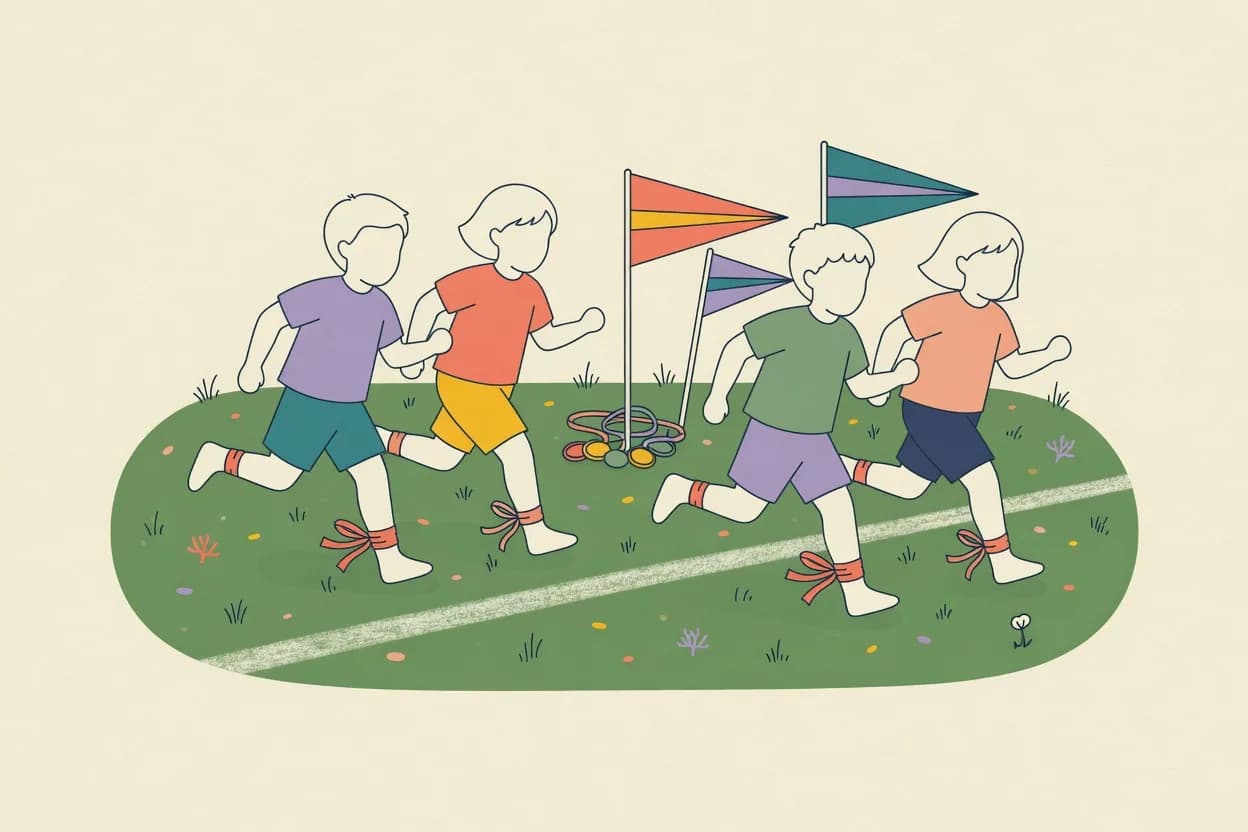
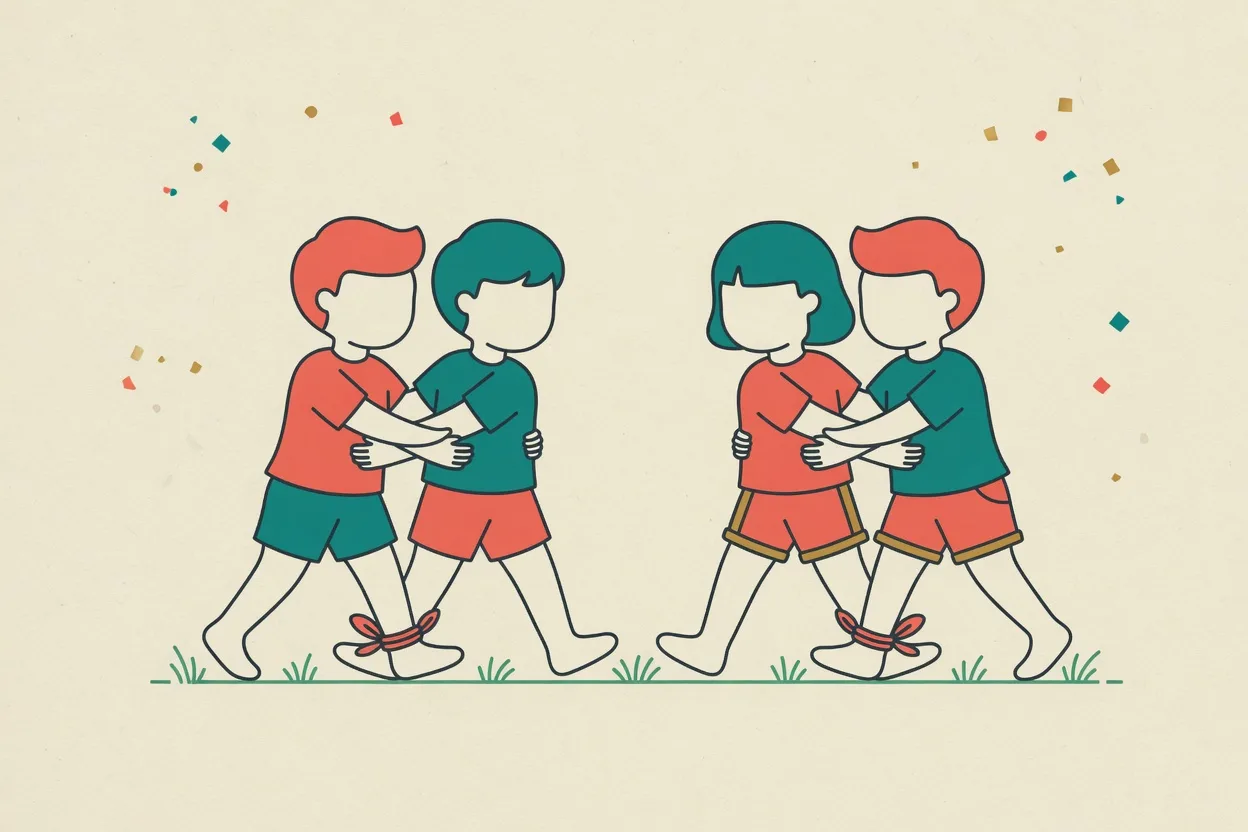
Partners stand side by side, shoulder to shoulder, facing the finish. Tie the inside ankles together — the right ankle of the child on the left and the left ankle of the child on the right — using a soft, wide tie in a simple bow. Snug enough that it will not slide down over the shoes; loose enough to slide two fingers underneath. Some people tie above the knee as well; do that only for older children who have already mastered the ankle version, and always as a second tie rather than a replacement.
Check every knot yourself before the start, and undo them yourself at the end. A bow that can be pulled loose in one movement is the only kind you want anywhere near a child's ankle.
Three-legged race rules
- Pairs line up behind the start line with inside ankles tied and inside arms around each other's waist or shoulders.
- On "go", each pair runs, walks or shuffles to the finish line together.
- The tie must stay on. If it comes undone, the pair stops, reties and continues — no disqualification.
- If a pair falls, they get up and keep going from where they landed.
- Both partners must cross the line for the pair to finish. Dragging your partner over it does not count, however tempting.
Three-legged race technique: how to actually win
Hold on to each other properly
Inside arms go around each other's waists or over the shoulders, and grip firmly. Pairs who run with their arms flapping free spend the entire race pulling in different directions. Being physically joined at the hip as well as the ankle is what turns two people into one runner.
Start with the tied legs — always
This is the single technique that wins three-legged races. On "go", the tied inside legs move first, together, as one leg. Every pair that starts on their outside legs trips over themselves in the first two steps. Say it out loud before the whistle: "inside leg first."
Count out loud
A simple "in, out, in, out" or "one, two, one, two", called by one partner and matched by the other, is worth more than any amount of speed. The rhythm is the race. Pairs who count beat pairs who sprint, every time, and children pick it up within a few strides.
Small steps, then build
Start with short, controlled steps to establish the rhythm over the first few paces, then lengthen the stride once you are in sync. The pairs who go flat out from the line are almost always the ones lying on the grass by the halfway point.
Lean in, not apart
Both partners lean very slightly towards each other so your weight is shared through the joined hip. Leaning away drags the tie sideways and pulls you both off balance.

Variations
- Three-legged relay. Two pairs per team, out to a cone and back, then untie and pass the tie on. The untying is half the fun and all of the chaos.
- Parent and child pairs. Adults have to shorten their stride dramatically, which levels the field beautifully and is very funny to watch.
- Four-legged (or centipede) race. Three or four children tied in a line. Almost impossible, entirely hilarious, and best over a very short course.
- Carry-something race. Each pair carries a balloon between their free hands, or a beanbag on a shoulder. Adds a second thing to coordinate and slows the fastest pairs down.
- Backwards finish. Out forwards, back backwards. For confident older children only, on a clear course, with an adult watching the return leg.
What age is a three-legged race for?
Six and up for the real thing. Kids under five generally cannot coordinate with a partner well enough to enjoy it, and being tied to someone can genuinely upset a small child — if you want the youngest guests involved, pair each of them with a parent and let it be a walking race rather than a running one. From six to eight, keep the course short and expect plenty of falling. From nine up, the counting rhythm turns it into a truly competitive race worth running heats and a final for.
Safety
- Only soft, wide ties, always in a quick-release bow, and always tied and untied by an adult.
- Never tie wrists or waists together — ankles only, so both children can put their hands out if they fall.
- Grass, cleared of stones and sprinkler heads, with plenty of lane width per pair.
- Pair by height rather than by friend group where you can, and never force a child who does not want to be tied to anyone.
- Untie every pair as soon as they finish, rather than letting them hop around the yard still joined.
Run it alongside a sack race and a tug of war for a complete backyard field day, or browse local entertainers to have someone else run the whole afternoon.
Frequently asked questions
- How do you do a three-legged race?
- Partners stand side by side, tie their inside ankles together with a soft, wide tie, and race to a finish line fifteen to twenty paces away. Inside arms go around each other's waist or shoulders, and both partners must cross the line for the pair to finish. If the tie comes undone, the pair stops and reties; if they fall, they get up and keep going.
- How do you win a three-legged race?
- Move the tied legs first, together, on "go," then count out loud ("in, out" or "one, two") so both partners keep the same rhythm. Hold on to each other firmly around the waist or shoulders, lean slightly in toward each other, and start with short steps before lengthening your stride. Pick a partner of similar height, which matters far more than speed. Pairs who count beat pairs who sprint.
- What do you use to tie legs together for a three-legged race?
- Something soft and wide, such as a scarf, dish towel, wide fabric ribbon or bandage, tied around the inside ankles in a simple bow. An adult should be able to pull it loose in one movement, so never use string, cord or cable ties. It should be snug enough not to slide over the shoes but loose enough to slip two fingers underneath.
- How long should a three-legged race be?
- Fifteen to twenty paces on flat grass, with plenty of lane width for each pair — nobody runs straight in this race. Keep it short, because pairs fall over, and grass is non-negotiable for the same reason. Mark the start and finish clearly with cones, chalk or two garden stakes.
- What happens if the tie comes undone or a pair falls?
- Neither is a disqualification. If the tie comes undone, the pair stops, reties and keeps going; if they fall, they get up and continue from where they landed. Both partners have to cross the finish line for the pair to finish.
Perfect for these parties
Themes that build a whole party around this game — with the food, the decor and a printable invite to match.