
Party Games for Toddlers: No Elimination Needed
Fifteen party games for toddlers that skip elimination altogether — cushion-swap musical chairs, rope-pull piñata, no-blindfold pin the tail, and the handful worth trying with a grown-up close by.
Party games
The games that have been winning birthday parties for a hundred years, explained properly — how to set each one up safely, the technique that actually wins it, the mistakes that lose it, and the variations that keep every age group in the game. No kit list longer than a rope and a few spoons.
Already know the occasion or the age group? Start here — each round-up picks the games that suit it and says why.
Fifteen party games for toddlers that skip elimination altogether — cushion-swap musical chairs, rope-pull piñata, no-blindfold pin the tail, and the handful worth trying with a grown-up close by.
Fourteen party games for five-year-olds, split into a run-around half and a sit-down half — the classic party age, with soft exits ready for whichever elimination game gets too much.
Fourteen party games for eight-year-olds where the competition is real — team-versus-team games, races worth timing, and head-to-head contests, because this is the age that actually wants to win.
Fifteen party games for ten-year-olds with nothing babyish about them — the older-kids version of every classic, from a tug-of-war bracket to a wheelbarrow obstacle course, plus sardines for the evening.
Fifteen party games that actually survive a living room — a quiet run for when noise needs managing, then the rainy-day classics worth clearing space for, from musical statues to a real indoor treasure hunt.
Fifteen outdoor party games for a full backyard field day — the classic races, the games that need real park-sized space, and a run of small-yard picks, plus what to do if the weather turns.
The games built for a sixty-second clock, plus everyday classics timed instead of played to an end — with the bracket, scoring and per-station supply list that turns loose games into a real tournament.
The games that are genuinely about water — sponge and cup relays, water balloons, drip drip drop — plus soaked-down versions of the classics, built for a hot afternoon with towels, spare clothes and the lawn all accounted for.
The carnival-booth classics — pumpkin bowling, ring toss, bean bag toss — plus the harvest-ready lawn games that round out a school or backyard fall festival without a single repeat.
The genuinely spooky picks — apple bobbing, a mummy wrap, pumpkin bowling — plus classic games with just enough of a monster twist to earn their spot on a Halloween afternoon.
Thanksgiving has no games of its own except tug of war, so this is the honest version — reliable classics regrouped for a house full of cousins with a few hours to fill before dinner.
The on-theme leads — left-right, an indoor snowball fight, a candy-cane hunt — plus the reliable classics dressed up for December, enough to fill a class party or a family afternoon without repeats.
Games built around a kids' early countdown — a balloon drop rigged to land at zero, plus reliable classics that fill the hours before an 8pm 'midnight' — sorted to build toward one big moment.
Every one of these games reskins for a theme — browse party themes
All 52 games, grouped by how they play — each with the rules, a safe setup and the variations by age.
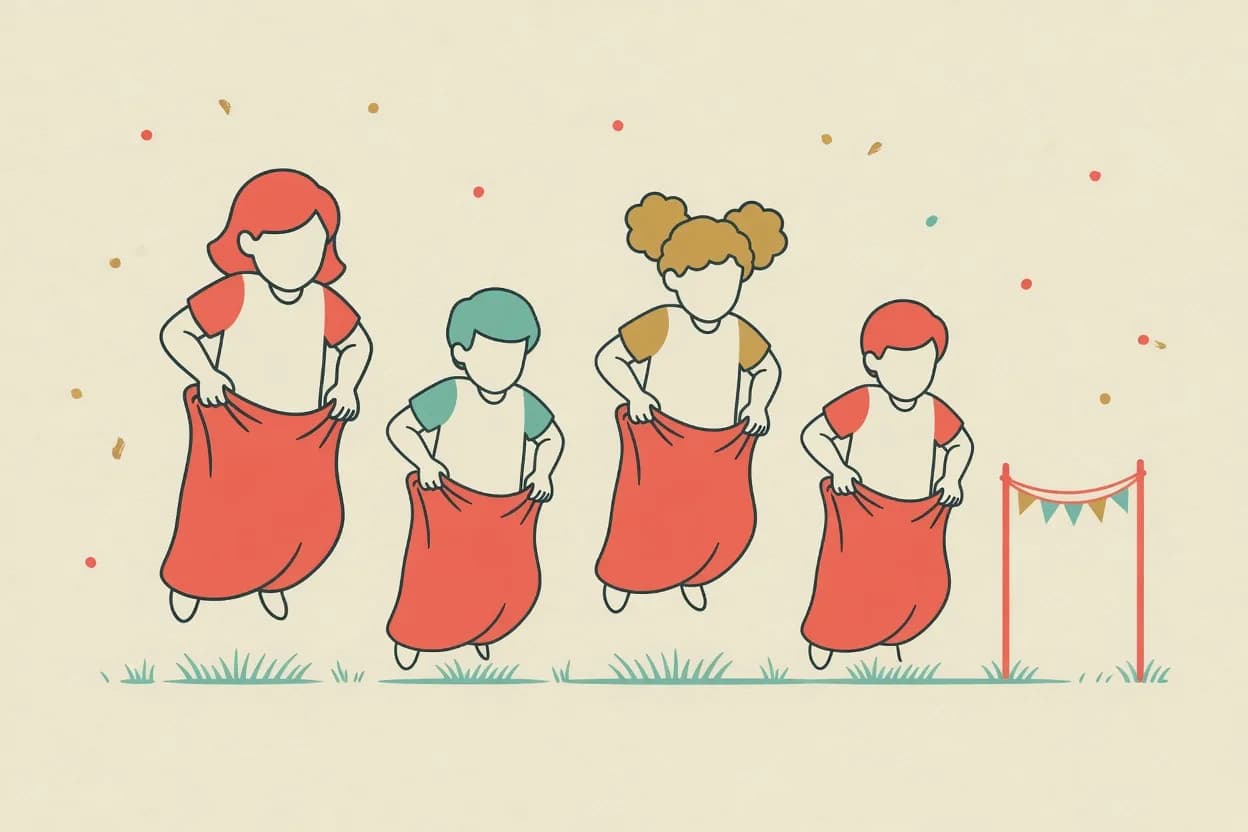
How to run a sack race that works — choosing the right sacks, marking a safe course, the jumping rhythm that actually wins, and the variations that keep every age group racing.
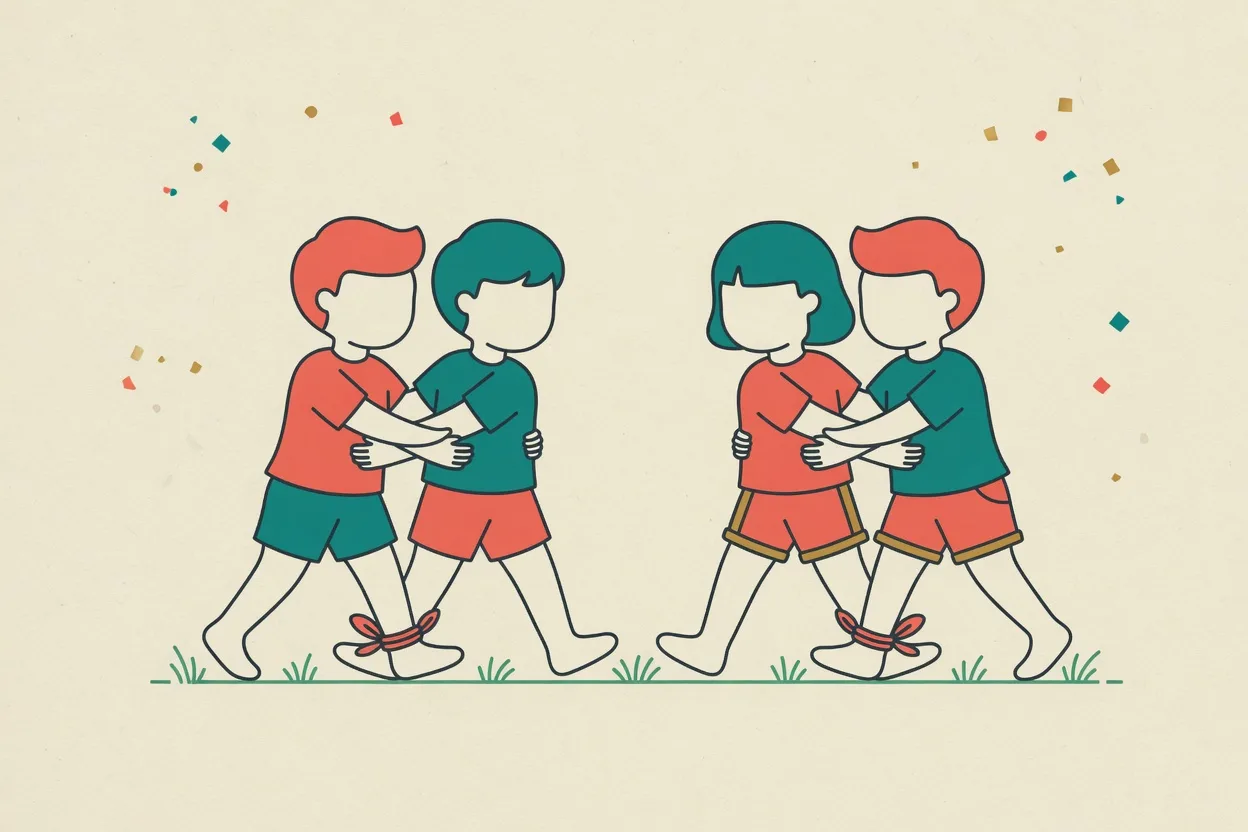
Everything you need to run a three-legged race — how to tie the legs safely, the inside-leg start and counting rhythm that beat brute speed, plus pairings and variations by age.
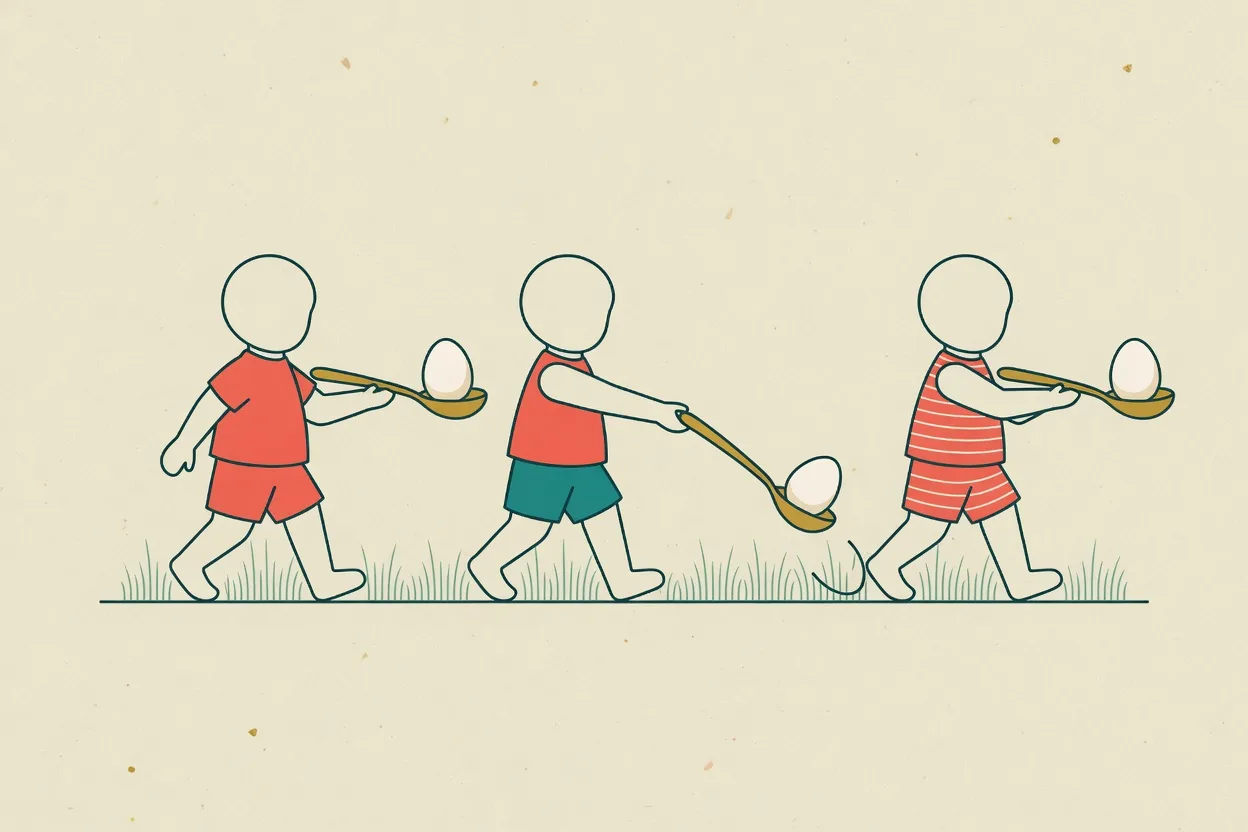
How to run an egg and spoon race without ruining the lawn — the rules, the grip and gaze that keep the egg on the spoon, and the mess-free swaps that work just as well indoors.
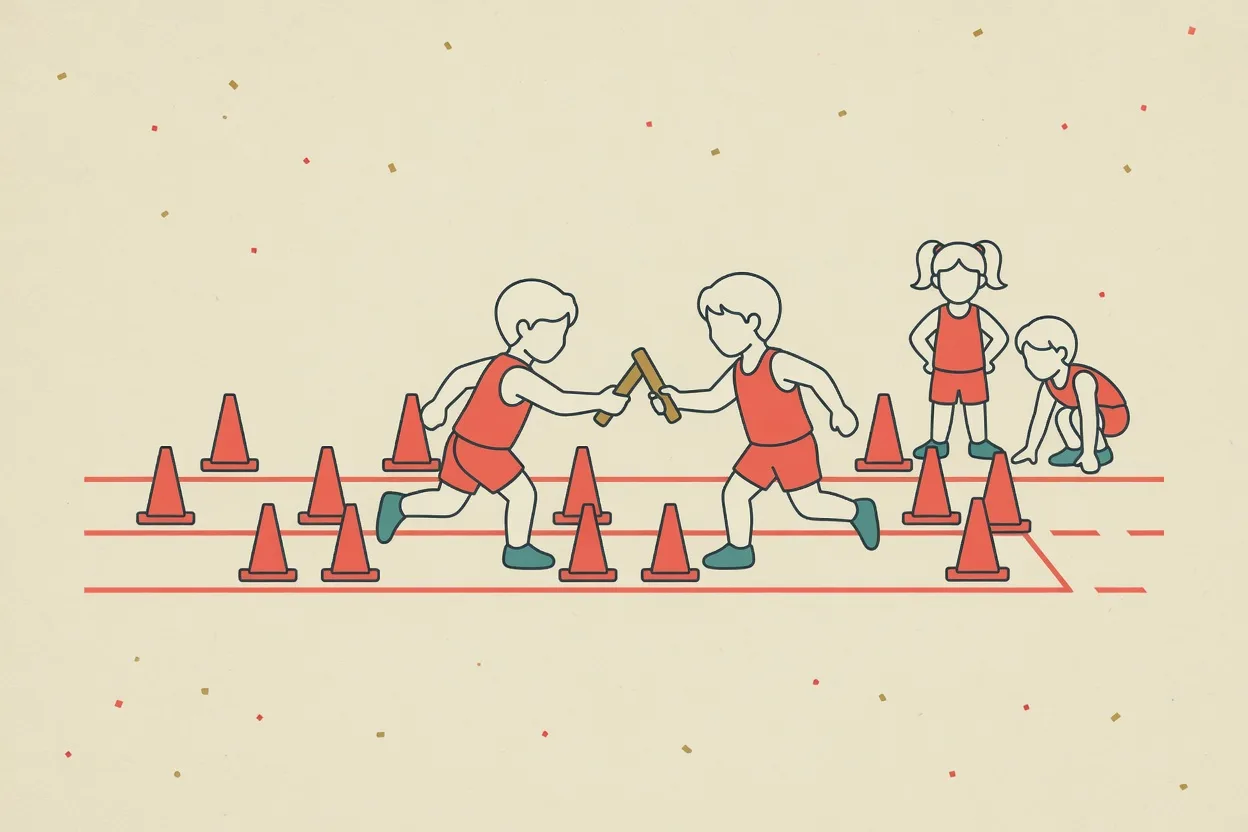
The format behind every relay — lane setup, the hand-off that decides most races before the running even matters, team balancing, and baton, spoon and dress-up versions to run it with.
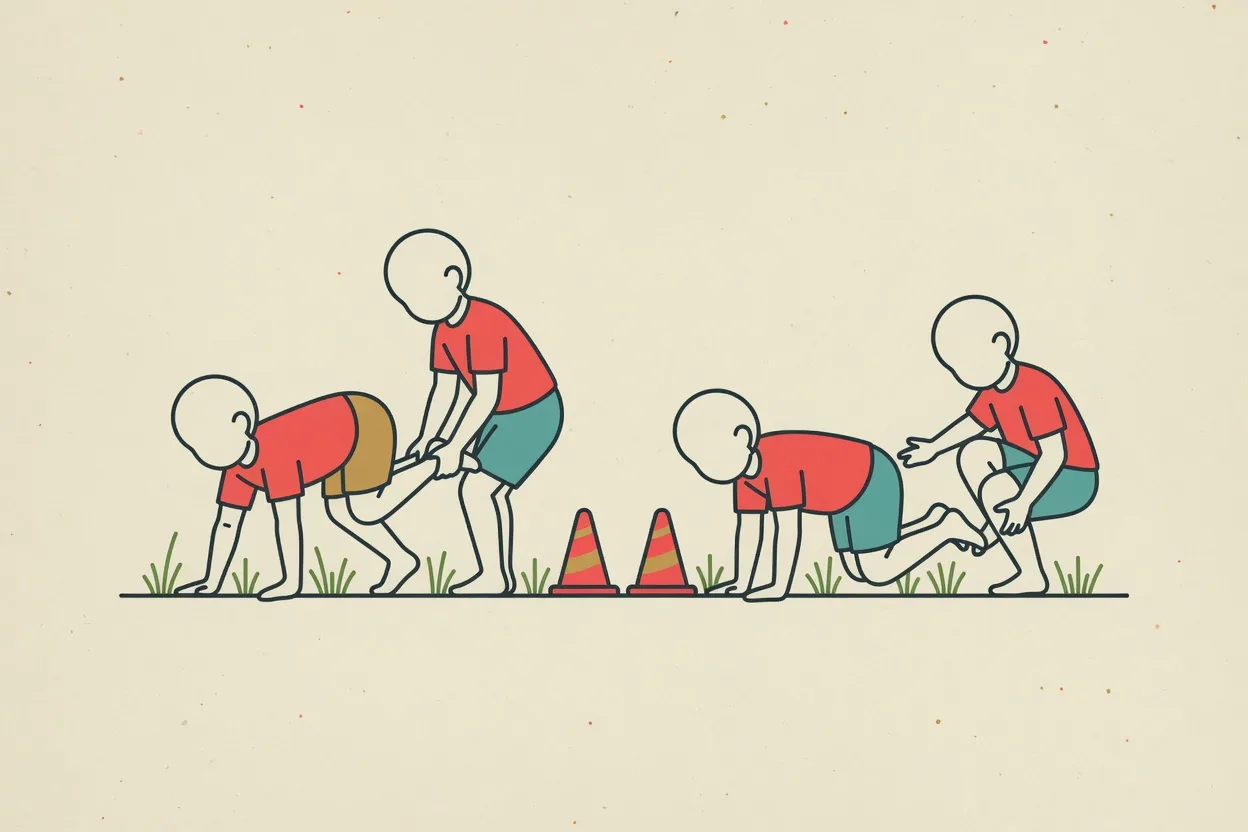
The pairs race where one child walks on their hands and the other steers by the ankles — the grip that actually holds a pair together, and why this is the one race that has to be on grass.
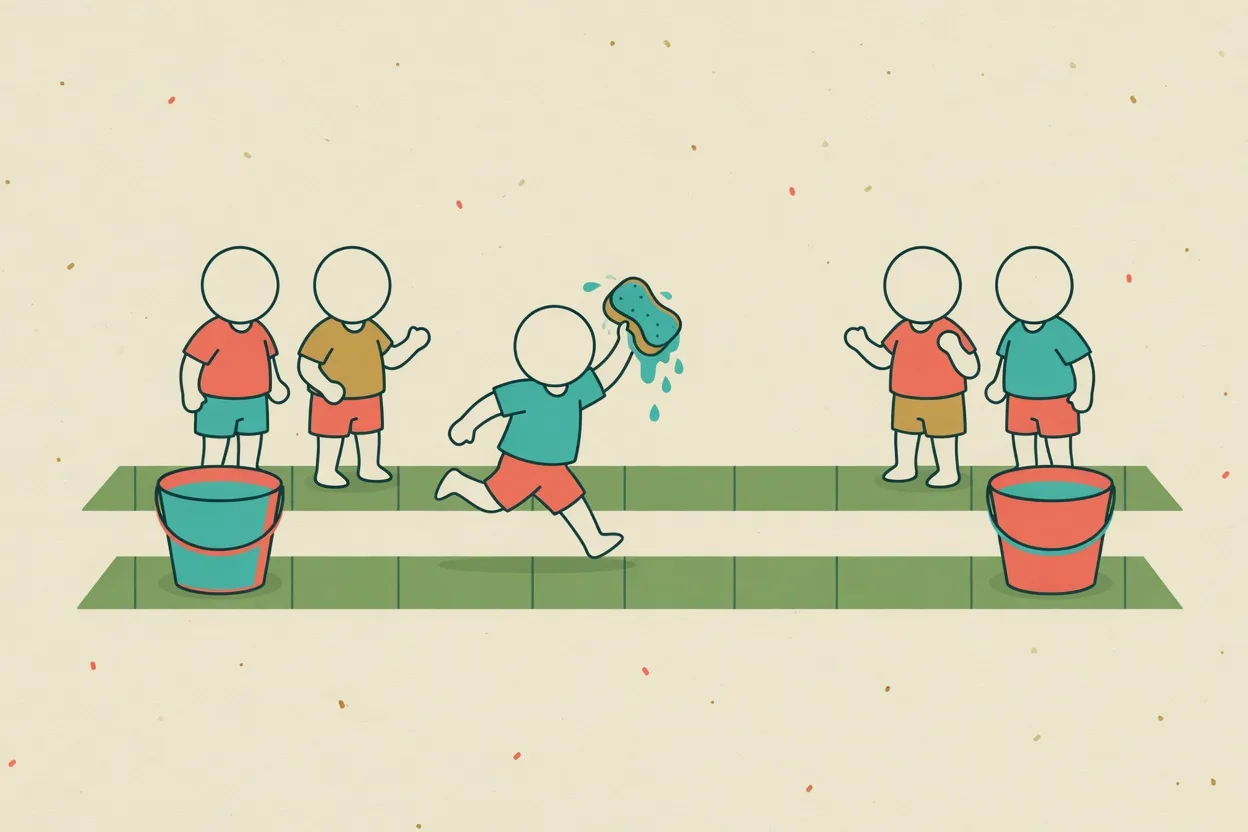
The soaked-sponge bucket relay, explained with real numbers — how much water a sponge actually carries, the fill line that keeps a round short, and team sizes that avoid a long line.
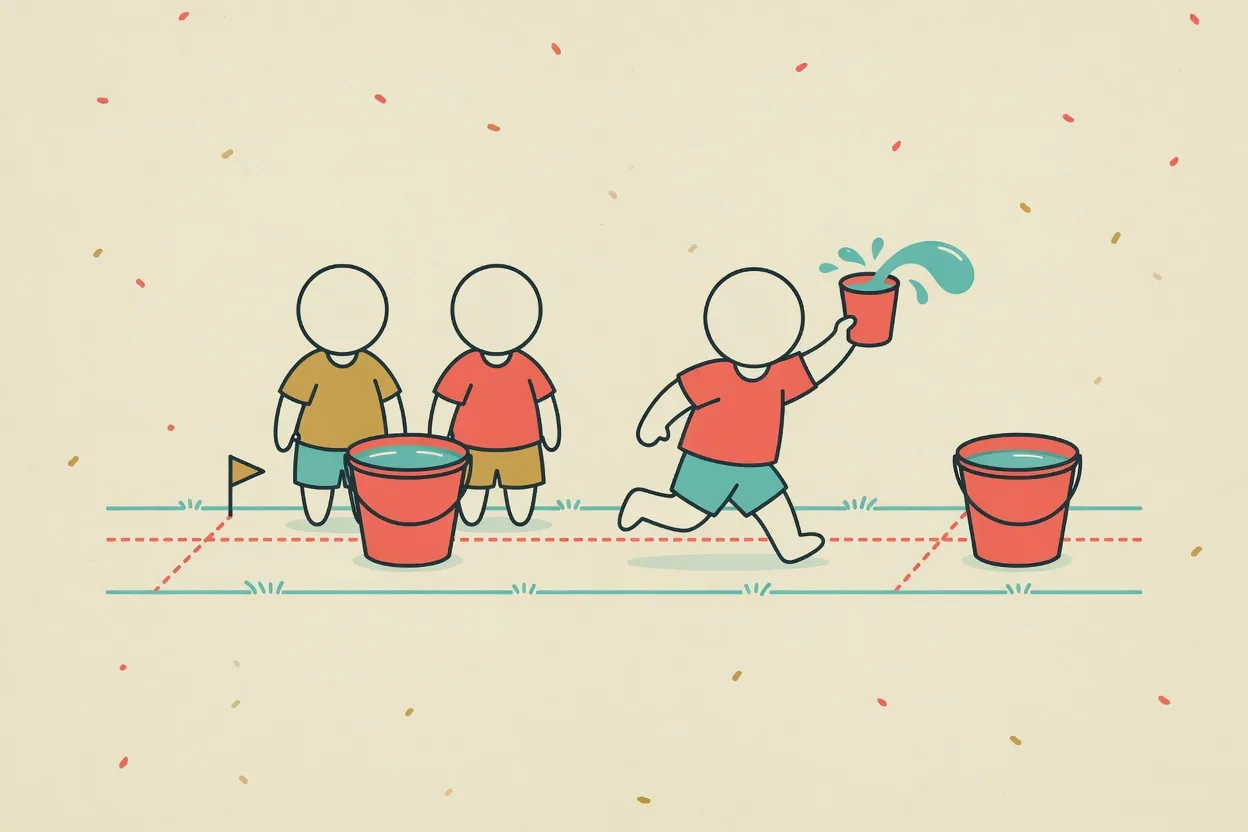
Fill a bucket one leaky cupful at a time — a summer relay where the water you lose on the way is half the fun, and the towel logistics matter as much as the running.
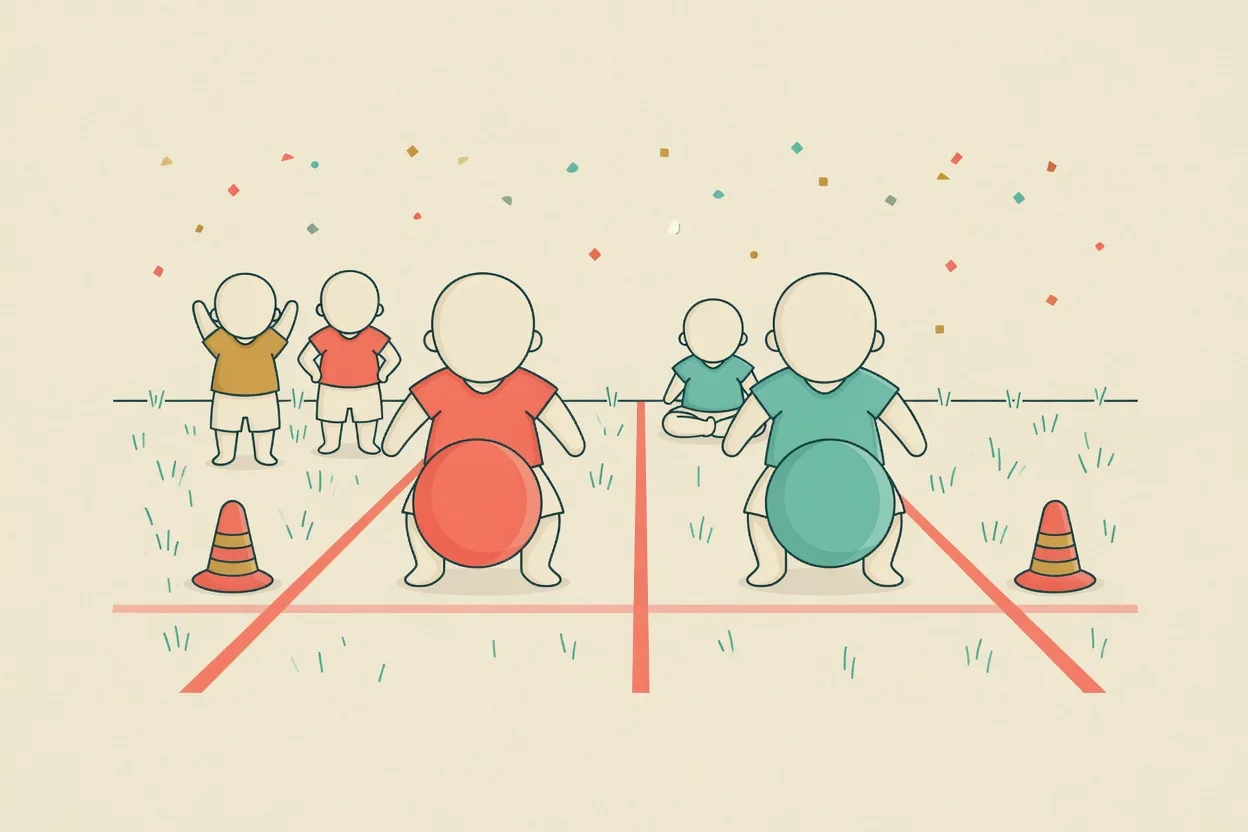
A balloon squeezed between the knees, a short lane, and a waddle instead of a run — the Thanksgiving relay that gets children moving without anyone actually racing.
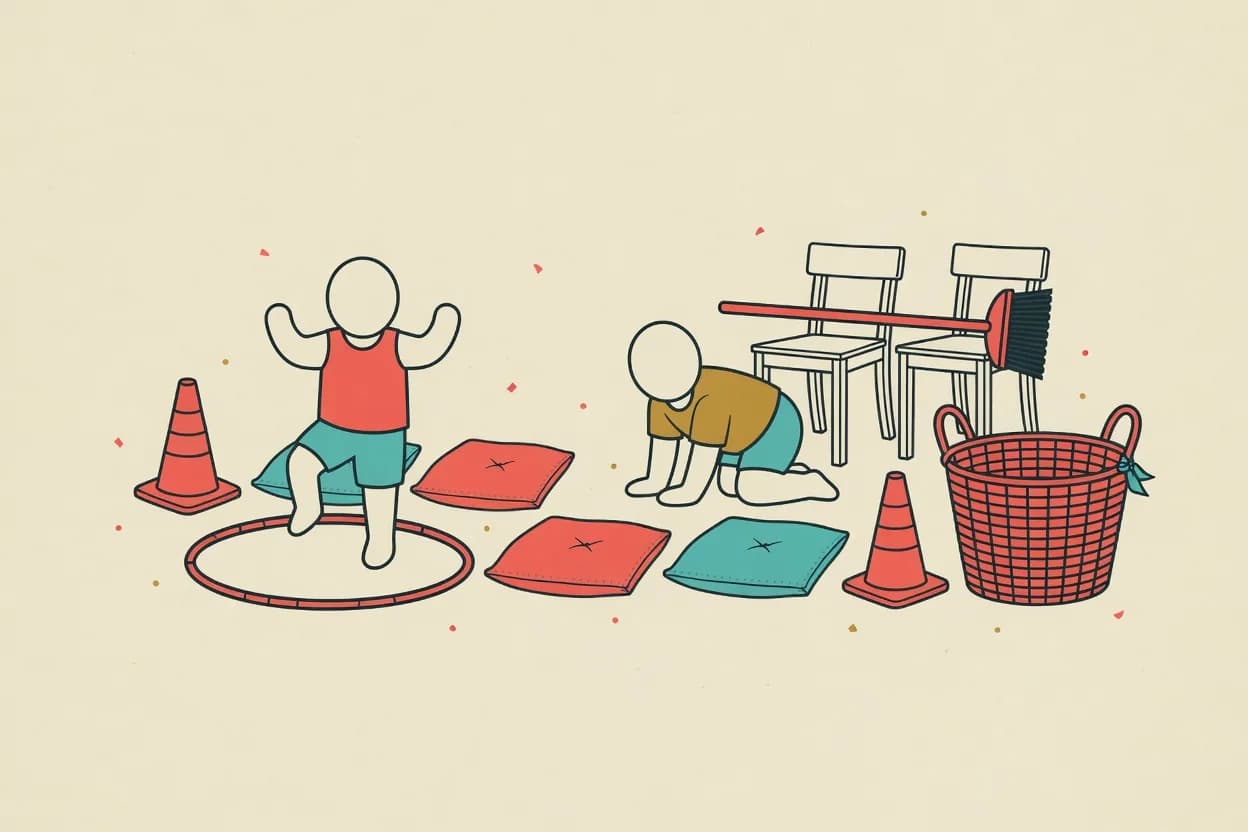
How to build a real backyard obstacle course from things you already own — three ready-made designs by age, and the one mistake (not testing it yourself first) that causes almost every problem.
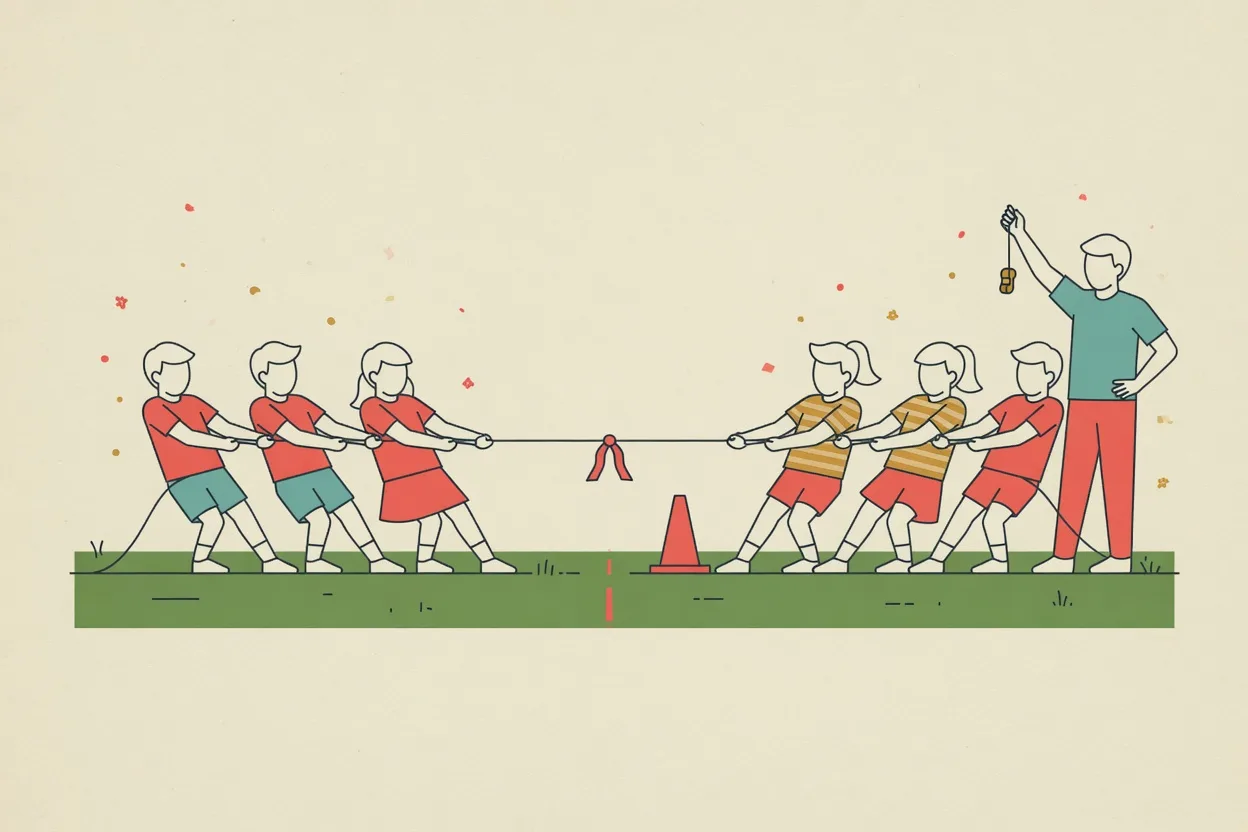
The complete guide to tug of war — how to set it up safely, the team order that wins, the grip, stance and lean that turn strength into ground, and the calls that decide close pulls.
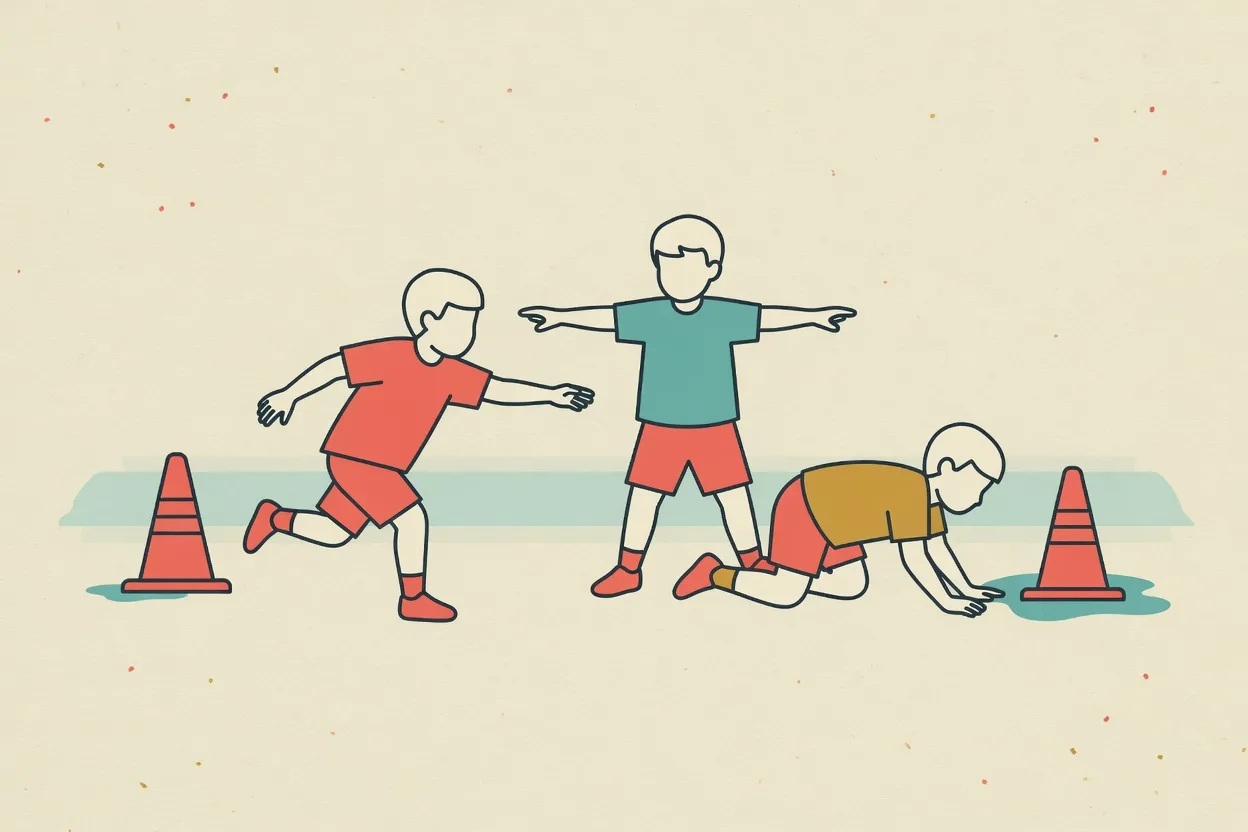
Ordinary tag with the freeze rule that makes it actually work — the boundaries that stop it sprawling across the whole yard, a fair way to pick who's "it", and the unfreezing variants that change the pace.
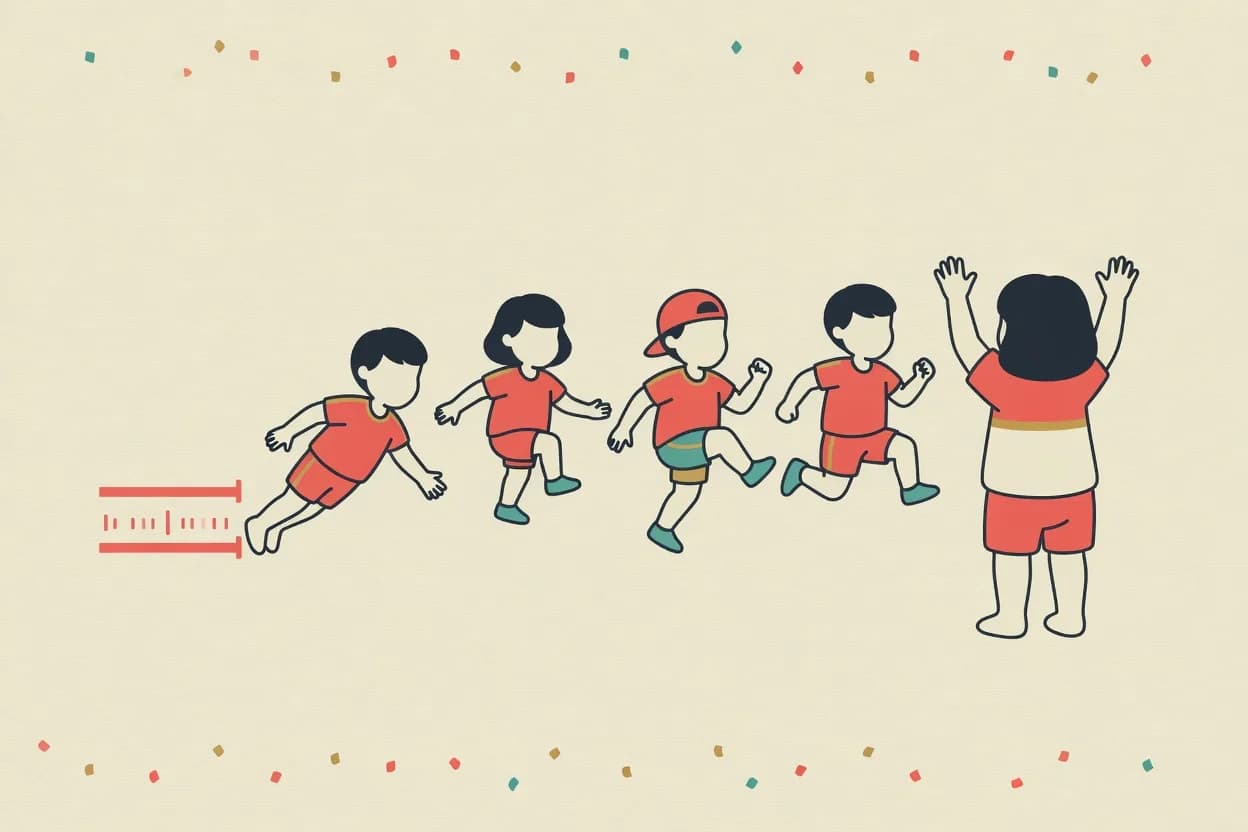
The stop-start sprint every child knows — how much space it really needs, how to call it so nobody argues, and the variations that keep it fair from age four to eleven.
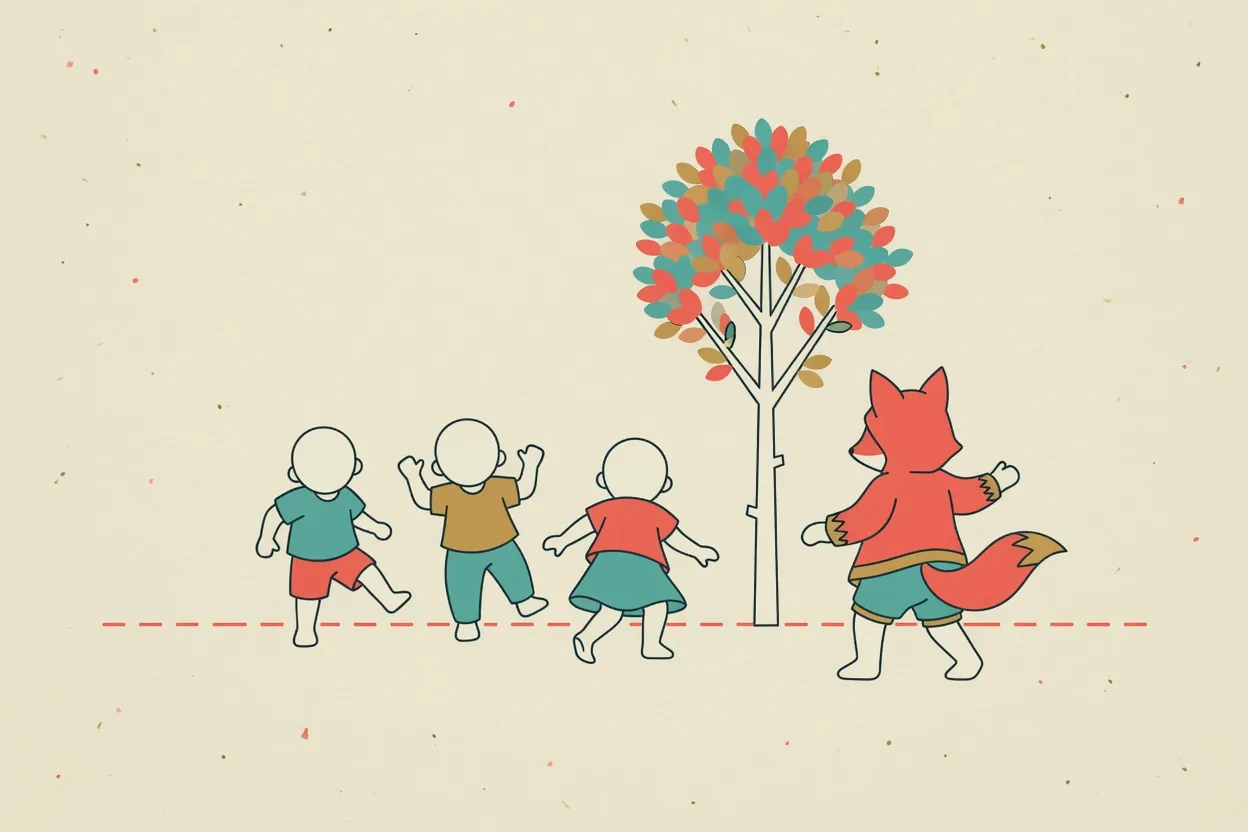
The creeping-up clock game — the calling cadence that builds real suspense, how the fox's sudden dinner-time chase works safely, and the shorter, gentler version for younger children.
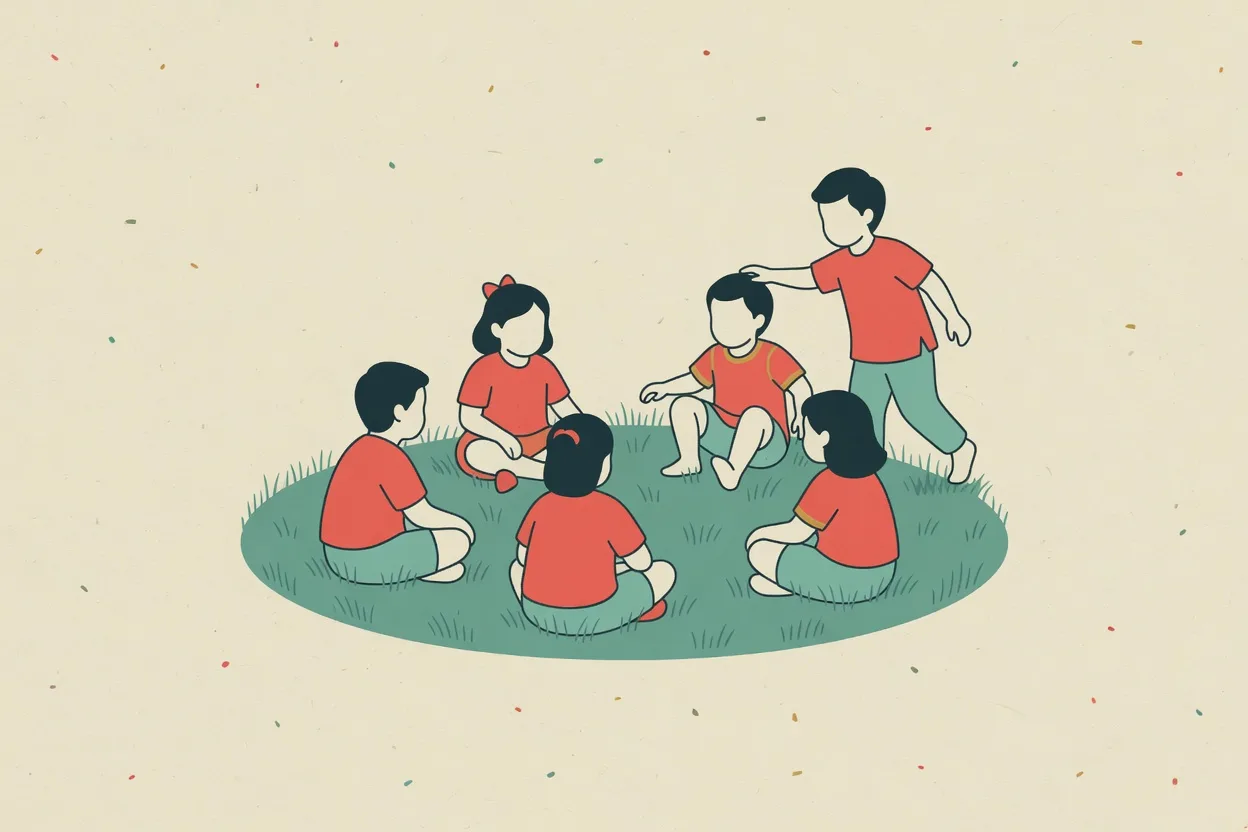
The playground circle-chase classic for ages three to seven — how the tap-and-chase actually works, the fix for the child who never gets picked, and when to swap in a gentler version.
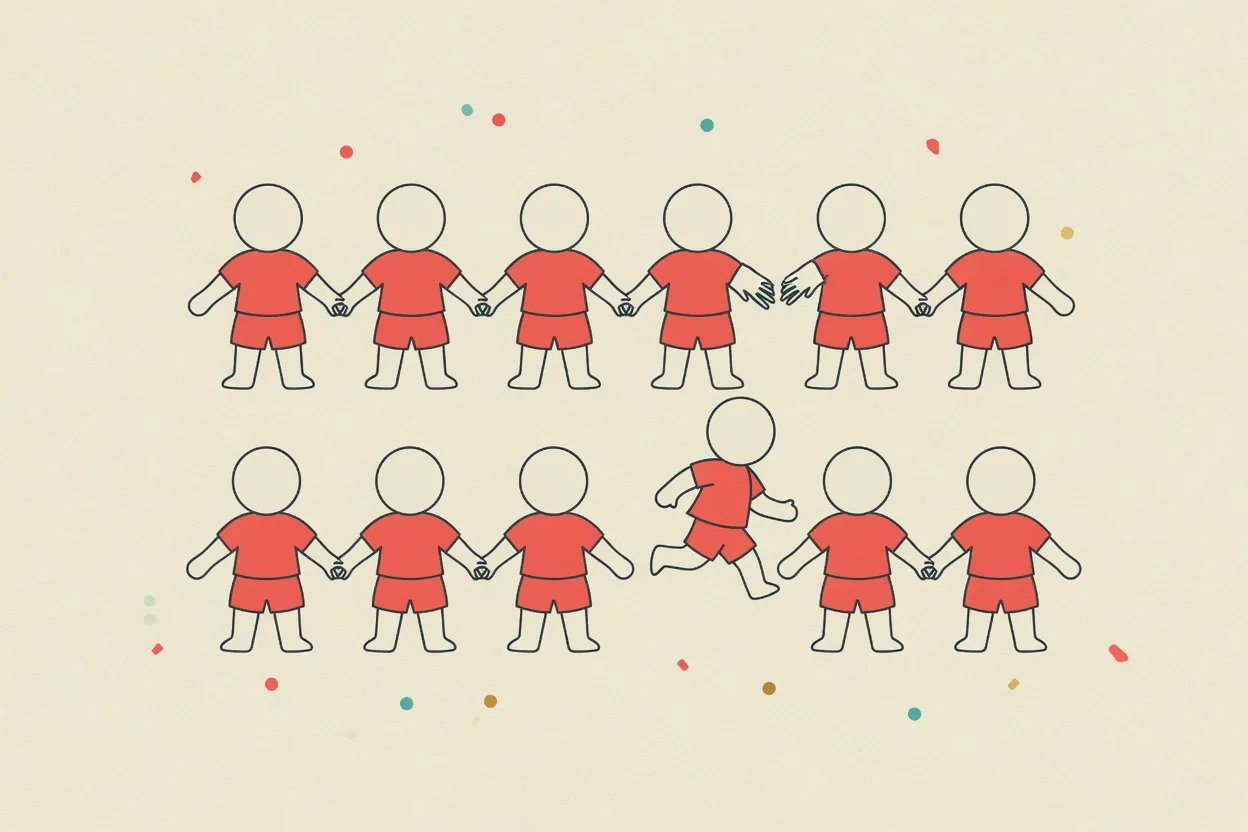
The calling-and-running line game, taught the way most families now play it — a loose grip that gives way instead of locking, why that one change matters, and the ages it suits.
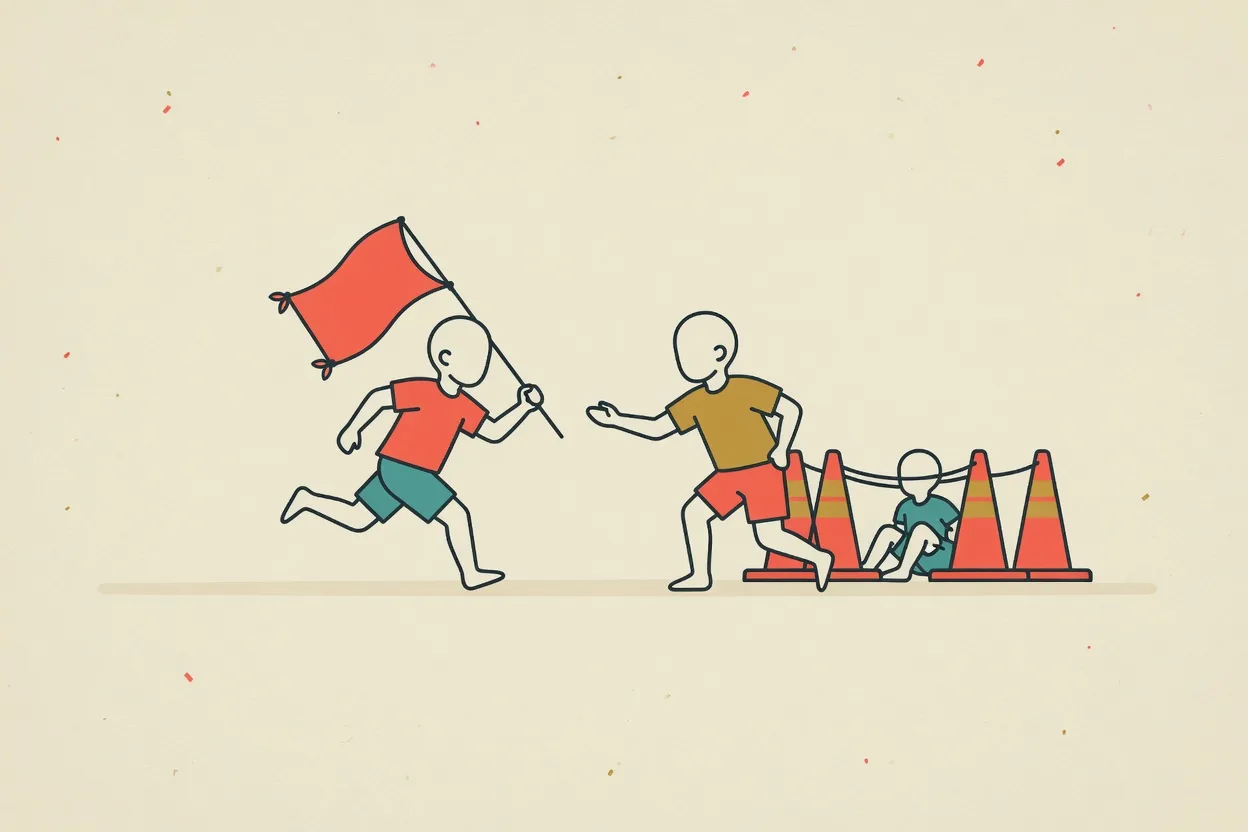
The territory game that rewards a plan, not just speed — how to set up the two zones, the jail rule that causes every argument, and the numbers you actually need for a fair game.
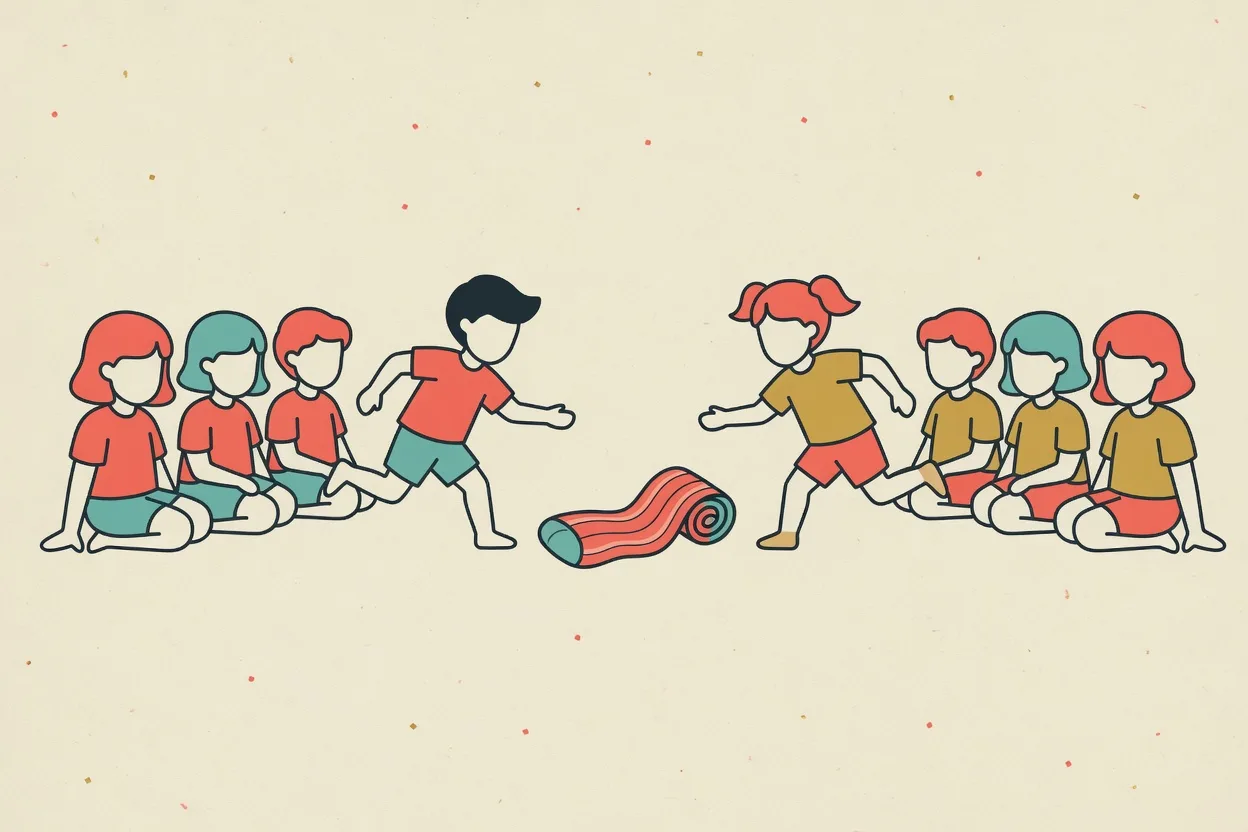
The numbered dash-for-the-object game — how to call numbers fairly, resolve a tie when two children grab at once, and what actually works as the bacon.
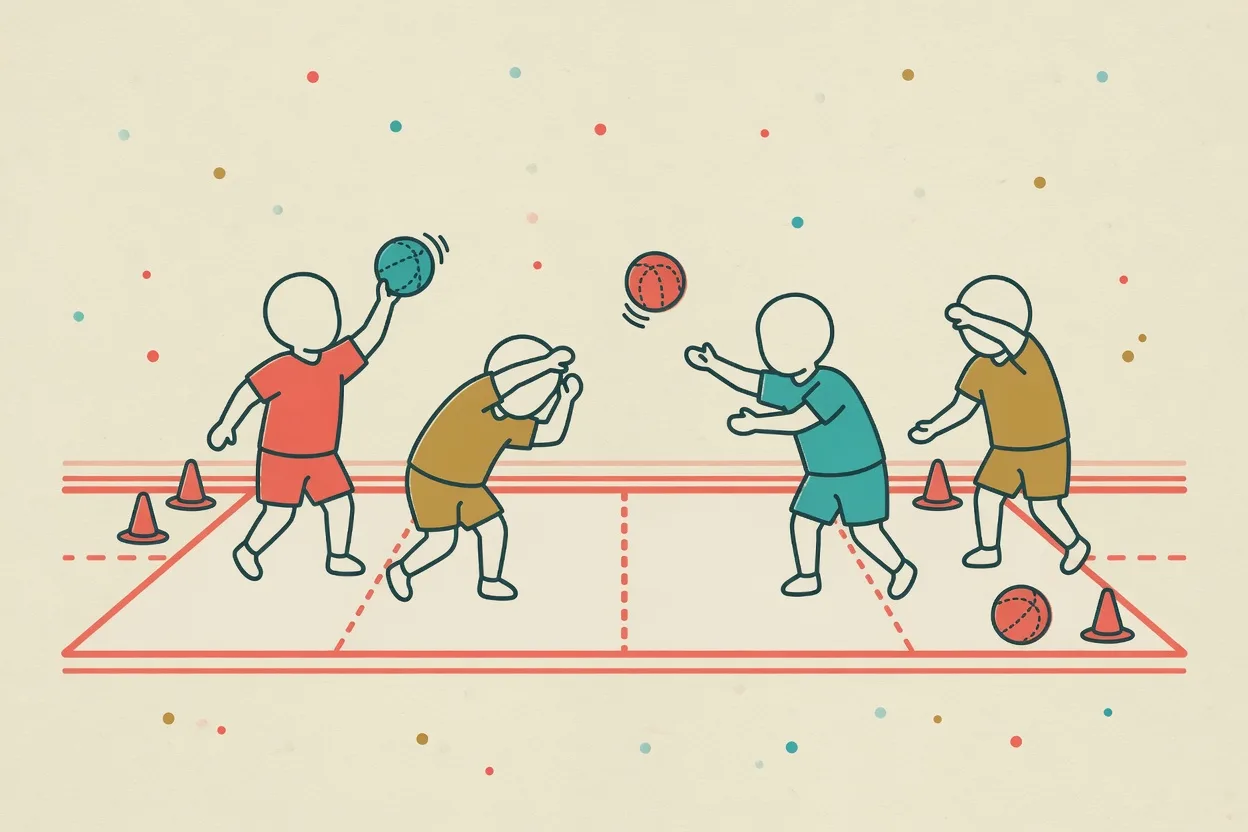
Soft-ball dodgeball scaled down for a birthday party — foam balls only, marking a court in an ordinary backyard, the no-headshot rule, and the catch that brings a player back in.
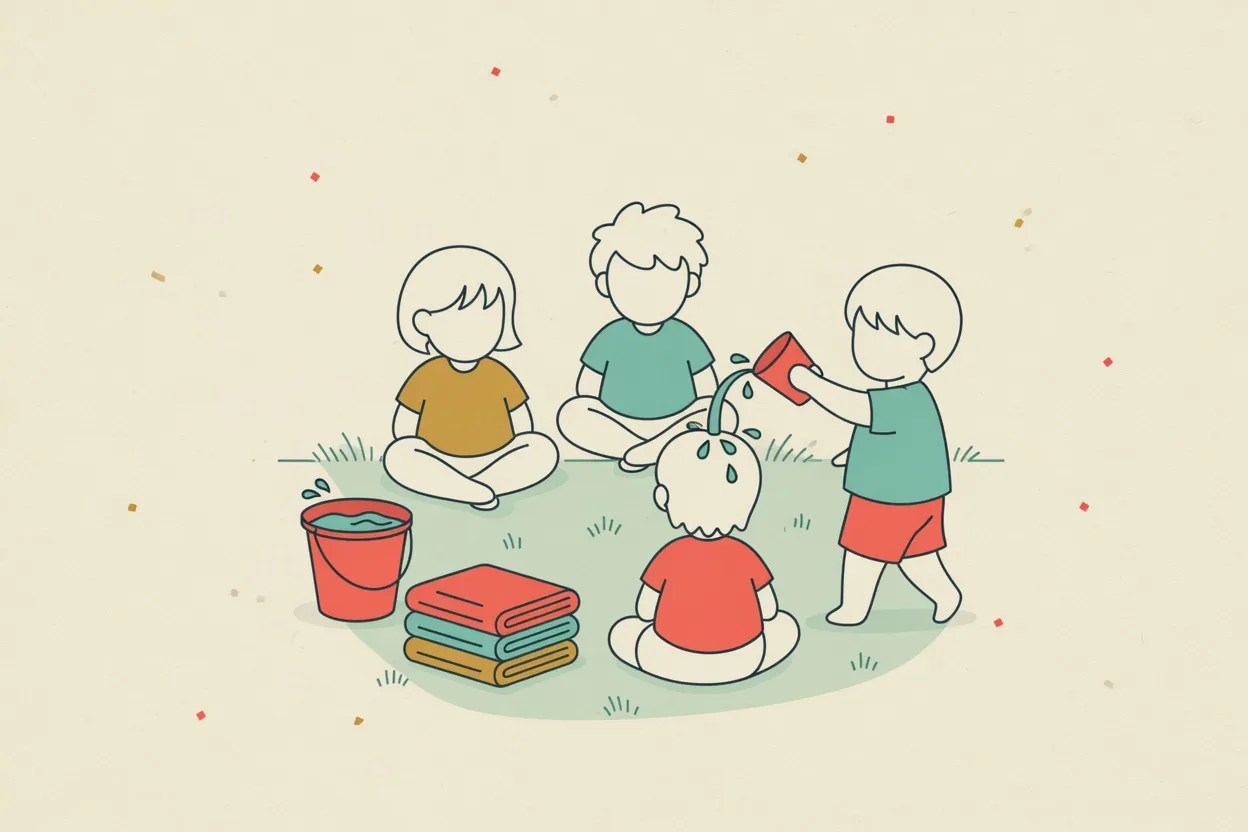
Duck duck goose with a splash — a cup of cold water instead of a tap on the head, run on grass on a hot afternoon with the same chase-around-the-circle rules everyone already knows.
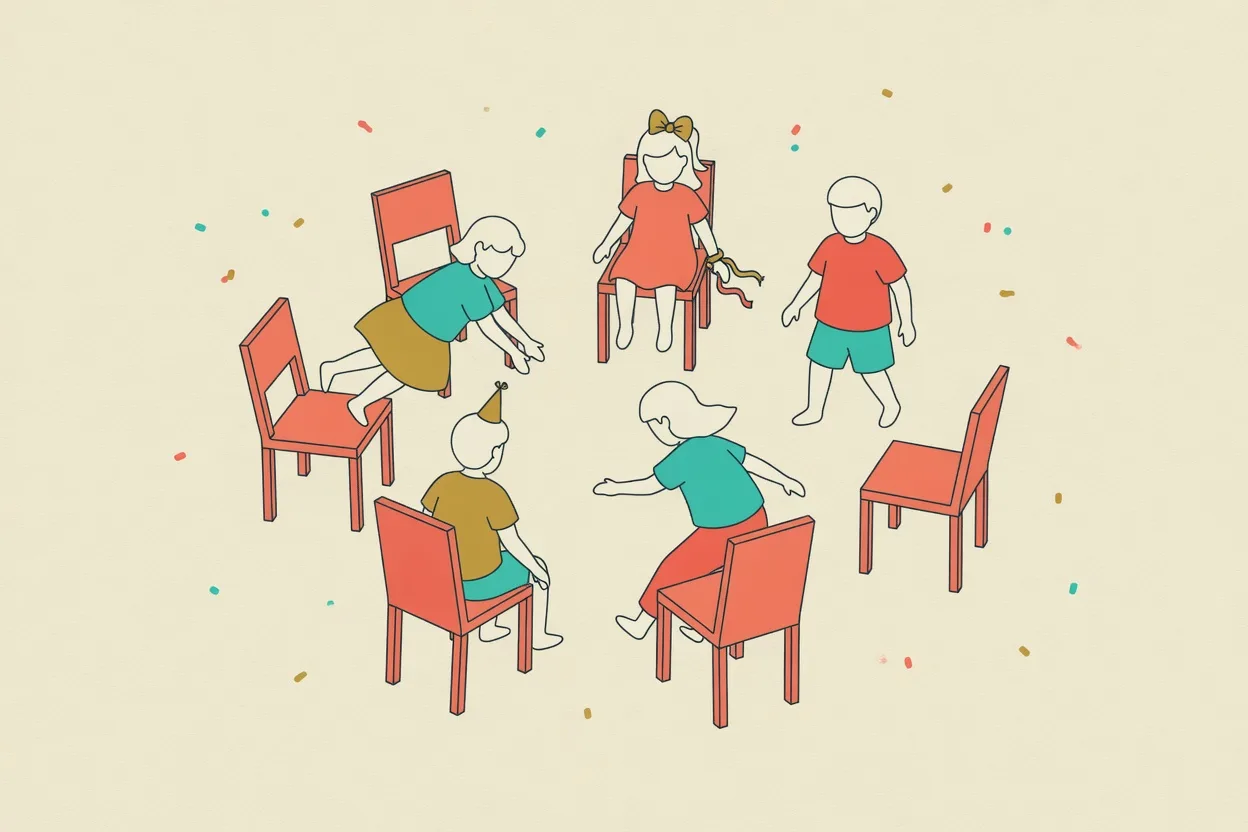
The party game everyone half-remembers, run properly — how many chairs, the ages it suits, stopping the music fairly, and the versions that keep every child playing to the last round.
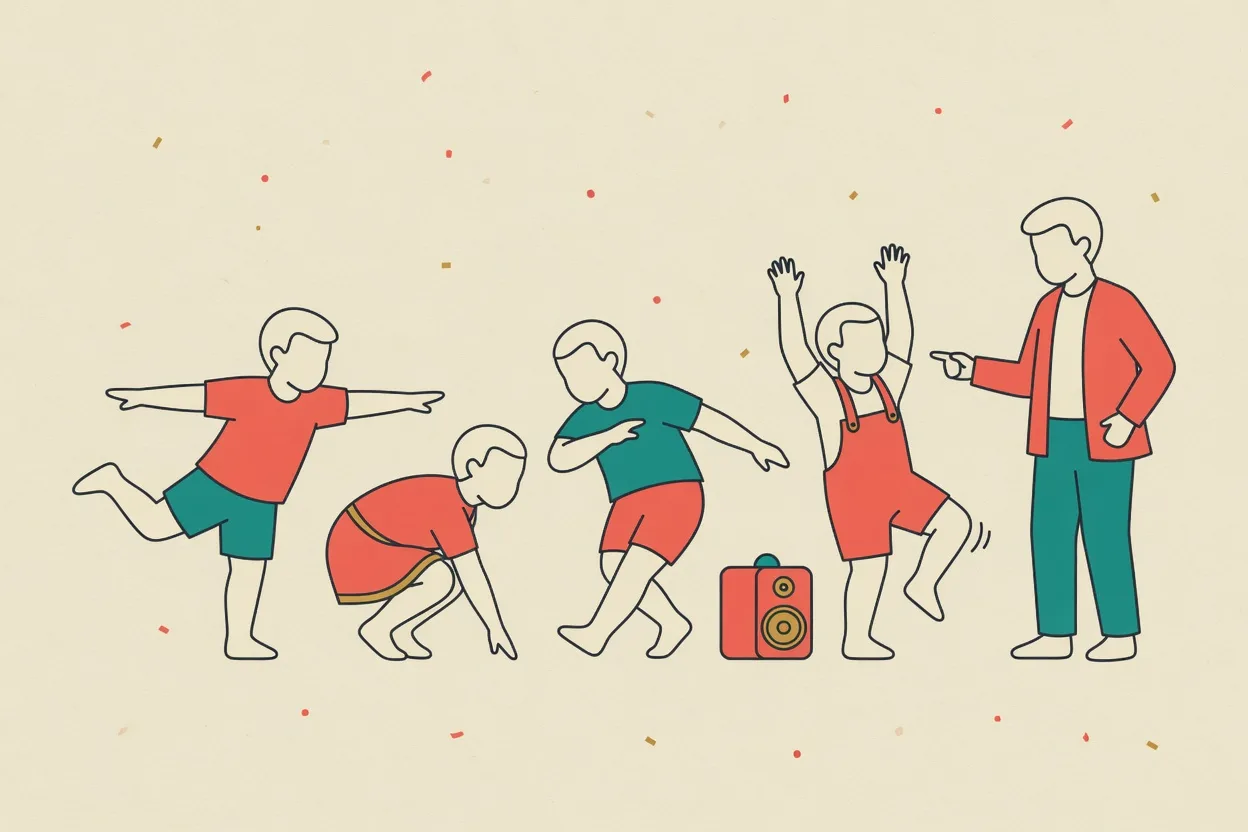
The classic freeze game, done properly — the rules, how to judge fairly without making anyone cry, the playlist that gets the room dancing, and how it compares to musical chairs and bumps.
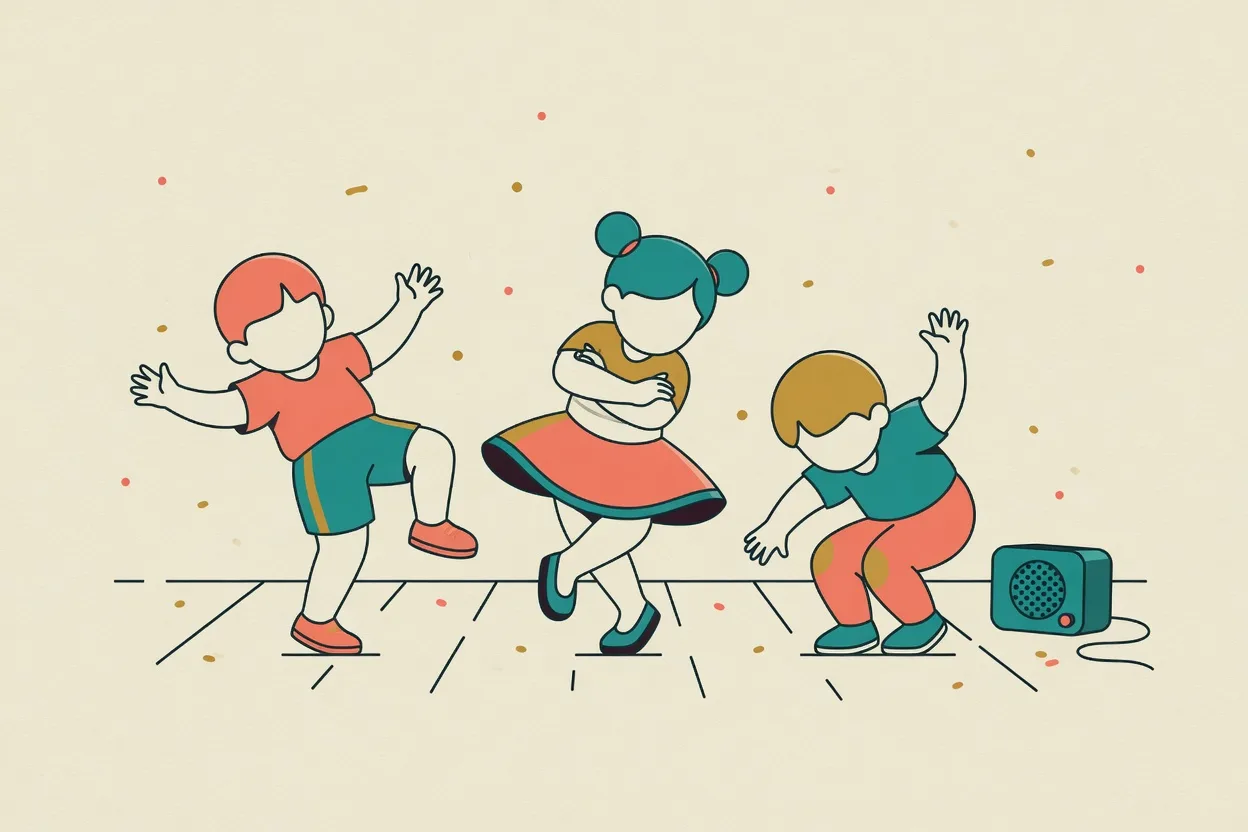
Music plus statues, American-style — the rules, the ages it suits, how to judge freezes without an argument, and the playlist tricks that keep a room of children dancing until the next stop.
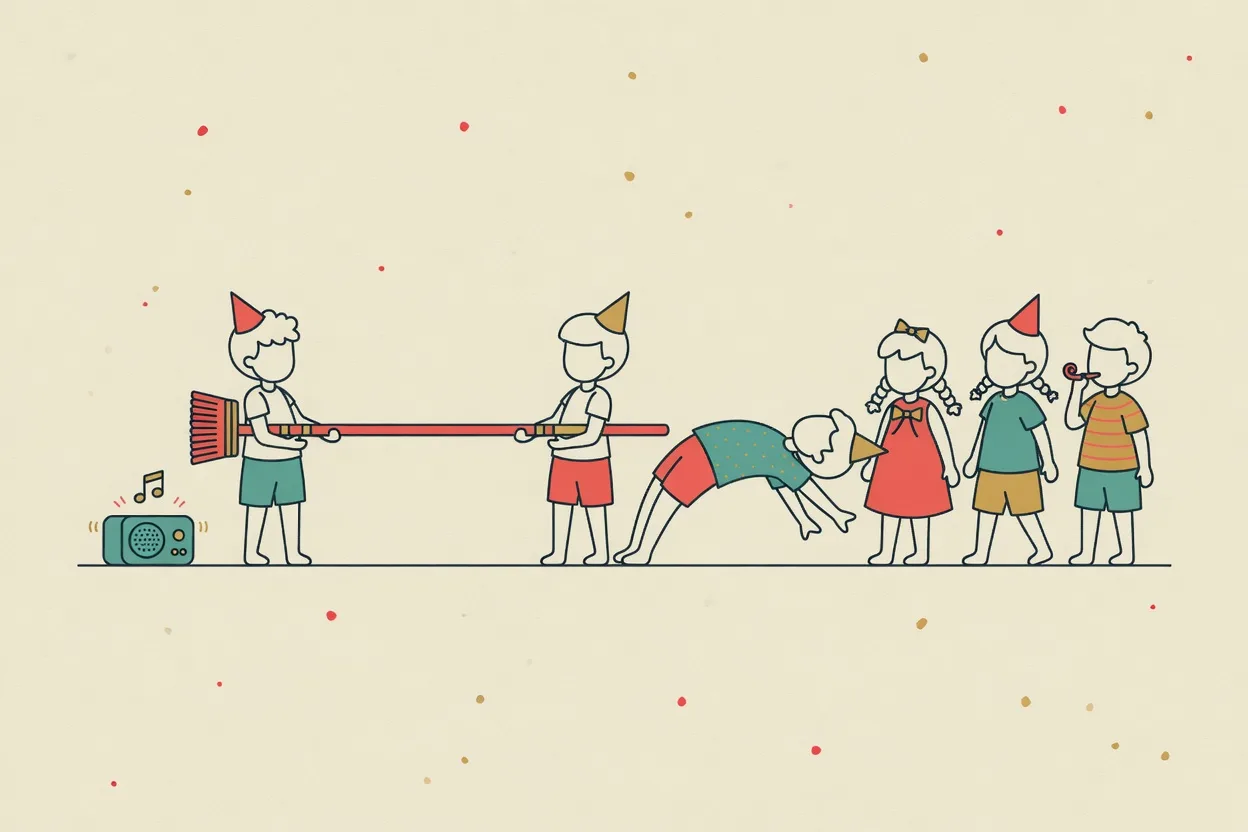
The lean-back line game that gets harder every round — pole alternatives that are actually safer than a real pole, how fast to lower the bar, and the music that carries the whole thing.
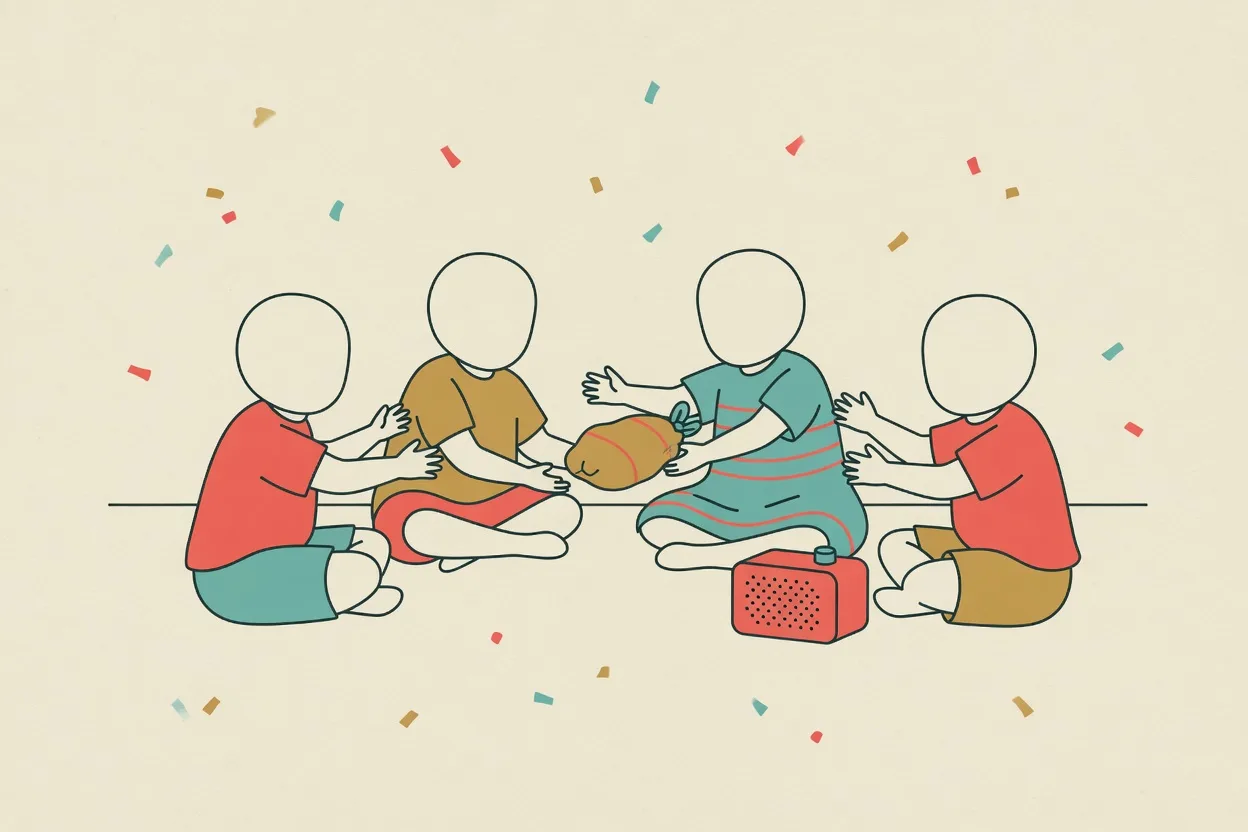
The fast-passing circle game that needs one object and a speaker — what actually works as the potato, how to run it without a scramble, and the gentler version for children who hate being out.
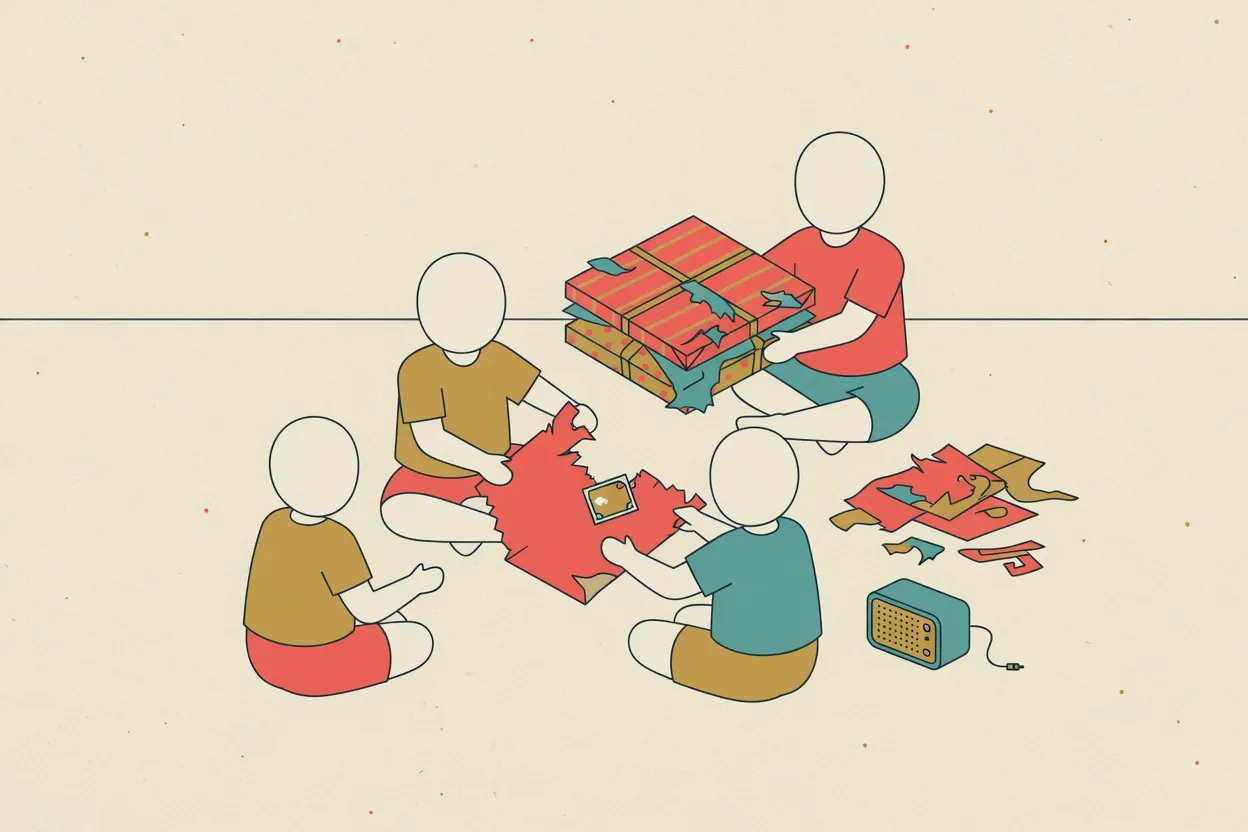
The classic unwrapping circle game, run properly — how many layers to wrap, whether every layer needs a prize, fair music-stopping, and the version that keeps the whole group happy to the end.
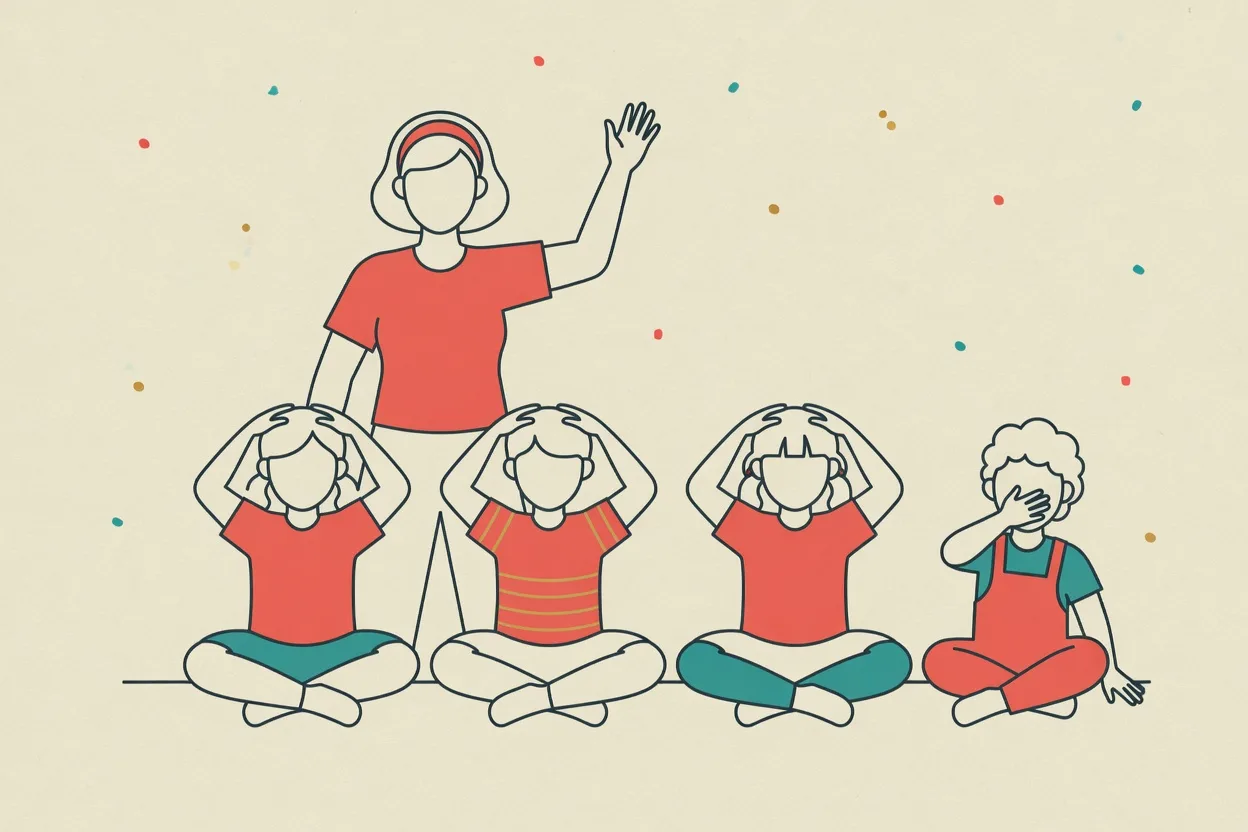
The instruction game everyone half-remembers badly run — the rhythm and traps that make a good Simon, elimination versus no-elimination for younger children, and how to keep it moving.
The copy-everything movement game — how to stop it dissolving into chaos, rotating the leader so every child gets a turn at the front, and movement ideas that work for a mixed-age group.
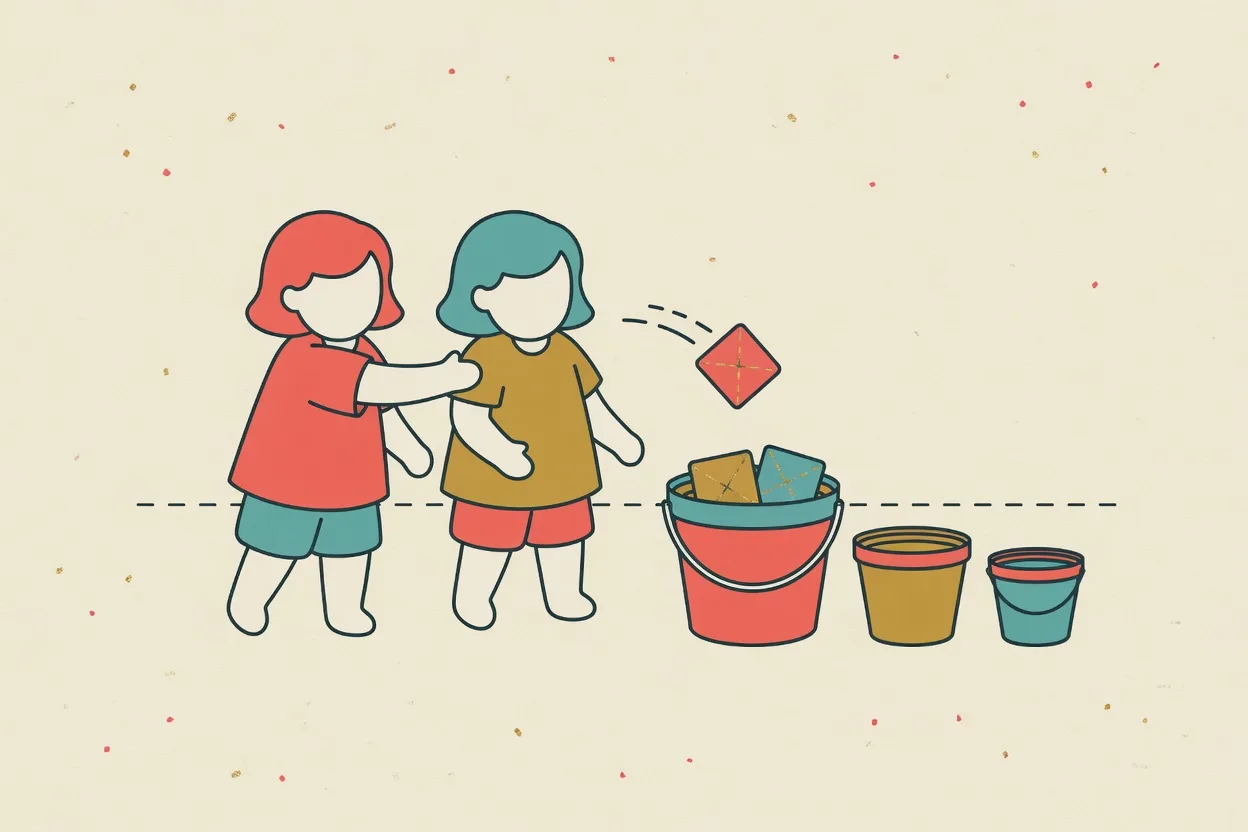
Target throwing for a backyard party — DIY target boards, fair scoring by age, and how to set distance handicaps so a four-year-old and a ten-year-old can play the same round.
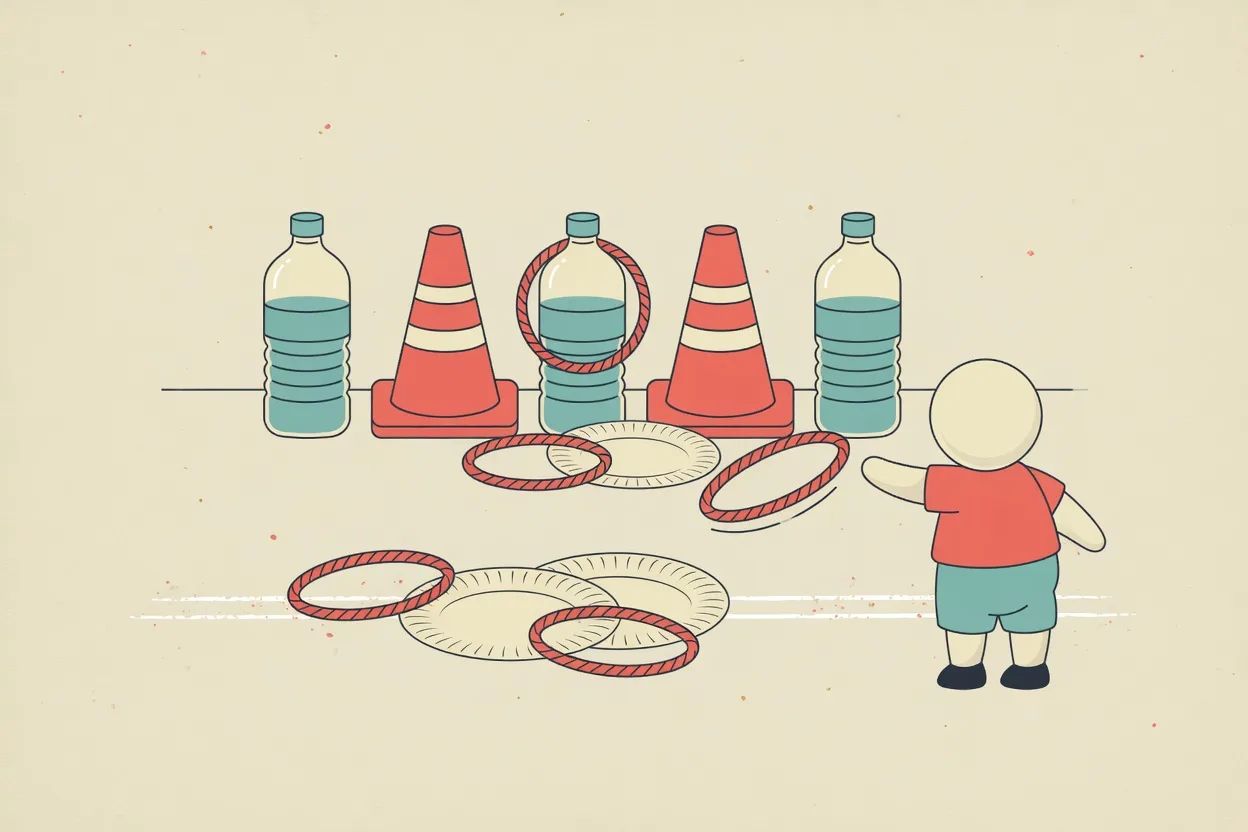
Bottle-and-cone ring toss for the backyard — homemade rings that cost nothing, fair throwing distances by age, and how to keep the prize table moving instead of stalling the party.
Mini pumpkins, plastic-bottle pins and a real lane — how far to set the throw line, which pumpkins actually roll straight, and the scoring that turns it into a real tournament.
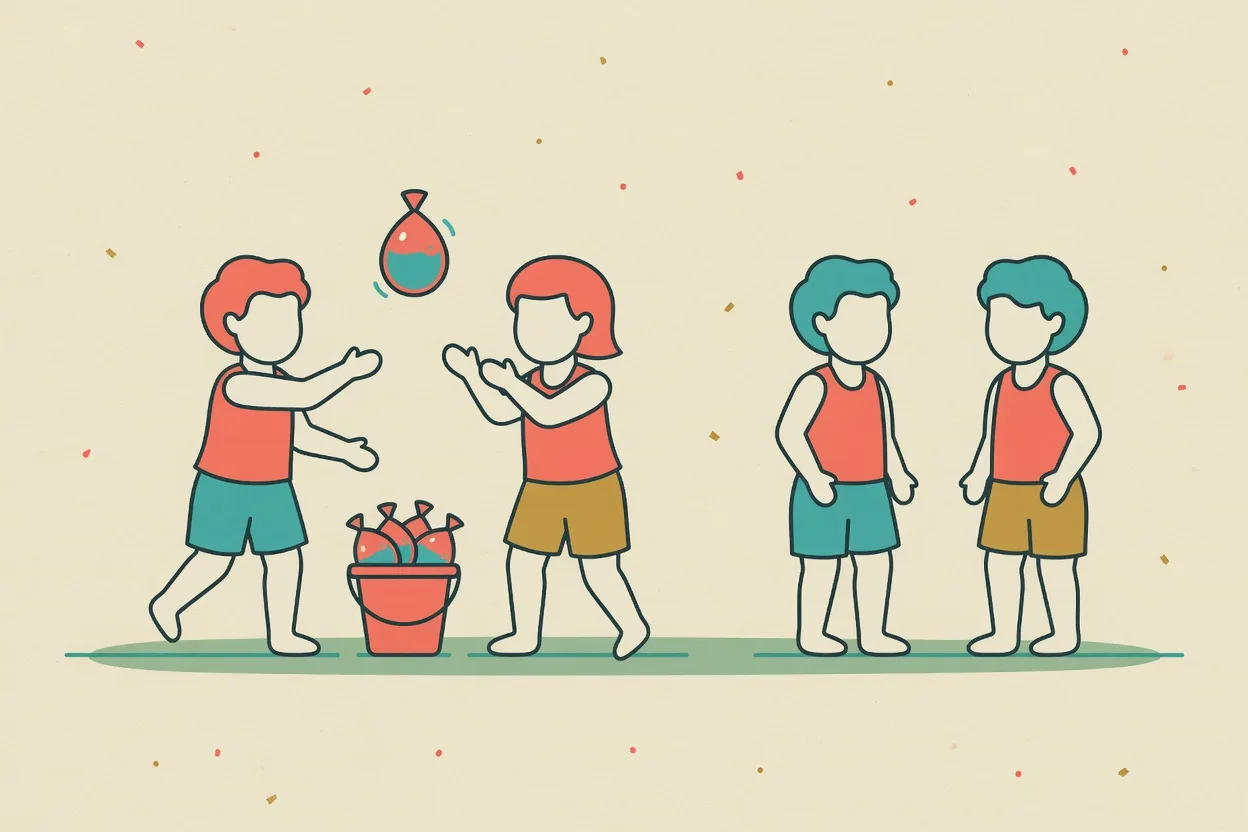
The classic pairs toss, run properly — how many balloons to fill ahead of time, the fastest way to fill them, the step-back rule that makes it a real contest, and why it's grass only.
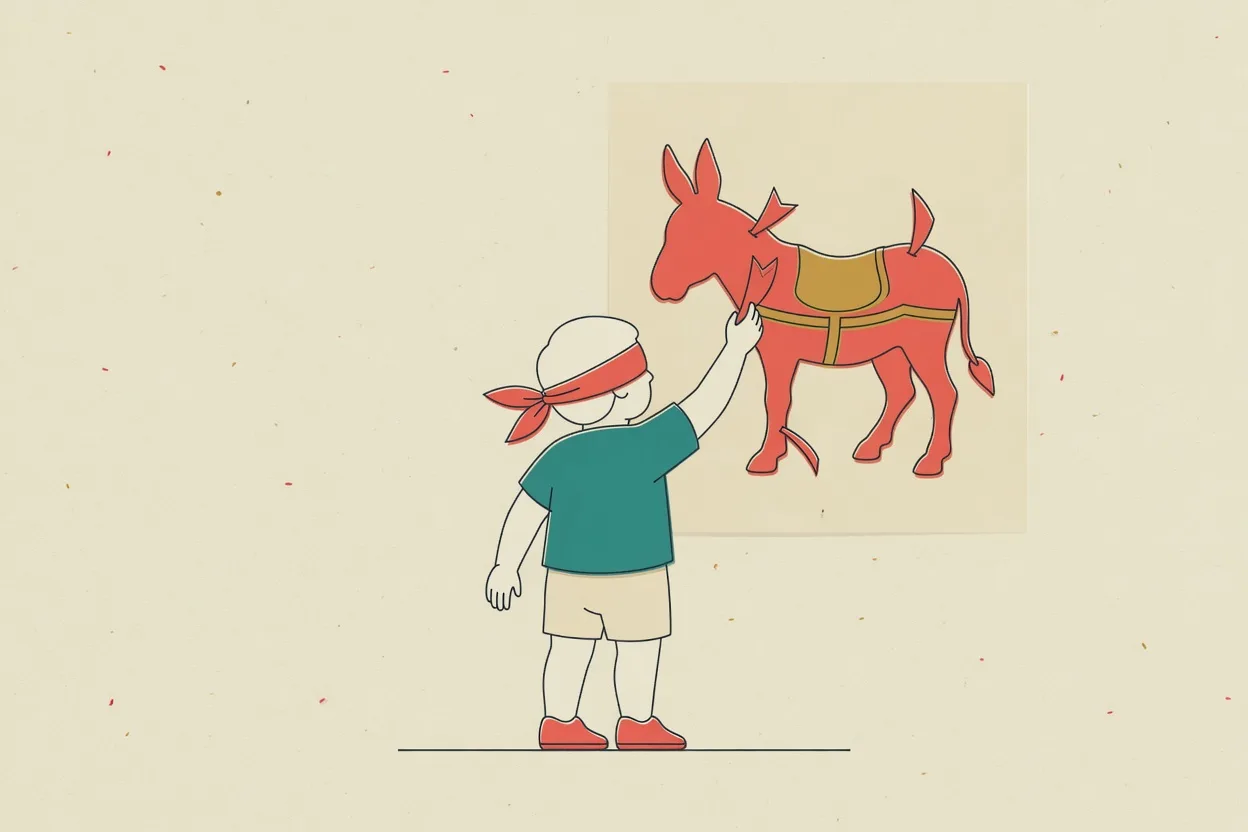
The blindfold classic, run properly — poster or drawn-on-paper, how many spins suit which age, tape instead of pins, and the line order that keeps eight children from turning into a mob.
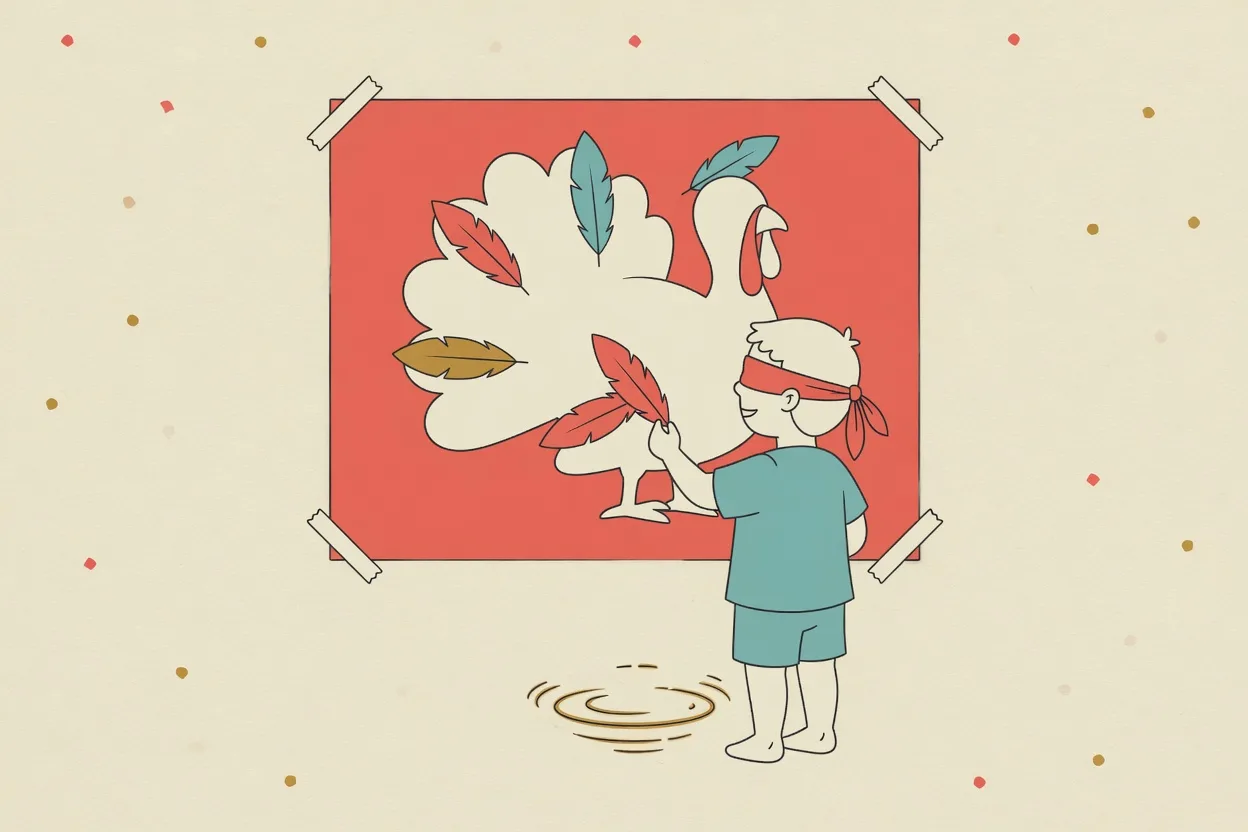
The Thanksgiving table-side classic — a turkey poster, paper feathers and a blindfold, run properly with spin counts that stay fair across a wide age range.
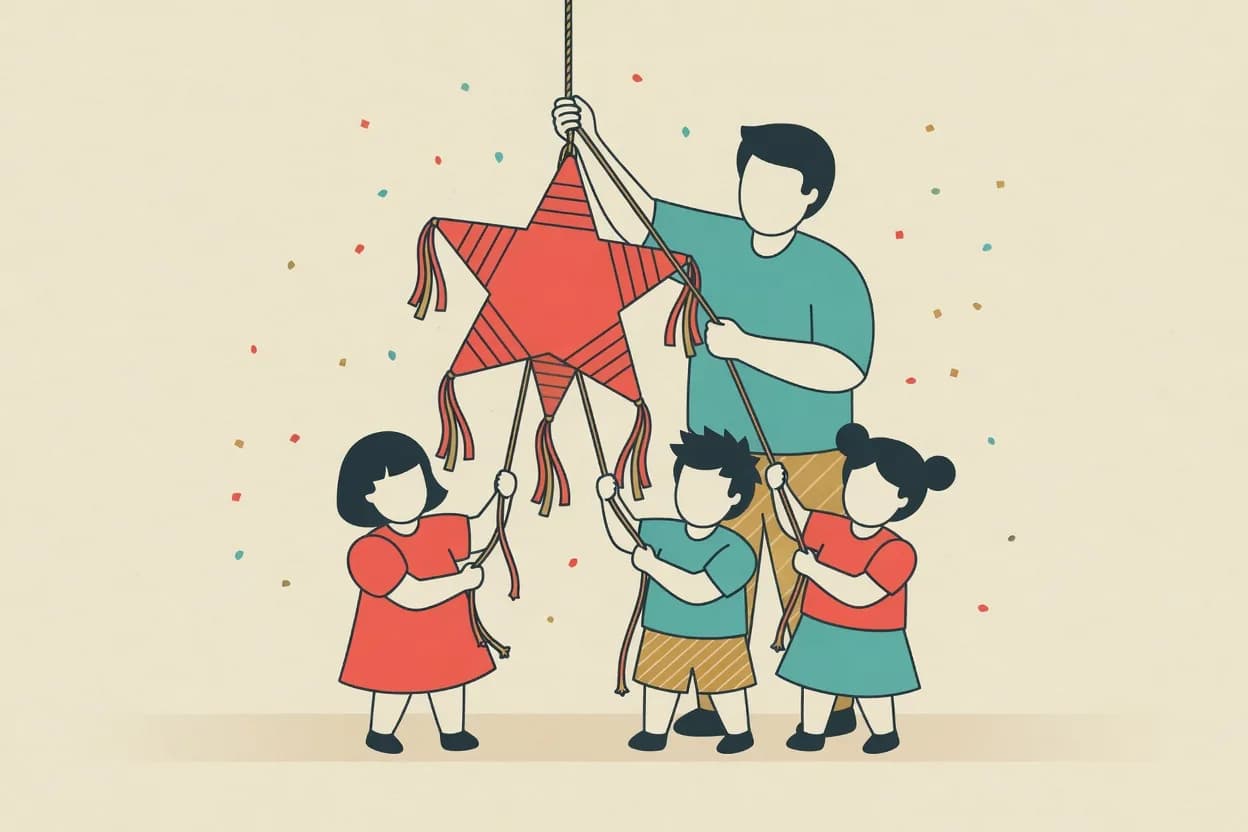
Running a piñata safely and fairly — swing order, the no-bat rope-pull version for small children, and how to stop the candy scramble turning into a pile-up.
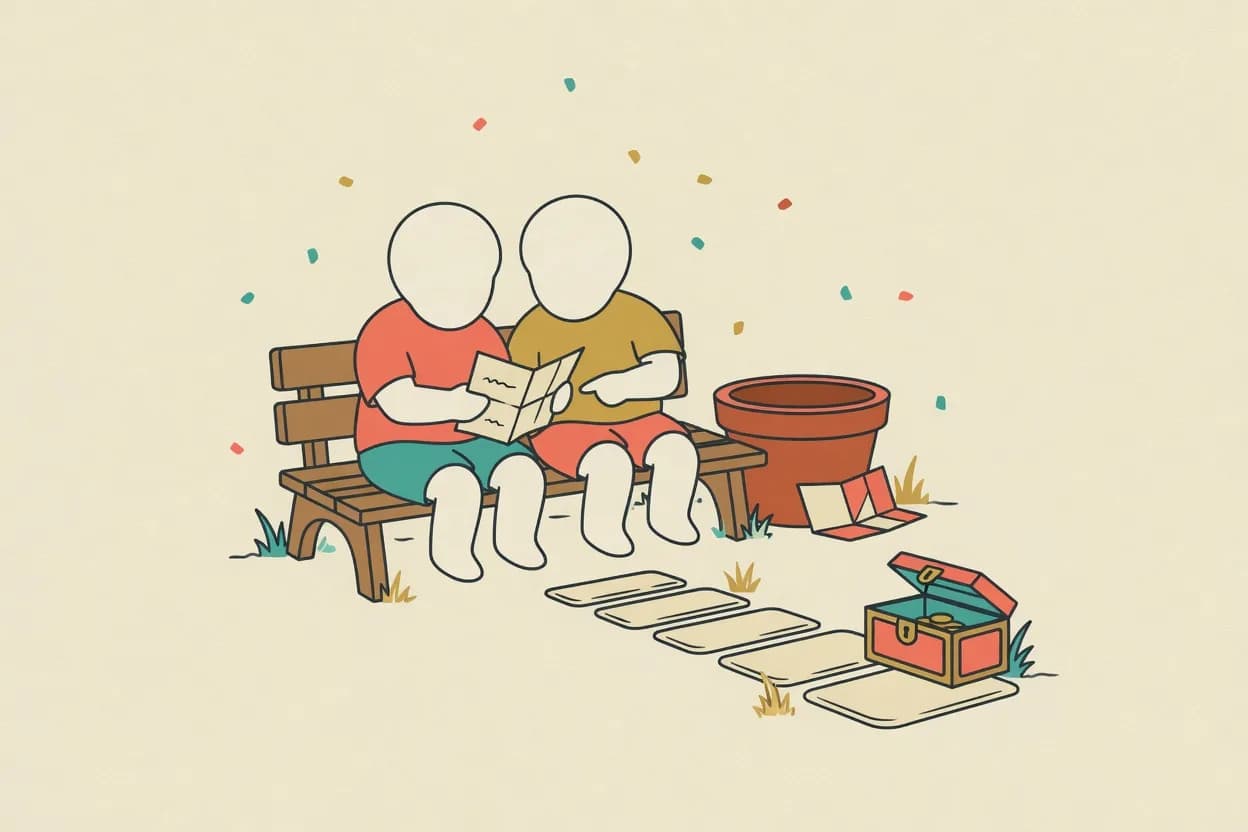
Three ready-to-steal clue trails by age, indoor versus backyard setup, and how to handle the prize at the end so the hunt doesn't finish in tears for whoever got there second.
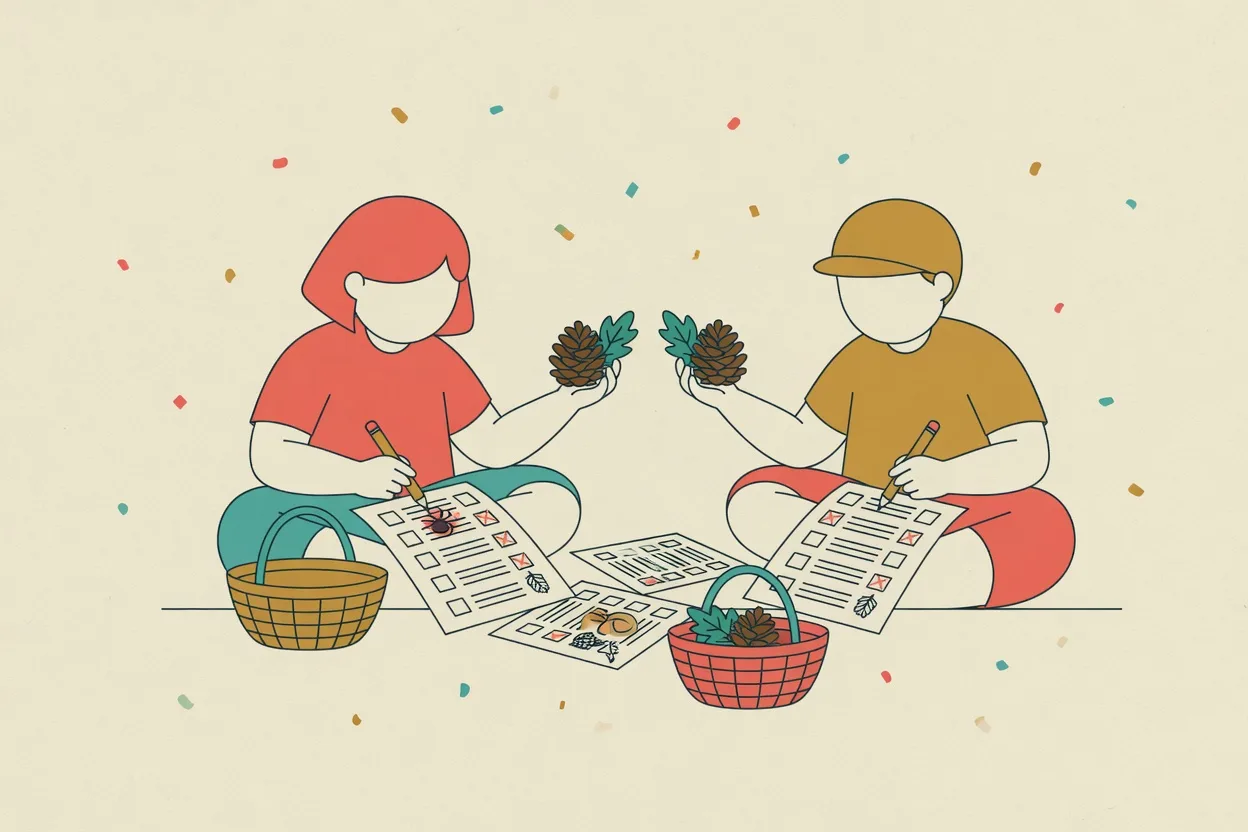
The checklist version of a hunt — find-these-things, not follow-this-trail — with printable lists for nature, backyard and indoor parties, and how it's different from a treasure hunt.
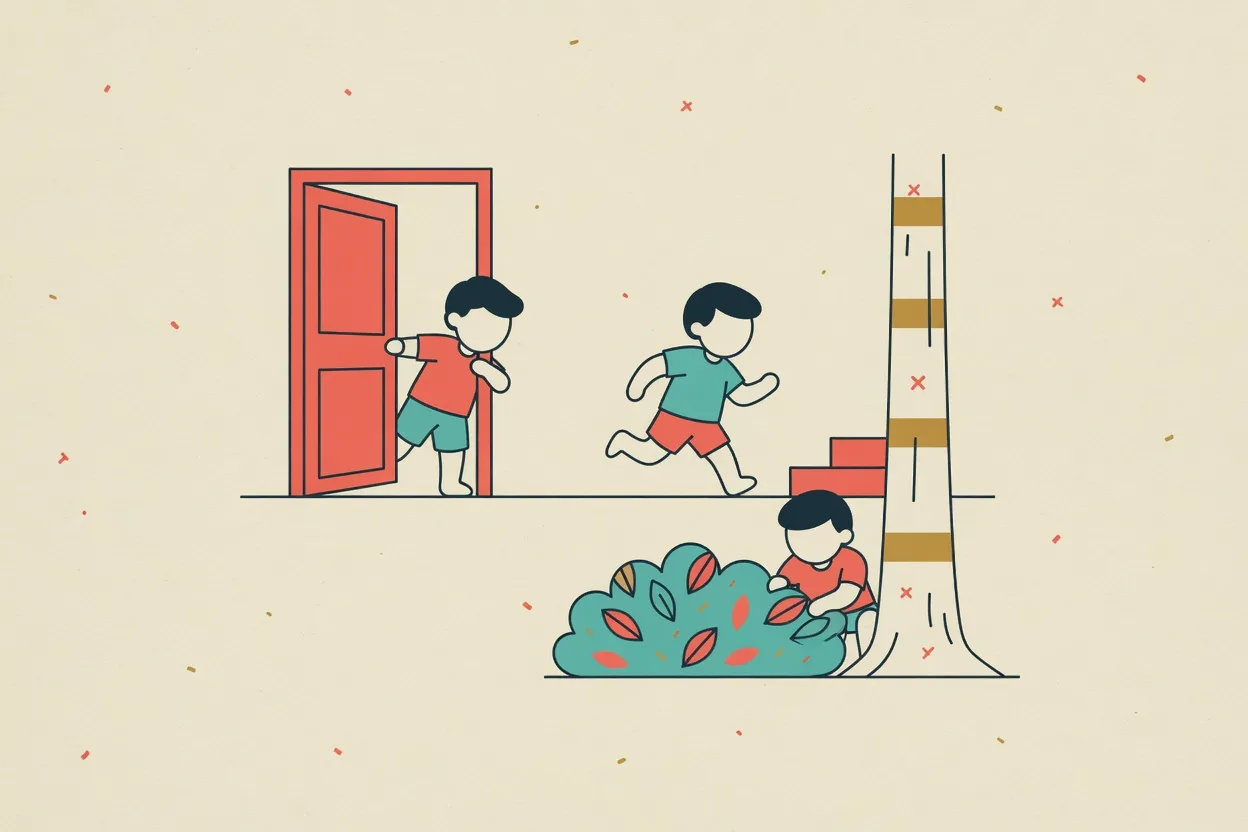
The game every child already knows, written down properly for once — a fixed home base, a boundary everyone agrees before scattering, and a fair way to end a round nobody can finish.
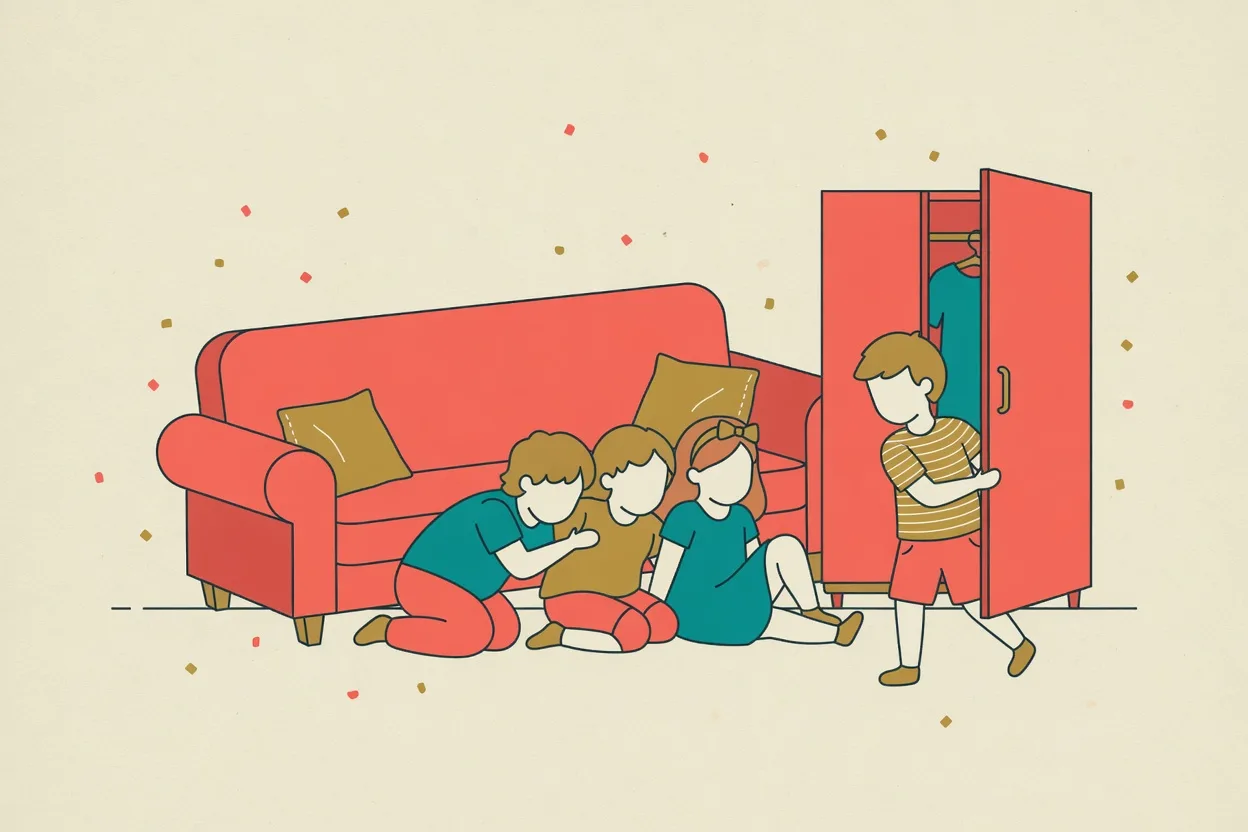
Hide and seek turned inside out — one player hides, everyone else searches alone, and finding them means squeezing in beside them and staying quiet. The best game for a sleepover, and here's why.
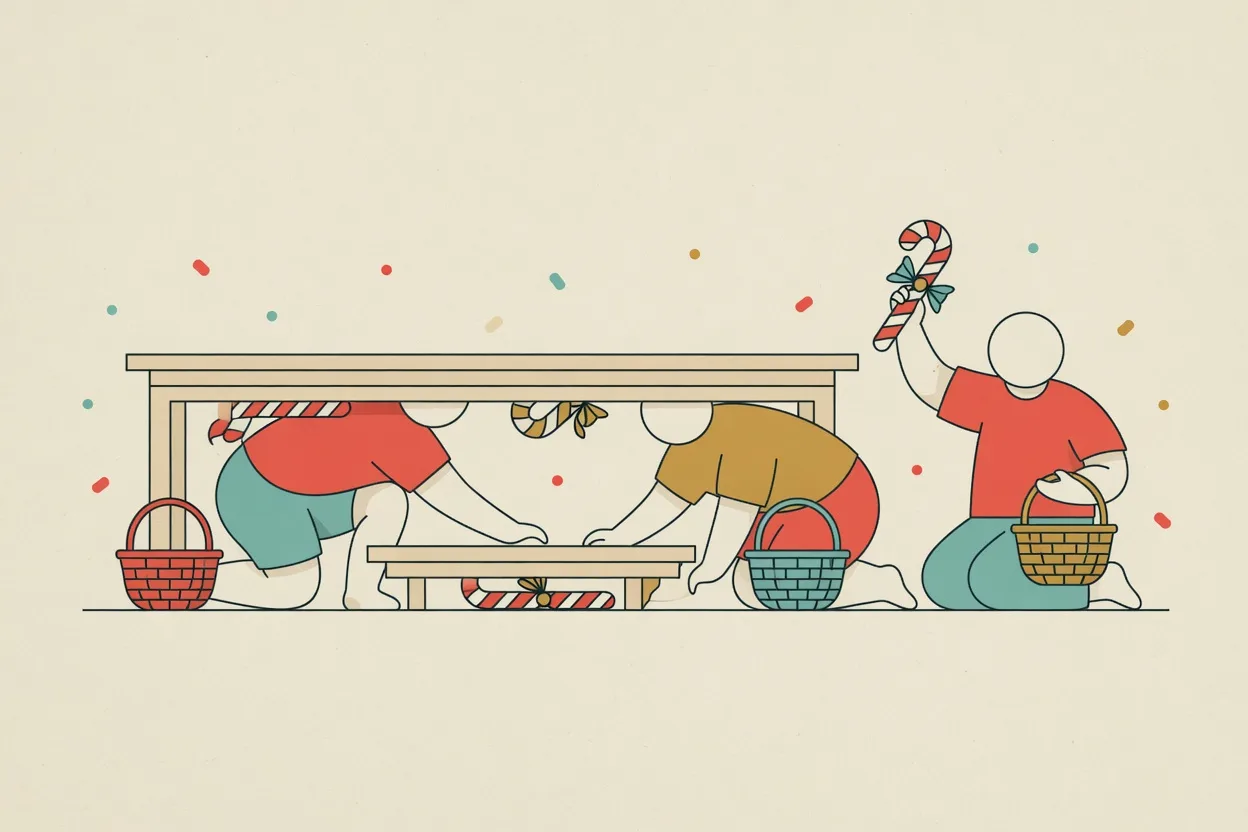
The Easter-egg-hunt format, run for December — how many candy canes to hide, the color-coding trick that makes it fair across ages, and where children always forget to look.
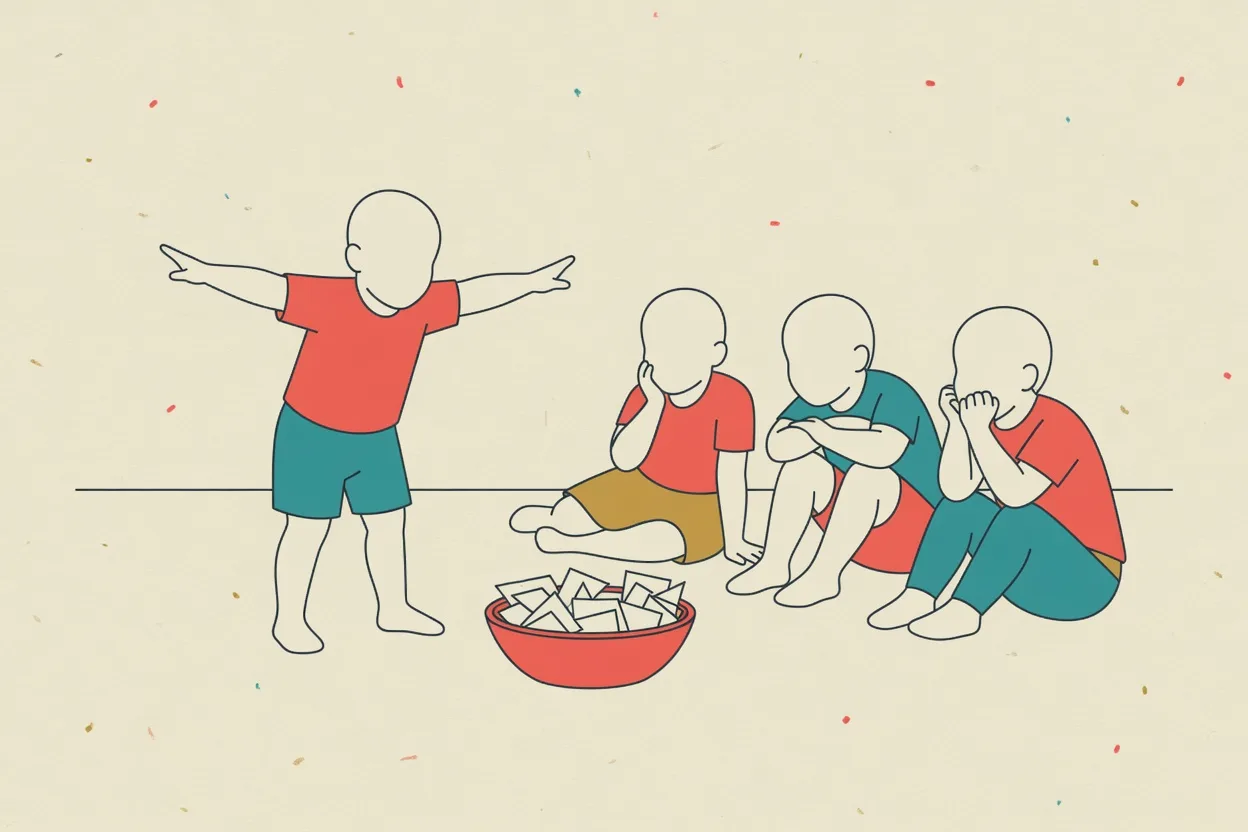
The silent acting game, adapted for children — age-appropriate prompt lists that actually work, team play versus free-for-all, and how to keep the guessing from turning into a shouting match.
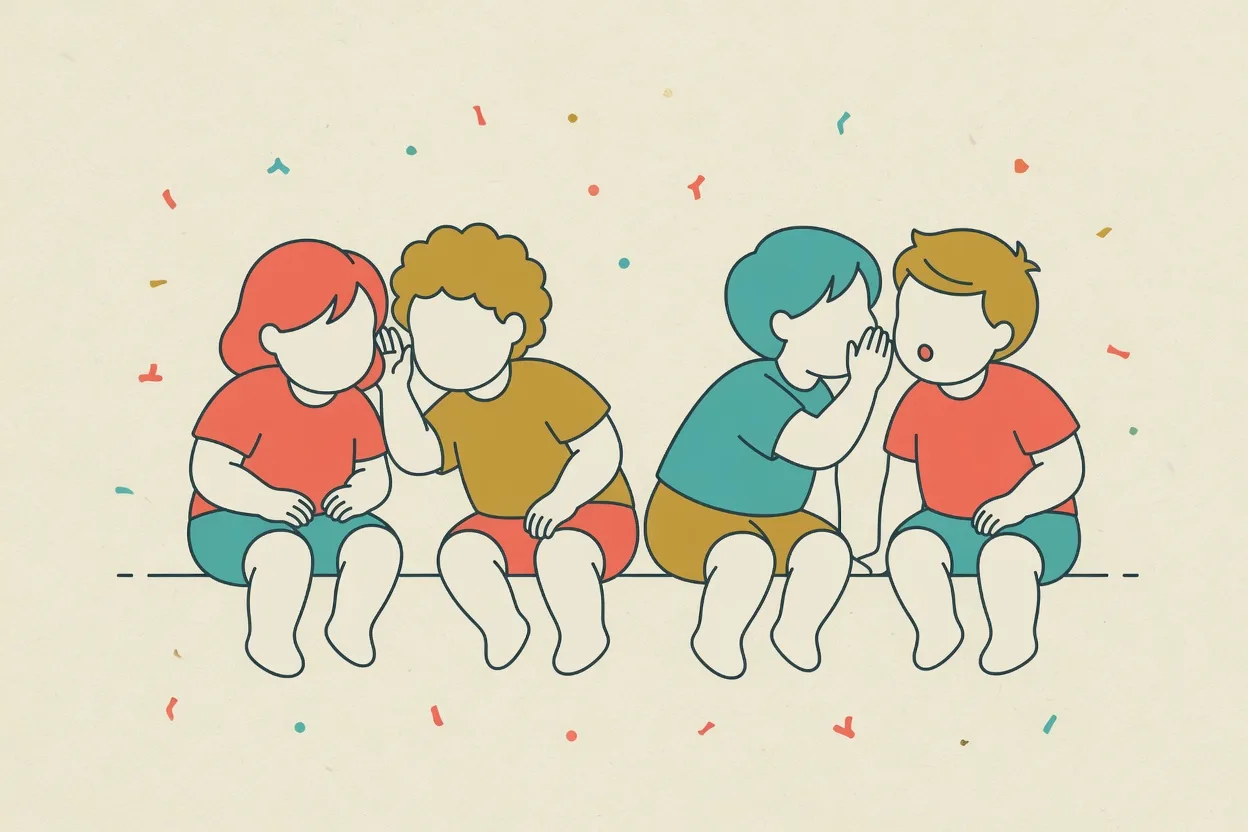
The whisper-down-the-line classic, known in Britain as Chinese whispers — how the message actually changes, starter phrases that survive ten retellings, and the age it starts working properly.
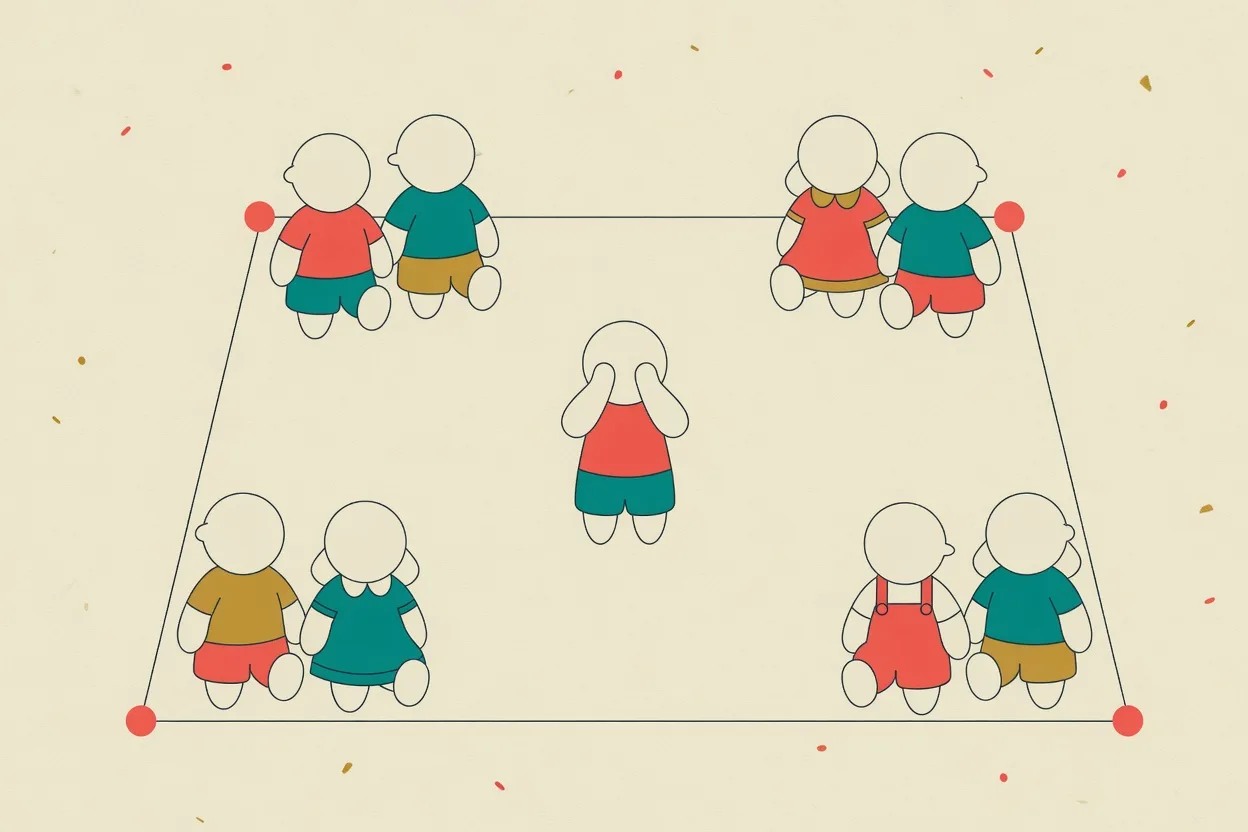
The indoor elimination classic for a rainy afternoon — how "it" calls a corner fairly with their eyes shut, the dash that needs managing, and a calmer version for younger or nervous children.
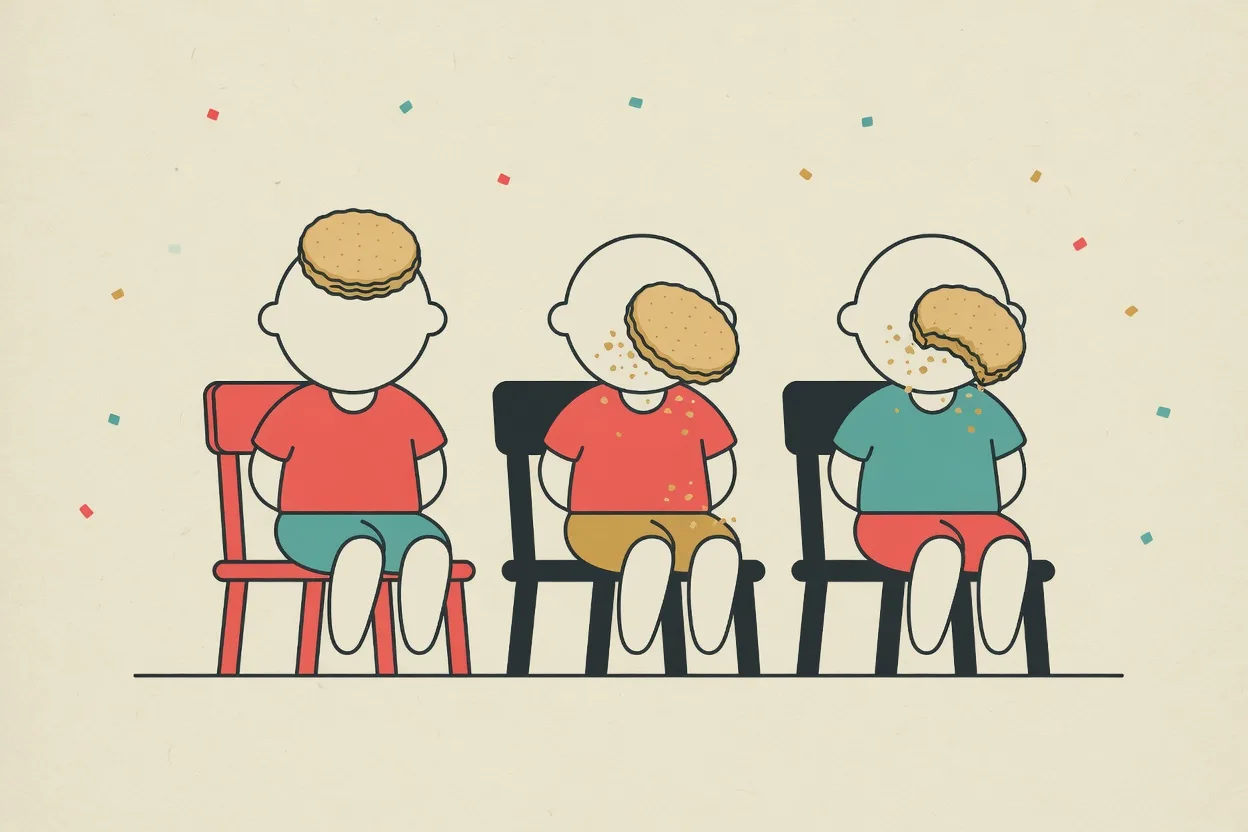
The forehead-to-mouth cookie race, explained properly — which cookies actually work, how to enforce the no-hands rule, and the timing that turns it into a genuine minute-to-win-it heat.
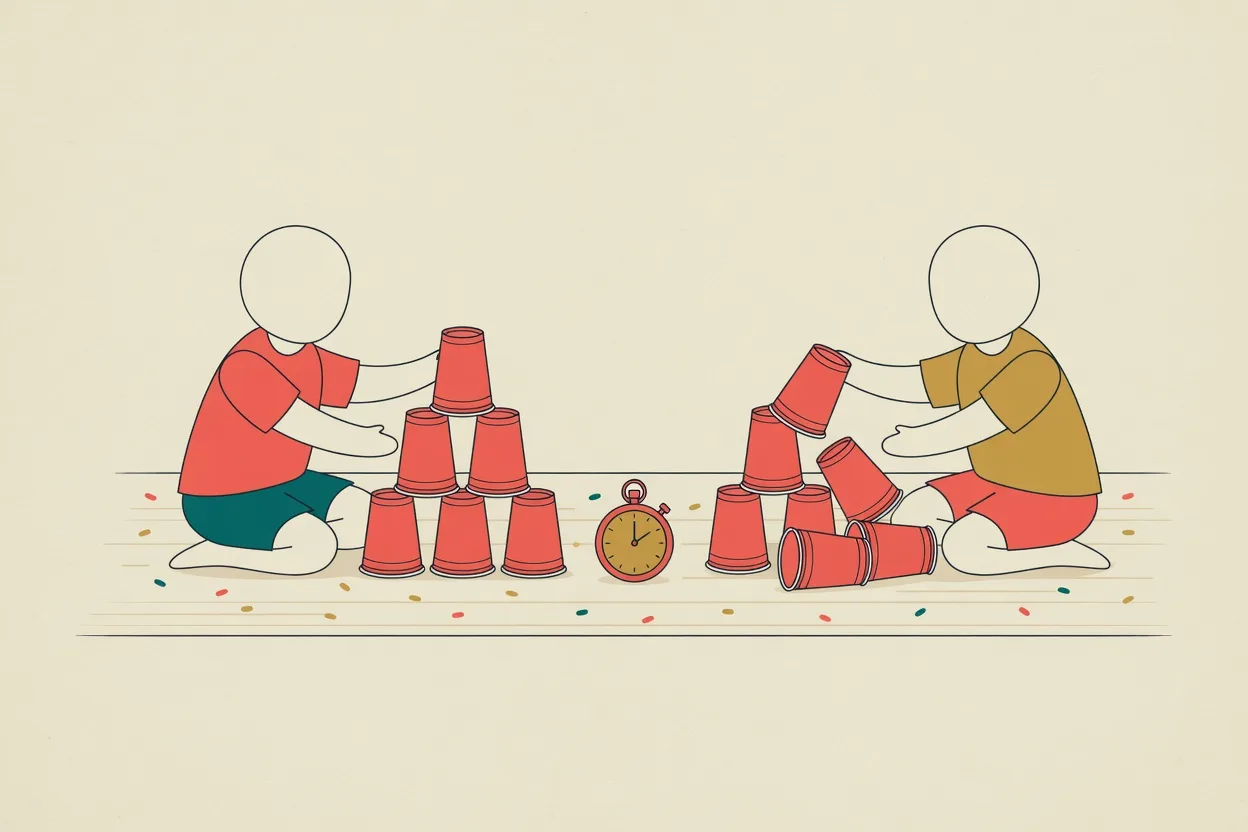
The pyramid stack-and-collapse race, explained with real numbers — how many cups to use, what table height works best, realistic times to beat, and how to run a real knockout bracket.
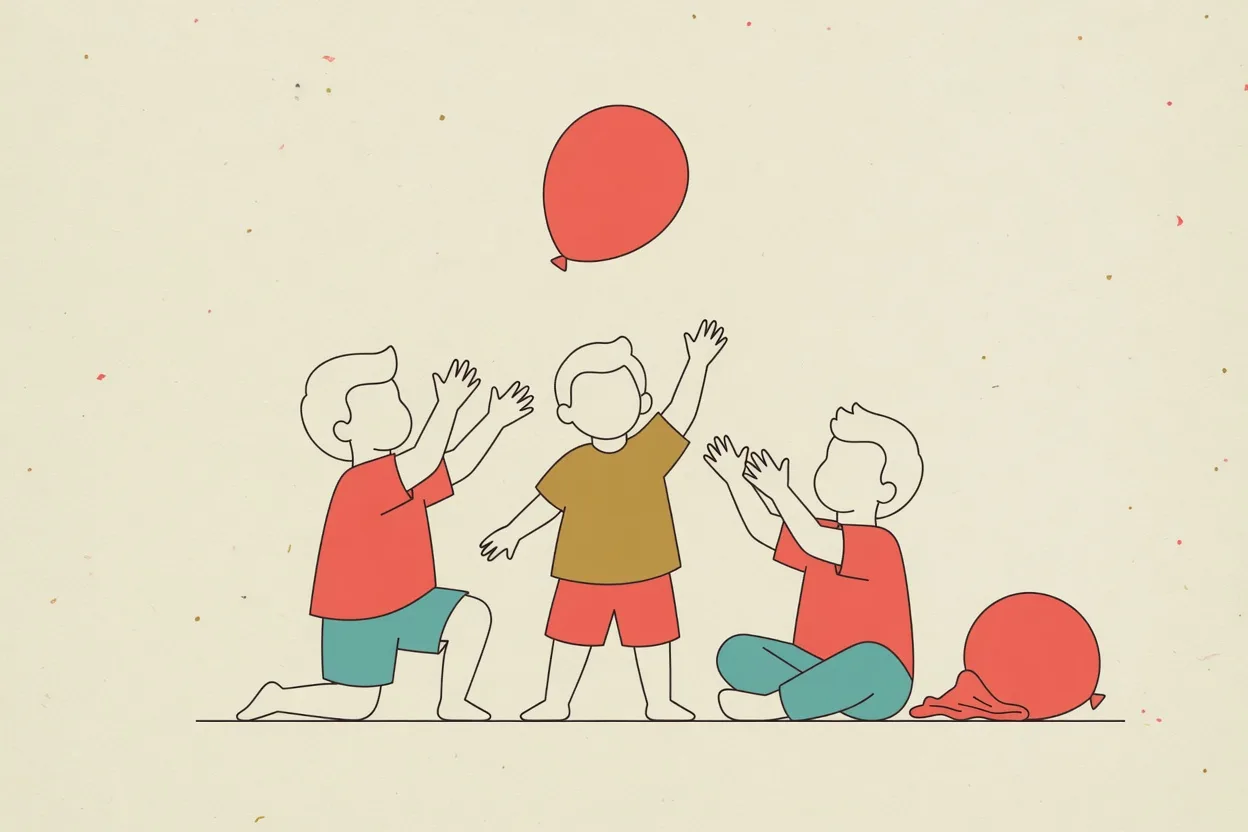
The don't-let-it-touch-the-floor game — solo counts, team counts, and the trick of adding one new rule every round that turns five quiet minutes into genuine chaos.
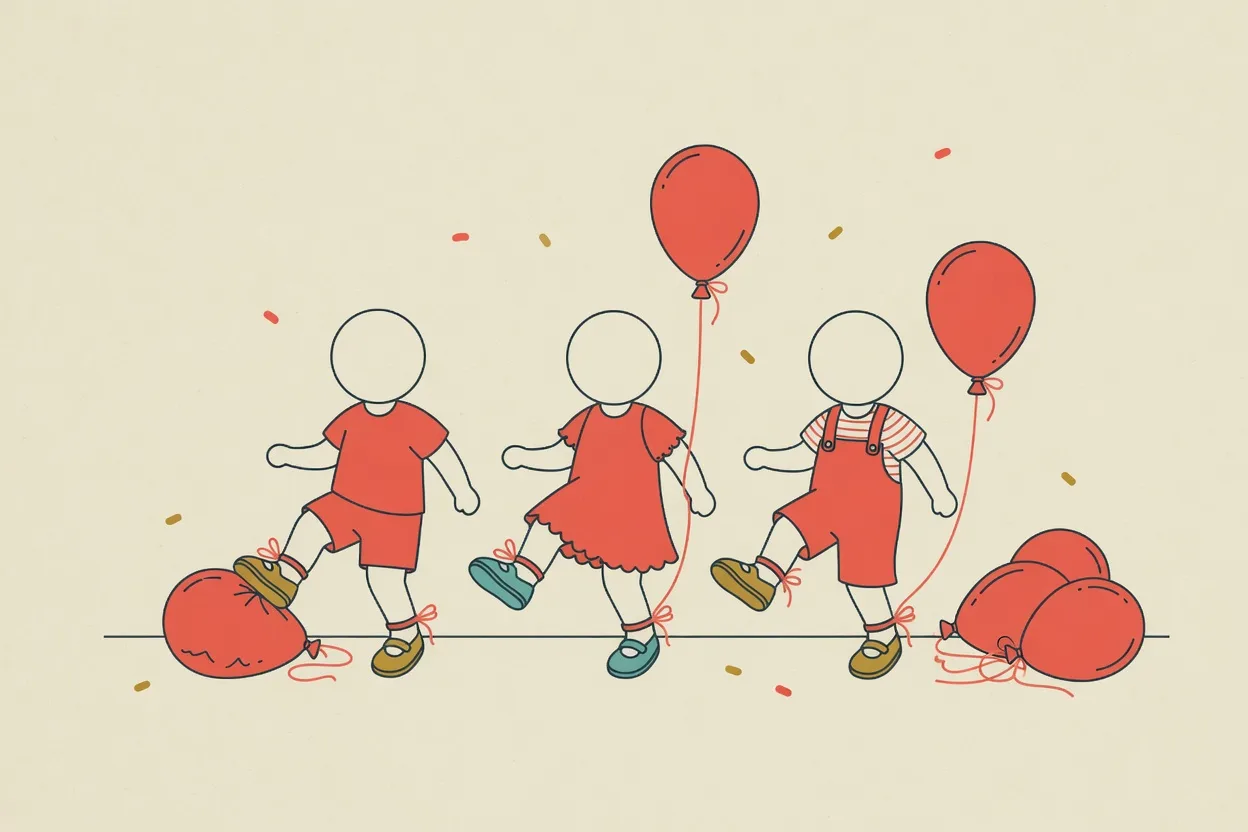
Ankle-balloon stomping elimination, done properly — how many balloons to prep, the gentle version for kids under five, and the noise everyone remembers the party for.

The pass-the-gift story game explained properly — how the left and right rule works, how to write or find a story that uses it well, and a short original example to copy the pattern from.
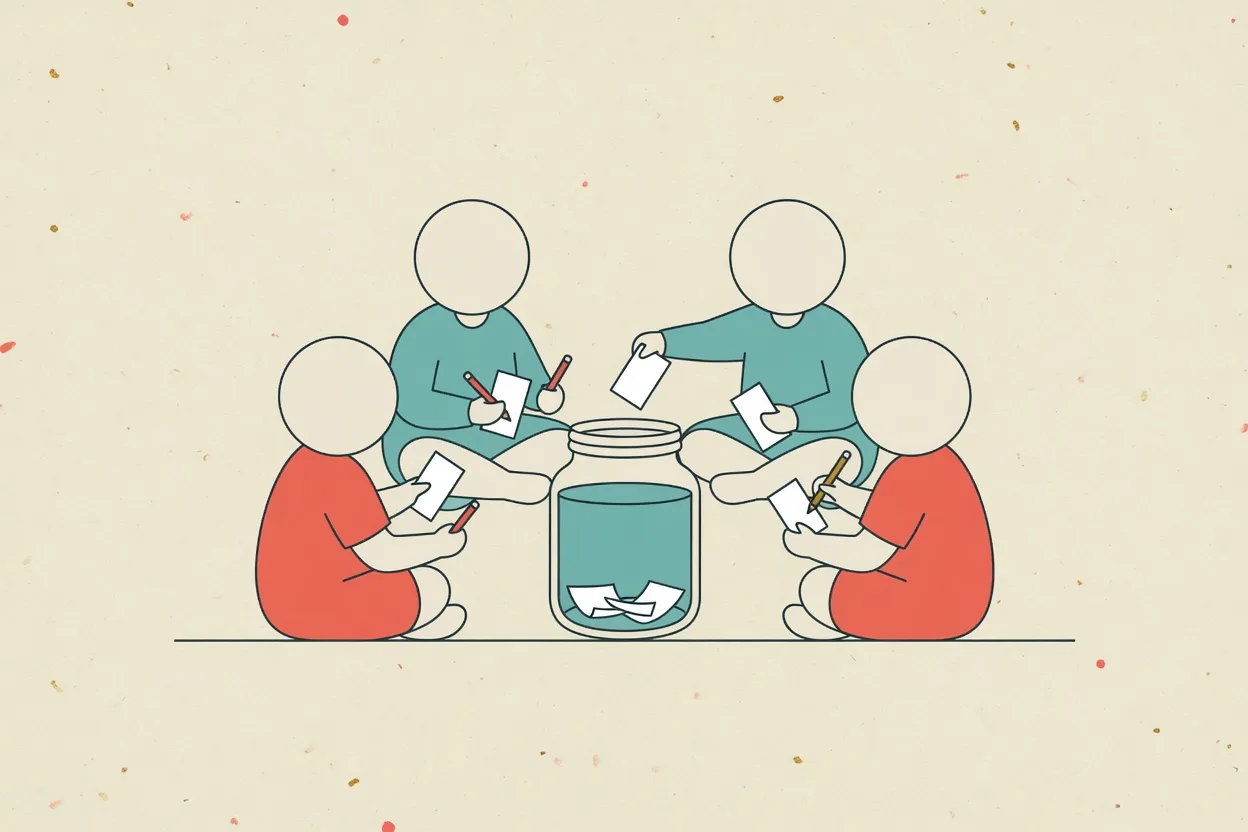
A New Year's writing activity run as a real party game — every child writes a wish, chooses to share it or seal it away, and the capsule gets opened again a year later.
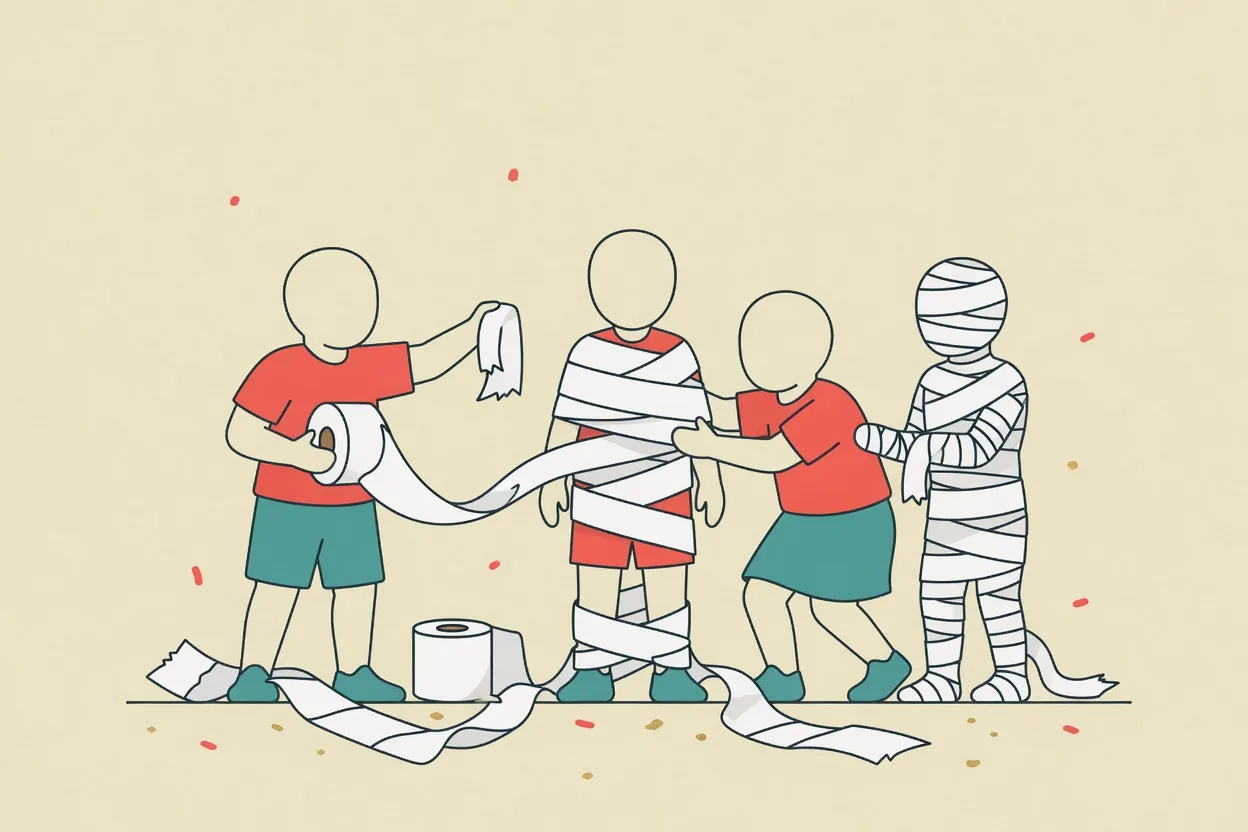
The toilet-paper mummy race, explained properly — how many rolls per team, how long to give each round, the judging criteria that keep it fair, and how to stop a wrap unraveling mid-walk.
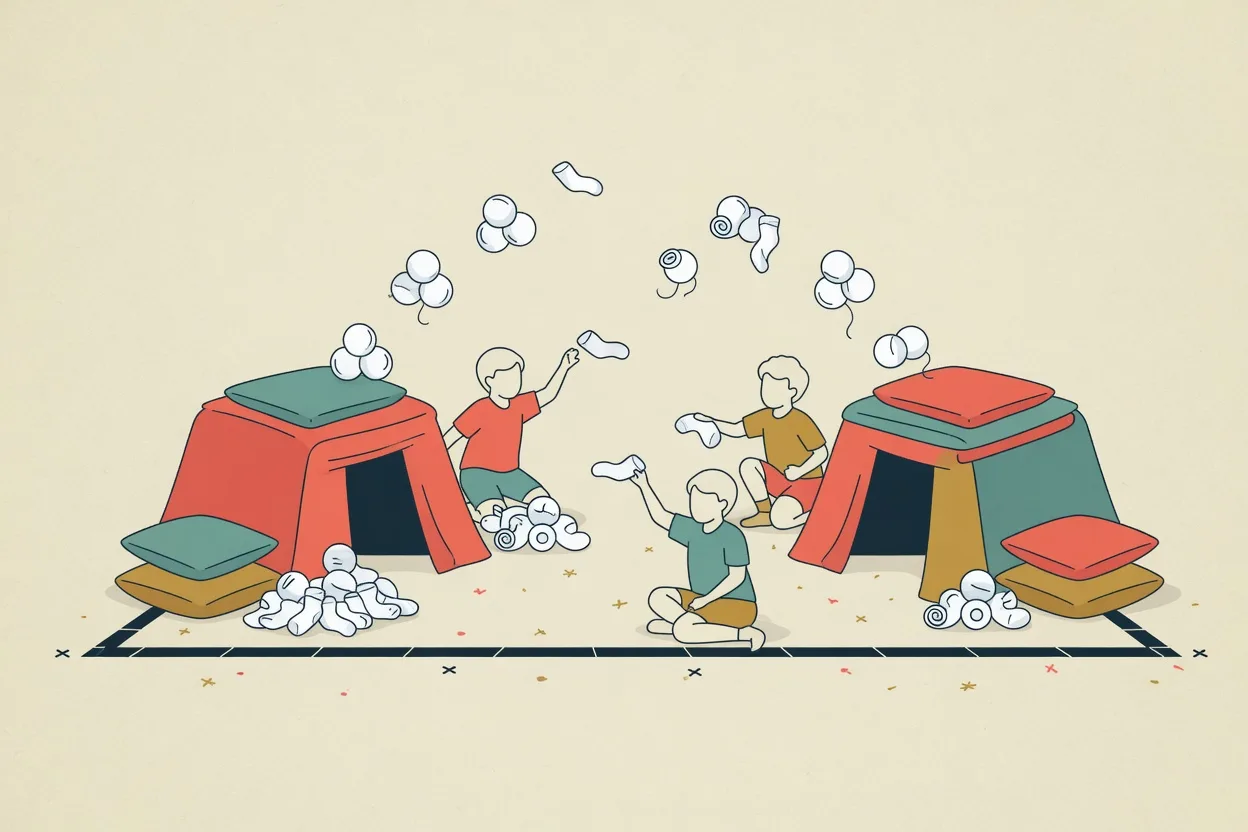
Cotton-ball and sock snowballs, cushion forts, and a real round structure — how many snowballs per team, how long each round should run, and the one safety rule that matters most.
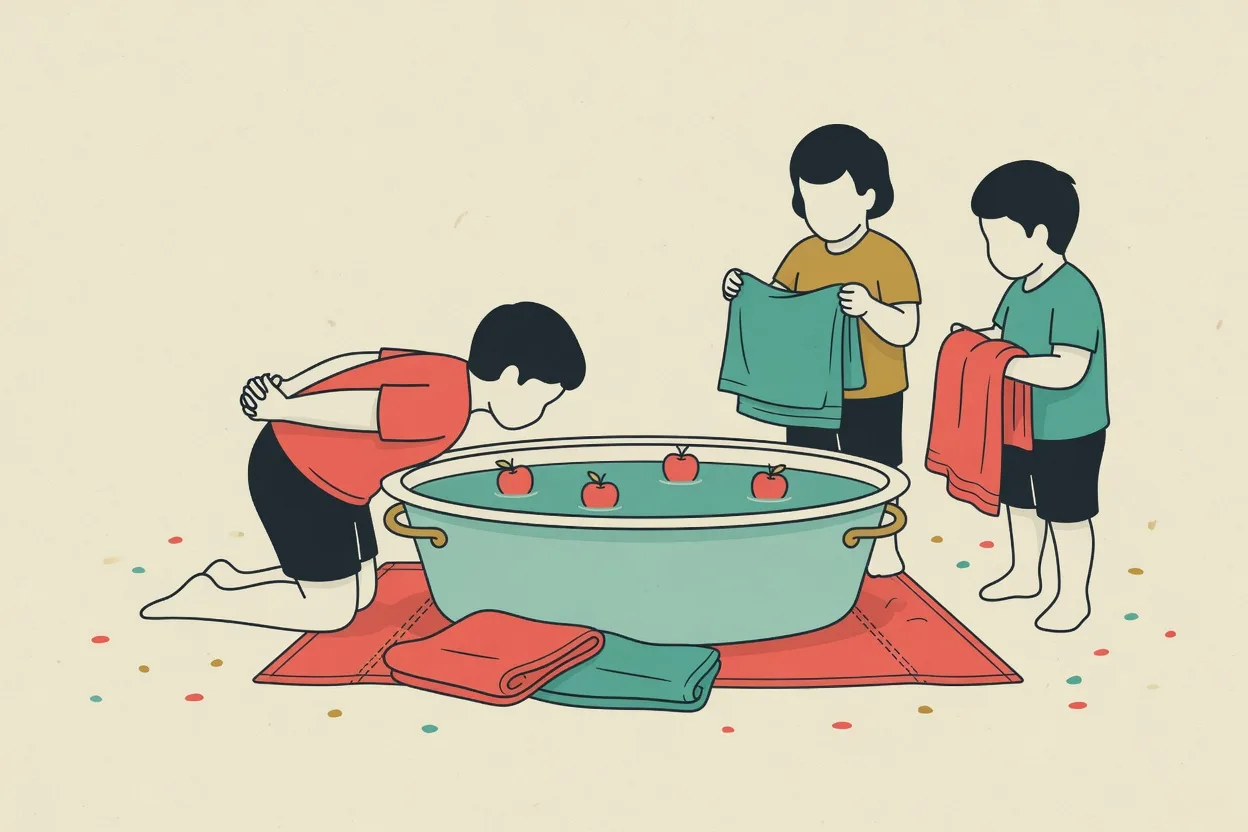
The Halloween classic, run properly — how much water, how many apples, the towel logistics that save your floor, and the hygienic string and fork variants that skip the shared tub.
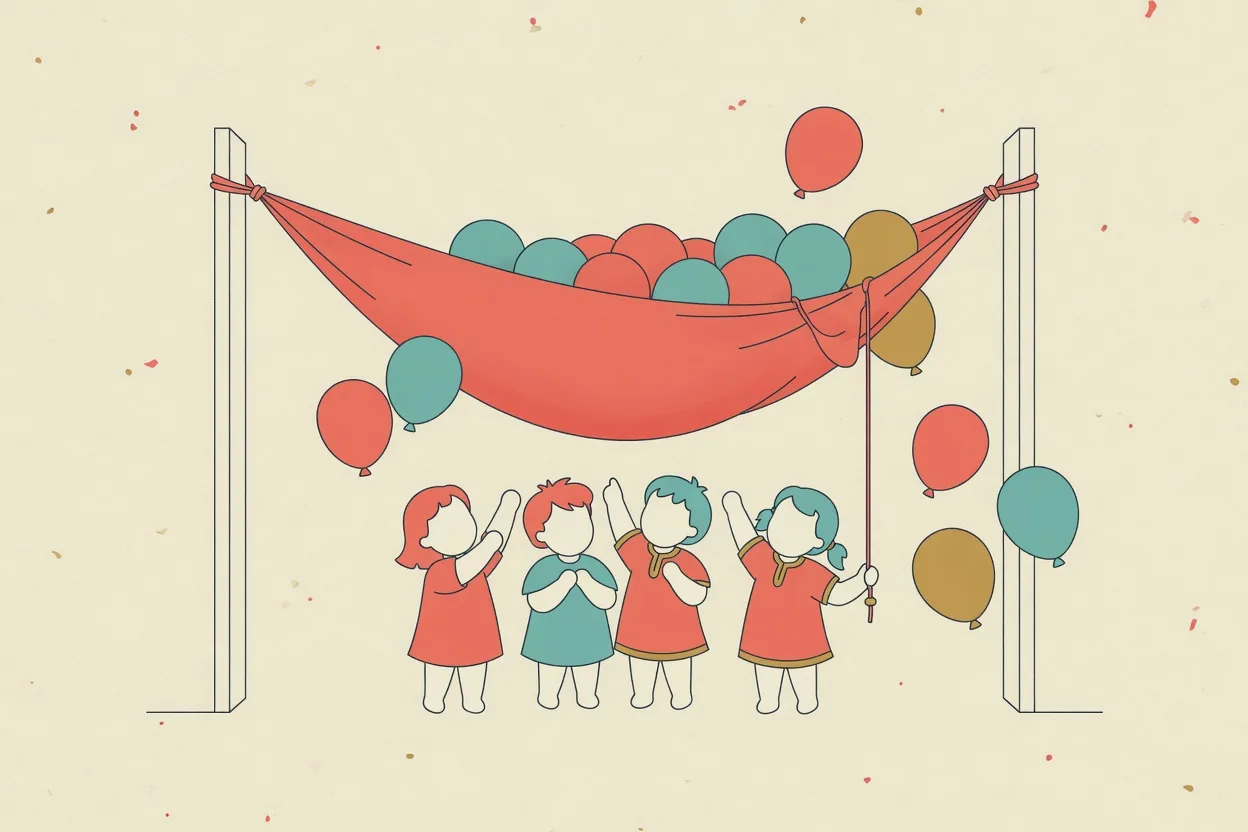
The New Year's Eve balloon drop, scaled for a kids' party — a bedsheet rigged overhead, an early countdown to a stand-in "midnight", and a burst of balloons everyone can be awake for.
Running five games for a dozen children while also hosting a party is a lot. Here’s where to go when you’d rather someone else did it.
Vetted, insured local entertainers with upfront pricing — send one request and we’ll check real availability. They bring the kit and keep every child in the game.
Find a proA character performer runs themed games, leads the sing-along and holds a room of over-excited guests together.
Browse charactersEvery kind of entertainment worth booking, who each one suits, and how to mix them into an afternoon that flies by.
Read the guide