
5–12
Ages
6+
Players
Indoors
Where
10–15 min
How long
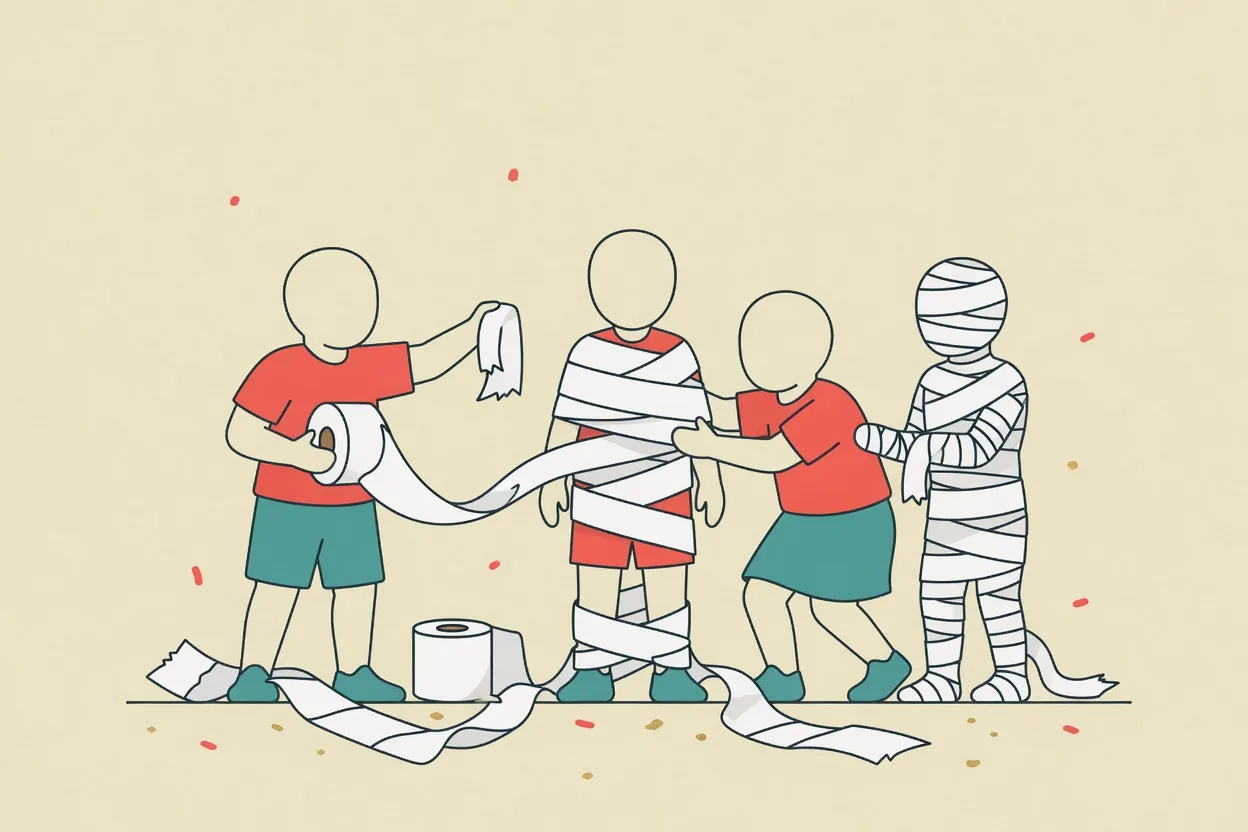
The mummy wrap game needs almost nothing — toilet paper, a stopwatch, and a child willing to stand still — which is exactly why it's become a Halloween party fixture. Two or three children wrap a fourth from ankle to forehead against the clock, and what looks like a simple race turns out to reward teamwork over speed almost every time: the team that divides the job properly, one wrapping legs while another does arms, beats the team of three children all fighting over the same roll.
What follows is the version that actually holds together for the mummy to walk around and show off afterwards, not just the seconds it takes to judge — the roll counts, the judging criteria, and the cleanup that keeps your living room from looking like the aftermath rather than the party.
Part of the appeal is how visual it is. Musical chairs and tug of war reward speed and strength that not every child has in equal measure; the mummy wrap game rewards whoever can organize a team fastest, which is a completely different skill and gives quieter, more methodical children a genuine chance to lead. It also produces the best photographs of the whole party, which is not nothing.
How to actually judge it
Judging is where most families wing it and most games end in an argument. Agree on the criteria out loud before the first roll of paper comes off the tube: coverage, how much of the mummy is actually hidden; neatness, whether there are long trailing ends dragging on the floor; and durability, whether the wrap survives the mummy taking ten steps and raising both arms. Have one adult judge every team to the same standard — a parent judging their own child's team is the fastest way to end the game in tears that have nothing to do with the toilet paper.
The mummy wrap game doesn't reward the fastest child — it rewards whoever organizes a team fastest, and that's a different child every time.
Where it goes wrong
The most common failure isn't a bad wrap, it's running out of paper. Two full rolls per team is the reliable minimum — one for the torso, one for everything else — and even that goes fast once children realize more wrapping means a better score. Keep two or three spare rolls within reach rather than making a team stop mid-round to fetch more, which kills the momentum for everyone else watching. The second failure is the mummy themselves: standing still for ninety seconds is a genuinely hard ask for a five-year-old, so let the youngest mummies fidget a little and score them on coverage rather than stillness.
Run it back to back with bobbing for apples or pumpkin bowling for a full Halloween run of games that between them need almost no shopping beyond apples, pumpkins and toilet paper — and if you'd rather someone else referee the judging and keep score, a party entertainer will happily run all three back to back while you actually get to watch.
What you need
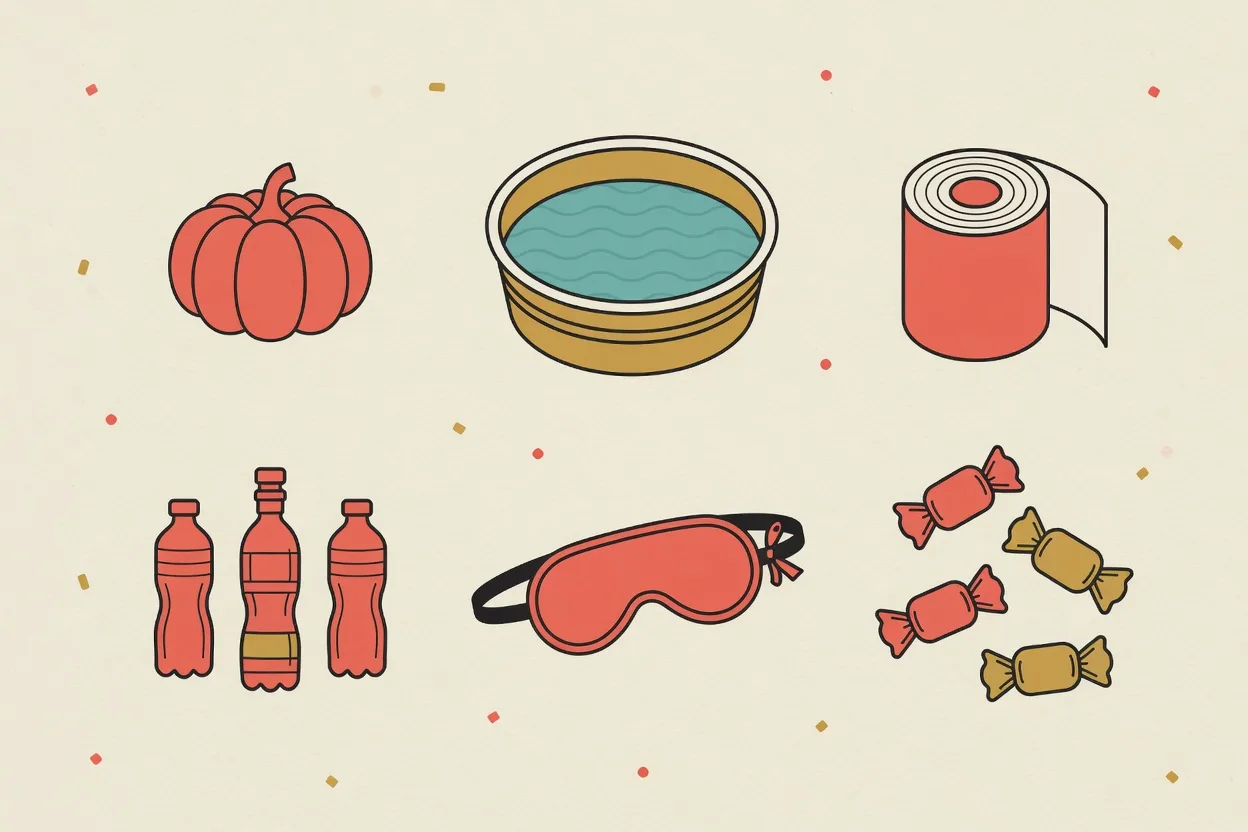
- Toilet paper — two full rolls per team, plus two or three spares
- A stopwatch or phone timer
- A judging criteria card (coverage, neatness, durability) — optional but useful
- Space for each mummy to stand and take a few steps once wrapped
How to play the mummy wrap game
- Split into teams of three or four, and give each team two full rolls of toilet paper — one roll wraps a torso, the second does arms, legs and head.
- Choose one child per team to be the mummy; everyone else on the team is a wrapper.
- On "go", wrappers have ninety seconds to wrap their mummy from ankles to forehead, leaving the eyes, nose and mouth clear so they can breathe and see comfortably.
- When time's up, everyone stops wrapping exactly where they are — a half-wrapped ankle counts against you.
- Judge each mummy on coverage, neatness and whether the wrap actually holds together when the mummy takes a few steps.
- Swap roles and run a second round so every child gets a turn being wrapped.
Variations
Speed wrap (ages 8+)
Same game, but a single wrapper takes on the whole job solo against the clock rather than a team — much harder, and a good one-on-one heat for older children who want the challenge ramped up.
Costume theme
Judge on "scariest mummy" or "most Halloween mummy" rather than neatness — a wonky wrap with a groaning mummy walk can beat a technically perfect one, which keeps younger children who wrap less tidily fully in the running.
Toilet-paper relay
Instead of wrapping a person, race to wrap a chair, a broom handle or a willing adult from a stack of rolls at the far end of the room, relay-style — good for a bigger group where not everyone can be a mummy at once.
Frequently asked questions
- How much toilet paper do you need for the mummy wrap game?
- Two full rolls per team is the reliable minimum: one for the torso, one for arms, legs and head. Buy a couple of spares — teams that run out early always ask for more, and it's cheaper than a game that fizzles.
- How long should a round of the mummy wrap game last?
- Ninety seconds is the sweet spot for most groups; long enough to properly wrap a person, short enough that nobody's arms get tired holding the roll up. Sixty seconds works well for a faster, scrappier round with older children.
- What age is the mummy wrap game suitable for?
- From about five, so long as the mummy is comfortable standing still while wrapped and wrappers can manage the roll without constant adult help. Kids under five tend to find standing still for ninety seconds the hardest part, not the wrapping.
- How do you judge the mummy wrap game fairly?
- Agree on the criteria out loud before you start — usually coverage, neatness and whether it survives a few steps — and have one adult judge all the teams to the same standard rather than letting each team score itself.