
4–10
Ages
2+
Players
Indoors or out
Where
10–20 min
How long
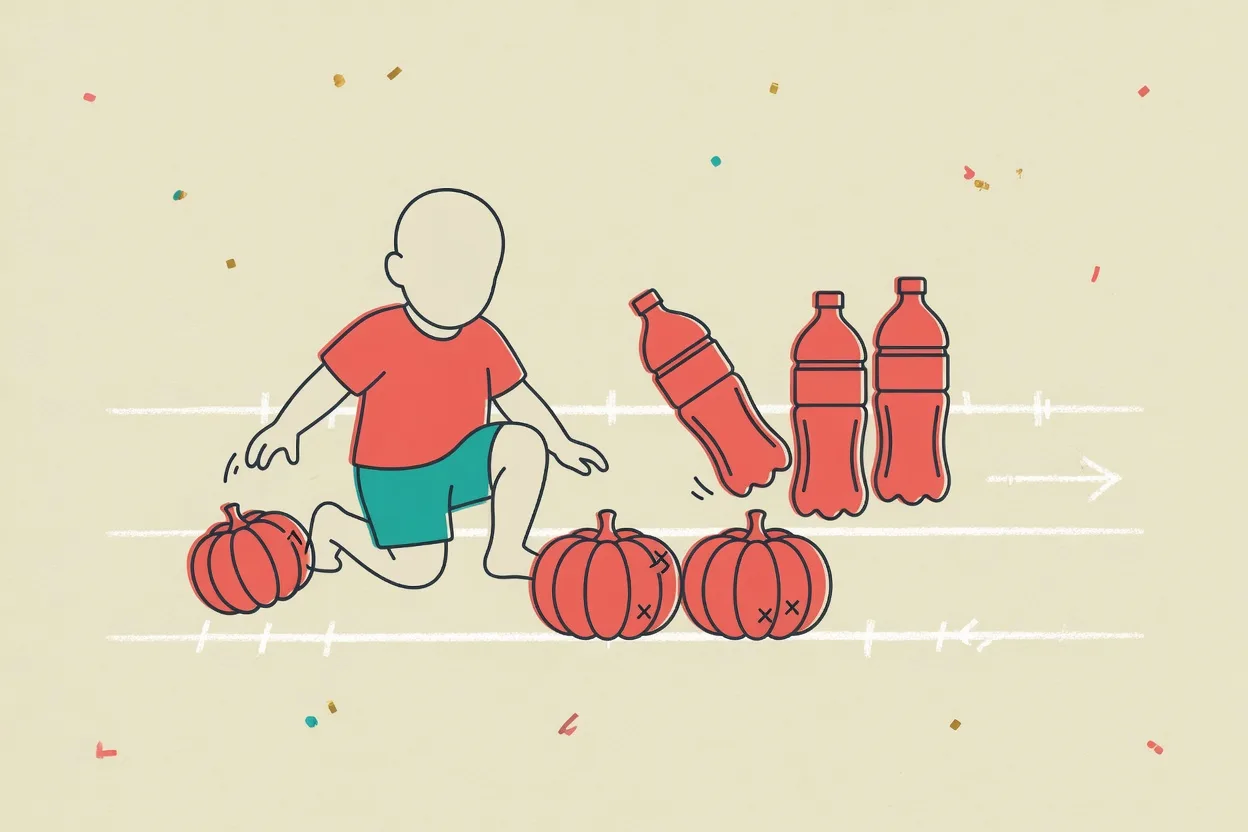
Pumpkin bowling swaps a bowling ball for a mini pumpkin and swaps pins for whatever empty plastic bottles you've got in the recycling, and it's a better party game than that description makes it sound. A pumpkin doesn't roll true the way a ball does — it wobbles, curves, and occasionally does something nobody predicted — which somehow makes every knock-down feel more earned than a straight strike ever does.
This covers the lane setup that actually works on a lawn or in a hallway, which pumpkins roll best, how many pins to use, and the scoring that turns a five-minute knock-'em-down into a real mini tournament.
Choosing pumpkins and setting the lane
Skip the big carving pumpkins from the front porch — they're heavy, lopsided, and roll about as predictably as a football. What you actually want are "mini" or "munchkin" pumpkins, roughly grapefruit-sized and sold in most supermarkets right through October; they're light enough for small hands and round enough to roll in something close to a straight line. Buy a few more than you think you need, because pumpkins bruise and eventually split after a dozen rolls down the same lane.
A pumpkin doesn't roll true the way a ball does. It wobbles, it curves, and that's exactly what makes a knock-down feel earned.
The lane itself just needs to be flat and roughly ten to thirteen feet long — a hallway, a garage, or a level bit of patio all work fine, and indoors has the advantage of not caring what the weather's doing. A hallway rug or two laid end to end also works in a pinch, and keeps any stray pumpkin juice well away from a good carpet. Mark the throw line with tape or chalk so nobody creeps forward round by round, which they will otherwise absolutely do.
A nice extra: let the children choose and even lightly decorate their own bowling pumpkins with a marker before the game starts — initials, or a stripe — so everyone's rolling something that's unmistakably theirs by the second round. It costs five minutes and heads off the inevitable dispute about whose pumpkin just split.
Where it goes wrong
The failure mode here isn't the game, it's the pumpkins giving out. A pumpkin that's been rolled ten or fifteen times starts to soften and eventually splits, leaving a faintly unpleasant trail down the lane that nobody wants to deal with mid-party. Swap in a fresh one the moment you see a crack rather than waiting for it to properly give way. The other thing that catches people out is pin weight — empty bottles blow over in even a light breeze outdoors, so add a splash of water or sand to the base of each one before you set them up, enough to keep them standing but light enough to still fall to a well-aimed roll.
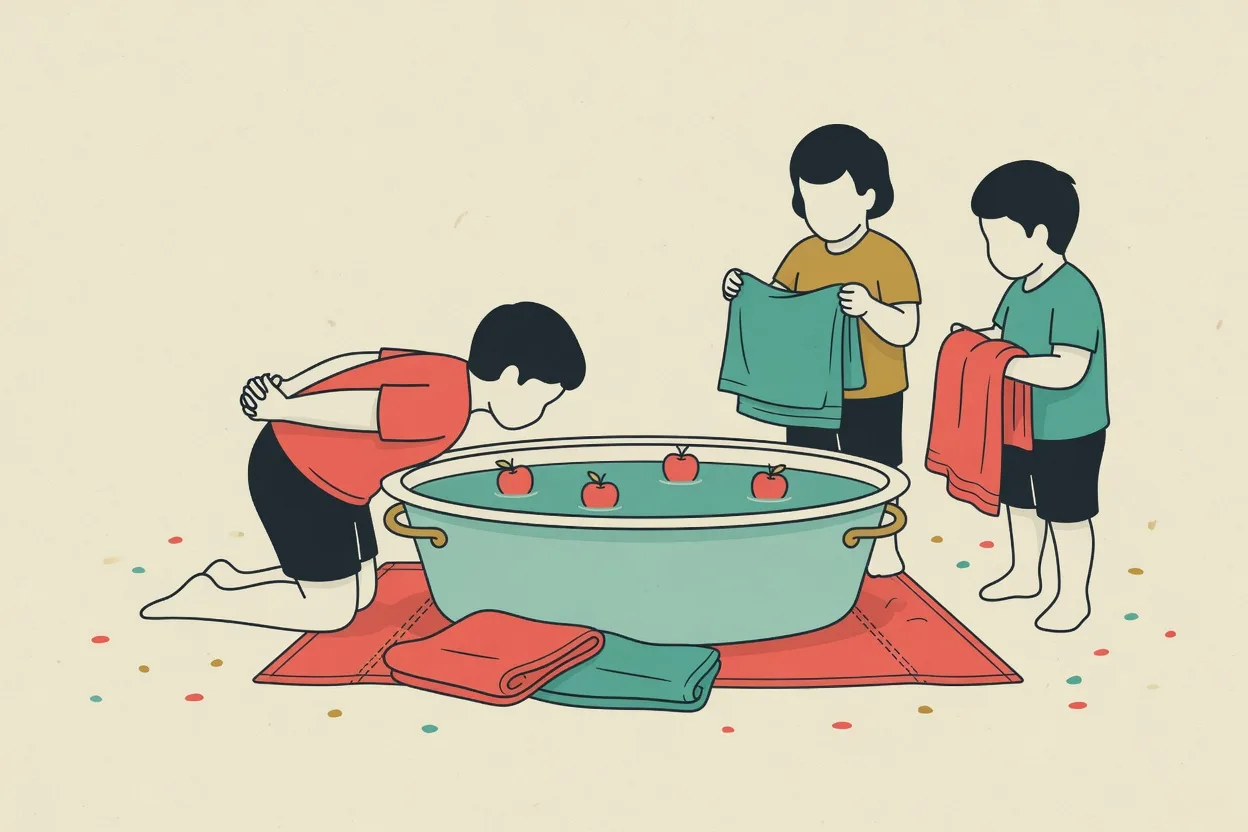
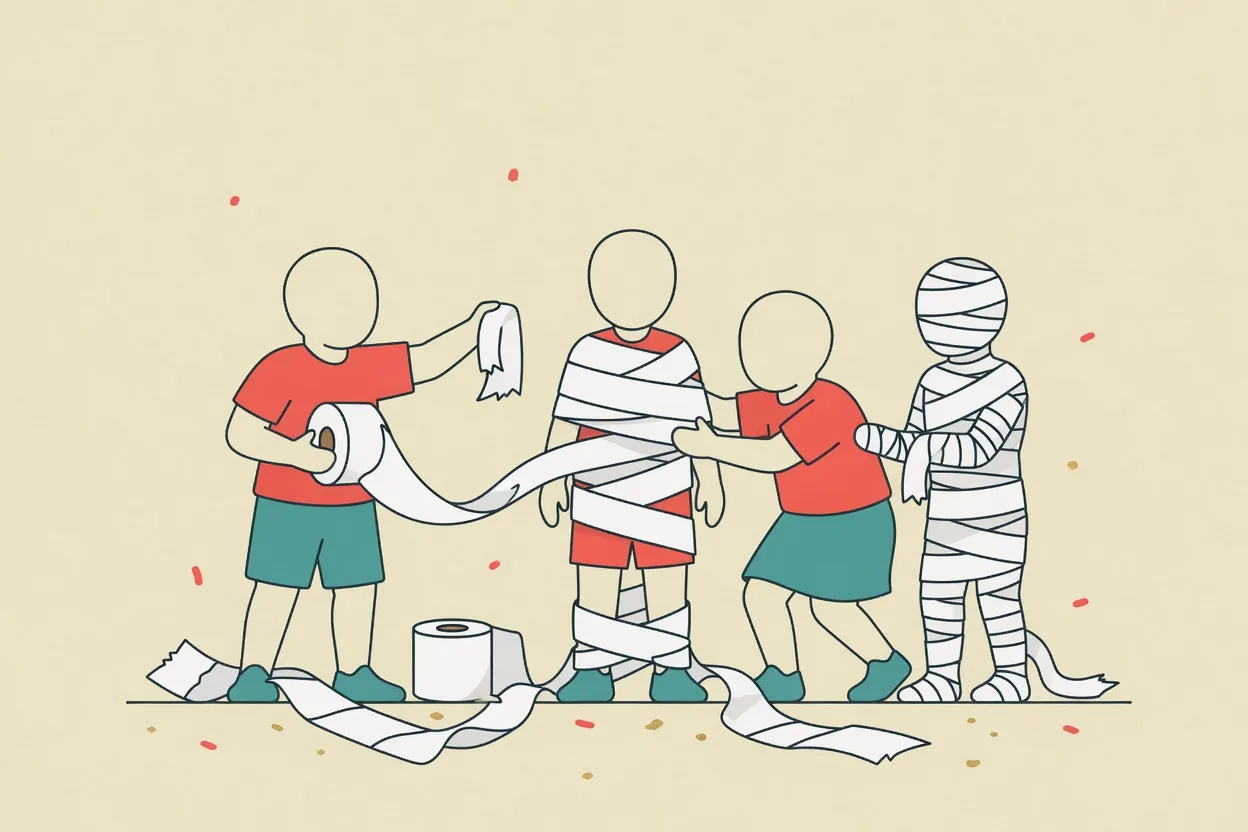
It sits naturally alongside bobbing for apples and the mummy wrap game as a trio that covers a whole Halloween party without repeating itself — one wet, one energetic, one that rewards a genuinely good aim.
What you need
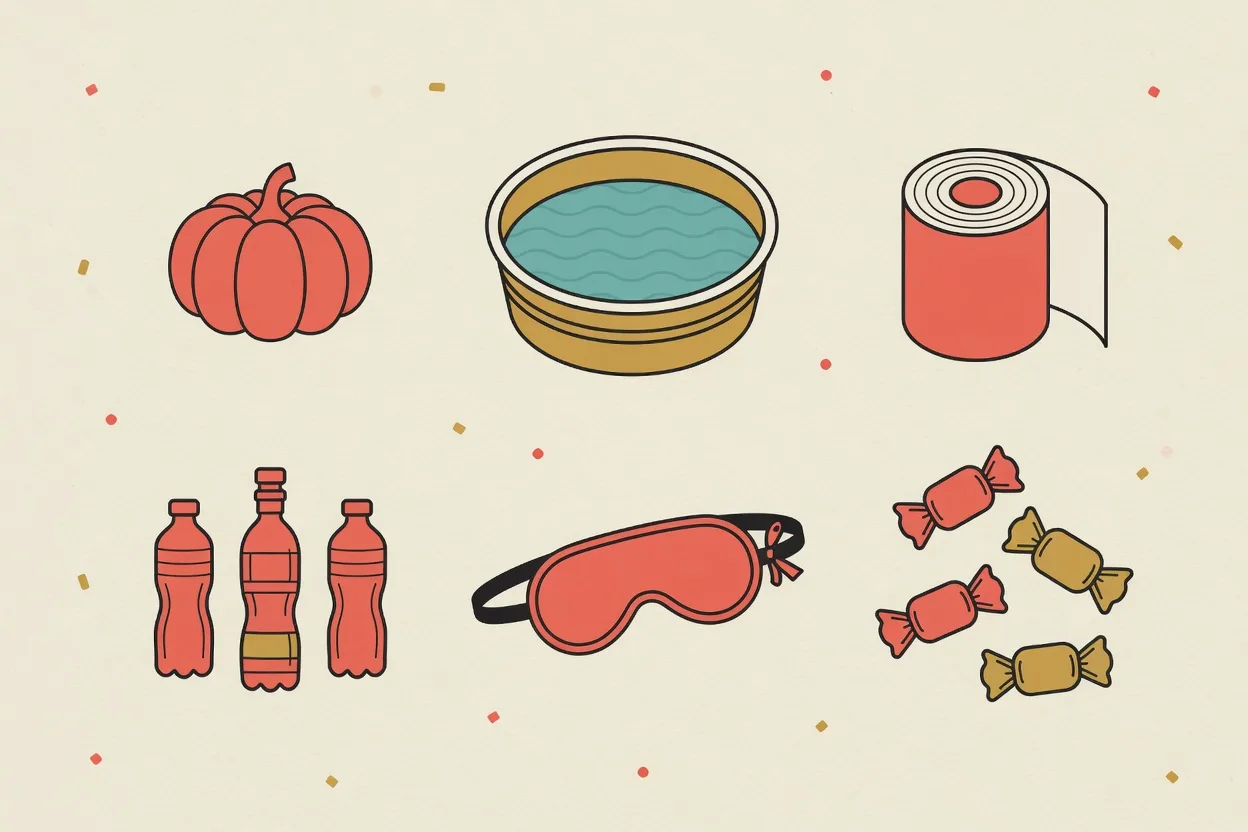
- Six to ten empty plastic bottles, as pins
- Small "mini" or "munchkin" pumpkins, two or three per player, plus spares
- A flat lane roughly ten to thirteen feet long
- Tape or chalk to mark the throw line
- A splash of water or sand for the base of each bottle, to stop them blowing over outdoors
How to play pumpkin bowling
- Set up six to ten empty plastic bottles in a triangle at one end of a flat lane, roughly ten to thirteen feet from the throw line.
- Give each child two or three small pumpkins — mini or "munchkin" pumpkins roll straighter and are easier for small hands than a full-size one.
- Mark a throw line with tape or chalk and have each player roll their pumpkins one at a time, bowling-style, aiming to knock down as many pins as possible.
- Reset the pins between turns and keep a running score — most pins down across two or three rolls wins that frame.
- Rotate through every player for a full round, then start a second round if the pumpkins are holding up.
Variations
Glow bowling
Play at dusk with a glow stick tucked into each bottle, or swap in small battery tea lights — the pumpkins themselves stay the same, but knocking over a lit-up pin in the near-dark is a different game entirely.
Two-hand underhand toss (ages 3–5)
Skip the rolling technique and let younger children just push or toss the pumpkin two-handed from close range — move the throw line in to three feet or so and lower your expectations of a strike.
Points lane
Instead of counting knocked pins, number the bottles one to ten and add up the values of whichever ones fall — turns a simple knock-'em-down game into something with actual scorekeeping for children who are into their math.
Frequently asked questions
- What size pumpkin is best for pumpkin bowling?
- Small "mini" or "munchkin" pumpkins, roughly the size of a grapefruit or a little bigger, roll the straightest and are the easiest for young hands to grip and aim. A full-size carving pumpkin is too heavy and lopsided to bowl properly.
- How many pins do you need for pumpkin bowling?
- Six is enough for a full triangle and a satisfying knock-down; ten if you want it to feel more like real bowling. Empty plastic bottles work as well as anything bought specially — a little water in the base of each keeps them from blowing over in a breeze.
- Can you play pumpkin bowling indoors?
- Yes, a hallway or a garage with a flat, hard floor works well and means the weather doesn't matter. Just check the lane is clear and the pumpkins are dry, since a wet pumpkin picks up dust and grit that then goes everywhere.
- How long do pumpkins last for bowling?
- A few rounds, usually. Pumpkins bruise and eventually crack after repeated rolling, so bring two or three spares per lane rather than expecting one pumpkin to survive an entire party.
Perfect for these parties
Themes that build a whole party around this game — with the food, the decor and a printable invite to match.