

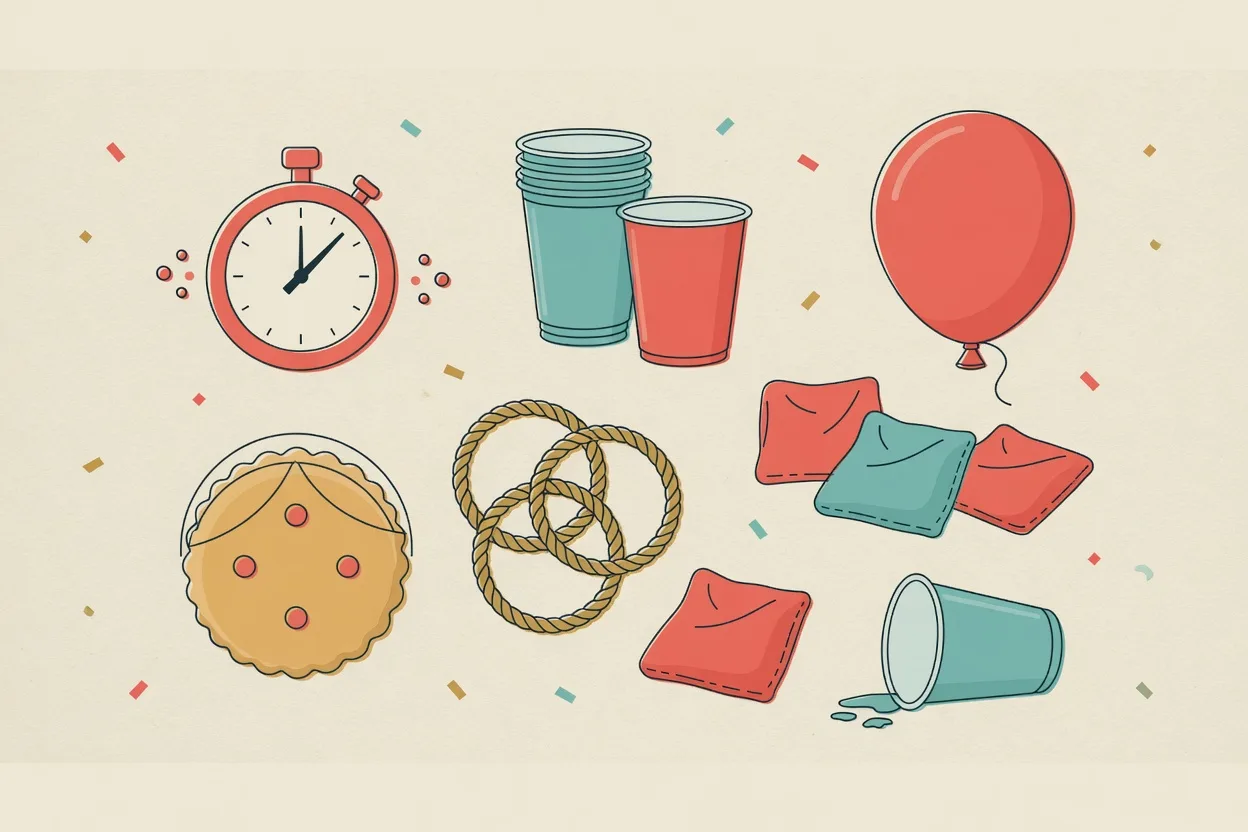
Minute to win it isn't really a game — it's a format. Take almost anything a child can do with their hands, give them sixty seconds and an audience, and you have a minute-to-win-it station. The best parties built around it borrow from two piles: a few games that are genuinely made for a stopwatch, and a longer list of classics that adapt to one with barely any change at all.
What actually makes the format work isn't the games — it's the structure around them. A single sixty-second challenge is a nice thirty seconds of fun. A run of six, scored and building to a final, is an afternoon.
Running it as a bracket, not just a list of games
Set up three or four stations around the room, each with its own supply box, and rotate pairs or small teams through all of them — everyone plays every station once, and you keep a running score rather than declaring a winner station by station. For a bigger group, run heats: the fastest two from each station's first round come back for a head-to-head final at the end, which gives the whole party somewhere to build to instead of just fizzling out after the last station.
Scoring only needs to be as complicated as your group can follow — for younger children, a star sticker per completed challenge beats any numeric score, since 'most stars' is a concept a five-year-old can actually track. For each station, pack the supplies in their own labeled box or tray beforehand: nothing kills the pace of a bracket like hunting for the second cup mid-round. And put one adult on timing and nothing else — a stopwatch app on a phone, called out loud, stops every argument about whether the sixty seconds was really up.
This format tends to land best with children who already care about winning — see our party games for 8-year-olds guide if that's the age you're planning for. Younger guests can still play; just weight the scoring toward stars for taking part rather than a strict ranking.
Running the bracket on a hot day? Our water games for kids roundup times a lot of these same challenges with a hose involved instead.
Games built for sixty seconds
These were basically made for a stopwatch — no adapting required.
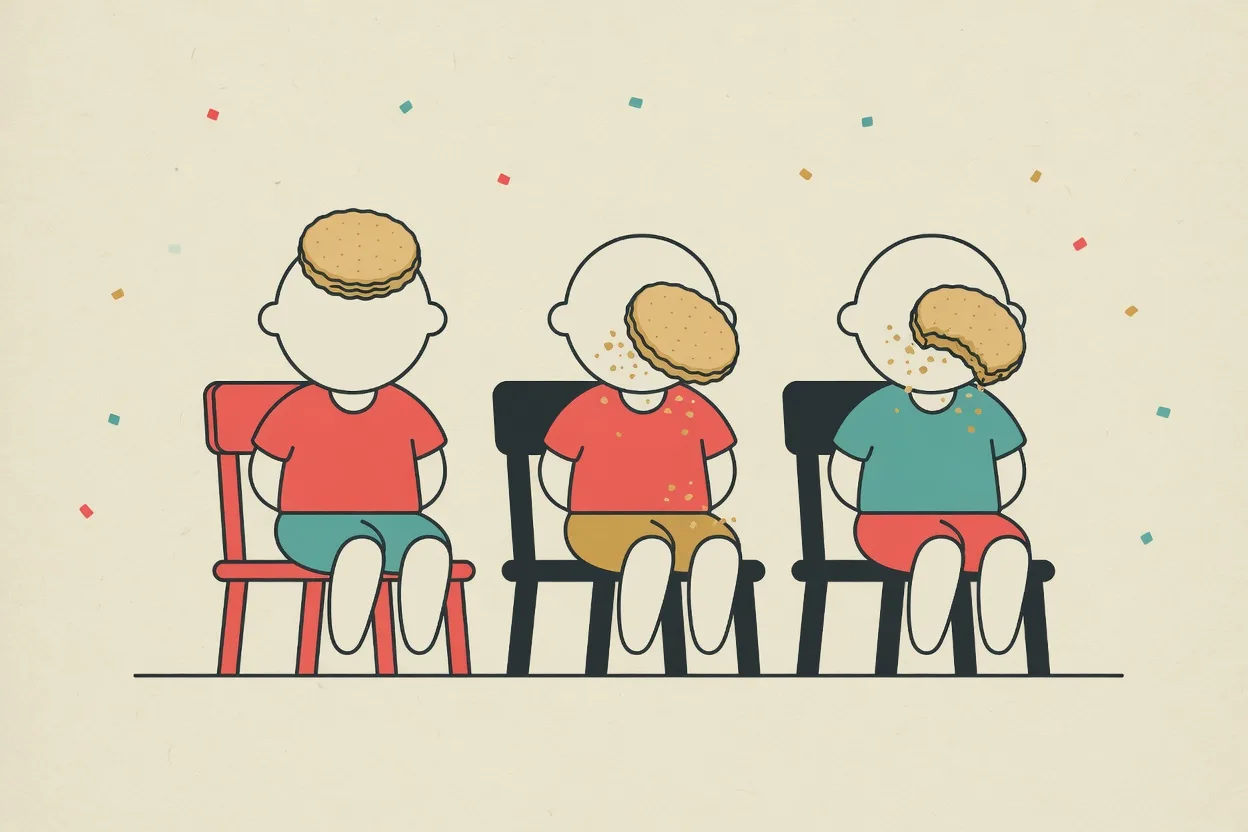
Cookie Face
Walk a cookie from forehead to mouth using only your face muscles, no hands — a genuine sixty-second station because almost nobody manages it faster than that, which keeps every round really tense.
Full rules and variations for cookie face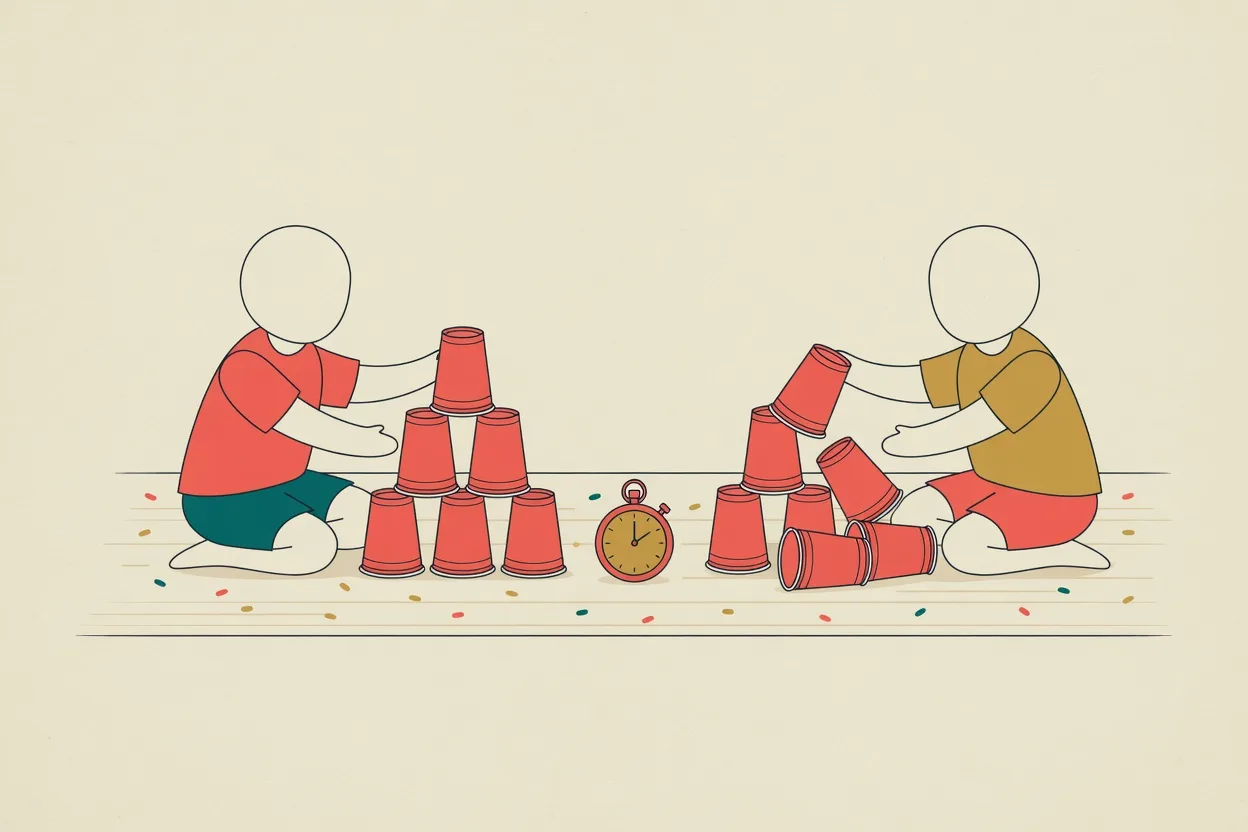
Cup Stacking
Stack and unstack a pyramid of cups against the clock — it rewards a steady hand over raw speed, which is exactly the kind of skill a minute-to-win-it bracket should be testing.
Full rules and variations for cup stacking
Keep the Balloon Up
One balloon, one child, sixty seconds, and the simple rule that it can't touch the floor — the easiest station to set up and the hardest one to walk away from once a kid's on a streak.
Full rules and variations for keep the balloon upClassics that adapt perfectly to a 60-second clock
None of these were built as a timed challenge, but every one of them turns into a real station the moment you add a stopwatch and a scoreboard.

Balloon Stomp
Turn it into a solo station: how many of your own ten balloons can you stomp in sixty seconds, rather than the usual free-for-all. Simple to score, and satisfyingly loud.
Full rules and variations for balloon stomp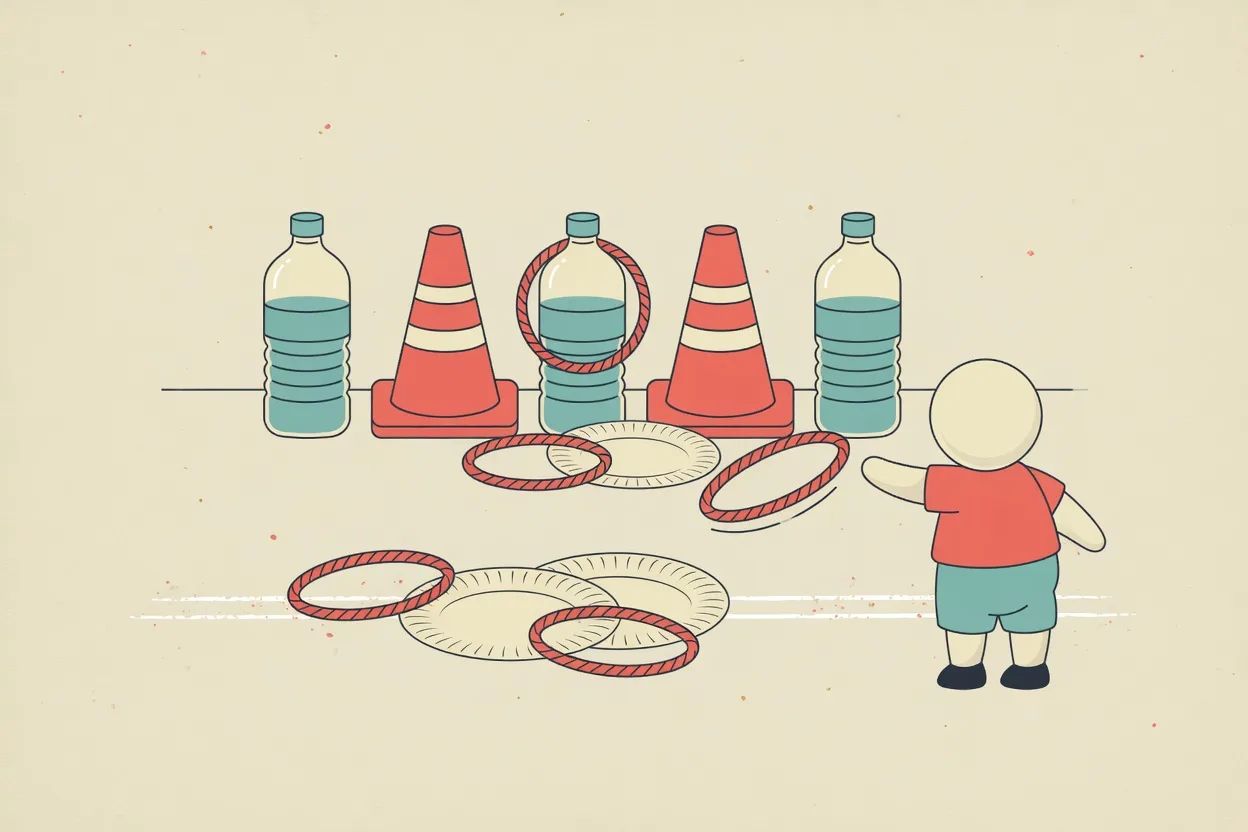
Ring Toss
Most rings landed in sixty seconds is an obvious, instantly-understood scoring system, and it's one of the few stations on this list that genuinely rewards the quieter, more careful kid in the room.
Full rules and variations for ring toss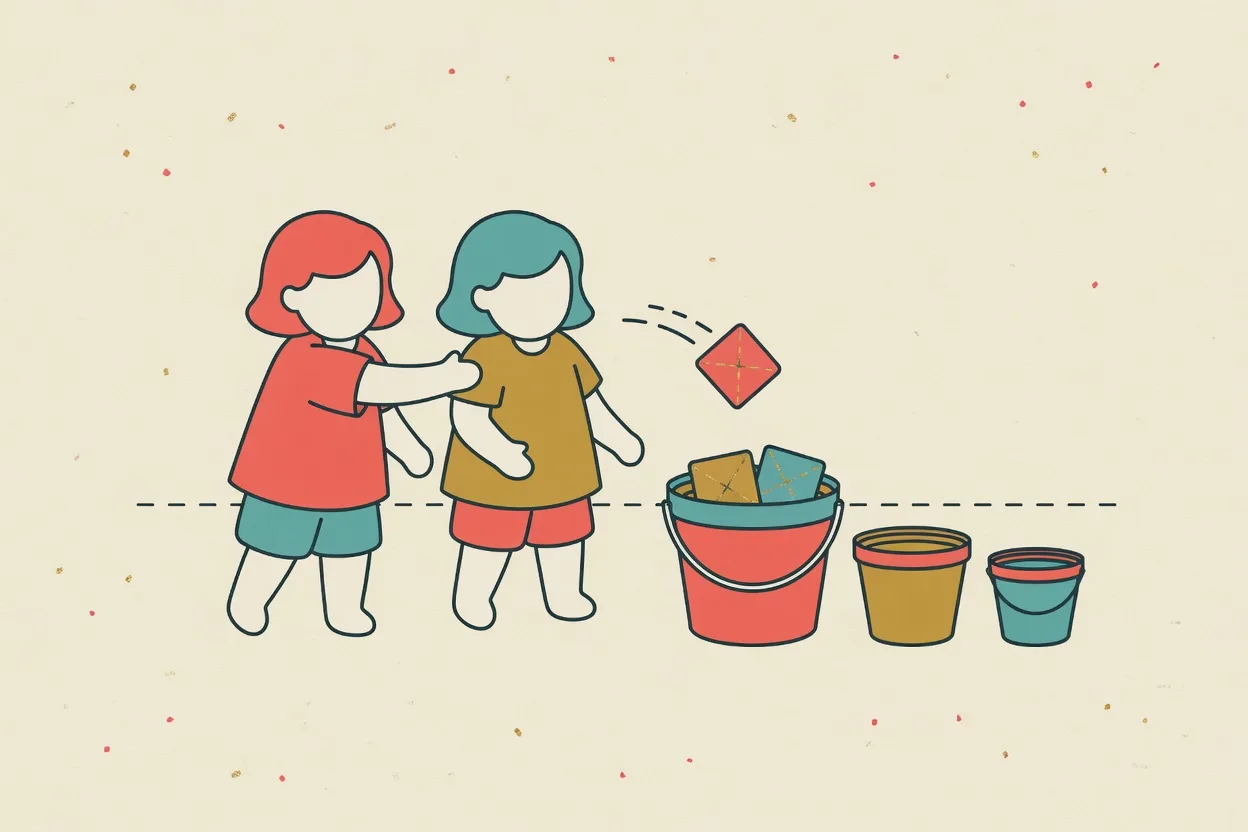
Bean Bag Toss
Same logic as ring toss — count the hits inside sixty seconds — and it's an easy station to run at two difficulty levels by moving the target closer for younger throwers.
Full rules and variations for bean bag toss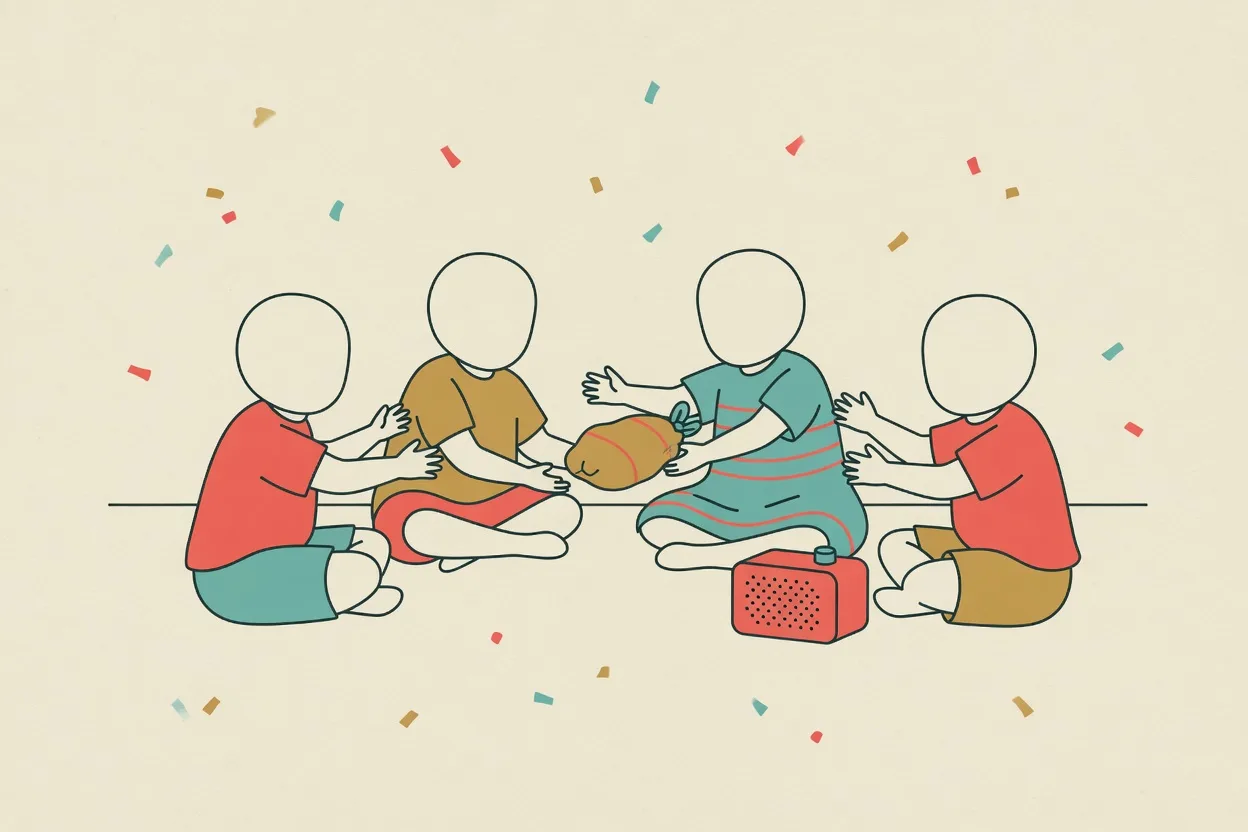
Hot Potato
Run it as a solo station instead of a group game: how many times can you pass a ball hand to hand around your own body before the minute's up. Odd, simple, and it works.
Full rules and variations for hot potato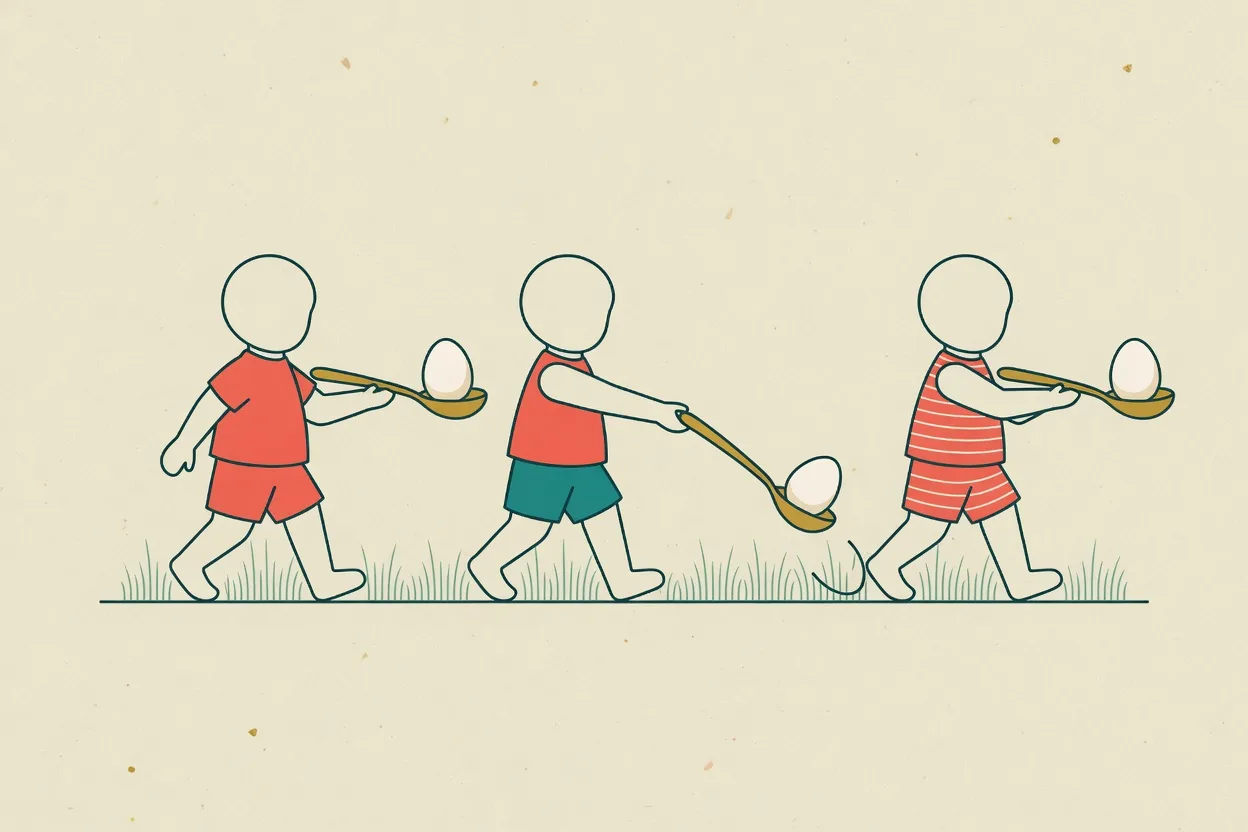
Egg and Spoon Race
Shrink the course to a there-and-back sprint and count completed laps in sixty seconds rather than running one long race — it turns a backyard classic into a real bracket station.
Full rules and variations for Egg and Spoon Race
Simon Says
Run it as elimination-by-mistake within the minute rather than the usual free-form version: last child still following instructions correctly when the clock runs out wins the station.
Full rules and variations for Simon says
Freeze Dance
Score it by how many freezes a child holds correctly across the sixty seconds rather than single-elimination — it turns a party game into something you can genuinely rank.
Full rules and variations for freeze dance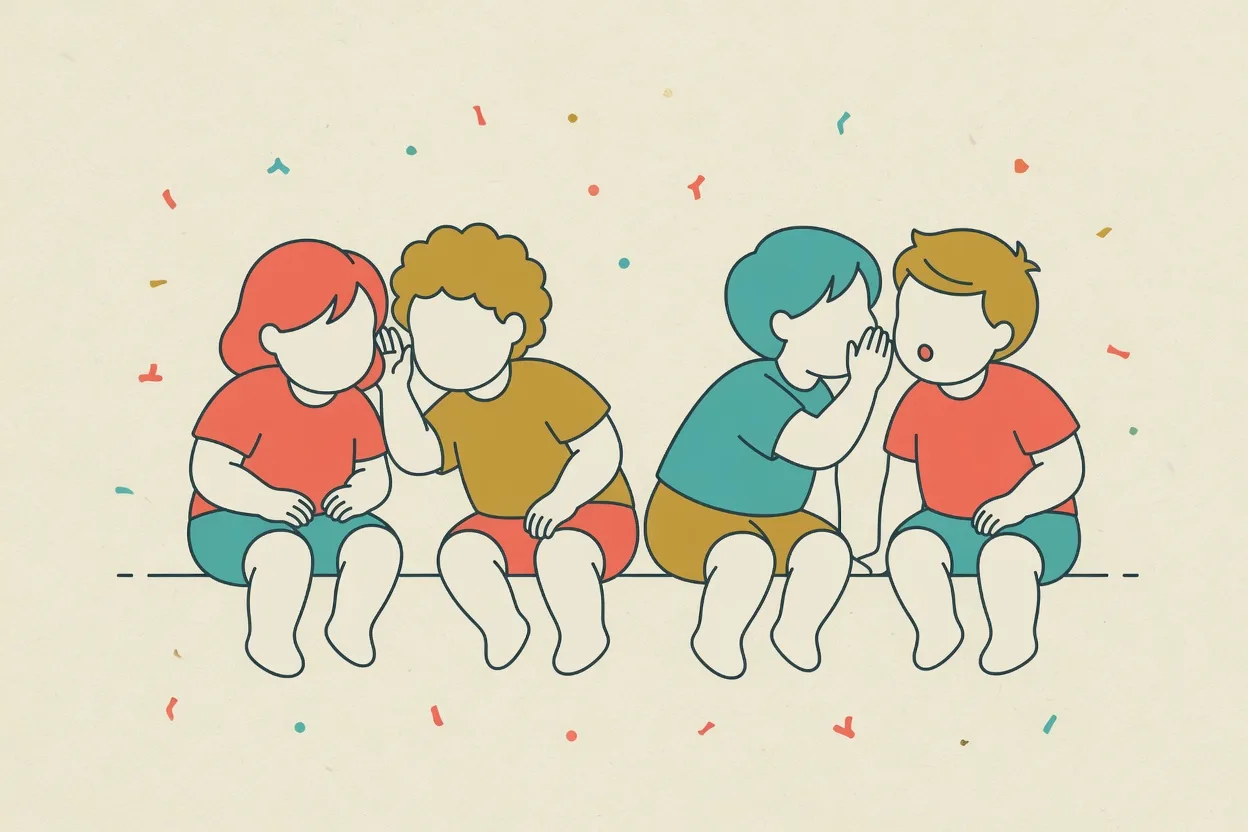
The Telephone Game
Time how long it takes a whispered sentence to get all the way down a line and back with the message still intact — a nice change of pace from the physical stations, and it rewards a completely different skill.
Full rules and variations for the telephone gameSeasonal swaps for the same format
Running the bracket around a specific holiday? These slot straight into the same sixty-second structure.
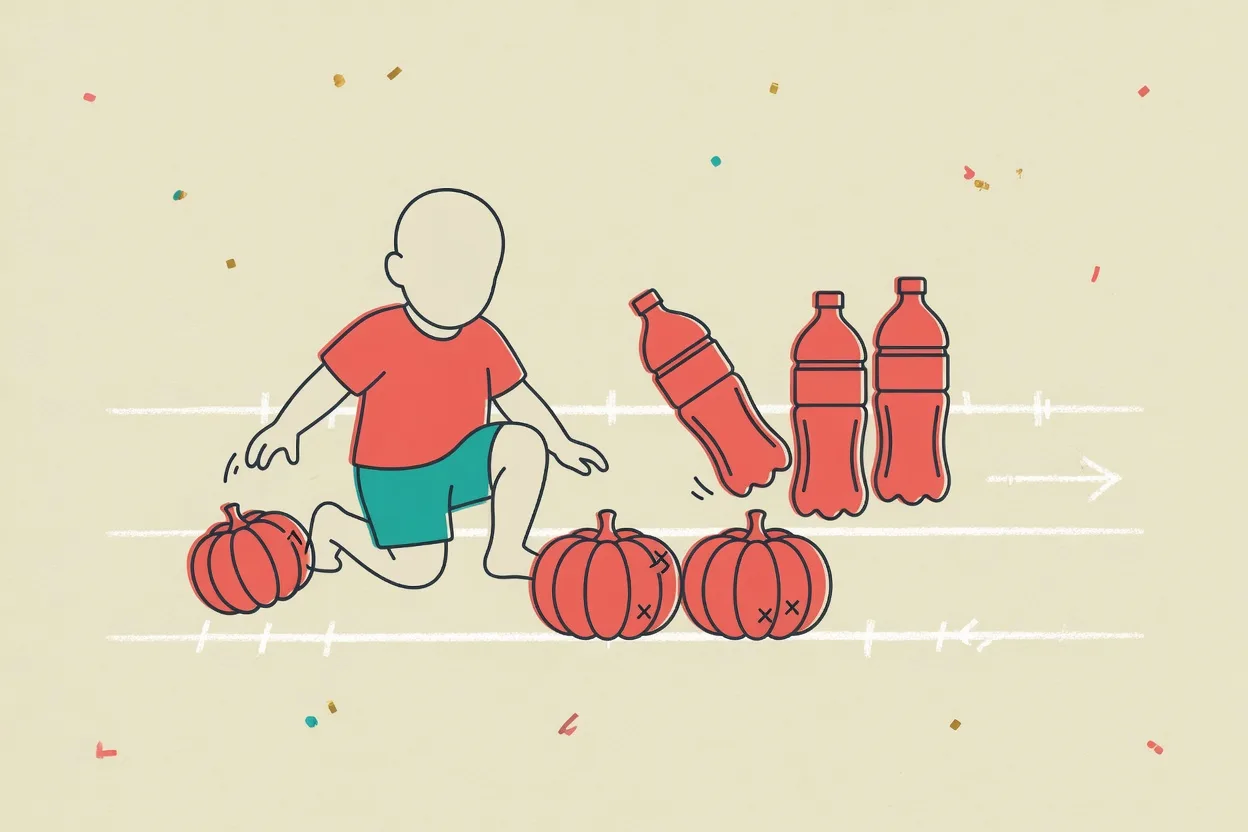
Pumpkin Bowling
Most pins down across repeated sixty-second rounds turns a calm Halloween game into a real bracket station, no changes needed beyond the stopwatch.
Full rules and variations for pumpkin bowling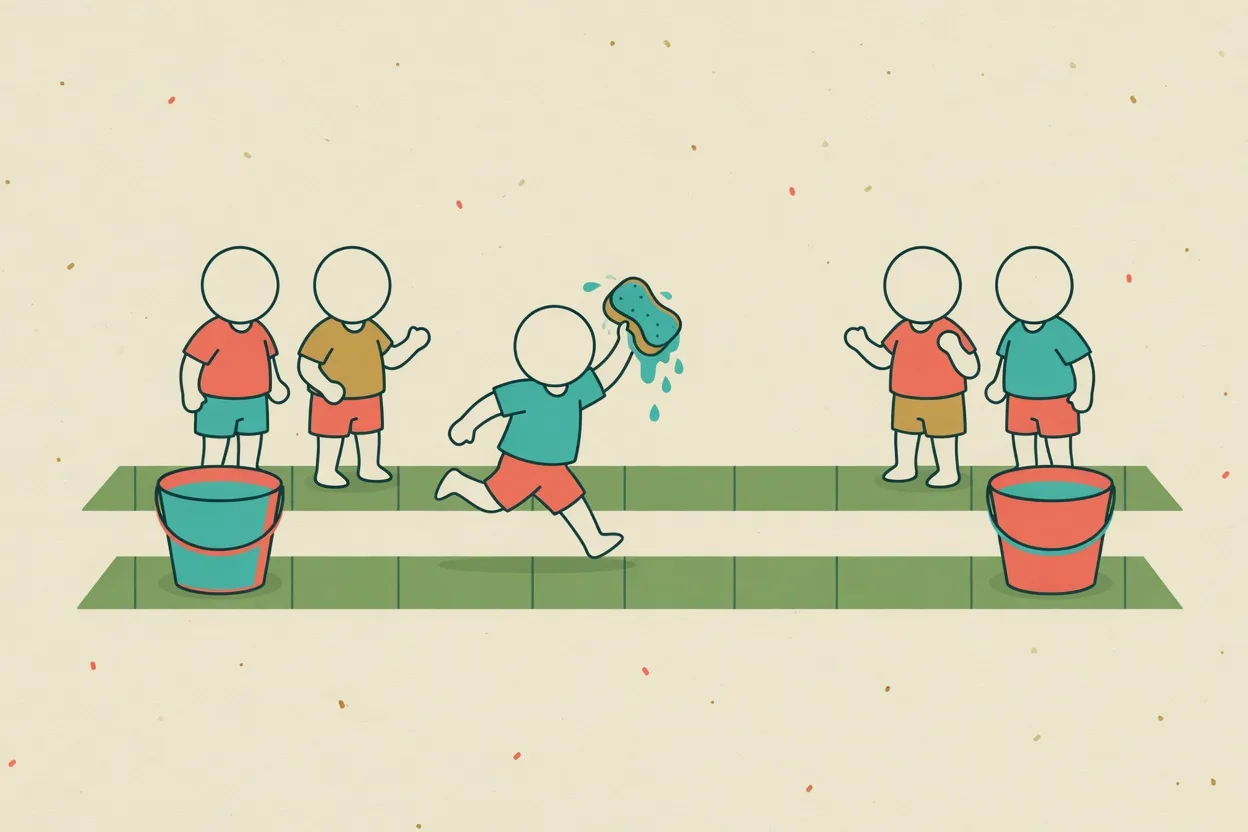
The Sponge Relay
Count completed sponge-and-bucket trips within the minute rather than running it as a straight relay, and it becomes a great hot-weather station for a summer version of the bracket.
Full rules and variations for the sponge relay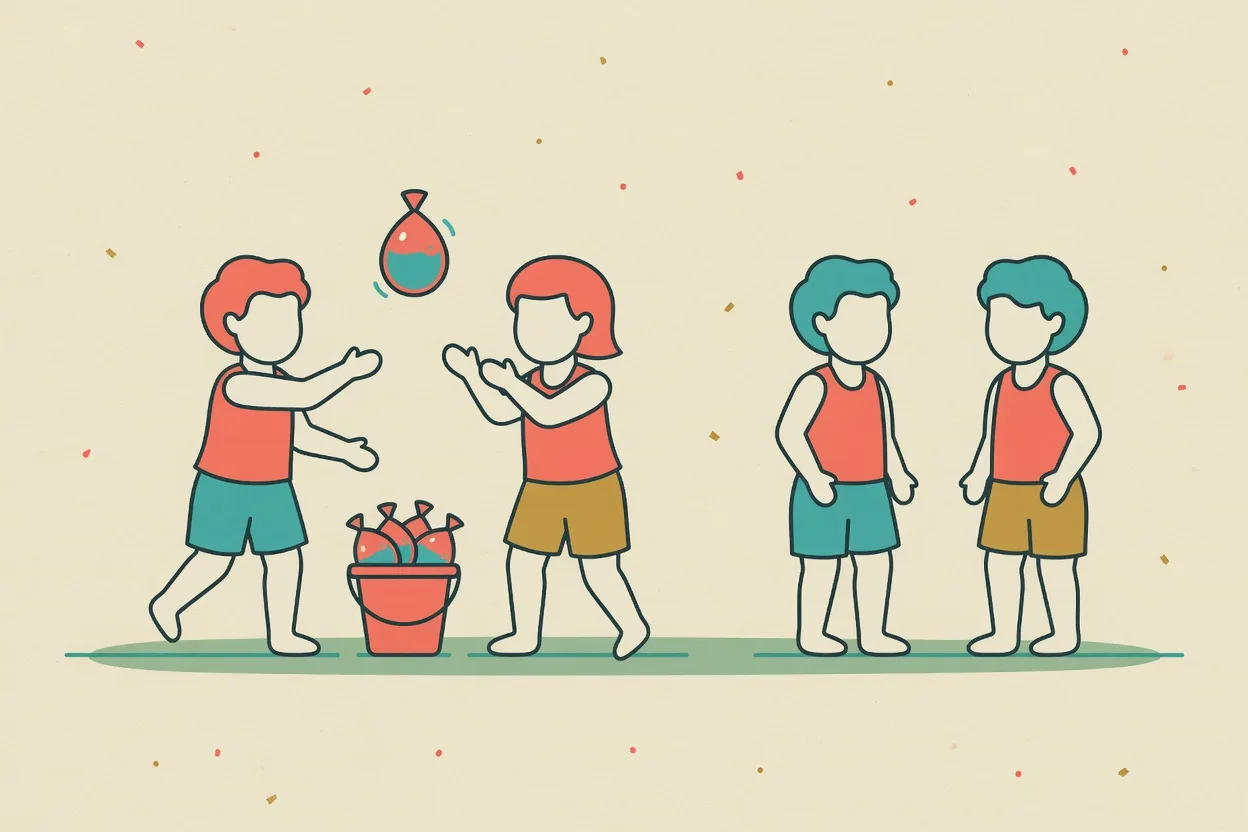
Water Balloon Toss
Furthest successful catch within the minute, counting only the throws that don't burst — a satisfying, slightly chaotic station for exactly the weather that makes the rest of this list feel indoors-only.
Full rules and variations for water balloon tossFrequently asked questions
- What is minute to win it?
- A party format rather than a single game: short, sixty-second challenges run as stations, usually scored and built up to a final. It comes from a TV show of the same idea, but the party version needs nothing more than household objects and a stopwatch.
- How do you run a minute-to-win-it bracket at a party?
- Set up three or four stations, each with its own labeled supply box, and rotate everyone through all of them while one adult keeps time and calls it out loud. Score simply — stars for younger children, points for older ones — and run a head-to-head final between the top scorers.
- What do you need for a minute-to-win-it party?
- Mostly things already in the house — cups, spoons, balloons, a ball of string — plus a stopwatch and a scoreboard. Pack each station's supplies into their own box in advance so nothing gets hunted for mid-round.
- Can minute-to-win-it games be themed for a holiday?
- Yes — swap in pumpkin bowling for Halloween or a sponge relay and water balloon toss for a summer version, and time them the same way as the rest of the bracket. The stopwatch format works with almost any physical game.
Sorting the venue too? 12 Kids Birthday Party Places in Atlanta (2026)