
6–14
Ages
10+
Players
Outdoors
Where
20–40 min
How long
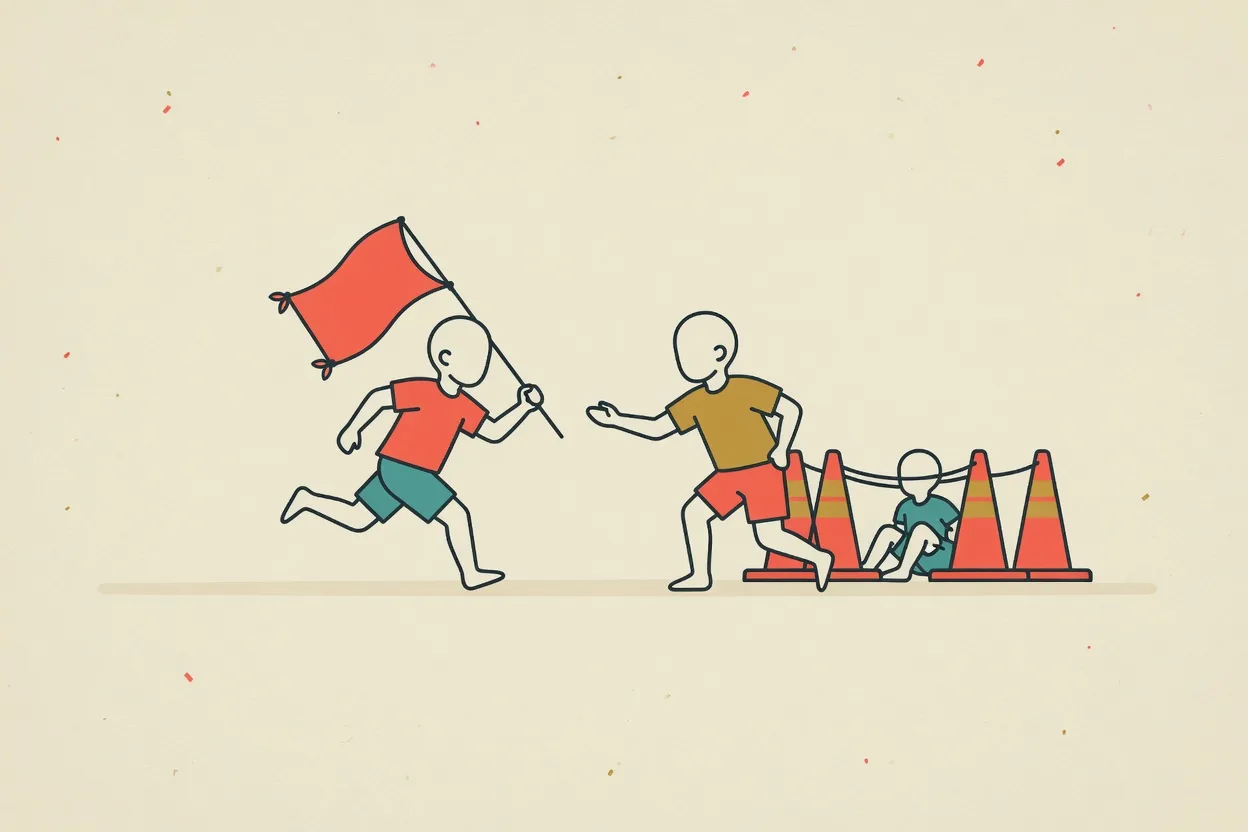
Capture the flag is the party game that actually rewards a plan. Most outdoor games come down to speed or luck, but capture the flag adds territory, defense and a genuine decision about whether to attack or guard — which is why it is the game eight- to twelve-year-olds are still arguing tactics about on the way home. It also needs more space and more children than almost anything else in this library, and that is the one thing worth getting right before you commit to running it.
This guide covers the simplest rule set that actually works at a party: the two-zone setup, the jail rules that cause almost every argument, and the tweaks that keep it fair for a mixed-age group.
The space and numbers this game actually needs
A capture-the-flag game wants a genuinely large area — a park, a school field, or a backyard big enough to feel like real ground is being contested — split roughly in half by an obvious center line: a path, a hedge line, or two cones and an imagined line between them. Ten players is a realistic minimum, five a side; below that there are not enough defenders to make hiding a flag meaningful, and the game collapses into a straight sprint to find it. Sixteen to twenty is close to the ceiling for one flag each, because much beyond that the field gets too crowded to run in a straight line without colliding. With a bigger group than that, run two games side by side rather than one overcrowded one.
The jail rule everyone gets wrong
Nearly every argument in capture the flag comes from the jail, not the flag itself. Agree on three things out loud before the first round: what counts as a tag — a clear touch, not a claimed brush from three feet away — that a freed prisoner and their rescuer both get an uncontested walk back to their own territory before anyone can tag them again, and that a defender may not simply stand on top of their own flag. They have to guard it from a few steps back rather than block it outright. Skip any one of these three and you will spend more time refereeing the jail than watching the game.
The other common failure is a flag hidden too well. It should be findable — propped on a low branch, tucked half-behind a tree, draped over a cone — not buried, not indoors, not somewhere a search could genuinely take twenty minutes. The tension in this game comes from the risk of being tagged while looking, not from a scavenger hunt, and a flag nobody can find just produces a bored, wandering game that never reaches an ending.
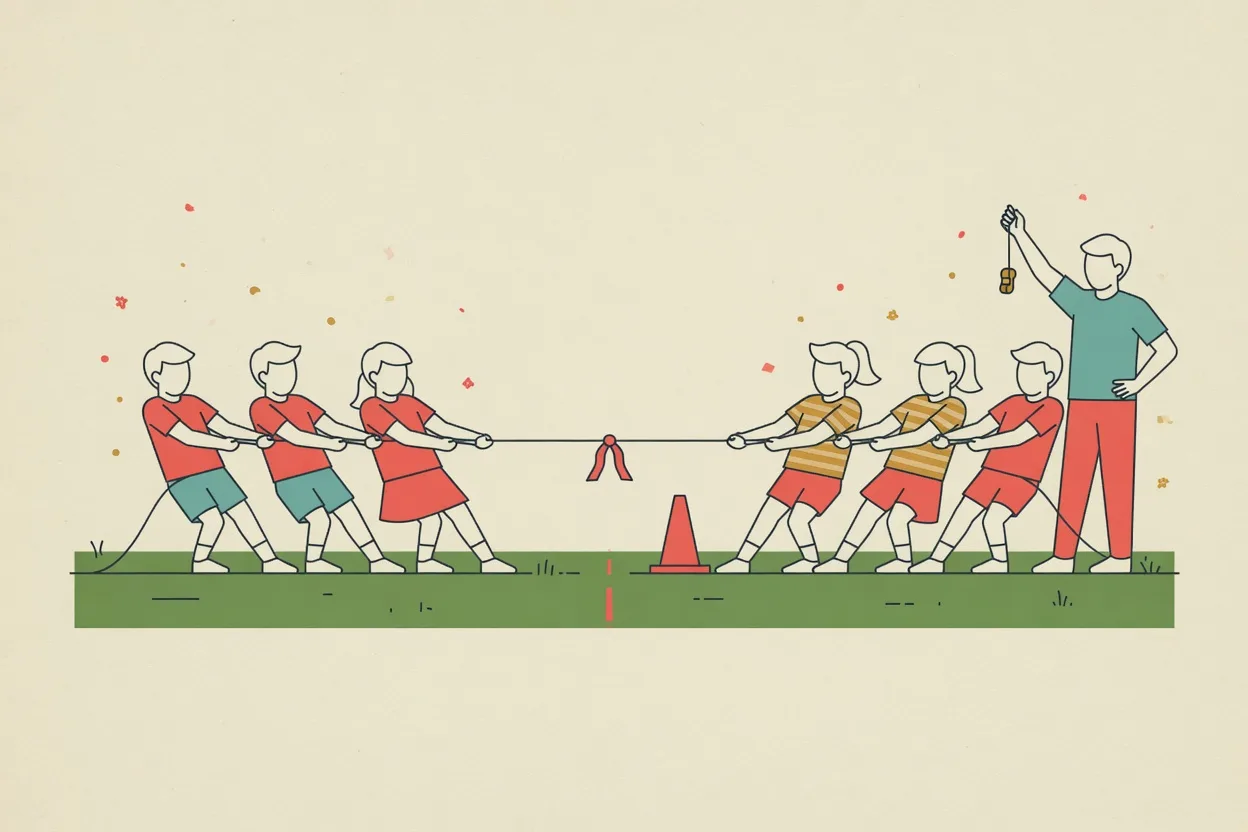
For other big-group outdoor games that work well on the same afternoon, see red rover and freeze tag, or run a round of tug of war to settle the score between the two teams once the flags are won. Browse local entertainers if you would rather someone else refereed the jail.
What you need
- A big, roughly rectangular space split down the middle — a park, a school field or a large backyard with a clear center line
- Two flags: a bandana, a dish towel or a bright t-shirt tied to a stick both work
- Two jails, one in each team's territory, marked with cones
- Something to mark team colors — armbands, colored bandanas, or just shirts versus skins
How to play capture the flag
- Split the space in half with an obvious center line, and give each team the half behind it as their own territory.
- Each team hides its flag anywhere in its own territory, in the open rather than fully buried or hidden indoors, and sets up a jail near the back of its half.
- On "go", players cross into the opposing team's territory to hunt for the flag while defending their own.
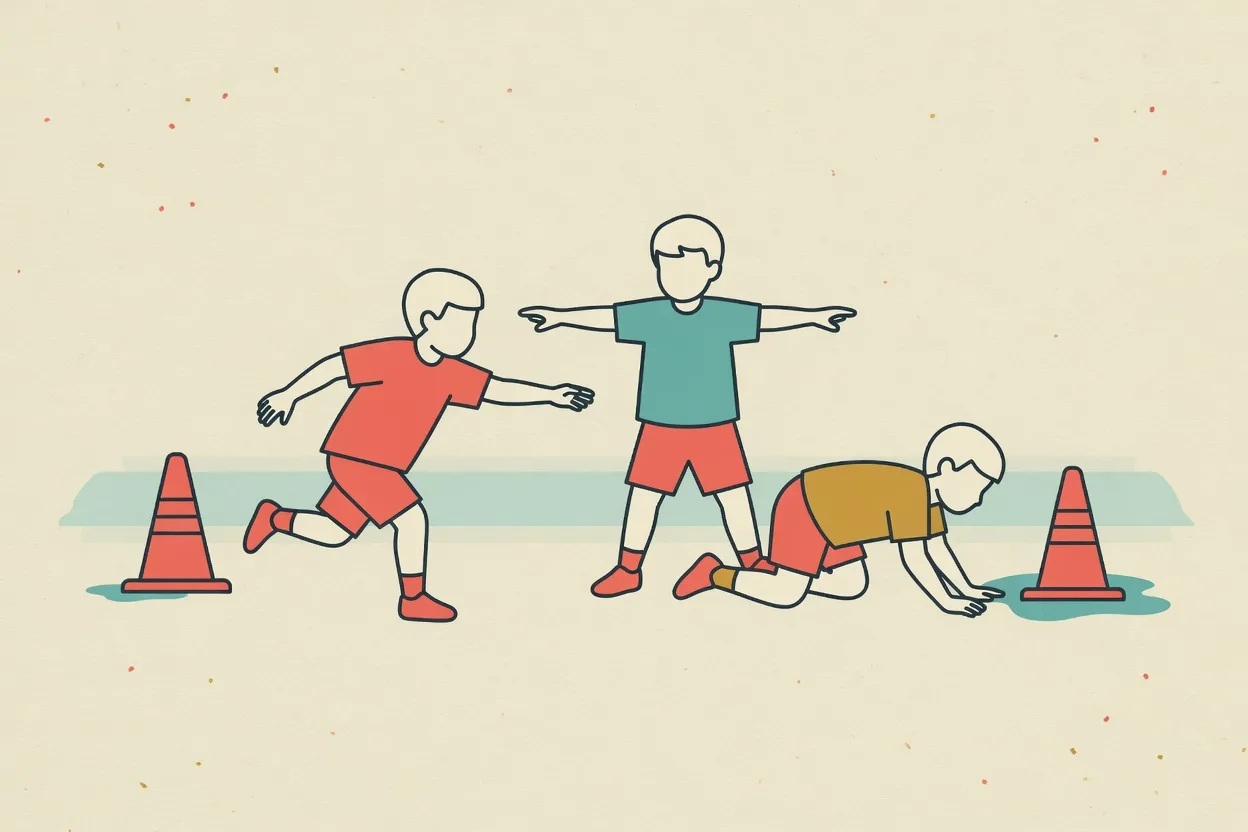
- A player tagged while inside enemy territory is caught. They walk themselves to that team's jail and stay there until a teammate frees them.
- A teammate frees a jailed player by reaching the jail without being tagged and touching hands. Both then get a free, uncontested walk back to their own territory before rejoining the game.
- A team wins by carrying the enemy flag back across the center line into their own territory without being tagged while holding it.
Variations
Flag guard (ages 6–8)
Add a rule that a defender must stand at least three big steps back from their own flag, so younger children cannot simply stand on top of it and end the game before it starts. It keeps the flag genuinely capturable and rewards teamwork over standing still.
Multiple lives
Give each player two or three lives before they are sent to jail rather than one. It makes for a longer game with fewer children standing around doing nothing, and suits a bigger group where getting tagged once should not end your afternoon.
No-hide version
Instead of guarding a hidden flag, give each team a flag they must carry at all times, tucked in a back pocket or waistband. It removes the searching phase entirely and turns the whole game into constant chasing, which suits a smaller space or a group with a shorter attention span.
Frequently asked questions
- How many players do you need for capture the flag?
- Ten is a realistic minimum, five a side, and sixteen to twenty is close to the ceiling for one flag each. Fewer than ten and there are not enough defenders to make hiding the flag meaningful; more than twenty and the field gets too crowded to run in without colliding.
- What are the jail rules in capture the flag?
- A tagged player walks themselves to their captor's jail and stays there until a teammate reaches the jail without being tagged and touches hands to free them. Both the rescuer and the freed player then get an uncontested walk back to their own territory before either can be tagged again.
- How big a space do you need for capture the flag?
- A park, a school field or a large backyard with enough ground on either side of a clear center line to feel like real territory. A typical backyard is usually too small — the game needs room for both a hiding flag and a genuine chase.
- What age can play capture the flag?
- From about six, once children reliably understand which territory is whose and can run without colliding. The strategy side of the game — guarding versus attacking, when to risk a run — really clicks from about eight and up.
Perfect for these parties
Themes that build a whole party around this game — with the food, the decor and a printable invite to match.