
5–11
Ages
4+
Players
Outdoors
Where
10–20 min
How long
Freeze tag is the game every playground half-plays without anyone teaching it — normal tag with one rule bolted on, where a tagged player has to stand frozen instead of sitting out. That single change is what makes it worth running properly at a party rather than leaving it to sort itself out, because a tagged player who simply stops moving needs a way back into the game, and how you handle that is the difference between five minutes of chaos and twenty minutes of a game that actually holds together.
This guide covers the boundaries that stop the game sprawling across an entire yard, a fair way to choose who starts as "it", and the unfreezing methods that keep everyone moving rather than standing around.
Why boundaries decide whether this game works
Freeze tag without an agreed edge turns into an unsupervised chase across however much space is available, which exhausts whoever is "it" long before anyone else gets tired. Fix the boundary before the first tag — a fence line, a hedge, four cones in a park — and say it out loud so nobody can claim they did not know. The same logic applies to how many taggers you start with: one "it" for a group of four or five works fine, but that same one player chasing fifteen children across a whole yard will never catch anyone, and the game dies from boredom instead. Add a second or third tagger as the group grows — roughly one for every five or six free runners keeps the chase alive without freezing everyone in the first minute.
Choosing who's "it" without starting a fight
Handled badly, picking the first tagger is where the arguing starts before the game has even begun. The fairest method is also the simplest: everyone puts a fist into a circle, and whoever's hand is touched last on a counted-out rhyme becomes "it" — nobody chose them, so nobody can argue with it. After that, rotation takes care of itself: whoever is the last player tagged in a round is a sensible, self-selecting choice to start the next one, since they have already shown they are quick.
Keep an eye on the frozen players too, not just the runners. In a big group it is easy for one child to end up forgotten near the edge of the boundary, waiting for a rescue that never comes because nobody has spotted them. An adult calling out an occasional headcount of who is still frozen, or extending an unfreeze method to "tag three frozen players in a row" for older children, keeps the game moving for everyone rather than just the fastest few.
The unfreezing method you pick changes the pace of the whole round more than any other rule, from a fast, forgiving game where nobody is stuck for long to a slower, funnier one where getting free takes real teamwork. The variations below cover both ends of that range — pick whichever matches the energy of the group you have got.
For the same stop-on-command idea without any tagging, see musical statues or red light green light, or send the group looking for each other instead with hide and seek. Browse local entertainers if you would rather someone else kept count of who's "it".
What you need
- A clear, boundaried outdoor space — a backyard, a playground or a park corner everyone can see the edges of
- One or two players to start as "it", agreed before the whistle
- Cones, a fence line or a flower bed to mark the boundary — nothing fancier is needed
How to play freeze tag
- Mark out clear boundaries — a backyard fence line, or four cones in a park — and agree on them out loud before starting, since "out of bounds" is the first argument this game produces.
- Choose one or two players to be "it". Everyone else spreads out inside the boundary.
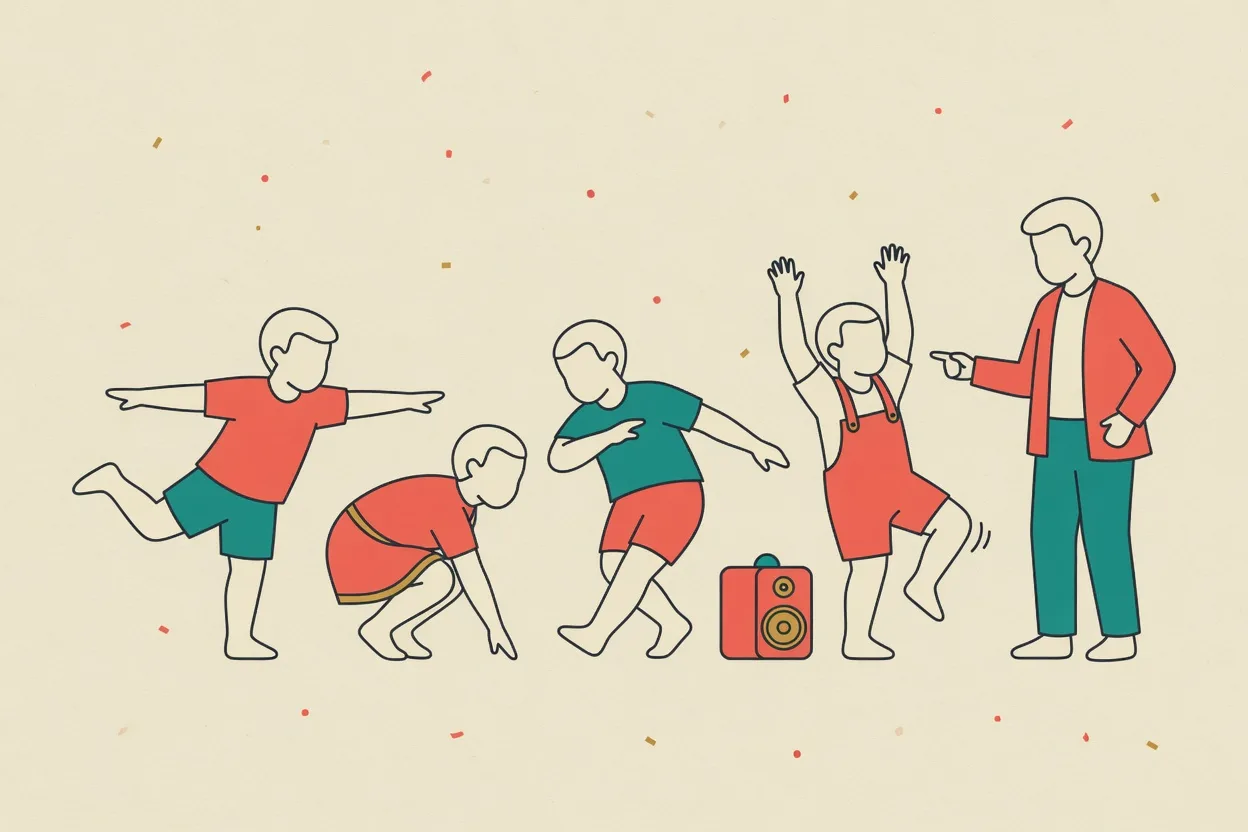
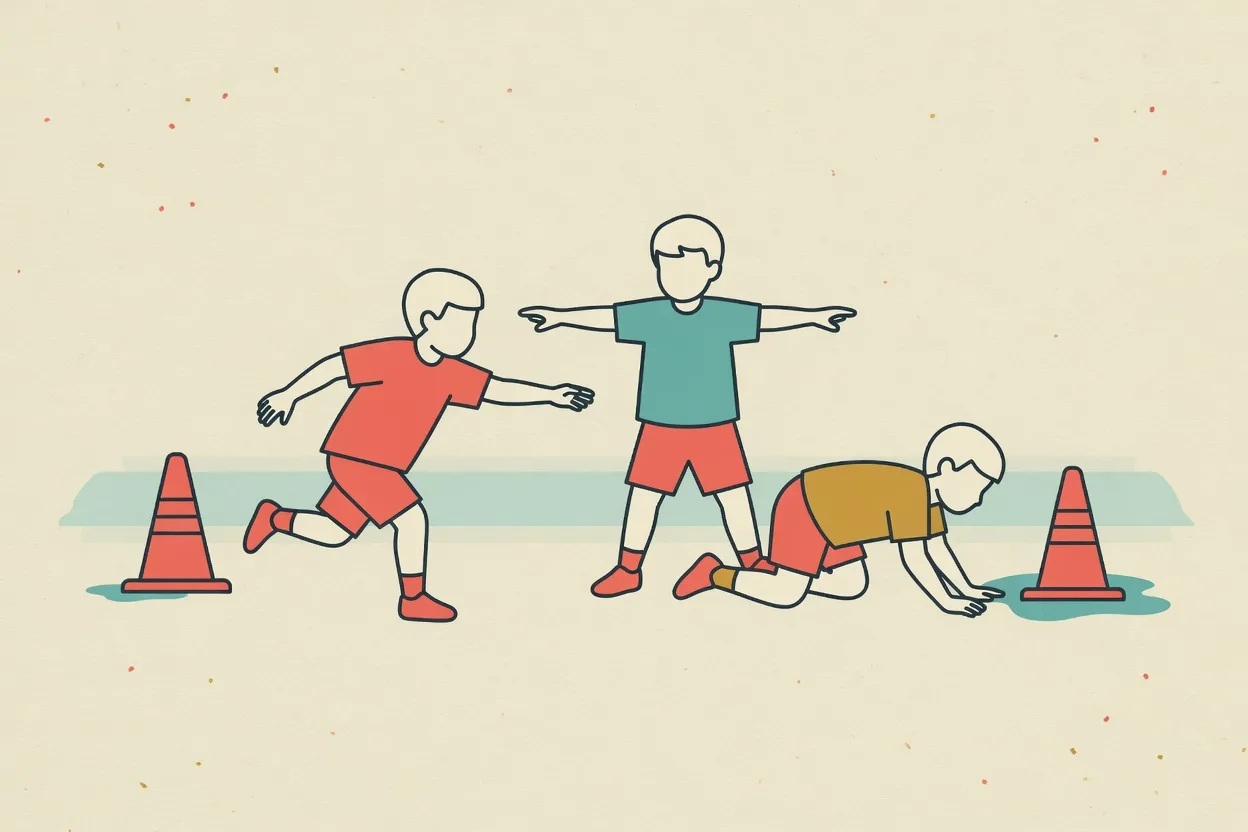
- On "go", the players who are "it" chase and try to tag the others. A tagged player freezes on the spot, feet planted, arms out.
- Frozen players stay frozen until a free teammate unfreezes them, using whichever method you agreed before starting — crawling between their legs, a high five, or one of the variations below.
- Play continues until either every player is frozen at once, or you call time and count how many are still free.
- Swap who is "it" for the next round — the last player tagged is a fair, self-selecting choice to go next.
Variations
Crawl-under freeze
Frozen players stand with legs apart, and a teammate unfreezes them by crawling through the gap. Slower to unfreeze than a high five, which keeps the "it" players from being overwhelmed in a big group, and it adds a genuinely funny visual to the whole game.
High-five freeze
The simplest unfreezing method: any free player runs past and gives a frozen player a high five to release them. Fast-paced and forgiving, and the best choice for a younger group, since standing frozen for long stretches gets boring fast at that age.
Ice and fire
Split the free players into two roles: designated "fire" players can unfreeze with a touch, while the "ice" players — the taggers — can freeze. Everyone else just runs as normal. It adds a light strategy layer for older children without changing the basic mechanic at all.
Frequently asked questions
- How do you play freeze tag?
- One or two players are "it" and chase everyone else inside agreed boundaries; anyone tagged freezes on the spot, feet planted and arms out. A free teammate can unfreeze them, by crawling between their legs or with a high five, and the round ends when everyone is frozen or you call time and count who is still free.
- How do you unfreeze someone in freeze tag?
- Agree on the method before you start — a free player touching or high-fiving a frozen player is the simplest, and crawling between their legs is a popular slower alternative. Any consistent rule works as long as everyone knows it before the first tag.
- How many players should be "it" in freeze tag?
- Roughly one tagger for every five or six free runners. Too few taggers for a big group means nobody gets caught and the game drags; too many means everyone is frozen within a minute and the round ends before it starts.
- What happens when everyone is frozen?
- The round simply ends — the taggers have won that round. Unfreeze everyone, pick a new "it" (the last player tagged is a fair choice, since they've already shown they're quick), and start again. If you'd rather not wait for a full freeze, call time and count how many players are still free.
- What age is freeze tag good for?
- From about five and up. Younger children do better with a single tagger and the high-five unfreeze, which keeps nobody stuck standing still for very long. Older children enjoy the ice and fire variation, where designated fire players unfreeze with a touch, which adds a light strategy layer.
Perfect for these parties
Themes that build a whole party around this game — with the food, the decor and a printable invite to match.