

7–12
Ages
10+
Players
Indoors or out
Where
15–30 min
How long
Red rover has a reputation, and it is fair. The traditional version — two lines with hands locked tight, one child sprinting full speed into the middle of the chain — is a real way to hurt a shoulder or an elbow, and plenty of schools stopped playing it for exactly that reason. None of that means the game has to go. The version below keeps everything that makes red rover fun — the calling, the tension, the choosing who comes over — and changes the one thing that made it risky: how the hands are held and how fast the runner is allowed to go.
This guide teaches that safer version as the standard rules, not as an optional extra tucked in at the bottom, because it is genuinely just as good a game.
The one change that makes this game safe
A locked, laced-fingers grip does not give way, so a child running at it full speed hits something rigid — that is where the injuries in this game actually come from, far more than from the running or the falling itself. Hold hands loosely instead, palm against palm rather than fingers interlocked, and treat the grip as something that is meant to come apart under real pressure rather than something to defend. Pair that with a jog for the runner rather than a flat-out sprint, and the game keeps its drama without the collision that gave it a bad name in the first place.
Distance between the two lines matters more than people think, too. Thirty feet gives a runner enough room to build a bit of momentum and enough time for the calling team to see them coming, without letting them hit top speed before they arrive. Much closer than that and there is no real run-up to enjoy; much further and you are back to the exact problem the loose grip was meant to solve — a child arriving at real speed. Ten to twelve big steps is about right for most backyards and most ages.
It is worth running one practice call before the real game starts, with no team on the line at all — just to show everyone what a released grip actually looks and feels like. A single dry run answers most of the nervousness younger children have about the whole idea, and it costs less than a minute.
Keeping it fair once the safety is handled
Uneven teams are the other common failure. A line of much bigger, stronger children calling over a much smaller one — or the other way around — turns even the safer grip into either an impossible wall or no contest at all, so mix teams by size as well as by friendship group, and move a player across if one side is clearly stronger partway through. When it is your team's turn to call, naming the fastest runner on the other side is the obvious move, but calling a quieter player and cheering them through the line, successful or not, is usually what actually makes the game.
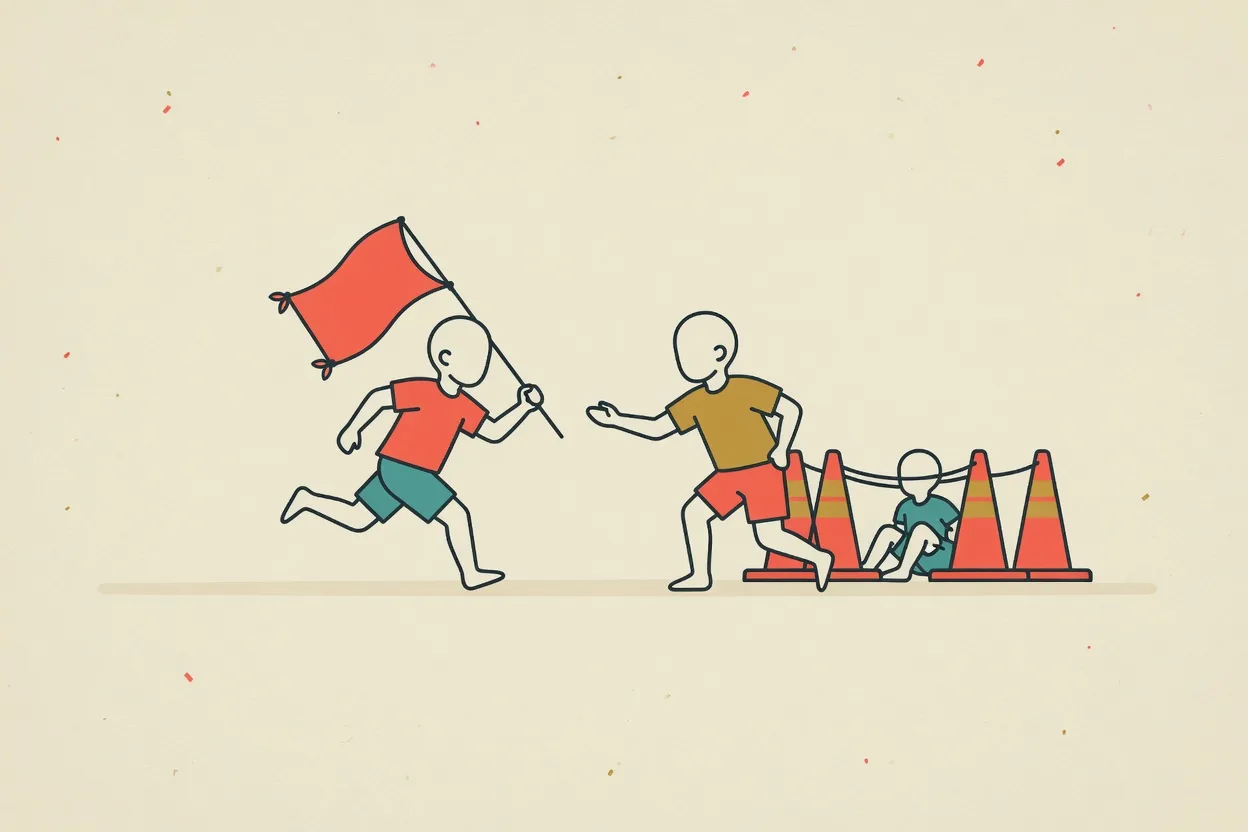
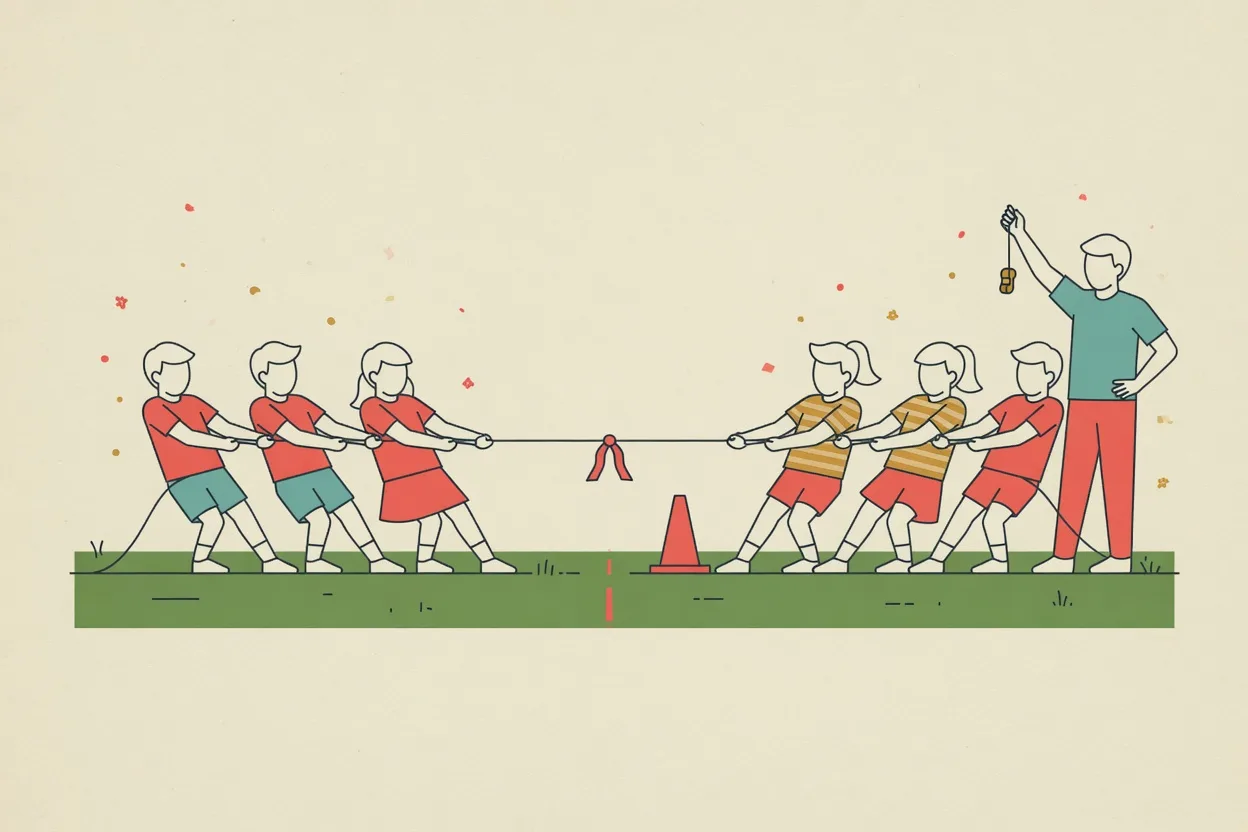
For other calling-and-chasing games at the same party, try capture the flag or freeze tag, or settle the two teams with a round of tug of war once everyone has had a turn being called over. Browse local entertainers if you would rather someone else ran the line.
What you need
- A flat stretch of grass at least thirty feet long, or a cleared gym floor
- Two teams of five or more, matched for size where you can manage it
- Nothing to hold beyond each other's hands — no props, no rope needed
How to play red rover
- Split into two teams of at least five, and have each team form a line facing the other, about thirty feet apart, holding hands in a loose grip that is easy to pull apart — never locked or laced fingers.
- One team calls a single named player from the other side: "Red rover, red rover, send [name] right over."
- The named player jogs — not sprints — toward the calling team's line, aiming for a gap between two players rather than straight at one person.
- If the runner breaks through (the grip simply comes apart), they pick one player to take back to their own team. If the line holds, the runner joins the calling team instead.
- Reform both lines with the new arrangement, and the other team calls next.
- Keep going for a set number of rounds or a set number of minutes — there is no fixed finish line, so most families just agree on a time and stop there.
Variations
No-contact version (ages 4–6)
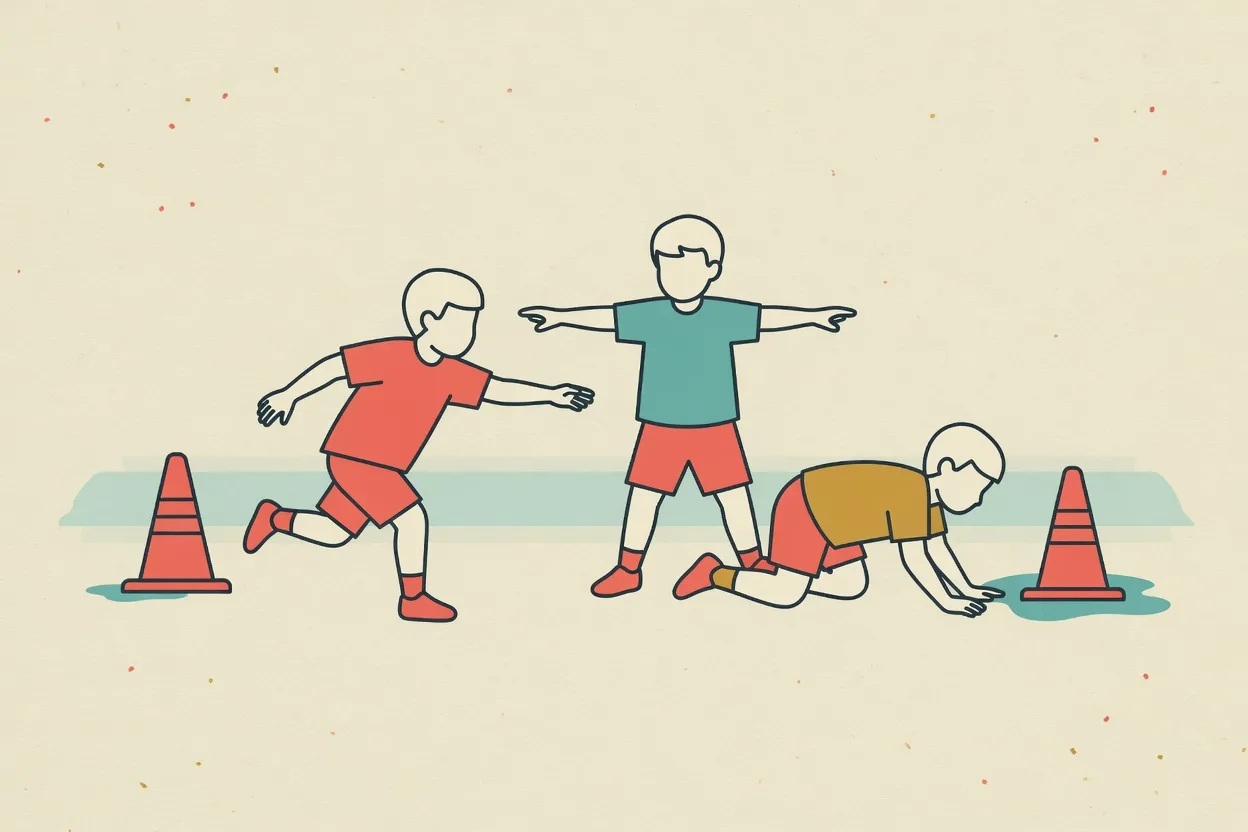
Skip the line entirely. Two teams stand behind their own line facing each other, and the named runner has to sprint across and back before being tagged by a chaser from the other team, rather than breaking through anyone. All of the calling and the drama, none of the collision, and it is genuinely the better choice for a group under seven.
Ribbon rover
Instead of holding hands, each pair holds either end of a loose strip of crepe paper or ribbon between them. It slips free the moment any real pressure hits it, which makes "breaking through" completely safe by design while keeping the exact same call-and-run structure.
Indoors, on a clear floor
A school gym or an indoor play center with the floor cleared works well when the weather does not cooperate. Keep the loose-grip rule exactly as it is outdoors, and a jog rather than a sprint matters even more on a harder indoor floor than it does on grass.
Frequently asked questions
- How do you play red rover?
- Two teams of at least five form facing lines about thirty feet apart, holding hands loosely, and one team calls, "Red rover, red rover, send [name] right over." That player jogs at a gap in the calling team's line: if the grip comes apart, they take a player back to their own team, and if the line holds, they join the calling team. Then the other team calls.
- Is red rover safe to play?
- Played the traditional way, with locked hands and a full sprint, red rover carries a real risk of shoulder and elbow injury when a running child meets a rigid line. Played with a loose, easily-released grip and a jog instead of a sprint — the version taught in this guide — the risk drops right down, which is how most families and schools now run it.
- How do you make red rover safer?
- Hold hands loosely rather than gripping or lacing fingers, and have the runner jog rather than sprint. Play on grass rather than a hard surface, and aim the run at a gap between two players rather than straight at one person. The ribbon rover variation, where each pair holds a loose strip of ribbon that slips free under pressure, makes breaking through completely safe by design.
- How many players do you need for red rover?
- At least five a side, so ten in total as a realistic minimum. Beyond that, more players is fine as long as both lines stay roughly even in size and strength; mix teams by size as well as by friendship group, and move a player across if one side is clearly stronger partway through.
- What age is red rover suitable for?
- From about seven for the loose-grip running version described here. Younger children do better with the no-contact variation, which keeps the calling and the chase but removes the line-breaking altogether: the named runner sprints across and back before a chaser from the other team can tag them.
Perfect for these parties
Themes that build a whole party around this game — with the food, the decor and a printable invite to match.