
Musical statues is the game to reach for when you have a living room full of children, twenty minutes to fill and no equipment beyond a speaker. It needs no space, no props and no explaining, it works indoors on a rainy afternoon, and it burns off a genuinely useful amount of energy. The catch is that it lives or dies on the judging — a badly judged round produces tears in about ninety seconds, and a well judged one has the whole room laughing at each other.
How to play musical statues
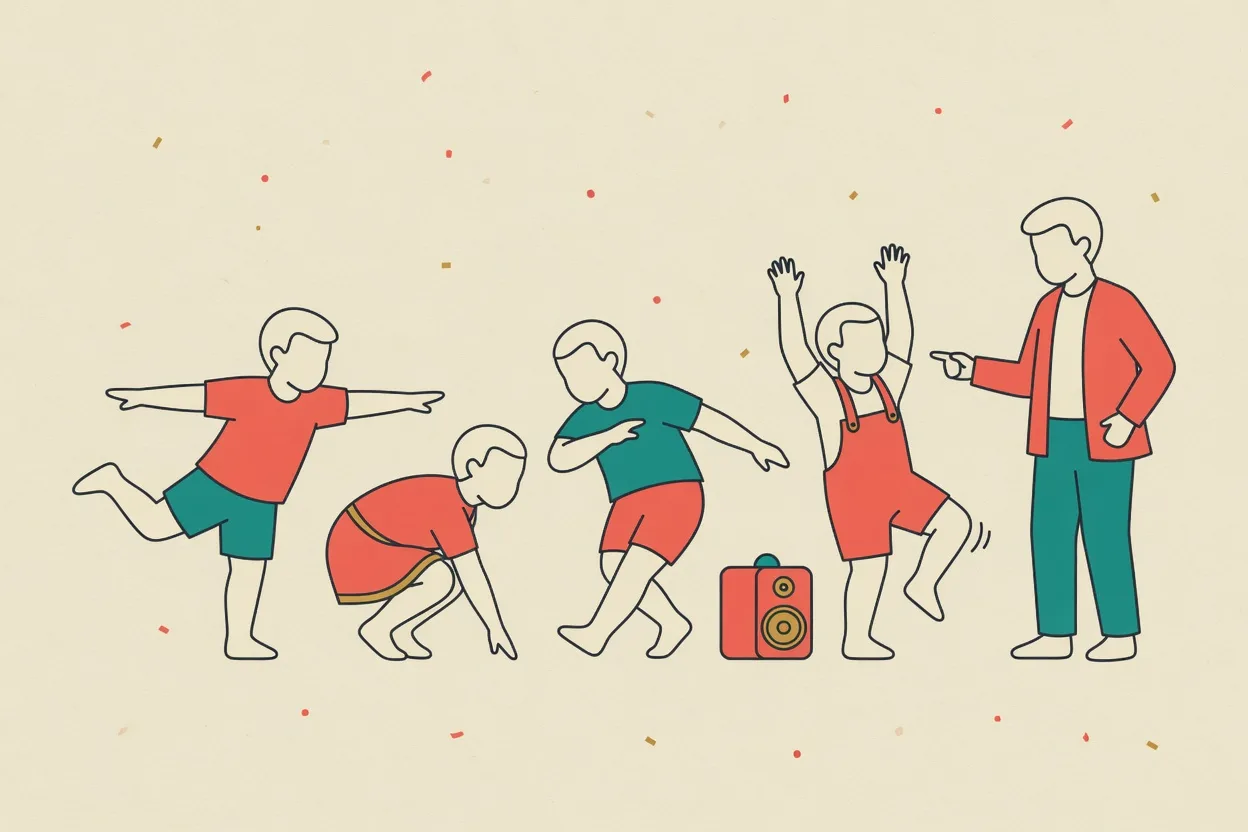
- Clear a space, put music on and tell everyone to dance.
- Without warning, stop the music. Everyone must freeze instantly, exactly as they are.
- The judge walks through the statues looking for movement — a wobble, a foot shifting, a giggle that shakes a shoulder.
- Anyone who moves is out and joins the judging team at the side.
- Start the music again. Repeat until one statue remains, and crown them the winner.
That is the whole game. Everything that makes it good or bad happens in step three.
How to judge musical statues fairly
The judge is the game. Get this right and children accept being out cheerfully; get it wrong and you have a room of six-year-olds convinced of a miscarriage of justice.
- Say what you saw. "Your left foot moved" is accepted instantly. "You're out" is not. Naming the specific movement makes the call feel like an observation rather than a verdict.
- Give a one-second grace period. Nobody stops on a dime. Let the room settle for a beat after the music dies, then start looking.
- Work in one direction. Walk the room in the same order every round so nobody feels singled out or watched more closely than anyone else.
- Try to make them laugh, and say so. Pulling faces at the statues is entirely fair play — but tell the children up front that laughing counts as moving, so it never feels like a trick.
- Be decisive, then move on. Long deliberations over a marginal wobble kill the momentum. Make the call, restart the music within a few seconds, and the disappointment evaporates.
- Give the out-children a job. Promote them to assistant judges. The children who are out are the ones most likely to spoil the game, and this turns them from spectators into the loudest, most enthusiastic officials in the room.
Music that works
You want songs with an obvious, driving beat that children already know the words to, because the singing is what gets the shy ones dancing. Big pop choruses, movie soundtracks and anything with a dance everybody already knows are all reliable. Avoid ballads and anything slow — a room of children swaying gently is not a game.
Two practical notes on running the music. Vary the interval wildly — fifteen seconds, then ninety, then twenty — because a predictable rhythm lets children anticipate the stop and defeats the whole point. And stop the music cleanly with a pause rather than fading it out, so the moment is unambiguous and nobody can argue that they froze on time. Have the playlist ready and the volume set before the first round, not during it.
Variations
- Musical bumps. Instead of freezing, everyone sits down as fast as they can when the music stops — last one down is out. Better than statues for kids under five, who find "sit" a far easier instruction than "freeze completely still".
- Musical chairs. Chairs in a row, one fewer than the number of players, and everyone races for a seat when the music stops. More competitive and more physical than statues, so best for six and up, and it needs a watchful adult to keep the scramble friendly.
- Themed statues. The judge calls a shape before the music stops — freeze like a dinosaur, a superhero, a robot. Rewards imagination alongside stillness and gives the judge something to praise as well as eliminate.
- Statues with no eliminations. Nobody goes out; instead, anyone who moves collects a silly forfeit — a star sticker, a funny hat, one hop in place — and keeps dancing. The best version by far for a room of three- and four-year-olds.
- Team statues. Two teams, a point for every statue still frozen after five seconds. Keeps everybody in the game to the end and removes the sting entirely.
What age is musical statues for?
Three and up, with the format changing as they grow. Three- and four-year-olds should play musical bumps or the no-elimination version — genuine stillness is beyond most of them, and being out early is genuinely upsetting at that age. Five to seven is the classic musical statues age: they understand the rules, they can hold a pose, and they find the whole thing hysterical. From eight upwards, sharpen the judging, add themed freezes or switch to musical chairs, which suits their appetite for a real contest.
Running it well
- Clear the space properly — coffee tables, lamps, drinks and anything with a corner. Frozen children fall over.
- Socks on a wooden floor are a slip hazard. Bare feet or sneakers.
- Keep the whole game to ten minutes or so. Musical statues is a great filler, not a main event.
- Have small prizes for the winner and something for everyone else — a sticker each removes ninety percent of the drama.
- If one child keeps winning, hand them the judging job for a round. They will love it more than winning again.
For the games to run on either side of it, see our complete guide to kids party entertainment, or browse local entertainers if you would like someone else holding the speaker.
Frequently asked questions
- Is musical statues the same as freeze dance?
- Yes — freeze dance is the name most American kids know it by. Music plays, everyone dances, the music stops and everyone freezes, and anyone who moves is out.
- How do you judge musical statues fairly?
- Give everyone a one-second grace period after the music stops, walk the room in the same order every round, and name the exact movement you saw ("your left foot moved") rather than just saying "you're out." Make the call quickly, restart the music within a few seconds, and turn anyone who's out into an assistant judge.
- What's the difference between musical statues, musical bumps and musical chairs?
- In musical statues, everyone freezes when the music stops and anyone who moves is out. In musical bumps, everyone sits down as fast as they can and the last one down is out — easier for kids under five. In musical chairs, players race for a seat with one fewer chair than players, which makes it more competitive and best for six and up.
- How long should a game of musical statues last?
- About ten minutes. Vary the time between stops — fifteen seconds, then ninety, then twenty — so nobody can predict the pause, and treat it as a filler between bigger activities rather than the main event.
Perfect for these parties
Themes that build a whole party around this game — with the food, the decor and a printable invite to match.