
3–8
Ages
4+
Players
Indoors or out
Where
5–15 min
How long
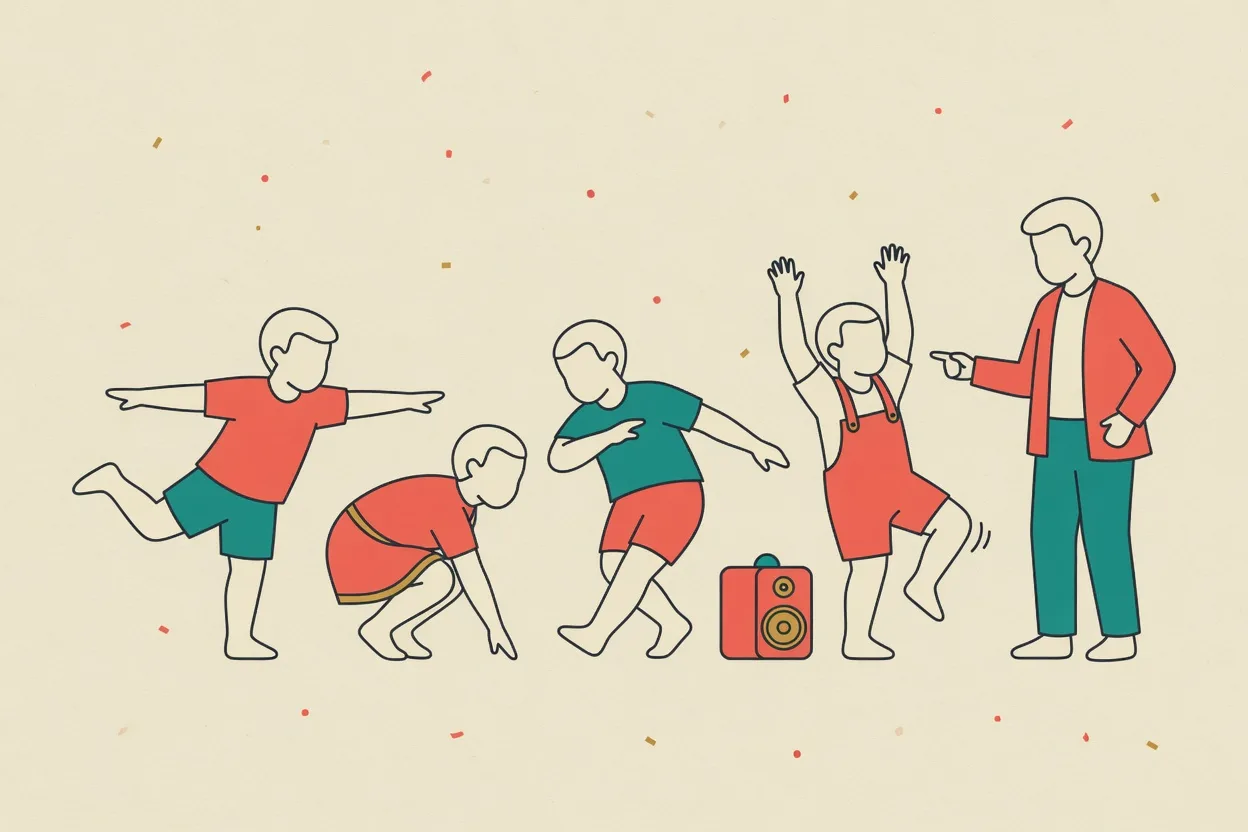
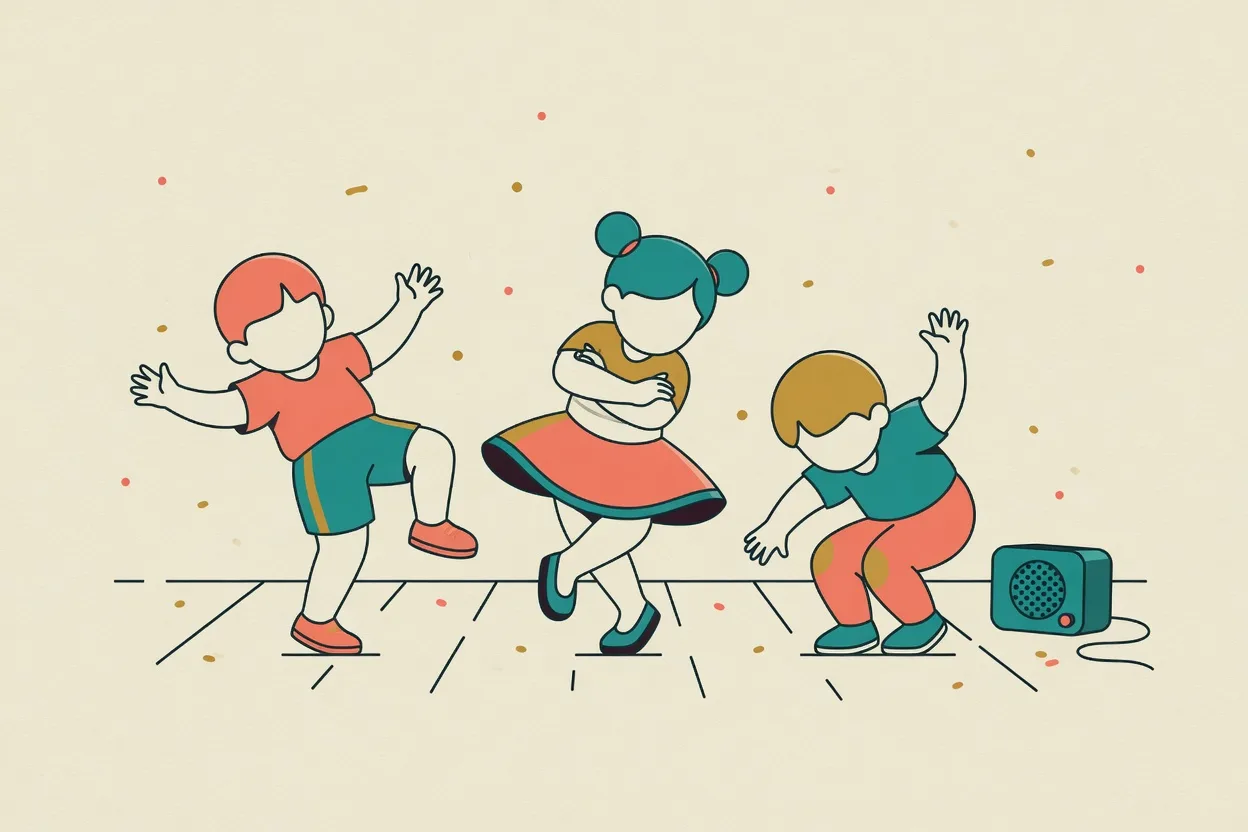
Freeze dance is musical statues by its American name, and the two are close enough that most families just use whichever word they grew up with. Music plays, everyone dances, the music stops, everyone freezes — move after that and you're out. It needs nothing but a speaker and a clear bit of floor, and it burns off a genuinely large amount of energy for a game with zero equipment.
The format is identical whichever name you use — freeze dance and musical statues are the same game by different names, and a child who has only ever heard one will pick up the other the moment the music starts.
Anyone can judge — it doesn't have to be an adult. Handing the job to the first child who's caught out works well, because it gives them something to do immediately instead of sulking, and a six-year-old judge is often stricter and fairer than the grown-up running the music.
Judging the freeze without an argument
This is where the game is won or lost, and it has nothing to do with the dancing. Give a one-second grace period after the music dies before you start looking for movement — nobody stops instantly, and calling a freeze on the exact millisecond the sound cuts is a fight waiting to happen. Say what you saw rather than just declaring someone out: "your foot moved" lands as an observation; "you're out" lands as an accusation, even when both mean the same thing. And decide before you start whether laughing counts as moving — it should, but only if you've said so out loud beforehand.
Run one practice freeze before the game properly starts — a single "ready, and… freeze" with no consequence for moving — so everyone knows what an actual freeze looks like before anything is at stake. It takes ten seconds and quietly removes most of the "I didn't know we'd started" arguments that otherwise show up in round one. For a group bigger than about fifteen, appoint two judges rather than one and have them cover opposite sides of the room — a single judge genuinely cannot see every dancer at once, and pretending otherwise is how fair calls start looking like guesses.
What goes wrong, and the playlist that avoids it
The most common failure isn't the freezing — it's the music. A predictable interval between stops lets sharp children anticipate the freeze and simply stop moving a half-second early every time, which turns a dance game into a stillness contest for the quick ones and leaves everyone else looking slow by comparison. Vary the gap wildly: eight seconds, then forty, then fifteen. Cue up a playlist rather than one long track, so you're never scrambling to find the next song mid-round, and pick music with choruses children already know — the singing is what gets the shy ones dancing in the first place. Stop it cleanly with a pause rather than a fade, so the moment is unambiguous and nobody can argue they froze in time.
For a version with more physical competition once everyone's warmed up, musical chairs uses the same stop-the-music mechanic with an actual race for a seat.
What you need
- Music and a speaker with an easy stop/start
- A clear dancing space with nothing to trip over
How to play freeze dance
- Clear a space and cue up music with an obvious beat.
- Everyone dances however they like while the music plays.
- Stop the music without warning. Everyone must freeze in place, exactly as they are, after a one-second grace period.
- Whoever is still moving, wobbling, or laughing (if you've ruled that counts) is out, or takes a small forfeit in the no-elimination version.
- Restart the music and repeat until one dancer is left.
Variations
No elimination (ages 3–5)
Nobody goes out. Instead, anyone who moves after the freeze collects a small forfeit — a silly pose, a star sticker — and keeps dancing. The best version for the youngest children, who find genuine stillness much harder than staying in the game.
Themed freezes
Call a shape just before the music stops — freeze like a robot, an animal, a superhero. Rewards imagination as well as stillness, and gives you something to praise beyond just naming a winner.
Team freeze
Split into two teams and award a point for every player still frozen five seconds after the music stops. Keeps everybody dancing to the end of the round rather than watching from the side, and takes the sting out of being caught.
Frequently asked questions
- What's the difference between freeze dance and musical statues?
- Nothing — they're the same game under two different names, American and British. Music plays, everyone dances, the music stops, and anyone who keeps moving is out. Use whichever name your group already knows.
- What age is freeze dance good for?
- Three and up, with the no-elimination version for the youngest children. From about five, the classic elimination format works well because being out for the last few minutes of a short game doesn't upset most children that age.
- What music works best for freeze dance?
- Big, familiar choruses with an obvious beat — songs children already know the words to, so the singing pulls even the shy ones onto the dance floor. Avoid anything slow; a room of children swaying gently isn't really playing the game.
- How do you judge freeze dance fairly?
- Give a one-second grace period after the music stops before you start looking, describe what you actually saw ("your foot moved") rather than just declaring someone out, and decide before you start whether a laugh counts as movement.
Perfect for these parties
Themes that build a whole party around this game — with the food, the decor and a printable invite to match.