
5–11
Ages
5+
Players
Outdoors
Where
10–20 min
How long
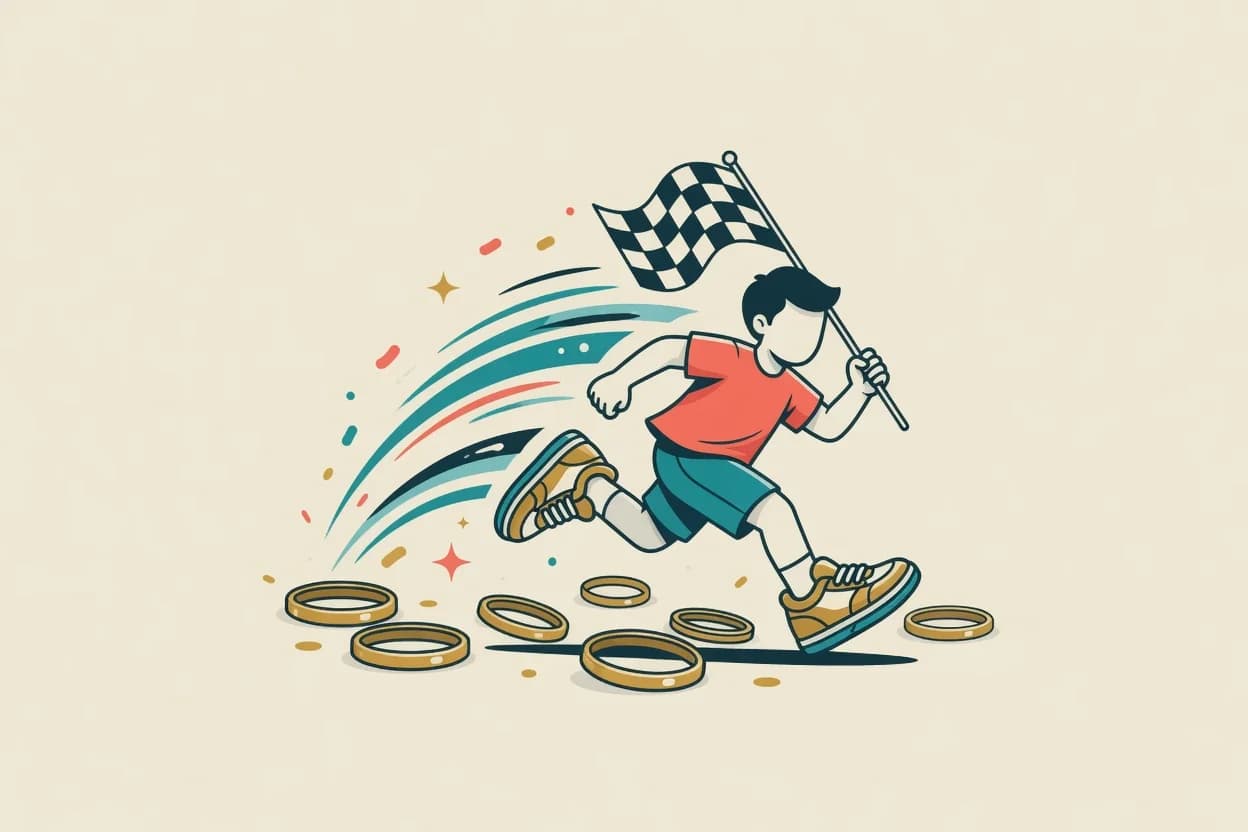
Red light, green light needs almost nothing — a bit of open ground and one person willing to shout — which is exactly why it turns up at every birthday party, every recess, every family barbecue with more than four children present. Runners creep forward on green, freeze dead on red, and whoever reaches the caller first without ever being caught moving wins. It sounds foolproof. In practice it is one of the most argued-over games at any party, because the whole thing rests on one person's word and a group of children who are all, genuinely, sure they were standing still.
The fix for almost every problem this game produces is not a new rule. It is space, and it is how you run the calling — both covered properly below, along with the variations that keep it fresh once the straight sprint gets too easy.
How much space you actually need
Most backyards are not big enough, and that is the single biggest reason this game goes flat. You need at least fifty feet between the start line and the caller — sixty-five is better — because the whole appeal is the risk of creeping just a little too far on a green light, and there is no risk to manage over a twenty-foot dash. A run of that length is what a school playground, a park lawn or a sports field gives you and a patio does not. If real distance is not available, shrink the group instead of the course: five children in a long side yard still has room to feel tense; fifteen children in the same space is just a crowd falling over itself.
Flat grass or a hard playground both work; loose gravel and slopes do not, because a sudden dead stop on an uneven surface is how ankles get turned. Walk the strip yourself before the first round and clear anything a sprinting child might not see — a hose, a sprinkler head, a toy left out from the last game.
The argument that decides whether the game survives
Every round of red light green light produces at least one child insisting they were already stopped. That single dispute, handled badly, is what ends the game in tears — handled well, it barely registers. The fix is entirely in how the caller behaves. Turn fully away from the group on green light so that nobody can claim you were watching them specifically, and turn back sharply and completely on red rather than peeking over one shoulder, so the moment of judgment is the same for everyone. Once you have made a call, it stands. Reopening it for debate teaches children that arguing works, and the next round will have twice as many objections.
Handing the calling job around helps more than any rule change. A child who has just been sent back to the start line accepts it far better once they have stood at the front and made a call or two themselves — it turns "the caller is against me" into "the caller has an actually hard job." Rotate it after every round or two rather than saving it as a prize for whoever wins.
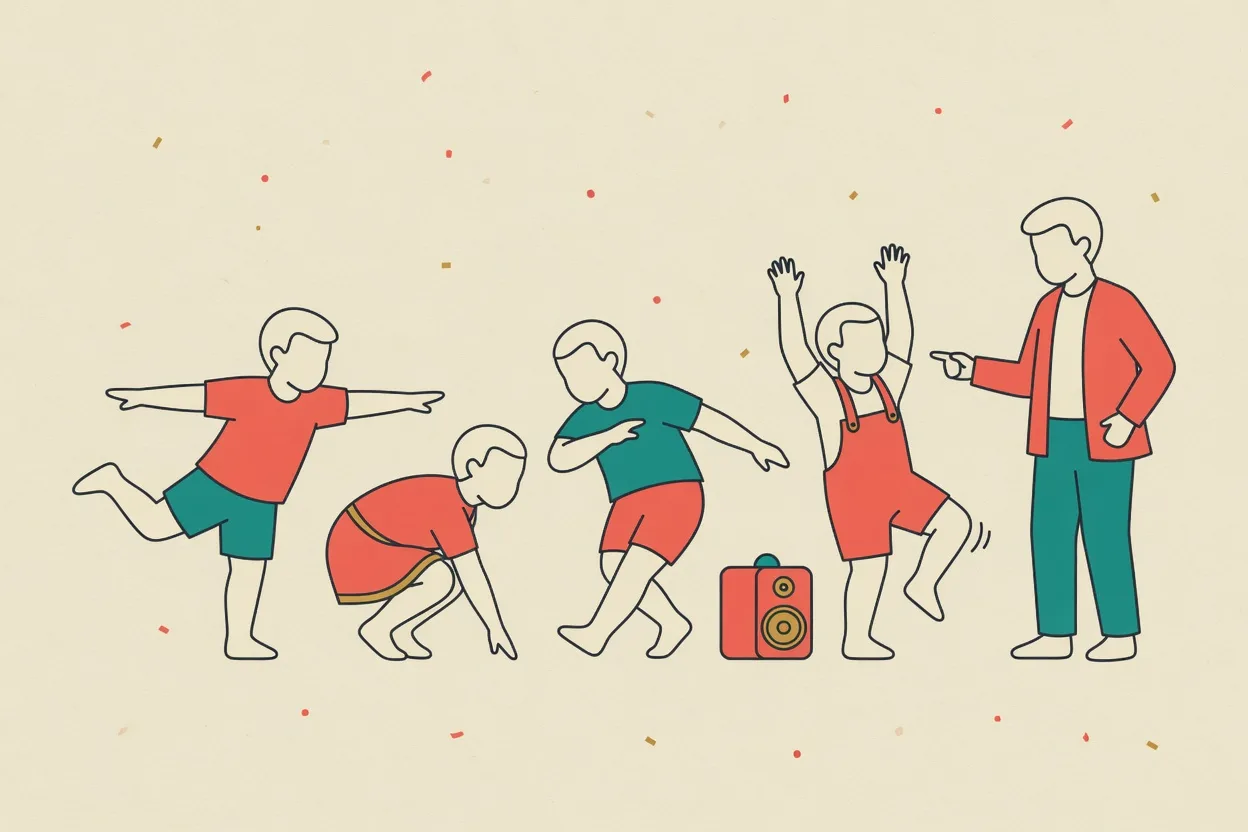
Freeze tag and musical statues both run on the same stop-on-command instinct in a much smaller space, and either one makes a good next game once red light green light has run its course. Try freeze tag for a chase version of the same idea, or browse local entertainers if you would rather someone else did the calling.
What you need
- A flat, open space with a start line and a finish line at least 50 feet apart
- One caller — an adult is best for the first few rounds — standing at the finish line with their back to the group
- Cones, chalk or garden stakes to mark the two lines clearly
- Nothing else. This is one of the few party games that needs no equipment at all
How to play red light green light
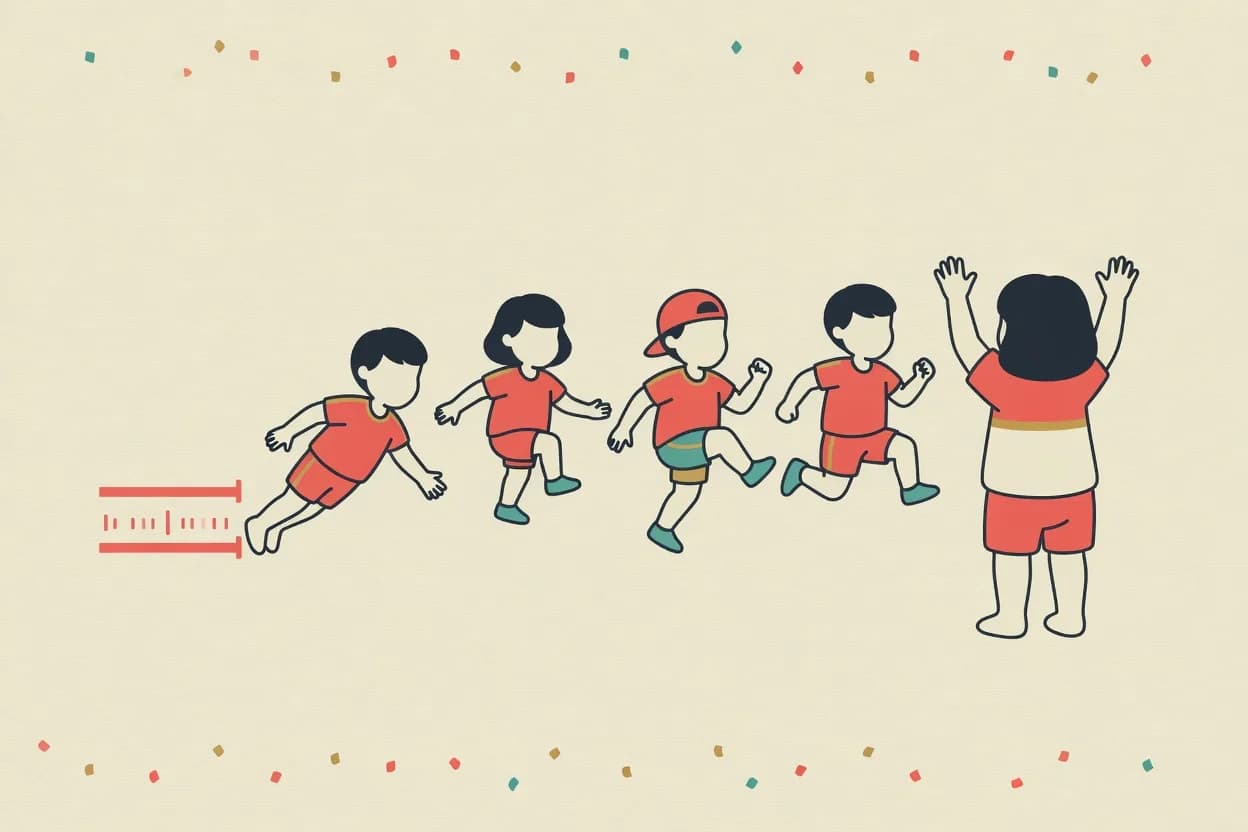
- Mark a start line and a finish line at least fifty feet apart, and have the caller stand at the finish line with their back to the runners.
- Everyone lines up on the start line. The caller shouts "green light" and every runner moves toward the caller — walking, jogging or sprinting, their choice.
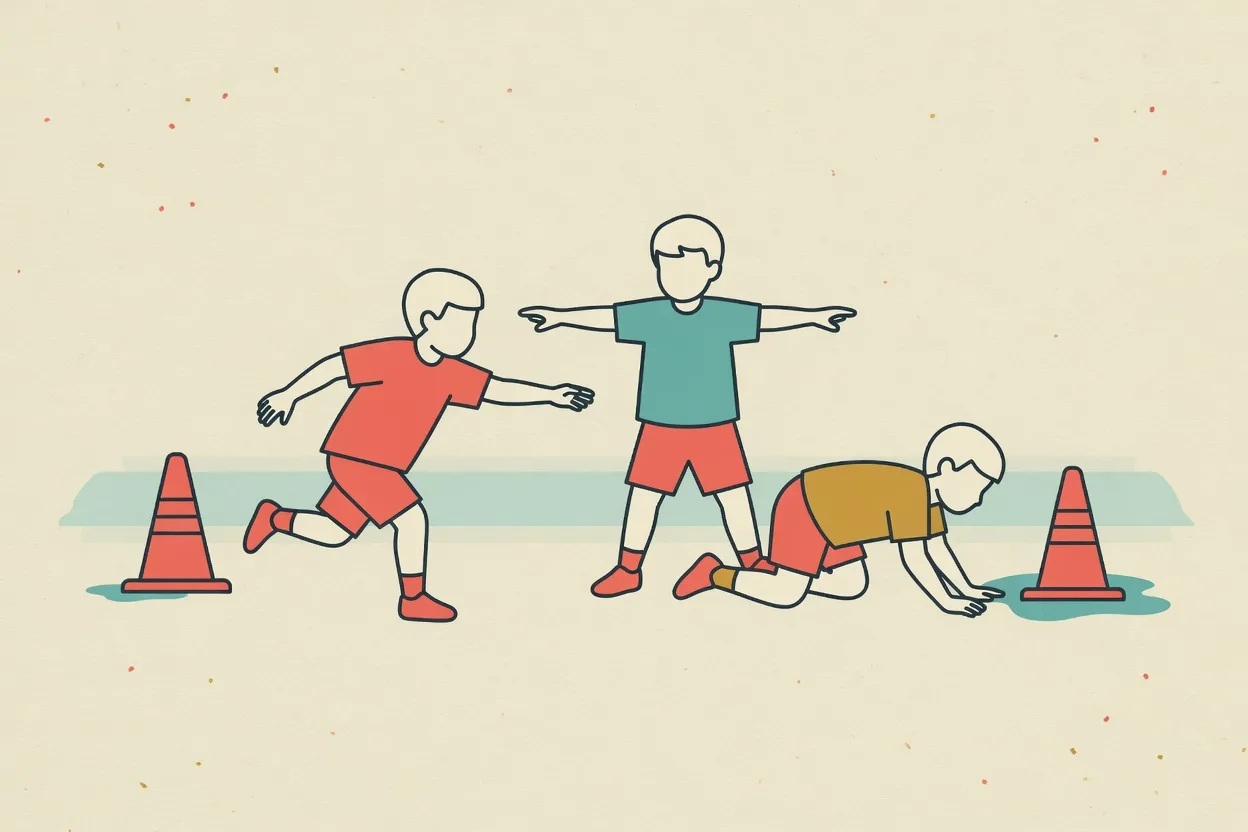
- At any moment, the caller shouts "red light" and spins around to face the runners. Everyone must stop dead exactly where they are, with no more steps and no swaying forward.
- The caller looks along the line. Anyone still moving, or caught mid-wobble, is sent back to the start line.
- The caller turns away again and calls "green light" to restart the runners who are still in play.
- Keep repeating the stop-start pattern. The first runner to reach the caller without ever being caught moving wins and becomes the next caller.
Variations
Silent lights (ages 8+)
The caller uses hand signals instead of shouting — an open palm for stop, a waved-on hand for go. Runners have to watch instead of listen, which is a sharper test of attention for children who find the shouted version too easy, and it quietly removes any dispute about who heard the call late.
Team version
Split into teams of three or four and send them forward together, holding hands or linked at the elbow. If any one player in a team is caught moving, the whole team goes back to the start. It turns an individual elimination game into a shared-responsibility one, and suits a bigger party where a straight one-by-one race would take too long to produce a winner.
Statue check (ages 4–6)
Drop the elimination entirely for younger children: anyone caught moving does five silly wobbles in place instead of going back to the start. Everybody keeps playing until the first child reaches the caller, which matters more at this age than being fair about who is out — being sent back to the start line first is the part four-year-olds actually mind.
Frequently asked questions
- How much space do you need to play red light, green light?
- At least fifty feet between the start line and the caller, and sixty-five is better. A shorter run removes the risk of creeping too far on a green light, which is most of the fun — shrink the group instead of the course if space is tight.
- What happens if you get caught moving?
- You go back to the start line and rejoin on the next green light. Nobody is out of the game for good until one runner actually reaches the caller, so even a child sent back early is still playing right to the end.
- Can you play red light, green light indoors?
- Only if you have real distance to work with — a school gym or a long hallway can work, but a living room cannot. The stop-start tension depends on runners having enough space to build up speed and then kill it, which needs more room than most indoor spaces give you.
- What age is red light, green light suitable for?
- From about five, once children can reliably stop themselves on command. Kids under five usually do better with the no-elimination statue-check version, because stopping dead mid-sprint is a genuine physical skill that takes a year or two to arrive.
Perfect for these parties
Themes that build a whole party around this game — with the food, the decor and a printable invite to match.