
A magic party works best when every kid leaves knowing one real trick, not just having watched someone else do a bunch of them. A trick they can actually perform for a parent or a sibling that evening is worth more than any decoration on the table, and the good ones — a coin behind the ear, a card that seems to change — cost nothing and take five minutes to teach.
What follows is a magic party built around learning, not just watching: games worth running, food with a mystery-box twist, decorations you can put together with black paper and a cardboard top hat, and a printable invitation. It suits ages five through eleven, and it's one of the few themes that genuinely works whether the group is rowdy or a little shy, since a magic trick gives quieter kids something to shine at.
Teach one real trick
Pick a single simple trick everyone can learn together — the classic coin-behind-the-ear, a card force, or a rubber band that appears to jump between fingers — and spend fifteen minutes at the start of the party teaching it step by step. Kids practice on each other, then take turns performing it for the group. It's the single best activity on this whole page, because it turns "watching magic" into "being able to do magic," which is what actually sticks after the party ends.
Send every guest home with the props for their trick — a coin, a deck of cheap cards, a rubber band — in a small paper bag labeled "magic kit." It doubles as the party favor and it's the reason the trick gets performed again at home instead of forgotten by the car ride.
The magic words are the game
"Abracadabra," said properly, with a flourish and a serious face, is funnier to a group of seven-year-olds than almost anything else you could plan. Build a couple of games around saying the magic words correctly — kids love being the one who gets to say them, and it needs no props at all, just a willingness to be a little theatrical.
A trick a kid can actually perform for a parent that evening is worth more than any decoration on the table.
What goes wrong is usually a trick too hard for the group — sleight of hand that takes real practice will frustrate kids in minutes and undercut the whole point of the party. Pick tricks that rely on a simple gimmick rather than skill, so every kid, not just the naturally dexterous ones, leaves able to actually do it. If you'd rather leave the real performing to someone who's done it professionally, a kids magician will run a show and often teach the group a trick of their own at the end, which covers both halves of this page at once.
The other thing worth planning for is the reveal moment — every trick needs a small audience and a bit of hush before the payoff, which is harder to get from a room of a dozen excited kids than it sounds. Do the teaching and practicing in smaller clusters, then gather everyone together only for the final performances, so the big reveal actually lands.
Games for a magic party
Whispered spells
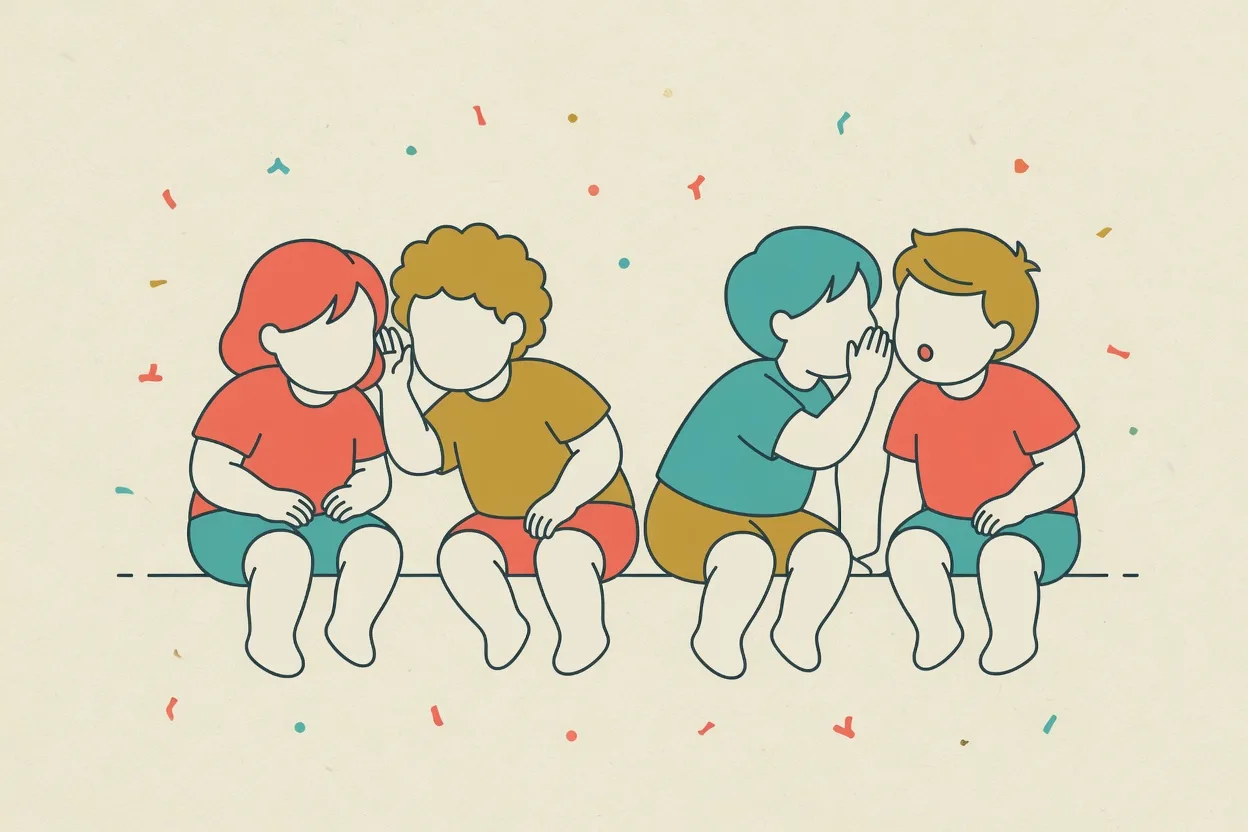
A made-up spell phrase travels around the circle in a whisper and comes out unrecognizable by the end. It fits the magic-words idea perfectly and gives the group a quiet, seated game between the more physical ones.
Full rules for the telephone game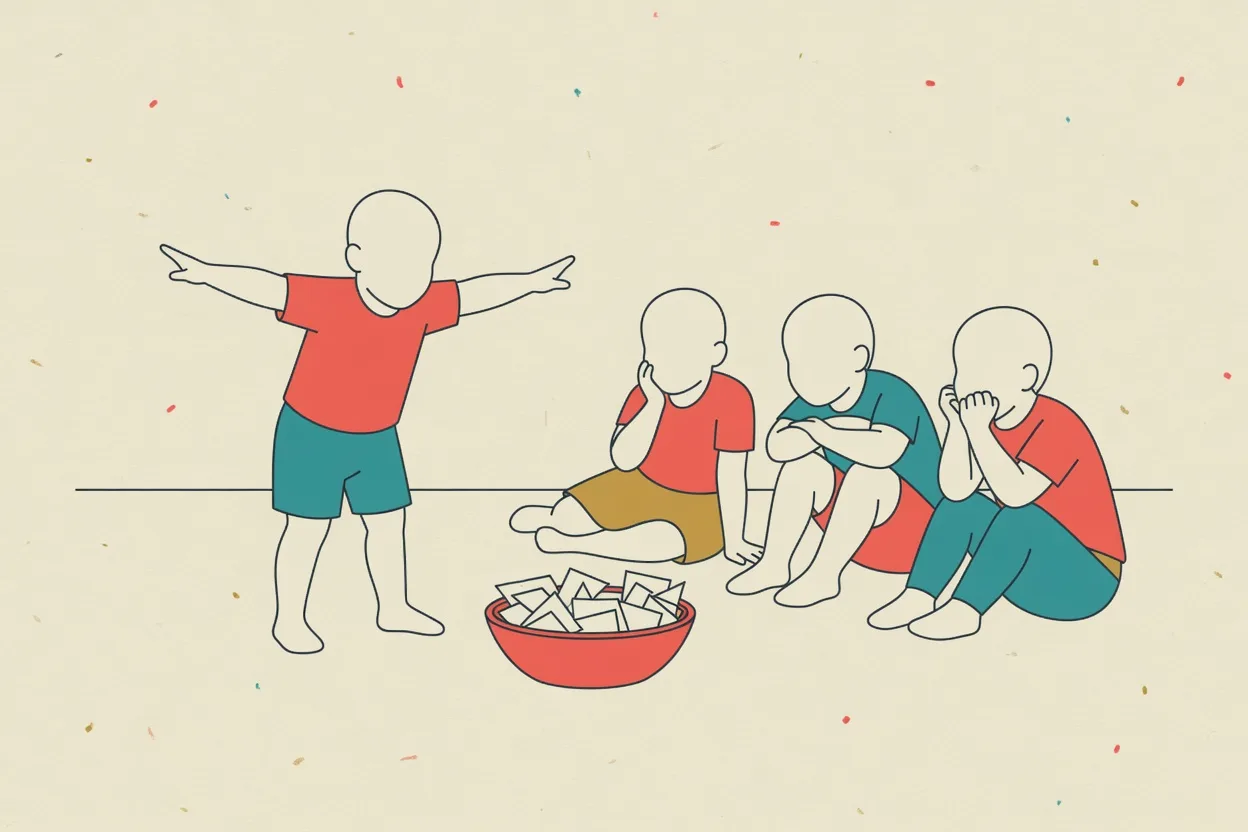
Guess the trick
One kid mimes a magic trick — pulling a rabbit from a hat, sawing someone in half, making a coin vanish — while the rest guess what's being performed. It rewards imagination and hamming it up, which suits this theme better than almost any other game.
Full rules for charades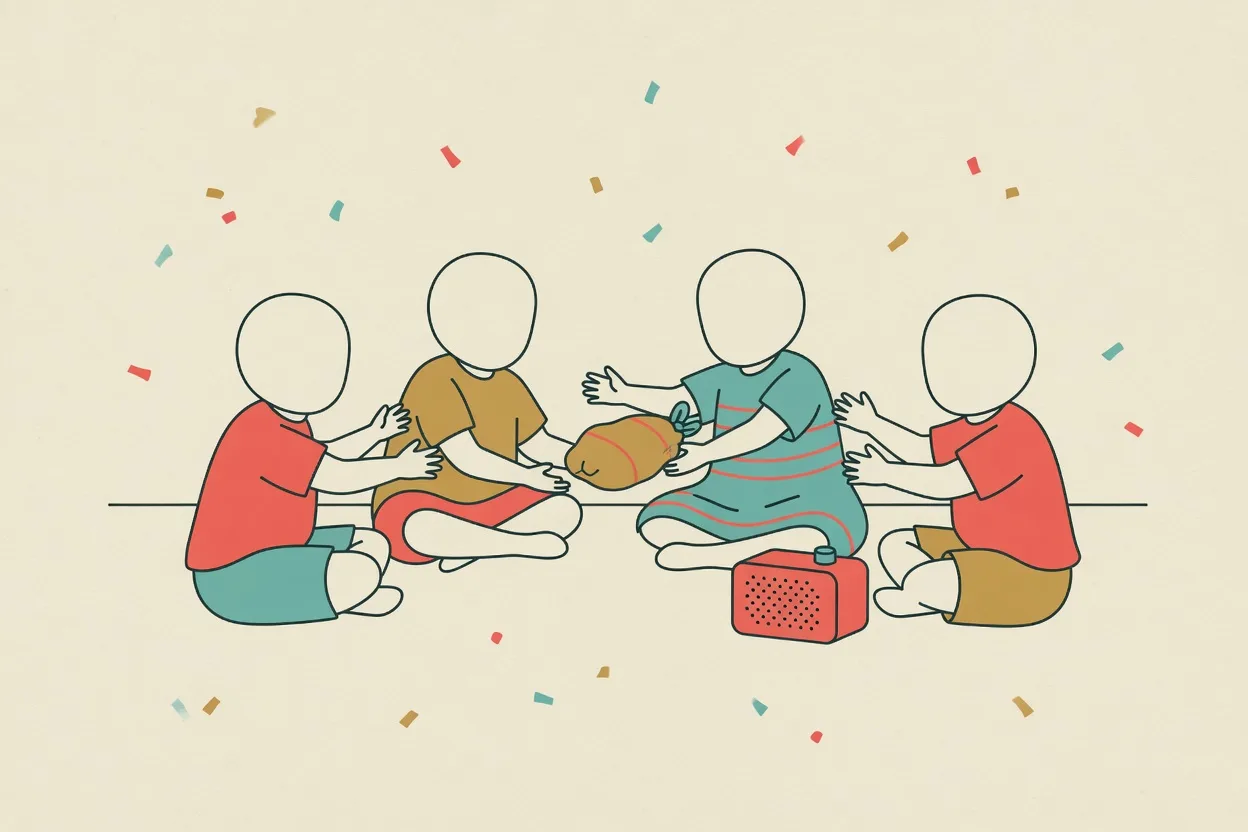
Pass the wand
A wand or wand-shaped object passes around the circle to music, and whoever's holding it when it stops has to say the magic words and take a small forfeit. Two minutes to set up, and it works well as the wind-down game once the tricks have all been taught.
Full rules for hot potato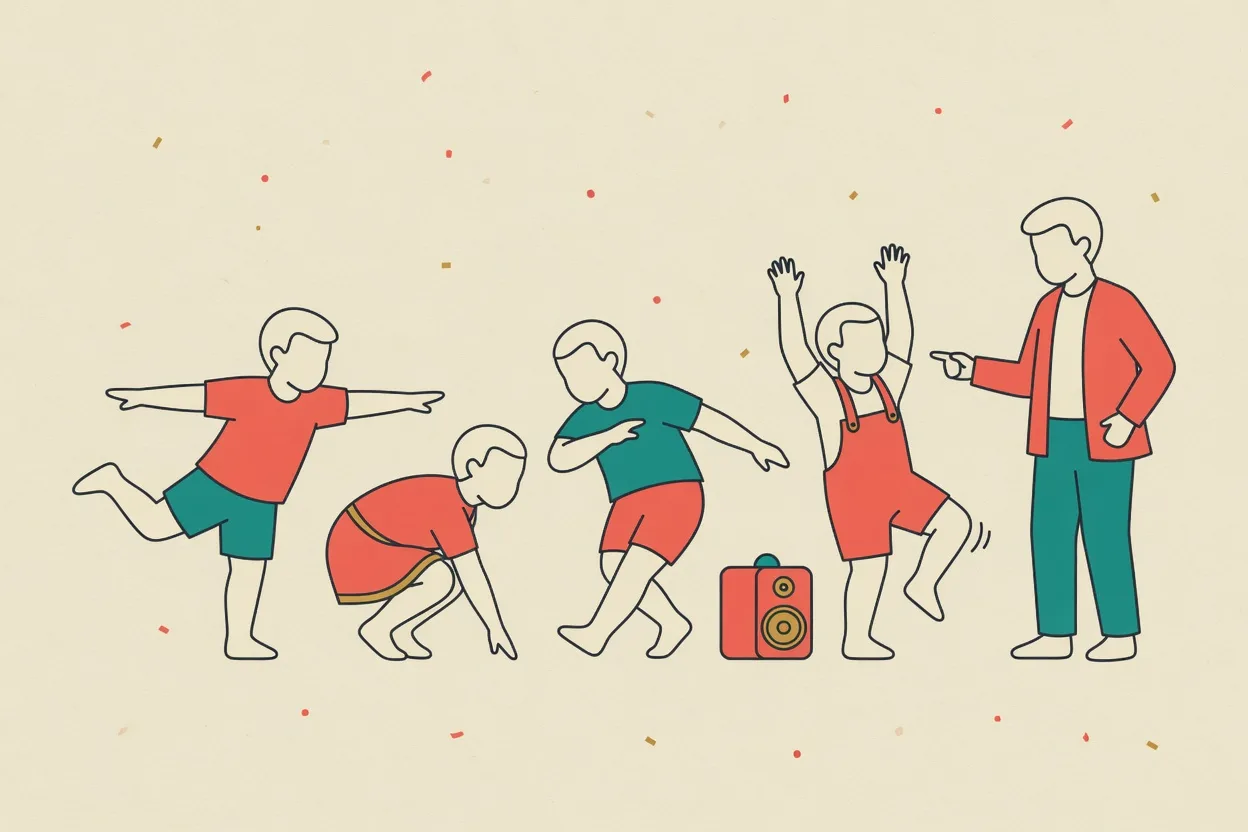
Freeze the spell
Everyone dances until the music stops, at which point a spell has "frozen" them mid-move. It's a familiar game dressed in one line of theming, and it needs nothing beyond a phone and a speaker to run.
Full rules for Freeze the spell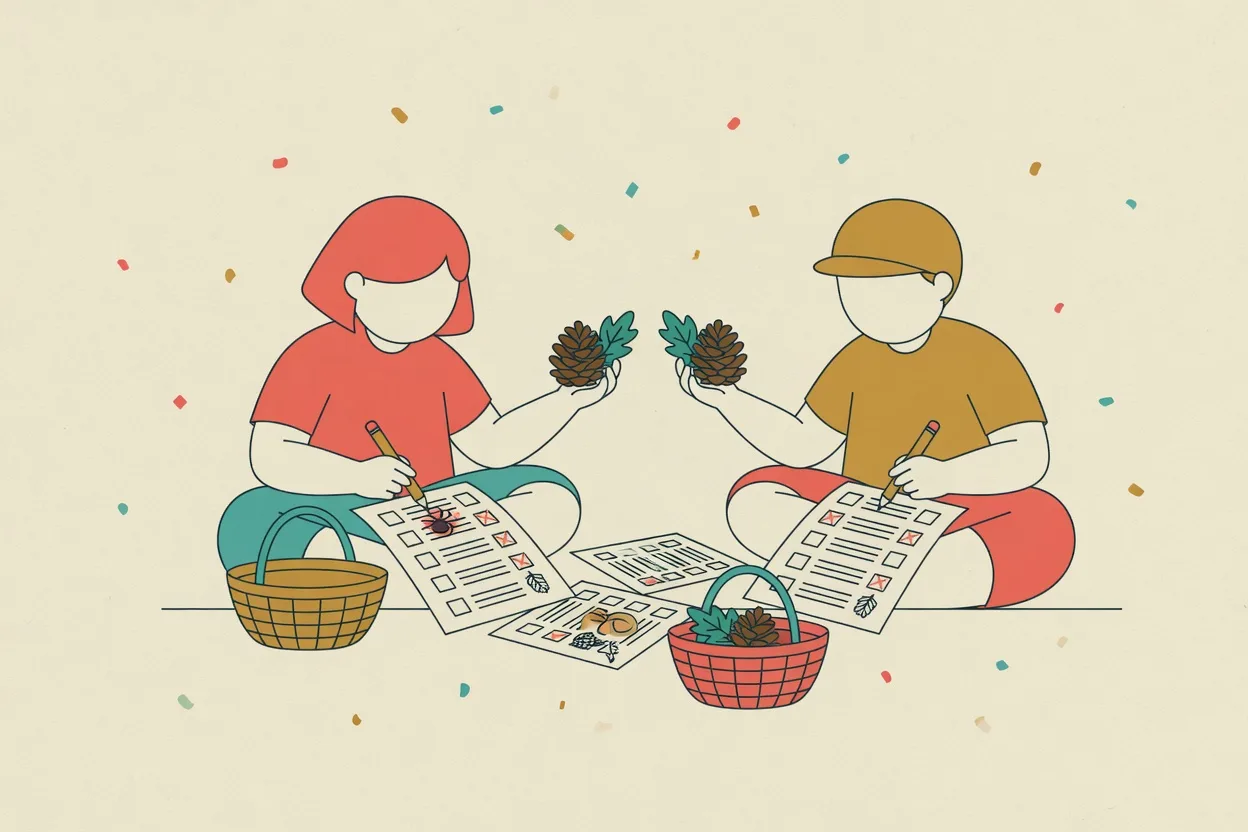
Find the vanished object
Hide a handful of small "vanished" items — a coin, a deck of cards, a small toy rabbit — around the yard or house and send kids out with a checklist. It's the quiet counterweight to the performing games and works well right before the food table.
Full rules for scavenger huntFood ideas for a magic party
Mystery-box snack cups
Small paper cups filled with a mix of snacks — a few crackers, a couple of grapes, one chocolate — sealed with a circle of paper on top that says "reveal your fortune" before peeling back to eat. The reveal moment is the entire trick; the snacks themselves are ordinary.
Disappearing act cookies
Plain round cookies iced in black with a white star or moon piped on top, arranged on a tray with a sign reading "they won't last long." No special skill needed beyond basic icing — the sign does the joke for you.
Rabbit-in-a-hat cupcakes
Chocolate cupcakes with a small marshmallow or white candy "rabbit ear" pair pressed into black icing to look like a rabbit peeking out of a hat. About a minute of extra work per cupcake over a plain frosted one.
Card-suit fruit skewers
Strawberries, blueberries, and cubed melon threaded onto skewers, with a small paper card-suit shape — heart, spade, diamond — taped to the top of each stick. It's a five-minute craft addition to an otherwise ordinary fruit skewer.
Purple potion punch
Grape juice or purple fruit punch served in clear cups with a drop of blue food coloring swirled in right before serving so the color shifts as it's handed out. Serve it from a dark bottle or jug labeled "potion" for the full effect.
Decoration ideas for a magic party
The top-hat photo corner
A large cardboard top hat, painted black, propped against a wall with a stuffed rabbit toy peeking out of the brim. Kids pose behind it as if pulling the rabbit out themselves, and it becomes the default photo spot for the whole party.
Black-and-gold table setting
A plain black tablecloth with gold or yellow paper stars scattered across it, plus a few playing cards tucked between plates. It costs the price of one tablecloth and a pack of stickers, and it reads as a genuine magic-show table.
A wand centerpiece
A cluster of chopsticks or wooden dowels, painted black with white or silver tips, bundled together in a jar as a table centerpiece. Twenty minutes with paint and a jar covers the whole table for less than a bought decoration.
Playing-card bunting
A string of oversized paper playing cards — cut from card stock and drawn or stamped with suits — hung along a wall or doorway on twine. It's a genuinely quick project and it turns spare card stock into the party's main banner.
The magic-words sign
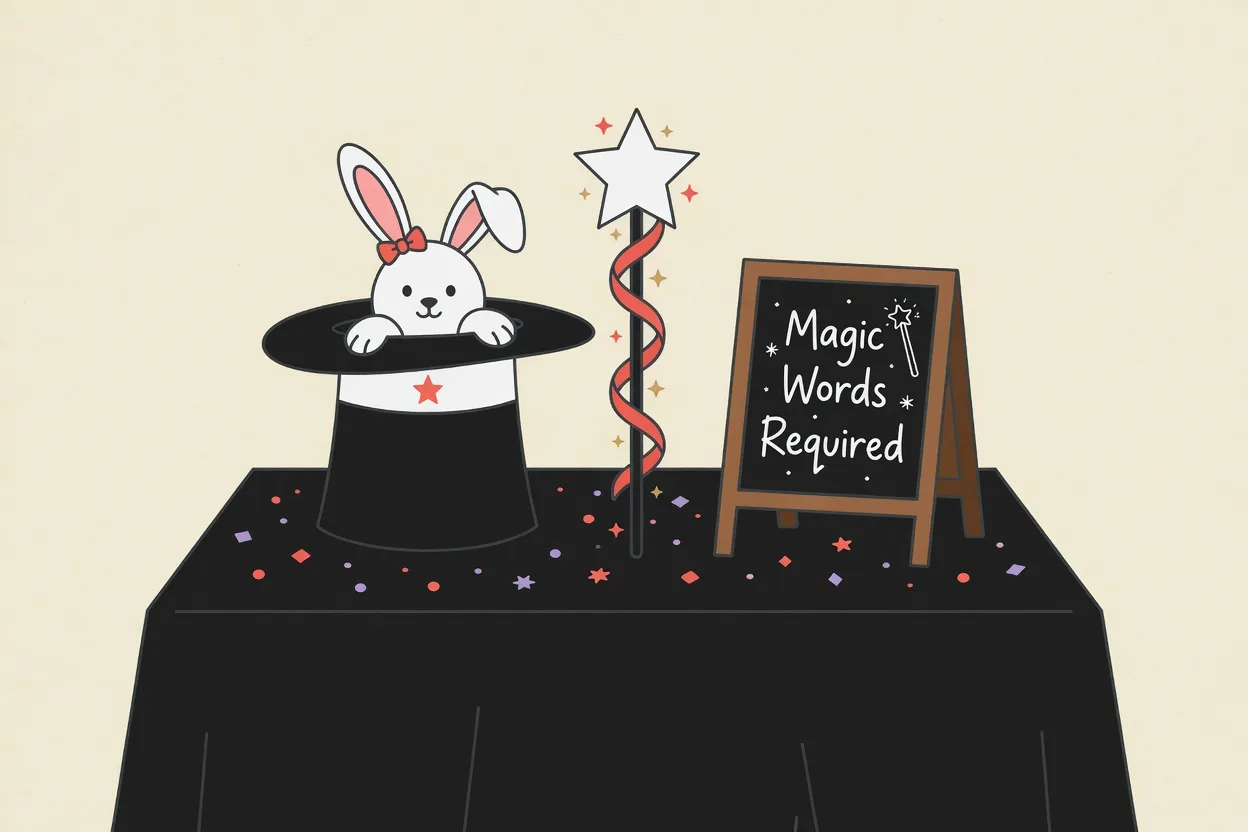
A chalkboard or a sheet of black paper by the door reading "Magic Words Required Beyond This Point," so every guest says "abracadabra" to get in. It costs nothing and starts the theming the second anyone arrives.
Two more things worth sorting before the big day: where to buy the plates, balloons and piñata and what the whole party is likely to cost
Hosting somewhere new this year? 12 Kids Birthday Party Places in Atlanta (2026)
Printable magic invitation
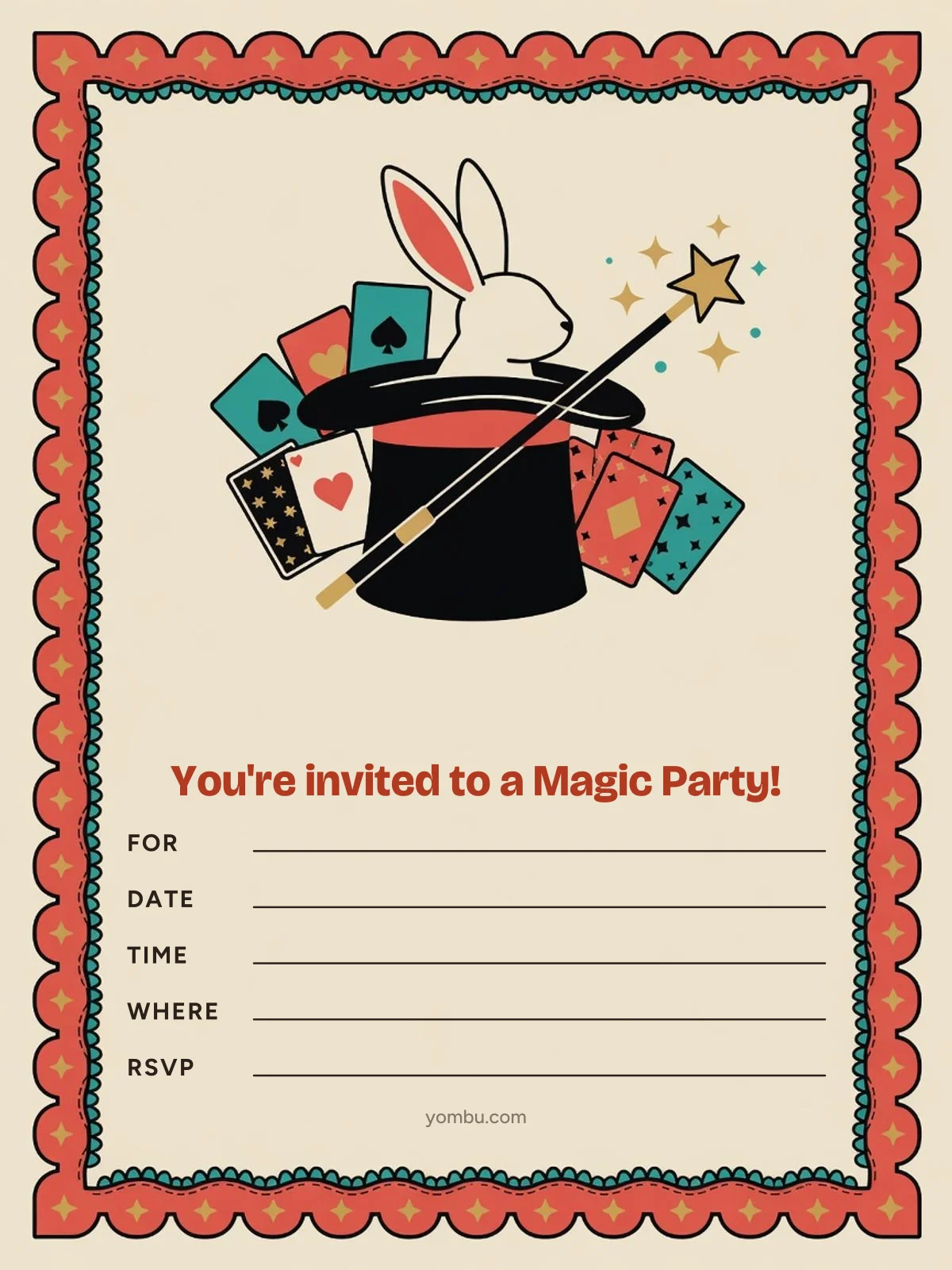
Free to download and print at home — write in the date, the time and the address, and it is done. It prints cleanly on ordinary paper at half-letter size, two to a US Letter sheet, or on 5×7 cardstock, and it works just as well sent as a picture in a group text if you would rather not chase a class list for addresses.
The magic invitation
One card, blank where the details go. Drop your email and it’s yours — print as many as you need, nothing to pay.
Hire a kids' magician
Everything above assumes you are running the afternoon. You do not have to. A character performer arrives in costume and in character, runs the themed games, handles the child who is frightened and the child who wants to be the star, and gives you an hour to put the candles in the cake — which is usually the difference between hosting the party and watching it.
Party characters by city
- Party characters in Atlanta
- Party characters in Boston
- Party characters in Chicago
- Party characters in Dallas
- Party characters in Houston
- Party characters in Jacksonville
- Party characters in Los Angeles
- Party characters in Miami
- Party characters in New York
- Party characters in Phoenix
- Party characters in San Diego
- Party characters in San Francisco
Frequently asked questions
- What age is a magic party best for?
- Five to eleven. Younger kids enjoy the magic-words games and watching a performance; kids seven and up get the most out of actually learning and practicing a trick themselves, which is the part of the party that sticks longest.
- What magic trick can kids actually learn at a party?
- Pick a trick built on a simple gimmick rather than real sleight of hand — a coin that appears behind an ear, a rubber band that seems to jump fingers, a card force. Anything requiring genuine practiced skill will frustrate the group instead of delighting them.
- How do you throw a magic party on a budget?
- A deck of cheap cards, a bag of coins and a few rubber bands cover the trick-teaching side for a few dollars total. Black paper, a cardboard top hat and paper stars handle the decorations without a single store-bought magic-themed party pack.
- Can you hire a magician for a kids party?
- Yes — kids magicians run a full show scaled to the age group and often close by teaching the group a simple trick of their own, which pairs neatly with this page's whole approach. It's worth it if you'd rather host than perform.
- How long should a magic party run?
- About two hours: twenty minutes of arrivals, thirty minutes teaching and practicing the main trick, thirty on the magic-word games, thirty for food, and the rest for final performances and cake before everyone heads home with their magic kit.