
3–10
Ages
4+
Players
Indoors or out
Where
15–30 min
How long
A piñata turns fifteen seconds of chaos into the most-talked-about part of the party, which is exactly why it is worth setting up properly. Done well, every child gets a fair turn, the candy comes down in one satisfying burst, and the scramble afterwards is supervised rather than a free-for-all. Done carelessly, it is a stick swinging near small heads and a stampede for candy on a hard floor — the same game, badly run.
This guide covers both versions worth knowing: the classic swing, for children old enough to handle a blindfold and a bat safely, and the rope-pull version, which removes the bat entirely and works from about three years old.
Swing order and turn limits
Decide the running order before anyone picks up the stick — youngest to oldest works best, because it gets the least confident children their turn while the piñata is easiest to hit and the line behind them is at its most patient. Give each child a fixed number of swings, three is generous, regardless of whether they connect, and count out loud so nobody argues about it afterwards. Whoever is holding the rope should raise and lower the piñata gently rather than yank it wildly away — a little movement keeps it interesting, constant dodging just makes it impossible for a six-year-old to ever land a hit.
Everyone else needs a real stand-back line, not an approximate one — mark it with tape or a rope on the ground, at least two arm spans from the swinger in every direction, and hold the next child in line to it as strictly as the swinger themselves. A spare adult holding the rope, rather than the birthday child's parent trying to also referee, keeps both jobs done properly.
The rope-pull version for younger children
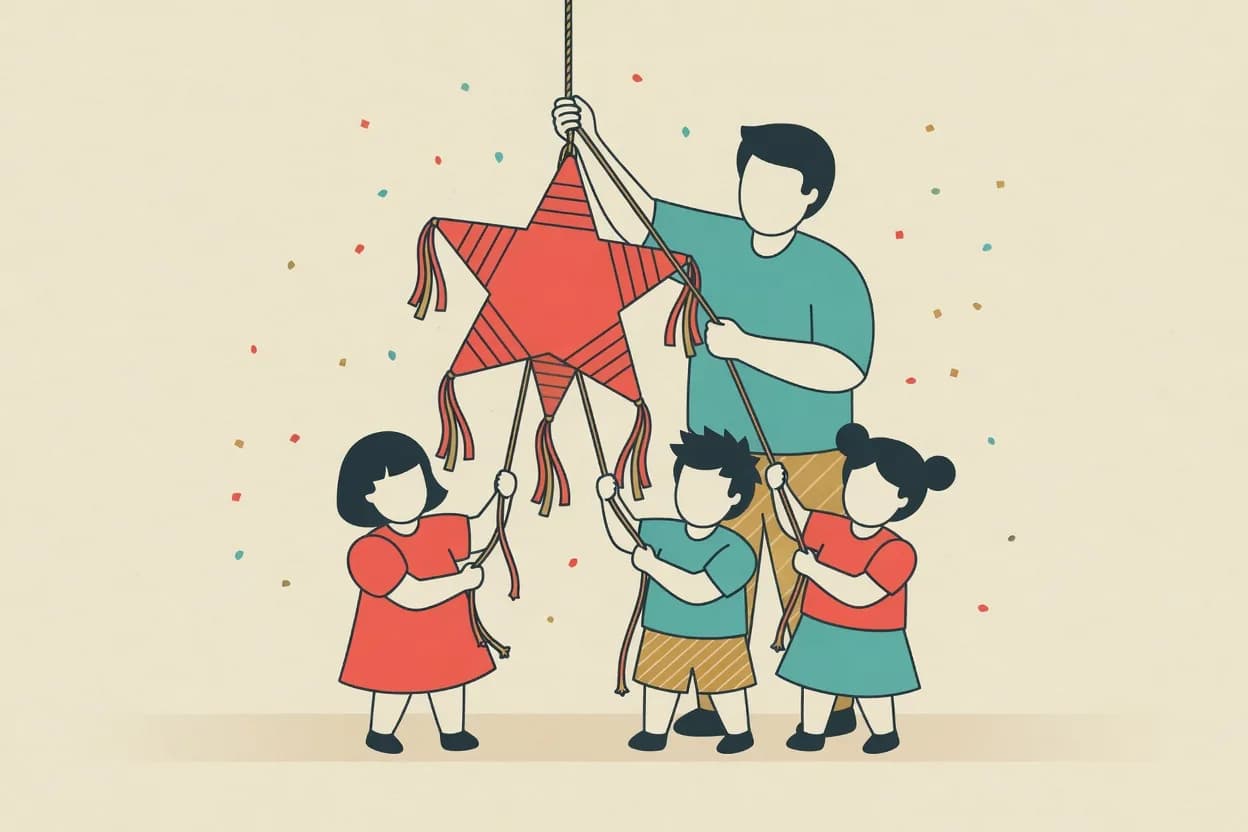
For a group that is mostly under five, skip the bat entirely. Tie four to six ribbons to the bottom of the piñata, one of which is the true string rigged to release the bottom seam, and let each child pull one in turn. Nobody swings anything near anyone's head, nobody needs a blindfold, and the anticipation of not knowing which string is the real one does most of the entertaining. It also solves the age-mixing problem outright: a three-year-old can pull a ribbon exactly as well as an eight-year-old can.
The scramble afterwards is where most piñata parties actually go wrong, not the swinging. Candy hits a hard floor and every child dives at once, and a scrum of eight children going for the same handful of candy on tile or a wooden deck is how knees get scraped and smaller children get knocked over. Scatter the candy across as wide an area as you reasonably can rather than letting them pile in one spot, hold the smallest children back for a few seconds while the older ones spread out, and consider handing out bags rather than leaving it a free grab.
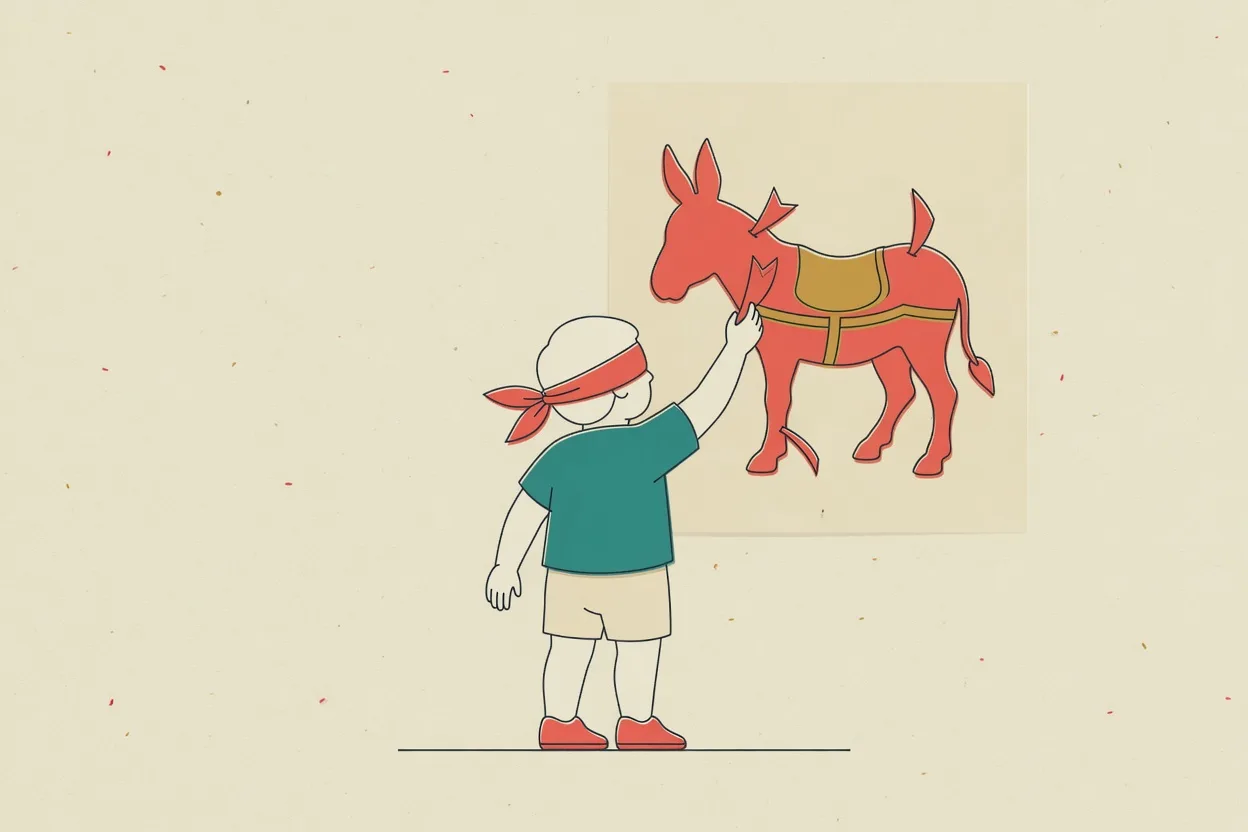
If your line spans a wide age range, the same running-order problem comes up in pin the tail on the donkey — both games are easier with an adult whose only job is calling the order. A party entertainer who runs games for a living will do exactly that without you having to referee your own party.
What you need
- A piñata, store-bought or homemade, filled and sealed
- A stick or plastic bat for the swinging version, or knotted ropes or ribbons for the pull version
- A blindfold, for children old enough to swing safely blind
- A sturdy branch, beam or piñata stand with rope to hang it from
- Candy and small prizes to fill it with, plus something to sweep up the mess
How to play piñata
- Hang the piñata from a sturdy branch, beam or stand, at a height the tallest child can reach with a raised stick, adjusting the rope as the game goes on.
- Line everyone up in a fixed order — youngest first works best — and mark a stand-back line at least two arm spans away on every side.
- For the swinging version, blindfold each child and allow a maximum of three swings, counted out loud; for the pull version, tie four to six ribbons to the base with one rigged to release it.
- Have one adult hold and gently move the rope, raising it a little between swings rather than yanking it away, so every child gets a genuine chance to connect.
- The moment it breaks, hold the smallest children back for a few seconds while the candy is scattered wide, then let everyone collect.
Variations
Piñata pull (ages 3–5)
Tie four to six ribbons to the base of the piñata instead of using a stick, rig one to release the bottom, and let each child pull one in turn. No swinging, no blindfold, and every age can play the same round.
Two-piñata split
For a big party, hang two smaller piñatas at once and split the group in half. It roughly halves the wait in line and means nobody is waiting through a dozen other turns before their own.
No-candy fill
Fill it with small toys, stickers, temporary tattoos or bouncy balls instead of candy if you'd rather avoid a sugar spike five minutes before the cake. It changes nothing about how the game plays.
Frequently asked questions
- What age can children play the piñata game?
- From about three, using the rope-pull version instead of a stick. The classic blindfolded swinging version needs enough coordination and self-control to manage a bat safely, which usually means five or six and up.
- How many hits should each child get at a piñata?
- Three swings is the standard, generous without making the line drag. Count them out loud so there's no argument, and stick to the number even if a child hasn't connected yet — save the disappointment for a longer turn next time, not an unlimited one now.
- How do you stop kids getting hurt at a piñata party?
- Keep a strict stand-back line at least two arm spans away from the swinger in every direction, use a blindfold only for children old enough to control a bat safely, and use the no-bat rope-pull version for anyone under about five.
- What's the best way to hand out piñata candy fairly?
- Scatter them as widely as you can when the piñata breaks rather than letting them fall in one pile, hold the youngest children back for a few seconds while the older ones spread out, and consider handing out bags so it's a collection rather than a grab.
Perfect for these parties
Themes that build a whole party around this game — with the food, the decor and a printable invite to match.