
5–14
Ages
8+
Players
Outdoors
Where
20–40 min
How long
A relay race is less one game than a format you can run almost anything through. Once you have the skeleton set — lanes, a turning point, a hand-off — you can plug in a straight sprint, a spoon, a dress-up box or a wheelbarrow and get a completely different race out of the same setup, without changing anything about how it actually runs. That skeleton is what this guide is really about: get the lanes and the hand-off right, and any relay you build on top of it will work.
Below is the core format, the team-balancing that stops one side winning every single leg, and three ready-made versions — baton, spoon and dress-up — to run it with.
The hand-off is where relays actually go wrong
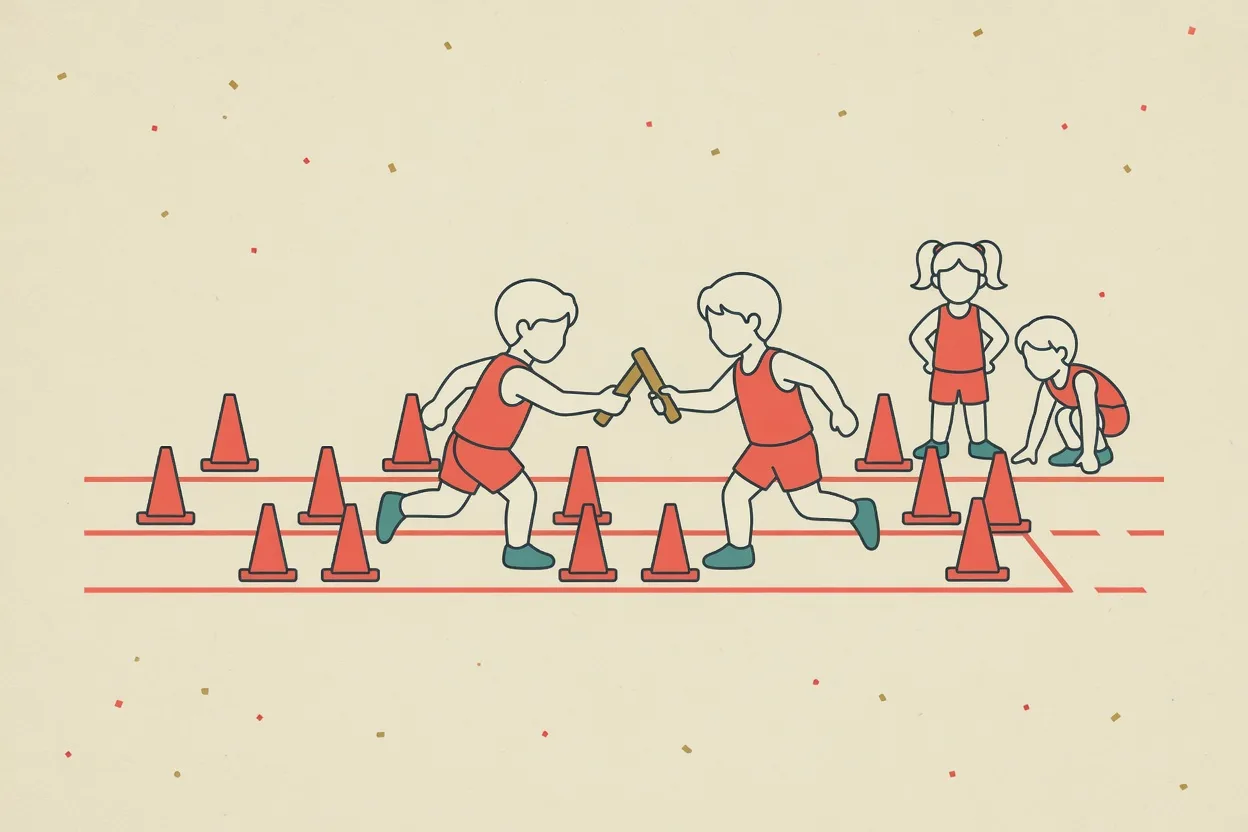
Almost every relay problem happens in the two seconds around the changeover, not during the running. A returning runner who throws the baton ahead rather than carrying it into a real hand-to-hand pass turns a race into a scramble on the ground. A next runner who is chatting, facing the wrong way, or standing a pace back from the line loses their team a second or two on every single leg, which adds up fast over six runners. Fix both with one instruction, said before the first leg: the incoming runner runs all the way to their teammate and places the baton in their hand — no throwing it, no dropping it at their feet — and the next runner stands with a hand already out, eyes on their teammate, from the moment the leg before theirs starts. A single practice hand-off before the clock starts, with no running involved, fixes most of this in under a minute and saves several fumbled changeovers later.
A clear, consistent starting signal matters more than it seems — a shouted "go", a whistle, or a raised and dropped arm all work, as long as it is the same signal every single leg. Changing it partway through, or letting one lane's runner get a half-second head start because they were watching more closely, is a small unfairness that children notice immediately and will mention for the rest of the party.
Balancing teams so it isn't over in the first leg
Even headcounts are not the same as even teams. Stack all the fastest runners on one side and the race is decided in the first leg, however evenly you split by number. Spread your quickest and slowest runners across every team instead, and think about running order rather than just team lists — putting your fastest runner first can build an early lead that holds up psychologically even once the other legs are close, while saving them for last sets up a genuine final-leg finish. With a wide age range, let older children run the harder variation, such as dress-up or a longer leg, while younger ones run a shorter, simpler one within the same overall relay, so nobody is racing an opponent twice their size. Rotating who anchors each relay, rather than always saving the same fast child for last, keeps the ending unpredictable and stops the same one or two children carrying every race.
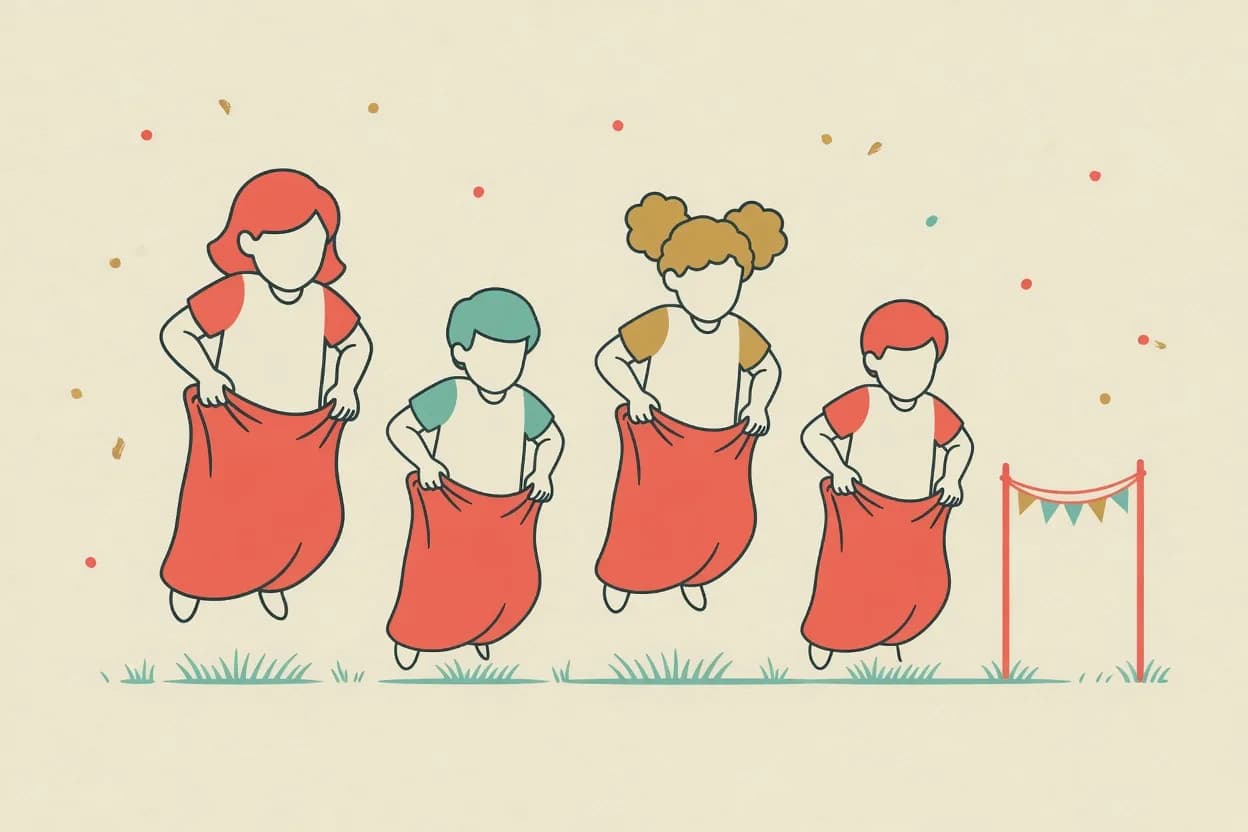
Relays pair naturally with an obstacle course leg, a wheelbarrow race leg, or a straight sack race for a full field-day afternoon. Browse local entertainers if you'd rather someone else called the legs and kept the score.
What you need
- A flat course at least fifteen paces long, split into a lane per team and marked with cones or chalk
- A turning point for each lane — a cone, a bucket or a garden stake to run around
- Something to pass at each changeover — a baton, a wooden spoon, a beanbag, or a full outfit for a dress-up relay
- Evenly sized teams, marked with colored pinnies or bandanas if you have more than two
How to play relay races
- Split into even teams of four to six, and balance them by age and speed as well as by headcount.
- Mark out parallel lanes, one per team, each with a turning point fifteen to twenty paces from the start.
- Line each team up single file behind their own start line, with the first runner holding whatever is being passed — a baton, a spoon, a beanbag.
- On "go", the first runner in each lane runs to their turning point, around it, and back to their own team.
- They hand over whatever they're carrying to the next runner in line — a clean hand-to-hand pass, not a drop-and-go — who then sets off on the same out-and-back run.
- Keep going until every runner on a team has had a turn. The first team with all runners finished and lined up in order wins.
Variations
Spoon relay
Carry an object balanced on a spoon instead of gripping a baton — a small ball, a beanbag, or, outdoors on grass, a hard-boiled egg. Dropping it means stopping to pick it up and continuing rather than starting the leg over, which keeps one fumble from ending a team's whole race.
Dress-up relay
Each runner puts on a full outfit at the turning point — a hat, a pair of oversized rain boots, a coat, sunglasses — then takes it all off again before running back to hand over. Slower and much funnier than a straight sprint, and it rewards coordination over raw speed, which levels out a team with a wide age range.
Piggyback or wheelbarrow leg
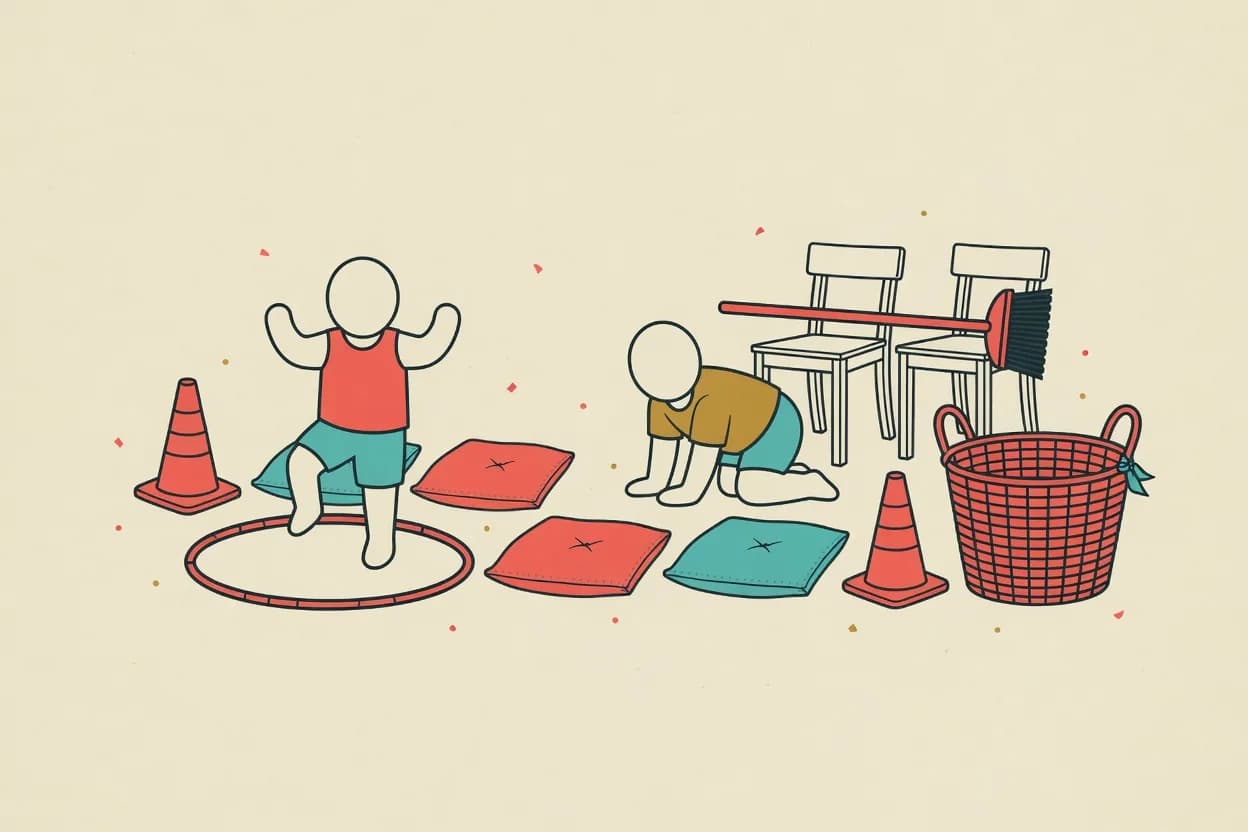
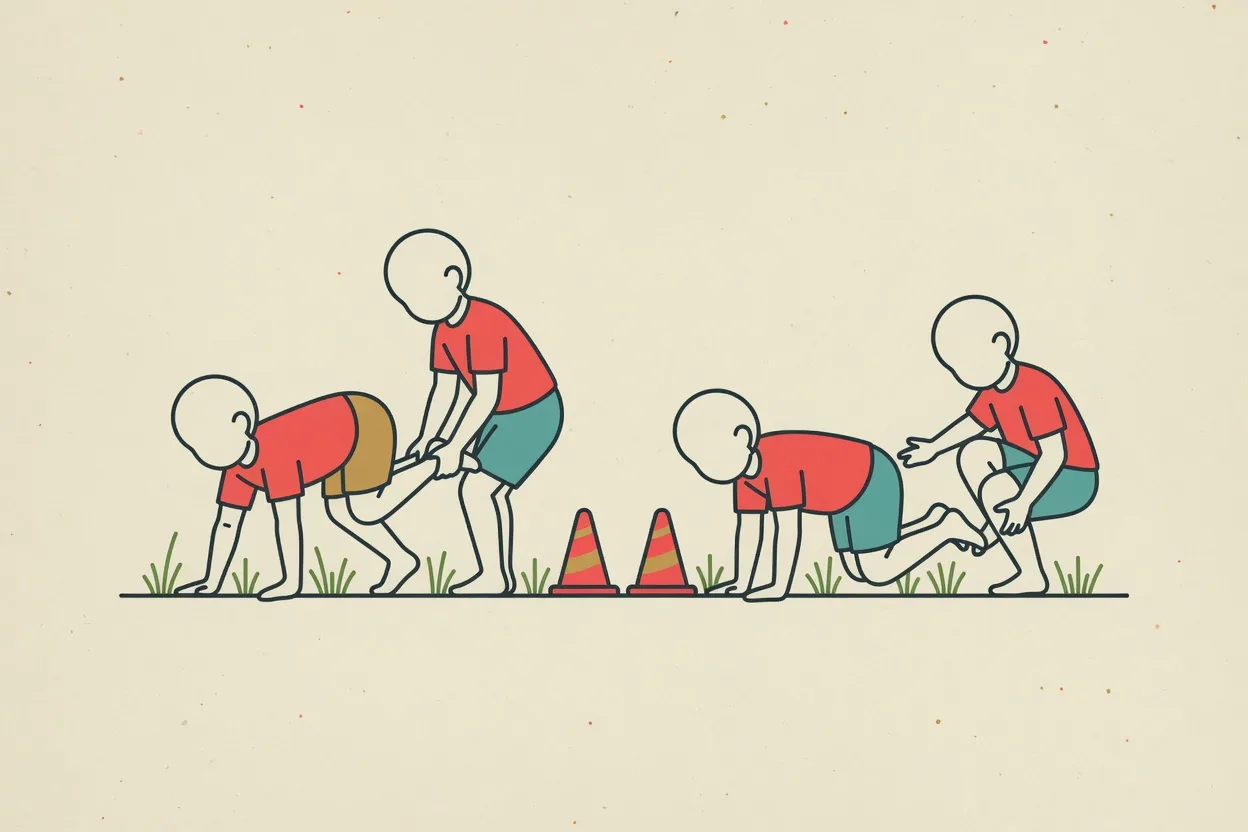
Swap one leg of the relay for a paired obstacle — a wheelbarrow-race stretch or a piggyback carry there and back — rather than a solo run. Good for adding variety partway through a longer relay without redesigning the whole course, and it forces teams to think about pairing as well as running order.
Frequently asked questions
- How do you balance teams for a relay race?
- Spread your fastest and slowest runners across every team rather than stacking speed on one side, and think about running order as well as team lists — a strong first leg builds an early lead, a strong anchor sets up a close finish. Rotate who runs last so the same child isn't always deciding the race.
- What can you use as a relay baton?
- A real baton if you have one, but a wooden spoon, a beanbag, a rolled-up magazine or a length of pool noodle all work just as well. The object matters far less than a clean hand-to-hand pass at the changeover.
- How long should a relay race lane be?
- Fifteen to twenty paces out to the turning point is plenty for a party. Longer lanes mostly just mean more waiting around for teammates between legs.
- What age is a relay race suitable for?
- From about five for a simple run-and-pass version with a big, easy-to-grip baton. Add spoon or dress-up variations from about seven, once the basic hand-off is second nature.
Perfect for these parties
Themes that build a whole party around this game — with the food, the decor and a printable invite to match.