
7–14
Ages
4+
Players
Indoors or out
Where
15–30 min
How long
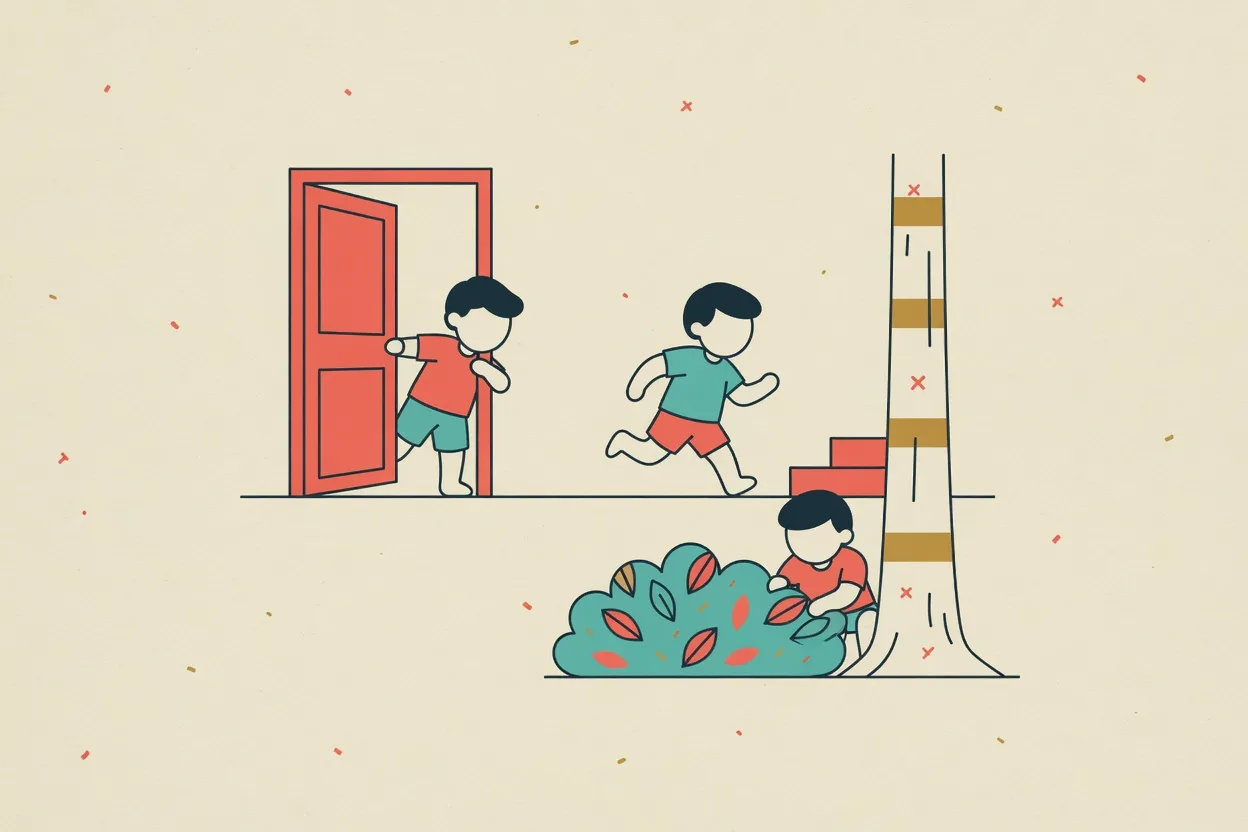
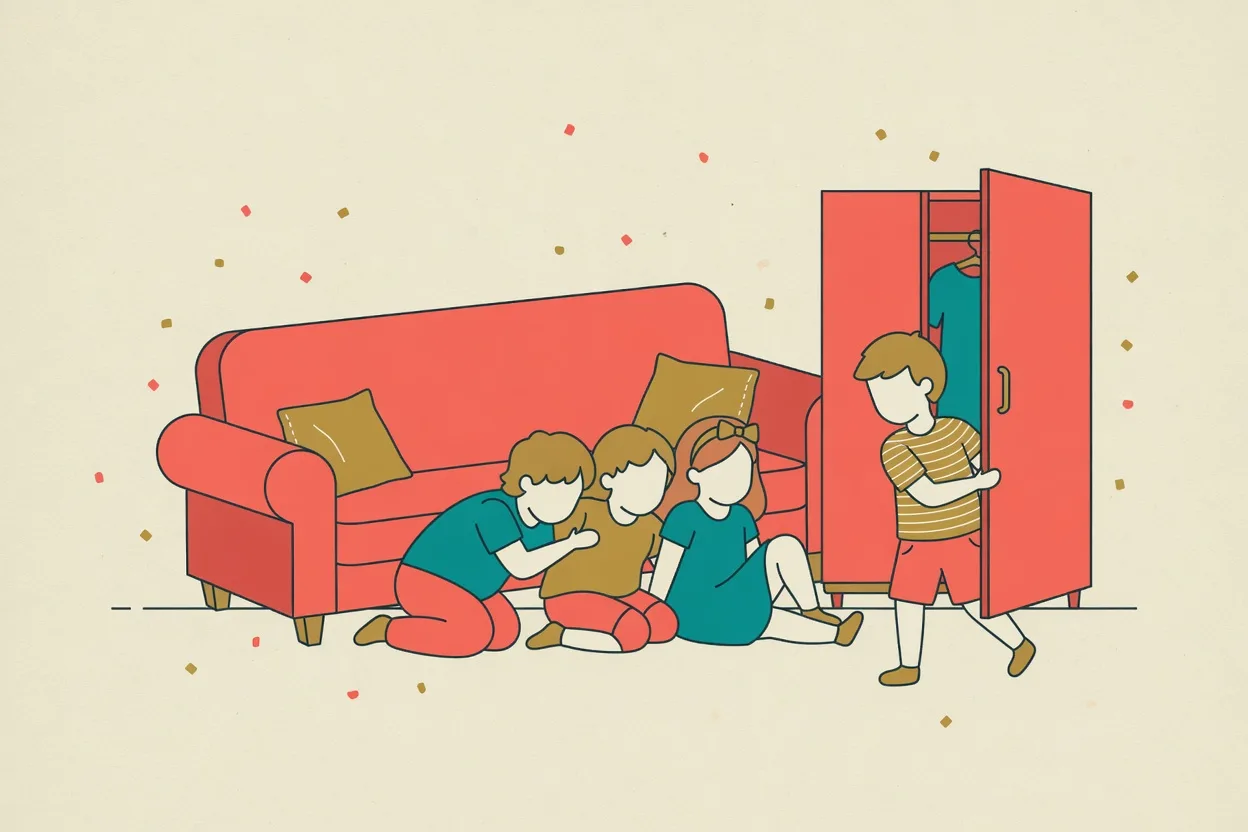
Sardines is hide and seek turned inside out, and the flip is what makes it the better game for an evening indoors. One player hides; everyone else searches alone. But finding the hider is not the end for you — it is an invitation. You squeeze in beside them, say nothing, and wait for the next seeker to find the two of you and do exactly the same thing. By the end, half the party is folded into a closet together, and the last person still wandering the house alone, confused about where everyone has gone, becomes the next hider.
This guide covers how the round actually plays out, why it is specifically the right game for an older, sleepover-age group rather than a younger one, and how to choose hiding spots that stay safe once four or five children are packed into them.
Why this is the sleepover game
Sardines needs almost nothing that a backyard game does — no running room, no equipment, no noise really — which is exactly why it comes into its own once the outdoor games are done and everyone is indoors for the evening. It also rewards a skill that only really arrives with age: sitting still and staying quiet while squashed against your friends in a closet, biting back a laugh, is genuinely hard for a six-year-old and genuinely funny for a ten-year-old. That is the real reason this is the sleepover-age game rather than the birthday-party one — it needs children old enough to enjoy self-control as part of the joke, not children who will simply shout "found you" the second they open the closet door.
A good sardines hiding spot has to do two things: fit far more people than seems reasonable, and let every one of them get out again without anyone having to open a door from outside. A walk-in closet, the space behind a sofa, or the gap between a bed and the wall all work far better than a first hider expects — under a comforter or in a bathroom rarely does, because there simply is not room once four more children arrive.
The giggling is the whole game
Nobody needs a timer for sardines, because the game ends itself. A hiding spot with five or six children squashed into it, trying not to laugh, has a shelf life measured in seconds rather than minutes — someone always cracks, a stifled laugh turns into a real one, and the last searcher follows the noise straight to the pile. That built-in ending is what makes sardines such an easy game to run: unlike almost everything else in this library, there is no judging, no arguing over who was caught first, and no adult decision about when to call time. The room simply gives itself away.
Pair it with hide and seek earlier in the evening while there is still running-around energy to burn, and save sardines for once things have settled. Limbo and musical statues both work well in the same indoor, lower-energy slot. Browse local entertainers if you want the whole evening planned out for you.
What you need
- A house or backyard with several genuine hiding spots — a closet, behind a sofa, a large shed, a bushy corner
- A boundary of which rooms or areas are in play, agreed before the first hider goes
- Nothing else to buy or bring — sardines is free and needs no equipment at all
How to play sardines
- Agree on the boundary — which rooms or areas are in play — then choose one player to be the first hider. Everyone else covers their eyes and counts to an agreed number.
- The hider goes and finds one genuinely good hiding spot, ideally one with room for several more people to squeeze in later.
- Everyone else splits up and searches alone, not as a group. The moment a seeker finds the hider, they don't shout — they quietly squeeze into the same hiding spot and stay silent.
- The game continues exactly like this: each seeker who finds the hiding spot joins it, packed in tighter each time, until only one seeker is still searching alone.
- Sooner or later, a hiding spot with several children stifling laughter gives itself away — usually through giggling rather than being spotted. The last person left searching becomes the next hider.
Variations
Silent countdown (harder)
Seekers aren't allowed to whisper to each other at all once they've split up, even to ask a teammate if they've checked somewhere. It's a small change that makes the giggling-gives-it-away ending happen much faster, which suits a group that already knows the basic game and wants a sharper version.
Two hiders
For a bigger group, start with two hiders in two separate spots instead of one. It roughly halves the time the first squeeze takes to form, which keeps a large group of ten or more from spending the whole round looking for a single person.
Backyard sardines
Play it outdoors instead, using sheds, hedges, a play structure or the far side of a car as hiding spots. Genuinely good hiding places are harder to find outside than in a house full of closets, so shrink the boundary to stop the round running too long.
Frequently asked questions
- How do you play sardines?
- One player hides while everyone else searches alone. Whoever finds the hider joins them quietly instead of announcing it, and the game continues until one player is left searching alone — they become the next hider.
- Why is sardines a good game for sleepovers?
- It needs no running room and very little noise, which suits an evening indoors once the louder outdoor games are done. It also rewards staying quiet while squeezed in with friends, a joke that lands best with an older, sleepover-age group rather than very young children.
- What happens when you find the hider in sardines?
- You don't announce it. You quietly squeeze into the same hiding spot and wait for the next seeker to find you both — that's the twist that separates sardines from ordinary hide and seek.
- How many people do you need to play sardines?
- Four is a workable minimum, but the game gets funnier with more players, since the fun scales with how ridiculous the final hiding spot squeeze gets. Six to ten is the sweet spot.
Perfect for these parties
Themes that build a whole party around this game — with the food, the decor and a printable invite to match.