
5–14
Ages
3+
Players
Indoors or out
Where
15–30 min
How long
Limbo is the rare party game that gets harder as it goes rather than settling into a routine — every round the bar drops a little further, and the whole point is finding out exactly how far each child can lean back before gravity or the pole wins. It needs almost no space, works just as well in a living room as a backyard, and if you improvise the pole rather than buying one, it needs almost no equipment either.
This guide covers the pole alternatives that actually work better than a real pole, how fast to lower the bar so the game doesn't end in the first two rounds, and the music that carries the whole thing along.
The pole is the least important part
A rigid pole is often the wrong choice, not the right one. Two adults holding a broom handle or a garden stake taut between them means a child who clips it at speed hits something solid, and a bar resting across two chair backs can tip and fall on someone reaching under it. A long strip of crepe paper streamer or a wide ribbon, held taut by two holders, does the same visual job — everyone can see exactly where the line is — but simply snaps or slips loose if someone does clip it, which is both safer and, if you are using what is already in a closet, free.
How fast to lower the bar
Start higher than feels necessary — chest height for most children — so the first round or two are easy and everyone gets a feel for the lean before any real challenge arrives. Lower the bar by about a hand's width each round after that. Drop it faster and you eliminate half the group in the first few minutes, which ends the game just as it should be getting fun; drop it slower and the early rounds drag before the height starts to matter. The lean itself is simple to coach: small shuffling steps rather than one big lunge, weight low and back rather than ducking the head down first, and eyes up rather than on your feet — exactly the same look-up habit that helps in a sack race or an egg and spoon race, and for the same reason.
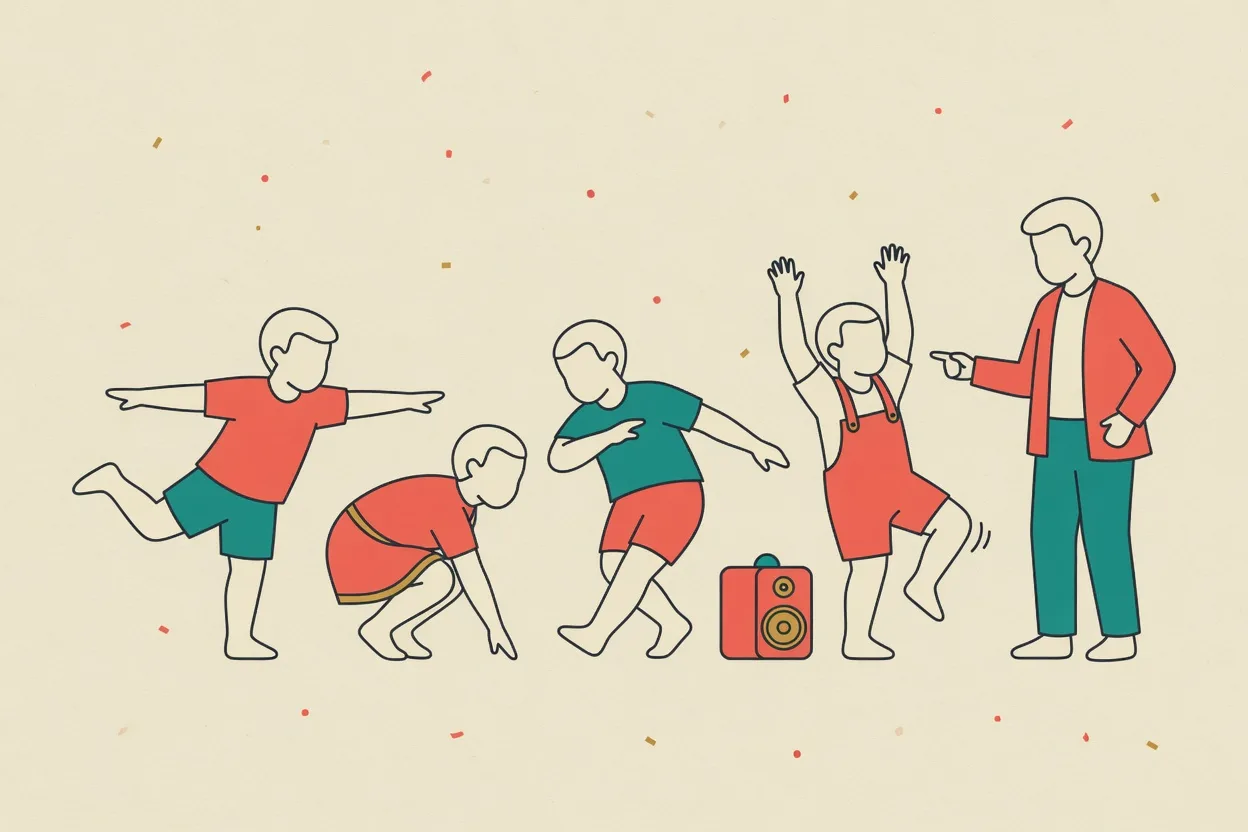
Music matters more to this game than it looks like it should. A steady, driving beat gives every player something to move to while they wait their turn, and it covers the slightly awkward pause of a group watching one child lean backward in concentration. It does not need to be anything specific — anything with a strong, consistent rhythm works, and running it through the same playlist as the rest of the party is completely fine.
Limbo works well later in the same afternoon as musical chairs or musical statues — all three run on music and need very little space — or save it for the evening alongside sardines at a sleepover. Browse local entertainers if you'd rather someone else held the pole and ran the playlist.
What you need
- A pole to go under — a broom handle, a garden stake, or a long strip of ribbon or crepe paper streamer held taut works just as well
- Two holders, one at each end, or two chairs or stands to rest the pole across if nobody wants to hold it
- Music with a steady beat — the whole game runs better with something to move to
How to play limbo
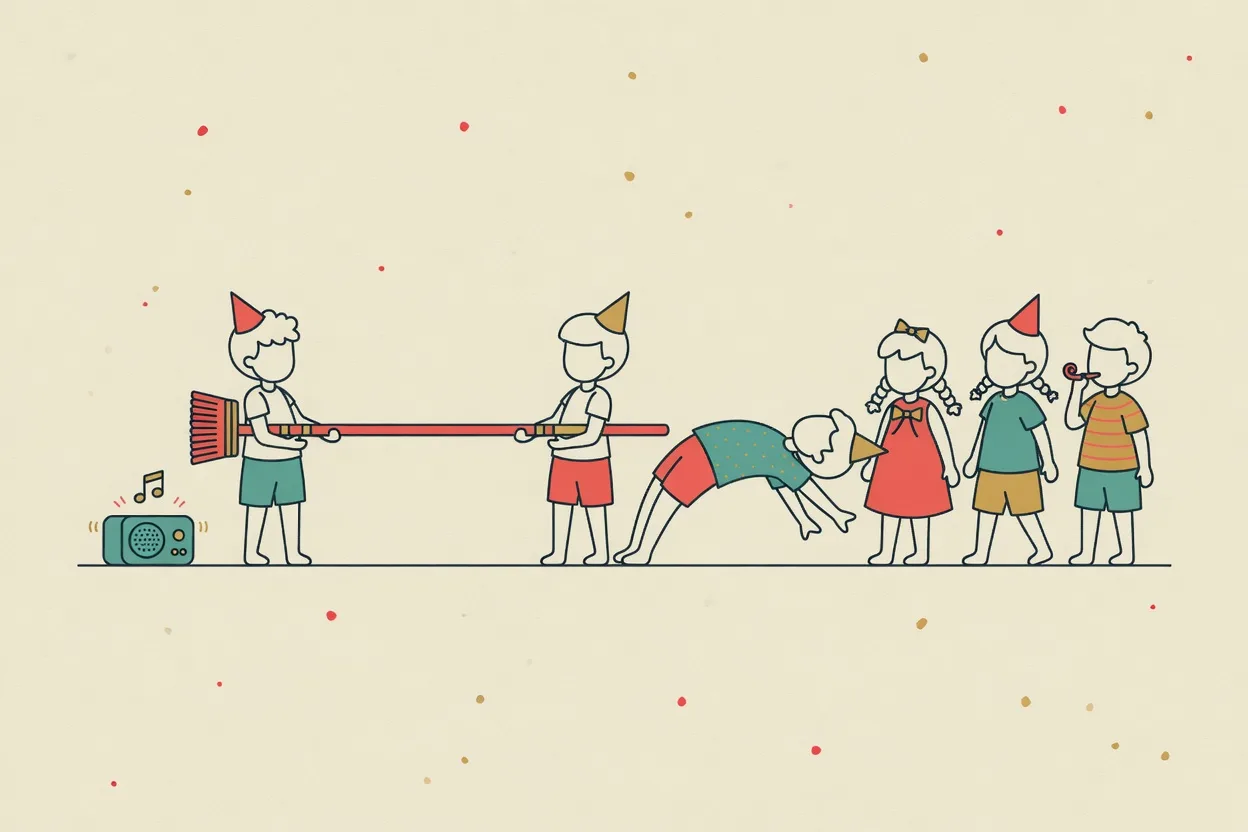
- Two people hold the pole horizontally at chest height, or rest it across two chairs or stands set the same distance apart.
- Everyone else lines up. Put music on, and each player in turn leans backward and shuffles under the pole without touching it, ducking sideways, or using their hands to push off the ground.
- Touch the pole, fall over, or use your hands, and you're out for this round — or, for a gentler version, you simply wait for the bar to come back up (see the no-elimination variation below).
- Once everyone still in has had a turn, lower the pole a little — a hand's width is about right — and go again.
- Keep lowering the bar round after round. The last player still able to get under it without touching wins.
Variations
No pole at all
Two players hold a long strip of crepe paper streamer or a piece of wide ribbon stretched taut instead of a rigid pole. It's just as visible, costs nothing, and if anyone does clip it, it simply snaps or slips rather than causing a trip — genuinely the safer choice for a younger or more boisterous group.
No-elimination limbo
Nobody is out for touching the bar — they just rejoin the line and try again at the same height while everyone else has their turn. Keeps every child playing right through to the end, and the "winner" becomes whoever clears the lowest height at all, rather than whoever survives the most rounds.
Team limbo
Split into two teams and give each team a combined score — a point for every player who clears each height. Turns an individual elimination contest into a group effort, and means the least flexible player on a team still matters, because their attempt still counts toward the total.
Frequently asked questions
- How do you play limbo without a limbo pole?
- Hold a long strip of crepe paper streamer or a wide ribbon taut between two people instead of a rigid pole — it marks the height just as clearly and is safer, since it gives way rather than tripping anyone who clips it.
- How low should the limbo bar start?
- Start high — around chest height for most children — so the first round or two are easy and everyone gets a feel for leaning back before the real challenge begins. Lower it by about a hand's width each round from there.
- What music works best for limbo?
- Anything with a steady, driving beat. It gives players something to move to while they wait their turn and covers the pause while everyone watches one child lean under the bar — the same playlist as the rest of the party works fine.
- What age is limbo suitable for?
- From about five, since the challenge scales entirely with how low you set the bar. Start high for a younger or mixed-age group and lower it slowly, so the game stays easy for as long as it needs to.
Perfect for these parties
Themes that build a whole party around this game — with the food, the decor and a printable invite to match.