
4–10
Ages
2+
Players
Outdoors
Where
10–20 min
How long
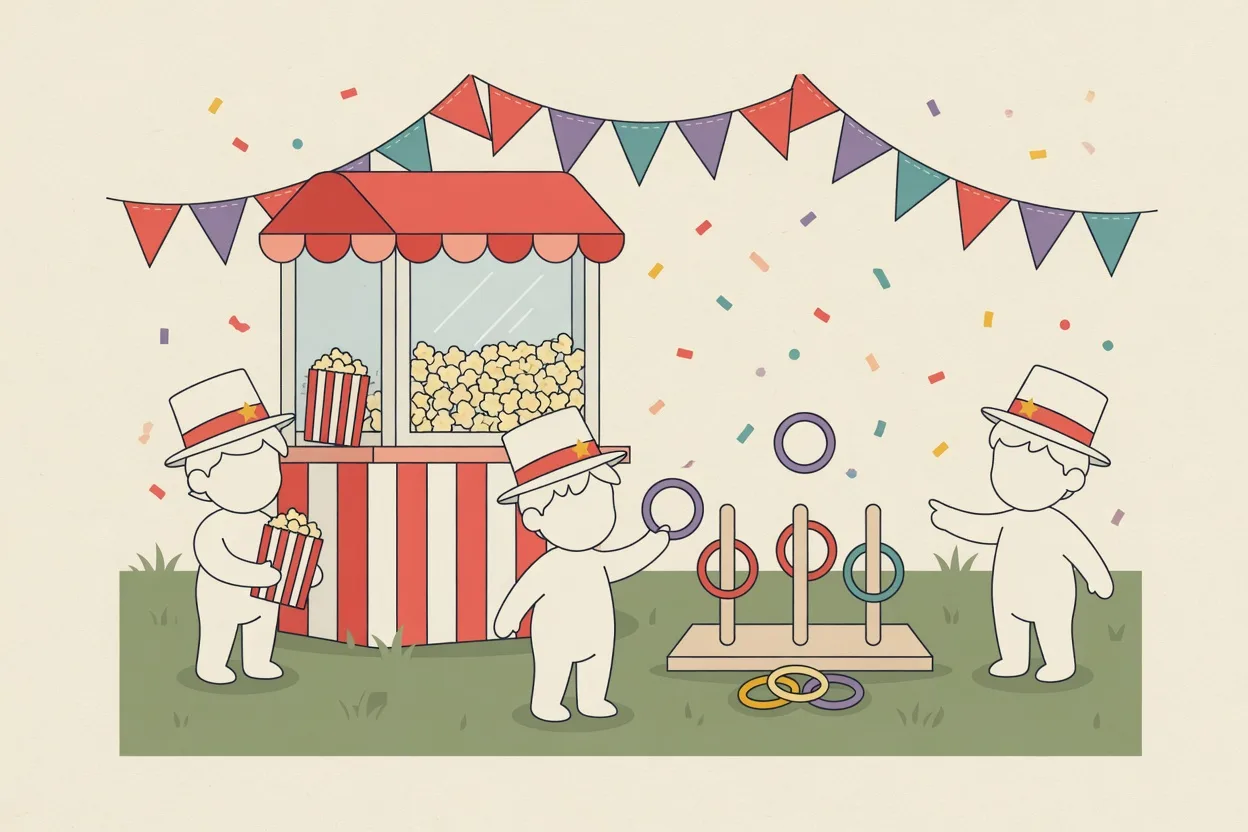
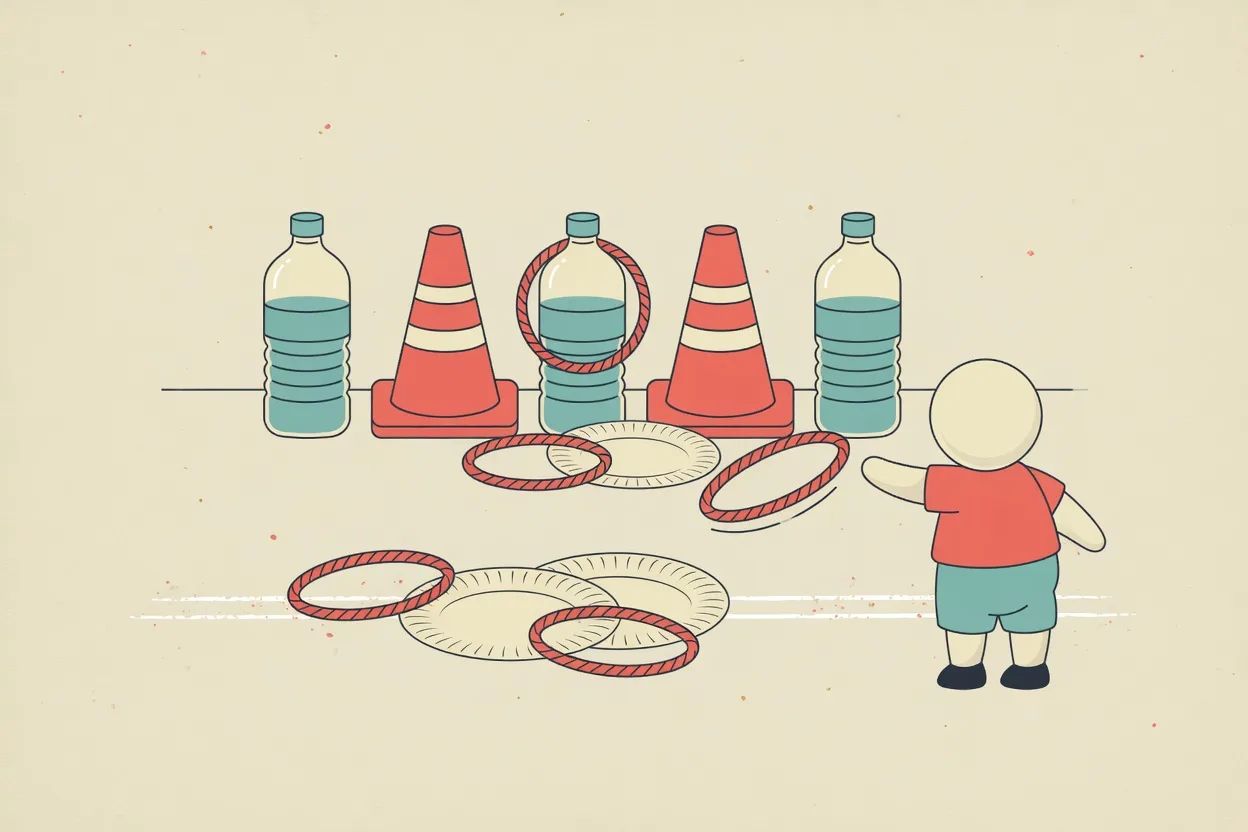
Ring toss is the carnival booth version of a party game — bottles or cones in a row, a handful of rings, a line to stand behind. It photographs well, it's genuinely satisfying when a ring lands clean, and it costs nothing to build if you skip the store-bought set entirely. The two things that decide whether it works are the size of the ring relative to what it's landing on, and how far back you make people stand — get either wrong and it's either too easy to be interesting or too hard to ever succeed.
This covers three ways to make rings for free, how far to set the line by age, and how to run it as a prize booth without the line backing up behind one over-determined child.
Homemade rings, and fair distances
Rubber jar-sealing rings are the closest free equivalent to a real toss ring — most kitchen drawers have a few. Rope tied into a loop and taped at the join works nearly as well and can be made any size you like. A paper plate with the center cut out is the fastest option if you need a dozen rings in five minutes, though it won't survive many rounds outdoors. Whatever you use, the ring should be noticeably wider than the neck of whatever it's landing on — a snug fit turns the game from aim into luck. Do one test throw yourself before the party starts; a ring that looks generous sitting on a shelf often turns out tighter than expected once someone's actually throwing it in a hurry.
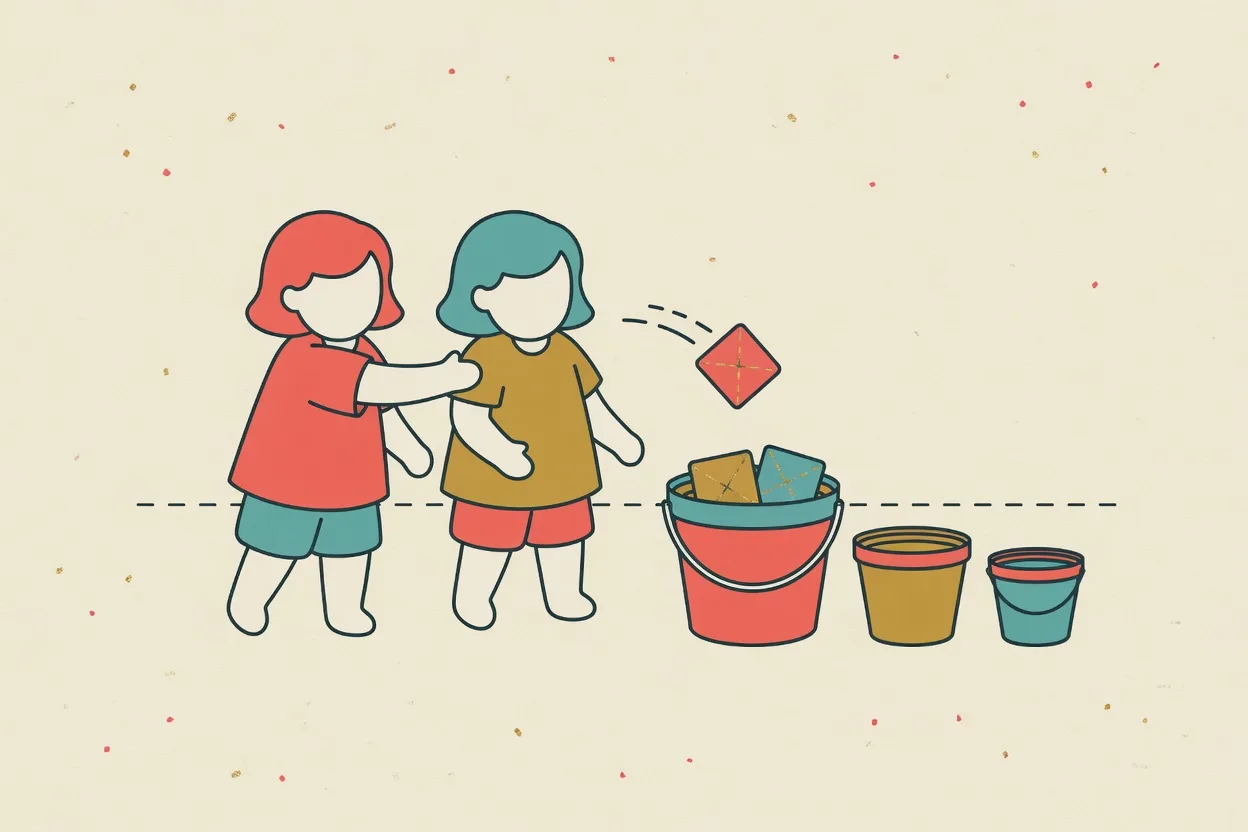
Set the line about three feet out for kids under six and six to ten feet for everyone older, and mark it clearly with chalk or a rope on the ground rather than leaving it to memory. As with any target game, let children choose their own distance instead of assigning one by age — it heads off the argument before it starts.
Running it as a booth — and what goes wrong
If you're using it as a prize booth rather than a straight scoring game, give everyone the same number of rings, three or four, and a small prize for any successful landing rather than reserving prizes for a perfect round — a booth that only pays out for the best throw in the whole party leaves most children with nothing, which is a bad trade for the ten minutes they spent waiting in line.
The most common failure is pacing at the prize table, not the throwing itself. One child who wants to keep trying just one more turn can hold up a line of six others waiting behind them — decide the ring allowance before you start and hold to it kindly but firmly. The other failure is bottles that tip over on a light touch; weight them with a little sand or water in the bottom so a near-miss doesn't knock the whole target down and end the round early for the next thrower.
Bean bag toss runs on the same set-up logic with a different throw — see bean bag toss if you'd rather throw at holes than loop over bottles.
What you need
- Rings — rubber jar-sealing rings, rope tied into loops, or paper plates with the center cut out
- Bottles, cones or wooden pegs to throw them over
- Chalk or tape to mark a throwing line
- Small prizes, if you're running it as a booth rather than just for score
How to play ring toss
- Stand three to six bottles, cones or pegs in a row, weighted at the base so they don't tip over easily.
- Make or gather rings — jar-sealing rings, taped rope loops, or paper plates with the center cut out — noticeably wider than the target's neck.
- Mark a throwing line with chalk or tape: about three feet out for kids under six, six to ten feet for everyone older.
- Give each player the same number of rings, three or four, and let them throw one at a time.
- Count successful ringers, or hand out a small prize for each one landed, and keep the line moving by holding to the ring allowance.
Variations
Glow ring toss (evening parties)
Swap in glow-stick bracelets as rings and glow sticks in bottles as the target for an evening or indoor-dark party. Same rules, considerably more atmosphere, and glow bracelets are cheap enough to let every child keep theirs afterwards.
Points-per-bottle
Instead of counting successful rings equally, give the front bottles one point and the back ones three, so a confident thrower is rewarded for aiming further rather than just clearing the closest target every time. Suits seven- to ten-year-olds who want more of a challenge.
Team ring toss
Split into two teams and total each team's successful rings across everyone's turns rather than scoring individually. Keeps the group invested in every throw, not just their own.
Frequently asked questions
- How do you make ring toss rings at home?
- Rubber jar-sealing rings work straight out of the kitchen drawer, rope tied into a loop and taped at the join is nearly as good, and a paper plate with the center cut out is the fastest option if you need several in a hurry. Any of them should be noticeably wider than whatever they're landing on.
- How far away should you stand for ring toss?
- About three feet for kids under six and six to ten feet for everyone older. Mark the line clearly with chalk or a rope, and let each child pick their own distance rather than assigning it by age.
- What can you use as ring toss targets?
- Bottles, cones or wooden pegs all work well. Weight bottles with a little sand or water in the base so a glancing hit doesn't tip the whole target over and end the round early.
- How do you keep a ring toss booth moving at a party?
- Decide the number of rings per turn before you start, three or four is standard, and hold to it even when a child wants another turn. A clear, consistent allowance keeps the line behind them moving.
Perfect for these parties
Themes that build a whole party around this game — with the food, the decor and a printable invite to match.