
6–12
Ages
6+
Players
Outdoors
Where
15–25 min
How long
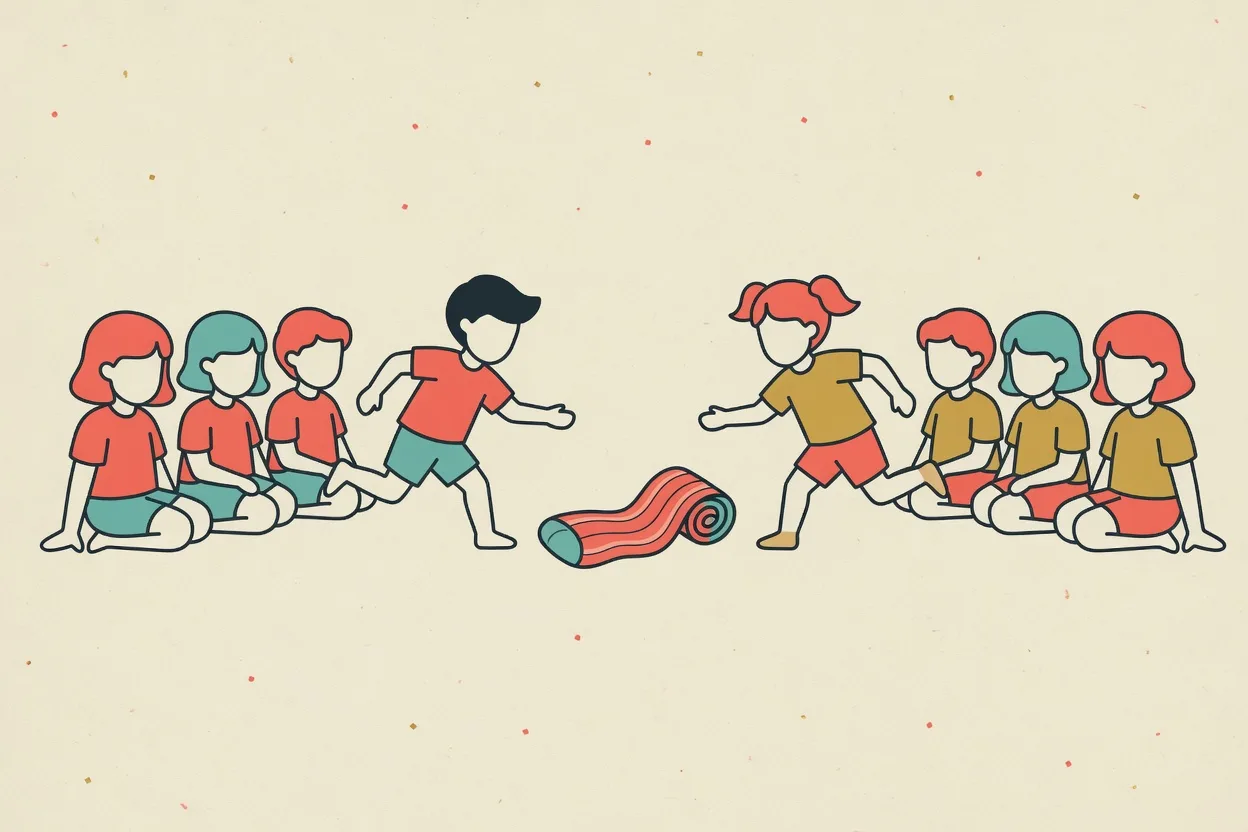
Steal the bacon is a dash game dressed up as a guessing game: two teams line up facing each other, every player on each side gets the same number as their opposite number on the other team, and an object sits on the center line. Call a number, and the two matching players sprint for the object — grab it clean and get back to your own line before the other player tags you, and your team scores. It needs almost no equipment and works on nearly any patch of open ground, which is most of the appeal.
This covers how to call numbers so nobody feels singled out, what actually works as the bacon better than an actual piece of bacon, and the one rule that resolves the argument every group eventually has: what happens when both players grab it at the same time.
Calling numbers fairly, and object ideas
Number each team identically — if there are eight players a side, both teams count off one to eight, so every player has exactly one opposite number on the other team. Call numbers in a genuinely random order rather than working up from one, and call each number roughly the same number of times across a full game; a caller who keeps favoring low numbers early gives those players more turns than everyone else, which the group notices fast. Keeping a running score somewhere both teams can see also helps — it gives the game a shape, and it settles the constant question of who's winning without anyone having to ask.
As for the bacon itself: a rolled-up sock, a small beanbag, a soft toy or a cone all work better than anything you'd actually want two children colliding over — nothing breakable, nothing with sharp corners, and nothing valuable enough that a fumbled grab causes an argument on its own. A rag or scarf, knotted into a ball, is the traditional choice and costs nothing.
Resolving a tie grab — and what goes wrong
The single most common dispute in this game is what happens when both players reach the object at exactly the same moment. Decide the rule before you start, not after the first tie: the simplest fair option is that whoever's hand is touching it when the tie is called owns it and can now run for home, tagged out if caught before crossing their own line. State it out loud at the start so nobody's inventing the rule mid-argument.
The game usually goes wrong when the running lanes aren't clear of the other players still standing in line — a sprinting child colliding with a teammate who forgot to step back is the most common injury in this game, not the tag itself. Keep both teams a full step behind their own line at all times, not just the two players whose number was called, and mark the center line and the two home lines clearly enough that nobody's guessing where the boundary actually is mid-sprint.
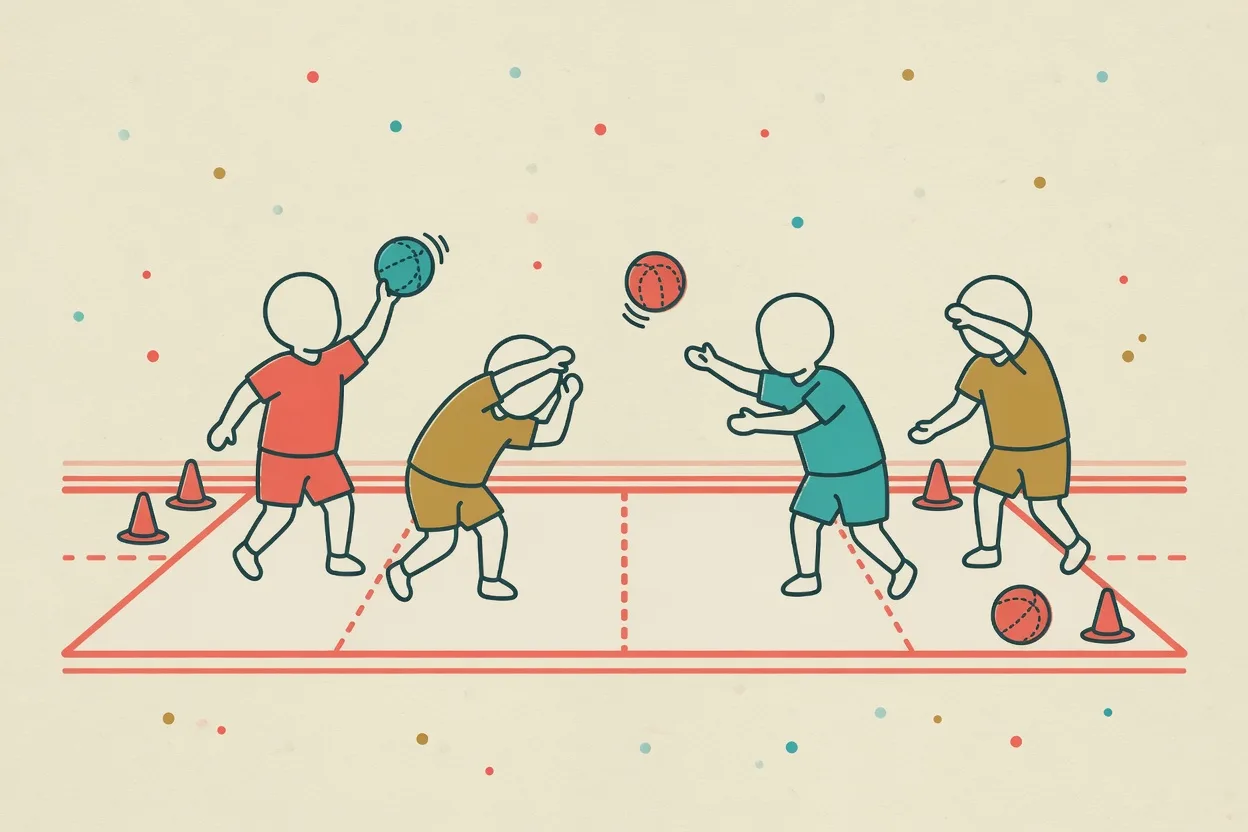
Dodgeball is the other high-energy outdoor game worth pairing with this one — see dodgeball for kids for the version with balls instead of a dash.
What you need
- One object to be the bacon — a rolled-up sock, a beanbag, a cone, or a soft toy
- Two lines of cones or tape marking each team's home line
- Enough open, flat ground between the two lines for a clean sprint
How to play steal the bacon
- Split into two teams of equal size, standing in lines facing each other about twenty-five to thirty feet apart, with a clear center line between them.
- Number each team identically from one upwards, so every player has exactly one opposite number on the other side.
- Place the object — the bacon — on the center line, equidistant between both teams.
- Call out a single number at random; the two players holding that number sprint for the object.
- Whoever grabs it must get back across their own team's line without being tagged by the other player to score a point; if they're tagged first, the point goes to the tagging team instead.
- Reset the object on the center line and call a new number for the next round.
Variations
Double call
Call two numbers at once so two players from each team run together. Considerably more chaotic, and a good way to speed up a long game with a big group waiting for their turn.
Gentle version, no tagging (ages 5–7)
Whoever reaches the object first simply wins the point and both players jog back to their lines — no tag, no chase. Removes the collision risk almost entirely while keeping the dash-and-grab excitement that makes the game fun.
Team steal
Instead of matched individual numbers, call out a color or letter group of three or four players from each team, who all race for several objects placed on the center line at once. Suits a bigger party where one-on-one turns would take too long to get through.
Frequently asked questions
- How do you play steal the bacon?
- Two equal teams stand in lines facing each other about 25 to 30 feet apart, number off identically, and put an object, the bacon, on the center line. When a number is called, the two matching players sprint for it; grab it and get back over your own line without being tagged to score, or the tagging team takes the point.
- What can you use as 'the bacon' in steal the bacon?
- A rolled-up sock, a small beanbag, a soft toy or a knotted scarf all work well. Use anything soft, unbreakable and not valuable enough to argue over if the grab is fumbled. A rag or scarf knotted into a ball is the traditional choice and costs nothing; skip anything with sharp corners.
- What happens if two players grab the object at the same time in steal the bacon?
- Whoever's hand is touching it first can run for home, and is tagged out if caught before crossing their own line. That is the simplest fair rule, but agree on it before you start and state it out loud, because deciding it after the first tie is how the argument starts.
- How many players do you need for steal the bacon?
- Six is a comfortable minimum, three a side, though it works well with much bigger groups too. Just make sure both teams are numbered identically so every player has exactly one opposite number to race against. With a big group, the double call, two numbers at once, keeps the waiting short.
- What age is steal the bacon suitable for?
- From about six, once children can reliably follow a number call and understand the tag rule. For five- to seven-year-olds, the no-tag version — first to reach the object simply wins the point — keeps the fun without the collision risk.
Perfect for these parties
Themes that build a whole party around this game — with the food, the decor and a printable invite to match.