
5–12
Ages
5+
Players
Indoors or out
Where
5–15 min
How long
The telephone game is proof that a party doesn't need equipment to be genuinely funny. One phrase, whispered once down a line of children, comes out the other end unrecognizable — and working out exactly where it went wrong is most of the entertainment. British readers likely know it as Chinese whispers; it's the same game under a different name.
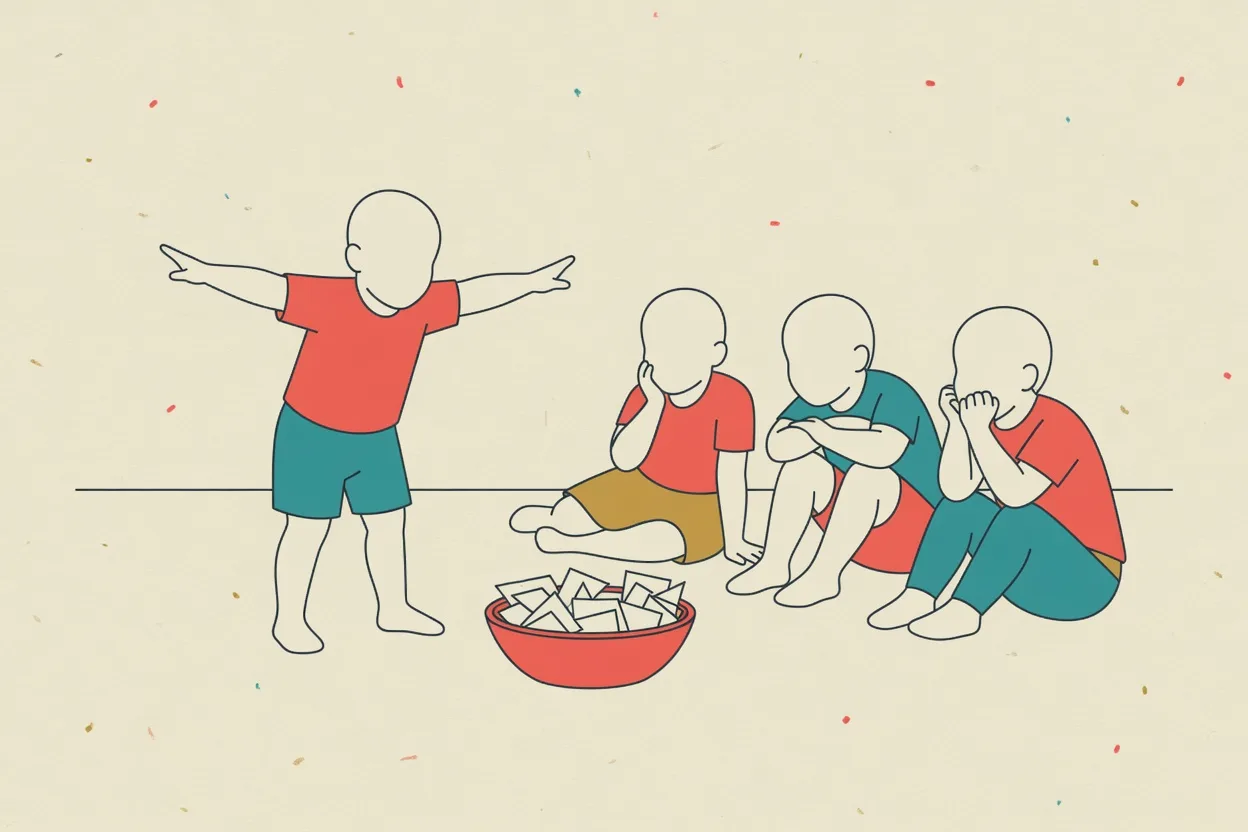
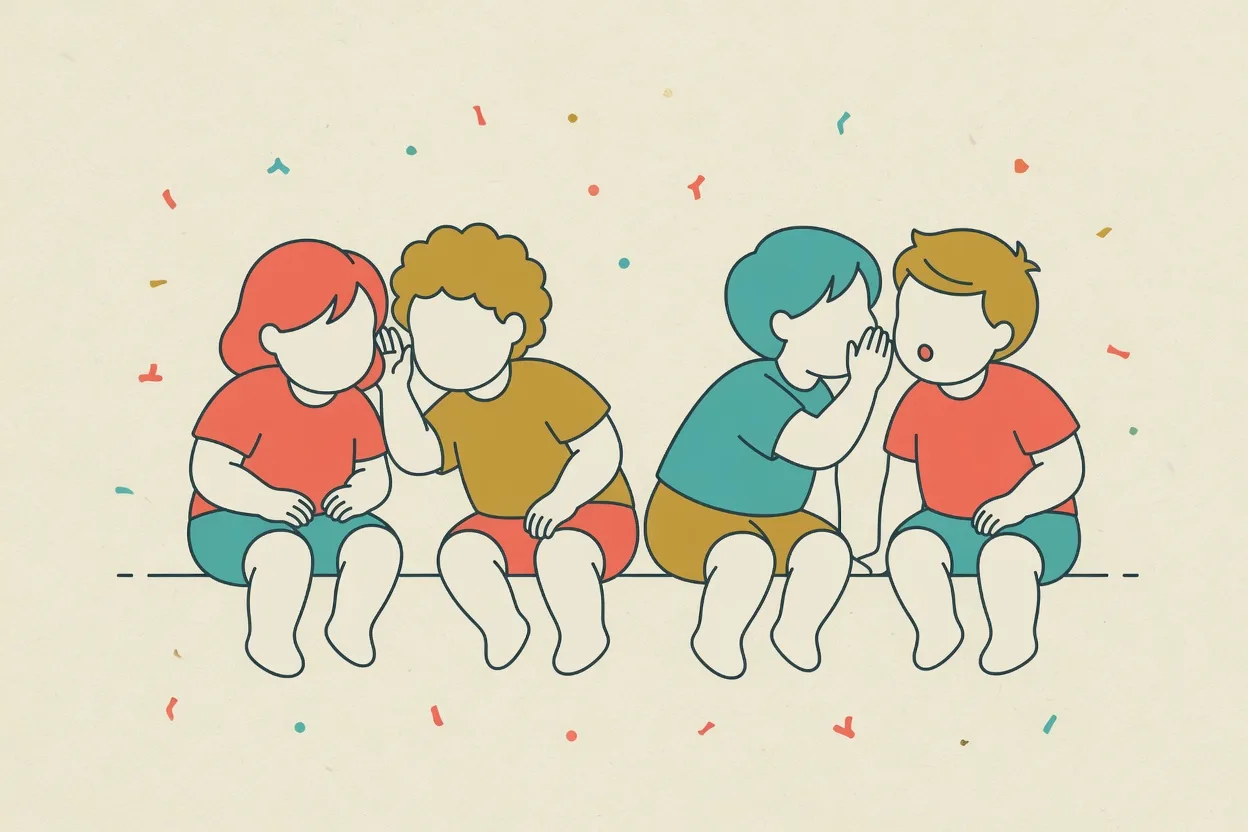
Sit or stand everyone in a line or a loose circle, close enough to whisper without shouting. The first player thinks of a short phrase, whispers it once into the next player's ear, and it passes on exactly that way — once each, quietly, no repeats and no spelling it out — until it reaches the last player, who says out loud whatever they think they heard.
Why the message always changes
This isn't really a mistake anyone's making — it's the whole point, and it's worth saying so before you start so nobody feels like they've failed at whispering. A whispered phrase is genuinely hard to hear correctly the first time, especially in a room with any background noise, so small mishearings creep in at every link of the chain and compound by the end. A ten-player line reliably turns something simple into something unrecognizable, and the reveal at the end — comparing the original to what actually arrived — is funnier the more players are in the chain, not fewer.
Starter phrases that survive the trip
A good opening line is short, has a rhythm to it, and includes at least one word a child might genuinely mishear for something else — that's where the funniest drift happens. "The purple penguin ate my sandwich" works better than a plain fact, because it has sounds that blur into other words under a whisper and a silly enough image that the wrong version is funny rather than just wrong. Avoid anything with numbers or names in it; both get mangled instantly and the game just becomes "guess the number" rather than a real drift. For younger children, keep it to four or five words — a phrase that's already a full sentence gives a seven-year-old nothing to hold onto by the third whisper.
The other common failure has nothing to do with hearing and everything to do with patience: an impatient player down the line who repeats the phrase two or three times to "help", or announces halfway through that they already know what it says. Set the one-whisper rule firmly before you start, and enforce it the first time somebody breaks it — after that, the rest of the line polices itself.
A line works slightly better than a circle for larger groups, since a circle tempts the players on the far side to try to listen in rather than wait their turn. Whichever shape you use, let a different child start each round — being the one who invents the phrase is at least as fun as hearing how badly it survives, and it's an easy thing to forget to rotate.
If your group enjoys the reveal-at-the-end format, charades for kids has the same watch-it-go-wrong energy, with acting standing in for whispering.
What you need
- Nothing at all — just a circle or line of players and a good opening phrase
How to play the telephone game
- Sit or stand everyone in a line or a loose circle, close enough to whisper without needing to raise their voice.
- The first player quietly thinks of a short phrase, without saying it out loud to the group.
- They whisper it once, quietly, into the next player's ear — no repeats, no spelling it out.
- Each player passes on exactly what they heard, whispering it once to the next person in line.
- The last player says out loud what they heard, and the first player reveals the original phrase for comparison.
Variations
Telephone pictionary
Swap whispered words for a quickly drawn picture, passed to the next player who has ten seconds to look before drawing what they think they saw onto a fresh sheet. Works well for children who find sitting still to whisper harder than drawing, and the final reveal is just as funny.
Team race
Split into two lines running the same phrase at the same time, and see whose message survives closer to the original. Adds a genuine contest for older children who find the single-line version too gentle on its own.
Action telephone
Instead of a phrase, the first player mimes a short action, which gets passed down the line by copying rather than words. A good option for a younger group not yet confident whispering quietly enough for the words version to work.
Frequently asked questions
- How do you play the telephone game?
- Players sit in a line or loose circle, and the first player whispers a short phrase once into the next player's ear. Each player passes on exactly what they heard, once and quietly, with no repeats, until the last player says it out loud and the first player reveals the original for comparison.
- What is the telephone game called in Britain?
- Chinese whispers, most commonly — it's the identical game, just an older British name for it. "The telephone game" is the more common name in the US, but the rules don't change either way: one phrase, whispered once down a line, compared with the original at the end.
- What age is the telephone game good for?
- From about five, once children can reliably whisper quietly rather than mouth silently or say it at normal volume. It works especially well from seven or eight up, when children start finding the comparison at the end funnier than the whispering itself.
- Why does the phrase always change by the end?
- A whisper is genuinely hard to hear correctly, so small mishearings happen at almost every link in the chain and add up by the time the message reaches the end. That drift is the entire point of the game, not a sign anyone did it wrong.
- What makes a good starter phrase?
- Short, rhythmic, and with at least one word easy to mishear for something else — four or five words is plenty for younger children. Avoid numbers and names, which tend to get mangled instantly rather than drifting into something funny.
Perfect for these parties
Themes that build a whole party around this game — with the food, the decor and a printable invite to match.