
3–10
Ages
2+
Players
Outdoors
Where
10–20 min
How long
Bean bag toss is the throwing game that scales down furthest — a two-year-old can lob a bean bag at a hula hoop three feet away and feel exactly as pleased as a nine-year-old landing one through a hole from thirteen feet. That range is the whole appeal, and it's also the reason the game is worth setting up properly rather than just handing out bags and pointing at a bucket: the distance and the target decide whether it's satisfying or frustrating far more than the throwing itself does.
This covers building a target for nothing, scoring that works for a mixed-age group, and the handicap system that lets your youngest and oldest guests play the same round without either of them checking out.
Building a target, and setting fair distances
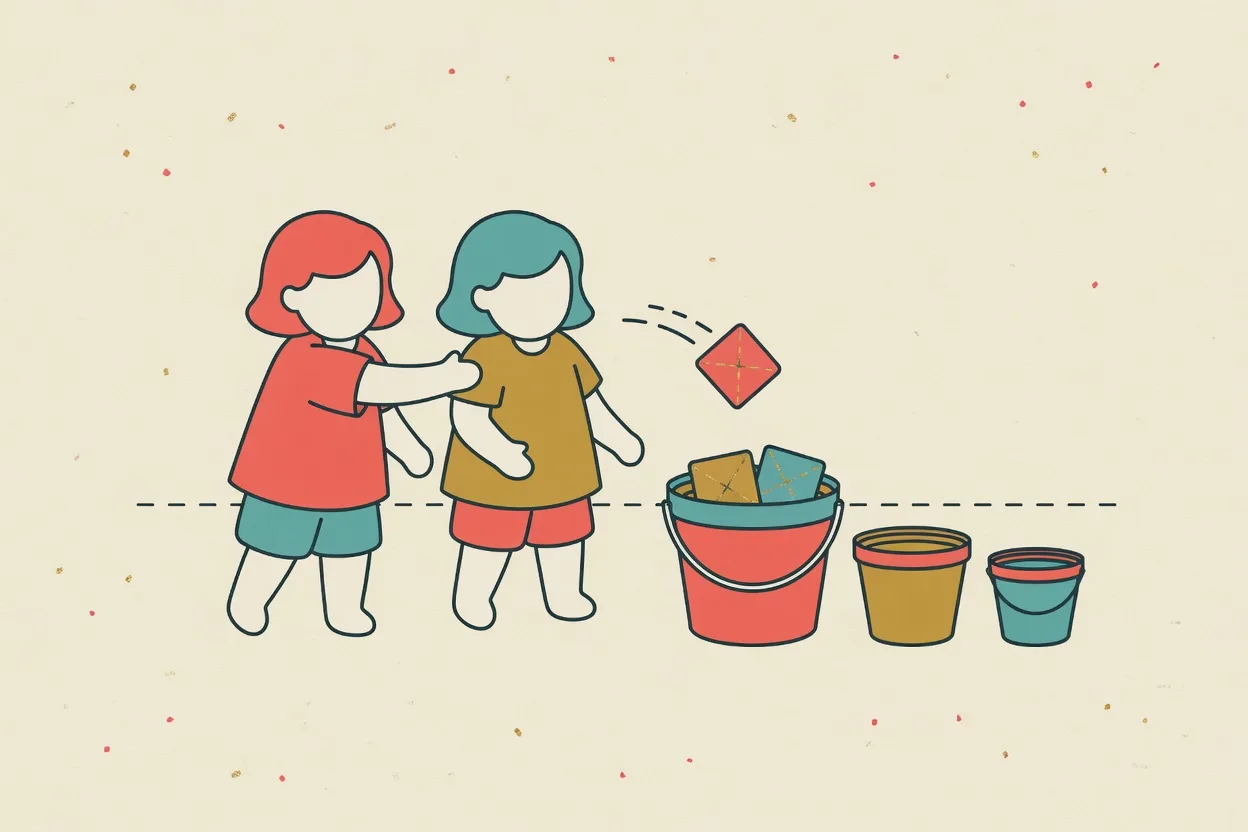
You don't need to buy anything. A cardboard box with two or three holes cut in it, a row of buckets or dish tubs worth different points, or three hula hoops laid flat on the grass all work as well as a store-bought board, and cost nothing. Weight the target down or stake it if there's any wind at all — a board that slides every time it's hit stops being about aim and starts being about luck.
Mark two throwing lines with chalk or tape: a close one, about five feet out, for kids under six, and a further one, ten to thirteen feet, for everyone older. Let each child choose their own line rather than assigning it, which avoids the exact conversation about who's too old for the easy line that would otherwise ruin the game before it starts.
Scoring that doesn't leave anyone out — and what goes wrong
Give each bag a points value based on where it lands rather than just counting hits — the center hole worth three, the side holes worth one, for instance — and give everyone the same number of throws, five is generous. Total the points across a couple of rounds rather than declaring a winner after one round; single-round luck feels unfair to a child who threw well but landed just wide, and a running total smooths that out. Write the score somewhere visible — chalk on the patio, a scrap of paper weighted down by the target — so nobody has to trust their memory of two rounds back.
The game usually goes wrong when the distance is wrong for the group, not the scoring. Set the line too far back for the youngest players and they simply never hit anything, which turns a fun five minutes into a discouraging one fast — watch for a child who's stopped aiming and started just throwing to get their turn over with, and quietly let them step forward. The other common failure is retrieving bags: designate one collector per round rather than letting everyone dash forward together, so nobody's standing in the target zone when the next bag is thrown.
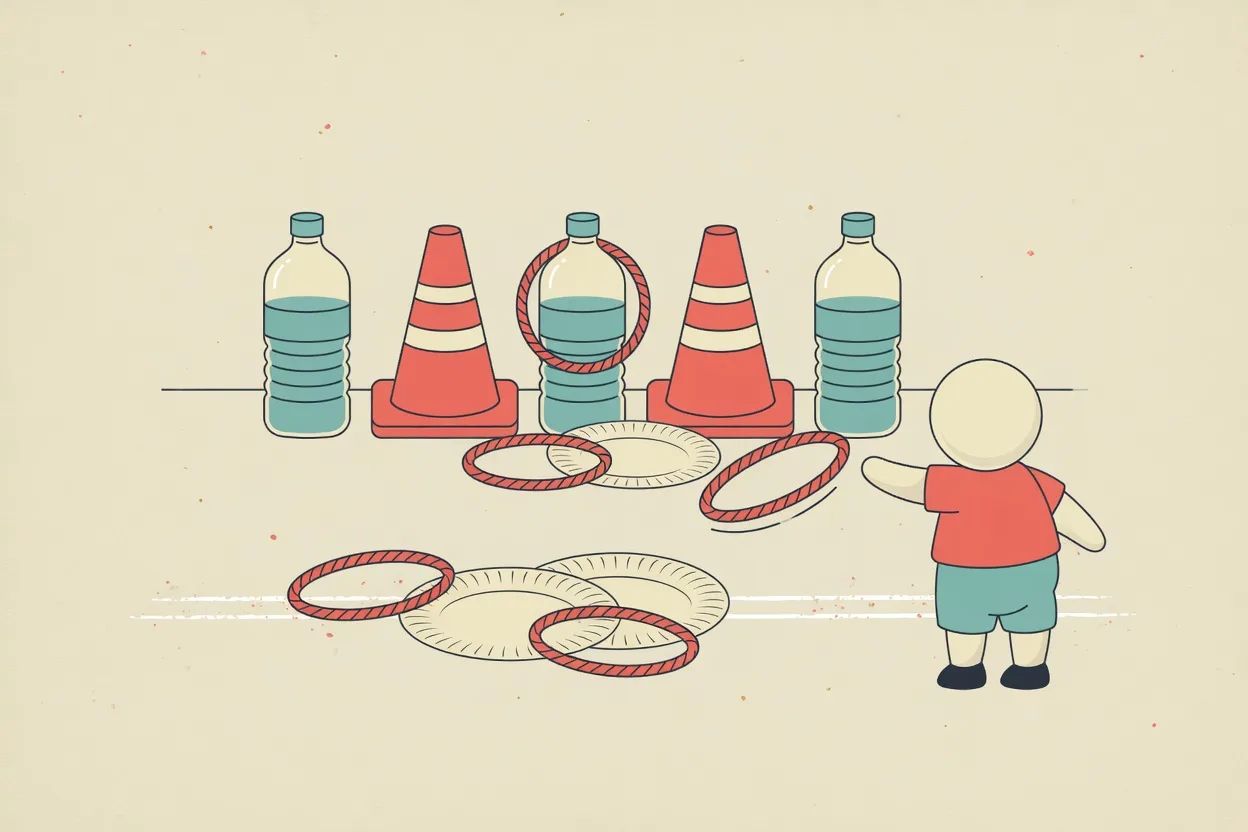
Ring toss is the other classic target game worth having in the same afternoon — see ring toss for the throwing version that swaps bean bags for rings and bottles.
What you need
- Bean bags, four to six per player — or rice-filled socks or balloons as a free DIY version
- A target board with holes, a row of buckets, or hula hoops laid on the grass
- Chalk or tape to mark throwing lines at two or three distances
How to play bean bag toss
- Set up a target — a box with holes cut in it, a row of buckets, or hula hoops laid flat on the grass — and weight it down if there's any wind.
- Mark two throwing lines with chalk or tape: a closer one for kids under six, a further one for everyone older.
- Let each child choose which line to throw from and give everyone the same number of throws, five is generous.
- Assign points to each part of the target — the hardest spot worth the most — and total each player's score across their throws.
- Play two or three rounds and add up the running total rather than judging on a single round.
Variations
Balloon toss, free version (ages 3–6)
Swap bean bags for half-inflated balloons if you don't have any on hand — they're lighter, more forgiving of a bad throw, and safe for the youngest players to throw at close range.
Moving target
For confident eight- to ten-year-olds, roll a hula hoop along the ground and have players try to land a bag through it as it moves, rather than throwing at a fixed target. Considerably harder, and a good way to keep older children engaged once the fixed version gets too easy.
Team relay toss
Split into two teams who take turns sending one player up at a time; add up team totals rather than individual ones. Keeps everyone involved between throws instead of standing around waiting for their own turn.
Frequently asked questions
- How far away should the target be for bean bag toss?
- About five feet for kids under six, and ten to thirteen feet for everyone older. Mark both distances with chalk or tape and let each child pick their own line rather than assigning one — it avoids arguments about who's too old for the easy line.
- How do you make a bean bag toss target?
- A cardboard box with two or three holes cut in it works well, as does a row of buckets or dish tubs, or hula hoops laid flat on the grass. Weight or stake it down if there's any wind, so a gust doesn't turn aim into luck.
- How do you score bean bag toss?
- Give each part of the target a points value, the hardest spot worth the most, and give everyone the same number of throws — five works well. Total scores across two or three rounds rather than judging on one, which is fairer to a child who had one unlucky round.
- What can you use instead of bean bags?
- Rice-filled socks, small fabric bags filled with dried beans, or half-inflated balloons all work as a free substitute, and balloons in particular are gentler for the youngest throwers.
Perfect for these parties
Themes that build a whole party around this game — with the food, the decor and a printable invite to match.