
4–11
Ages
2+
Players
Indoors or out
Where
20–40 min
How long
A treasure hunt is a clue trail — find clue one, it tells you where clue two is hidden, and so on until the last clue points at the treasure. That structure is the whole game, and it's flexible enough to run in a small apartment or a big backyard, for a single determined seven-year-old or a pack of twelve. The part people get wrong isn't the clues, which can be as simple as you like; it's the pacing, and what happens to the child who reads slower than the others.
What follows is three clue-trail structures that work at different ages, the difference between running one indoors and running one in a backyard, and how to handle the prize at the end without the fastest child taking everything.
Three clue structures, by age
For three- to five-year-olds, use picture clues rather than written ones — a photo of the fridge, a drawing of the front step — and keep the trail to four or five hops, because much more than that and the youngest children lose the thread of what they're looking for. For six- to eight-year-olds, simple rhyming or riddle clues work well (I'm cold inside, I keep the milk, look where I hide, softer than silk — a fridge again, but harder to guess), and six to eight hops holds their attention without dragging. From about nine up, you can use genuine puzzles — a short cipher, a clue that needs adding two numbers together to find a house number, a riddle with a red herring in it — and stretch the trail to ten hops or more across a whole yard.
Whichever structure you use, write the final clue so it leads to the treasure and nothing else — a vague last clue is the one place ambiguity actually ruins the game, because it turns the exciting bit into an argument about where to look.
Indoors, or in the backyard — and what goes wrong
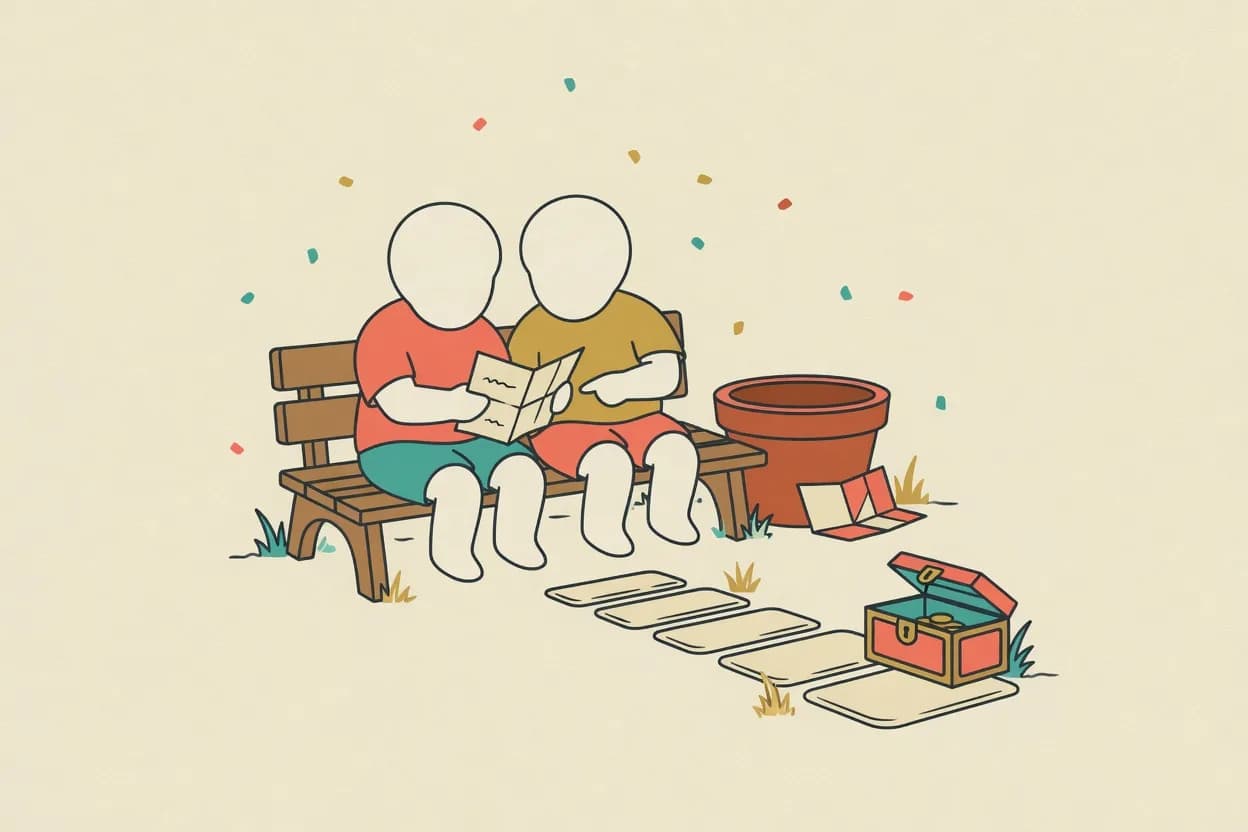
Indoors, hide clues at the children's height, not the adults' — on the arm of a sofa, taped under a chair, propped against a baseboard — and stay out of anywhere genuinely private or breakable. A backyard gives you more ground to cover and lets you use height (up a low branch, under a flowerpot, behind the shed) as part of the difficulty, but check the weather and have an indoor last leg ready if it turns wet halfway through.
The most common failure is pace, not difficulty. One confident reader gets ahead of the group and finds every clue first, and the slower children spend the whole game arriving to an empty hiding spot. Fix it by running the hunt as one team with clues read aloud together, or by handing different children the reading job at each stop so nobody's stuck watching. The other failure is an anticlimactic prize — a treasure box that's just a few pieces of candy split eight ways feels smaller than the build-up promised, so budget the prize to match the trail: small finds along the way, one shared or generous find at the end.
If you'd rather the group searched independently instead of following one trail together, a scavenger hunt runs on a checklist instead of a sequence and suits a bigger, more spread-out group. Both are the kind of game a party entertainer will happily design and run for you, clues and all, if you'd rather not write them yourself.
What you need
- A trail of written or picture clues, one per hiding spot
- A pencil, if any clue asks the children to write or draw an answer
- A treasure box, bag or small prizes to find at the end
- Somewhere to hide clues in advance — a backyard, or a house you know well
How to play treasure hunt
- Write or draw a trail of four to ten clues, depending on age, each one revealing where the next clue is hidden.
- Hide the clues in order before the party starts, and hide the final clue's destination — the treasure — last, so you remember exactly where everything is.
- Give the group the first clue and let them solve it together, reading each new clue aloud once they find it.
- Rotate who gets to read or hold the clue at each stop, so one fast reader doesn't finish the whole trail alone.
- Let the group open or collect the treasure together once the final clue leads them to it.
Variations
Photo trail (ages 3–5)
Replace every written clue with a photograph of the next hiding spot, taken on your phone minutes before the party. No reading required at all, and it's the fastest clue trail to put together if you're short on time.
Team hunt
Split into two teams following identical trails hidden in mirrored spots, or one trail with a marshal sending each team to alternate stops. Racing another team adds pace for confident eight-year-olds and up, but keep it cooperative within each team so nobody's left behind by their own side.
Map instead of clues
For a backyard hunt with older children, draw a simple hand-drawn map marking roughly where things are hidden instead of sequential clues, and let them find everything in any order. It suits nine- and ten-year-olds who enjoy the freedom more than the puzzle.
Frequently asked questions
- How many clues should a treasure hunt have?
- Four or five for three- to five-year-olds, six to eight for six- to eight-year-olds, and ten or more for confident nine-year-olds and up. Shorter is safer than you think — a trail that ends while everyone is still excited beats one that drags.
- What age is a treasure hunt suitable for?
- From about three, using picture clues instead of written ones. Reading-based riddle clues work well from six or seven, and genuine puzzle clues suit nine and up.
- How do you stop one child from finishing a treasure hunt on their own?
- Run it as one group solving clues together rather than a race, and rotate who gets to hold or read the clue at each stop. That keeps a fast reader from sprinting ahead and leaving slower children behind.
- What's a good treasure hunt prize?
- Small finds along the trail — a sticker or piece of candy at a couple of the middle stops — plus one shared or generous find at the end works better than a single small prize split many ways, which tends to feel like an anticlimax after a long build-up.
- What is the difference between a treasure hunt and a scavenger hunt?
- A treasure hunt is a sequence: each clue tells you where the next one is hidden, in order, ending at a prize. A scavenger hunt is a checklist: everyone searches for the same list of items at the same time, in any order, and there's no single trail to follow.
Perfect for these parties
Themes that build a whole party around this game — with the food, the decor and a printable invite to match.