
5–12
Ages
6+
Players
Outdoors
Where
15–20 min
How long
Water balloon toss is the simplest possible summer party game — two children, one balloon, a step back after every catch — and also one of the easiest to get wrong through under-preparation. The game itself takes care of the fun; your job is making sure there are enough balloons filled, and filled fast enough, that nobody's standing around waiting.
What follows covers exactly that: how many balloons to fill, the fastest way to fill dozens of them without spending your whole afternoon at the faucet, the step-back rule that turns a simple catch into a real contest, and why this is one of the few games on this site with a genuinely firm surface requirement.
Filling enough balloons, fast
Budget six to eight balloons per pair once you allow for the ones that split while filling or in the first throw or two — for ten pairs playing, that's realistically sixty to eighty balloons, which is more than it sounds like when you're filling them one at a time from a kitchen faucet. A balloon-filling attachment for an outdoor hose or spigot turns this from a twenty-minute chore into a five-minute one and is worth buying if you host more than one summer party a year. Without one, put two or three adults on filling duty at a large bucket in a rough assembly line rather than one person doing it all.
Chill the filled balloons in a shaded bucket of ice water until the game starts rather than leaving them in direct sun — a balloon left baking on a hot patio is noticeably more likely to split in someone's hands before the game's even begun, and a cold balloon is honestly part of the appeal on a hot day.
Designate one part of the yard as the official wet zone and keep it away from the path back indoors — a trail of drips from the game to the kitchen door is the one bit of cleanup that catches most hosts off guard.
Where it goes wrong
The step-back rule is what makes this a game rather than just two children lightly damp within thirty seconds, and it's also where most families forget the actual point: both partners step back together after every clean catch, not just the thrower. Skip that rule and you get a static toss that ends the second the first balloon bursts, with nothing built up to lose. The bigger issue, though, is surface. A burst balloon leaves grass fine but turns concrete, a deck or a patio tile genuinely slippery, and this game is specifically built around children stepping backwards repeatedly while looking at something else — exactly the moment a slip happens. Play it on grass, always, or switch to the sponge variation below if a lawn isn't an option.
Both partners step back after every clean catch, not just the thrower — skip that rule and you've got two children lightly damp, not a game.
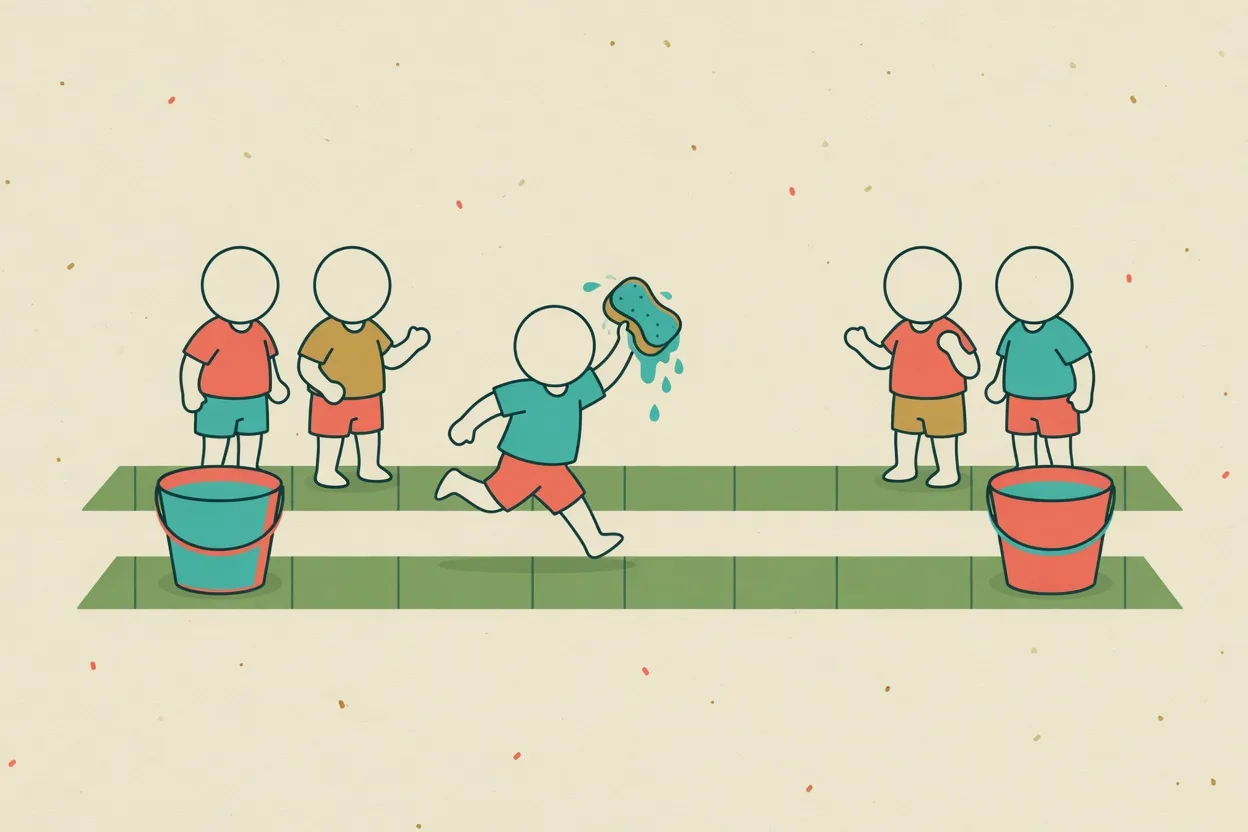
Pair it with the sponge relay for a full hot-weather double feature of summer games that both clean up with nothing more than a hose.
What you need
- Water balloons, pre-filled — six to eight per pair
- A hose or outdoor faucet, ideally with a balloon-filling attachment
- A large bucket or bin for spares
- Towels
- A grassy area with a marked start line
How to play water balloon toss
- Fill water balloons well ahead of time — six to eight per pair is a realistic minimum once you allow for the ones that burst before the game even starts.
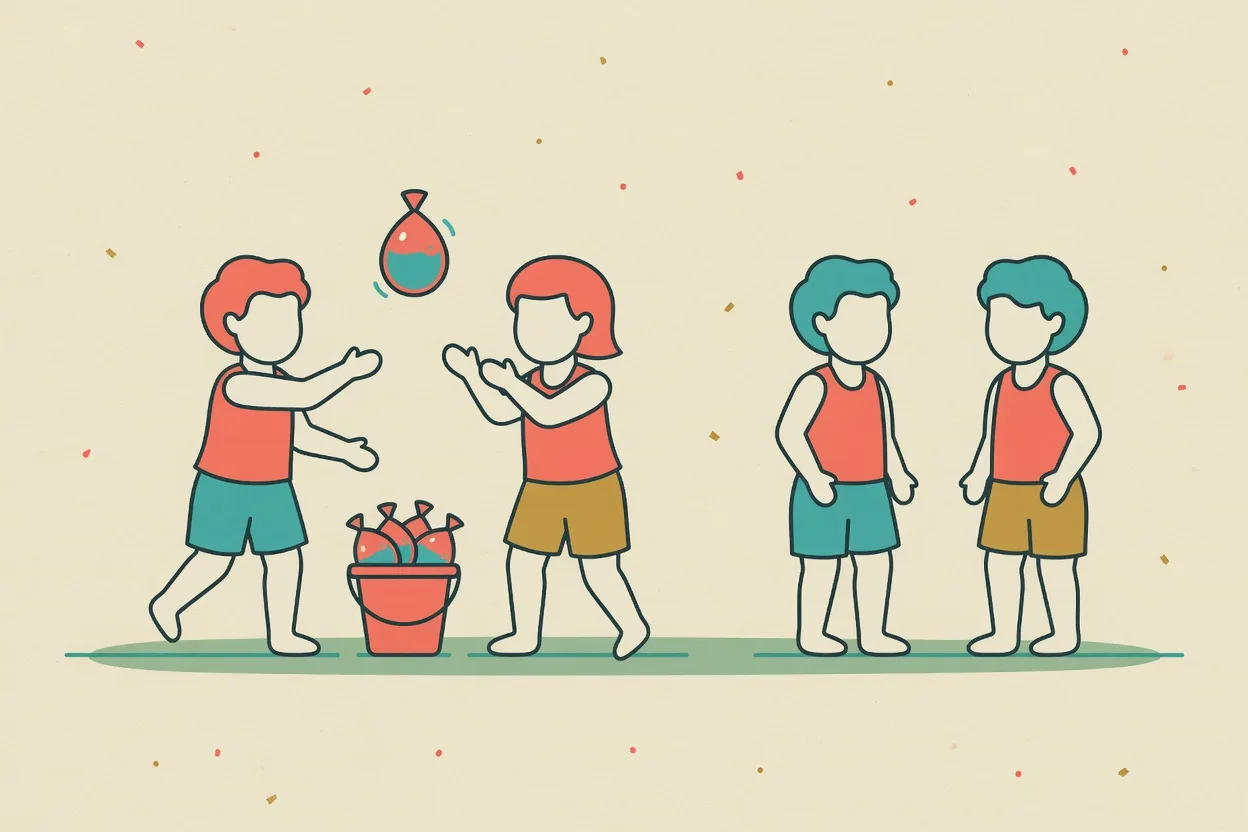
- Pair children up and have each pair stand facing each other, an arm's length apart, on the grass.
- One partner in each pair gently tosses the balloon underhand to the other; if it's caught without bursting, both partners take one step backwards.
- Keep tossing and stepping back after every successful catch — the pairs who catch cleanly end up throwing from much further apart than the ones who don't.
- A pair is out the moment their balloon bursts; the last pair still standing, or the pair with the widest gap when time's called, wins.
- Refill from the spares bucket between rounds rather than mid-round — chasing more balloons while everyone else waits is how the game loses momentum.
Variations
Sponge toss (no balloons)
Swap the water balloon for a soaked sponge if you'd rather not deal with popped rubber underfoot — it splats rather than bursts, and there's nothing to clean off the grass afterwards.
Color teams
Fill balloons in two or three different colors and run it as a knockout — last pair standing from each color group advances to a final toss-off. Good for a bigger party where one long elimination line gets boring to watch.
No-elimination version
Skip the "you're out" rule entirely and just see which pair can get the furthest apart across the whole game, resetting with a fresh balloon whenever one bursts. Keeps every child playing right to the end, which matters more than winning for kids under seven.
Frequently asked questions
- How many water balloons do you need for water balloon toss?
- Budget six to eight per pair once you account for balloons that burst while filling or before their first throw. For ten pairs, that's sixty to eighty balloons — fill more than feels necessary, since running out mid-game is the most common complaint.
- What is the fastest way to fill lots of water balloons?
- A balloon-filling attachment on an outdoor spigot or hose is far faster than filling each one by hand, and lets you fill a full bucket's worth in a few minutes. Without one, an assembly line of two or three adults at a full bucket works almost as well.
- Can you play water balloon toss on any surface?
- Grass only. Burst balloons make concrete, decks and tile genuinely slippery, and the game depends on children stepping backwards repeatedly, which is exactly when a slip happens. If you don't have a lawn, use the sponge variation instead.
- What age is water balloon toss suitable for?
- From about five, once a child can catch a soft, light object two-handed without flinching. For younger children, start them a single step apart rather than the usual arm's length, so the first few catches are easy wins.
Perfect for these parties
Themes that build a whole party around this game — with the food, the decor and a printable invite to match.