
3–10
Ages
2+
Players
Indoors or out
Where
10–15 min
How long
Balloon stomp is loud, it's over fast, and it needs almost nothing — a balloon tied to each ankle with a bit of string, and the rule that you're out when both of yours are popped. It is also one of the few party games where the entire skill is in the preparation rather than the playing: how you tie the balloons on decides whether the game lasts four minutes or forty seconds, and whether anyone actually manages to pop one at all.
This covers how much string to leave, how many balloons to prep so the game doesn't end the instant it starts, and the gentle version that works for children too young for full elimination stomping.
Tying the balloons, and why the length matters
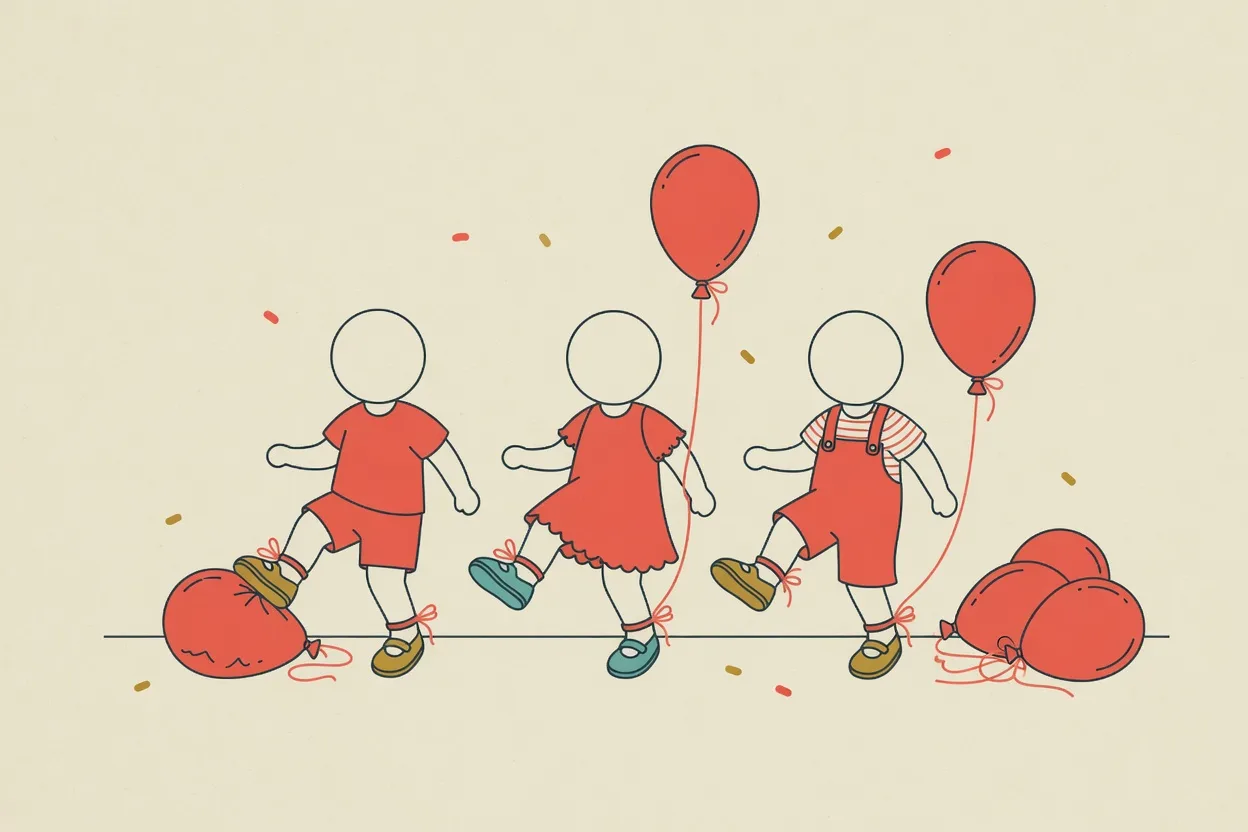
Tie each balloon with about a foot of string, looped loosely enough around the ankle that it can't tighten if pulled, but short enough that the balloon trails rather than drags. Too short and nobody can reach the balloon at all without falling over trying; too long and it drags along the ground where it's nearly impossible for anyone to actually stomp on, which makes the whole game a slow, frustrating shuffle instead of a chase. A foot is the sweet spot for most ages — go a little shorter, about eight inches, for the youngest players, who have shorter legs and less balance to spare.
Give each child two balloons rather than one — tied to different ankles — so a single lucky pop doesn't eliminate them in the first ten seconds. Blow a handful of spares up in advance too; balloons pop on their own from friction against clothes and grass even before the game starts properly, and stopping to reinflate mid-round kills the momentum.
Running the elimination — and what goes wrong
Set clear boundaries before you start — a specific patch of lawn, or one room with the furniture pushed back — and make the rule explicit: you can only pop balloons with your feet, never your hands, and never by grabbing at another child. On the word go, everyone tries to pop everyone else's balloons while protecting their own, and a child is out once both of theirs have gone.
The game usually goes wrong in one of two ways. The first is balloons that are too well protected — a child standing still and guarding their ankles rather than moving never gets eliminated, which stalls the whole round; keep reminding everyone that standing still isn't allowed, they have to keep moving and popping. The second is over-excitement turning into shoving, especially once it's down to the last two or three children — call the game the moment you see anyone grabbing at clothes or pushing rather than feet, and restart with a clearer reminder of the rules.
Keep the balloon up runs the opposite way — the aim is keeping balloons alive rather than popping them — see keep the balloon up for the calmer game that uses the same balloons.
What you need
- Two to three balloons per child, blown up and tied
- A piece of string or ribbon per balloon, about a foot long
- A clear, open floor space with nothing hard or sharp underfoot
How to play balloon stomp
- Blow up two balloons per child and tie about a foot of string to each — eight inches for kids under five — looped loosely around one ankle each.
- Blow up a handful of spares in advance, since balloons pop on their own from friction before the game even starts.
- Mark clear boundaries — a patch of lawn or a room with furniture cleared — and set the one rule: feet only, no hands, no grabbing at anyone.
- On go, everyone tries to pop other players' balloons with their feet while keeping their own two safe.
- A child is out once both their balloons have popped; keep going until one player is left, or call it once the group has thinned to a size that feels right.
Variations
Gentle version, no elimination (ages 3–4)
Tie one balloon to each child's ankle and let them all try to pop each other's at the same time, but nobody sits out when theirs goes — they just tie on a fresh one from the spares pile and keep going. Removes the upset of being out first, which matters more than the competition at this age.
Team stomp
Split into two teams wearing color-coded balloons (a different balloon or string color per team) and see which team keeps at least one balloon intact longest. Turns individual elimination into shared team stakes, which suits six- to nine-year-olds who enjoy the loyalty angle.
Timed survival
Instead of playing to full elimination, set a sixty-second timer and see who has the most balloons left when it goes off. Shorter and less final than full elimination, and a good option when you're short on time before the next activity.
Frequently asked questions
- How long should the string be for balloon stomp?
- About a foot for most ages, shortened to around eight inches for kids under five. Long enough for the balloon to trail and be reachable, short enough that it doesn't drag on the ground or catch underfoot.
- How many balloons do you need for balloon stomp?
- Two per child tied to different ankles, plus a good handful of spares. Balloons pop on their own from friction even before the game starts, so having extras ready to tie on keeps the game moving.
- Is balloon stomp safe for young children?
- Yes, in the no-elimination version — tie on one balloon per child and let everyone keep replacing theirs from a spares pile rather than sitting out when it pops. Full elimination stomping suits confident five- and six-year-olds and up.
- What's the one rule that keeps balloon stomp safe?
- Feet only, never hands. Popping is done by stomping, not by grabbing at another child's ankle or clothing, and the game should stop immediately if anyone starts pushing rather than stomping.
Perfect for these parties
Themes that build a whole party around this game — with the food, the decor and a printable invite to match.