
3–10
Ages
2+
Players
Indoors or out
Where
5–15 min
How long
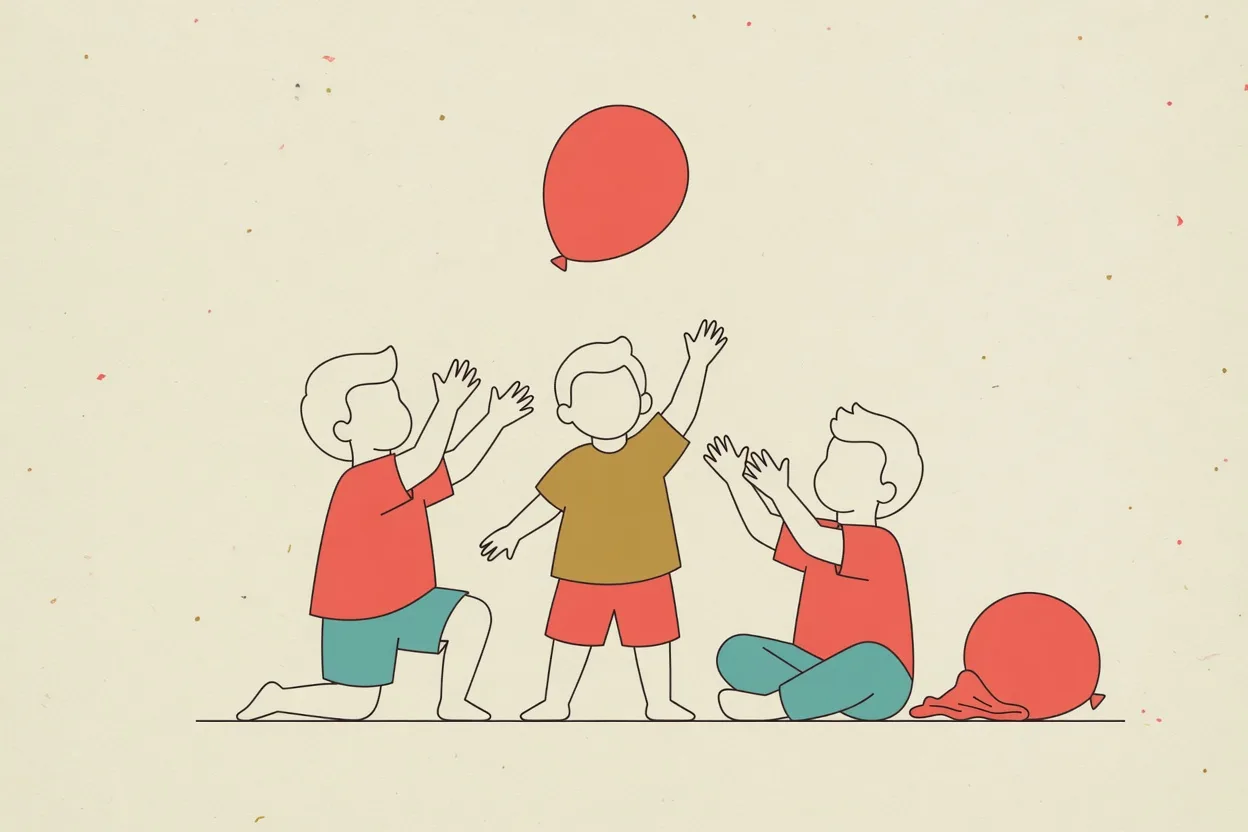
Keep the balloon up is the simplest game in this whole library and one of the most useful: everyone stands in a rough circle and hits a balloon back up before it touches the ground, counting together as they go. It needs one balloon, no teams to organize, and no adult to referee anything more complicated than restarting the count. It is also, underneath the chaos, one of the few party games that genuinely calms a room down rather than winding it up further — there's something about the shared counting that settles children who arrived overexcited.
This covers how to count fairly as a group, the team version for a bigger party, and the trick that keeps the game interesting well past the point where just keep hitting it up gets boring on its own.
Counting as a group, and adding rules as it goes
Count out loud together, as a whole group, every time anyone touches the balloon — not per person, just one shared count that resets to zero the moment it touches the floor. That single rule is what turns this from an individual game into a genuinely cooperative one, because the group's best score becomes something everyone is invested in together rather than any one child's personal total. Try for a new record each time it resets, and say the previous best out loud before you restart — children are noticeably more focused when they're chasing a number rather than just playing without a target.
Once the basic game is comfortable, start layering on rules one at a time rather than all at once: no using hands, only elbows; everyone has to touch it before anyone touches it twice; no talking while it's in the air. Each new rule resets the challenge without needing a new game, which is the real trick — the balloon and the floor space never change, only what you're allowed to do to keep it up.
Solo versus team counts — and what goes wrong
For a small group or a quieter moment, let one child try to keep a balloon up alone and count their own record — it works well as a calm-down activity between louder games, genuinely disguised as excitement rather than announced as one. For a bigger party, split into two circles or two teams sharing one balloon each, and compare best counts between them rather than racing head to head, which keeps the competition friendly rather than literal.
The game usually goes wrong when there's only one balloon and it pops — everything stops dead while someone finds and blows up another, and the group's attention goes with it. Keep three or four spares already inflated nearby so a pop is a five-second pause, not a five-minute one. The other common failure is a space that's too small or too cluttered — a coffee table or a low light fixture turns an enthusiastic hit into a genuine hazard, so clear the immediate area properly before you start rather than assuming everyone will remember to duck.
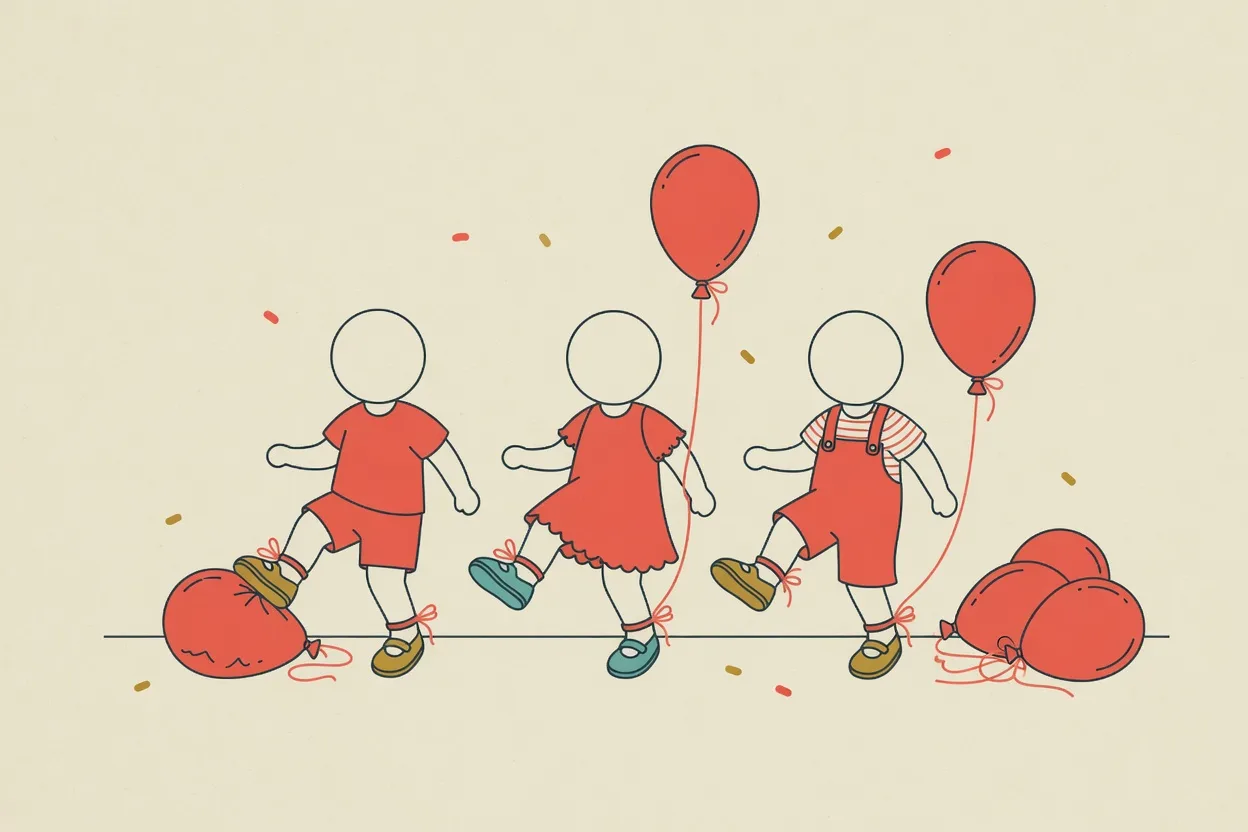
Balloon stomp uses the same handful of balloons for the opposite goal — see balloon stomp if the group's energy needs raising rather than settling.
What you need
- A handful of balloons, blown up — three or four spares beyond the one in play
- A clear floor space, indoors or out, with nothing breakable at head height
How to play keep the balloon up
- Blow up one balloon to play with and keep three or four spares already inflated nearby.
- Stand in a rough circle in a clear space with nothing breakable or sharp at head height.
- Bat the balloon into the air and count out loud together as a group every time anyone touches it.
- If it touches the floor, the count resets to zero — remind everyone of the previous best before starting again.
- Once the basic game is easy, add one new rule at a time — elbows only, no talking, everyone touches it before anyone touches it twice — to keep it challenging.
Variations
Solo record, calm-down version
One child keeps a balloon up alone and tries to beat their own record. Works well as a genuinely quiet activity between louder games, even though it looks like more of the same chaos from across the room.
Two-team count
Split into two circles, each with their own balloon, and compare best counts rather than playing head to head. Keeps a bigger party involved without anyone directly losing to anyone else.
Elbows and knees only (ages 7+)
Ban hands entirely and allow only elbows, knees and heads. Considerably harder, genuinely funny to watch, and a good way to keep older children challenged once the basic version stops holding their attention.
Frequently asked questions
- What age is keep the balloon up suitable for?
- From about three, with no real upper limit — the layered rules (elbows only, no talking, everyone touches it before anyone twice) keep it interesting well into the older end of a mixed-age party.
- How do you keep score in keep the balloon up?
- Count out loud together as one shared group total, resetting to zero whenever the balloon touches the floor. Announce the previous best before restarting so the group has something to beat.
- How many people can play keep the balloon up?
- Two is enough to start, and there's no real upper limit — for a bigger group, split into two circles with one balloon each and compare best counts rather than trying to fit everyone around a single balloon.
- What do you do when the balloon pops?
- Have three or four spares already blown up and ready nearby, so play can restart within a few seconds rather than stopping while someone finds and inflates a new one.