
3–7
Ages
6–15
Players
Indoors or out
Where
10–20 min
How long
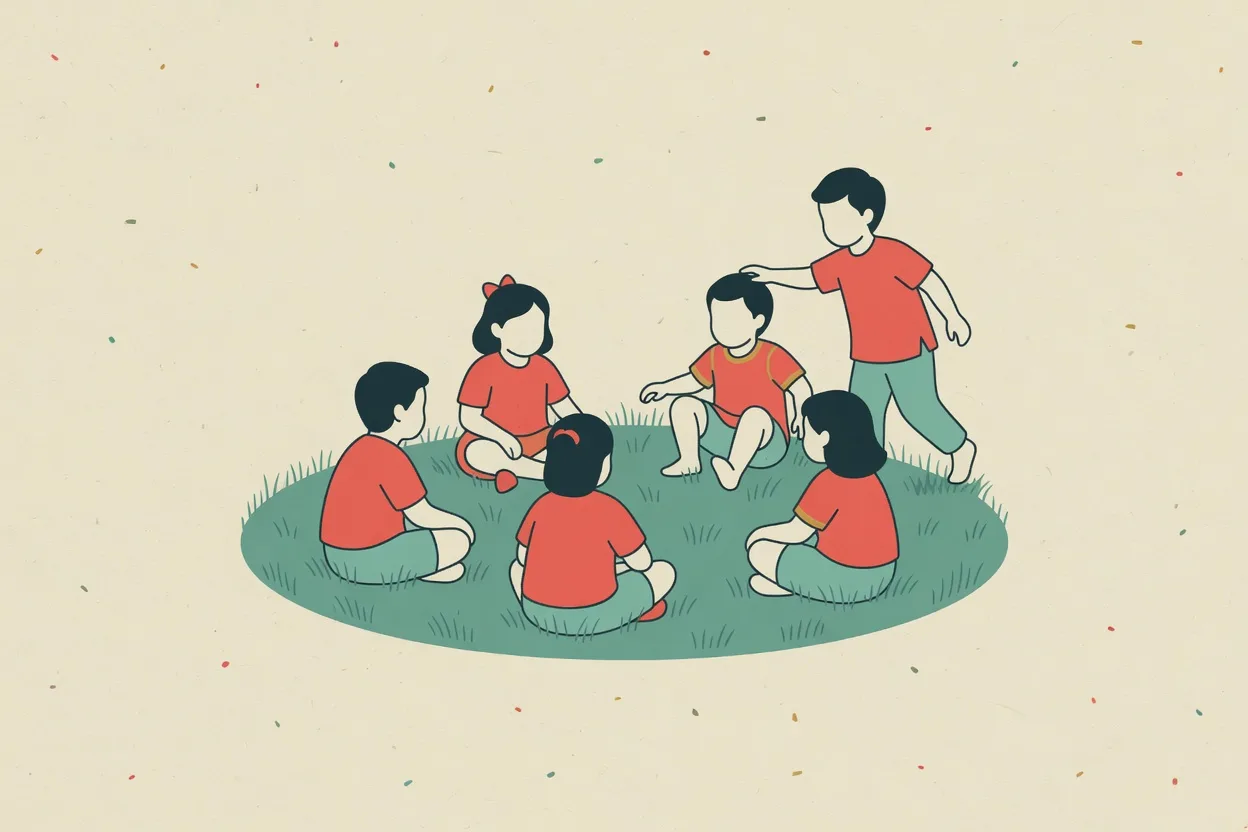
Duck duck goose needs nothing but space and a circle of children willing to sit still for a few seconds at a time, which is roughly the entire challenge for the age group it suits best. One child walks the outside of the ring tapping heads and saying "duck", then taps one head harder and says "goose" — and the chase is on. It is loud, it is simple, and for three- to seven-year-olds it is reliably one of the best five minutes of a party.
The whole game is one lap of a circle, so keep the ring itself small — eight to twelve children sitting close together works better than a sprawling circle of twenty, because a bigger ring just means a longer, less exciting chase and more time spent waiting for a turn.
Being "it" has its own small skill worth teaching: walk slowly, vary your pace, and let the tension build rather than picking the first head you reach. A goose chosen after a long, deliberately slow lap gets a much bigger reaction than one picked in the first two seconds, and it gives the seated children something to do while they wait, which is half the battle with this age group.
The child who never gets picked
This is the game's one real flaw, and it's worth fixing before you start rather than after someone's feelings are hurt. Left to their own devices, children pick their friends, and the same quiet child at the end of the row can go an entire game without ever being tapped "goose". The fix is simple: agree beforehand that "it" has to go all the way around the circle once before anyone can be picked a second time, or quietly hand the picking job to an adult for the first couple of rounds until the pattern is set. Either works. What doesn't work is hoping it sorts itself out — it won't.
Running the chase safely
The chase itself is the part that goes wrong physically rather than socially. Both children run the same direction around the outside of the circle — if the goose cuts back the other way to catch a shortcut, that's how two children collide head-on. Say the rule out loud before the first round: one direction, all the way around, no cutting across the middle. And keep the running lane genuinely clear; a stray chair or a toy left on the grass is invisible to a child looking backwards over their shoulder at whoever is chasing them.
A light tap that half the circle insists didn't happen is the other common flashpoint. Tell whoever is "it" to say the word clearly and audibly with the tap, rather than tapping silently and leaving everyone to guess whether they were chosen — a goose who didn't hear their own name called has a fair complaint, and a goose who's told twice over never does.
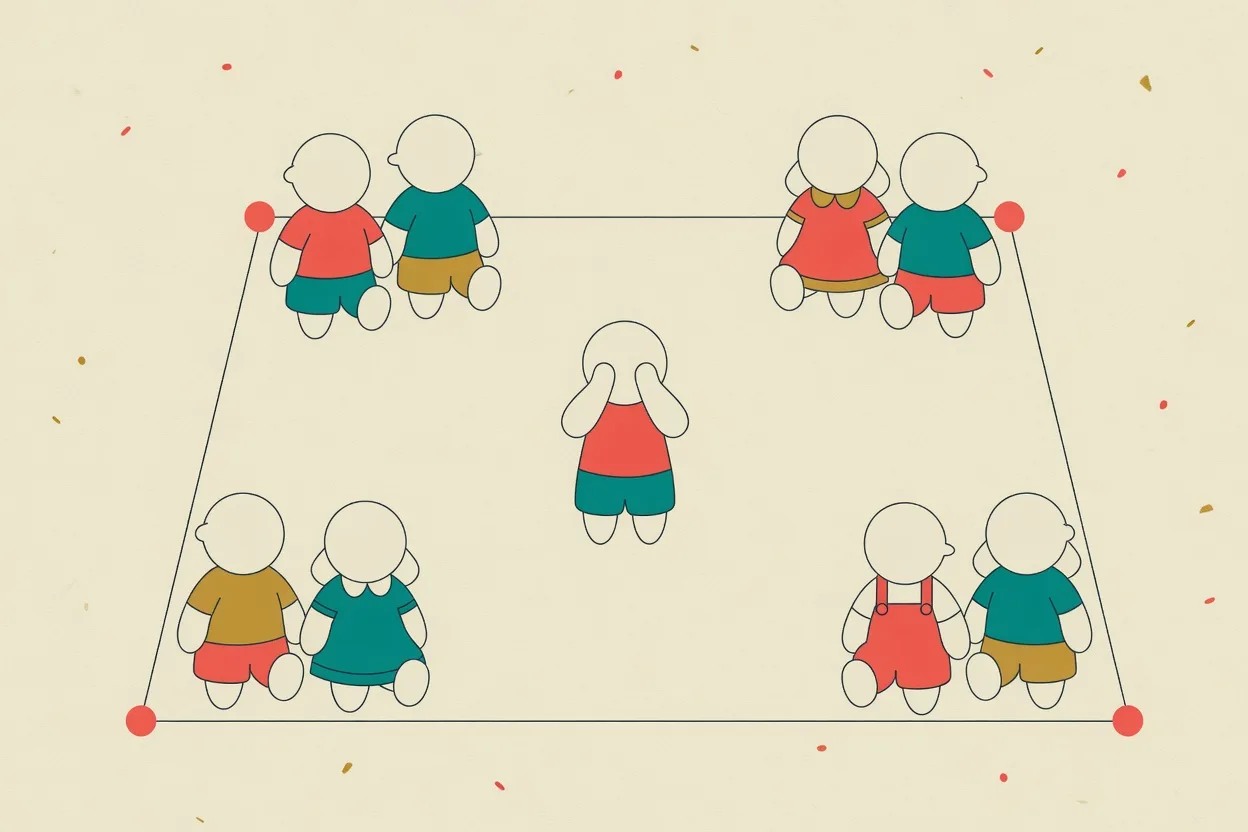
If the group is too big or too young to sit patiently for a chase-based game, four corners gives you the same "who gets caught" excitement without anyone having to wait their turn in a circle first — and it needs half the space.
What you need
- A patch of grass or clear floor big enough for a sitting circle plus a running lane right around the outside
- Nothing else — no equipment needed
How to play duck duck goose
- Sit everyone in a circle facing inward, close enough together that there are no big gaps between children.
- Choose one child to be "it". They stand up and walk around the outside of the circle.
- "It" taps each head lightly saying "duck" as they pass, until they tap one head and say "goose" instead.
- The goose jumps up and chases "it" around the outside of the circle, in the same direction, trying to tag them before they reach the goose's empty spot.
- If "it" reaches the empty spot first, they sit down and the goose becomes "it" for the next round. If the goose tags "it" first, "it" goes again.
Variations
Slower for kids under four
Cut the circle to six or seven children, have an adult play "it" for every round, and let the goose simply stand and clap rather than sprint a full lap. Three- and four-year-olds get the anticipation of being picked without the collision risk of a real foot race.
Themed calling
Swap "duck" and "goose" for any two words that suit the party — a favorite movie's characters, or a seasonal pair. Changes nothing about the rules and gives the game a five-second refresh for a group who already knows the original.
Two circles
Split a big group of twenty or more into two separate circles running at the same time. Every child gets picked far more often, and two ten-strong circles finish in less time than one twenty-strong one ever would.
Frequently asked questions
- How do you play duck duck goose?
- Children sit in a circle facing inward while one child, "it," walks around the outside tapping heads and saying "duck" until they tap one and say "goose." The goose chases "it" around the circle in the same direction: if "it" reaches the goose's empty spot first, the goose becomes "it," and if the goose tags "it" first, "it" goes again.
- What age is duck duck goose good for?
- Three to seven is the sweet spot. Kids under three usually can't manage the sitting-still-then-sprinting switch, and by about eight most children find a straightforward chase too easy and want more rules or more speed. For three- and four-year-olds, a smaller circle with an adult playing "it" works well.
- How do you make sure every child gets picked?
- Agree before you start that "it" must go all the way around the circle before repeating anyone, or let an adult do the picking for the first few rounds. Left unmanaged, children pick their friends, and the quietest child in the circle can end up never getting a turn.
- Can you play duck duck goose indoors?
- Yes, as long as you have a clear floor with room for a full running lap around the outside of the circle and nothing breakable within reach of it. A carpeted playroom or a party room works as well as grass does.
- What happens if the goose catches "it"?
- "It" goes again for another round, walking the circle and picking a new goose. Nothing else changes — there's no elimination in the classic version, so nobody sits out. Both runners must go the same direction around the outside, never across the middle, which is the one rule that prevents collisions.
Perfect for these parties
Themes that build a whole party around this game — with the food, the decor and a printable invite to match.