
5–11
Ages
5+
Players
Indoors
Where
10–20 min
How long
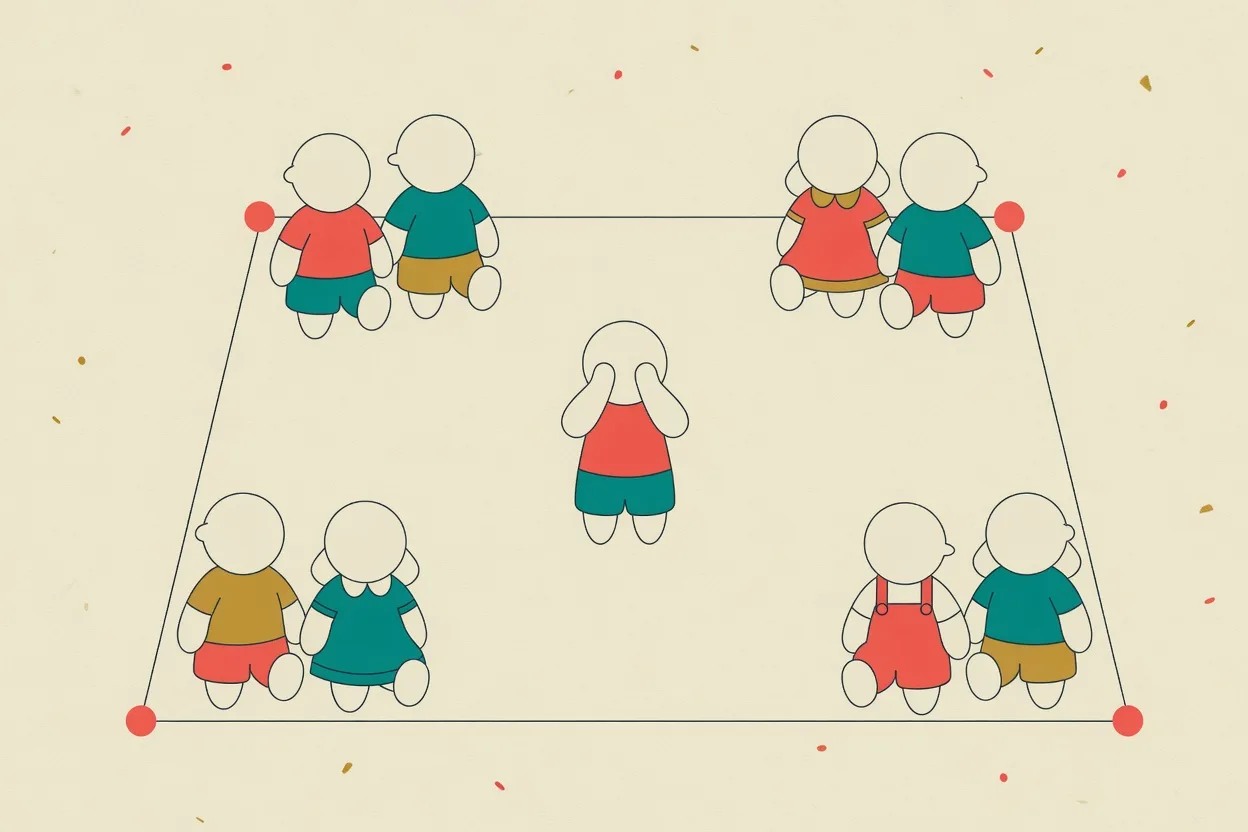
Four corners is the game to keep in reserve for the moment a party moves indoors and needs something with a bit of an edge to it. One player is "it" and stands in the center of the room with their eyes shut, counting; everyone else silently picks one of four numbered corners to stand in; "it" calls a number blind, and everyone in that corner is out. No equipment, no music, just a room and some nerve. A full game is usually four or five rounds of about a minute each, quick enough to run twice if the first round leaves everyone wanting more.
It rewards a specific kind of thinking that not every game does — reading which corner the other children are drifting towards and deciding whether to follow the crowd or bet against it. That's most of why it holds up well for the seven-to-eleven range, who are old enough to actually strategize rather than just pick at random.
Calling it fairly
The whole game depends on "it" genuinely not being able to see, so be strict about this from the first round: eyes shut and facing away, not just promising not to peek. Counting out loud to ten gives everyone enough time to choose a corner without a mad last-second scramble, and calling the number clearly — "corner one!" — rather than pointing, which they can't do fairly anyway, keeps the process the same every round. There's no limit to how many children can pile into one corner — a popular corner just means a bigger gamble if "it" calls it, which is part of what makes the choice interesting rather than a simple math problem. If "it" genuinely can't see, the game is entirely fair by design; the moment a child suspects otherwise, the whole thing falls apart in about one round.
Mark the corners properly rather than just announcing which is which — a sheet of paper taped up with a number, or a chair in each corner, means nobody's still asking "which one's three?" halfway through the first count. Small as it sounds, a confused scramble to find the right corner causes more collisions than the dash itself.
Managing the dash
What goes wrong with four corners is almost always the dash between the center and a corner, not the elimination itself — four or five children changing their minds and cutting across each other's path in a small room is how someone gets knocked over. Clear the room properly before you start, not just the corners: push chairs and low tables well back, and treat the whole floor as part of the game rather than just the four target spots. For a smaller or more excitable room, swap the dash for a fast walk — say so as a rule before round one, and it costs nothing in excitement while removing almost all the risk.
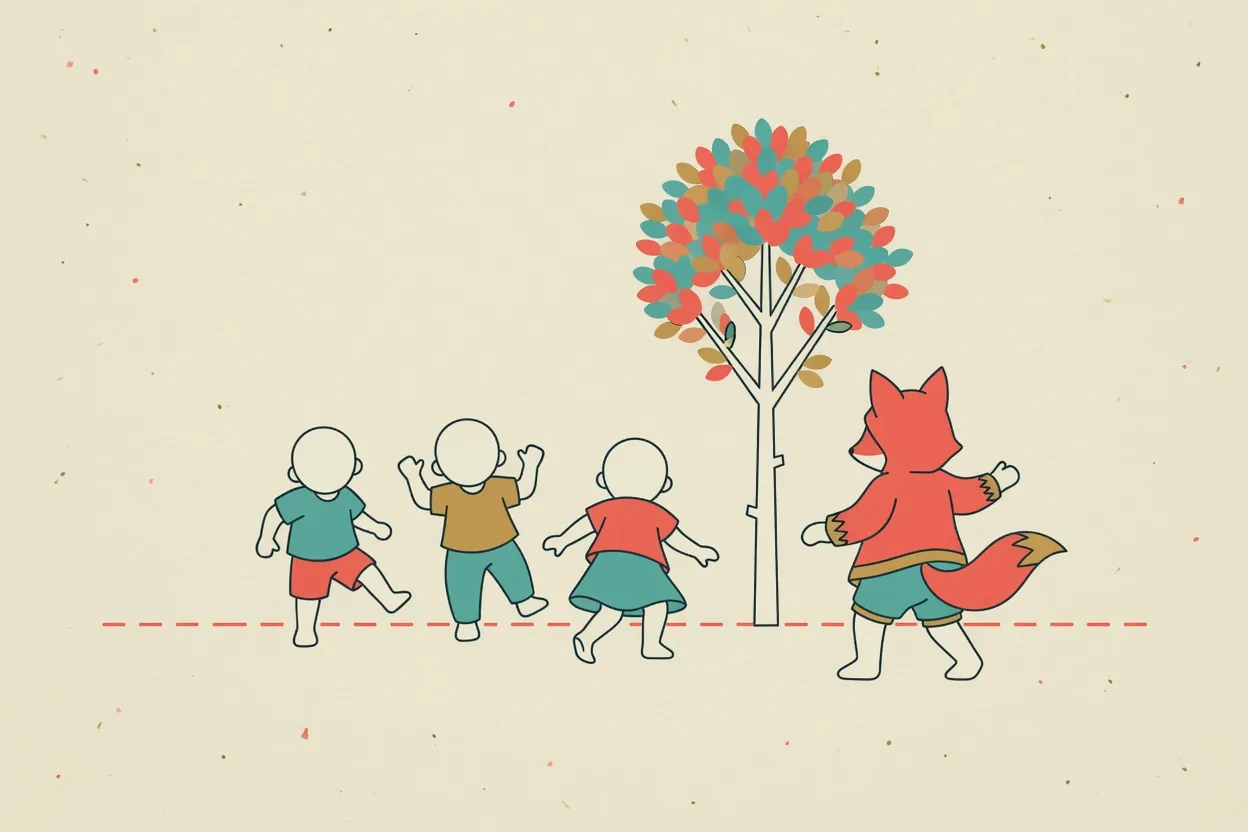
For an outdoor game with the same someone-gets-caught payoff, what's the time, Mr. Fox trades the four corners for a single creeping chase across open ground.
Keep rounds moving quickly once eliminations start — a paused, drawn-out count while four already-out children wait around does more to kill the game's energy than a slightly rushed one ever will.
What you need
- Four clearly marked corners of a room — furniture pushed back and each one numbered one to four
- One player to be "it", with a chair or wall to face away from the room
How to play four corners
- Number the four corners of the room one to four, and clear a safe path between them and the center.
- Choose one player to be "it". They stand in the center, close their eyes, and count out loud to ten.
- While "it" counts, everyone else picks one of the four corners and stands in it — any number of children can share a corner.
- When the count finishes, "it" calls out a number from one to four, still without opening their eyes.
- Everyone standing in that corner is out and sits down. Repeat with the remaining corners and players until one winner is left.
Variations
Quiet version (younger or nervous groups)
Swap the dash for a calm walk, and have "it" count slowly to a number everyone can hear clearly. Removes the collision risk almost entirely and suits younger children, or any room too small for a genuine sprint between corners.
No elimination
Instead of sitting out, anyone caught in the called corner does a quick forfeit and stays in the game. Keeps the youngest or most sensitive players involved for the whole game rather than watching from the sidelines after one unlucky call.
Giant corners, outdoors
Mark four corners with cones across a much bigger space — a backyard or a playground — for a faster, more physical version. Works well from about eight and up, where a small indoor room no longer offers enough of a real dash.
Frequently asked questions
- What age is four corners good for?
- From about five with the quiet, walking version, and the classic dashing version comes into its own from about seven, once children can genuinely weigh up which corner to risk rather than just copying a friend.
- How do you make sure "it" calls a corner fairly?
- Be strict that "it" keeps their eyes shut and faces away from the room the whole time, not just while counting. As long as they genuinely can't see, every call is fair by design — the moment a child suspects otherwise, the game stops working.
- Can you play four corners with a large group?
- Yes — there's no limit to how many children can share one corner, which is part of the game rather than a problem. A bigger group just makes each corner a bigger gamble when "it" calls a number.
- How do you make a quieter version for younger children?
- Swap the dash between corners for a fast walk, and have "it" count slowly and clearly. It removes almost all the collision risk while keeping the guessing and the elimination exactly the same.
Perfect for these parties
Themes that build a whole party around this game — with the food, the decor and a printable invite to match.