
3–12
Ages
1+
Players
Outdoors
Where
20–40 min
How long
A backyard obstacle course is the party game you don't have to buy anything for. Hula hoops, laundry baskets, cushions, a broom and two chairs — whatever is already lying around the yard and shed is the whole supply list, and it also happens to be the one game in this library you can genuinely scale to exactly the ages you have got, because you build the difficulty into the course itself rather than adjusting rules afterward.
This guide covers how to put a course together from things you already own, three ready-made designs by age below, and the one mistake — not testing it yourself first — that causes almost every obstacle course problem.
Building a course from what you've already got
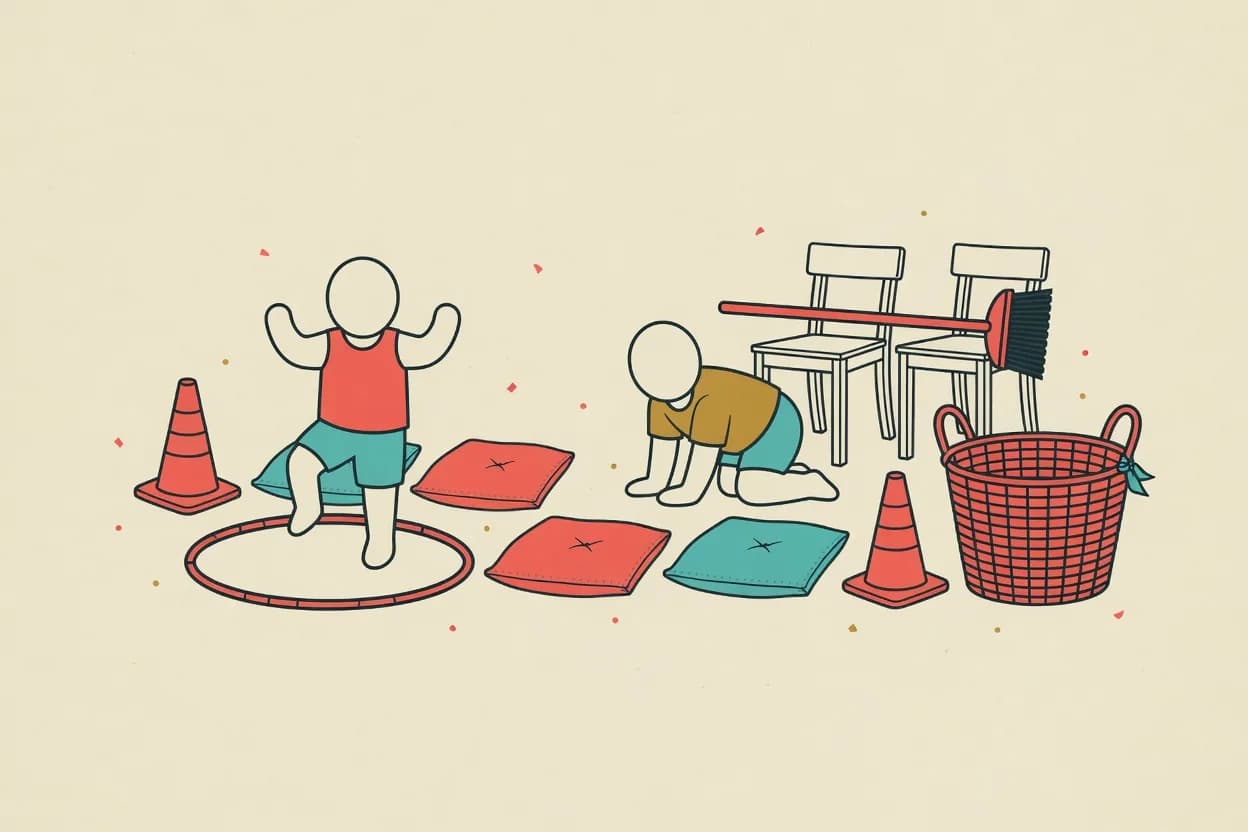
You do not need special equipment for this, and buying any is missing the point. A hula hoop to jump in and out of, a laundry basket to crawl under a broom balanced across two chairs, cushions laid out as stepping stones, a bedsheet clipped between two fence posts as a tunnel, a kiddie pool to wade through — six to ten of these laid out in a route between a clear start and finish makes a real course. Mark the path between obstacles with chalk or a length of string so nobody is unsure which way to go next, especially with younger children, who will otherwise just run straight to whichever obstacle looks most fun.
Timing against the clock and racing head-to-head feel similar but produce very different afternoons. A clock removes direct comparison — a nervous six-year-old is competing against their own last run, not against the fastest child in the group, which keeps the course fun rather than discouraging. Head-to-head racing gets a big group through faster and has more obvious drama, but works best once children are old enough not to take losing personally. With a mixed-age group, the clock is almost always the kinder choice.
Testing it yourself is not optional
The obstacle course that looks great on paper and falls apart in practice is the most common failure in this game, and it almost always comes down to the same thing: nobody walked it at the height of the youngest child before the first race. A gap that is an easy step for you is a genuine climb for a four-year-old, and a chair that seems perfectly stable holding your weight can wobble under a running child hitting it off balance. Get down and run the course yourself, or have another adult do it, before anyone else touches it. Then run children through in small heats of two or three rather than one at a time with everyone else waiting in line — a long line is how an obstacle course loses a bored four-year-old to something else entirely.
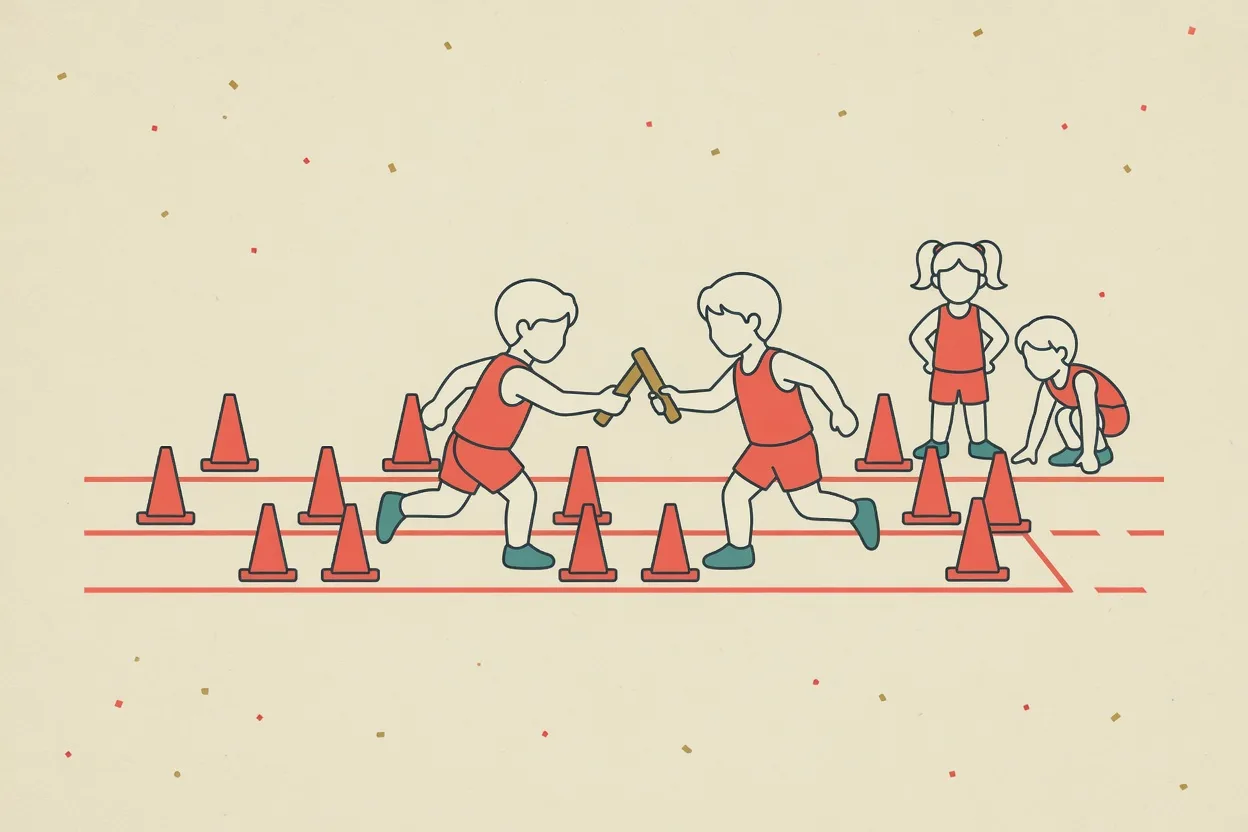
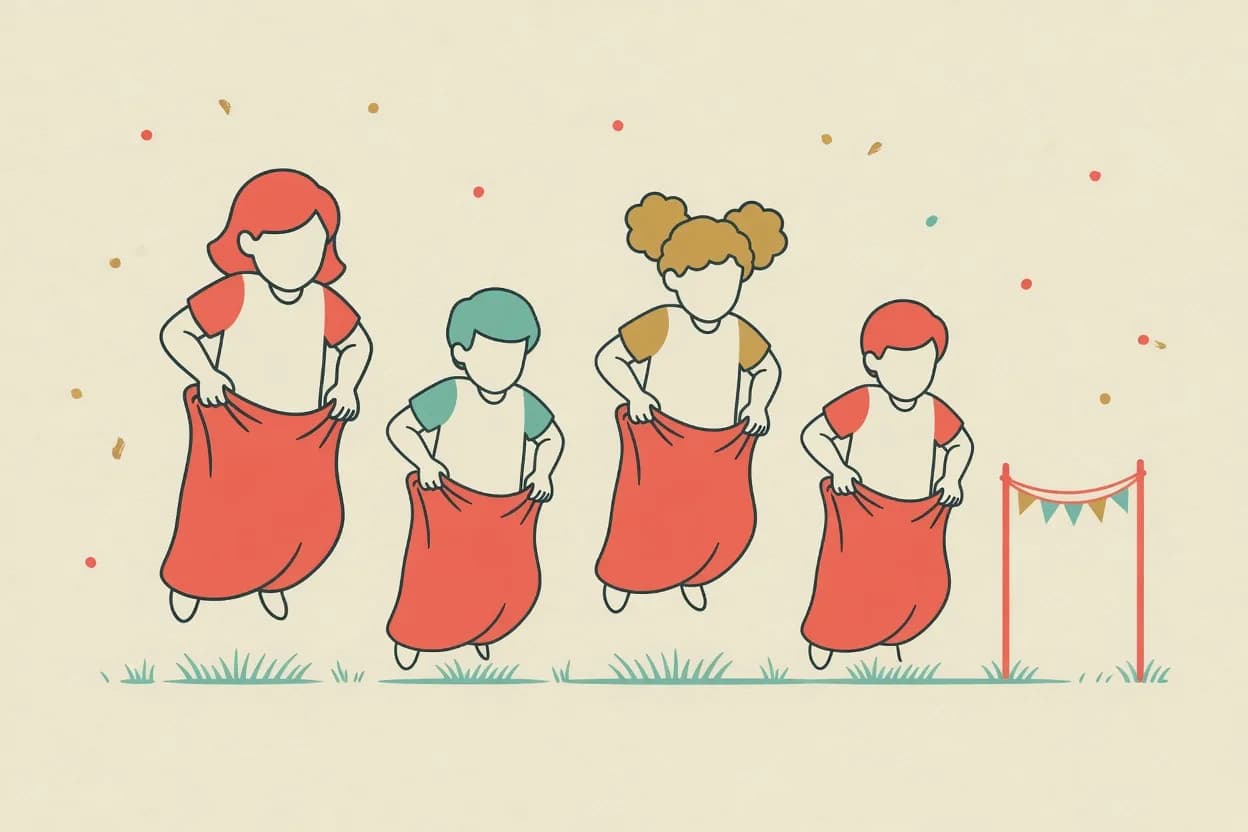
An obstacle course pairs naturally with relay races for a bigger field-day afternoon, or run it alongside a sack race and a three-legged race. Browse local entertainers if you'd rather have someone else design and run the course.
What you need
- Whatever you already own — a hula hoop, a laundry basket, garden stakes, cushions, a bedsheet, a kiddie pool
- Cones, chalk or string to mark a start, a finish and the route between obstacles
- A stopwatch or a phone timer, if you're racing the clock rather than each other
How to play an obstacle course
- Walk your yard and list what you've got to work with — trees, a clothesline, a flat lawn, a step, a flowerbed to go around.
- Lay a route between six and ten obstacles using household items: a hula hoop to jump into, a laundry basket to crawl under, a broom balanced across two chairs, cushions to hop between, a bedsheet tunnel clipped to a fence.
- Test it yourself first, at the height and ability of your youngest racer, to check nothing is too high, too heavy or too easy to trip on.
- Explain the route once, obstacle by obstacle, then let each child do a practice lap with no timing before the real runs start.
- Run it either as a straight head-to-head race or one at a time against the clock, depending on the group — see the variations below for which suits which age.
- Reset anything that gets knocked over between runs, and keep a note of the fastest time if you're racing the clock, so the leaderboard updates as more children go.
Variations
Ages 3–5: the toddler course
Keep it to four or five obstacles, all low and none needing real coordination: step into and out of a hula hoop, crawl through a fabric tunnel or under a low table, walk along a chalk line, drop a beanbag into a laundry basket. Skip timing altogether at this age — walk it together, cheer at the end, and let them go around again, which they will want to.
Ages 6–9: the full course
Six to eight obstacles with a bit of everything: jump between cushions laid out as stepping stones, crawl under a broom handle balanced across two chairs, weave through a line of cones, throw a beanbag into a bucket from a marked spot, then sprint the last stretch to the finish. This is the age where timing each child and comparing results afterwards works well — the course, not the other runners, becomes the thing to beat.
Ages 10 and up: the harder course
Add genuine physical challenges: a wheelbarrow-carry section, a stretch done backwards, a balance beam along a low curb or a plank, and a longer sprint finish. Run it head-to-head rather than against the clock at this age — two children going at once on parallel courses is more exciting for a group competitive enough to actually race each other.
Frequently asked questions
- What household items make good obstacle course obstacles?
- Hula hoops, laundry baskets, cushions, a broom balanced across two chairs, a bedsheet clipped up as a tunnel, cones, and a kiddie pool to wade through all work well and cost nothing extra. Anything you would trust a running child to bump into is fair game.
- How many obstacles should a backyard obstacle course have?
- Four or five for kids under five, six to ten for older children. More obstacles isn't automatically better — a course that takes too long to explain or too long to wait in line for loses younger children's attention fast.
- Should you time an obstacle course or race head-to-head?
- Time it against the clock for a younger or mixed-age group, since that removes direct comparison and keeps a slower child from feeling singled out. Head-to-head racing suits older children who are competitive enough to enjoy losing a close race.
- How do you make a backyard obstacle course safe?
- Walk the whole course yourself before any child runs it, use only furniture and objects that are genuinely stable, and avoid anything glass or anything that can pinch fingers. Run children through in small heats rather than one long line.
Perfect for these parties
Themes that build a whole party around this game — with the food, the decor and a printable invite to match.