
A backyard or a park gives you the one thing indoor games can't: real distance. Races that need a genuine sprint, chases that need somewhere to actually run to, team games with two defended halves — all of it needs outdoor space, which is exactly why field-day energy belongs out here rather than squeezed into a living room.
The planning that actually matters is space, not the games themselves. A backyard comfortably holds a sack race, a bean bag toss or a round of tug of war, but capture the flag and red light, green light both want real distance — a park, a school field, or a yard genuinely big enough to feel like ground worth contesting. Do that math before the guest list, not after.
Below: the classic field-day races, the games that want real space, and a run of small-yard-friendly options that need almost nothing at all. Keep indoor party games for kids in your back pocket too, in case the forecast turns that day.
The field-day classics
Sack Race: Rules, Setup & How to Jump Faster
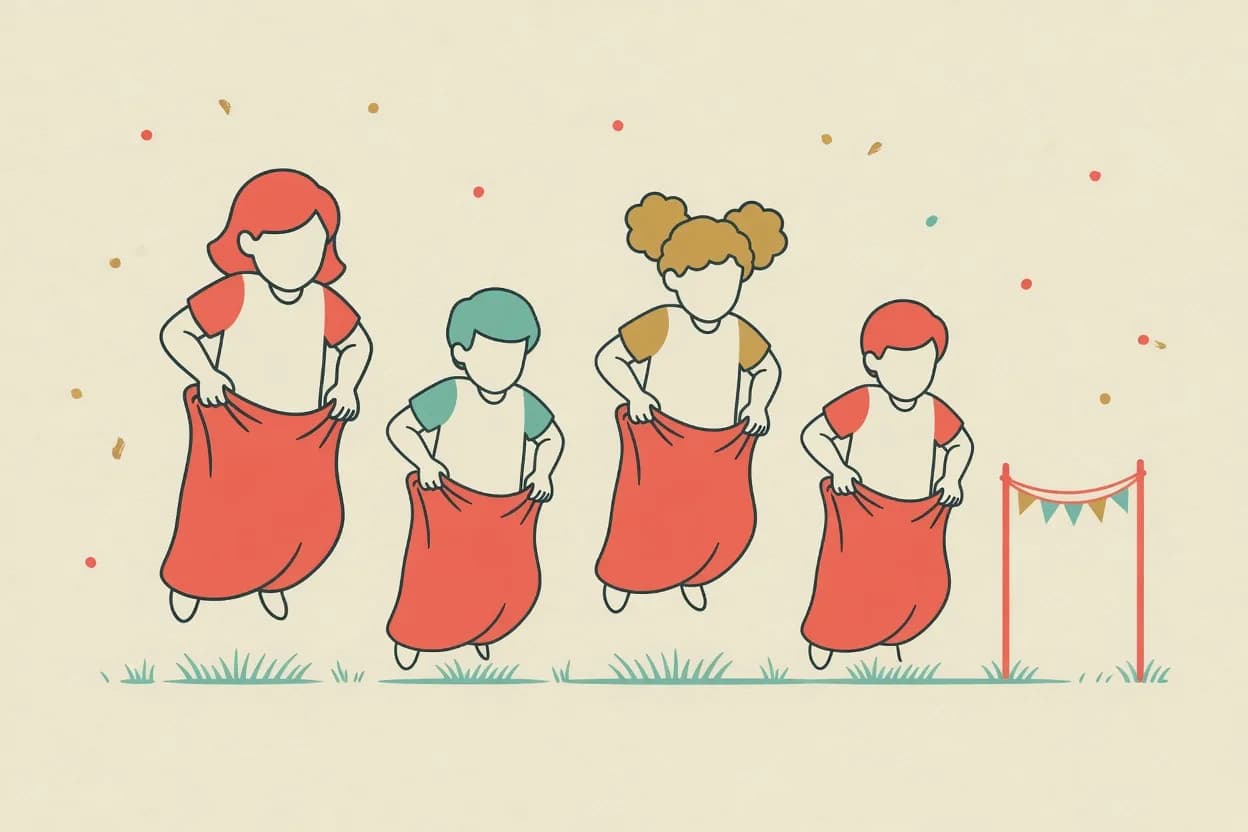
The most reliable five minutes of joy at any outdoor party, and it needs almost nothing you don't already own — a burlap sack or a heavy-duty pillowcase, a flat patch of grass, and fifteen to twenty paces of course. Small, fast jumps beat one big leap every time, which is worth teaching a losing child between heats.
Full rules and variations for Sack Race: Rules, Setup & How to Jump Faster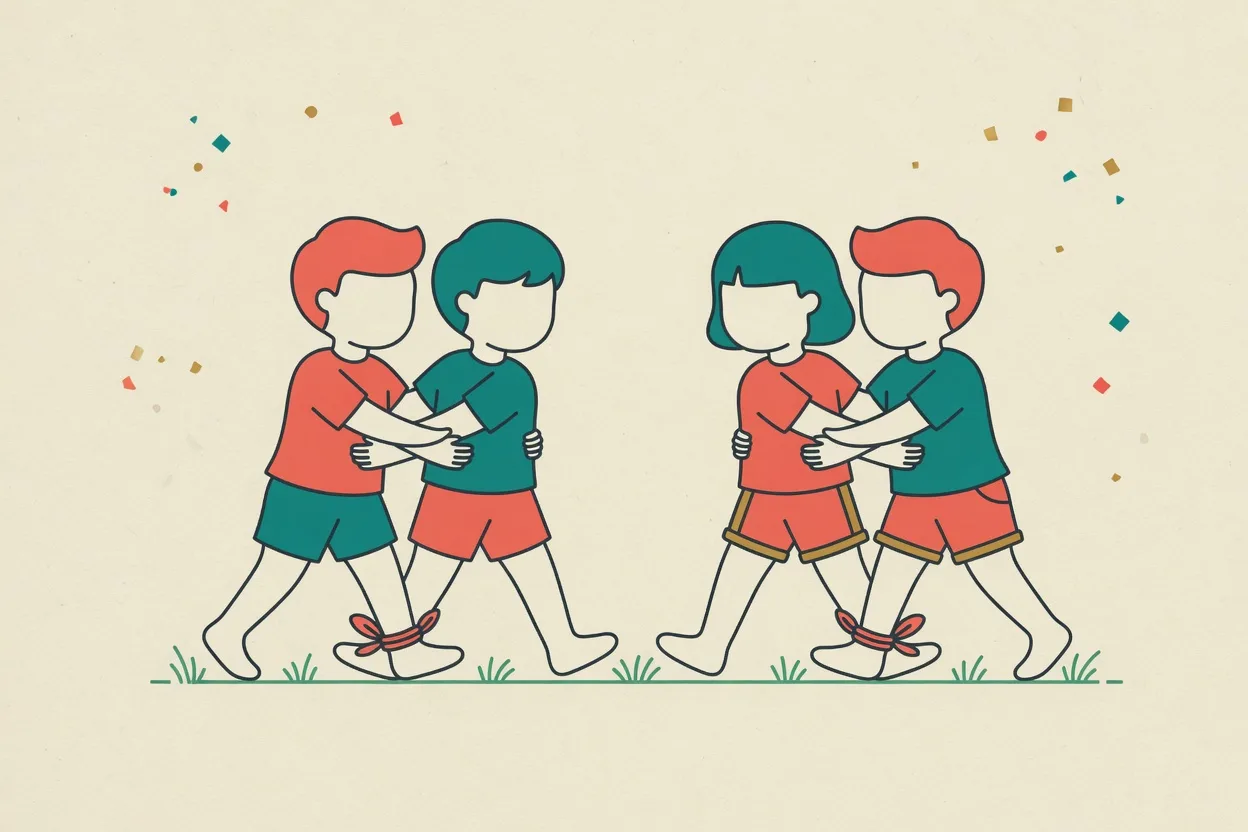
Three-Legged Race: Rules, Setup & Winning Technique
The great equalizer of a field-day afternoon — the fastest child at the party loses this one if they can't cooperate with their partner, and the two least sporty kids win it if they find the rhythm first. Pair by height rather than friendship group; a big stride mismatch is what ends most pairs on the grass.
Full rules and variations for Three-Legged Race: Rules, Setup & Winning Technique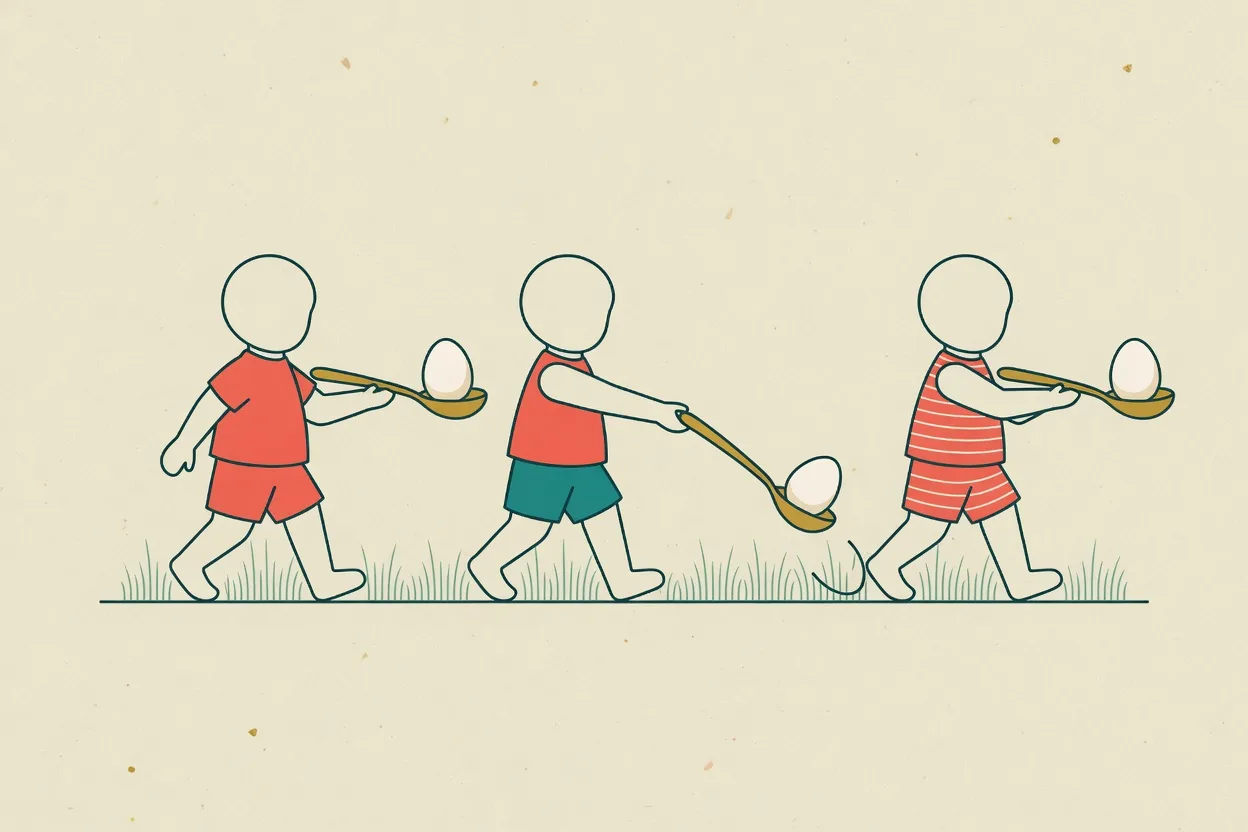
Egg and Spoon Race: Rules, Technique & Variations
The only race where going faster makes you worse, which makes it the calmest event on a field-day schedule and gives your least athletic guest a genuine shot at winning something. Swap a raw egg for a hard-boiled one, a small potato or a lemon, and skip the patio-scrubbing entirely.
Full rules and variations for Egg and Spoon Race: Rules, Technique & Variations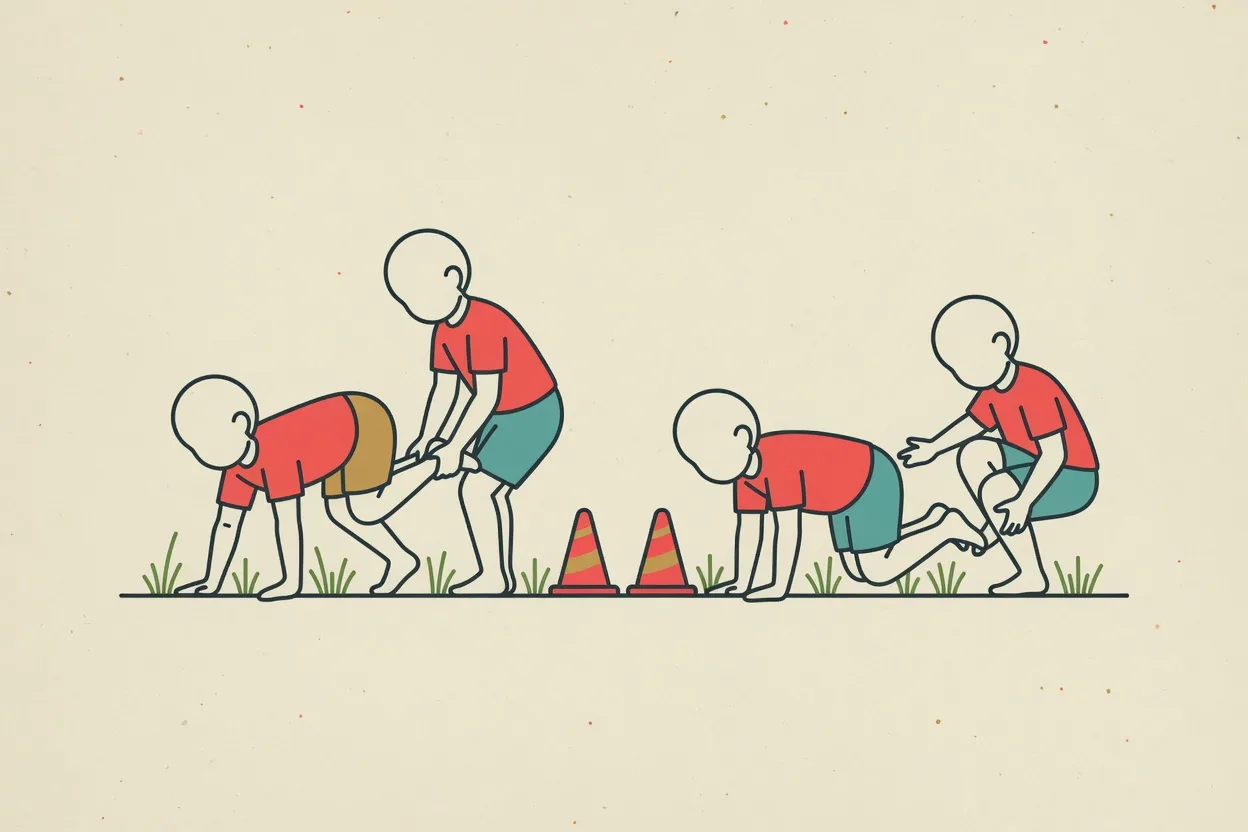
The Wheelbarrow Race
A literal partnership — one child walks the whole course on their hands while the other steers by the ankles — and it needs grass without exception, since a fall here lands on the hands and wrists rather than the feet. Pair by strength rather than height for the best-matched pace.
Full rules and variations for the wheelbarrow race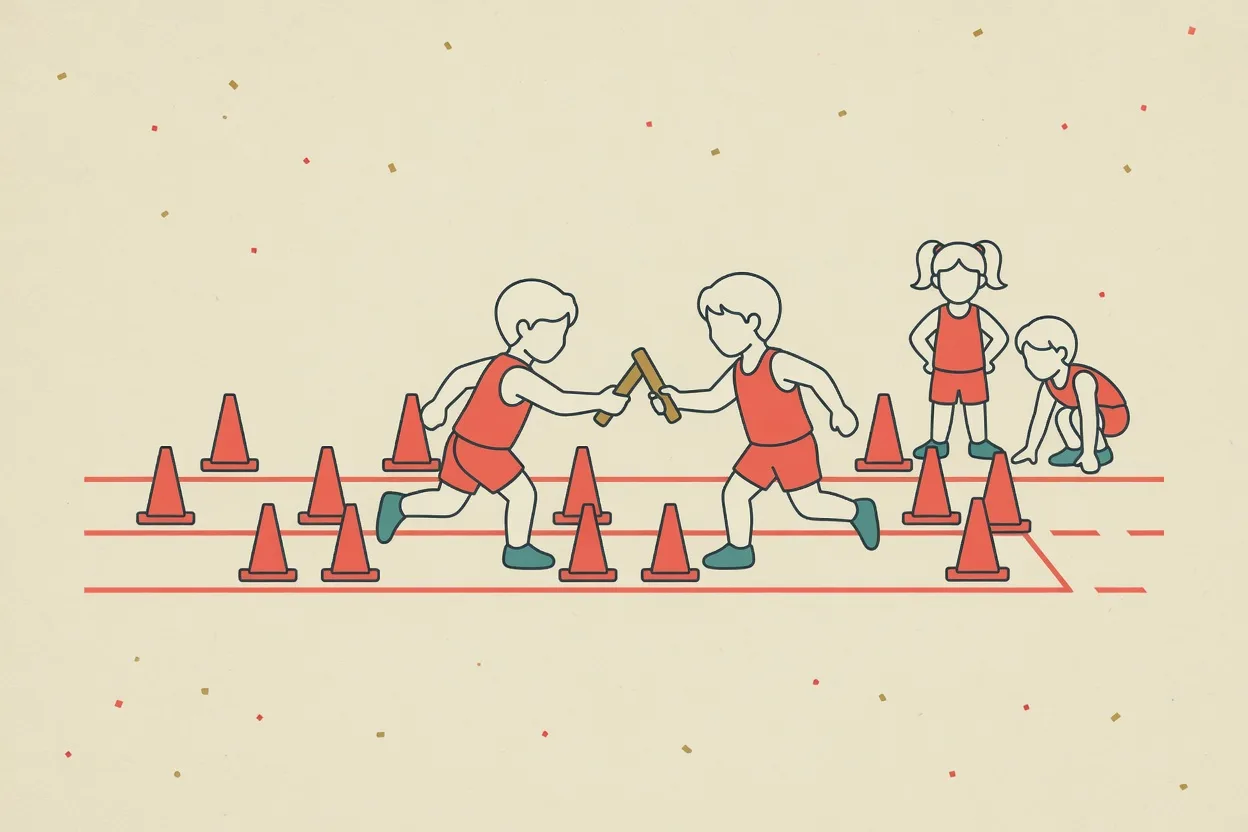
Relay Races
Less one game than a format — plug in a baton, a spoon or a dress-up box and get a completely different race out of the same lanes and turning point. The hand-off is where relays actually go wrong, not the running, so drill one clean hand-to-hand pass before the clock starts.
Full rules and variations for relay races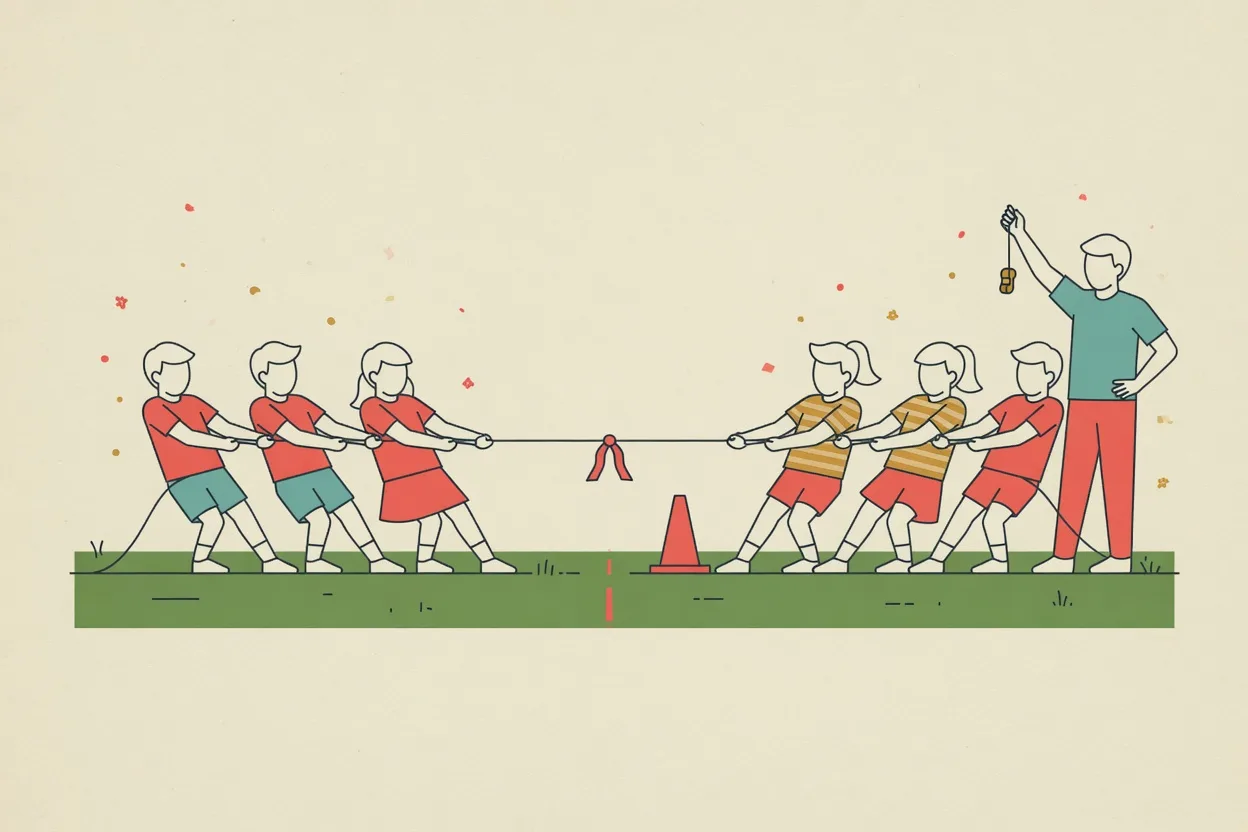
Tug of War: Rules, Strategy & How to Actually Win
The flagship of any backyard field day, and one of the only games on this list where technique visibly beats raw strength — the lean, the grip, a caller's rhythm. Play on grass without exception and agree on the stop signal before the first pull; a team letting go of a taut rope alone is the one real risk in this game.
Full rules and variations for Tug of War: Rules, Strategy & How to Actually Win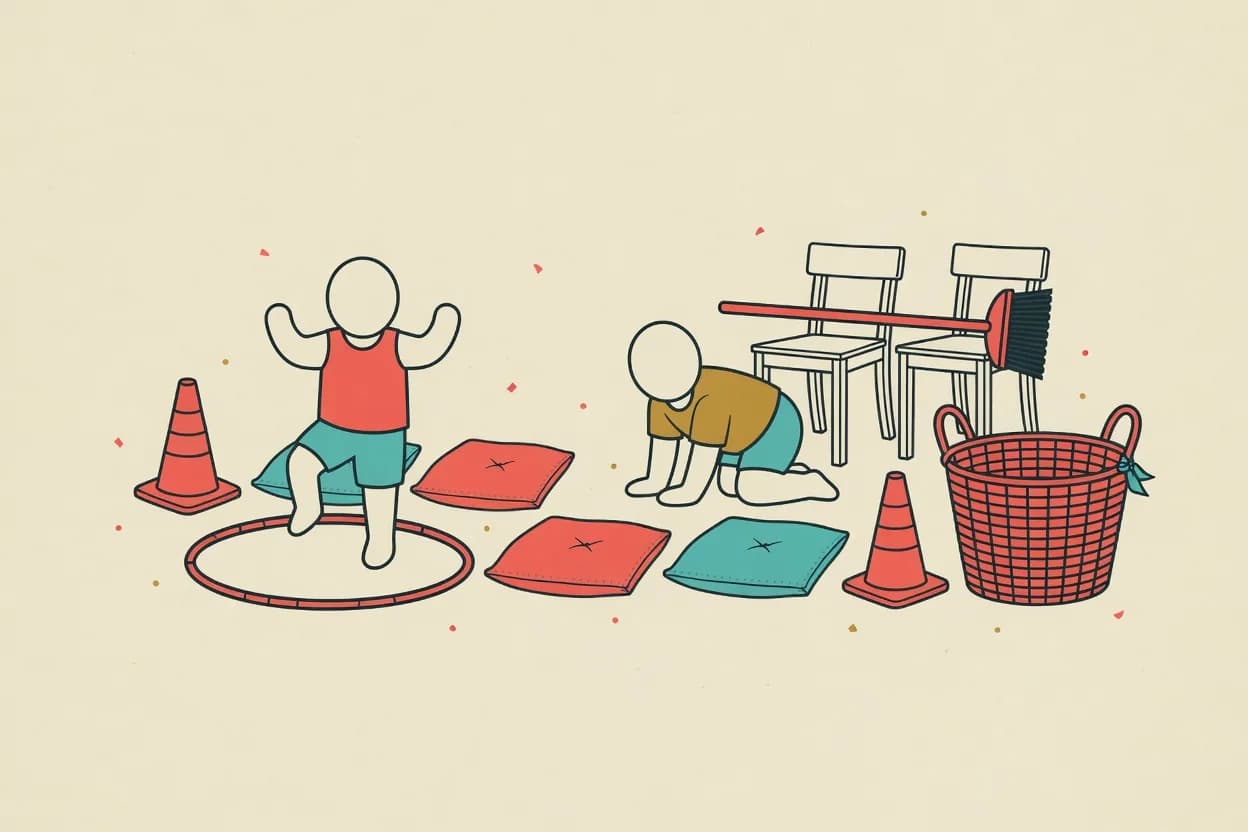
An Obstacle Course
Built entirely from things you already own — a hula hoop, a laundry basket, cushions as stepping stones — and it's the one game on this list you can genuinely scale to the ages you've actually got, since the difficulty lives in the course rather than the rules. Test every obstacle yourself first, at the height of your youngest racer.
Full rules and variations for an obstacle courseGames that want real space
Capture the Flag
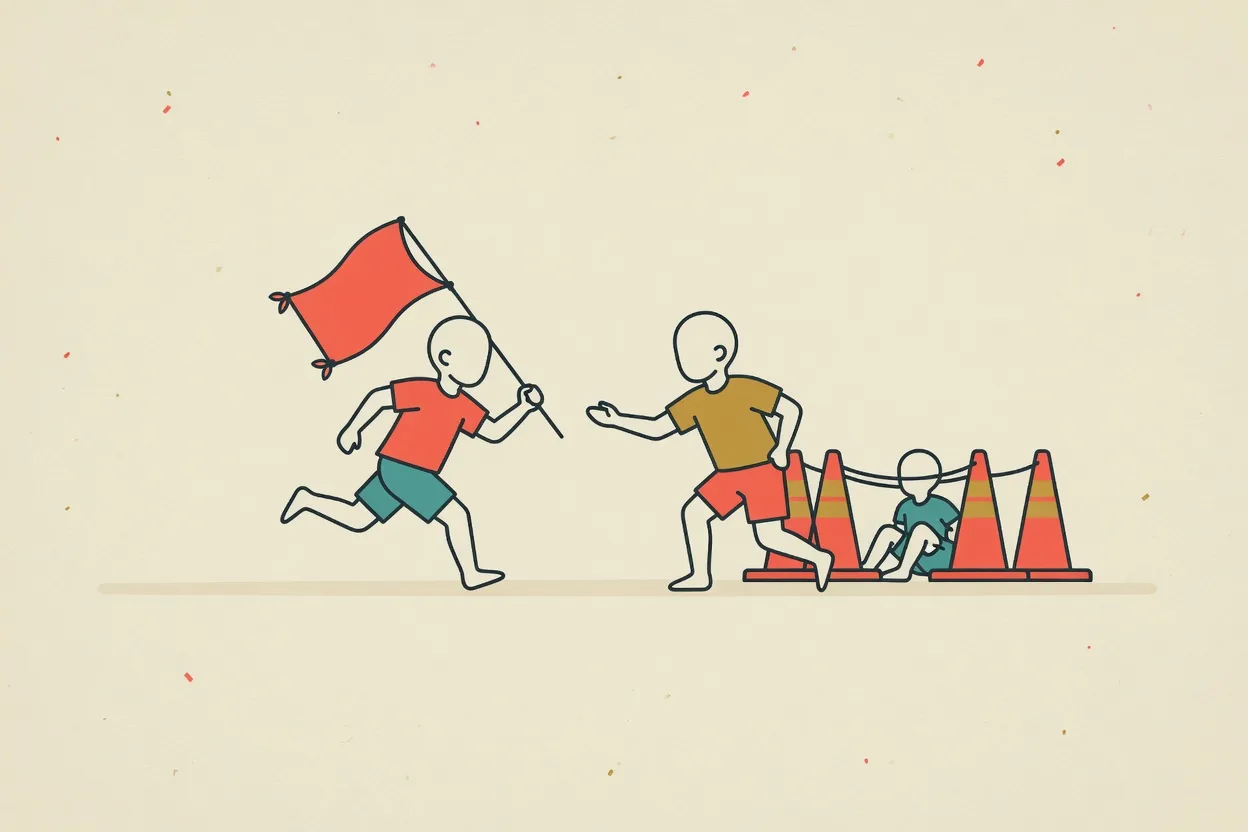
Wants a genuinely large space — a park or a big backyard, split in half by an obvious center line — and at least ten players, five per team, so do the math on your space and your guest list before you commit to it. Get that right and it's the rare outdoor game that rewards a plan over just speed.
Full rules and variations for capture the flag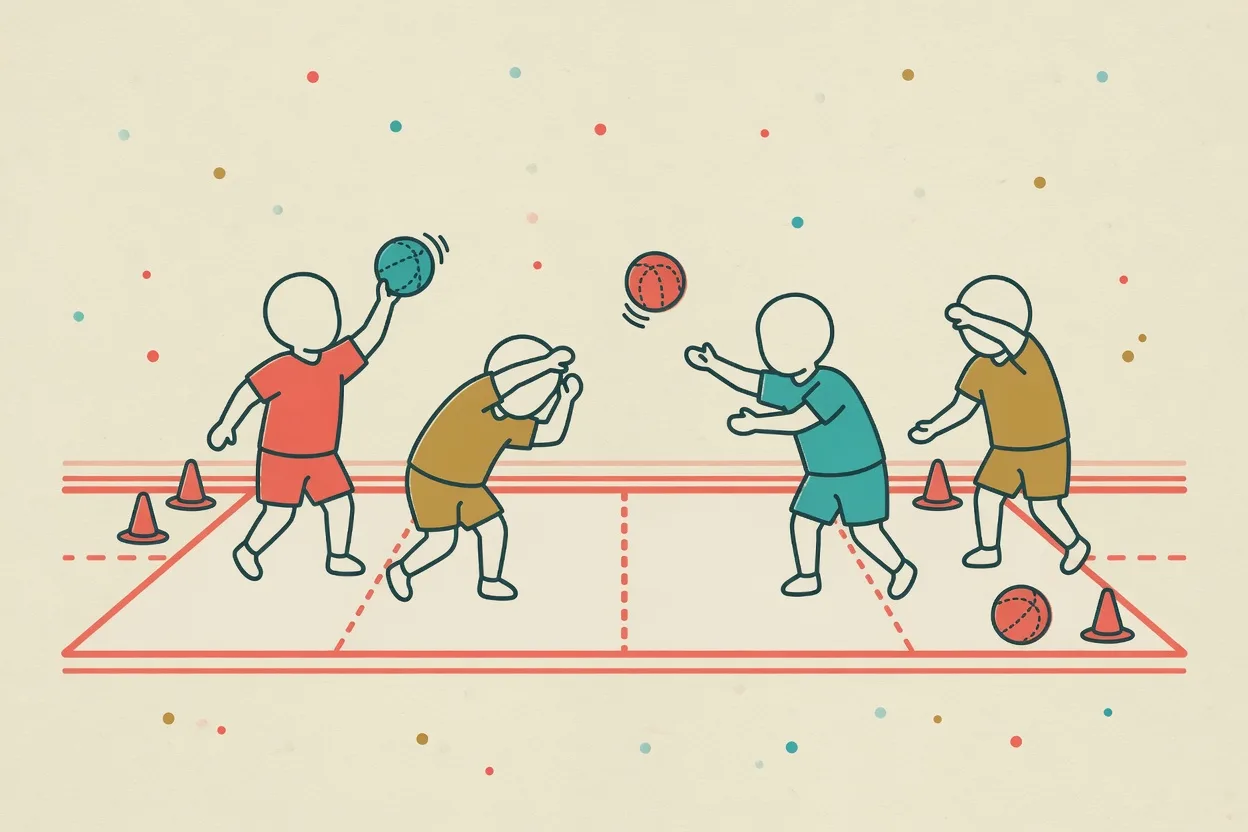
Dodgeball
Mark a rectangular court with cones or chalk, roughly twenty by thirty feet, and keep it strictly to foam balls — nothing with any real weight behind it. The catch-to-revive rule, where a clean catch sends the thrower out and brings a teammate back in, is what keeps eliminated children invested rather than just sitting out.
Full rules and variations for dodgeball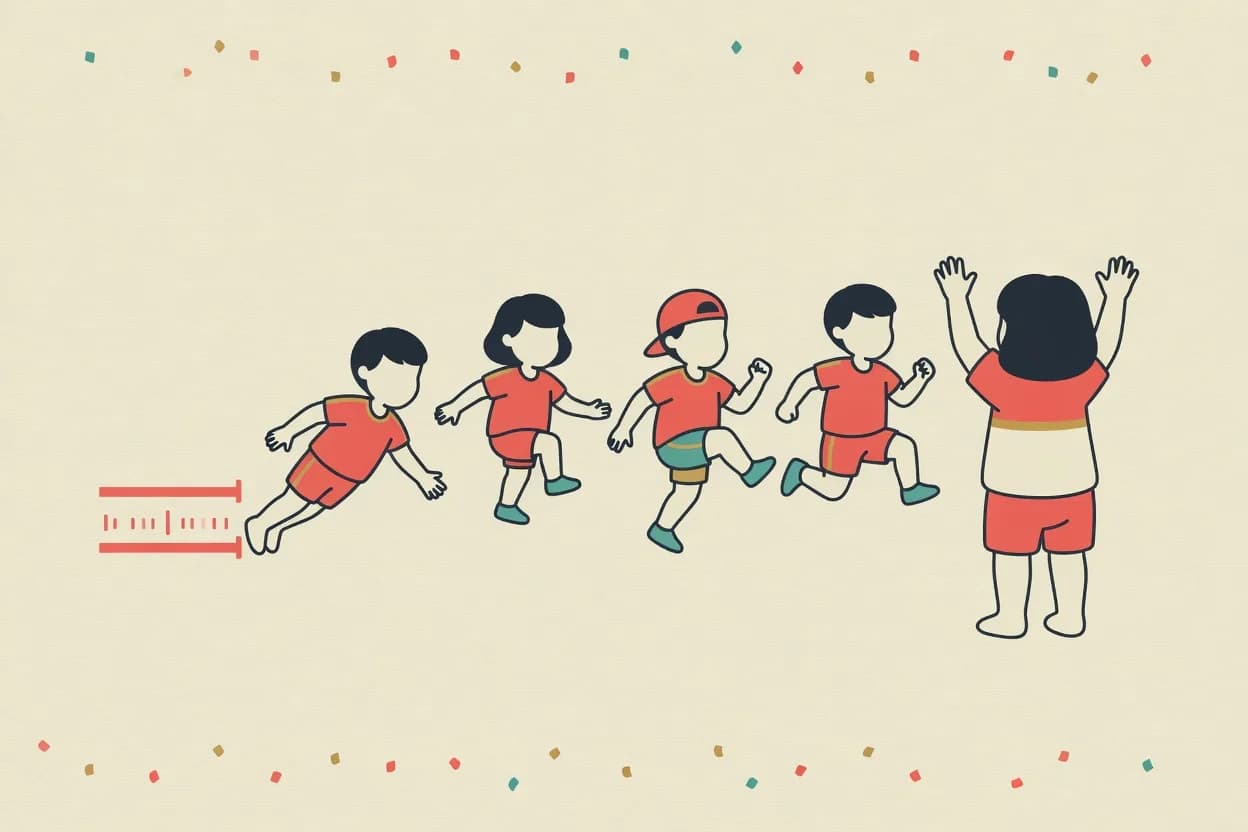
Red Light Green Light
Needs more room than most backyards actually have — at least fifty feet between the start line and the caller, ideally sixty-five — because the whole appeal is the risk of creeping too far on a green light. If your yard's too short, shrink the group instead of the course rather than trying to compress the distance.
Full rules and variations for red light green light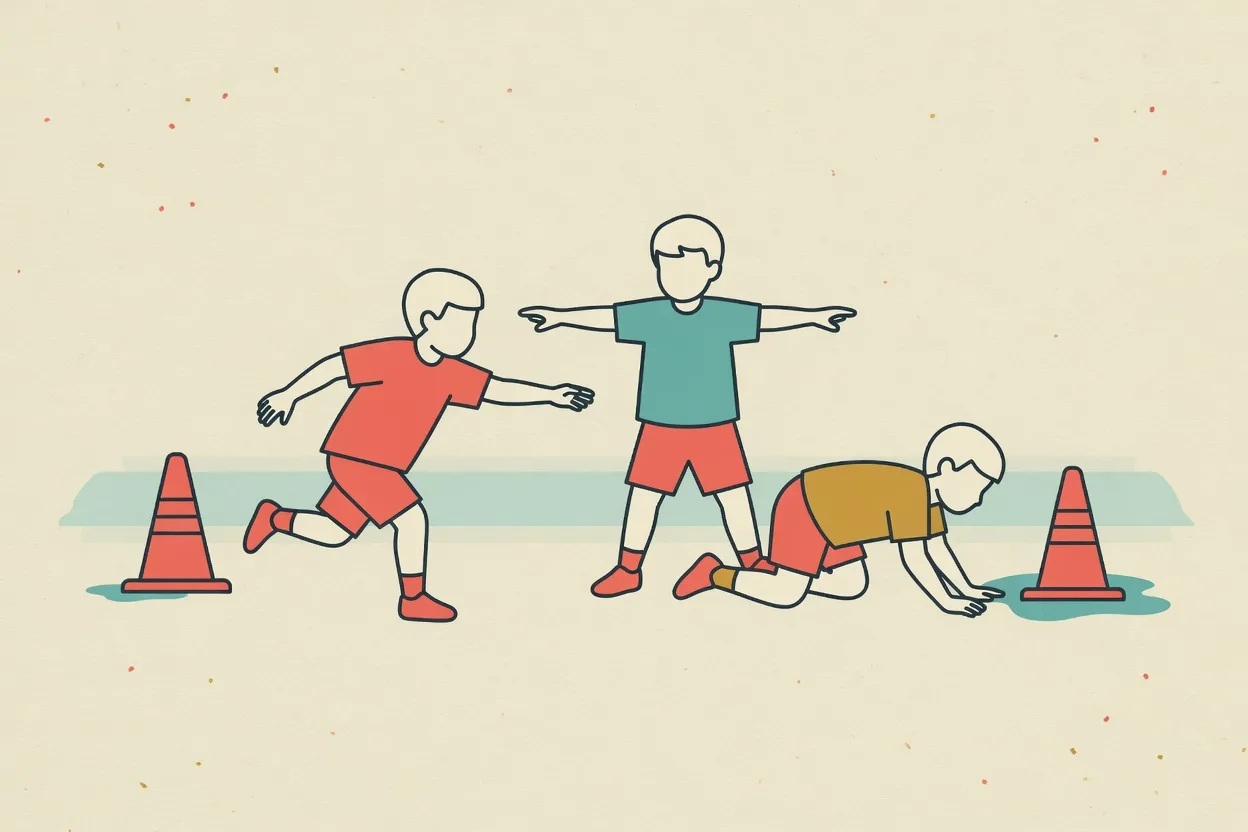
Freeze Tag
Ordinary tag with one rule bolted on — a tagged player freezes instead of sitting out — and it genuinely needs an agreed boundary before the first tag, or it turns into an unsupervised chase across however much yard or park is available. Add a second tagger once the group's past about six free runners.
Full rules and variations for freeze tag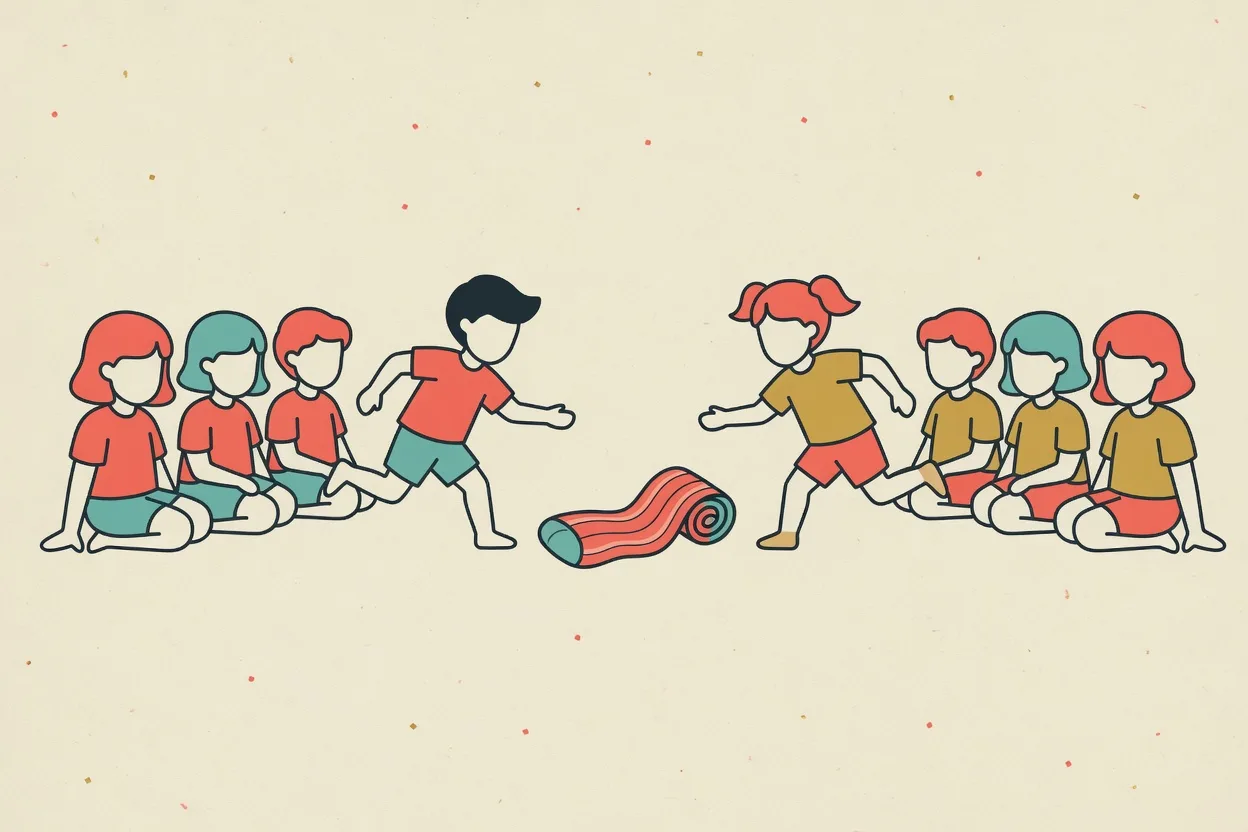
Steal the Bacon
Two lines twenty-five to thirty feet apart and one object on the center line between them — a real dash game with almost no setup, as long as the ground between the lines is clear and flat. Settle the tie-grab rule before you start; it's the single most common argument this game produces.
Full rules and variations for steal the baconSmall-yard friendly
Bean Bag Toss
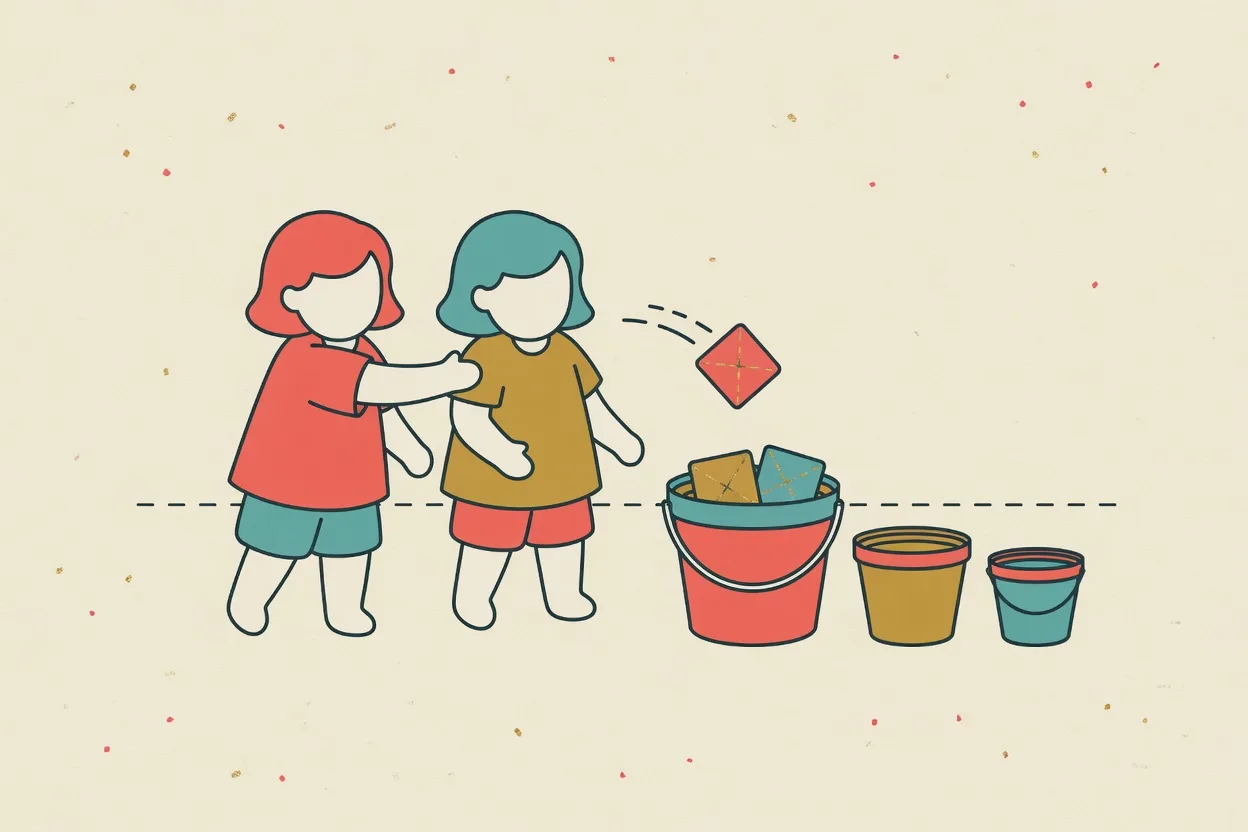
Scales down further than almost any other throwing game — a two-year-old lobbing a bag at a hula hoop three feet away feels exactly as pleased as an older child landing one through a hole from further back. A cardboard box with holes cut in it or a row of buckets does the whole job; you don't need to buy a target.
Full rules and variations for bean bag toss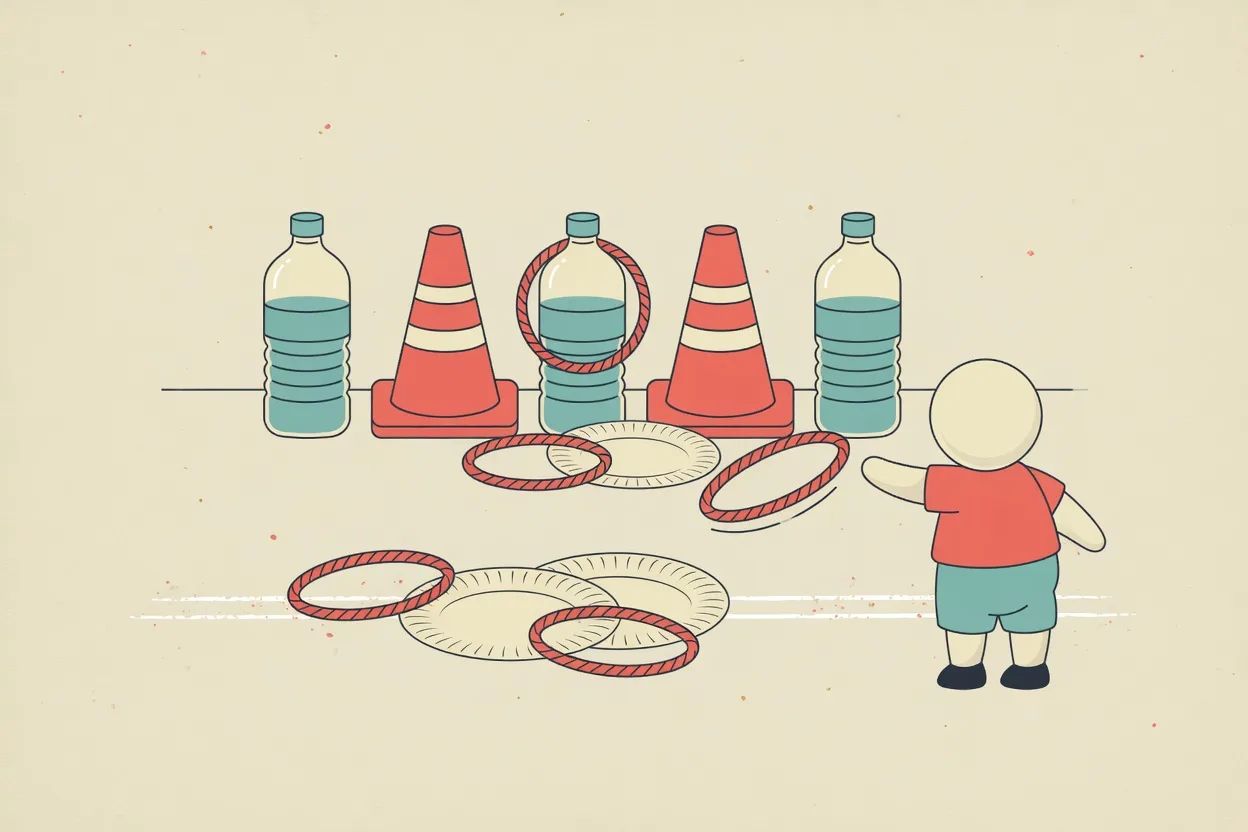
Ring Toss
The carnival-booth version of a backyard game, and it costs nothing to build if you skip the store-bought set — jar-sealing rings, taped rope loops, or paper plates with the center cut out all work. Weight the bottles with a little sand or water so a glancing hit doesn't tip the whole target and end the round early.
Full rules and variations for ring toss
Balloon Stomp
Loud, fast, and it needs almost nothing beyond balloons and string, which makes it an easy add to a field-day afternoon between the bigger races. The entire skill is in how you tie the balloons on, not the playing — about a foot of string per ankle is the length that actually works.
Full rules and variations for balloon stompFrequently asked questions
- How much yard space do you need for outdoor party games?
- For most of the classics — sack race, three-legged race, tug of war — fifteen to twenty paces of flat grass is genuinely plenty. Games like capture the flag and red light, green light want much more, thirty to sixty-five feet or a real park, so check that before you plan around them specifically.
- What's the backup plan if it rains on an outdoor party?
- Have two or three indoor swaps ready rather than hoping the weather holds — musical statues, pass the parcel and a real indoor treasure hunt all cover the same ten- to twenty-minute slot a backyard game would have filled. See our indoor party games list for the full set.
- How many outdoor games do you need for a field-day afternoon?
- Four to six, mixing a couple of team games with a couple of individual races, run in short heats rather than one long block. A full field-day schedule with heats and a final for each event comfortably fills ninety minutes to two hours.
- What outdoor games work for a small yard?
- Bean bag toss, ring toss and balloon stomp all need only a small cleared patch, not a full lawn's worth of running room. Save capture the flag and red light, green light for a park or a school field, since both genuinely need more distance than most backyards have.
Sorting the venue too? 7 Kids Birthday Party Places in Charlotte (2026)