
4–10
Ages
5–15
Players
Indoors
Where
5–15 min
How long
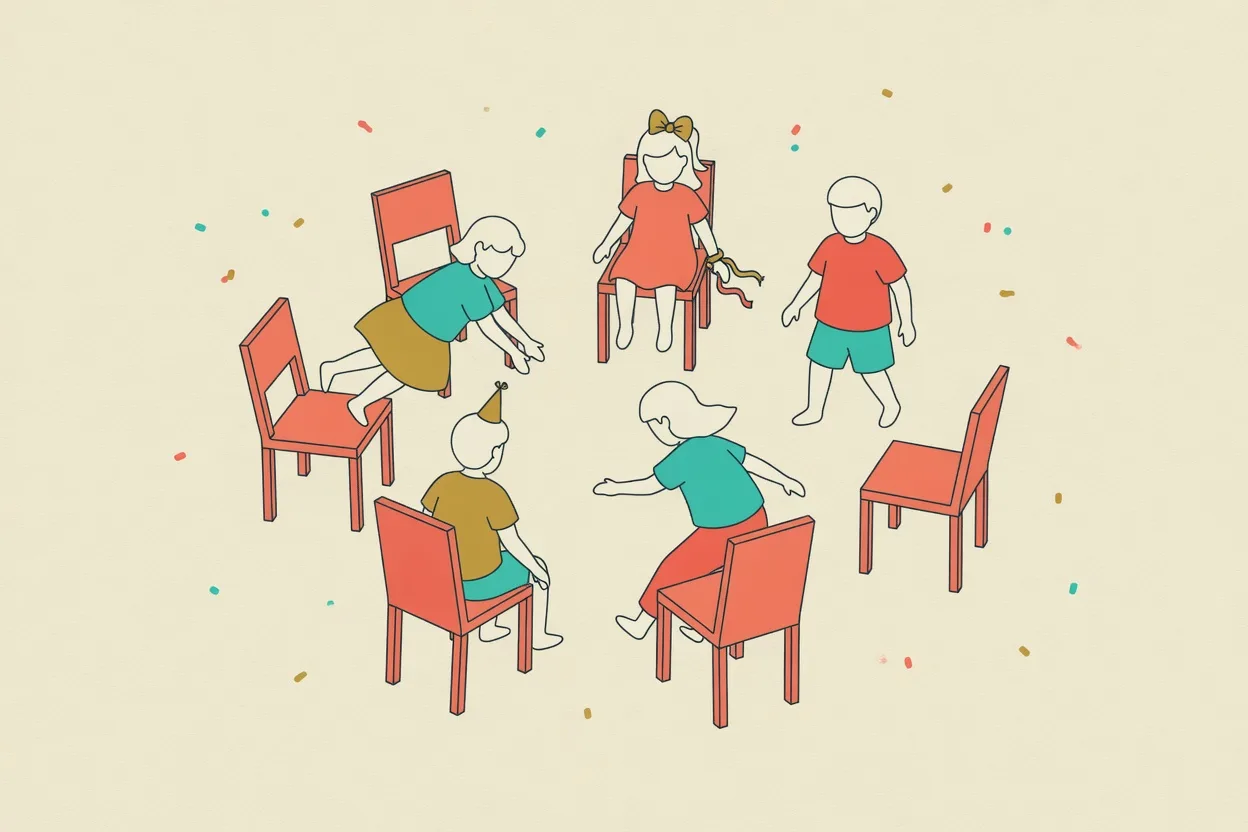
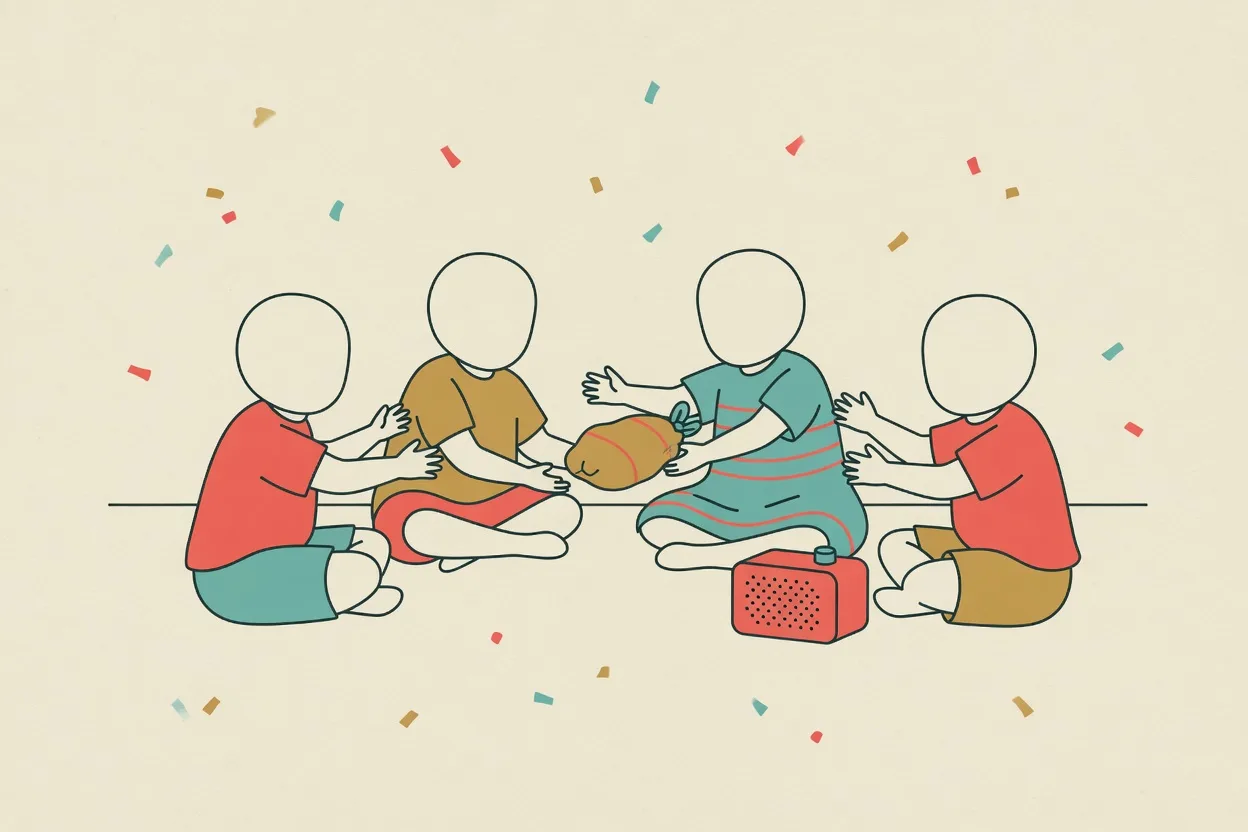
Hot potato is musical chairs with the furniture removed: a circle of seated children, one object, and the music deciding who's holding it when the sound stops. It travels well — no space needed beyond a circle to sit in — and it's over in one clean elimination per round, which makes it a good filler between bigger games rather than a whole party's entertainment on its own. Ten minutes of setup is really just deciding what the potato is and where to stand while you control the music.
The "potato" itself matters less than people think, as long as it's soft. An actual potato works exactly as advertised and gets a laugh purely for being a vegetable at a party, but a bean bag or a small soft ball passes just as fast and doesn't leave a bruise if it's dropped onto a foot. Skip anything hard, sharp-edged or breakable — it will be thrown as often as it's passed, deliberately or not.
Running it without the scramble
Sit the circle close enough that hands can reach without stretching or lunging, because a lunge is exactly how the potato ends up dropped, kicked, or launched sideways into someone's face. Pass in one direction only and say so before you start — allowing it to go either way just means two children yanking it between them when the music slows. And control the music from somewhere you genuinely can't see the circle; children spot a rigged stop within about one round, and the accusation that you stopped it on purpose to catch someone is the single fastest way to end the game in tears.
Vary how long the music plays for each round the same way you would for musical chairs — a predictable rhythm lets sharp-eared children brace for the stop and pass the potato on just before it lands on them, which defeats the whole point. Randomize it properly, and even the quickest hands in the circle can't game it. If you notice one pair developing a private rivalry, batting the potato straight back and forth between just the two of them, seat them opposite each other rather than side by side so it has to travel the whole circle instead.
The elimination problem, and the fix
What goes wrong with hot potato is exactly what goes wrong with every elimination game played with young children: the first child caught has the least fun, because they're out for the longest with nothing to do. For kids under seven, run the no-elimination version instead — whoever's holding it when the music stops does a small forfeit and stays in the circle, which keeps every child playing until the game itself ends rather than until they personally lose. Save straight elimination for groups of eight and up, where being out for the last few minutes of a short round genuinely doesn't sting.
If your group would rather draw the suspense out than end it in a snap, pass the parcel is the same circle-and-music setup slowed right down, with layers to unwrap instead of a single instant elimination — the two pair naturally back to back at the same party, one quick and one slow.
What you need
- A "potato" — a bean bag, a soft ball, or an actual (uncooked) potato
- Music and a speaker, plus someone who can't see the circle to control it
How to play hot potato
- Sit everyone in a circle, close enough that the potato can be handed rather than thrown.
- Start the music and pass the potato quickly from hand to hand around the circle, in one direction.
- Stop the music without warning, from somewhere you can't see the circle.
- Whoever is holding the potato when the music stops is out (or does a small forfeit in the no-elimination version), and the circle closes up.
- Restart the music and continue until one player is left.
Variations
No elimination (ages 4–7)
Instead of leaving the circle, whoever's holding the potato when the music stops does a quick forfeit — a silly noise, a hop in place — and stays in. Keeps the youngest children playing for the whole game instead of watching from the side after one unlucky stop.
Two potatoes
For a circle of more than about twelve, add a second potato traveling the opposite direction. Both keep moving until the music stops, which sometimes catches two players out at once and roughly doubles the pace of the game.
Question potato
Whoever is caught has to answer a quick, easy question — a joke's punchline, a favorite color — before sitting down. Turns the moment of being caught into a small spotlight rather than just a loss, which softens the game nicely for a mixed-age group.
Frequently asked questions
- How do you play hot potato?
- Children sit in a circle and pass a soft object, the potato, quickly from hand to hand in one direction while music plays. When the music stops without warning, whoever is holding it is out, or does a small forfeit in the no-elimination version, and the game continues until one player is left.
- What can you use as the potato?
- Anything soft and easy to grip — a bean bag, a small soft ball, or an actual uncooked potato for the novelty of it. Avoid anything hard, sharp-edged or breakable, since it gets passed fast and occasionally dropped or thrown.
- What age is hot potato good for?
- From about four, with the no-elimination version for anyone under seven. Straight elimination — out and watching — suits older children better, since a short wait at the end of a quick game doesn't bother them much. For a mixed-age group, the question potato, where whoever is caught answers a quick, easy question, softens it further.
- Can you play hot potato without eliminating anyone?
- Yes, and it's the better version for younger groups. Swap being out for a quick forfeit — a silly noise, a hop — so every child is still playing when the game ends rather than sitting out from the first round.
- How many players does hot potato need?
- Five is a comfortable minimum for a circle to feel like a circle, and it comfortably holds fifteen or more if you split into two potatoes traveling opposite ways. Below five, the game moves too fast to build any suspense.
Perfect for these parties
Themes that build a whole party around this game — with the food, the decor and a printable invite to match.