A science party sells itself on one idea: kids get to make a mess on purpose, with permission, wearing goggles. That is the whole appeal, and none of it requires a themed party box. A roll of foil for lab coats, a set of dollar-store safety glasses, some food coloring and a few kitchen-cabinet reactions will carry an entire afternoon, and the goggles alone will end up in every photo.
What follows is a lab party built for a kitchen table, a backyard, or both. It covers the games worth running as "experiments," food that fits the theme without tasting like a theme, decorations that turn a corner of the house into a lab in an evening, and a printable invitation. It works for a birthday between about five and ten, with the wilder reactions saved for the older end of that range.
Turning a table into a lab
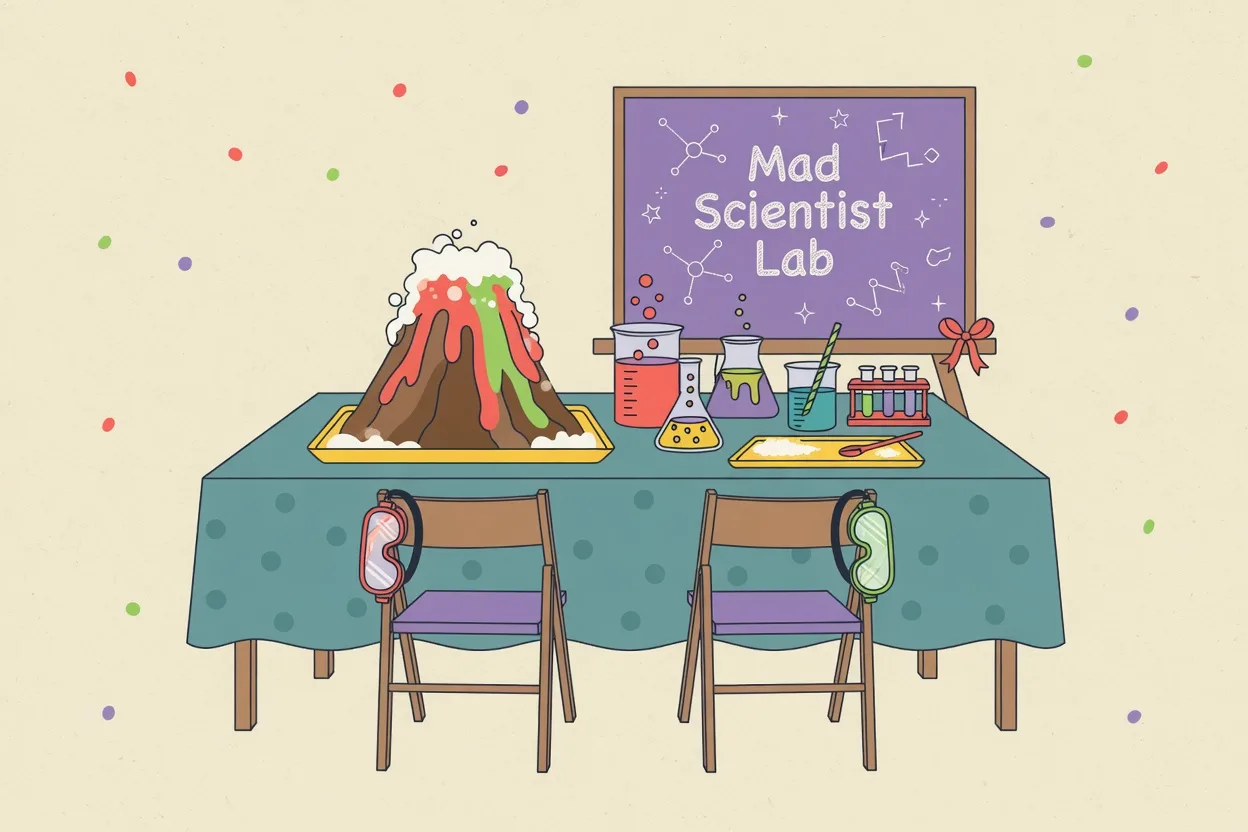
You need less than you think. Cover a table in white paper or an old sheet, line up mason jars or clear plastic cups, and label them with masking tape and a marker: "Sample A," "Do Not Drink." A white button-down shirt from the donation pile, sleeves rolled, is a lab coat. Safety goggles — the real dollar-store kind, not a costume prop — do more for the atmosphere than anything else on the table, because a child in goggles behaves like a scientist without being told to.
Assign each child a "research station": a tray, a small cup of baking soda, a squeeze bottle of vinegar tinted with food coloring, and a pipette or eyedropper if you have one. That single setup is most of the party. Kids will run it themselves for twenty minutes once you show them once, and the cleanup is a rinse under the faucet.
The experiments that are really games
The best science-party games are ordinary party games with a lab coat on. A steady hand and a stopwatch are what most "experiments" actually test, so lean into games that already reward exactly that, and rename them once instead of inventing new rules nobody remembers.
What goes wrong
The volcano. Every science party wants one, and a baking-soda-and-vinegar eruption is genuinely satisfying to watch — but it soaks whatever it touches, and "whatever it touches" is usually the tablecloth, a nearby plate of sandwiches, or somebody's shoes. Build it in a deep tray, run it outside or over a sink, and treat it as a one-time set piece right before cake rather than something left running on the snack table all afternoon.
The other failure mode is pacing: reactions that fizz for four seconds and are over. Line up three or four small ones back to back rather than building toward one big finale, so there is always a next thing happening. If chemistry is not your idea of a relaxing afternoon, a science-show performer will bring the reactions, the safety briefing and the goggles, and hand you back an hour to actually enjoy the party.
Keep every reaction food-safe and skip anything that needs a stove, dry ice, or an ingredient you would not want a five-year-old drinking by accident. The dollar-store version of this party — vinegar, baking soda, food coloring, dish soap — is not a compromise. It is the actual party every kid remembers, and it costs about as much as a bag of balloons.
Games for a science party
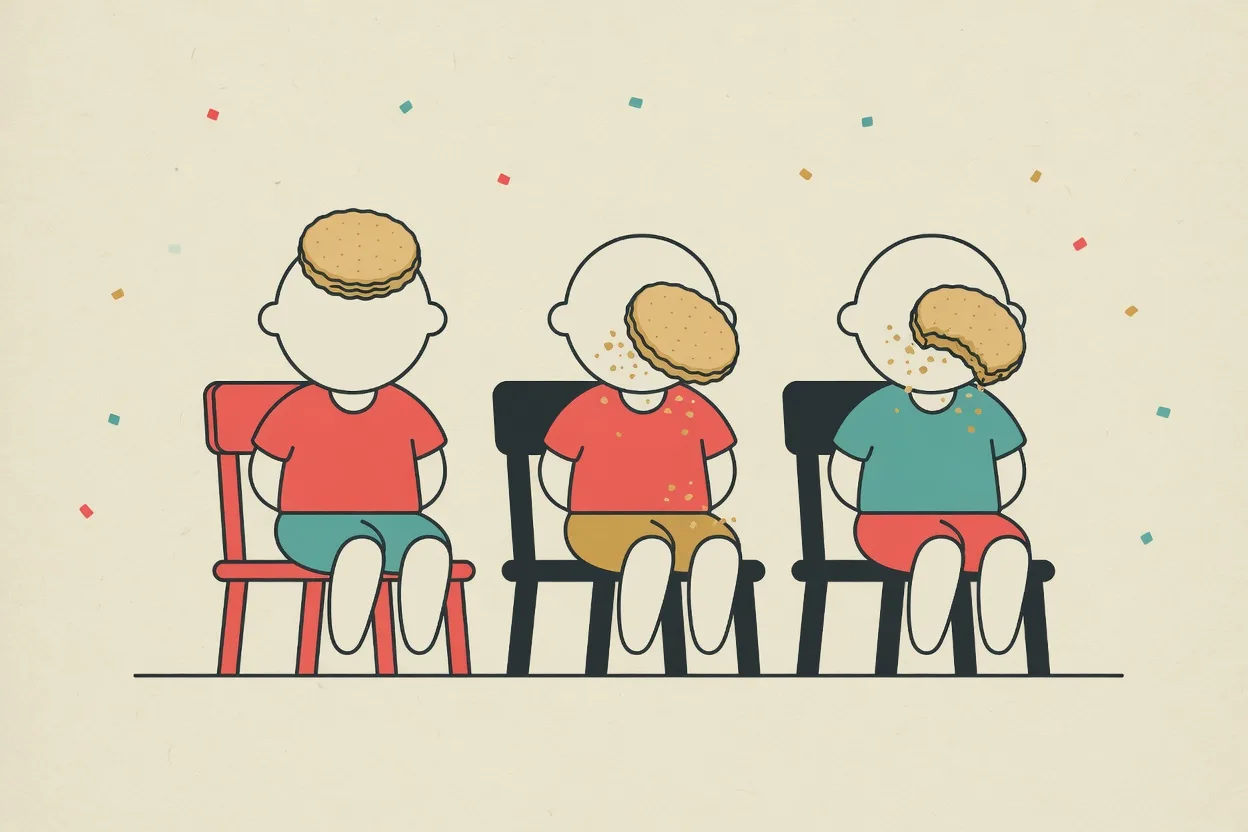
The reflex test
Frame it as measuring reaction time under pressure: whoever gets the cookie from forehead to mouth first, no hands, wins the round. It is loud, it is a little disgusting, and it is exactly the kind of "experiment" a seven-year-old will beg to run twice.
Full rules for cookie face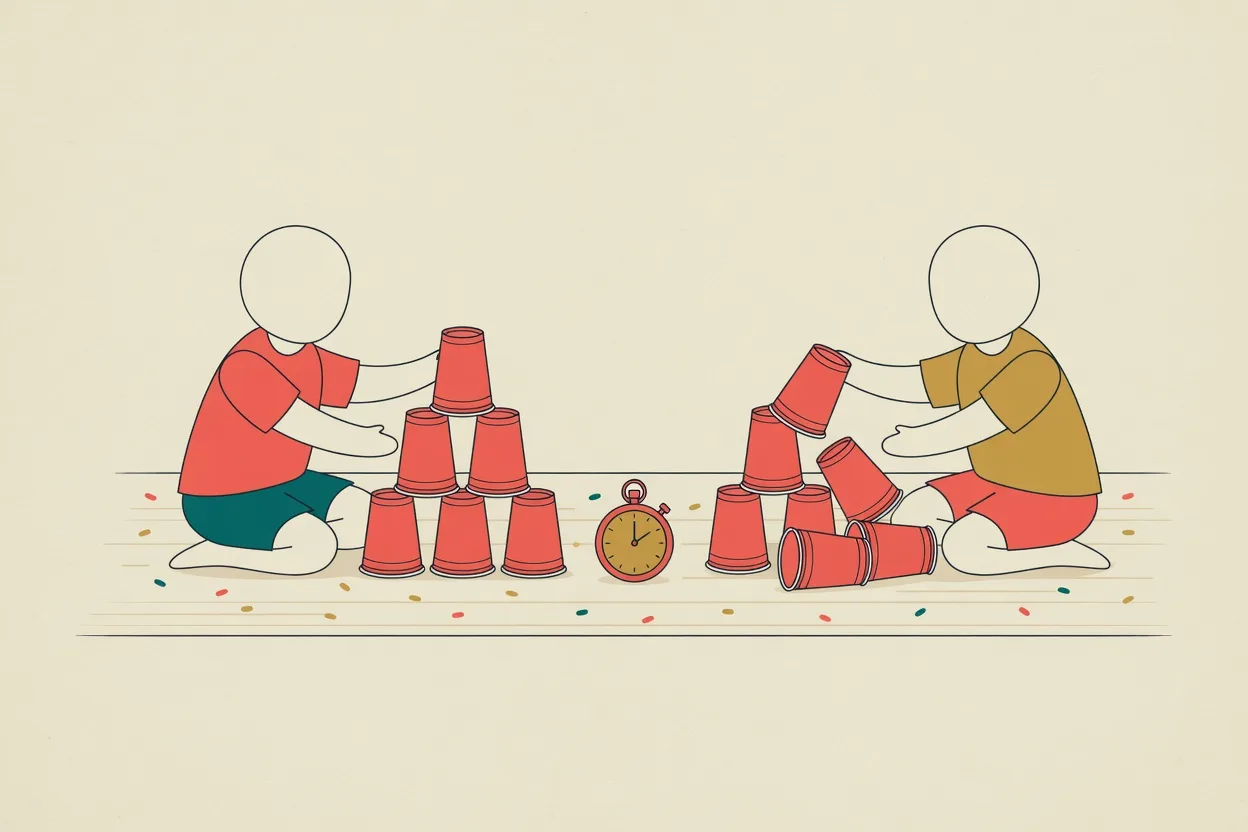
Speed-stack trials
Time each kid stacking and unstacking a pyramid of cups, write the results on a clipboard like real data, and let the fastest run stand as the lab record for the day. It needs a stopwatch and nothing else, and it fills the gap while the volcano tray gets cleaned.
Full rules for cup stacking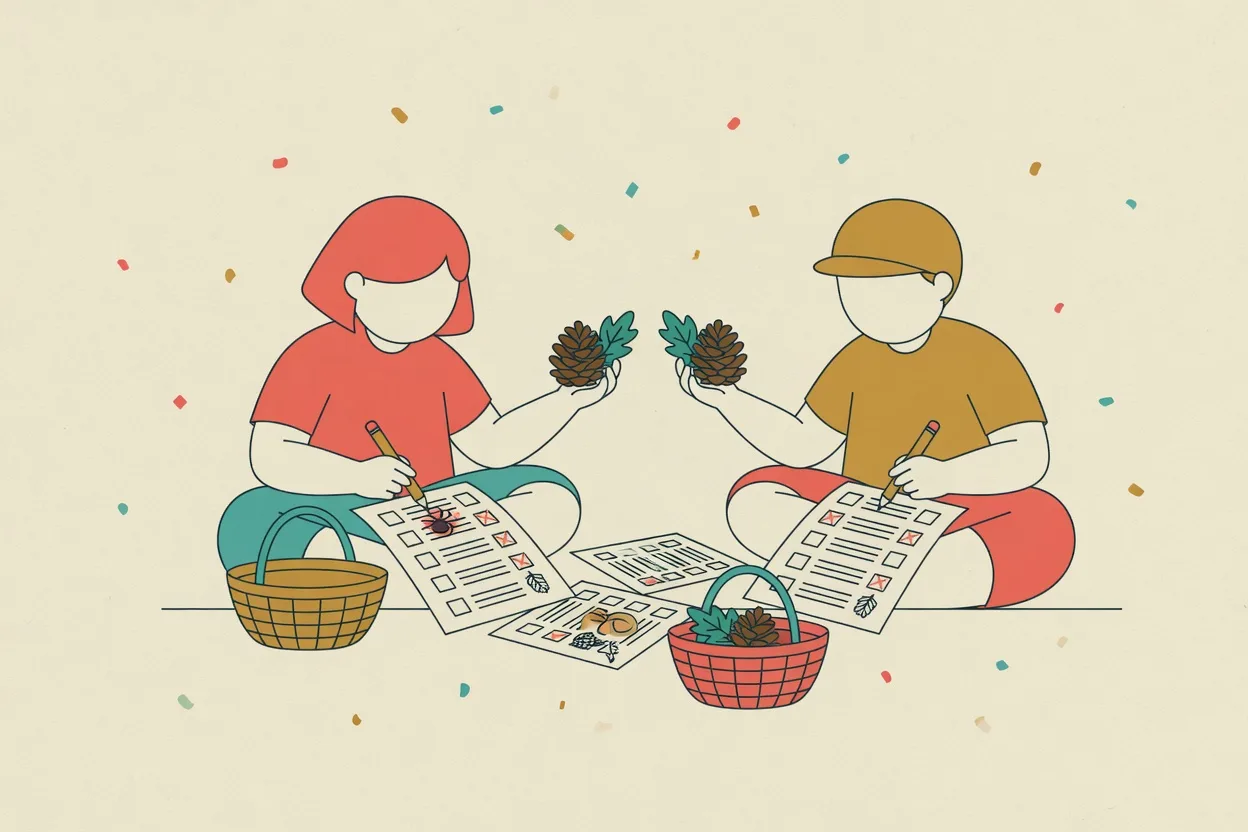
The element hunt
Hide a dozen labeled specimen jars — a leaf, a pebble, a feather — around the yard or the house and send kids out with a checklist to collect them. It is the quiet counterweight to the fizzing games and it works for the youngest guests just as well as the oldest.
Full rules for scavenger hunt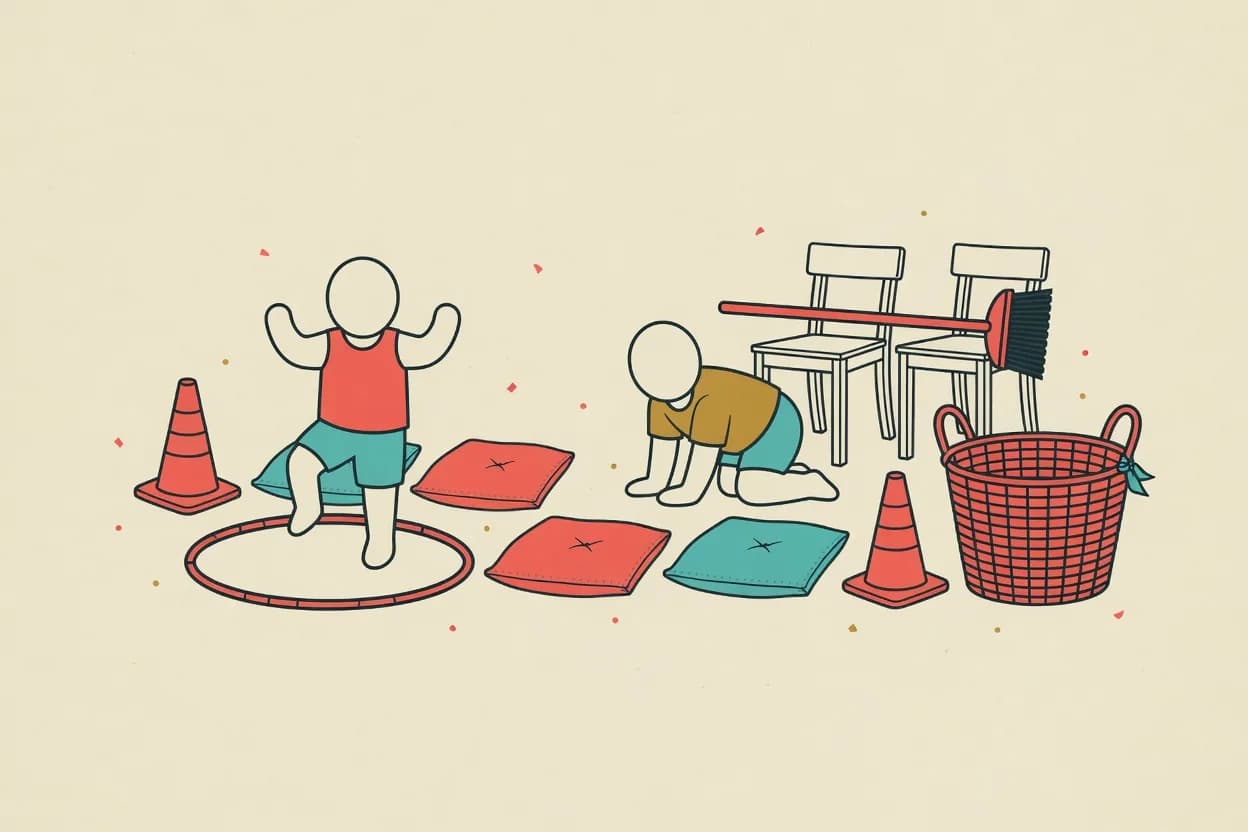
The lab safety course
Crawl under a table marked "low ceiling," balance a beaker of water across a plank, step through a row of hoops without touching the sides. Call every obstacle a safety hazard and the whole course becomes the joke, which is exactly what keeps six-year-olds running it on repeat.
Full rules for an obstacle course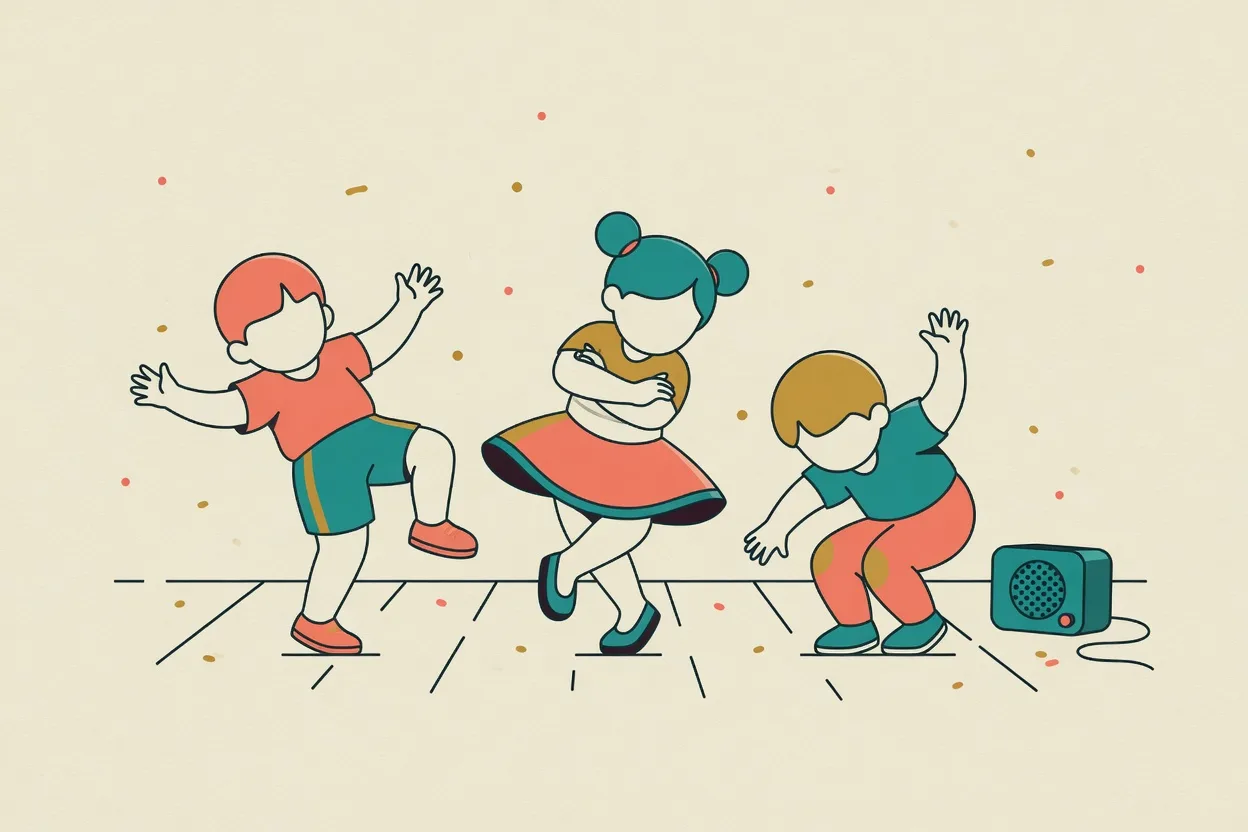
Reaction freeze
Music plays while everyone "reacts," wiggling and fizzing like a beaker; when it cuts out, the reaction has to stop dead. It needs a phone and a speaker, nothing else, and it is the fastest way to burn off energy between two quieter experiments.
Full rules for freeze danceFood ideas for a science party
Test-tube fruit layers
Small clear cups or real plastic test tubes, layered with different colored fruits — diced melon, blueberries, chopped strawberries — so each one looks like a different sample. Label them "Sample 1" through "Sample 4" on masking tape. No cooking, no sugar added, and they look like the whole party on a single tray.
Petri dish cookies
Round sugar cookies iced flat in pale green or blue, with a few chocolate chips or sprinkles scattered on top like cultures under a microscope. A store-bought roll of cookie dough works fine here; the icing is the entire costume.
Bubbling potion punch
Blue or green fruit punch poured over a scoop of vanilla ice cream or a splash of ginger ale right in front of the kids, so it foams up on the spot. Serve it in clear cups so the fizz is visible, and pour it as its own small ceremony rather than leaving a pitcher on the table.
DNA strand pretzel twists
Pretzel rods dipped halfway in melted white and blue candy melts in a spiral pattern, then left to set on wax paper. They take about fifteen minutes to make in a batch and give the snack table one genuinely science-looking item without any real skill required.
Chemical formula veggie tray
An ordinary vegetable and dip platter with small cards propped in front of each vegetable reading things like "H2O-carrot" or "C6H12O6-grape." The joke does the work of getting kids to eat vegetables that would otherwise be ignored on any other table.
Decoration ideas for a science party
A chalkboard lab sign
A sheet of black paper or an actual chalkboard propped by the door, chalked up with "Mad Scientist Lab — Goggles Required Beyond This Point." It sets the whole tone before anyone has taken a single step inside, and it takes five minutes to letter.
Bubbling beaker centerpieces
Clear jars or plastic cups filled with colored water and a fizzing tablet dropped in right as guests sit down for cake, so the table "activates" on cue. Keep a stock of tablets in a drawer and refresh them every twenty minutes for a table that never looks static.
Caution tape everywhere
A roll of yellow-and-black hazard tape strung across doorways, wrapped around chair legs, and taped in an X over the "danger zone" where the volcano runs. It costs about four dollars and reads as lab decor from across the room.
Name-tag lab badges
Index cards on ribbon, each one labeled "Dr." plus the child's first name, handed out at the door alongside the goggles. It is the cheapest possible party favor and it gets worn all afternoon, which most stickers do not survive.
Foil and paper beakers on the wall
Beaker and flask shapes cut from white and colored paper, taped along one wall with a wavy "liquid" line colored in near the bottom of each. Twenty minutes with scissors covers a wall a store-bought banner would cost thirty dollars to fill.
Two more things worth sorting before the big day: where to buy the plates, balloons and piñata and what the whole party is likely to cost
Hosting somewhere new this year? 12 Kids Birthday Party Places in Chicago (2026)
Printable science invitation
Free to download and print at home — write in the date, the time and the address, and it is done. It prints cleanly on ordinary paper at half-letter size, two to a US Letter sheet, or on 5×7 cardstock, and it works just as well sent as a picture in a group text if you would rather not chase a class list for addresses.
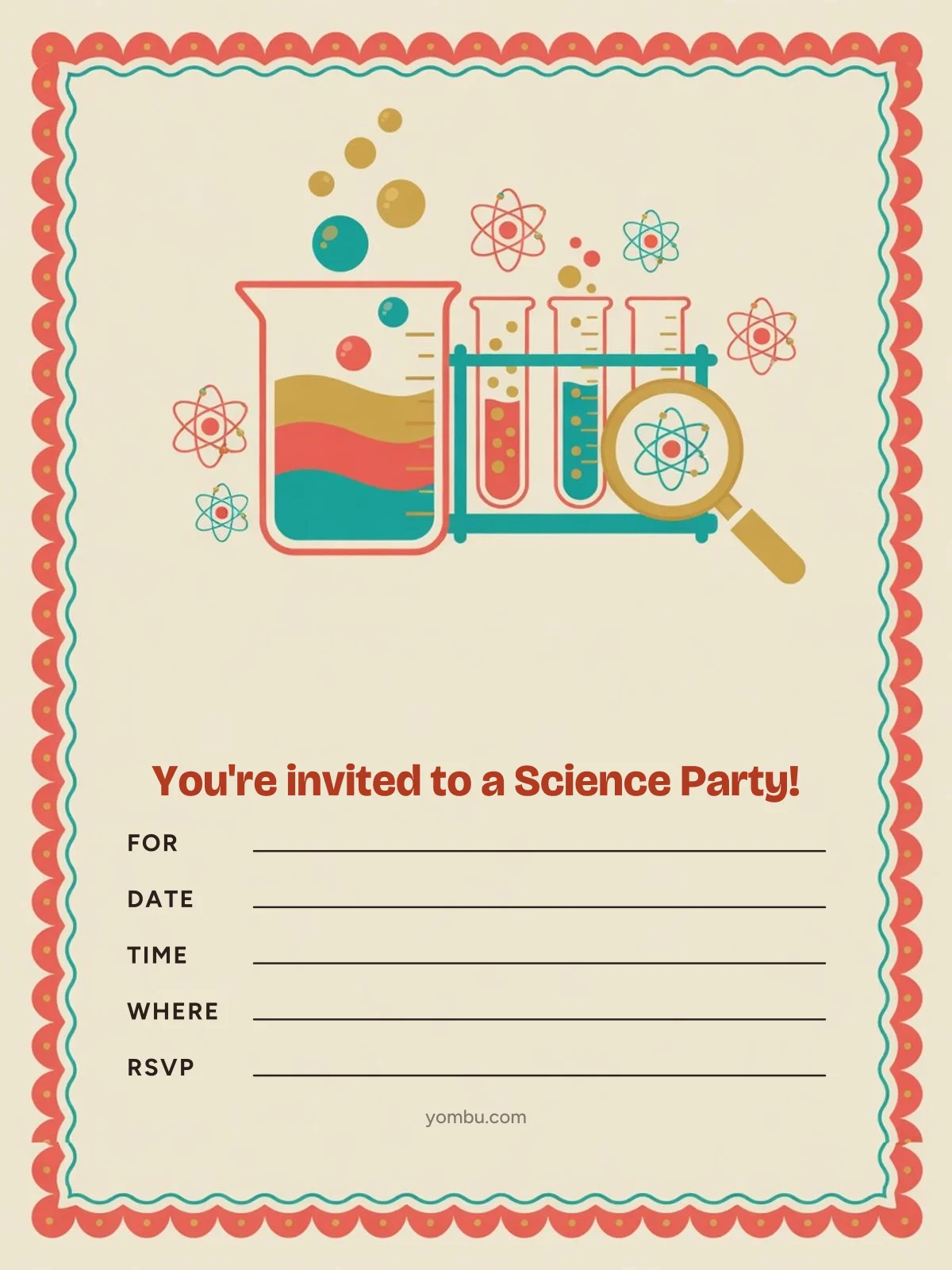
The science invitation
One card, blank where the details go. Drop your email and it’s yours — print as many as you need, nothing to pay.
Hire a science-show entertainer
Everything above assumes you are running the afternoon. You do not have to. A character performer arrives in costume and in character, runs the themed games, handles the child who is frightened and the child who wants to be the star, and gives you an hour to put the candles in the cake — which is usually the difference between hosting the party and watching it.
Party characters by city
- Party characters in Atlanta
- Party characters in Boston
- Party characters in Chicago
- Party characters in Dallas
- Party characters in Houston
- Party characters in Jacksonville
- Party characters in Los Angeles
- Party characters in Miami
- Party characters in New York
- Party characters in Phoenix
- Party characters in San Diego
- Party characters in San Francisco
Frequently asked questions
- What age is a science party best for?
- Five to ten works well, with the reactions scaled to the group. Under-sevens are happiest with the fizzing volcano and the slow, hands-on experiments; eight- to ten-year-olds want the timed challenges and enough reactions back to back that nothing feels slow.
- Is a science party messy?
- Yes, on purpose — that is most of the appeal. Cover the table, run anything with vinegar or dye outside or over a sink, and keep a stack of paper towels within reach rather than tucked away in a cabinet. A little mess is the party; a lot of mess on the good tablecloth is the mistake.
- What food do you serve at a science party?
- Ordinary snacks with lab names and a little presentation: fruit layered in test tubes, cookies dressed up as petri dishes, punch that fizzes when it is poured. None of it needs real cooking skill, and labeling each item is what makes it read as themed rather than just a fruit plate.
- Can you hire someone to run the experiments?
- Yes — science-show entertainers bring the reactions, the safety talk and usually a bigger finale than most parents want to attempt indoors. It is worth it if you would rather host than manage vinegar spills, and it takes the safety-briefing job off your plate entirely.
- How long should a science party run?
- About two hours works for most ages: twenty minutes of arrivals and lab-coat assembly, forty on the timed games and experiments, half an hour for food, and the rest for the volcano finale and cake. Build to the volcano rather than opening with it — once it has gone off, the party's energy peaks and starts winding down.