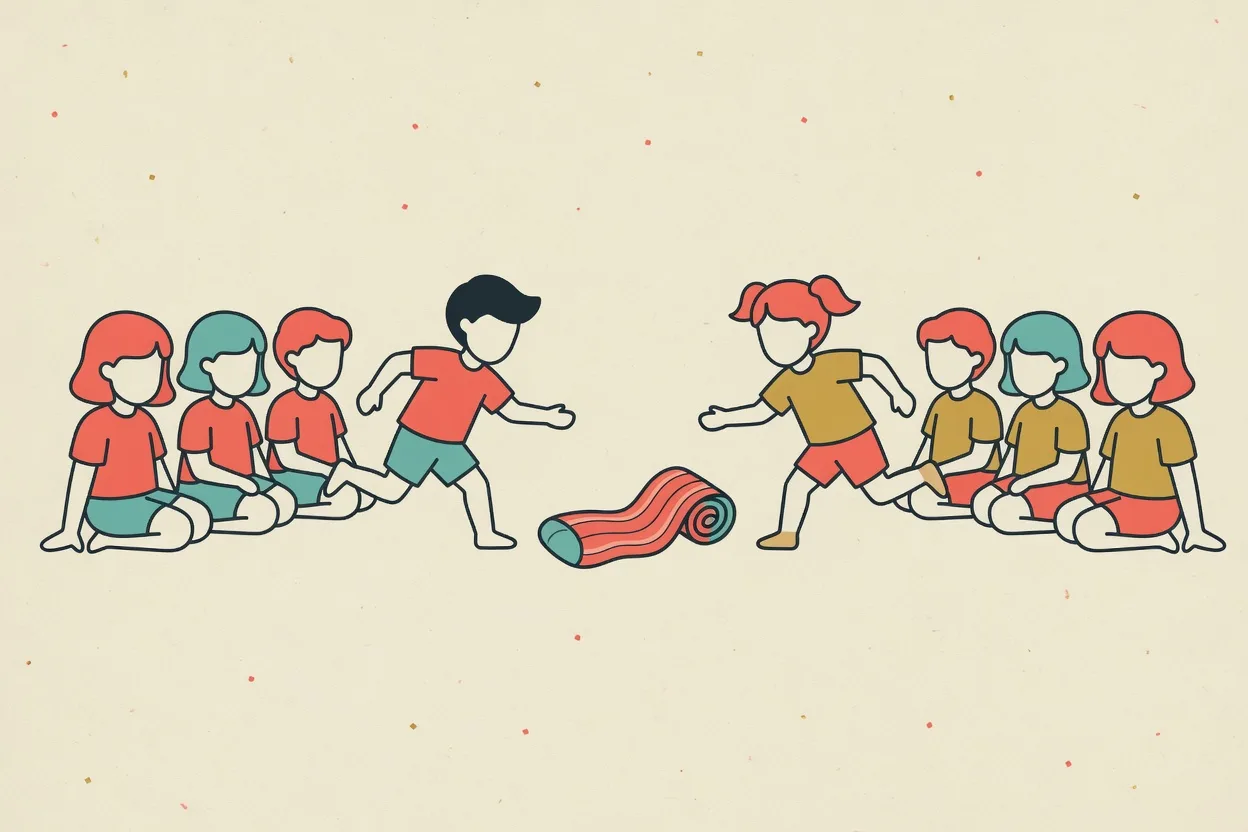

Seven is the age a party game can have a secret in it. Seven-year-olds are starting to manage a straight face while squashed into a hiding spot, to pick a corner for a reason rather than following a friend, and to pass a whispered message along without blurting it out. That opens up a set of games that simply collapse with younger children, because somebody always gives the game away.
Seven is also when a lot of games in this library unlock their next version. Red rover and the wheelbarrow race both start here; Simon says can go to full elimination; relays can add the spoon and dress-up legs; keep the balloon up can ban hands altogether. At the same time, seven is still young enough for duck duck goose and freeze dance, and most seven-year-old parties go best with a bit of both — the new, harder games, and one or two old favorites they'd never admit to missing.
If the group is still more comfortable with simple teams and a referee's call, party games for 6-year-olds has the gentler versions; if they're ready for real stakes, party games for 8-year-olds is the next step up.
Games that need a straight face
Bluffing, hiding and keeping quiet. Each of these depends on nobody giving the game away, which is a skill that starts to arrive around seven.
Four Corners
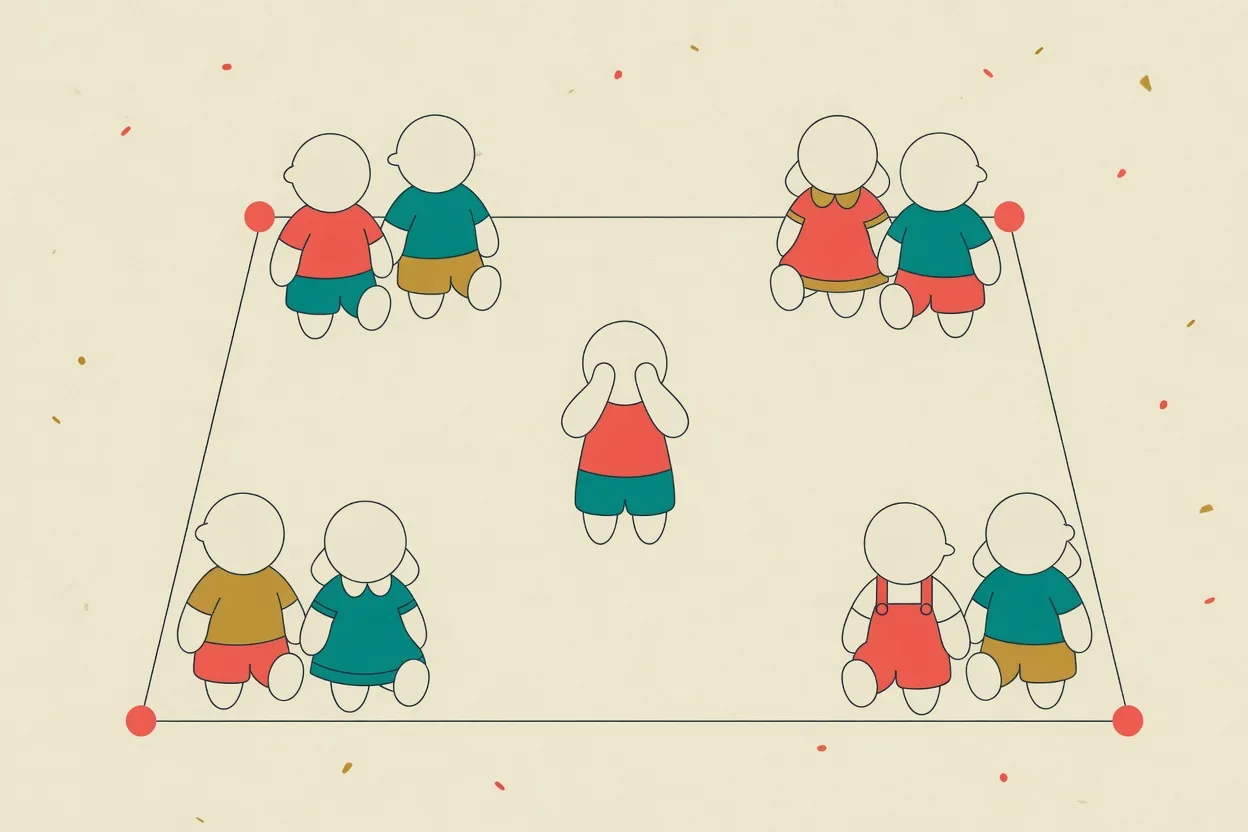
The classic dashing version comes into its own around seven, once children weigh up which corner to risk instead of copying whoever they came with. What goes wrong is almost never the elimination; it's four children changing their minds and cutting across each other mid-dash. Push the furniture right back, treat the whole floor as the playing area, and keep the count brisk so the children who are out aren't left waiting through a slow one.
Full rules and variations for four corners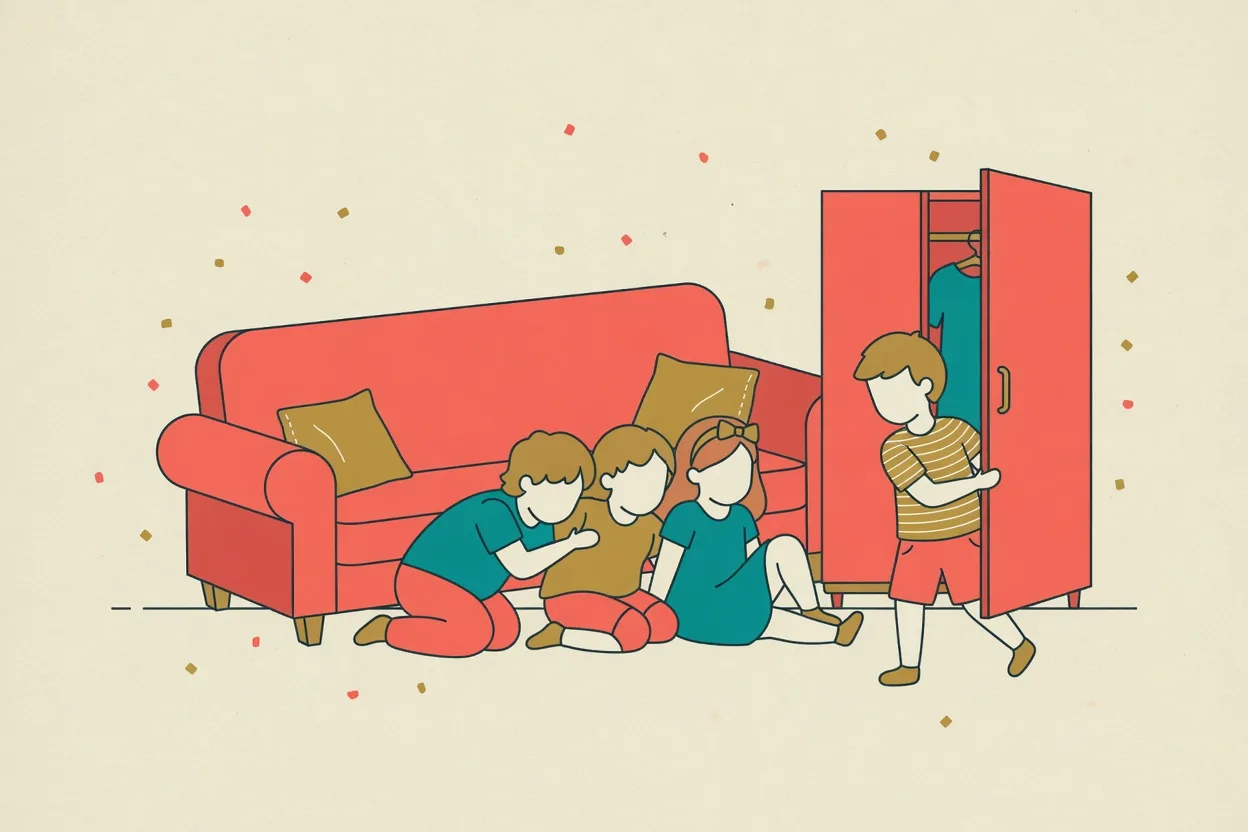
Sardines
Hide and seek turned inside out: one child hides, and every seeker who finds them squeezes in silently too, until the last one searching follows the giggles to the pile. Seven is the bottom of its age range, because the whole game depends on staying quiet while packed in with your friends. Pick a spot with real room — a walk-in closet, the gap behind a sofa — and save it for the calmer end of the party.
Full rules and variations for sardines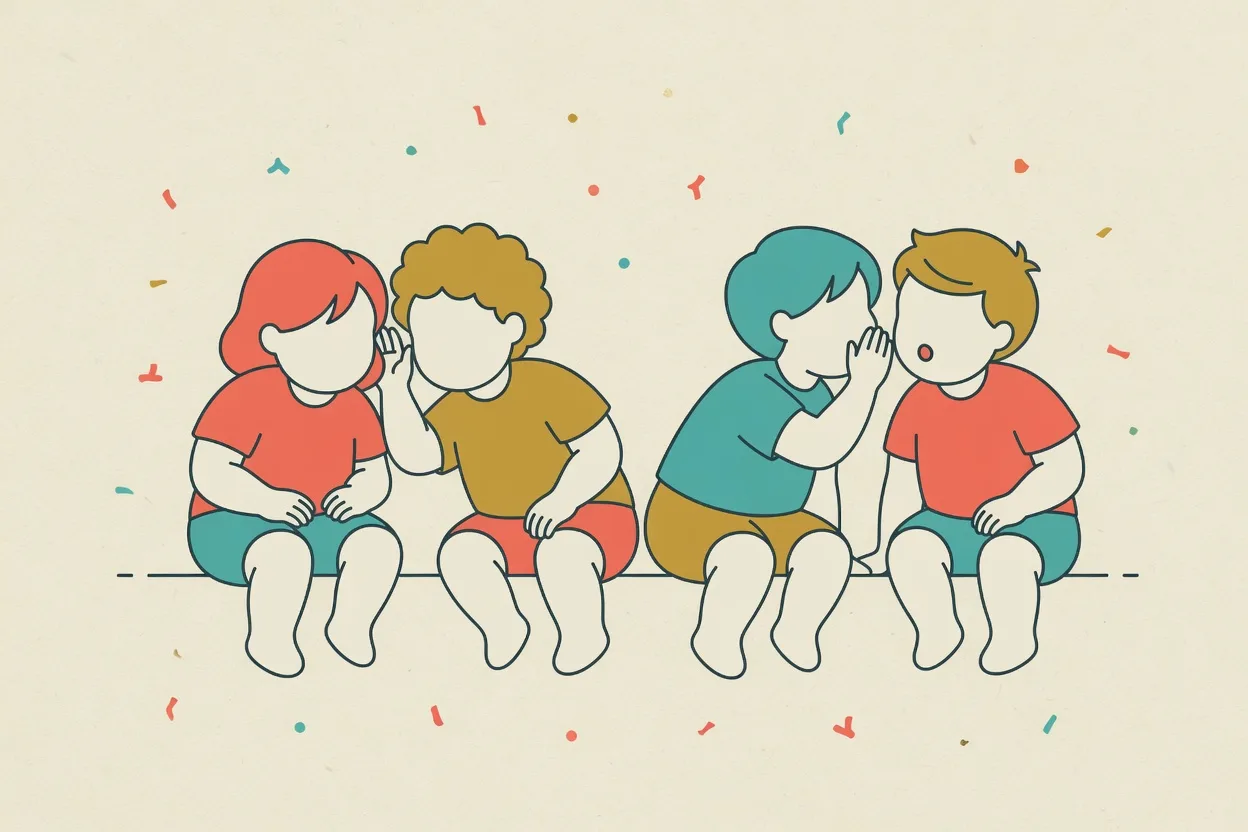
The Telephone Game
It works from five, but seven or eight is where it gets good, because children start finding the comparison at the end funnier than the whispering itself. Keep the opening phrase short and rhythmic, with one word that's easy to mishear, and agree before you start that nobody repeats the message to 'help' — that, not bad hearing, is how the game usually gets ruined.
Full rules and variations for the telephone gameNew at seven: the harder versions
Each of these either starts at seven or has a version written for seven and up. Reach for the harder version and a game the children have played since preschool suddenly feels new.
Red Rover
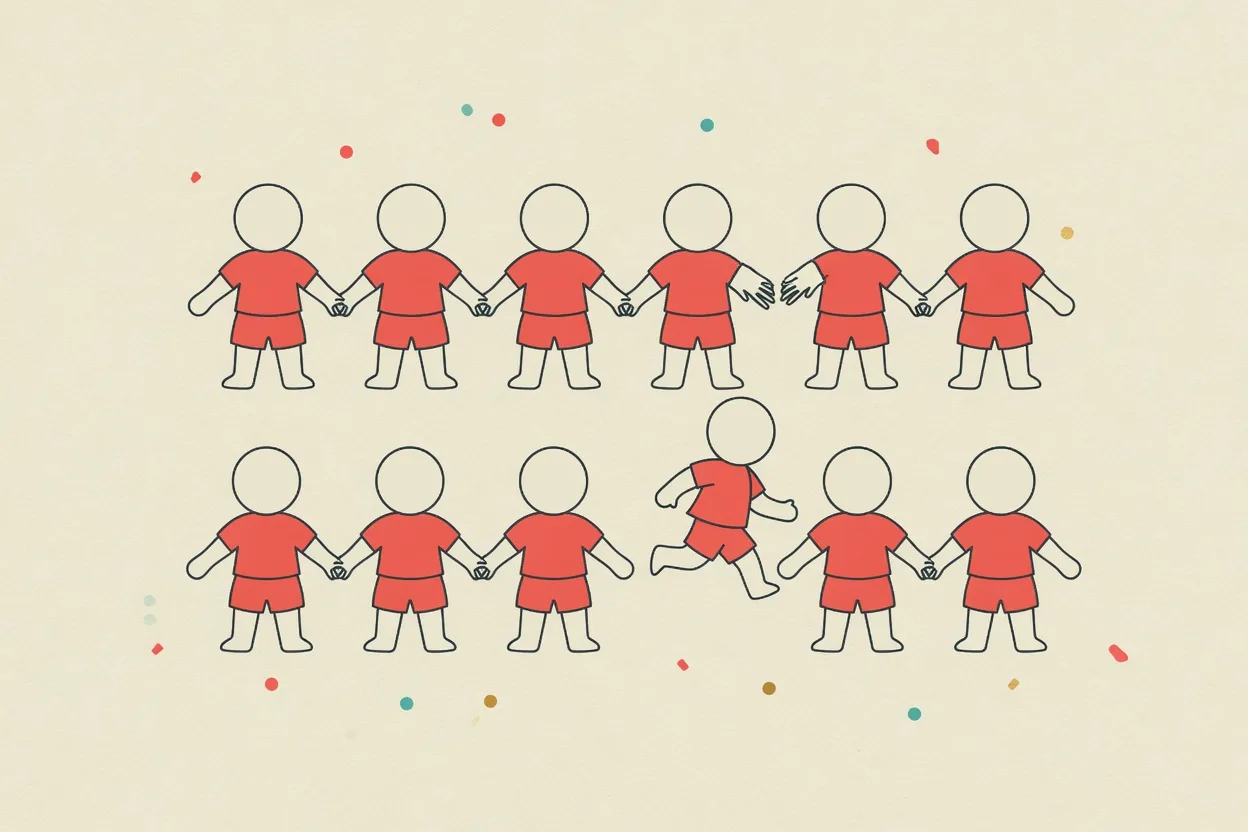
Seven is the starting age, and only for the loose-grip version: hands held loosely enough to pull apart, never locked or laced, and runners who jog rather than sprint and aim for the gap between two players instead of straight at one. Do one slow dry run first, which settles most of the nerves, and match the two lines by size as well as headcount.
Full rules and variations for red rover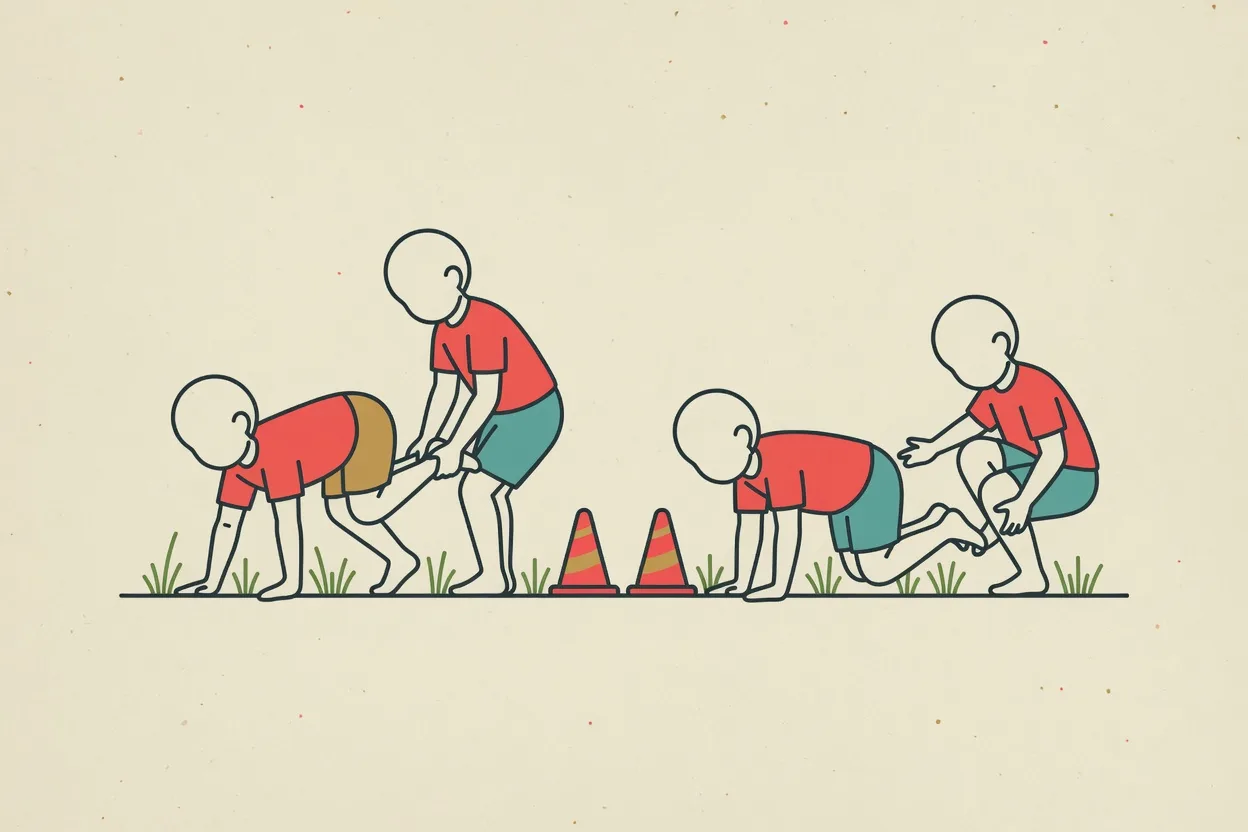
The Wheelbarrow Race
The front partner walks the course on their hands, which takes real arm and shoulder strength — that's why the guide starts it at seven or eight. Keep the course to about fifteen paces, play on soft grass and nowhere else, and pair children by strength rather than height. Anyone not ready for the front can still race as the back partner, steering by the ankles.
Full rules and variations for the wheelbarrow race
Simon Says
Seven is the age the guide switches to full elimination — out means out, sit down and watch — because a short wait at the end of a ten-minute game doesn't sting much anymore. Let a child be Simon once they've watched an adult do it, and try the speed round: thirty seconds of real instructions, no tricks, as fast as you can say them.
Full rules and variations for Simon says
Keep the Balloon Up
Ban hands — elbows, knees and heads only — which the guide marks as the version for seven and up. It turns a game four-year-olds play into something genuinely hard and very funny to watch, and counting every touch out loud as a group keeps the whole circle in it rather than just the two best players.
Full rules and variations for keep the balloon up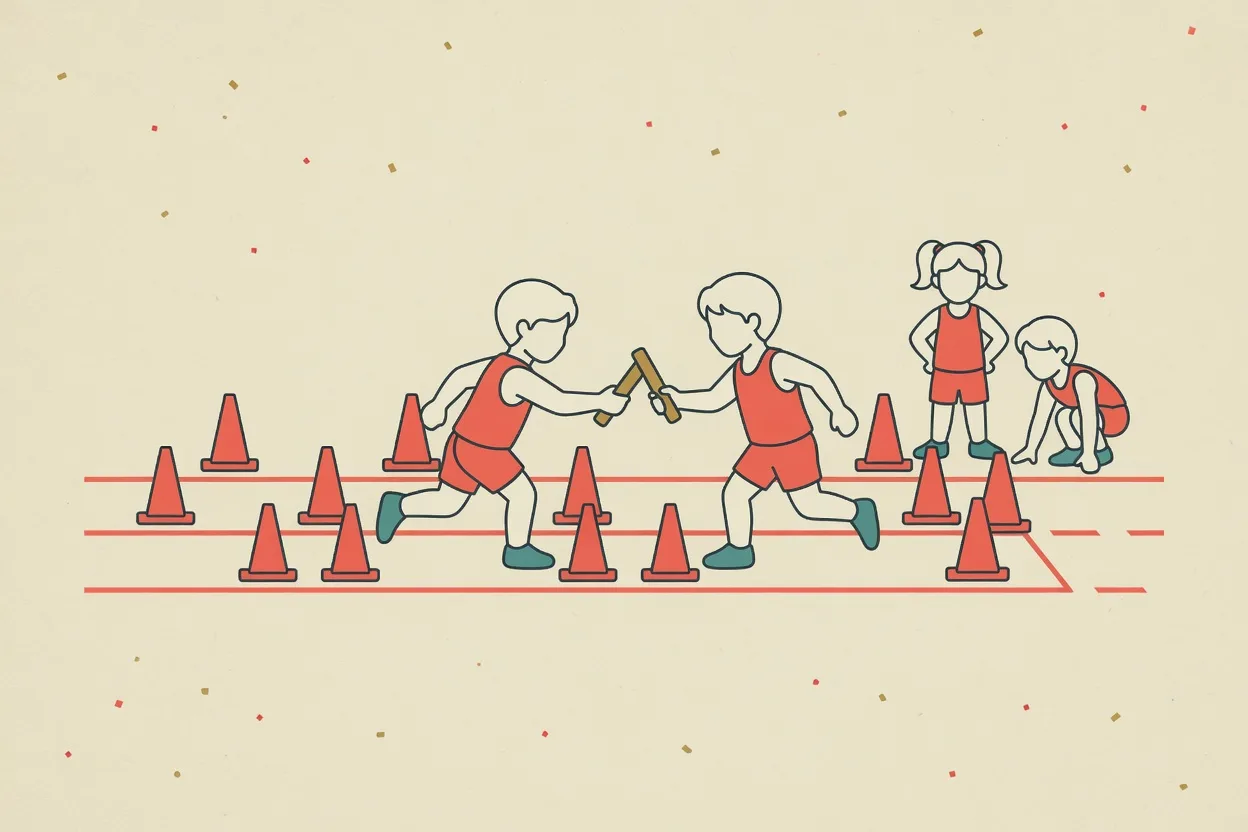
Relay Races
From about seven, add the spoon relay or the dress-up relay, where each runner pulls on a hat, oversized rain boots and a coat at the turning point and takes them all off again before running back. Both reward coordination over raw speed, which evens out teams that mix fast and slow runners far better than a straight sprint.
Full rules and variations for relay races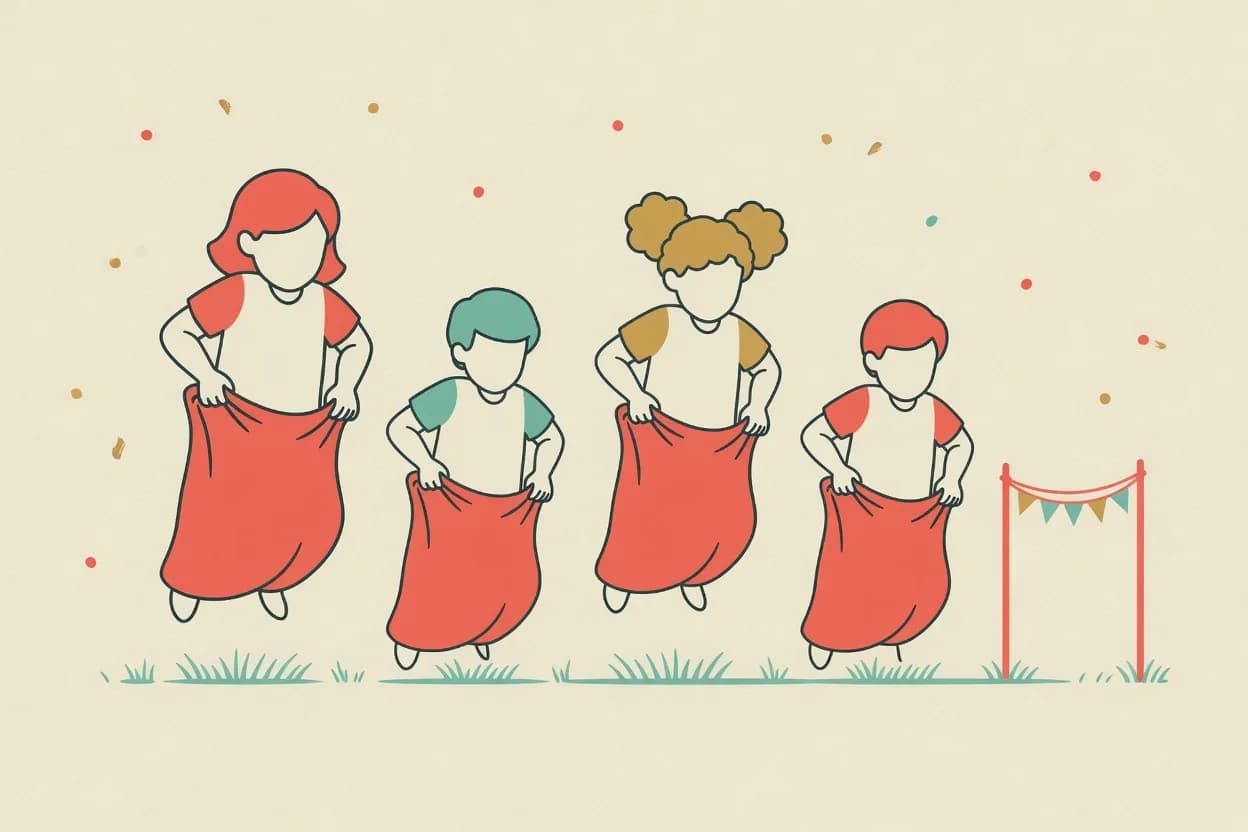
Sack Race: Rules, Setup & How to Jump Faster
A straight fifteen-pace hop stops being much of a challenge from about seven, so turn it into a sack relay or add a turn around a cone. Small, fast jumps still beat one big leap, and holding the sack high and wide is the other thing worth demonstrating before the start.
Full rules and variations for Sack Race: Rules, Setup & How to Jump FasterOne more year of the little-kid classics
Seven is still young enough for these, even if the guests wouldn't say so. Run each one once, with its older-kid twist, and move on while it's still a treat.
Duck Duck Goose
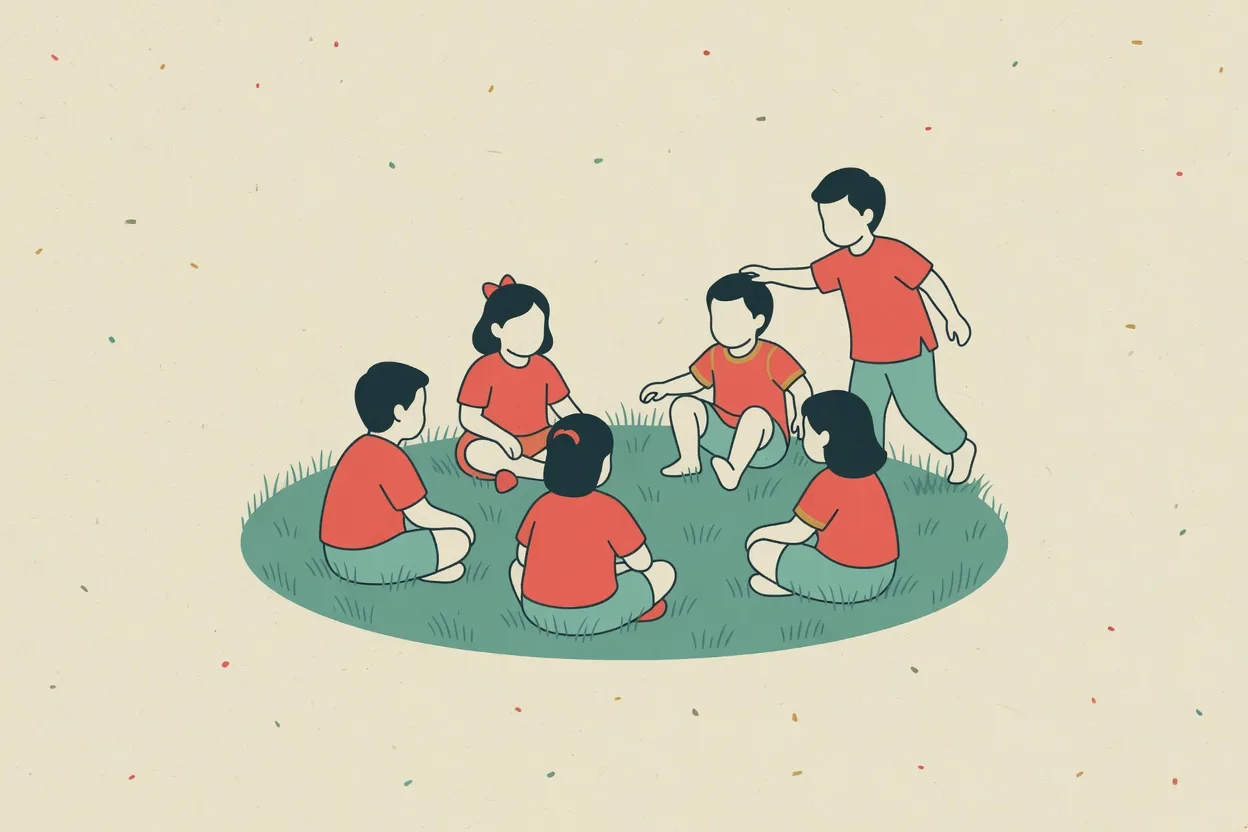
Seven is the top of this game's range — by about eight, most children want more rules or more speed than a straight chase can give them — so this is the year to play it one last time. Keep the circle small, eight to twelve, and try themed calling: swap 'duck' and 'goose' for any two words that suit the party, which makes it feel new without changing the game.
Full rules and variations for duck duck goose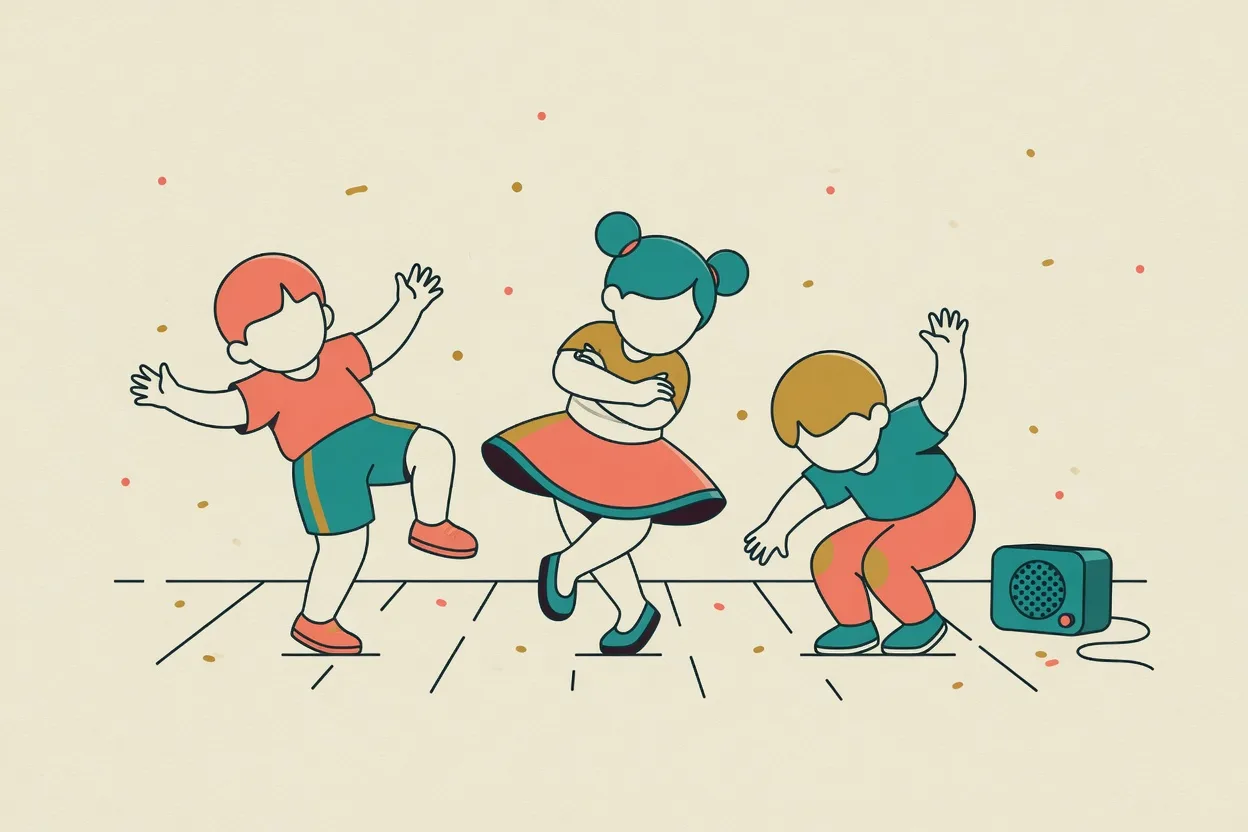
Freeze Dance
Still squarely in range at seven, and the variations keep it from feeling young: call a shape just before the music stops — robot, animal, superhero — or split into two teams and score a point for every player still frozen five seconds later. Hand the judging to the first child who's out; children are often stricter judges than the grown-up on the music.
Full rules and variations for freeze dance
Follow the Leader
It stays fun until eight or nine, the guide says, as long as the moves get more inventive. At seven, use the obstacle-course leader version: set out a chair to go around, a table to crawl under and a chalk line to walk, and let each leader take the line through it their own way.
Full rules and variations for follow the leaderFrequently asked questions
- What games can 7-year-olds play at a birthday party?
- Seven-year-olds can handle bluffing and partner games: four corners, sardines, the telephone game, red rover and the wheelbarrow race. Mix those with the harder versions of classics, like full-elimination Simon says or a dress-up relay, and one round of duck duck goose.
- Can 7-year-olds handle elimination games?
- Mostly, yes. Simon says and four corners both work with real elimination from about seven, as long as rounds stay short. Hot potato is the exception: its guide keeps the forfeit version up to age seven, so run that one without anyone sitting out.
- Which party games for 7-year-olds need no equipment?
- Sardines, the telephone game, Simon says, red rover, follow the leader and duck duck goose need nothing beyond space and players. Red rover wants a flat stretch of grass at least thirty feet long; the rest work in an ordinary house or yard.
- Is red rover safe for 7-year-olds?
- Yes, in the loose-grip version. Players hold hands loosely instead of locking them, runners jog rather than sprint and aim for a gap between two players, and the lines are matched for size. The traditional locked-hands, full-sprint version is where the shoulder and elbow injuries come from.
Planning the whole birthday? More ideas for a 7th birthday
Sorting the venue too? 7 Kids Birthday Party Places in Charlotte (2026)