

Eight is where competition stops needing to be softened. A straight loss doesn't need a participation sticker to feel okay, a team that's losing wants to try harder rather than quit, and 'winner' is a word this age actually enjoys hearing — which opens up a run of games that don't really work with younger children because the stakes would land too hard.
That doesn't mean anything goes. Team balance still matters more than most parents plan for — stack the fastest runners or the biggest pullers on one side and the contest is over in the first minute, however even the headcount looks on paper. Spread strength across every team, and where a game has a strategy layer, capture the flag or four corners, trust that eight-year-olds can actually use it rather than just running at things.
Below: the team-versus-team games, the races worth timing or racing head to head, and a handful of real individual contests for when the group wants to watch one child take a turn rather than run as a pack. Once the group's ready for even less softening, party games for 10-year-olds is worth a look too.
Team versus team
Capture the Flag
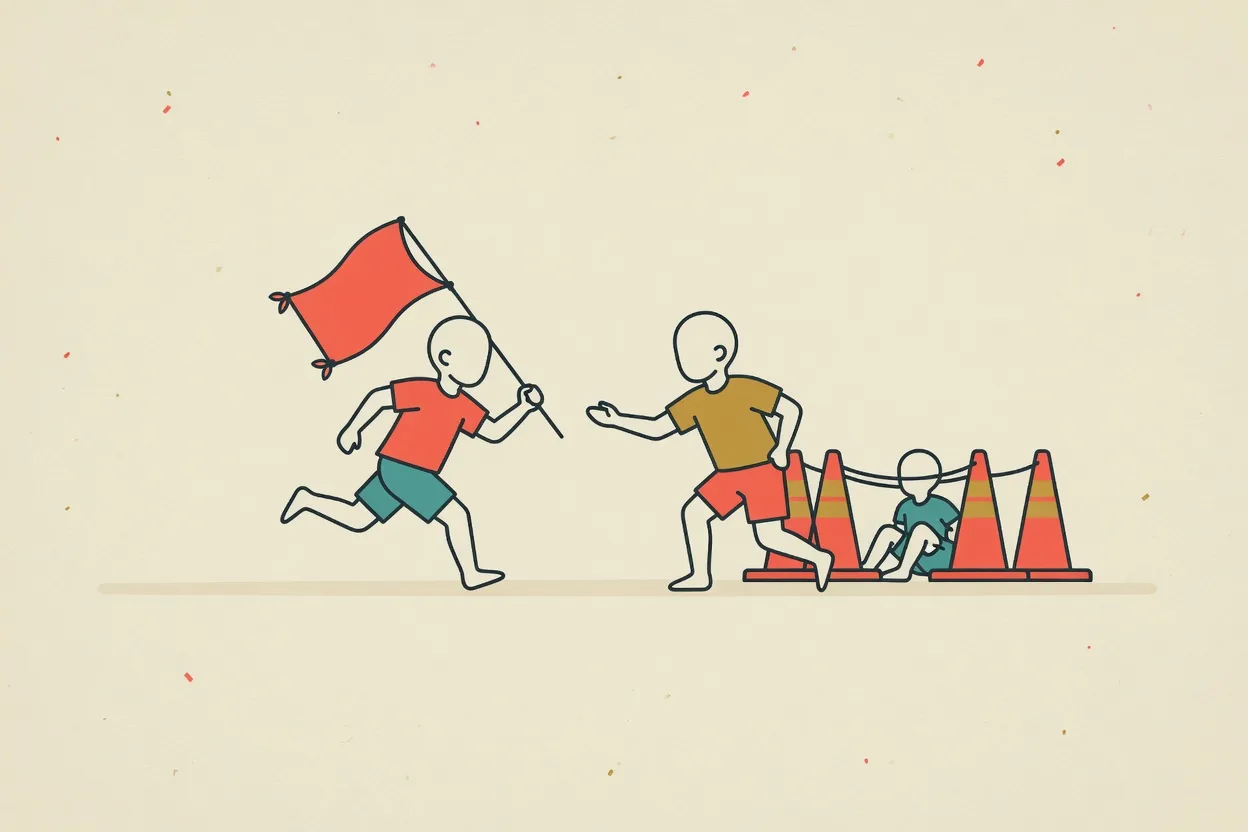
This is the game that actually rewards a plan rather than just speed, which is exactly the shift eight-year-olds are ready for — the strategy of guarding versus attacking really clicks from about this age. It needs real space and at least ten players, five per team, so save it for a bigger backyard or a park rather than trying to force it into a small yard.
Full rules and variations for capture the flag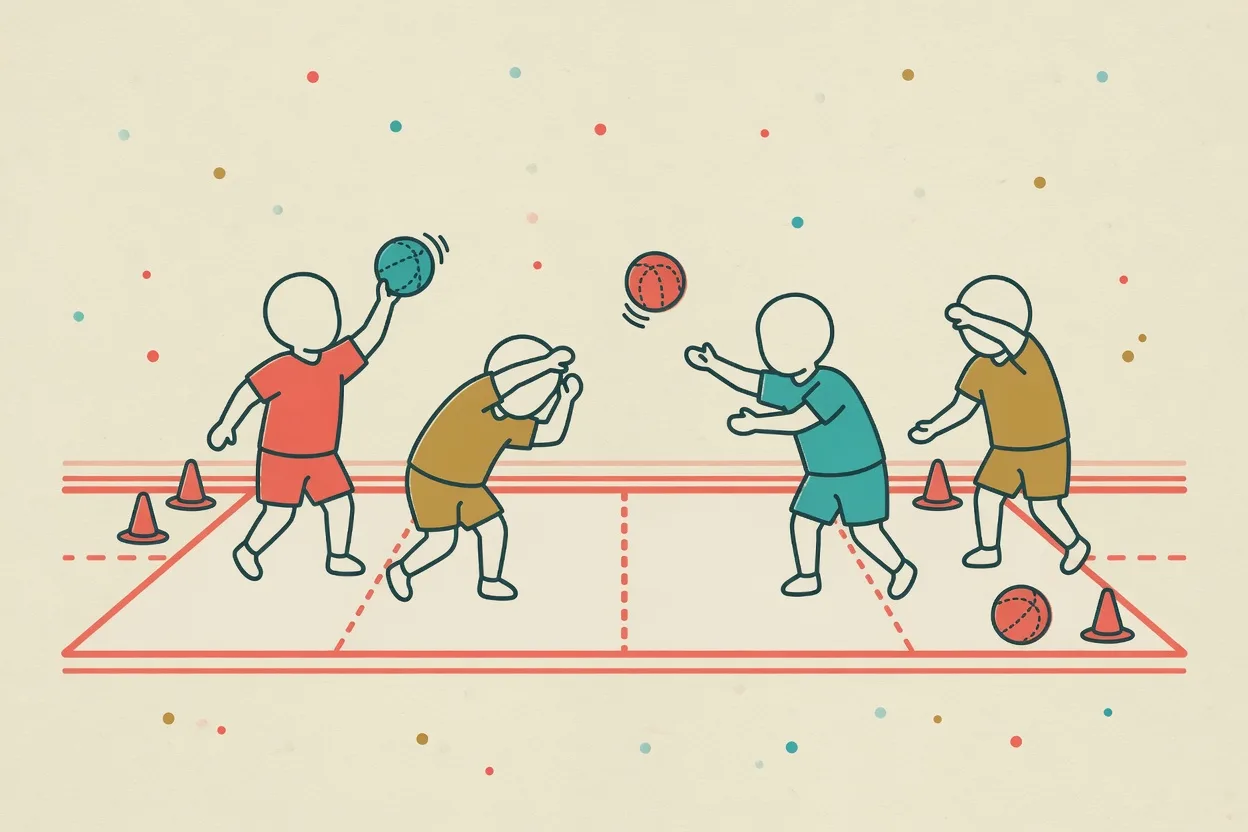
Dodgeball
Foam balls only, a marked backyard court, and the catch-to-revive rule — catch a throw cleanly and the thrower's out instead, with an eliminated teammate rejoining — which keeps the game honest even when one strong thrower starts to dominate. Genuinely one of the highest-energy games on this list, and eight-year-olds are old enough to actually follow the no-headshot rule without needing it repeated every round.
Full rules and variations for dodgeball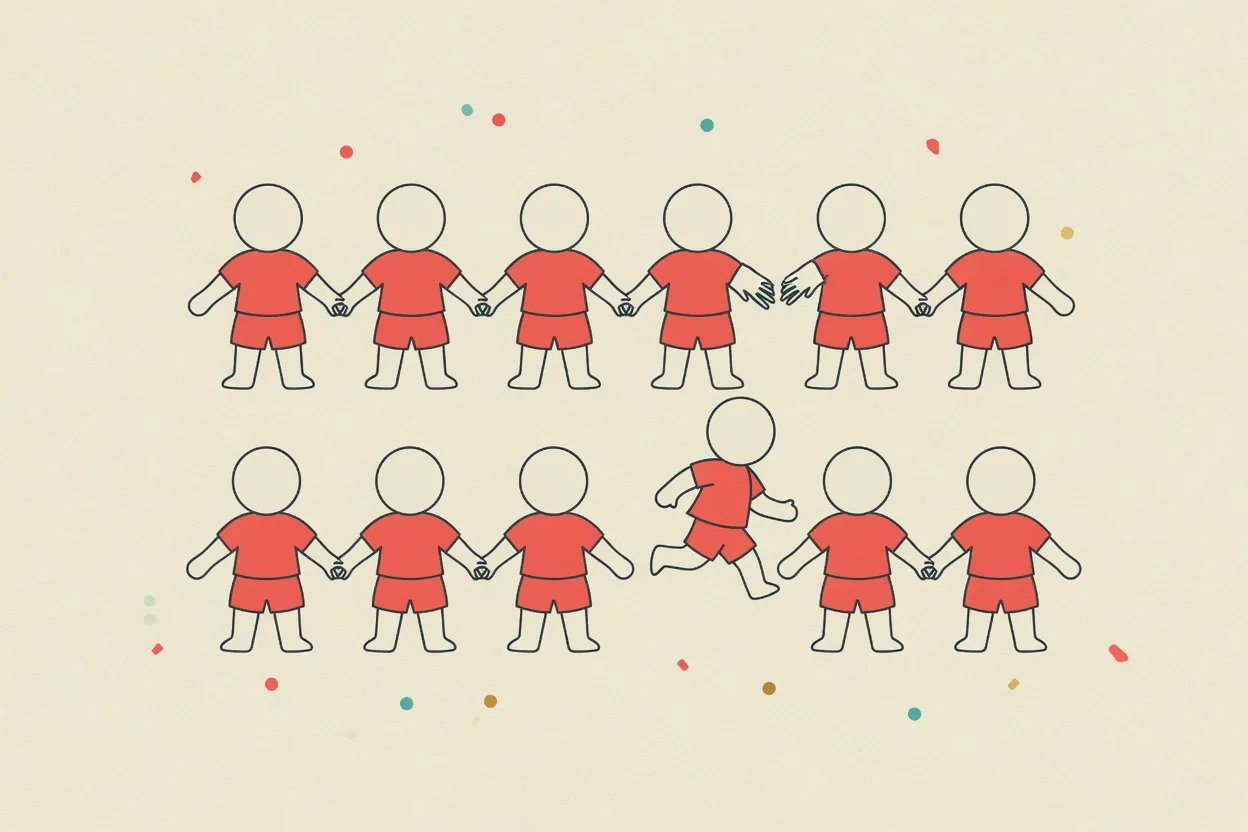
Red Rover
Teach the loose-grip, jog-not-sprint version as standard, not as a fallback — it keeps everything that makes the calling and the choosing fun while removing the shoulder injury the traditional locked-hands version is actually known for. Match team sizes by build as well as headcount, since a line of much bigger children calling over a much smaller one turns even the safe version into a wall.
Full rules and variations for red rover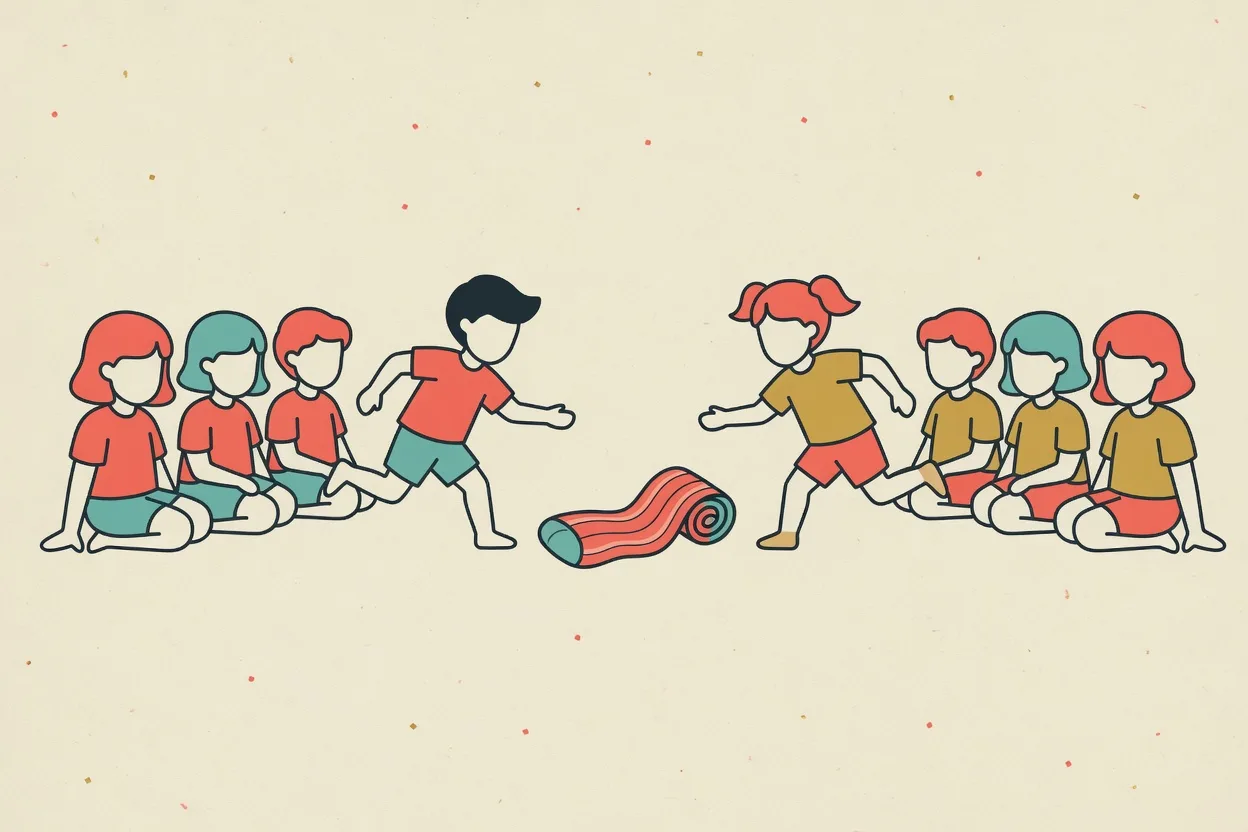
Steal the Bacon
A genuine dash-for-the-object game with real stakes attached to a single sprint, which is most of why it lands well at eight. Agree on the tie-grab rule out loud before the first round — whoever's hand is touching the object when it's called a tie gets to run — since it's the single most common argument this game produces.
Full rules and variations for steal the bacon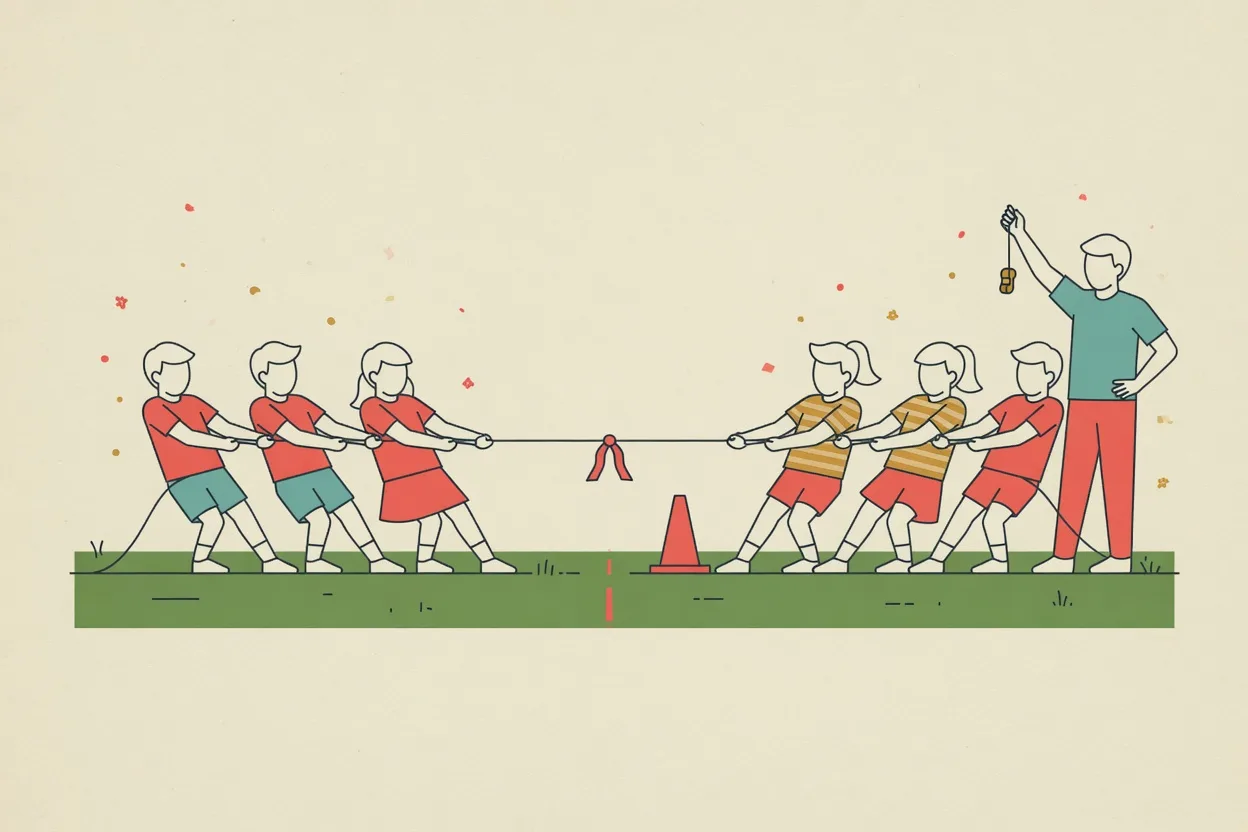
Tug of War: Rules, Strategy & How to Actually Win
Six to eight is the sweet spot by the game's own numbers, and it's the rare game at this age where technique — the lean, the grip, a caller's rhythm — visibly beats raw strength, which is enormously satisfying for the smaller, cleverer team. Balance teams by total size rather than headcount, and swap ends between pulls so nobody can blame the slope.
Full rules and variations for Tug of War: Rules, Strategy & How to Actually WinRaces with a clock or a finish line
Relay Races
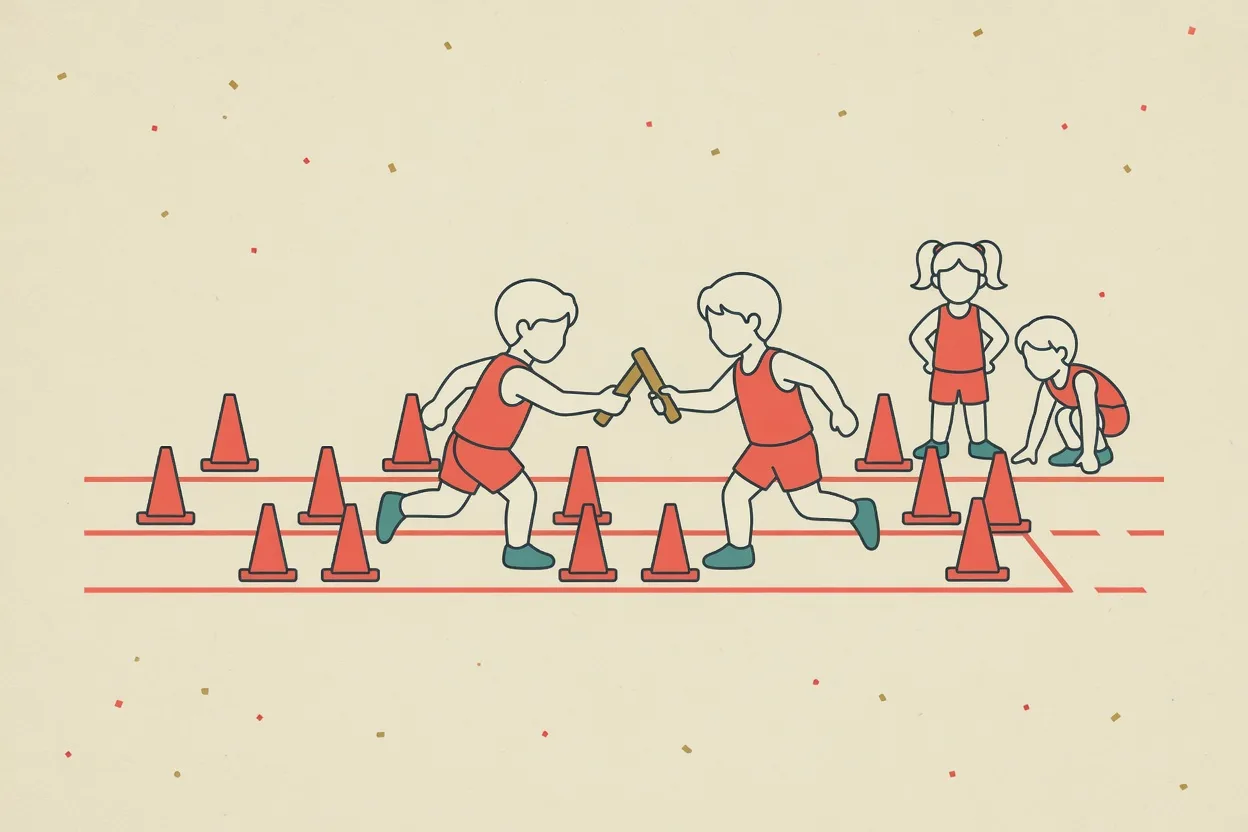
The hand-off is where relays actually go wrong at any age, and eight-year-olds are old enough to really drill it — a hand-to-hand pass, not a thrown baton, with the next runner already watching and ready. Balance teams by spreading fast and slow runners across every side rather than stacking speed on one, or the race is decided in the first leg.
Full rules and variations for relay races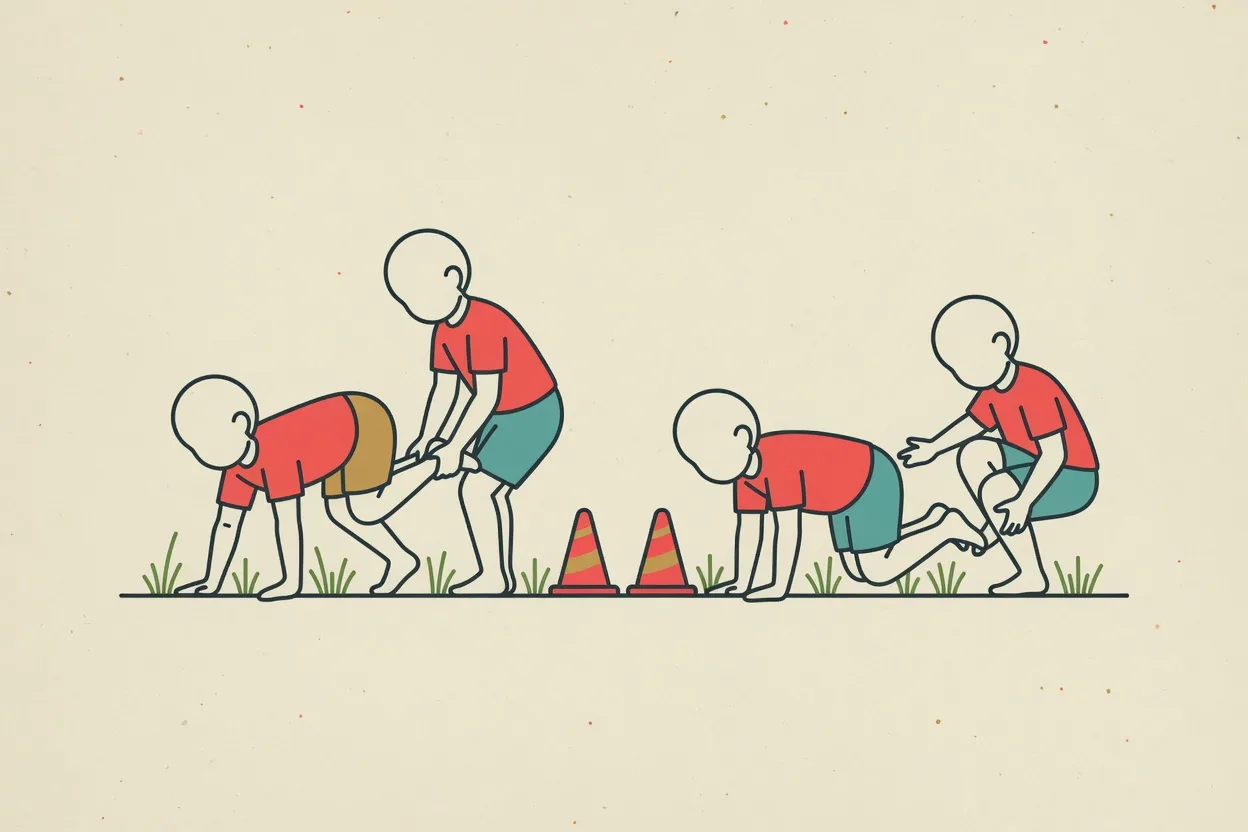
The Wheelbarrow Race
The front partner walks the whole course on their hands, which is a genuine test of arm and shoulder strength that most eight-year-olds are just about ready for. Pair by strength rather than by friendship group where you can, and keep it on grass without exception — a wheelbarrow fall lands on the hands and wrists, and grass is what turns that into a soft stumble instead of a graze.
Full rules and variations for the wheelbarrow race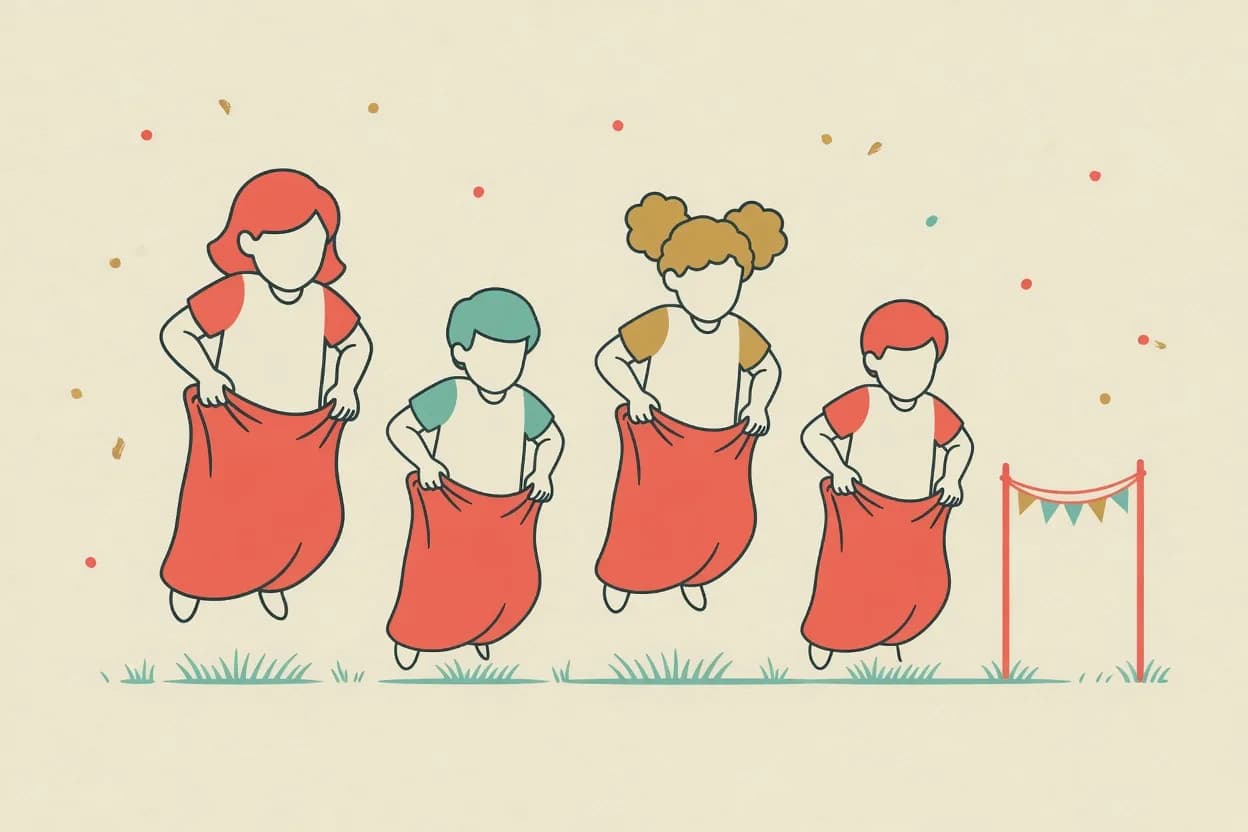
Sack Race: Rules, Setup & How to Jump Faster
A straight sprint in a sack stops being quite enough of a challenge by eight, so add a there-and-back turn or a couple of weaving obstacles rather than just a straight fifteen paces. The technique still matters more than raw speed — small, fast jumps beat one big leap, every time.
Full rules and variations for Sack Race: Rules, Setup & How to Jump Faster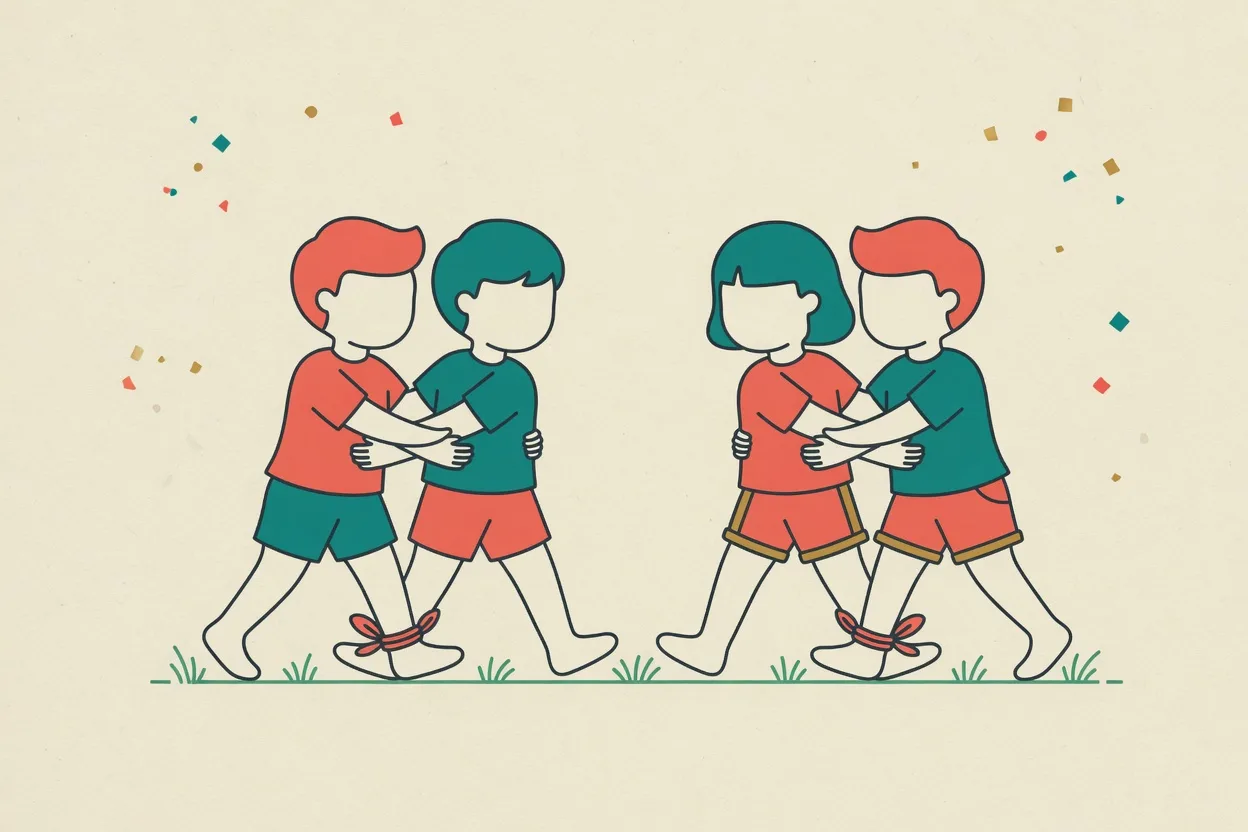
Three-Legged Race: Rules, Setup & Winning Technique
This is close to the age the counting rhythm really pays off — pairs who call 'in, out, in, out' together beat pairs who just try to run, and eight-year-olds are old enough to actually hold the rhythm rather than just start it and lose it. Pair by height rather than by friendship group; a big stride difference is what ends most pairs on the grass.
Full rules and variations for Three-Legged Race: Rules, Setup & Winning Technique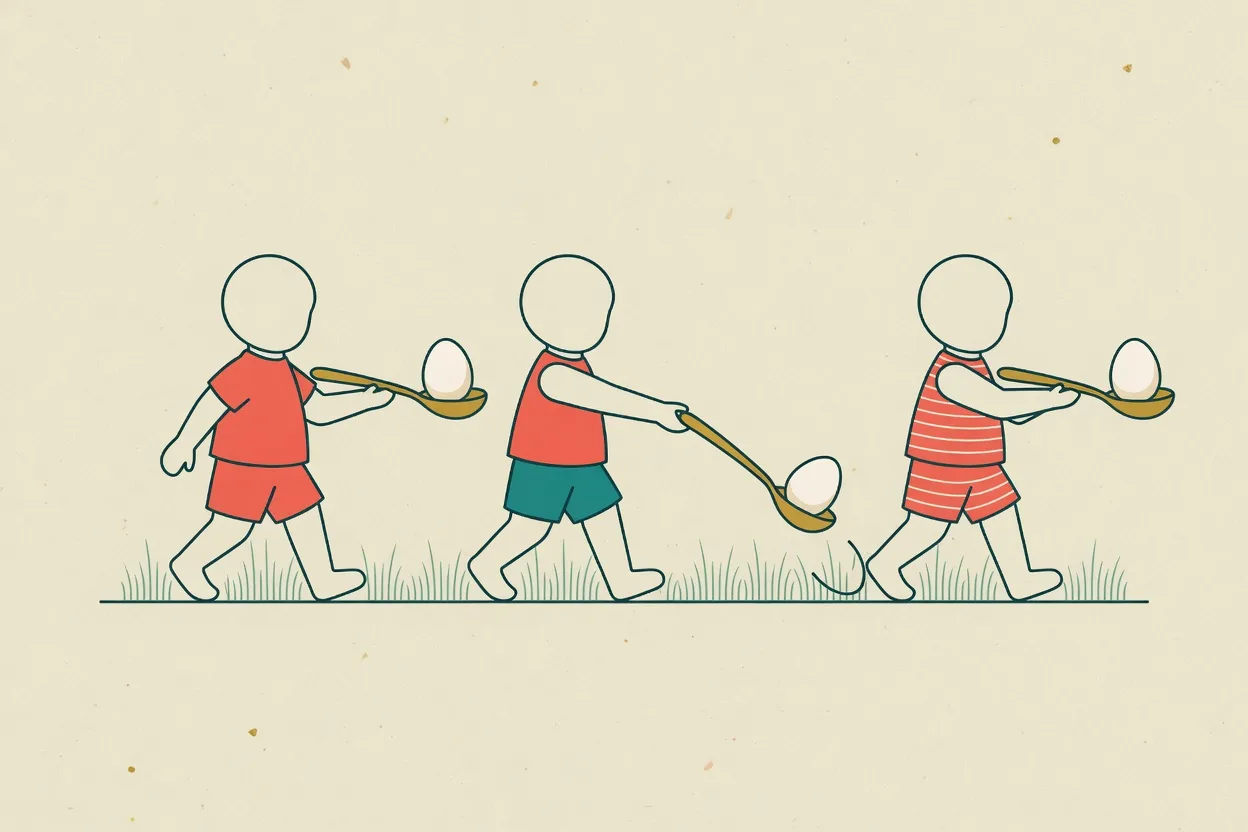
Egg and Spoon Race: Rules, Technique & Variations
The only race on this list where going faster makes you worse, which is a genuinely useful lesson for a competitive eight-year-old to learn in real time. Add the relay handover or a couple of obstacles at this age, since a straight walk with a hard-boiled egg has usually stopped being a real challenge by now.
Full rules and variations for Egg and Spoon Race: Rules, Technique & VariationsHead-to-head and strategy
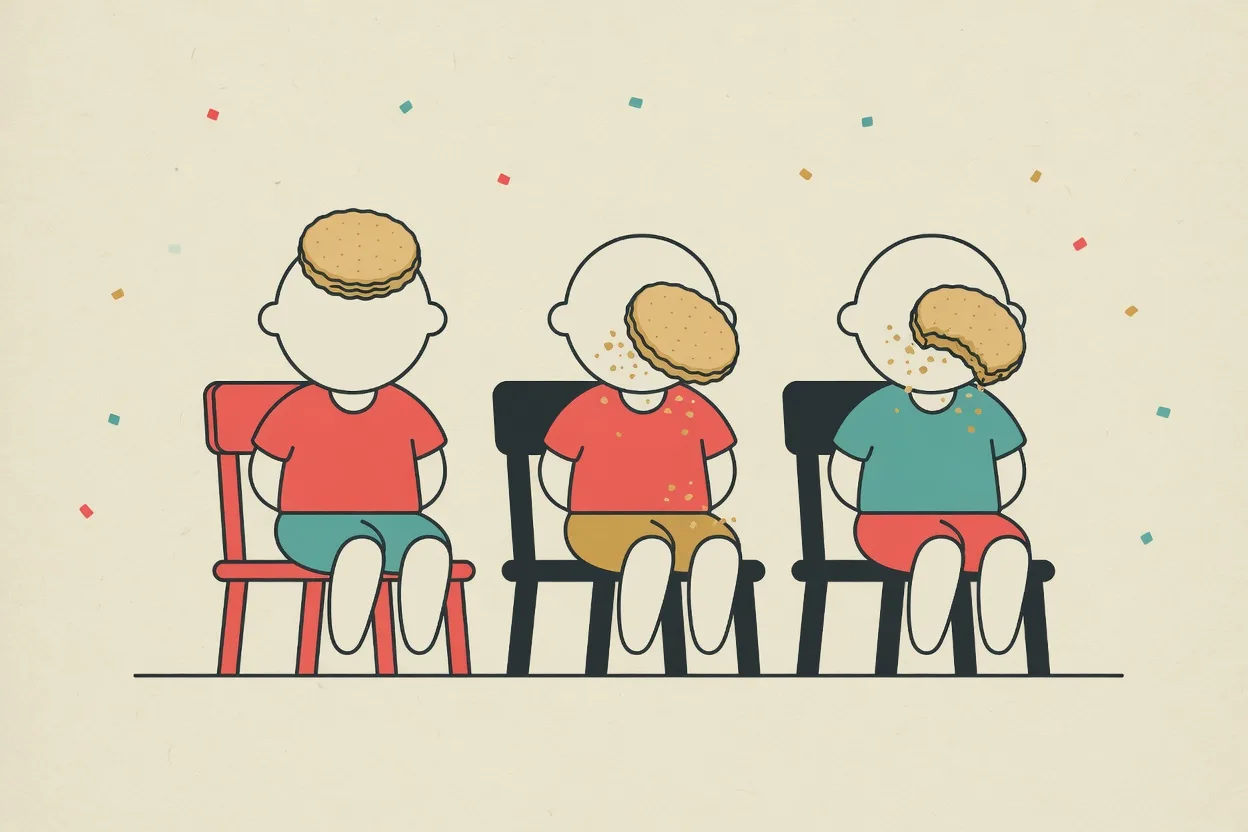
Cookie Face
A real minute-to-win-it heat — get a cookie from forehead to mouth using only your face, no hands — and it's exactly the kind of short, silly, genuinely competitive round that works well as a change of pace between bigger outdoor games. Run it as a straight knockout if the group wants an actual bracket rather than just watching for laughs.
Full rules and variations for cookie face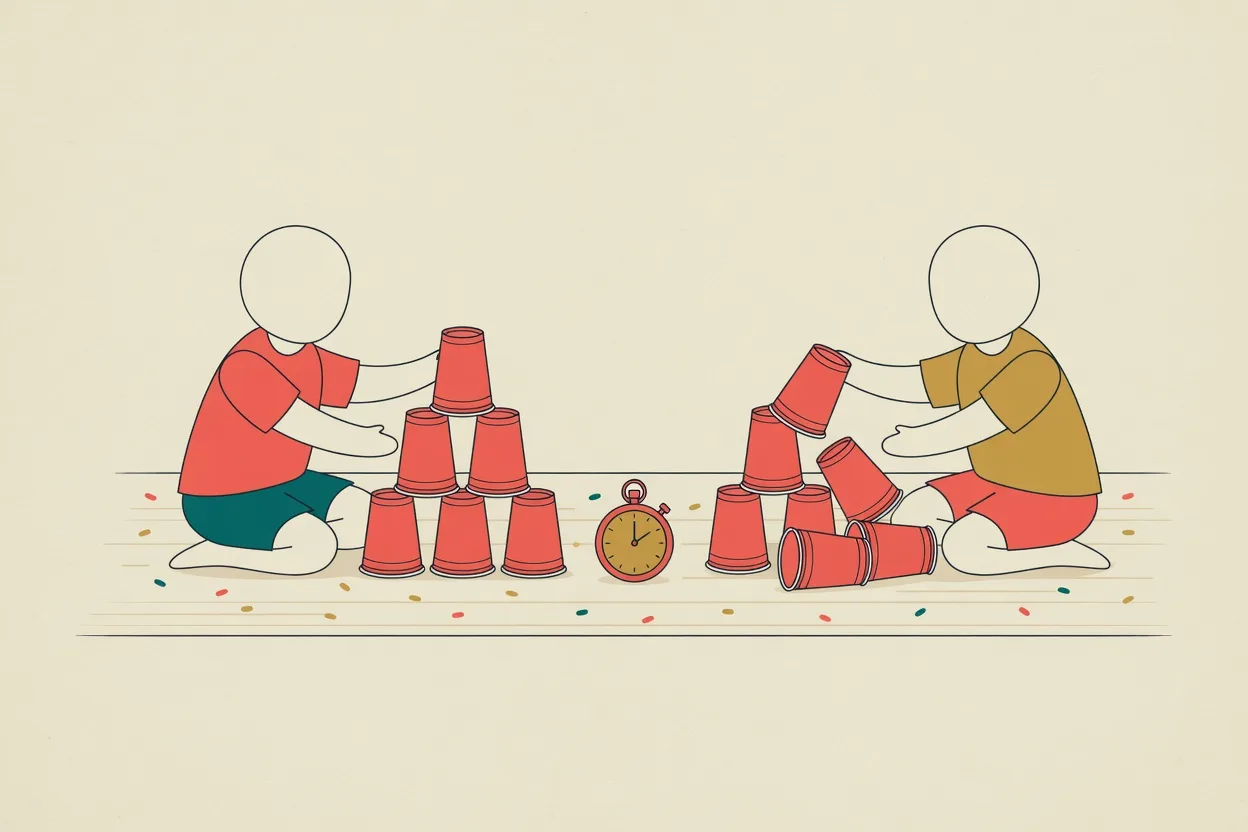
Cup Stacking
Looks easy on video and is genuinely humbling on a real table, which is most of the appeal for a group that thinks they'll be fast. Give everyone one practice stack before the clock starts, then run it as a head-to-head bracket rather than solo against a stopwatch — racing another child is more exciting to win and lose than a number on a screen.
Full rules and variations for cup stacking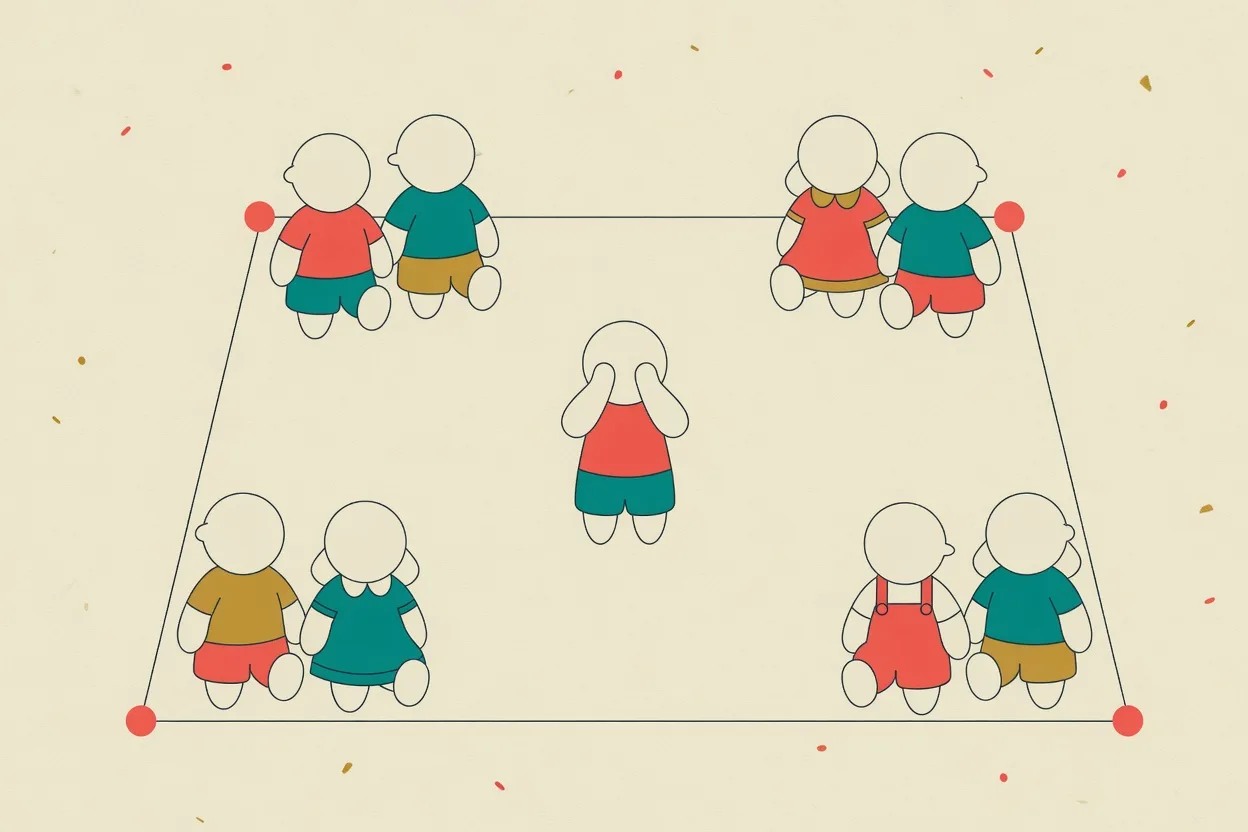
Four Corners
This one rewards reading the room — watching which corner the group is drifting toward and deciding whether to follow or bet against it — which is exactly the kind of thinking eight-year-olds are ready to enjoy rather than find confusing. Keep the whole floor clear, not just the corners; the dash between them causes more collisions than the elimination itself.
Full rules and variations for four corners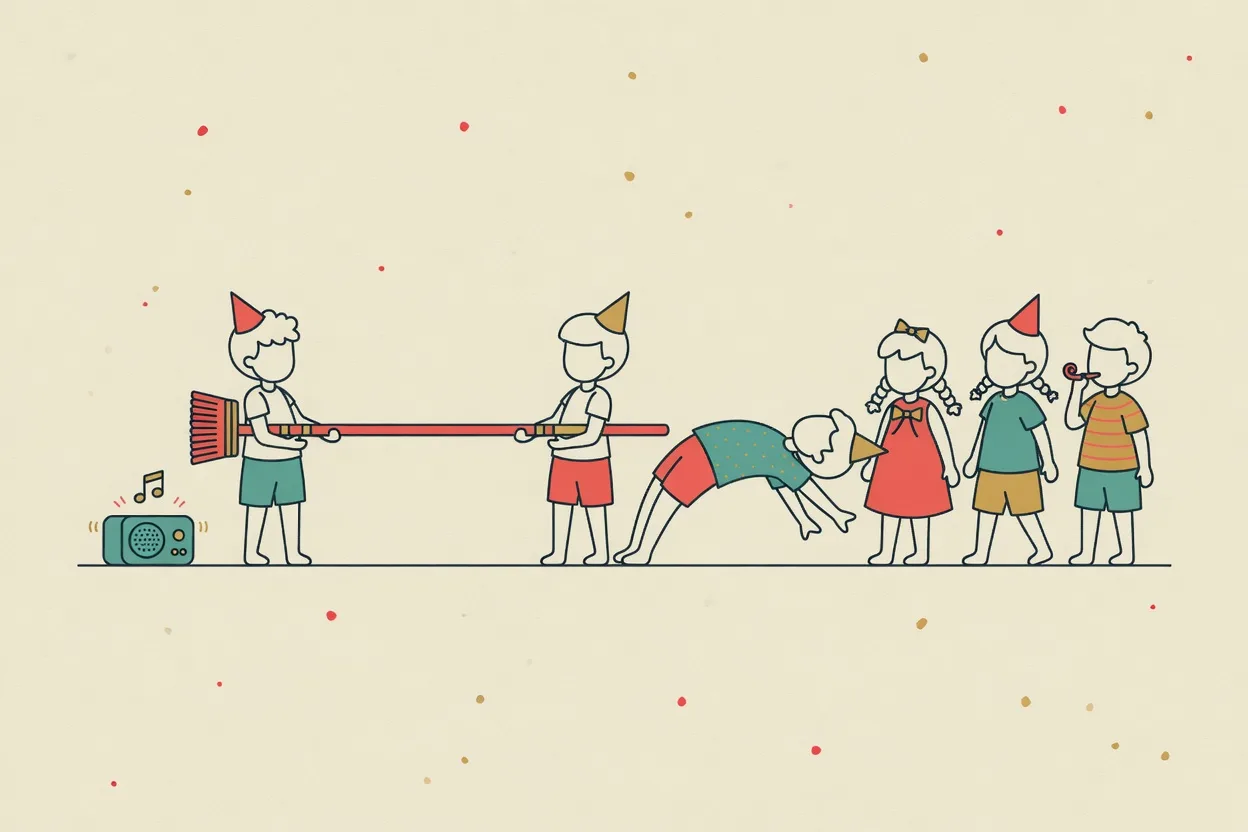
Limbo
Gets harder every single round rather than settling into a routine, which suits a group that wants a genuine contest with an actual last-one-standing winner. Start higher than feels necessary and lower the bar by about a hand's width each round, or you'll eliminate half the group before it's had a chance to get fun.
Full rules and variations for limboFrequently asked questions
- How many games do you need for an 8-year-old's party?
- Four or five, run as real rounds rather than quick fillers — this age can sustain a genuine ten- to fifteen-minute contest, including a heat, a final and a bit of a wait for a turn, which younger children generally can't. Plan for that longer attention span rather than cramming in extra games.
- Should games for 8-year-olds have real elimination?
- Yes, generally — by this age losing a round doesn't need the same softening it does for a five- or six-year-old, and a real knockout bracket or a genuine last-one-standing finish is part of what makes these games satisfying. Keep an eye on any one child losing repeatedly, but don't remove the stakes by default.
- How do you stop one team from winning everything?
- Balance by strength and size, not just by counting heads — spread your fastest, biggest or most confident players across every team rather than letting them cluster on one side. It matters more at this age than younger, because eight-year-olds notice an unfair team almost immediately and say so.
- What's the best game for a big group of 8-year-olds?
- Capture the flag if you have the space for it — ten players minimum, a park or a big backyard — since it's built for a bigger group and gets more interesting rather than more chaotic as numbers go up. For a smaller yard, relay races or a tug-of-war bracket scale down more easily.
Sorting the venue too? 12 Kids Birthday Party Places in Chicago (2026)