
Six is where the team games begin. Look through this library and the same starting age keeps turning up: steal the bacon, capture the flag, the cookie face game, a proper three-legged race and a tug of war all list six as the point they start to work. Six-year-olds can remember which side they're on, wait for their number to be called, and genuinely care whether their team wins, which is everything a first team game needs.
The other thing that arrives at six is a fierce sense of fairness. A shaky call in musical statues, a team that's obviously stacked, a tie nobody settled in advance — any one of them can turn a room of six-year-olds against the referee in seconds. Most of the work at this age happens before the first round: say out loud what counts as a tag, who runs on a tie and how the teams get picked, and once a call is made, let it stand.
For a group still finding its feet with rules, start with party games for 5-year-olds; for one that's ready for bluffing and the harder versions of old favorites, party games for 7-year-olds is the next step. Below: the first team games, the games that live or die on a fair call, and a few with a prize at the end.
Teams, for the first time
Each of these gives six as its starting age or its sweet spot. Spread the fastest and biggest children across the sides before anyone picks teams, and keep rounds short so a losing team gets another chance quickly.
Steal the Bacon
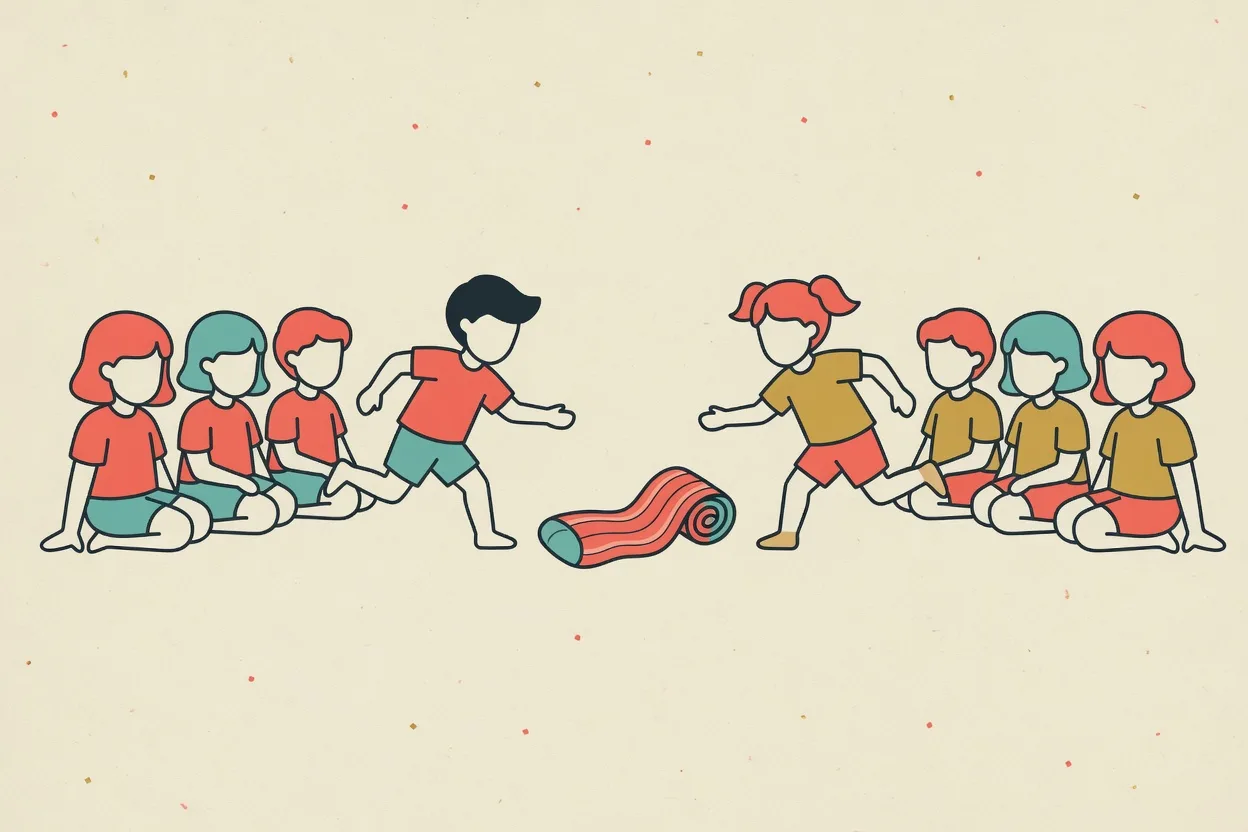
One called number, one sprint, one object in the middle — about as simple as a team game gets, which is why six is its starting age. Number both teams identically so every child has exactly one opposite, and settle the tie-grab rule out loud before the first call. If the group is mostly still five or nervous about being tagged, the no-tag version, where the first to reach the object simply wins the point, is written for exactly this age.
Full rules and variations for steal the bacon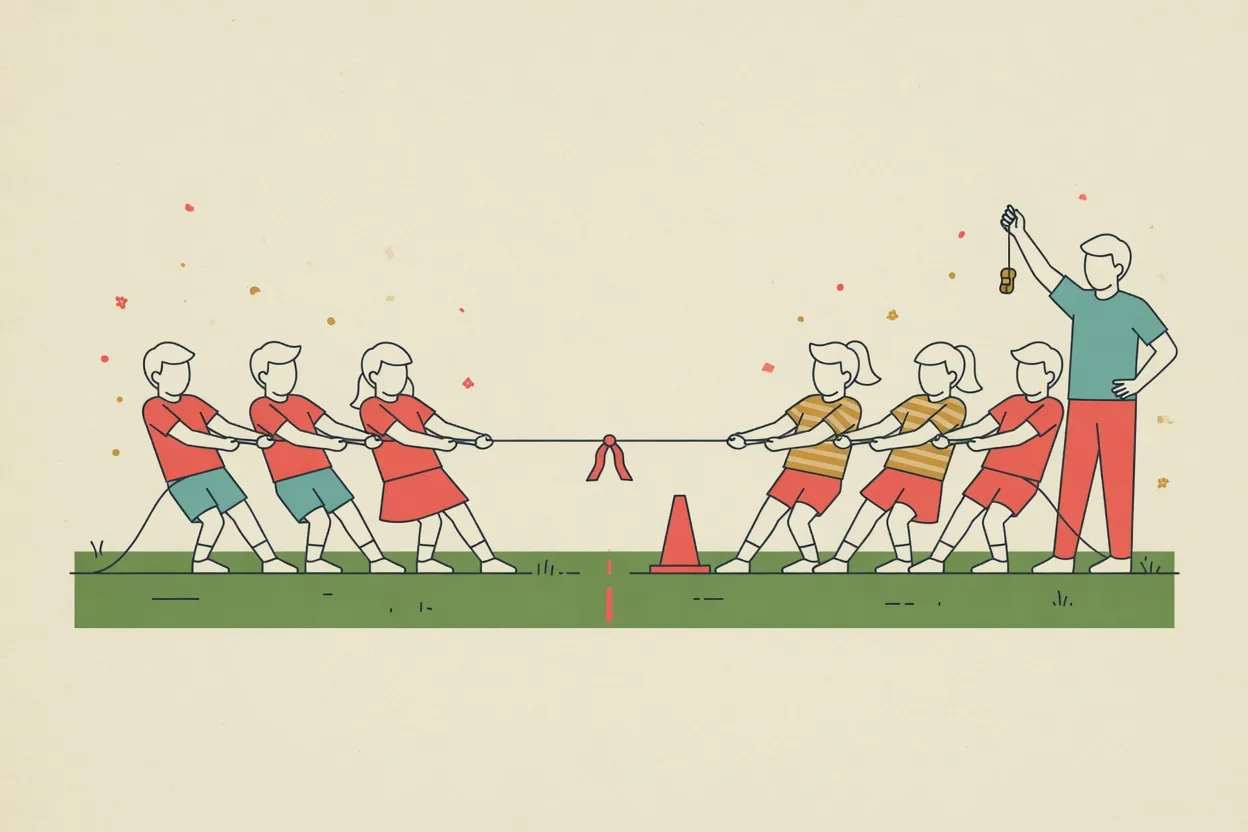
Tug of War: Rules, Strategy & How to Actually Win
The guide calls six to eight the sweet spot, and the setup it gives is the one to copy: four to six a side, a winning distance of just a couple of paces, best of three so the losing team gets a second pull while everyone still has energy. Spend two minutes on the grip and the lean before the first pull, and the difference shows on the second. If one side starts running away with it, swap two players — at six, nobody minds.
Full rules and variations for Tug of War: Rules, Strategy & How to Actually Win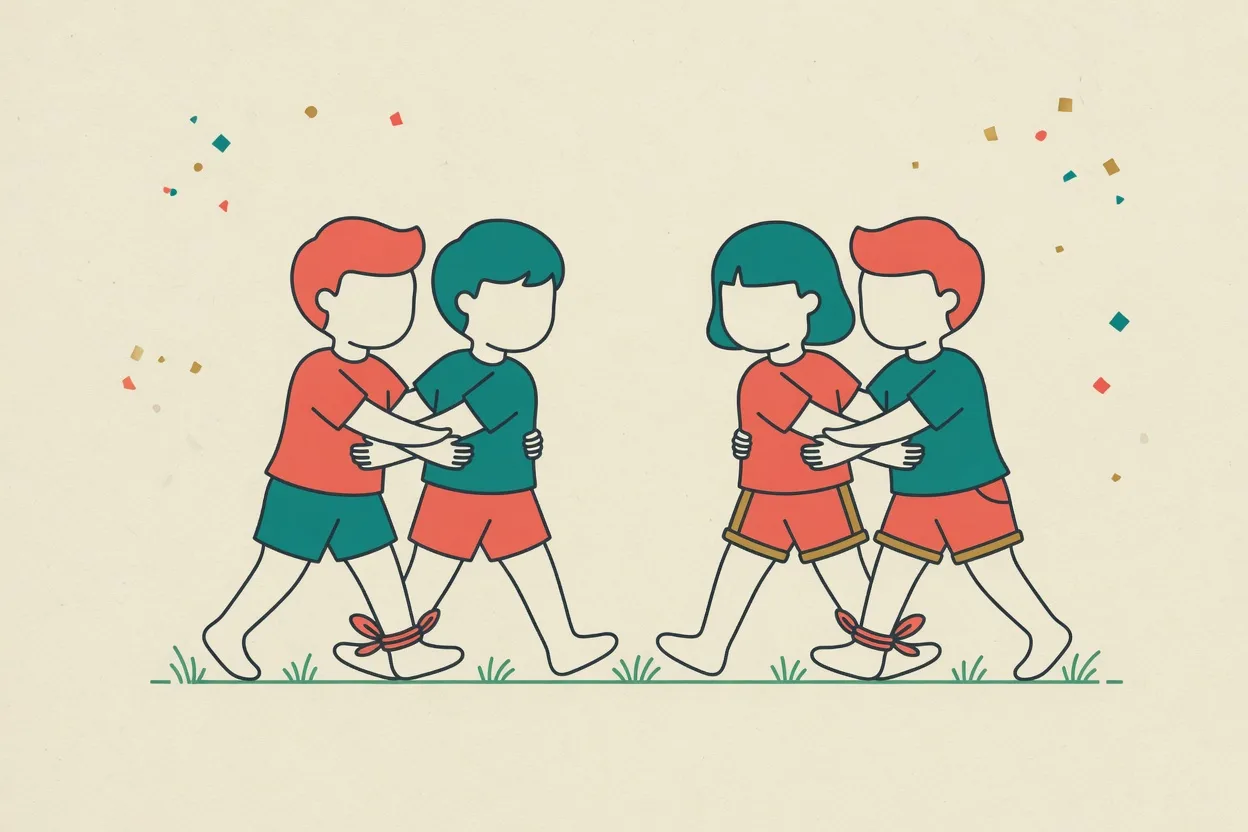
Three-Legged Race: Rules, Setup & Winning Technique
Six is where the real version starts, and six to eight is where you should expect plenty of falling, so keep the course short and the grass soft. Tie at the ankle only, pair children by height rather than by best friend, and teach the one technique that matters most: every pair steps off with their tied legs first, counting out loud together.
Full rules and variations for Three-Legged Race: Rules, Setup & Winning Technique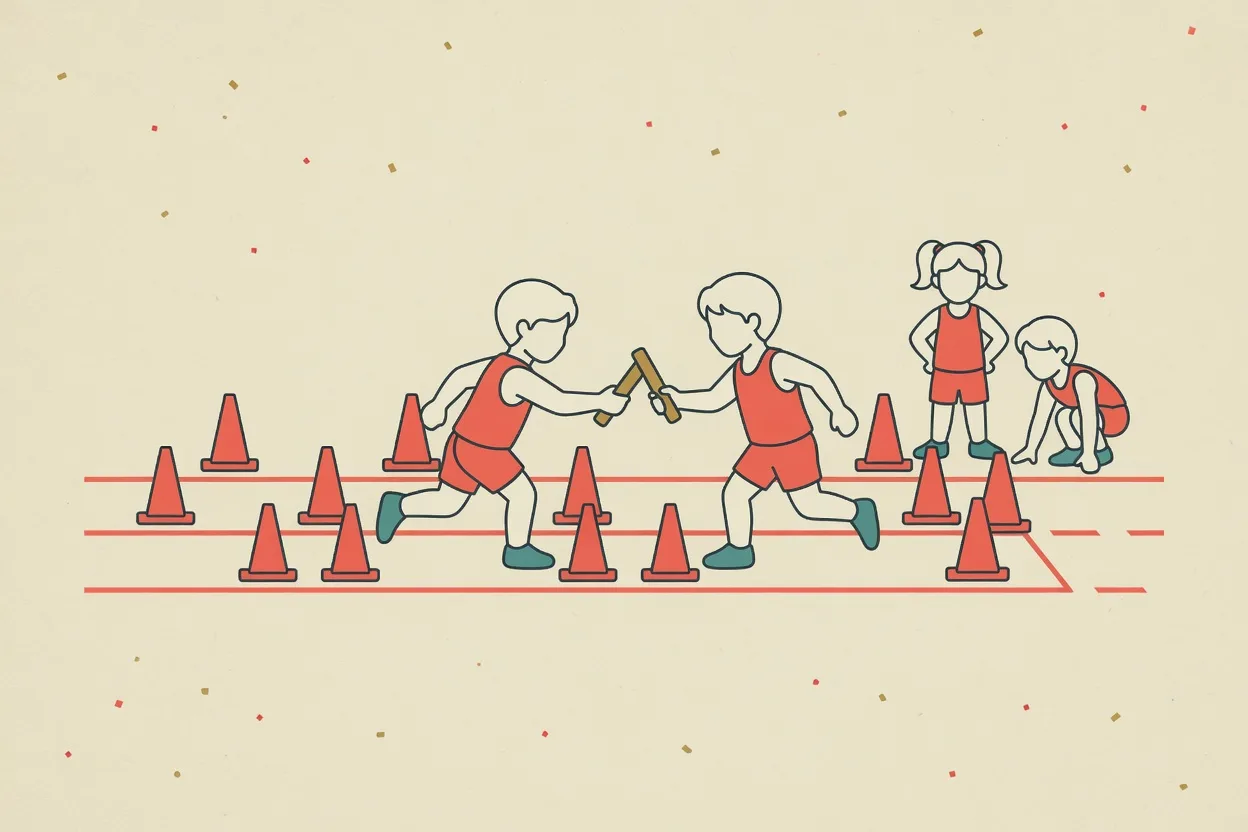
Relay Races
Relays work from five, and the hand-off is where they go wrong at every age. At six, stick with a plain baton and practice the pass once before the race — hand to hand, with the next runner already watching — and save the spoon and dress-up versions for seven and up, once the basic hand-off is second nature.
Full rules and variations for relay races
Balloon Stomp
Run the team stomp: two teams in different balloon colors, and the side that keeps at least one balloon intact longest wins. The guide pitches that version at six- to nine-year-olds for the loyalty angle — a popped balloon still stings, but now the whole team is in it together. Call the round the moment anyone grabs clothes or shoves instead of stomping.
Full rules and variations for balloon stomp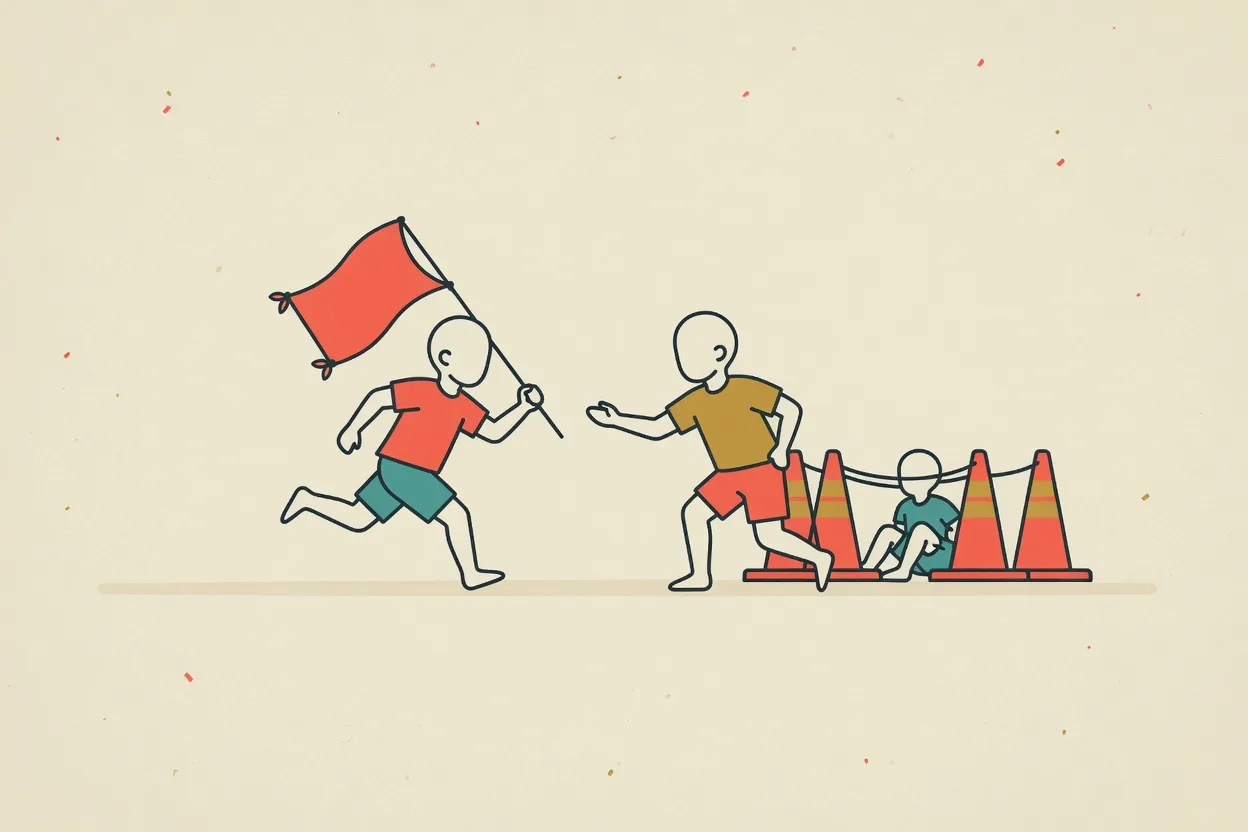
Capture the Flag
Playable from about six, as long as the yard is big and you have ten players or more. Add the flag-guard rule written for six- to eight-year-olds, where defenders stay at least three big steps back from their own flag, or somebody will simply stand on it and the game is over before it starts. The real strategy clicks around eight; at six, the thrill is getting the flag home at all.
Full rules and variations for capture the flagGames that live or die on a fair call
Each of these hangs on a judgment — who moved, who sat first, who got caught — and six-year-olds will contest every one. Agree the rules before you start, and where you can, give the job of calling it to someone who can't see the players.
Musical Chairs
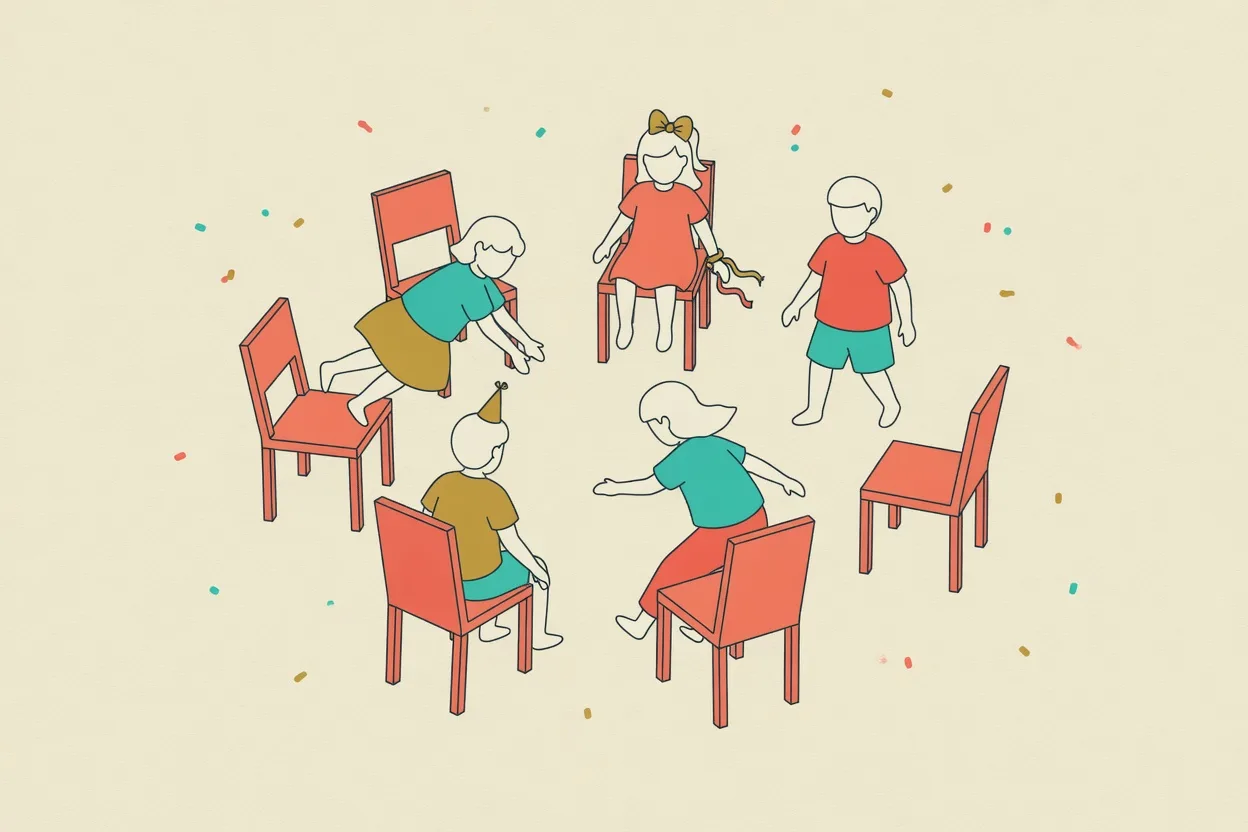
Six is where the classic elimination version comes into its own, so this is the year to retire the floor cushions. Put whoever runs the music where they can't see the chairs, and vary each burst — eight seconds, then twenty-five, then five. Then give the children who are out a role, chair remover, judge of close finishes, music controller, so going out means a new job rather than a seat on the sofa.
Full rules and variations for musical chairs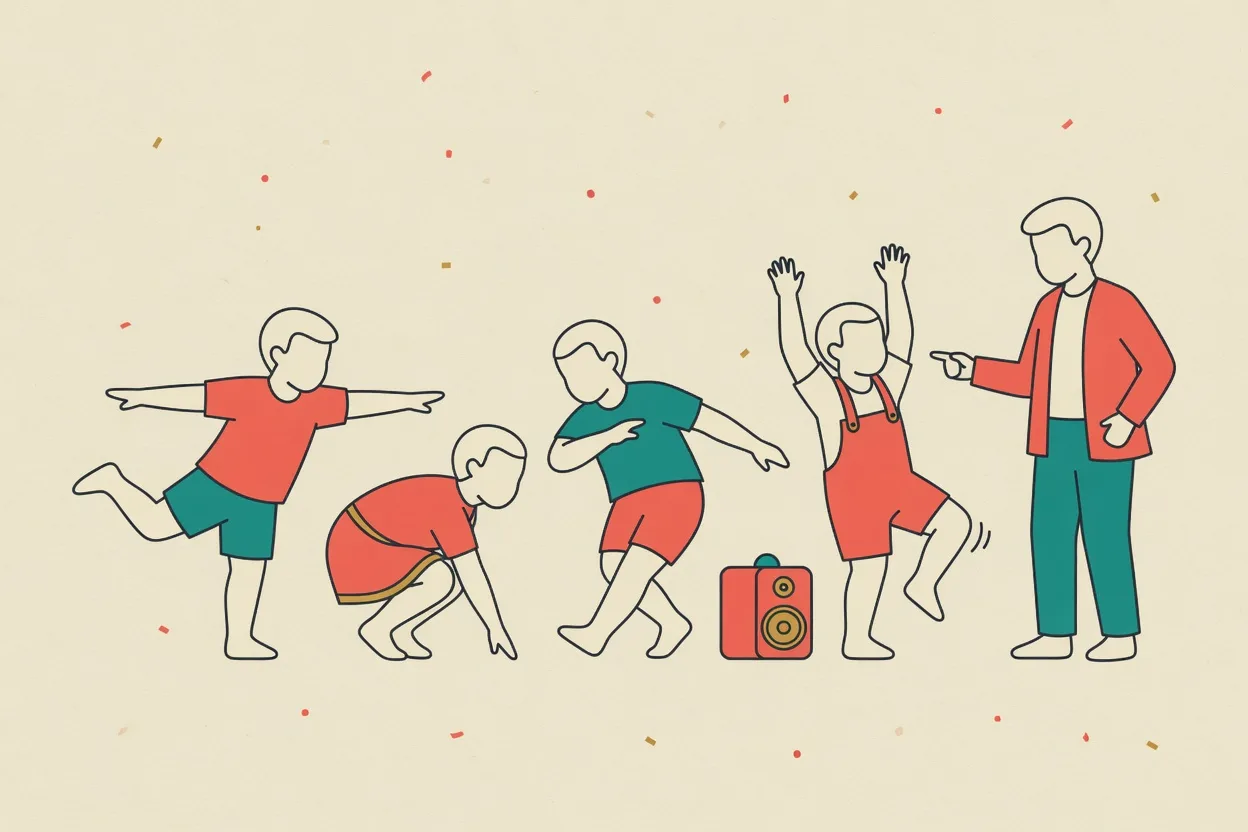
Musical Statues: Rules, Fair Judging & Playlist
Five to seven is this game's classic age, and six-year-olds play it with total commitment, which is exactly why the judging matters. Say what you saw rather than delivering a verdict — 'your left foot moved' goes down far better than 'you're out' — and give the room a one-second grace period after the music stops, since nobody freezes on a dime.
Full rules and variations for Musical Statues: Rules, Fair Judging & Playlist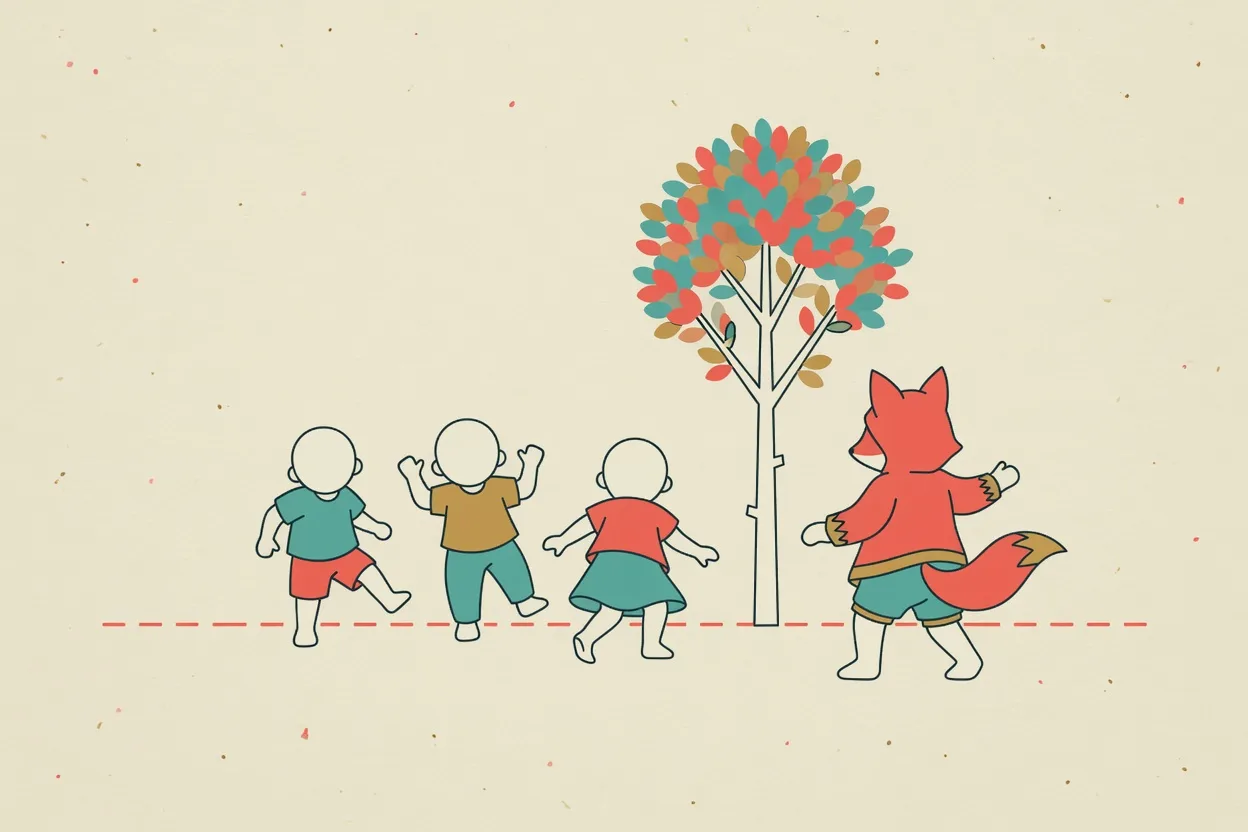
What's the Time, Mr. Fox
At four the fox calls dinner time early; by six, children enjoy the fox drawing out the suspense with small, cautious hours before finally springing the chase. Set the starting line further from the fox than feels necessary so the run back doesn't bunch up, and agree that only a clear tag counts as caught. Whoever's caught is the next fox, which spreads the best job around.
Full rules and variations for what's the time, Mr. Fox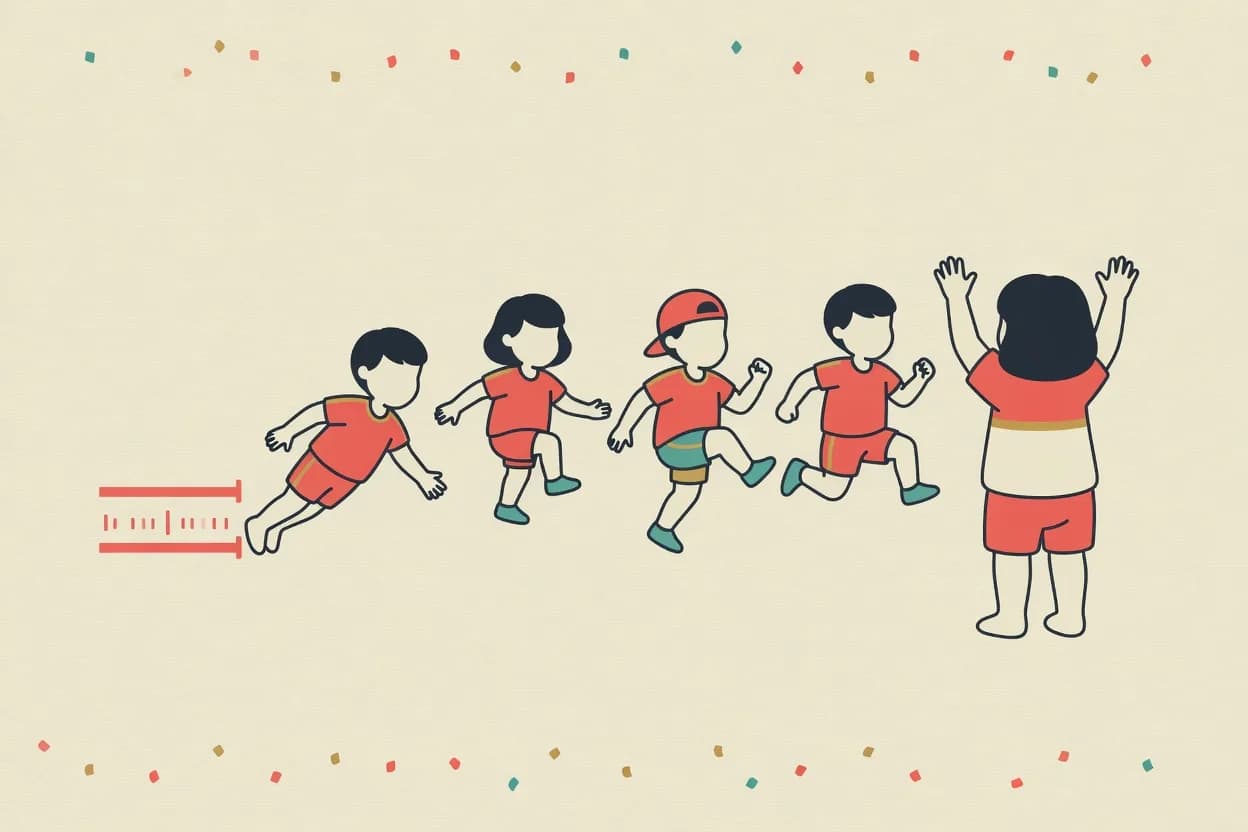
Red Light Green Light
Every round produces a child insisting they'd already stopped, and how the caller handles it decides whether the game survives. Turn fully away on green and back sharply on red, so the moment of judgment is the same for everyone, and once a call is made, let it stand. Rotate the caller's job every round or two; a six-year-old who has made a few calls accepts being sent back far more cheerfully.
Full rules and variations for red light green lightGames with something to win
From about six, the prize starts to matter — who gets the center of the parcel, who finds the treasure, who wins the heat. These games keep the prize but share it out, so the fastest child doesn't take everything.
Pass the Parcel
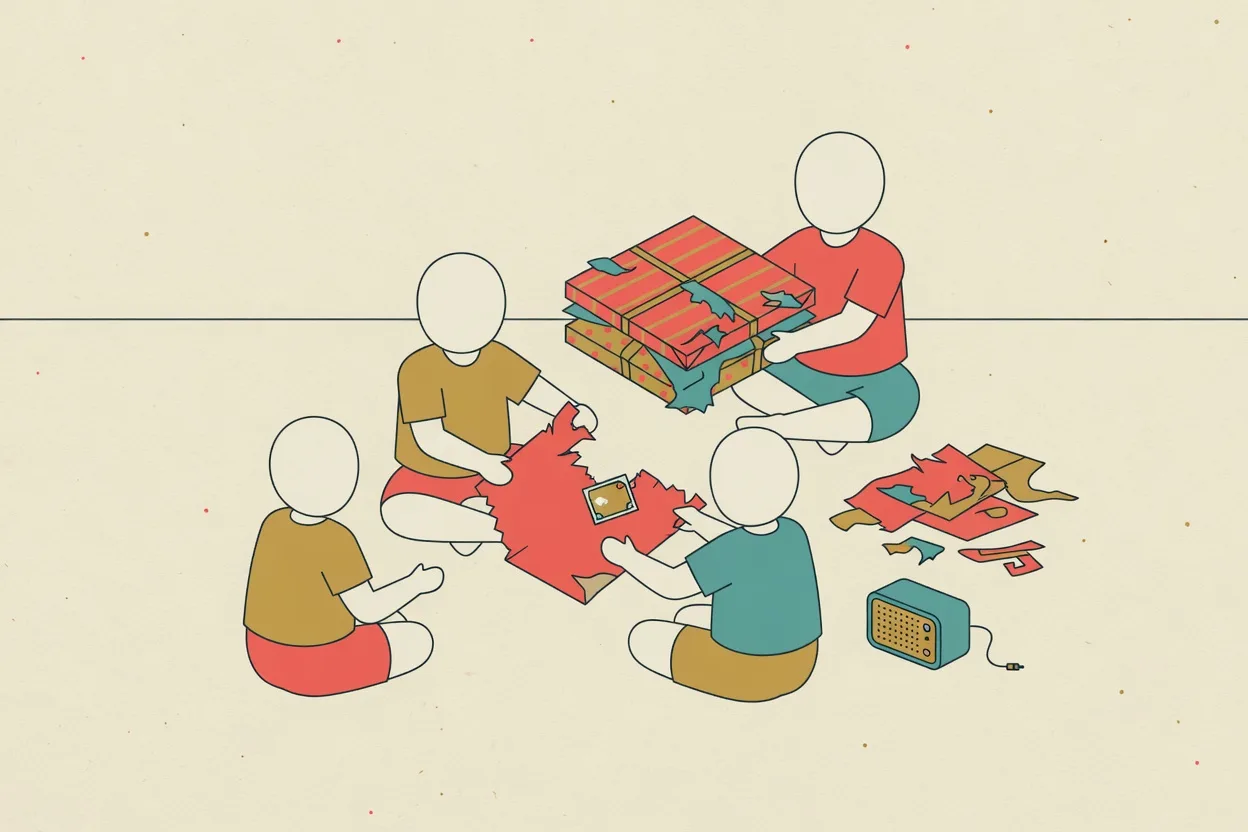
This is the age children start caring who gets the center prize, so switch to the classic one-layer-per-stop version, with small treats tucked into about half the outer layers. Then try pass and perform, which the guide suggests from about six: write a small dare inside a few layers — a joke, an animal impression, ten jumping jacks — so the layers without candy become a prize of their own.
Full rules and variations for pass the parcel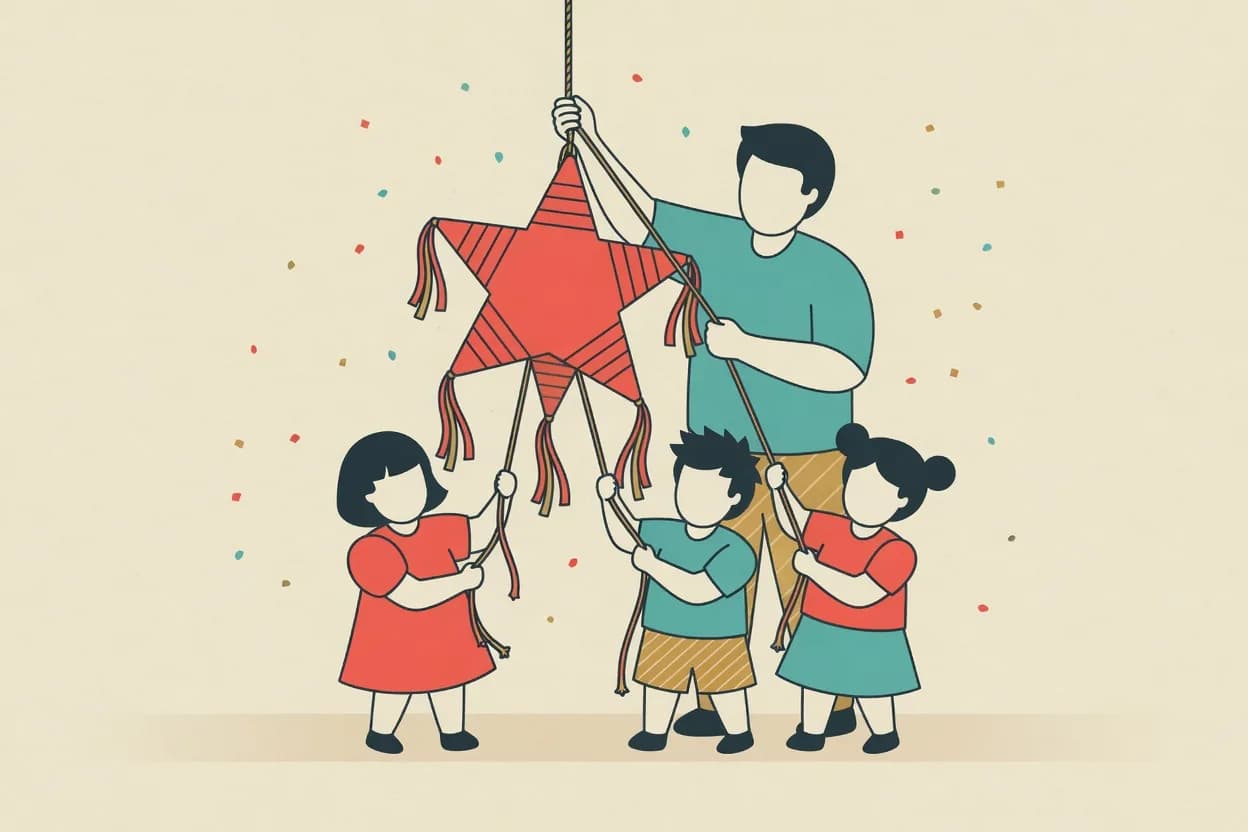
Piñata
Six is squarely in range for the classic swinging version: blindfold, a plastic bat, three swings each, counted out loud. Decide the running order before anyone picks up the bat, and when it breaks, scatter the candy as widely as you can or hand out bags — one pile of candy and eight six-year-olds diving at it is how knees get scraped.
Full rules and variations for piñata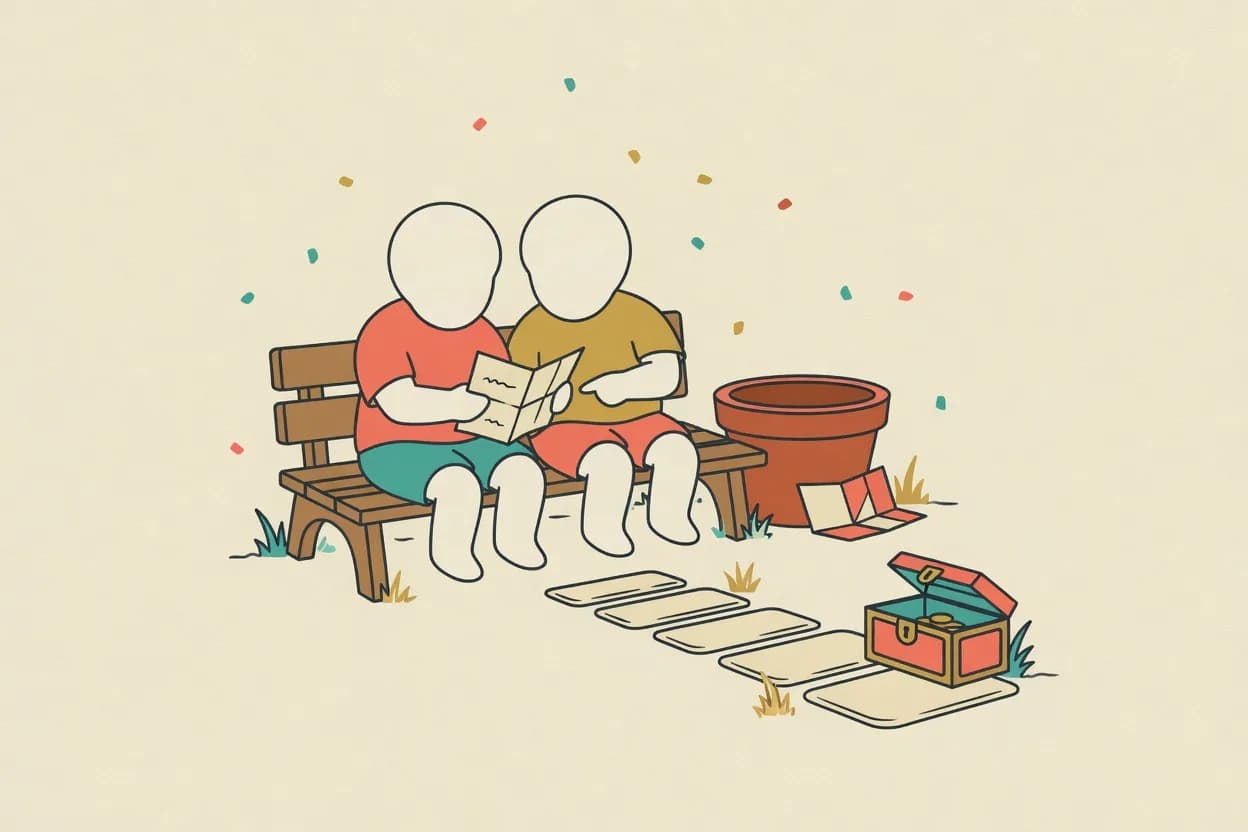
Treasure Hunt
Six- to eight-year-olds are ready for rhyming or riddle clues instead of pictures, and six to eight hops holds them without dragging. Read each clue aloud for anyone still learning to read, and match the prize to the trail: small finds along the way and one generous find at the end, so the last clue doesn't open on a few candies split eight ways.
Full rules and variations for treasure hunt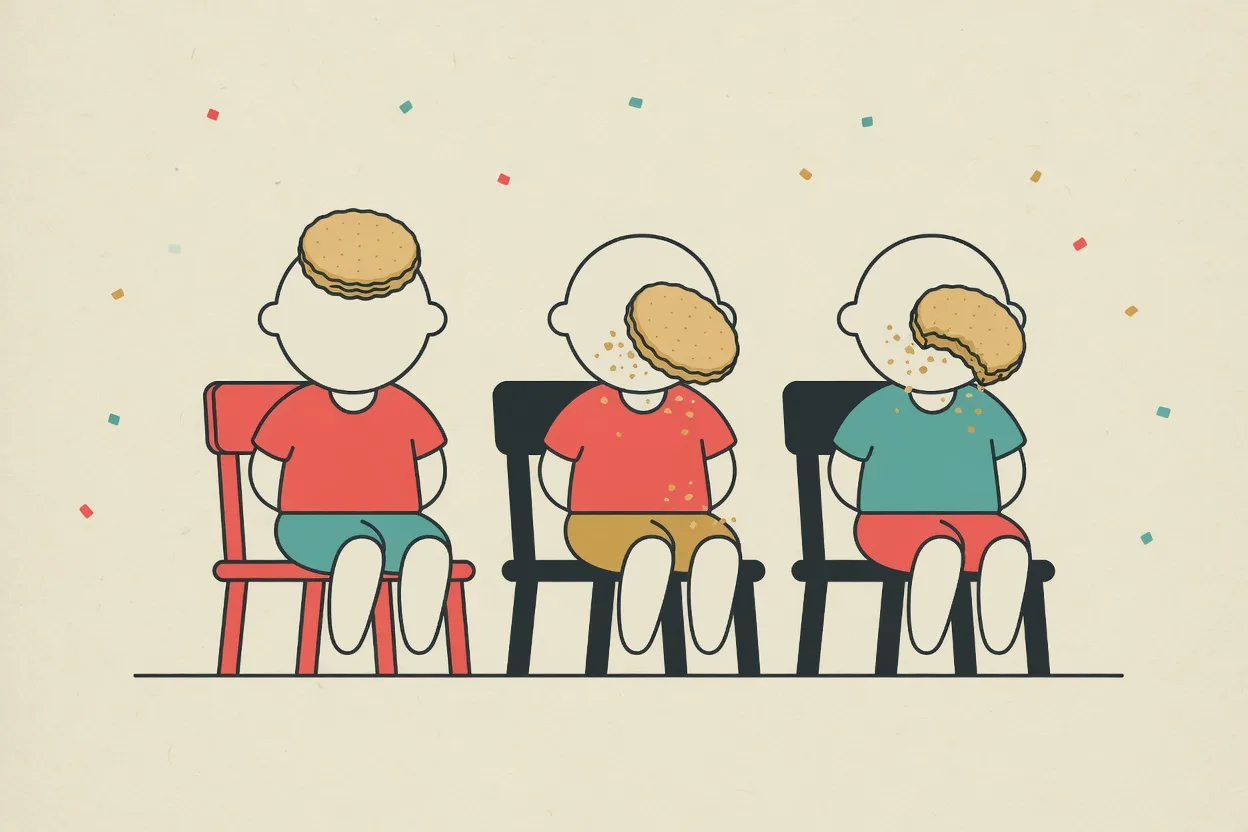
Cookie Face
Six is the starting age for this one, once a child can manage a mouthful of cookie unsupervised, and it's one of the best spectator games there is: children who've had their turn will happily watch the next four or five heats. Use a plain, sturdy cookie, nothing crumbly and nothing with nuts, and keep an adult close by.
Full rules and variations for cookie faceFrequently asked questions
- What games can 6-year-olds play at a birthday party?
- Six is the age team games start: steal the bacon, a short tug of war, a relay and a three-legged race all work. Mix them with musical chairs, a riddle treasure hunt and pass the parcel so the party isn't all running.
- Are 6-year-olds old enough for team games?
- Yes. Six is the starting age for most of the team games in our library, including steal the bacon, capture the flag and tug of war. Keep teams small, four to six a side, and balance them by speed and size rather than letting the children pick.
- How do you stop arguments during games at a 6-year-old's party?
- Settle the rules out loud before the first round, not after the first dispute. Say what counts as a tag, who runs on a tie and how teams are picked, keep one adult as the referee, and don't reopen a call once it's made.
- Is elimination okay for 6-year-olds?
- Usually, in short games. Six-year-olds can handle being out of musical chairs or freeze dance, but for Simon says and hot potato our guides still recommend a forfeit instead of sitting out until about seven.
Planning the whole birthday? More ideas for a 6th birthday
Sorting the venue too? 12 Kids Birthday Party Places in Chicago (2026)