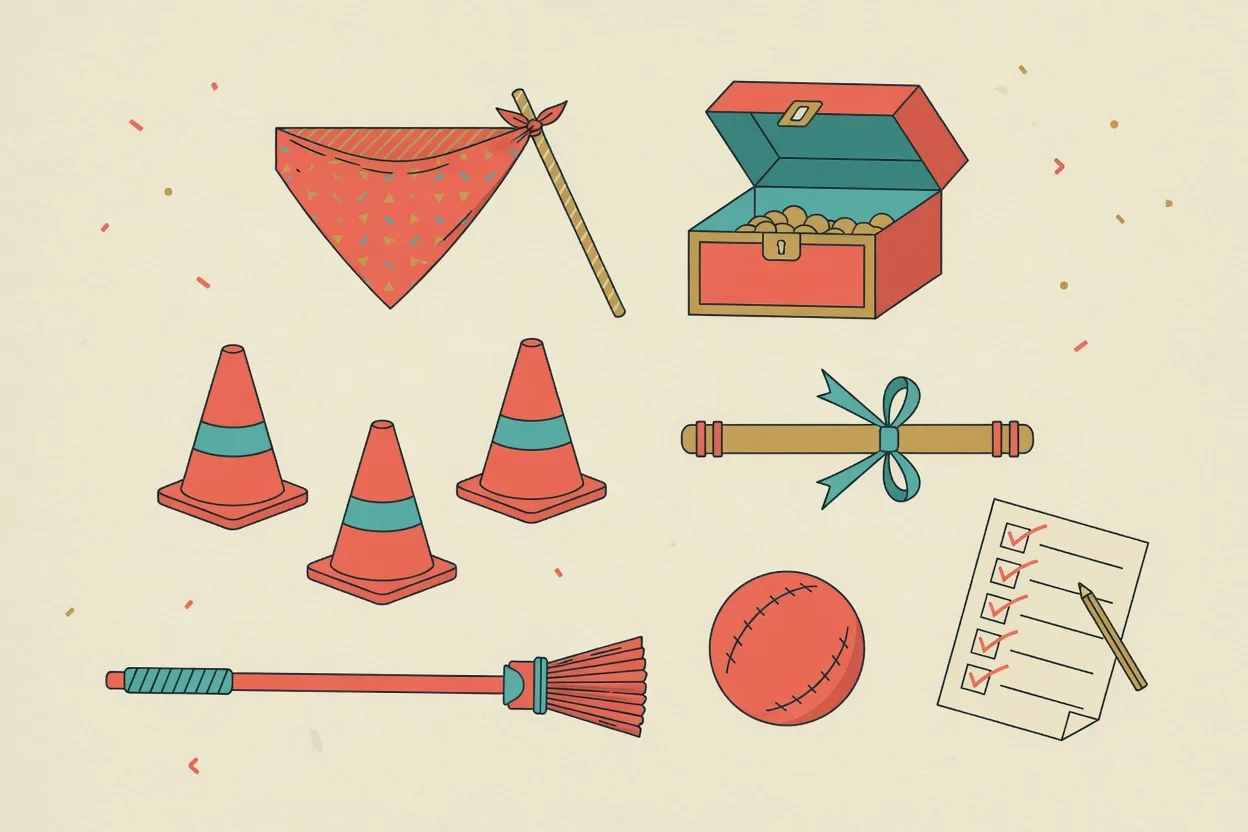

Nine-year-olds don't only want to play the game; they want to run it. Give a nine-year-old the caller's job in red light, green light, the fox in Mr. Fox, the clue-writing for the treasure hunt or the stopwatch for the obstacle course, and the same game suddenly feels a year older. It's the simplest way to keep a party from feeling like it was planned for their younger siblings.
That doesn't mean stepping back entirely. Your job shifts from running the games to setting them up safely and settling disputes: you test the obstacle course before anyone runs it, you keep the final say on tags and ties, and you rotate the caller every round or two so nobody holds the power too long. Nine is also the age several games in this library open their hardest version — puzzle clues instead of riddles, the ten-cup stack, heats and a proper final — so lean on those.
For a group that mostly wants head-to-head competition, party games for 8-year-olds is built around winning; for one that's already calling the classics babyish, party games for 10-year-olds has the older-kid upgrades.
Games a nine-year-old can call
Run the first round of each yourself, then hand the role to a child and stay close enough to settle the close calls.
Red Light Green Light
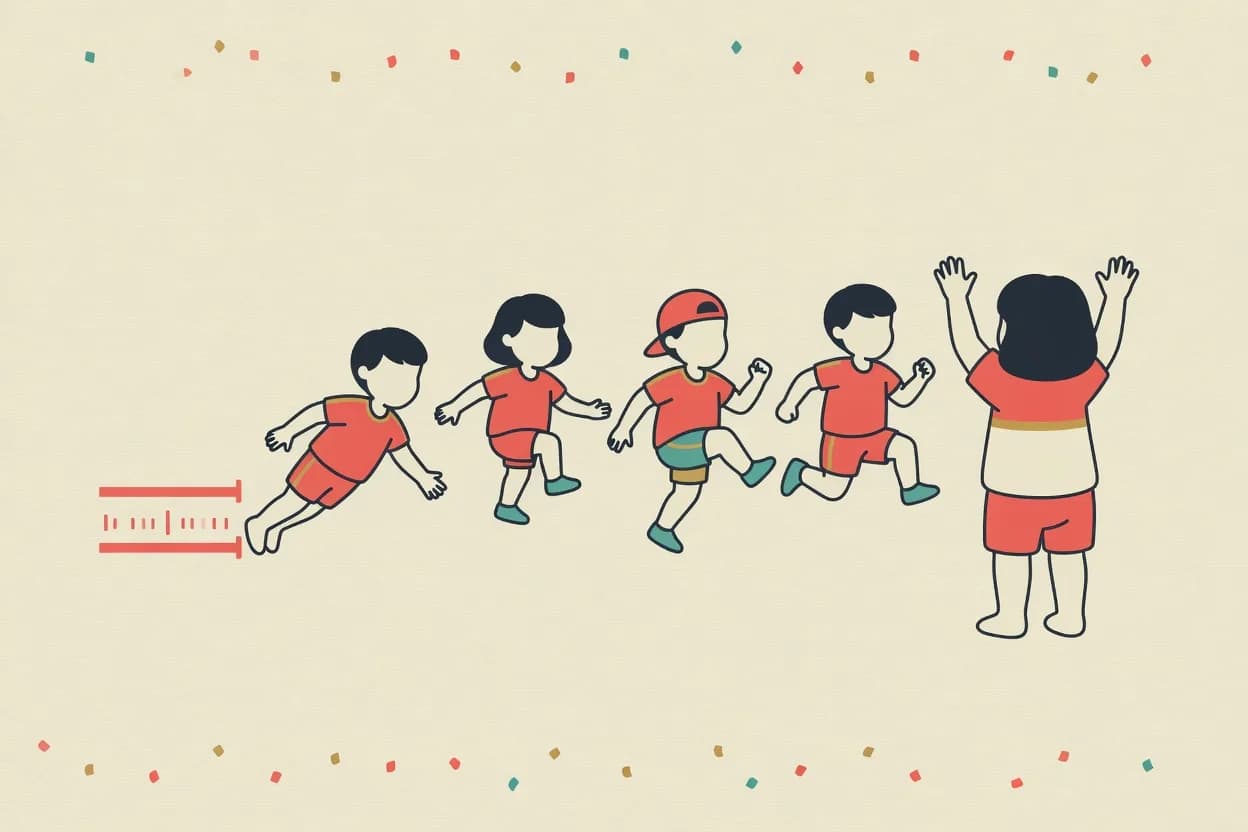
An adult is the best caller for the first few rounds; after that, rotating the job is the single best fix for the game's usual argument, because a child who has stood at the front and made a few calls accepts being sent back far more easily. Try the silent version written for eight and up, where the caller uses hand signals instead of shouting, and give it at least fifty feet between the lines.
Full rules and variations for red light green light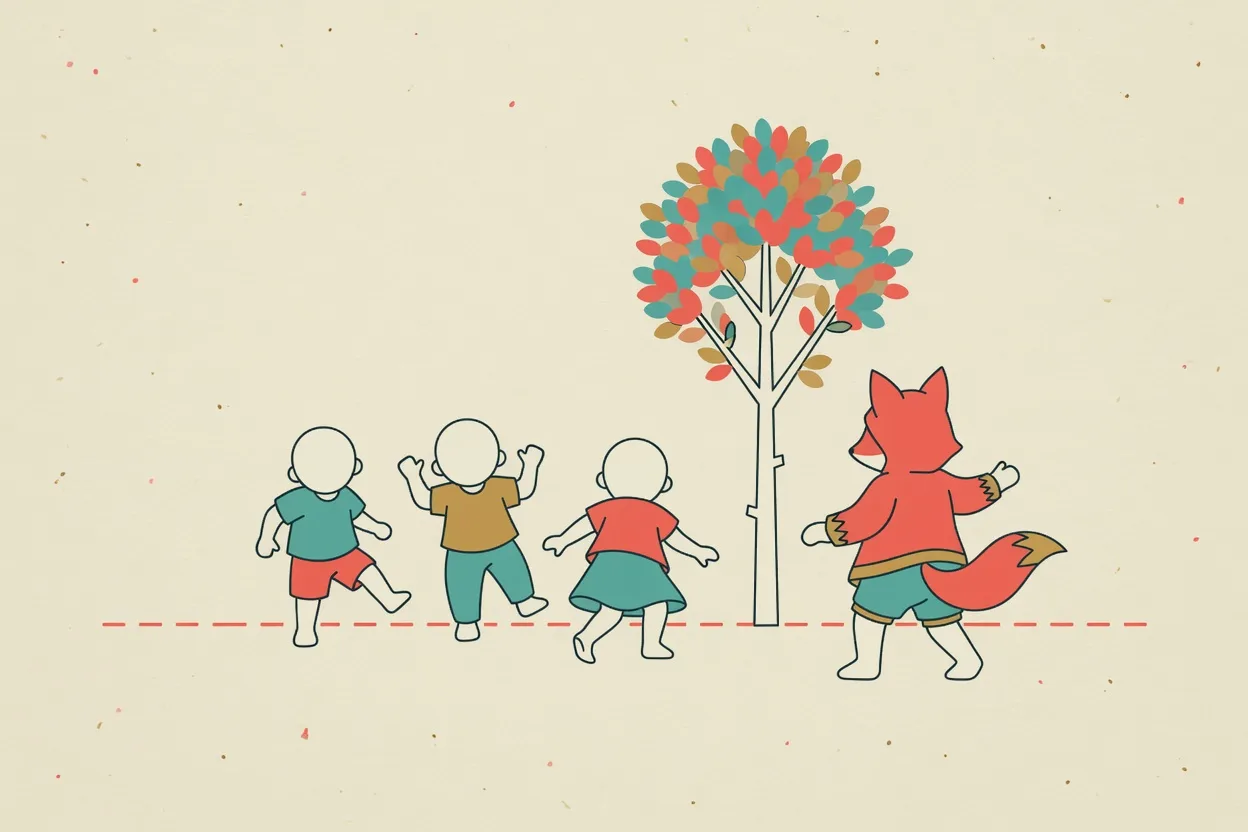
What's the Time, Mr. Fox
Nine is the top of this game's listed range, which makes it a good one to hand over: let a child be the fox and play the suspense, a cautious one o'clock and then a big nine o'clock, before springing the dinner-time chase. Players this age soon work out that adding up the fox's answers tells them roughly how close they've crept, which is a nice bit of math nobody notices they're doing.
Full rules and variations for what's the time, Mr. Fox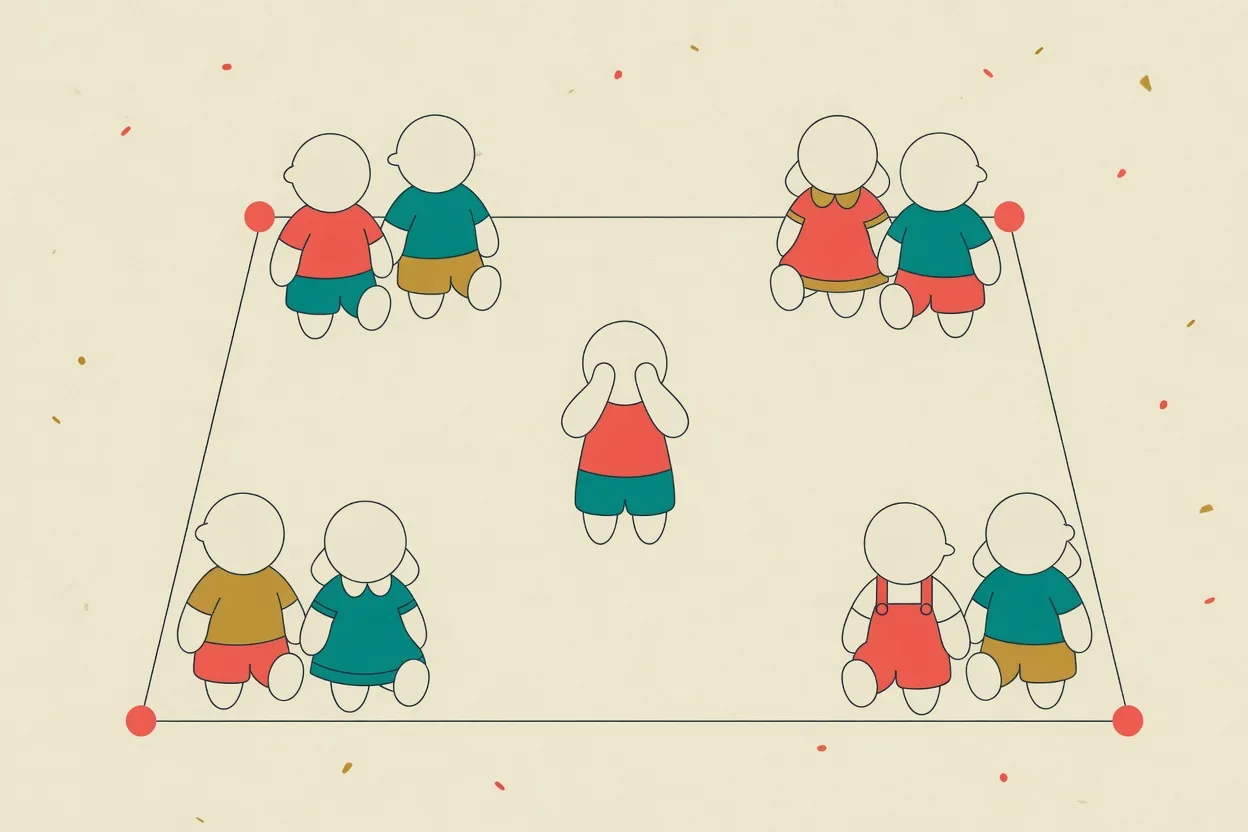
Four Corners
Any child can be 'it' here, because the caller keeps their eyes shut and calls a corner blind, so nobody can claim favoritism. Nine-year-olds genuinely strategize about which corner to risk, and if the room feels too small for a real dash, take it outside with four cones, the giant-corners version the guide gives for eight and up.
Full rules and variations for four corners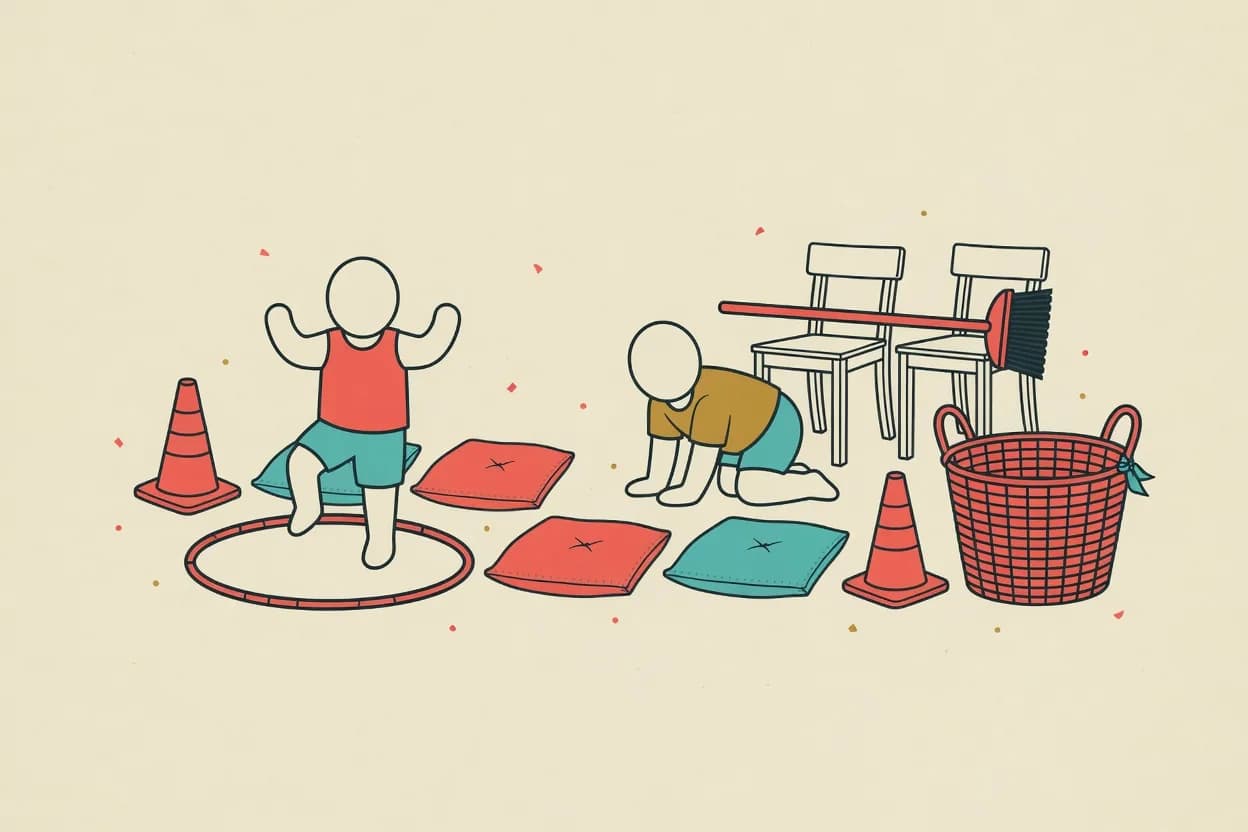
An Obstacle Course
Let the children design it — six to eight obstacles from whatever's in the yard: a hoop to jump into, cones to weave through, a broom across two chairs to crawl under — then test every obstacle yourself before anyone runs it. The guide's course for six- to nine-year-olds is timed one child at a time, which gives a nine-year-old timekeeper a real job and turns the results into a leaderboard.
Full rules and variations for an obstacle coursePuzzles, trails and prompts
Nine-year-olds can read, reason and write, so these games can finally ask them to — including writing the clues and prompts for each other.
Treasure Hunt
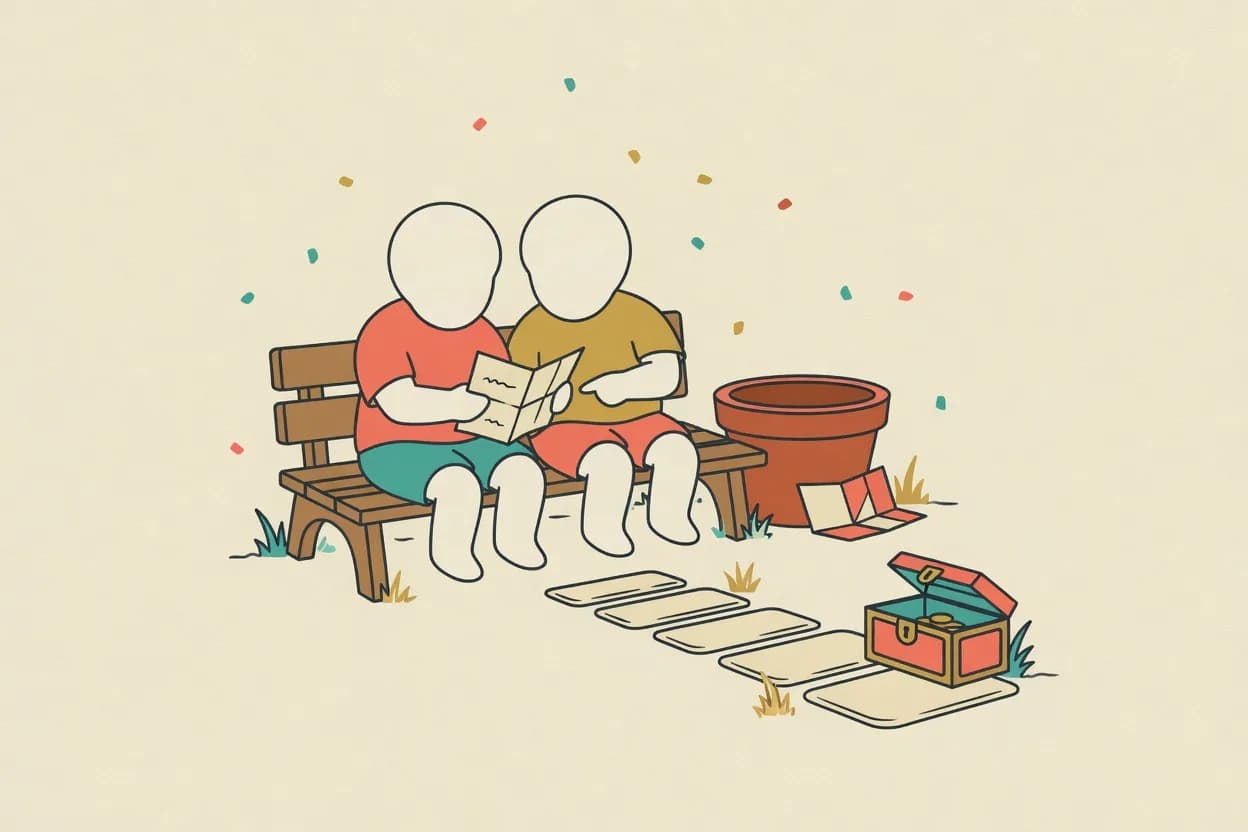
Nine is where the guide moves from riddles to real puzzles, like a simple cipher or a clue that needs two numbers added up, and to trails of ten hops or more. One twist that suits this age: split into two teams, give each fifteen minutes to write and hide a five-clue trail for the other, then swap. Or try the map version, a rough hand-drawn map instead of clues, which the guide pitches at nine- and ten-year-olds.
Full rules and variations for treasure hunt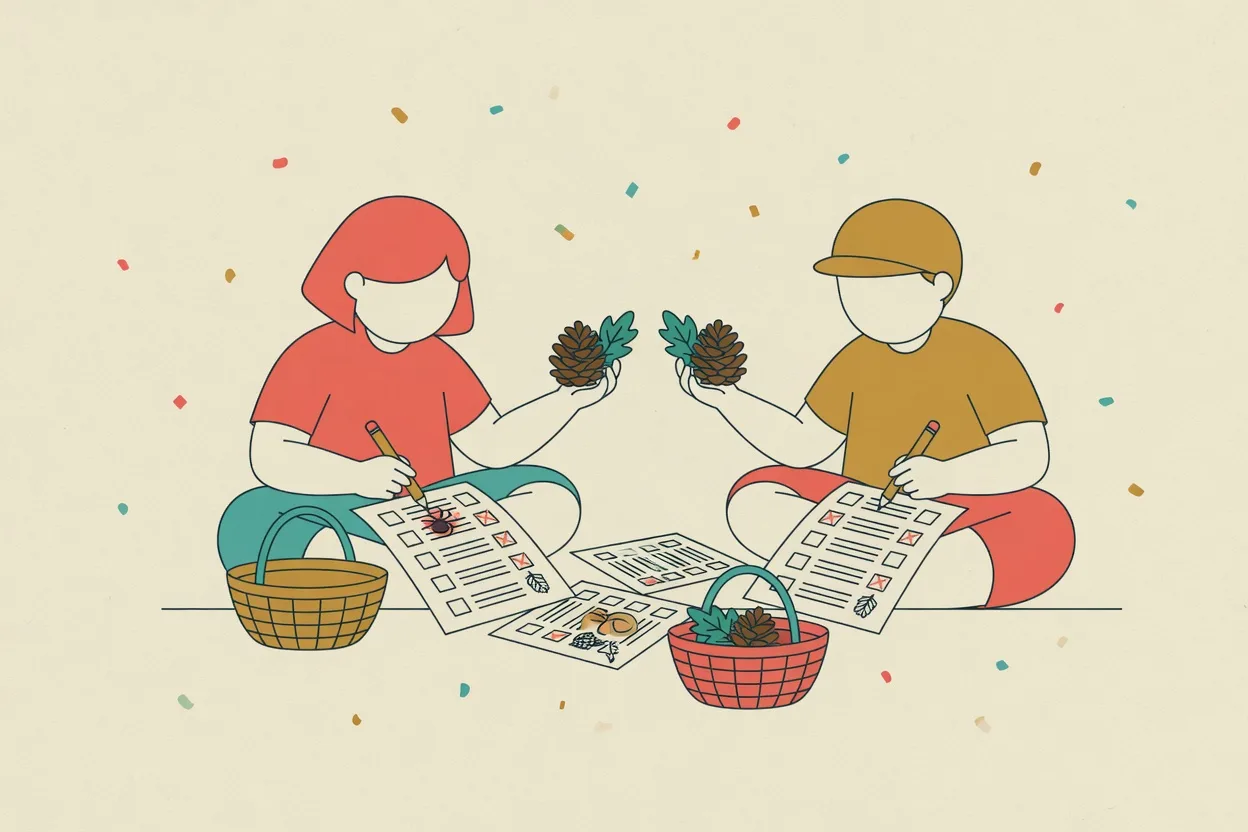
Scavenger Hunt
Go up to fifteen items, mixing easy finds with a couple of properly tricky ones, and set a firm time limit so it doesn't drag on with one child still hunting alone. The photo version, written for eight and up, has each team photograph items where they find them instead of collecting them, which is kinder to flowers and insects and gives one child per team the photographer's job.
Full rules and variations for scavenger hunt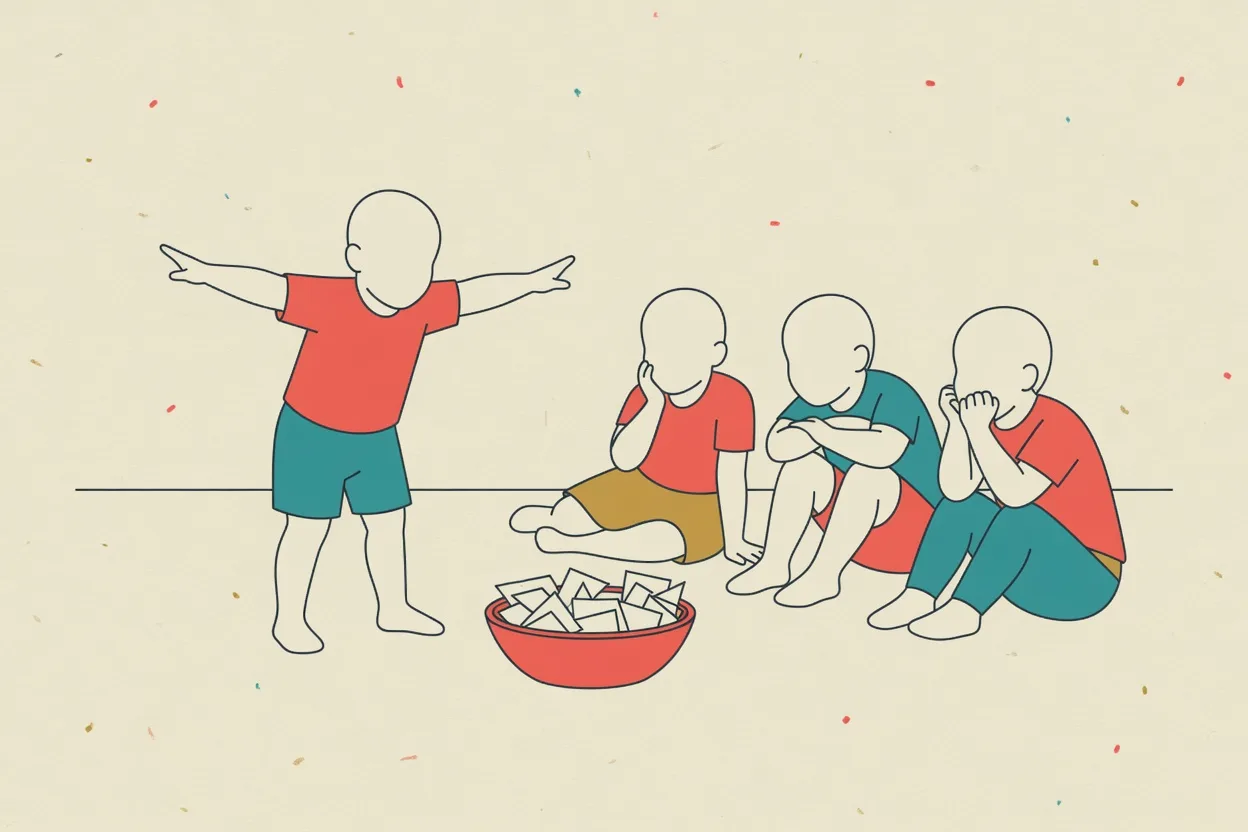
Charades
A nine-year-old wants movie titles and jobs, not animals, so write the prompts before the party, ten to fifteen of them, and stick to things the whole group has actually seen. Once they know the standard game, switch to reverse charades: the whole team acts out the prompt together while one player guesses, which is very funny with six or more.
Full rules and variations for charadesHeats, finals and scores worth keeping
A running total across a few games gives a nine-year-old's party a shape. Put one child in charge of the scoreboard, and the final round actually means something.
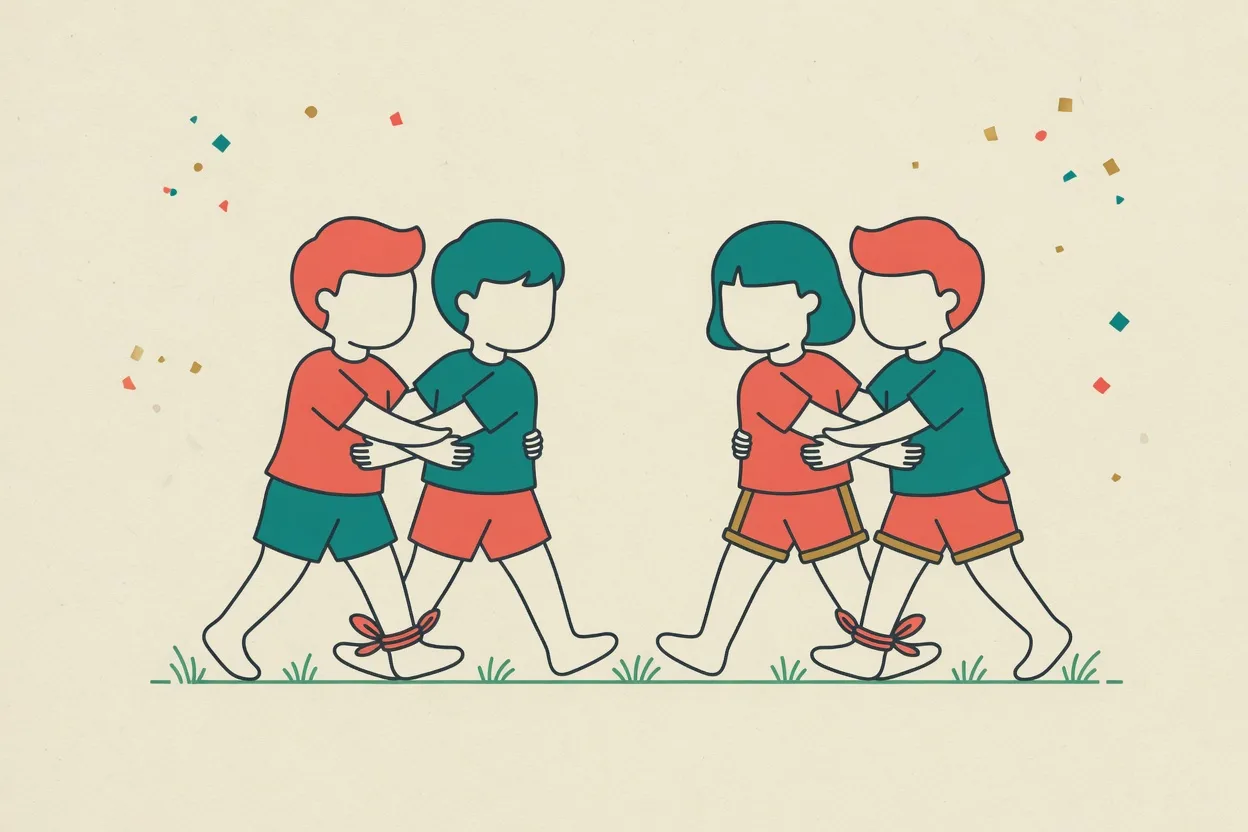
Three-Legged Race: Rules, Setup & Winning Technique
The guide's own line is that from nine up, the counting rhythm turns this into a properly competitive race worth running heats and a final for. Give every pair two minutes to practice stepping off with the tied legs and calling the beat together before the first heat. Tie at the ankle; a second tie above the knee is only for pairs who've already mastered the ankle version.
Full rules and variations for Three-Legged Race: Rules, Setup & Winning Technique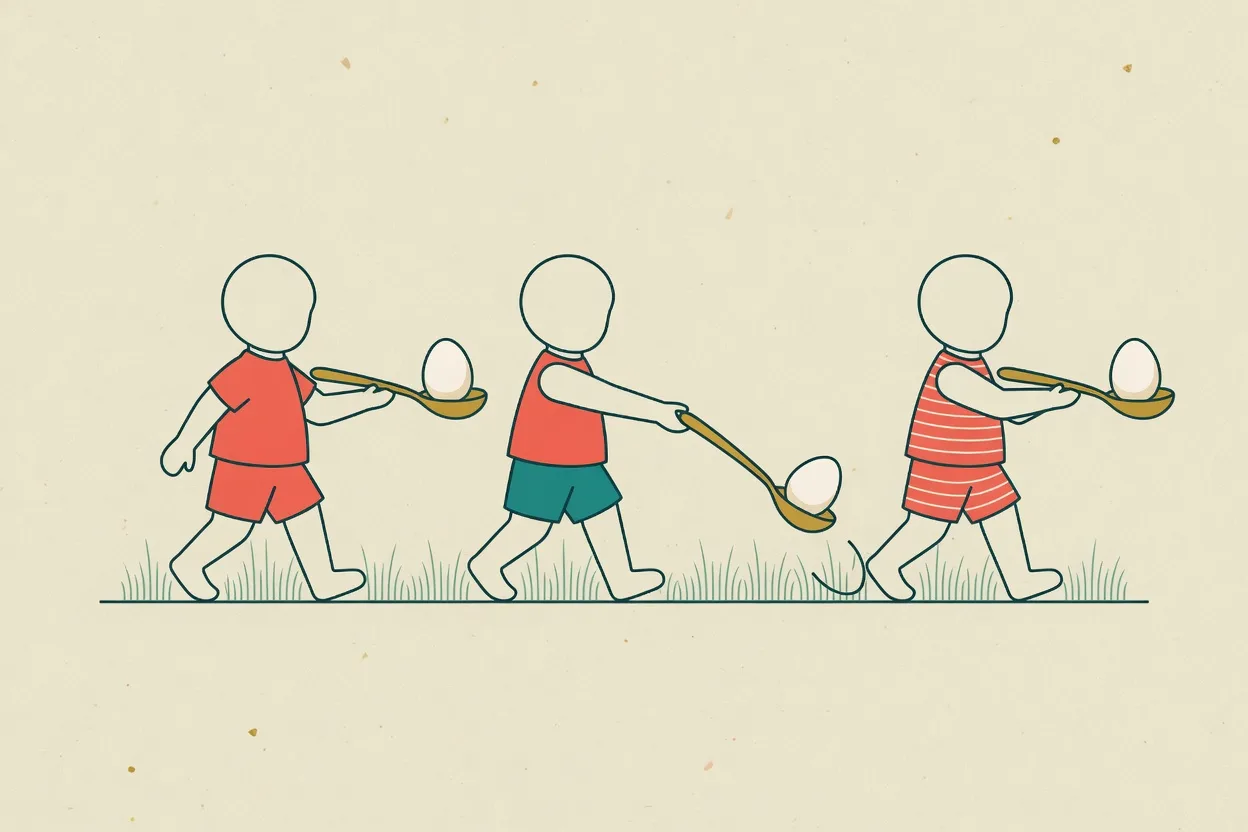
Egg and Spoon Race: Rules, Technique & Variations
A straight walk with an egg is too easy by nine, so take one of the guide's upgrades: obstacles, a relay handover, or the spoon held in the mouth, which is strictly for confident children eight and up with an adult watching closely. A quick, smooth walk still beats a sprint, which bounces the egg off within a few strides.
Full rules and variations for Egg and Spoon Race: Rules, Technique & Variations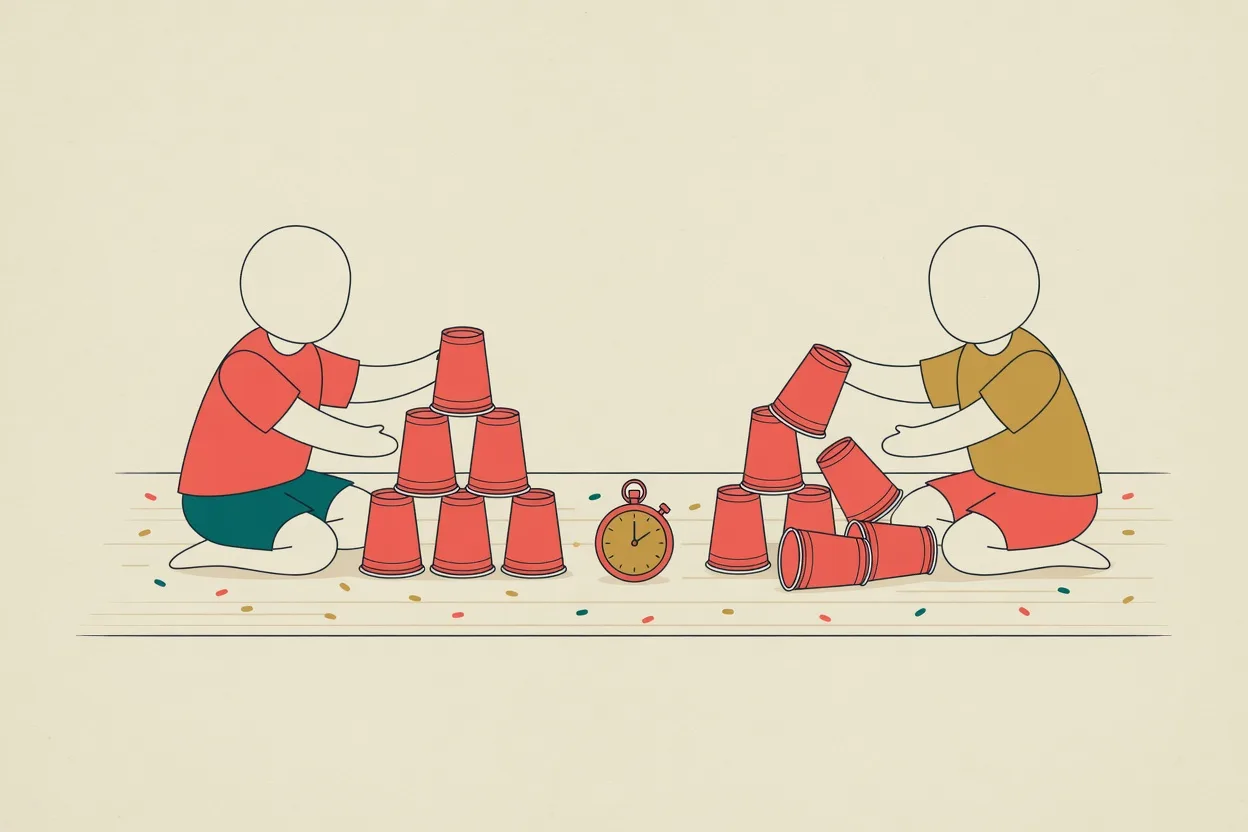
Cup Stacking
Step up to the ten-cup cascade the guide gives for nine and up — four, three, two, one. Give everyone one practice stack before the clock starts, since first attempts often take two or three times as long, then run it as a head-to-head bracket with a child on the stopwatch.
Full rules and variations for cup stacking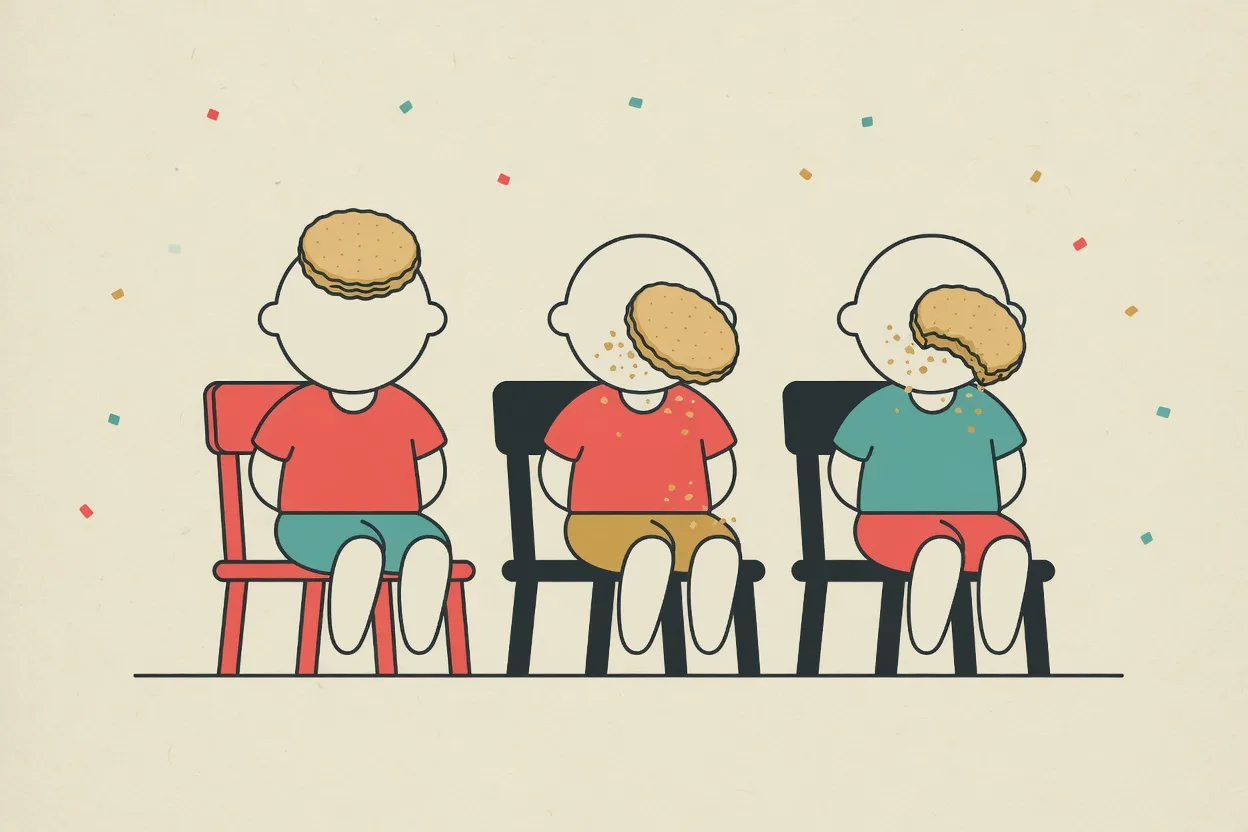
Cookie Face
Run proper heats, then save the guide's joke final for nine and up: a loose blindfold on top of the no-hands rule, purely for comedy, since nobody can see the cookie slipping anyway. At about thirty seconds a turn, it's a quick change of pace between bigger outdoor games.
Full rules and variations for cookie face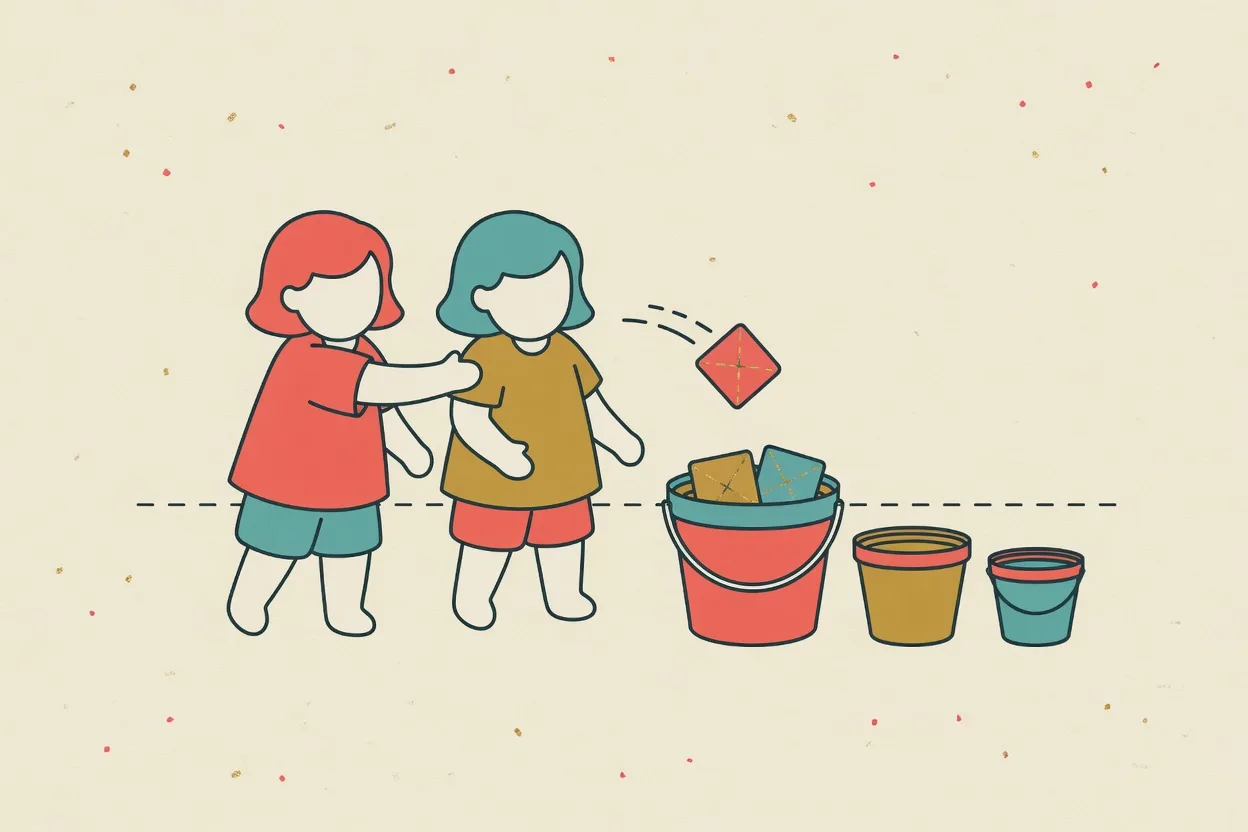
Bean Bag Toss
Give each hole or bucket a points value and keep a running total across two or three rounds, which is fairer to a child who had one unlucky round and gives the scorekeeper a real job. For a group that finds a fixed target too easy, use the moving target from the guide: roll a hula hoop along the ground and try to land a bag through it as it goes.
Full rules and variations for bean bag tossFrequently asked questions
- What games can 9-year-olds play at a birthday party?
- Games they can partly run themselves work best: red light, green light with a child calling, four corners, a puzzle treasure hunt and timed heats like cup stacking. Add one bigger team game if you have the space.
- How do you keep 9-year-olds from calling party games babyish?
- Give them a role and the harder version. A nine-year-old calling red light, green light or timing the obstacle course is getting something younger guests don't, and most classics have an older-kid version: puzzle clues, a ten-cup stack, a blindfolded final.
- Should 9-year-olds referee their own games?
- Partly. Let a child call or time a game once an adult has run the first round, but keep the final say on tags, ties and safety with an adult, and rotate the caller every round or two.
- How do you keep score across games at a 9-year-old's party?
- Use a simple running total across three or four games: three points for a win, two for second, one for everyone else who finishes. Put one child in charge of the scoreboard, and make the last game worth double so the final still matters.
Planning the whole birthday? More ideas for a 9th birthday
Sorting the venue too? 10 Kids Birthday Party Places in San Diego (2026)