

A toddler party runs on a different clock from the rest of this library. Ninety seconds is a genuine attention span, sitting still is a skill rather than a rule, and being told you're out lands as a real disappointment rather than a shrug. None of that means a two- or three-year-old can't play party games — it means the games have to be chosen for that age, not just scaled down from whatever works for a six-year-old.
The fix, almost every time, is elimination. Nearly every classic on this list has a version where nobody sits out — musical chairs becomes cushions on the floor, musical statues becomes musical bumps, pin the tail loses its blindfold for a promise not to peek — and at this age, that version is usually just the better game, not a consolation prize. The other constant is you: toddlers play best with an adult inside the circle rather than refereeing from the sofa, so budget for that rather than expecting to run any of this hands-off.
What follows is grouped by how much elimination they've already had swapped out, ending with a handful that work well but are worth a grown-up standing close by — and once the group skews a little older, our party games for 5-year-olds picks up from exactly here.
The no-elimination classics
These are the ones where elimination has already been swapped out, not just softened — nobody sits and watches.
Musical Chairs
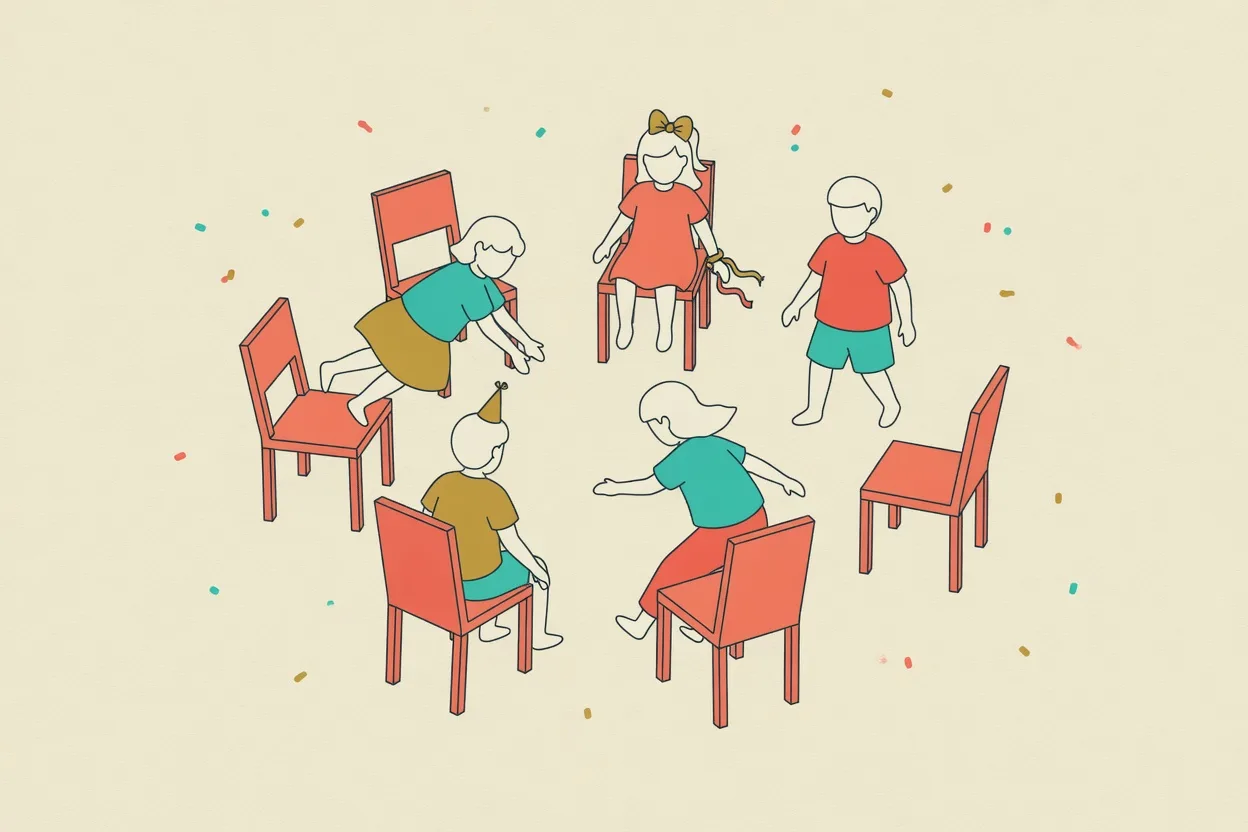
Skip the chairs entirely and swap in floor cushions or a chalk circle — nobody can trip over a cushion or tip one up, which is the version worth running with three- and four-year-olds. Even better, play the 'nobody out' variation: a chair disappears each round but nobody actually leaves the game, so the round ends in a giggling pile-up instead of a line of children watching from the sofa.
Full rules and variations for musical chairs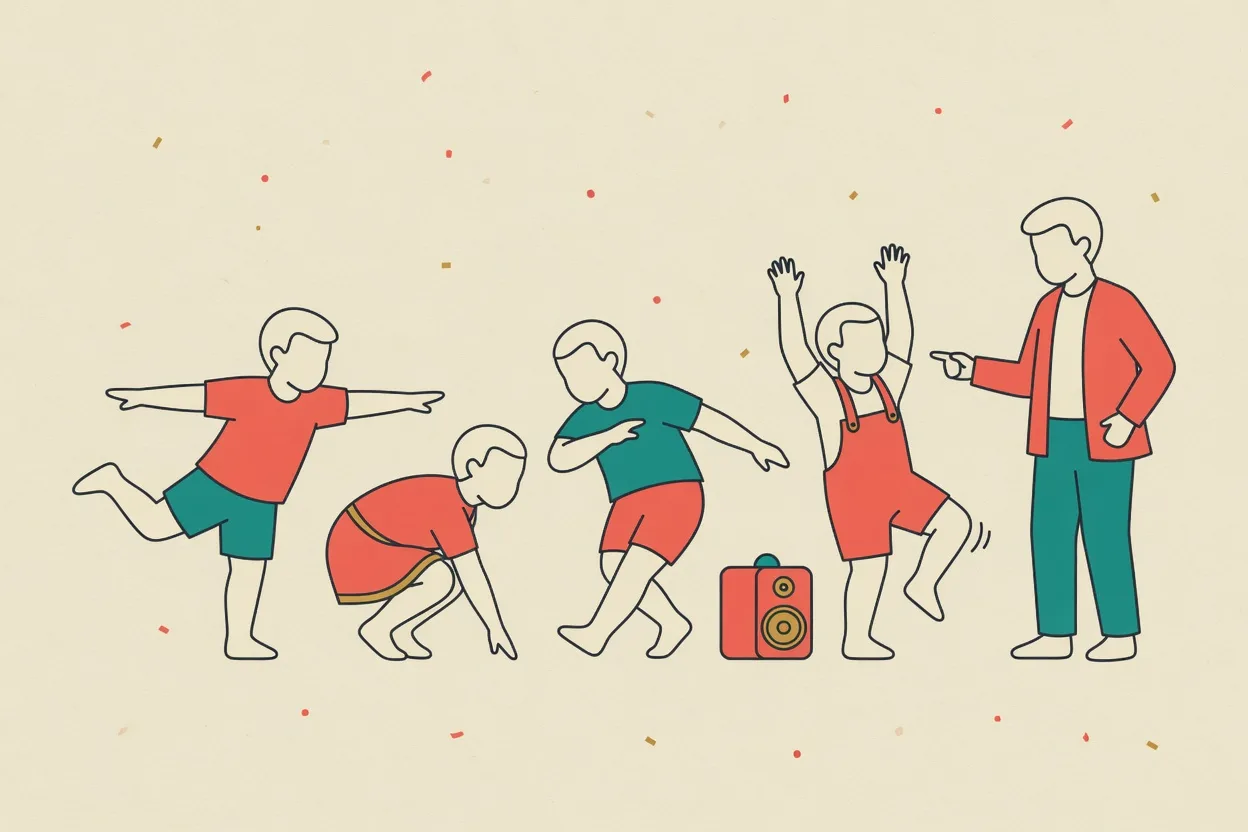
Musical Statues: Rules, Fair Judging & Playlist
Musical bumps — sit down as fast as you can when the music stops, instead of freezing — asks for an instruction a toddler can actually follow. Freezing completely still is a genuinely hard skill at this age; sitting down is not, which is why the no-elimination version, where a moving child collects a sticker and keeps dancing, is the one to run first.
Full rules and variations for Musical Statues: Rules, Fair Judging & Playlist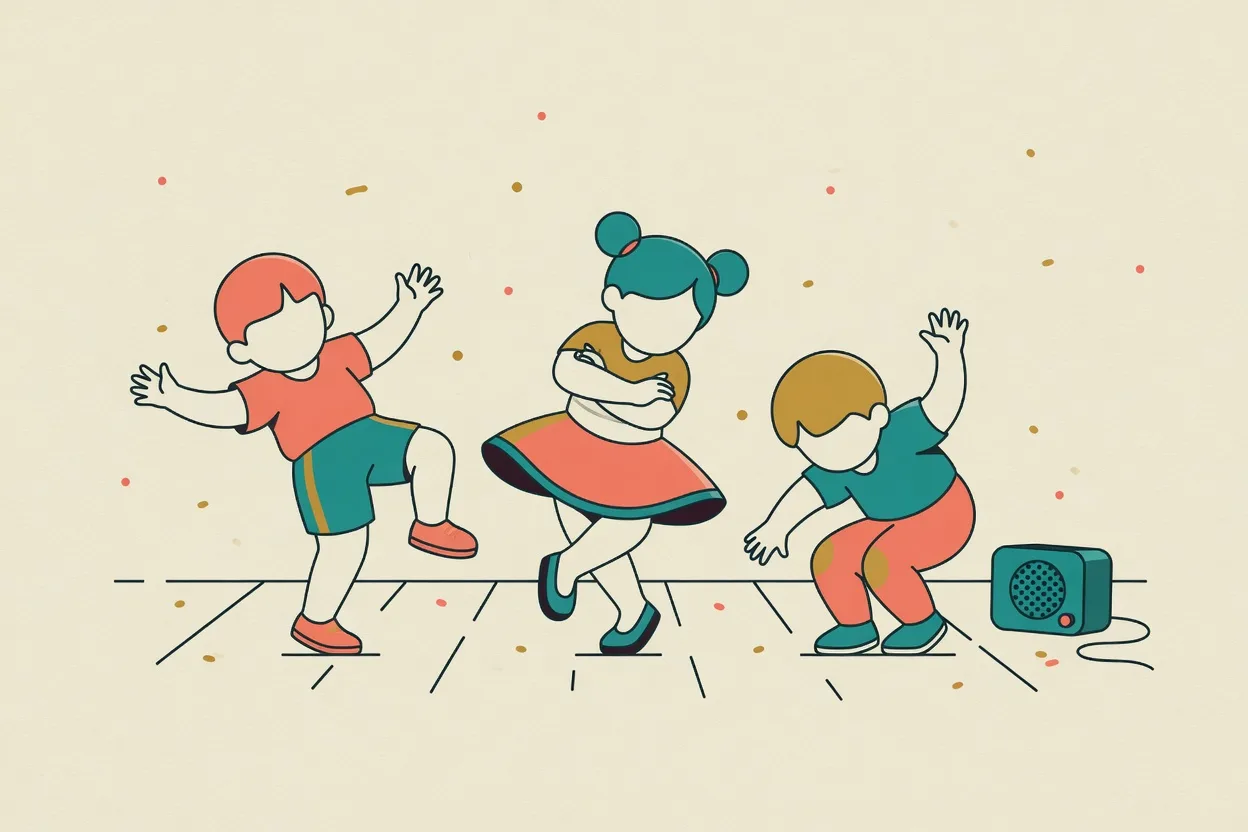
Freeze Dance
The no-elimination version is the one that works: nobody goes out, a wobble just earns a silly forfeit and the dancing carries on. It needs a speaker and a bit of clear floor and nothing else, so it's the game to reach for the moment a toddler group needs five minutes of running the wiggles out.
Full rules and variations for freeze dance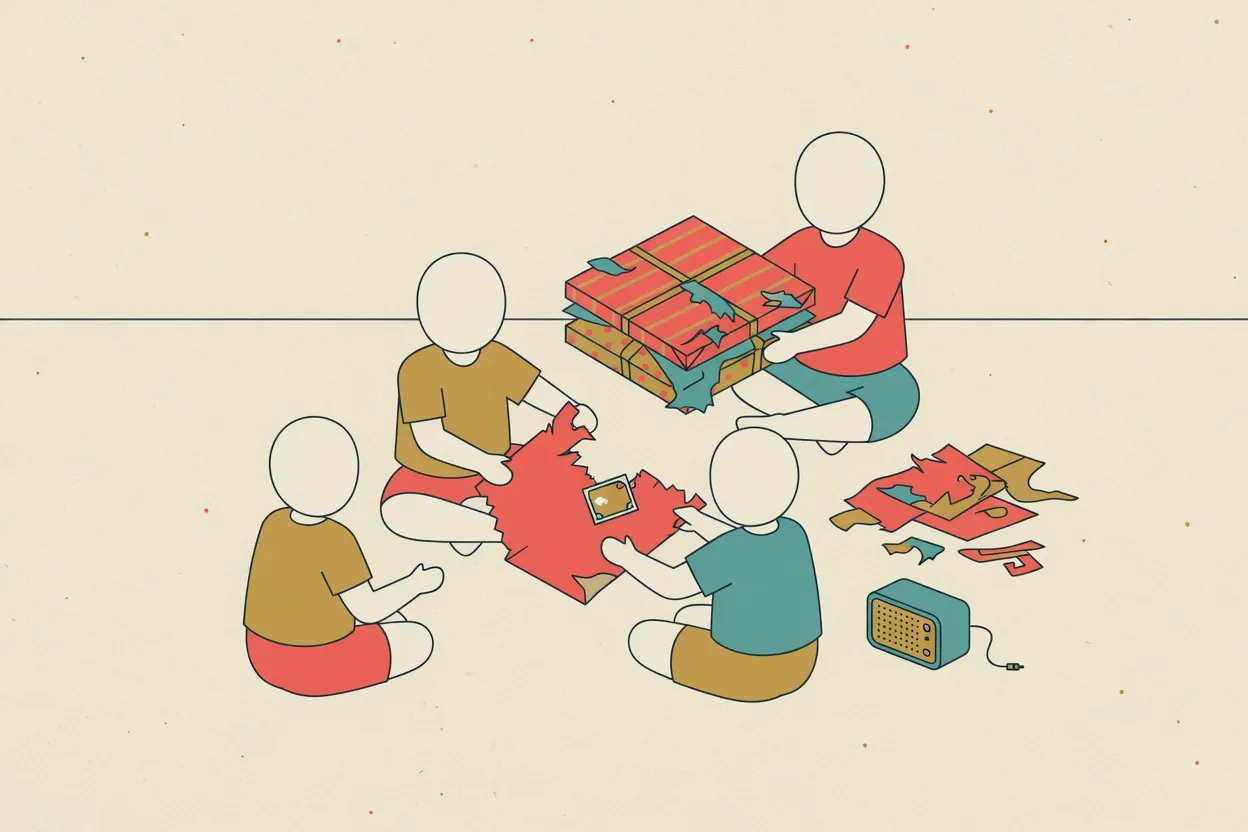
Pass the Parcel
Skip counting layers per child and just make sure everyone gets a turn holding the parcel, prize inside or not — the passing and the tearing is the entire appeal at this age, and a strict one-layer-per-child rule just means somebody never gets a turn. Wrap generously and slow the music right down so small fingers have time to actually get the paper off.
Full rules and variations for pass the parcel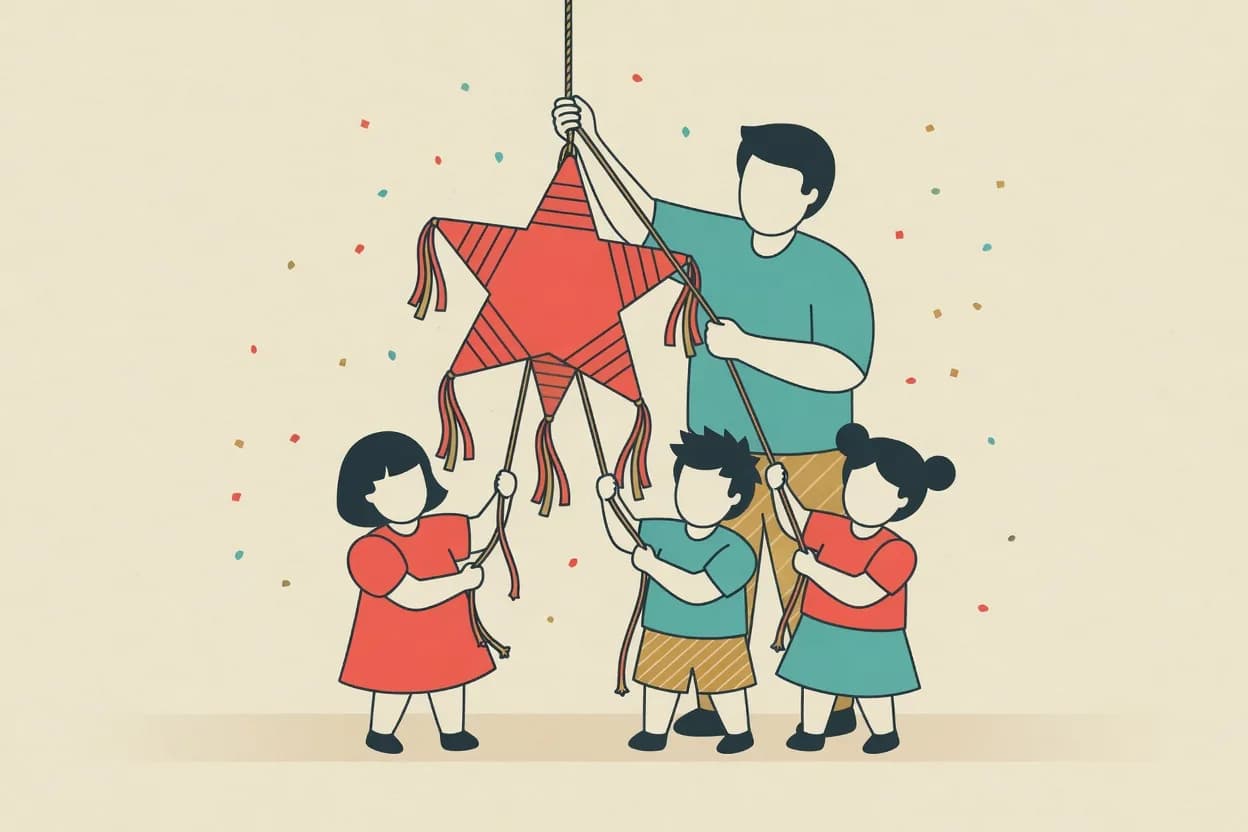
Piñata
Swap the stick for the rope-pull version: tie four to six ribbons to the base, rig one to release it, and let each child pull one in turn. No swinging near anyone's head, no blindfold, and a two-year-old can pull a ribbon exactly as well as an eight-year-old can — it's the only version of this game genuinely built for the age group.
Full rules and variations for piñataSimple enough to need no explaining
Almost nothing to set up, and a rule short enough to say once.
Follow the Leader
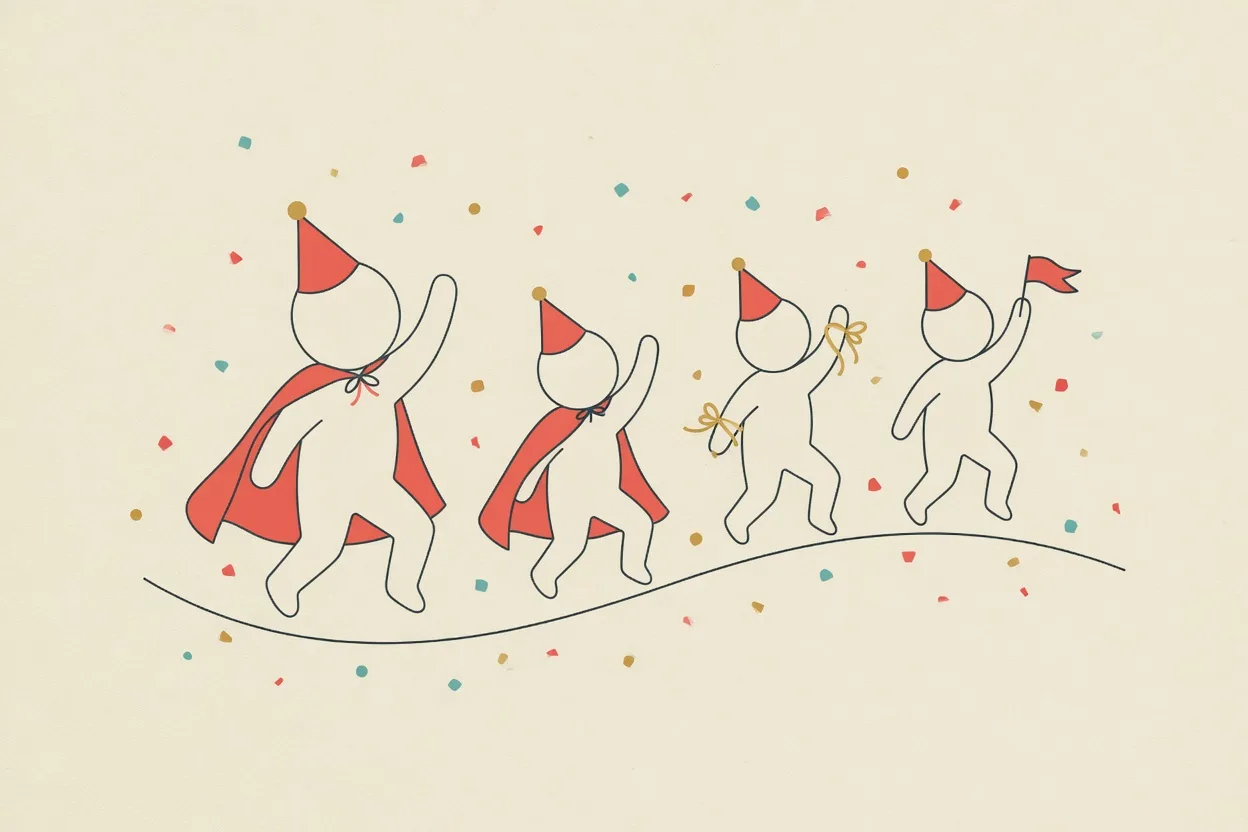
Nothing to explain beyond 'copy me' — a toddler picks up the format from watching a confident adult lead the first lap, and there's no equipment, no scoring and no way to be out. Keep each turn at the front short, since the line only holds together for a minute or so before someone at the back wanders off to look at something else.
Full rules and variations for follow the leader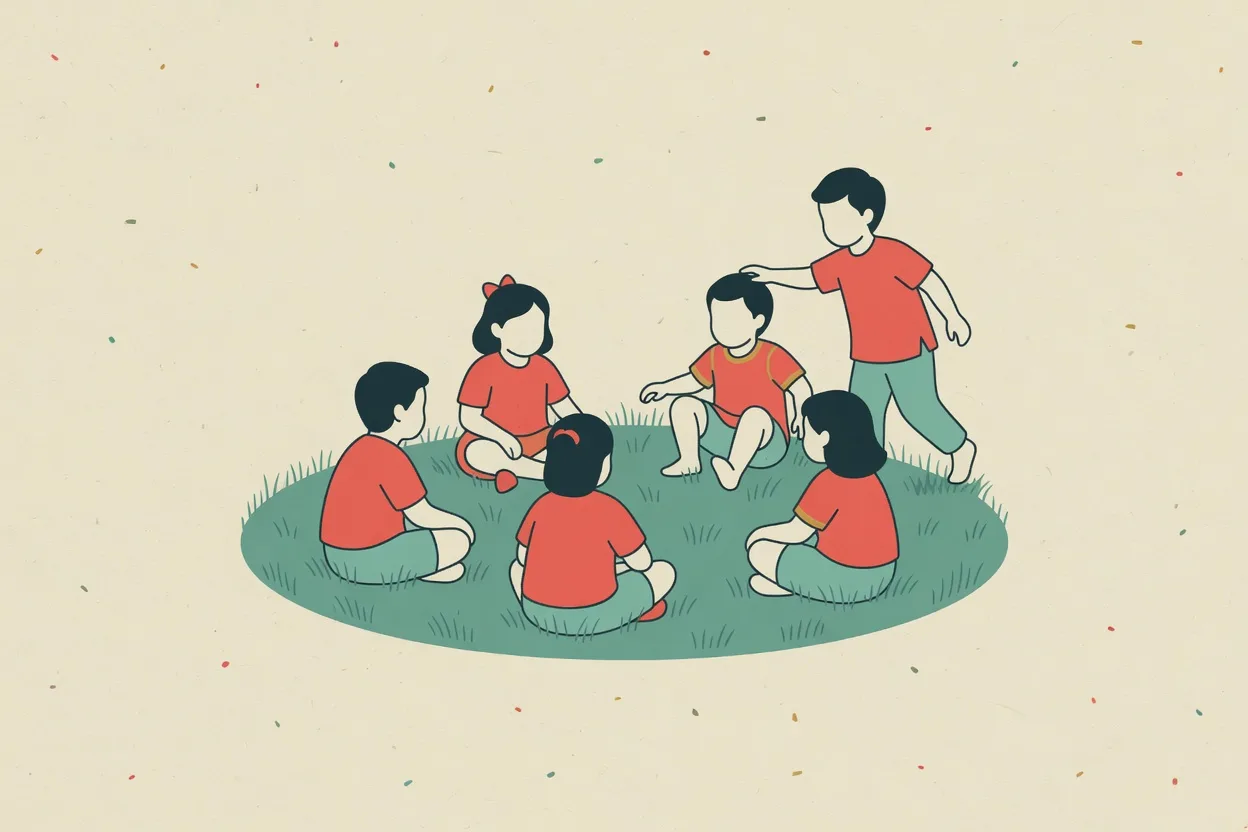
Duck Duck Goose
A tap, a name, and a short chase around a small circle — the whole game is one lap, so keep the ring itself to eight or so children rather than letting it sprawl. The one thing worth fixing before you start: agree that whoever's tapping has to go all the way around once before repeating anyone, or a quiet child at the end of the row can go the whole game without ever being picked.
Full rules and variations for duck duck goose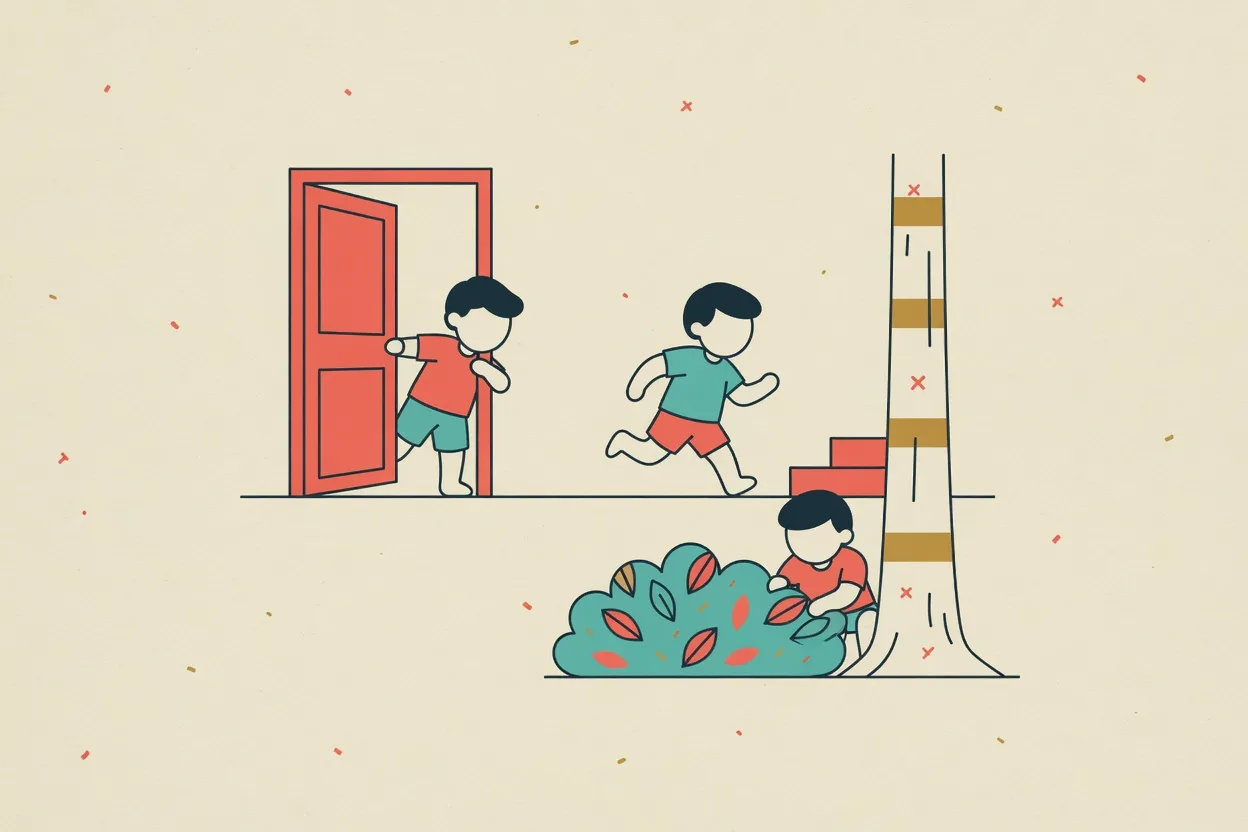
Hide and Seek
Works from about three with an adult nearby to remind them where home base actually is. Keep the boundary small and obvious — a single room rather than a whole house — and count short, since a long wait with nothing to do is exactly when a young seeker starts peeking anyway.
Full rules and variations for hide and seek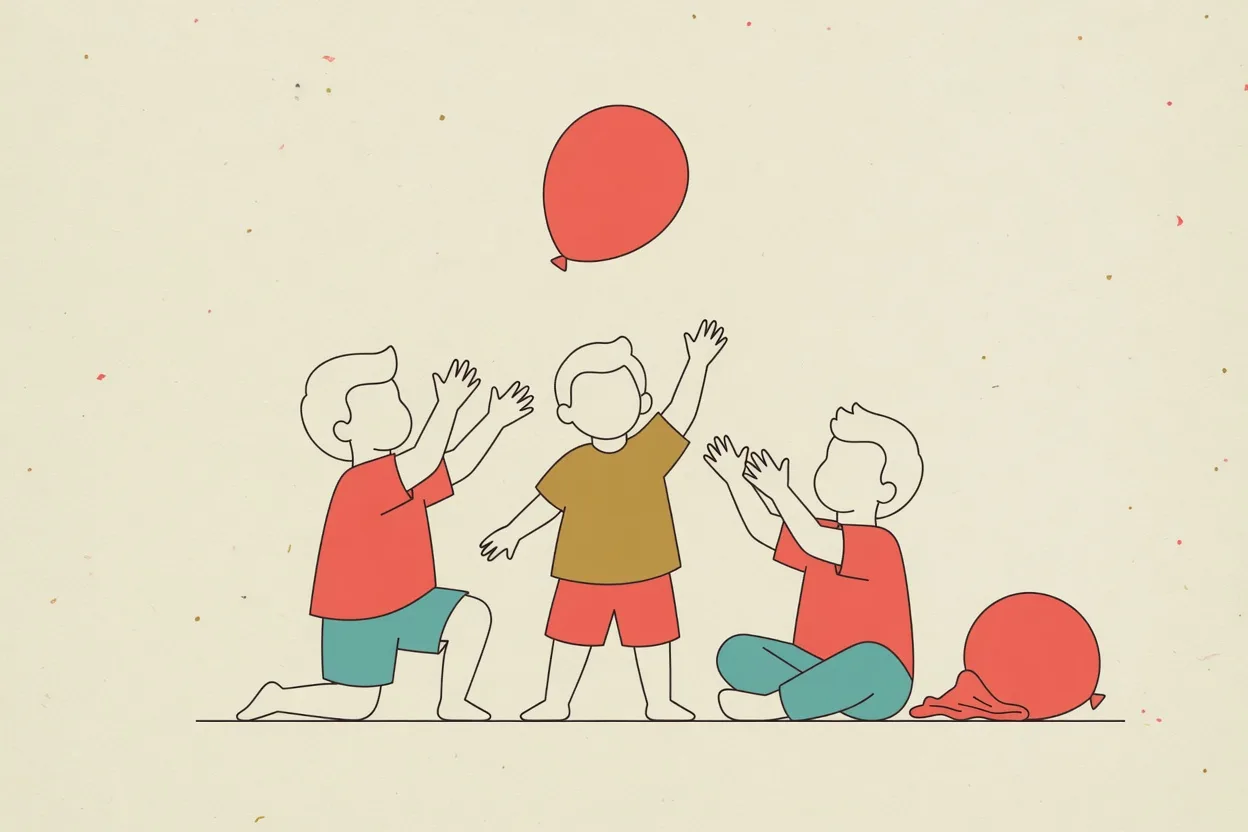
Keep the Balloon Up
One balloon, a rough circle, and a shared count out loud every time someone touches it — there's no elimination built in at all, which makes it one of the few games on this list that's no-elimination by default rather than by variation. It also does something unusual for a party game: it tends to calm an overexcited room down rather than wind it up further.
Full rules and variations for keep the balloon upWorth trying, with a grown-up close by
These ask a little more — of the child, or of the adult standing next to them — so treat the age notes below as real, not decorative.
Balloon Stomp
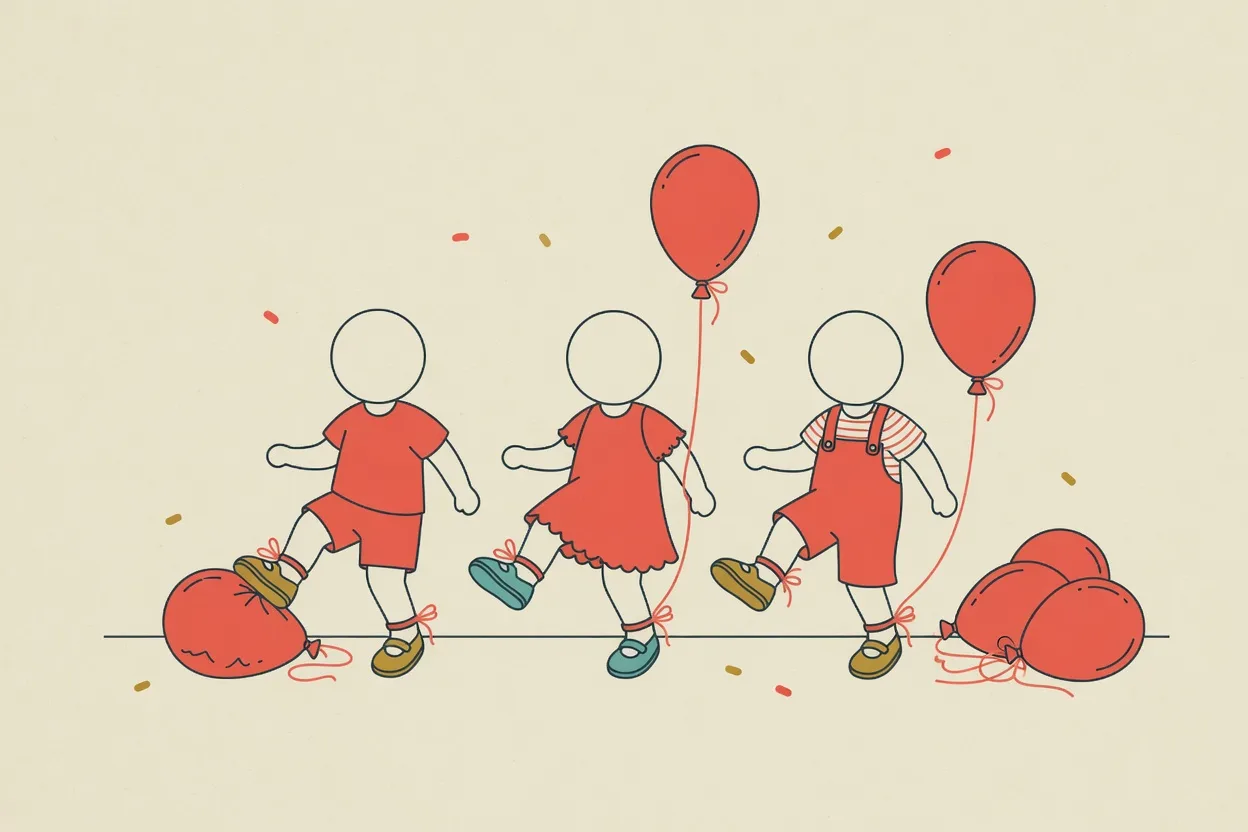
Use the gentle, no-elimination version: tie one balloon to each ankle, let everyone try to pop everyone else's, and when a child's balloon goes they just tie on a fresh one from the spares pile rather than sitting out. It's loud, it's fast, and the whole skill is in the tying rather than the playing, which suits a grown-up who wants a real job to do.
Full rules and variations for balloon stomp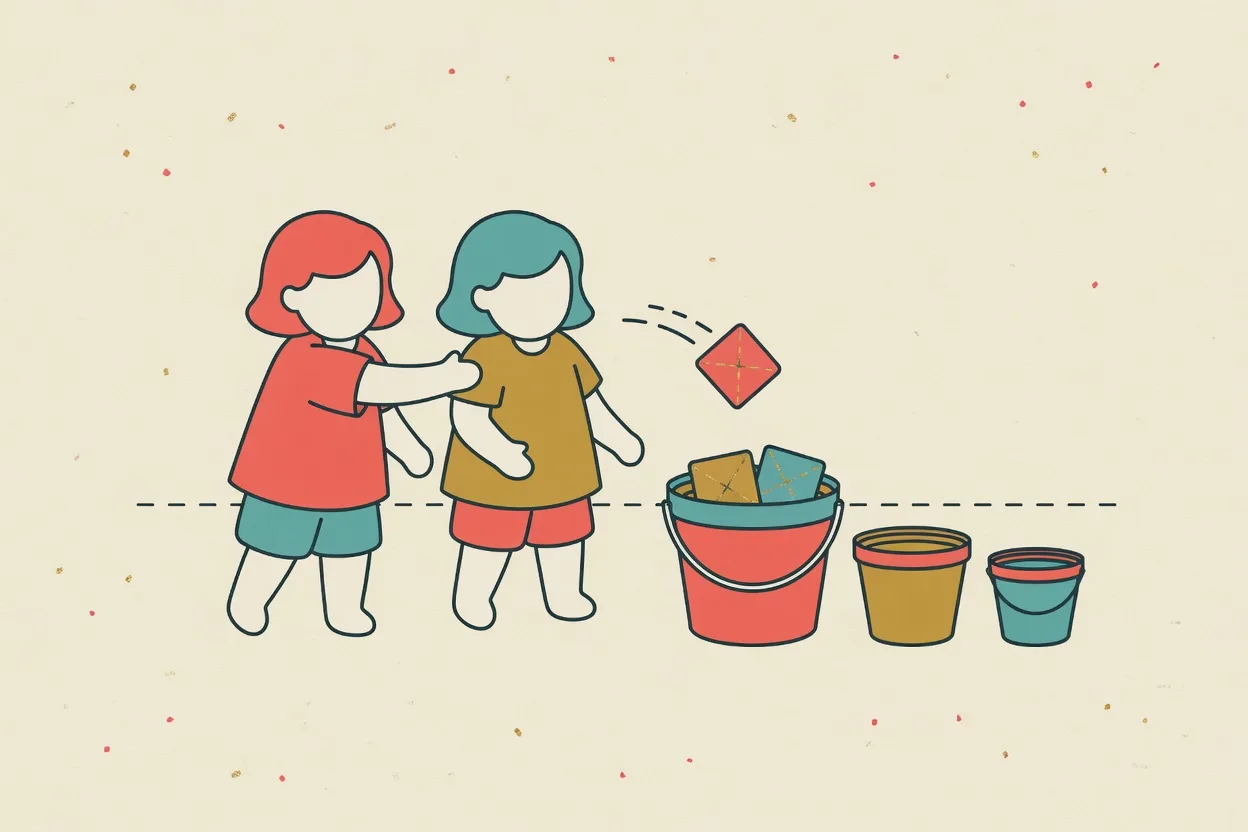
Bean Bag Toss
Mark the throwing line close — about five feet out is right for kids under six — and use half-inflated balloons instead of bean bags if you want something even more forgiving of a wild throw. A two-year-old lobbing a bag at a hula hoop three feet away feels exactly as pleased with themselves as an older child landing one through a hole from further back.
Full rules and variations for bean bag toss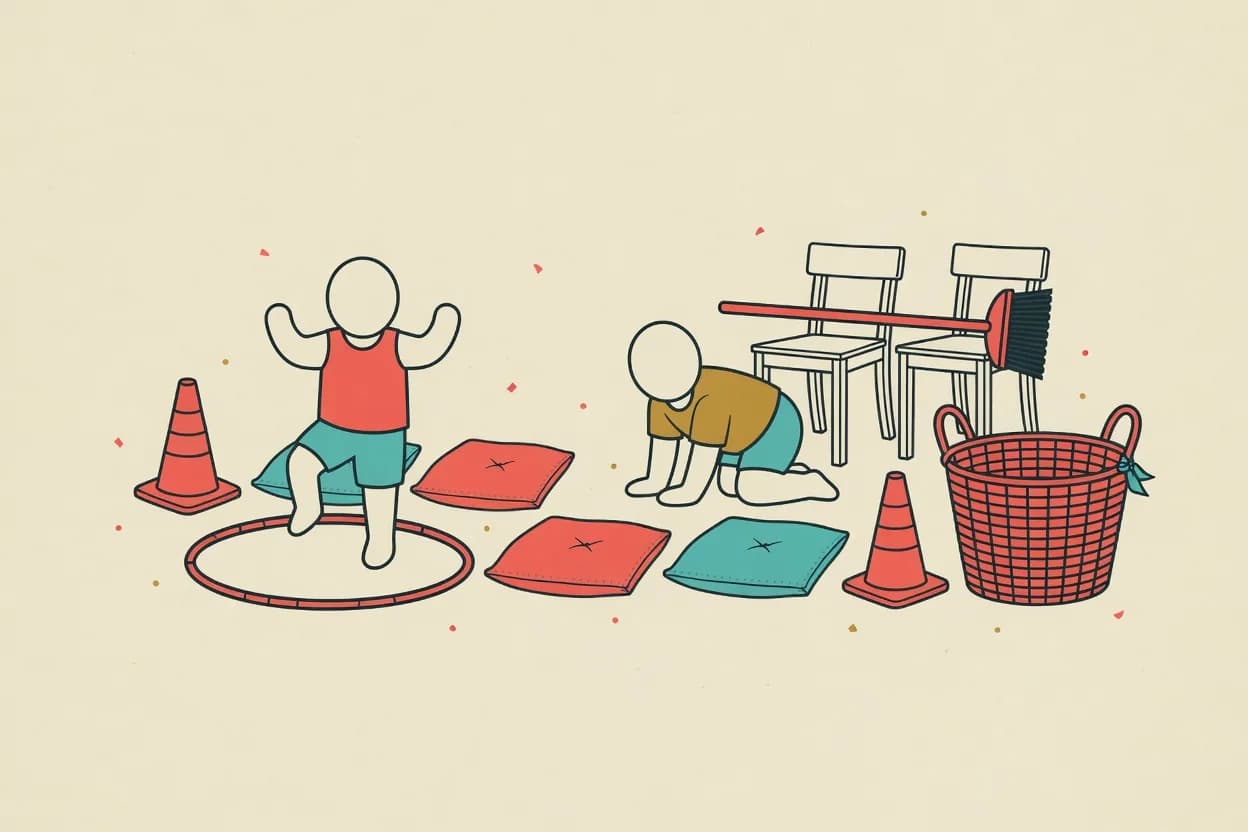
An Obstacle Course
Build the toddler version specifically: four or five low obstacles — step into a hula hoop, crawl through a fabric tunnel, walk a chalk line — and skip timing altogether. Walk it together, cheer at the end, and let them go around again, which they will absolutely want to; testing every obstacle at their height first is the one step that actually matters.
Full rules and variations for an obstacle course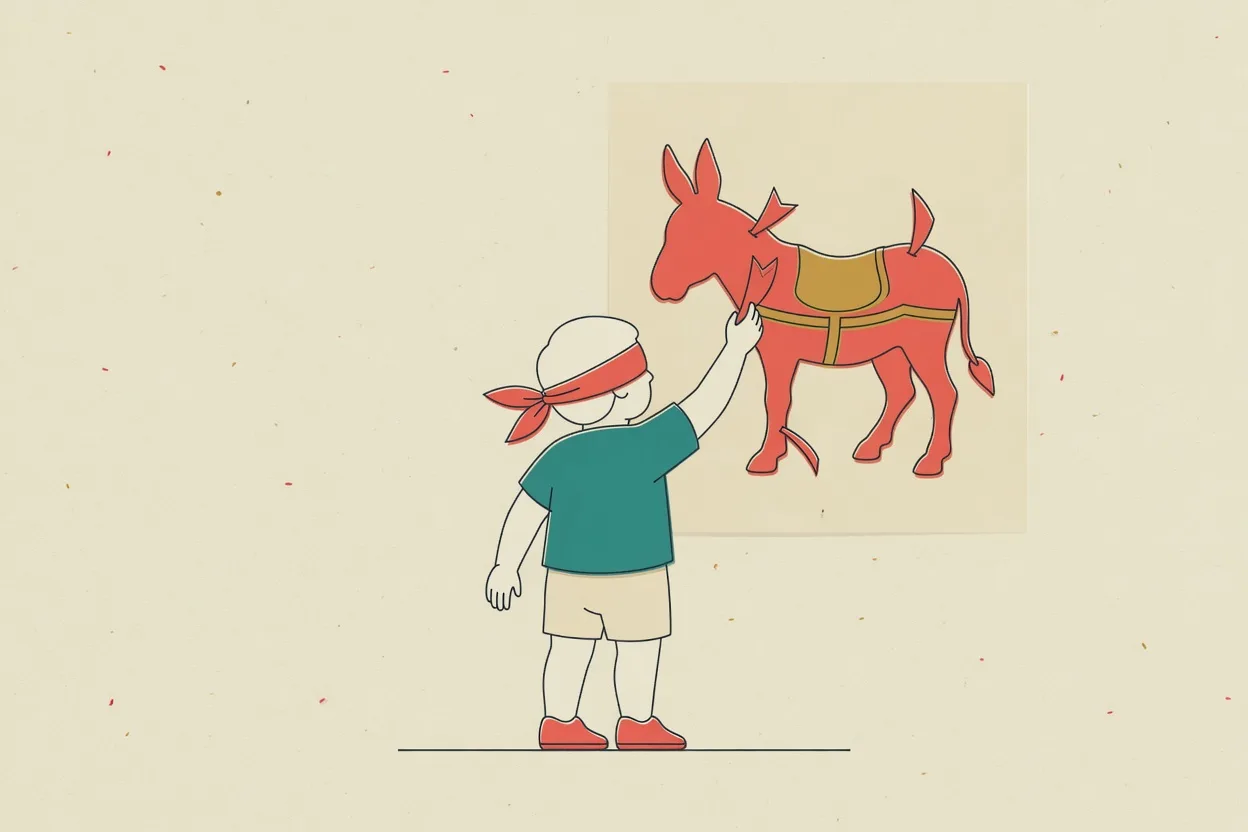
Pin the Tail on the Donkey
Swap the blindfold for simply closing eyes and promising not to peek, with an adult standing close enough to check — three- and four-year-olds are usually more interested in the sticking than the guessing, so it works better than it sounds. One gentle spin in place is plenty; any more and a small child just loses their footing.
Full rules and variations for pin the tail on the donkey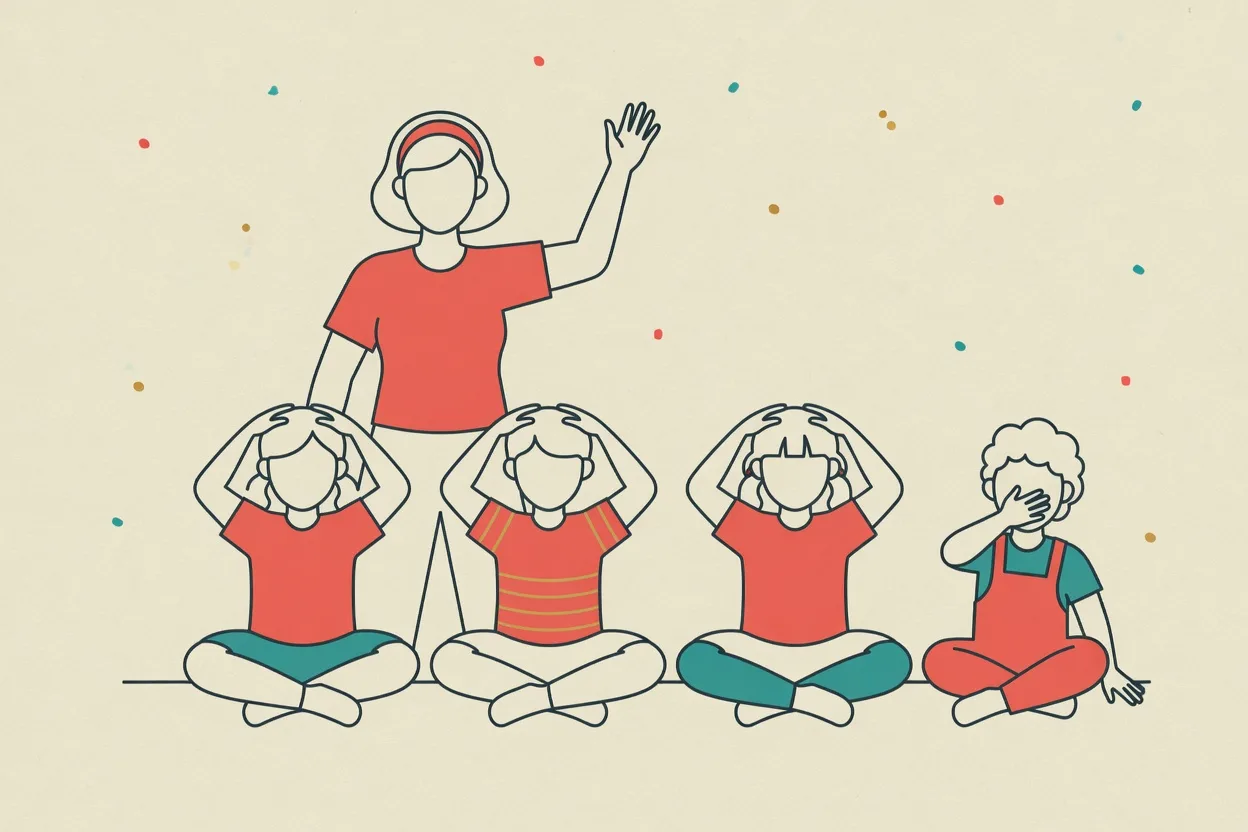
Simon Says
Run the no-elimination version only at this age: a child caught doing an instruction without 'Simon says' does one small forfeit — a jumping jack, a silly noise — and stays in, rather than sitting out for the rest of the game. An adult should be Simon for the first round or two, since toddlers copy the pacing and the trickery far faster from watching than from being told the rules.
Full rules and variations for Simon says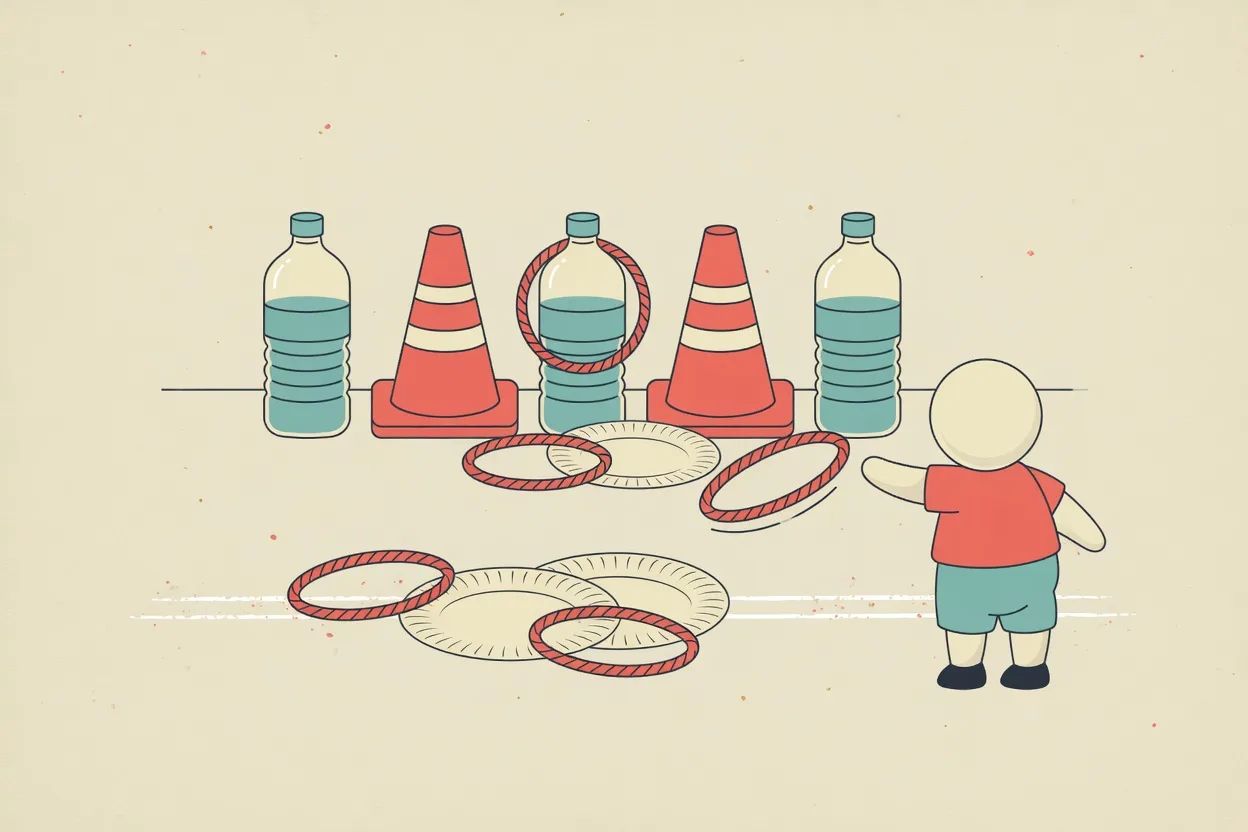
Ring Toss
Set the line at about three feet and use oversized, forgiving rings — jar-sealing rings or a paper plate with the middle cut out both work — so the aim genuinely feels achievable rather than a stretch. Stay close by for this one; a toddler's throwing arm is unpredictable enough that a grown-up wants to be within arm's reach of the target.
Full rules and variations for ring tossFrequently asked questions
- How many games do toddlers actually need at a party?
- Three or four is plenty for an hour of toddler attention, run in short five- to ten-minute bursts with breaks for snacks or free play between them. Toddlers lose interest in a single activity fast, but they'll happily cycle back through a short list of familiar games rather than needing constant novelty.
- What age can toddlers start playing party games?
- From about two, with an adult playing alongside them rather than just supervising. Most of the games on this list have a specific under-five or ages 3–4 version built in — use it rather than the standard rules, since the standard version is usually written for a five- or six-year-old's attention span and coordination.
- Should toddler party games have a winner?
- Not really, no. A two- or three-year-old cares about doing the activity, not about beating anyone at it, and naming a winner mostly just creates a loser who's upset about it. Save the competitive versions of these games for when the group is a couple of years older.
- What's the biggest mistake parents make running toddler party games?
- Running the standard elimination rules rather than the no-elimination version written for this age. A three-year-old who's out first, watching the rest of a ten-minute game from the sofa, is the single most common way a toddler party game ends in tears — and every game on this list has a fix for it.
Sorting the venue too? 9 Kids Birthday Party Places in Houston (2026)