
Ten-year-olds quit games that feel young, and they do it fast and vocally. That's not pickiness — by this age a straight sprint or an easy chase genuinely isn't much of a challenge anymore, and a party game built for a six-year-old reads as exactly that within the first round. The fix isn't a different game so much as the harder version of the same one.
Nearly every classic on this list has an explicit older-kids upgrade built in — obstacle courses get a wheelbarrow section, tug of war gets a real bracket and an anchor, sack races get a turn or an obstacle added — and the difference between a party that holds a ten-year-old's attention and one that doesn't is usually just remembering to reach for that version instead of the standard one.
Below: the games where strategy beats speed, the classics with their upgrades built in, and a handful of real contests that don't need softening for this age at all. Most of them want real outdoor room to work in — see outdoor party games for kids for the space planning that goes with them.
Strategy over speed
Capture the Flag
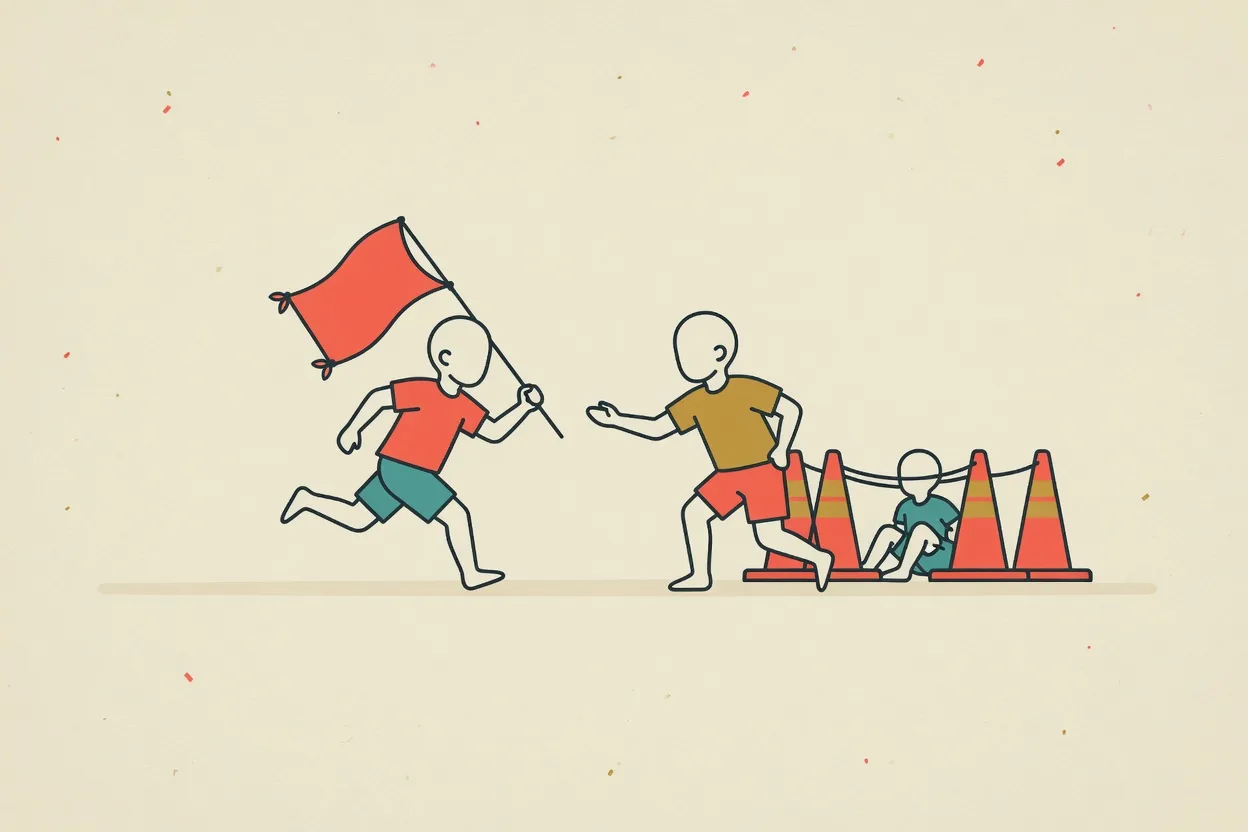
The strategy in this game — guarding versus attacking, when to risk a run into enemy territory — really clicks at this age, which is exactly why it's still the game ten- and eleven-year-olds are arguing tactics about on the way home. It needs real numbers, ten players minimum, and real space, so save it for a park or a big backyard rather than trying to force it into a small yard.
Full rules and variations for capture the flag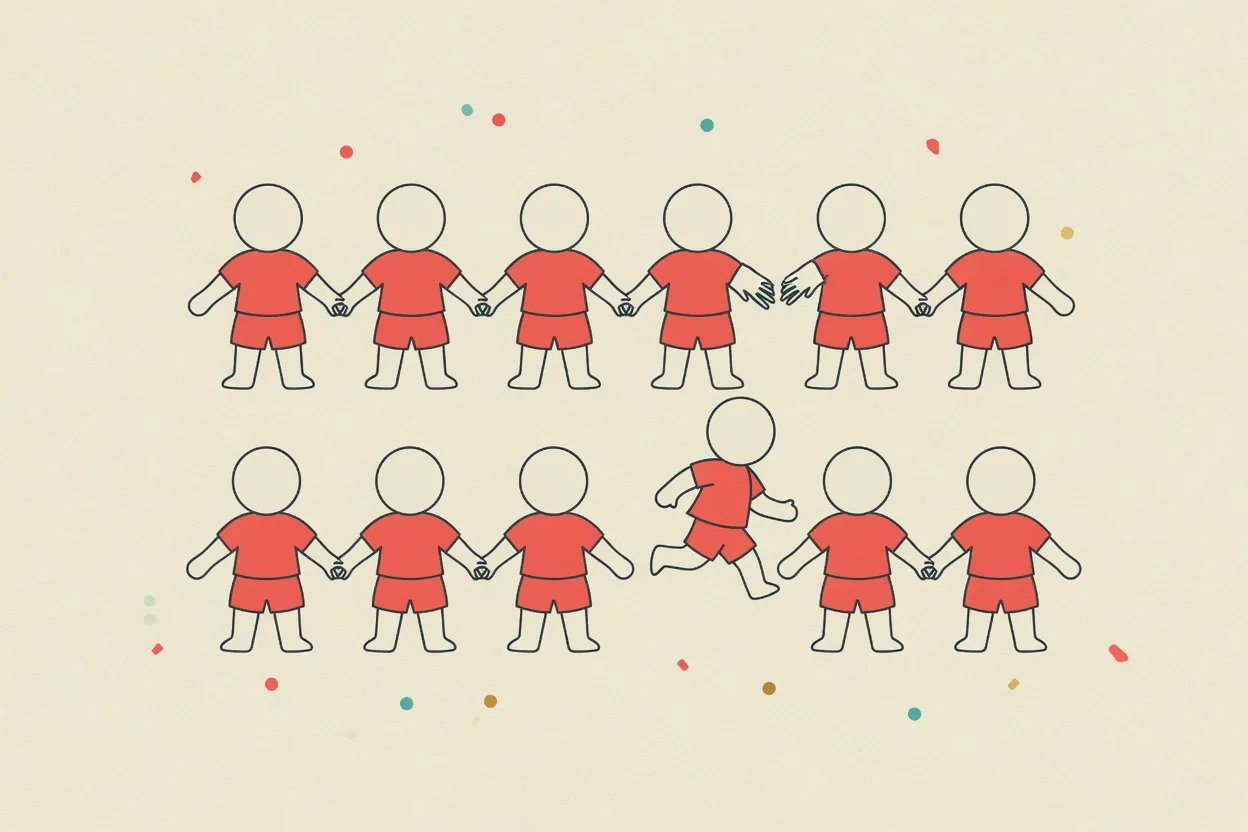
Red Rover
Loose grip, a jog rather than a sprint, aiming for the gap between two players rather than straight at one — taught this way rather than the old locked-hands version, it's a genuine test of nerve without the shoulder injury the traditional game is actually known for. Ten-year-olds are old enough to run the calling themselves, naming a specific player rather than just shouting into the line.
Full rules and variations for red rover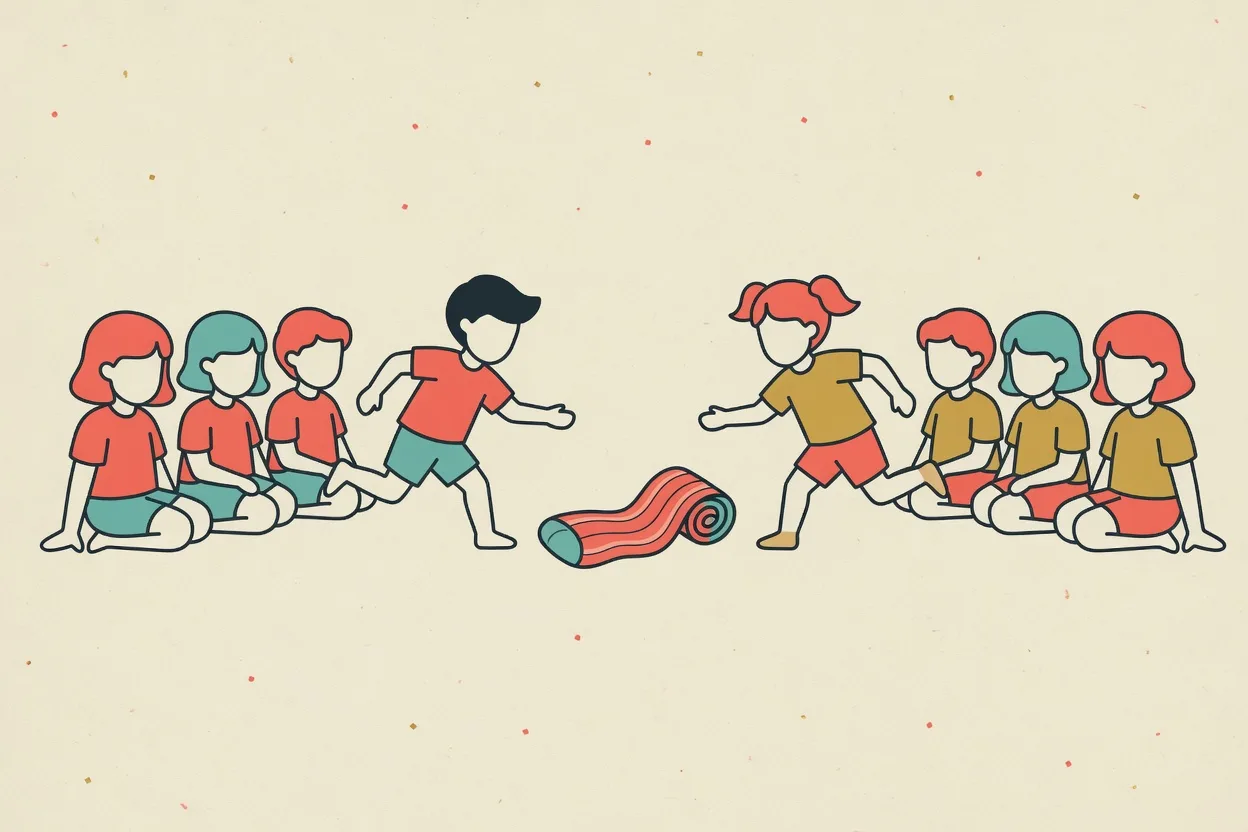
Steal the Bacon
A single sprint with a real result attached to it — grab the object and get home before you're tagged, or don't — which is close to the entire appeal for a tween who's stopped being satisfied by games where nobody really wins. Settle the tie-grab rule before the first round; it's the one argument this game reliably produces.
Full rules and variations for steal the bacon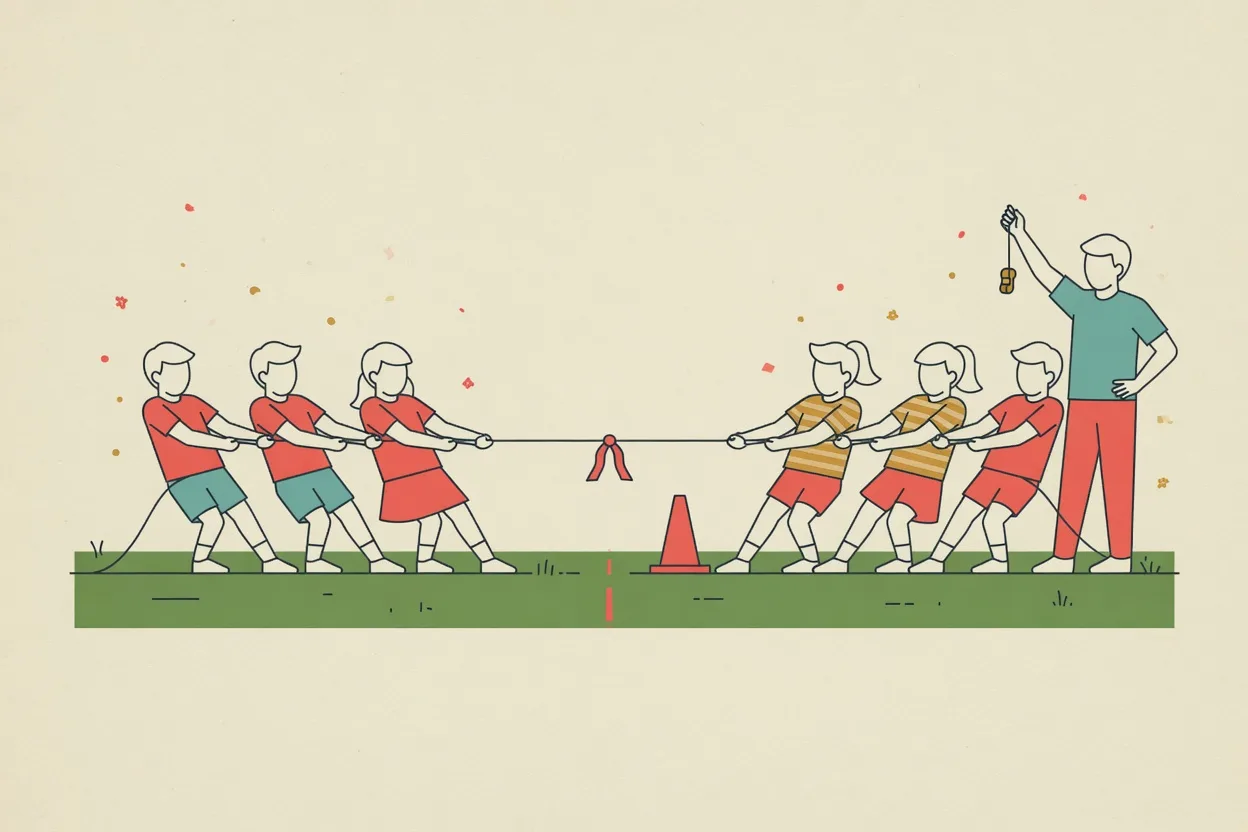
Tug of War: Rules, Strategy & How to Actually Win
This is the age the guide's own strategy actually starts to work — balance teams by total weight, appoint an anchor and a caller, and run a real knockout bracket with a final, because by ten the smaller, cleverer team can genuinely beat brute strength. That's a satisfying thing to prove at this age in a way it just isn't at six.
Full rules and variations for Tug of War: Rules, Strategy & How to Actually Win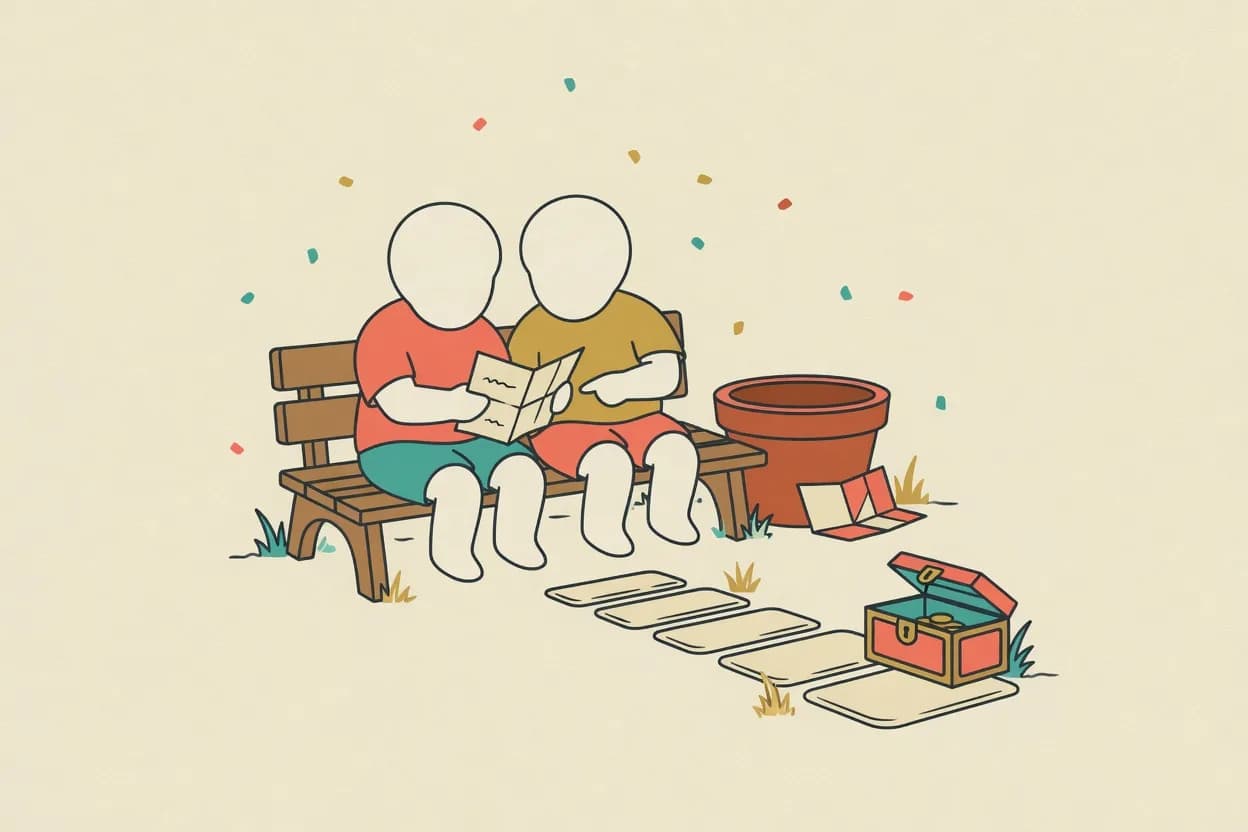
Treasure Hunt
Skip the picture clues and rhyming riddles built for younger children and write genuine puzzles instead — a short cipher, a clue that needs two numbers added together, a riddle with a red herring — stretched across ten hops or more through a whole backyard. A treasure hunt with an easy trail is one of the fastest ways to lose a ten-year-old's interest in the entire game.
Full rules and variations for treasure huntThe classics, upgraded
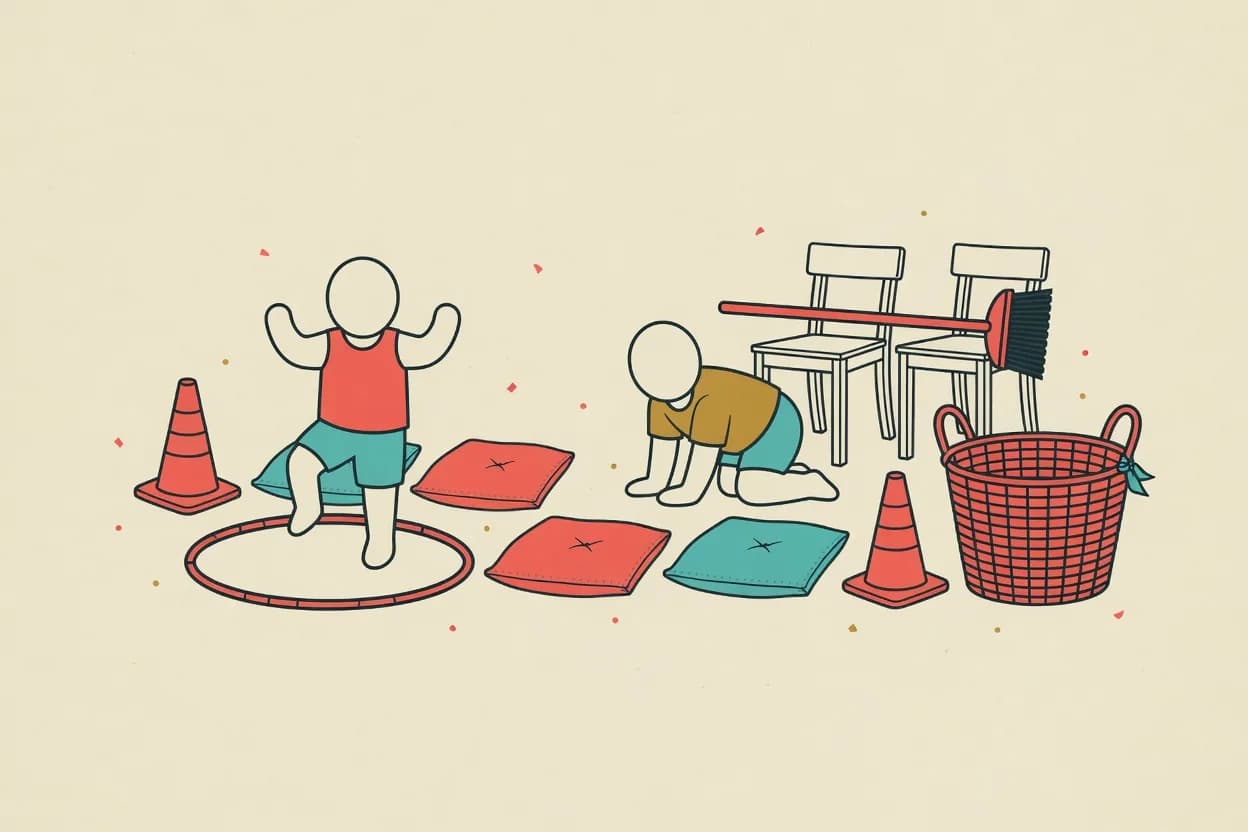
An Obstacle Course
Build the ages-10-and-up version specifically: a wheelbarrow-carry section, a stretch done backwards, a balance beam along a plank, run head-to-head rather than against the clock. A course built for six-year-olds reads as obviously babyish to a tween within about one obstacle, so don't just reuse last year's layout.
Full rules and variations for an obstacle course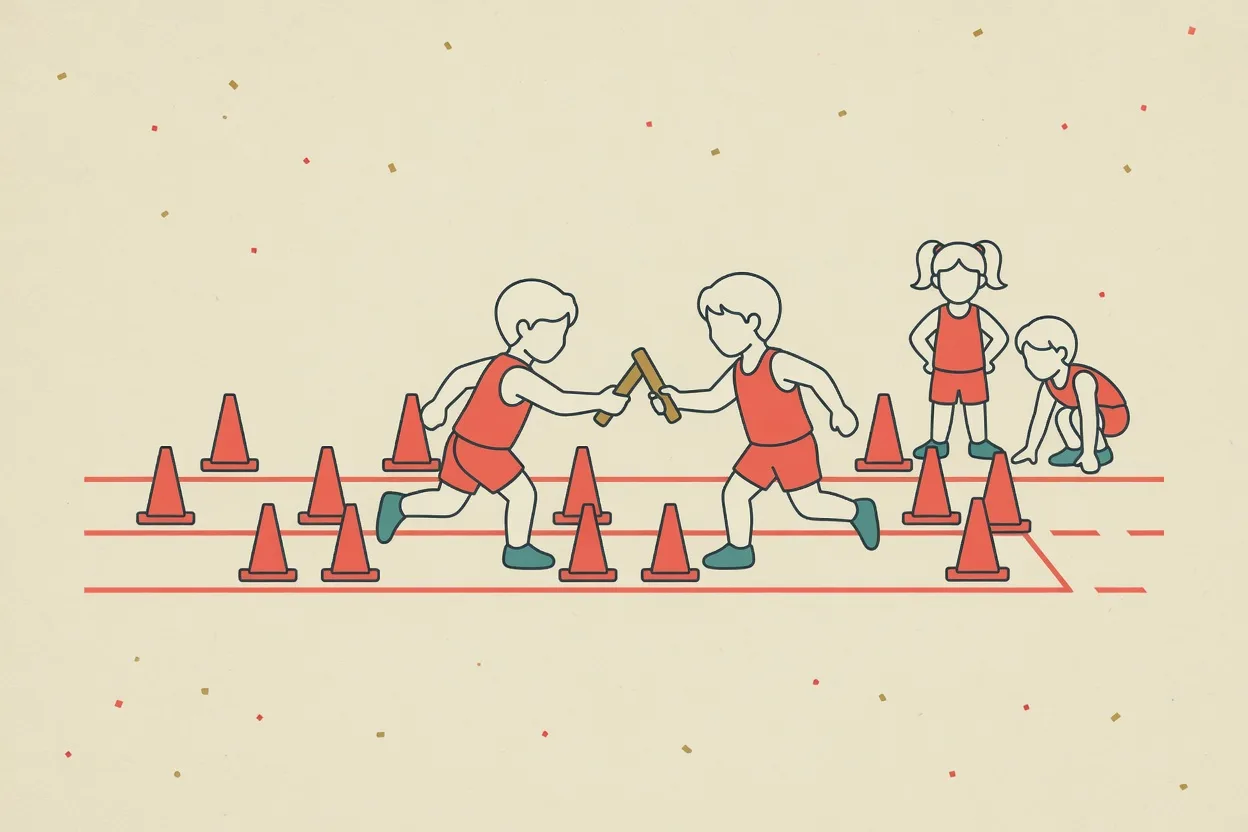
Relay Races
The dress-up or spoon variations are worth reaching for at this age rather than a plain baton — they reward coordination as much as raw speed, which keeps a wide age range genuinely competitive rather than just handing it to whoever's fastest. Drill the hand-off once before the clock starts; it's where relays actually go wrong, not the running.
Full rules and variations for relay races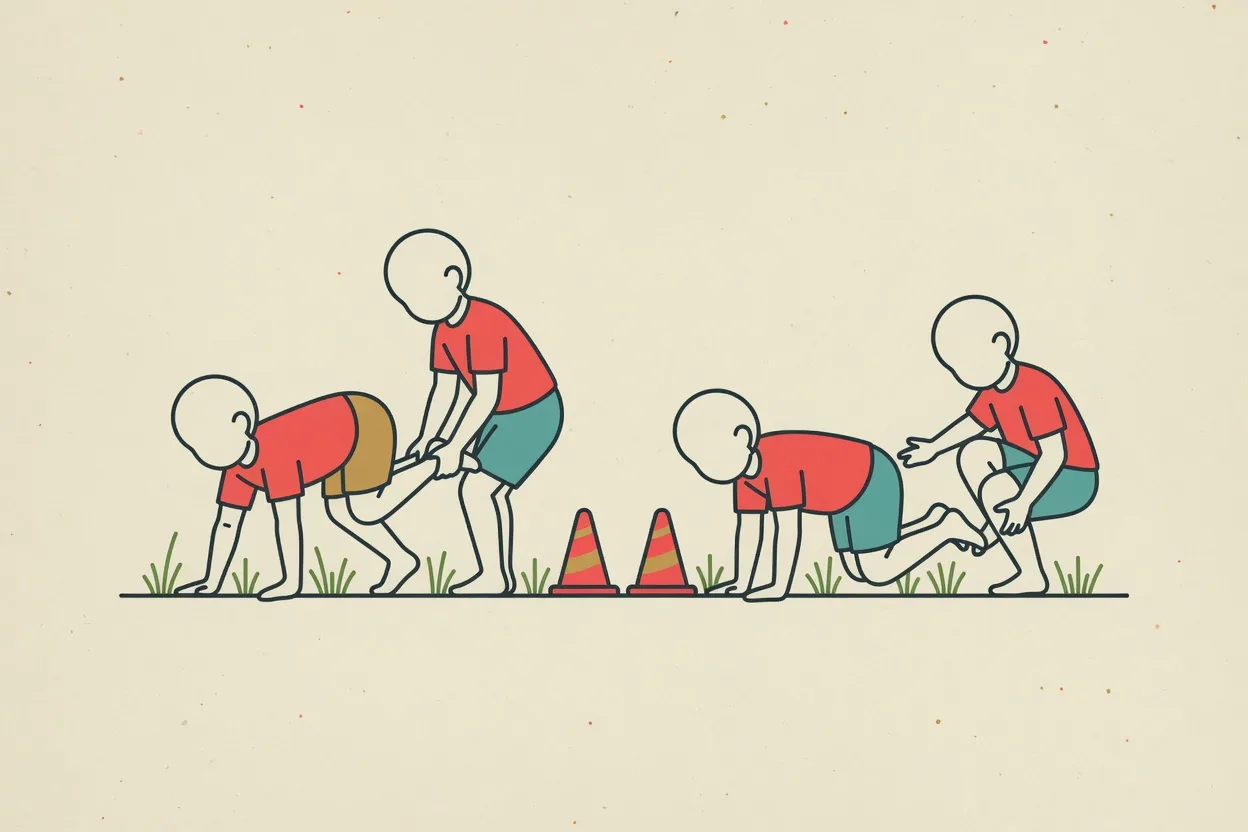
The Wheelbarrow Race
A real test of arm and shoulder strength by this age, which is most of why it lands better at ten than it does younger — the front partner is really walking the whole course on their hands rather than just wobbling through it. Grass only, without exception; a fall here lands on the hands and wrists.
Full rules and variations for the wheelbarrow race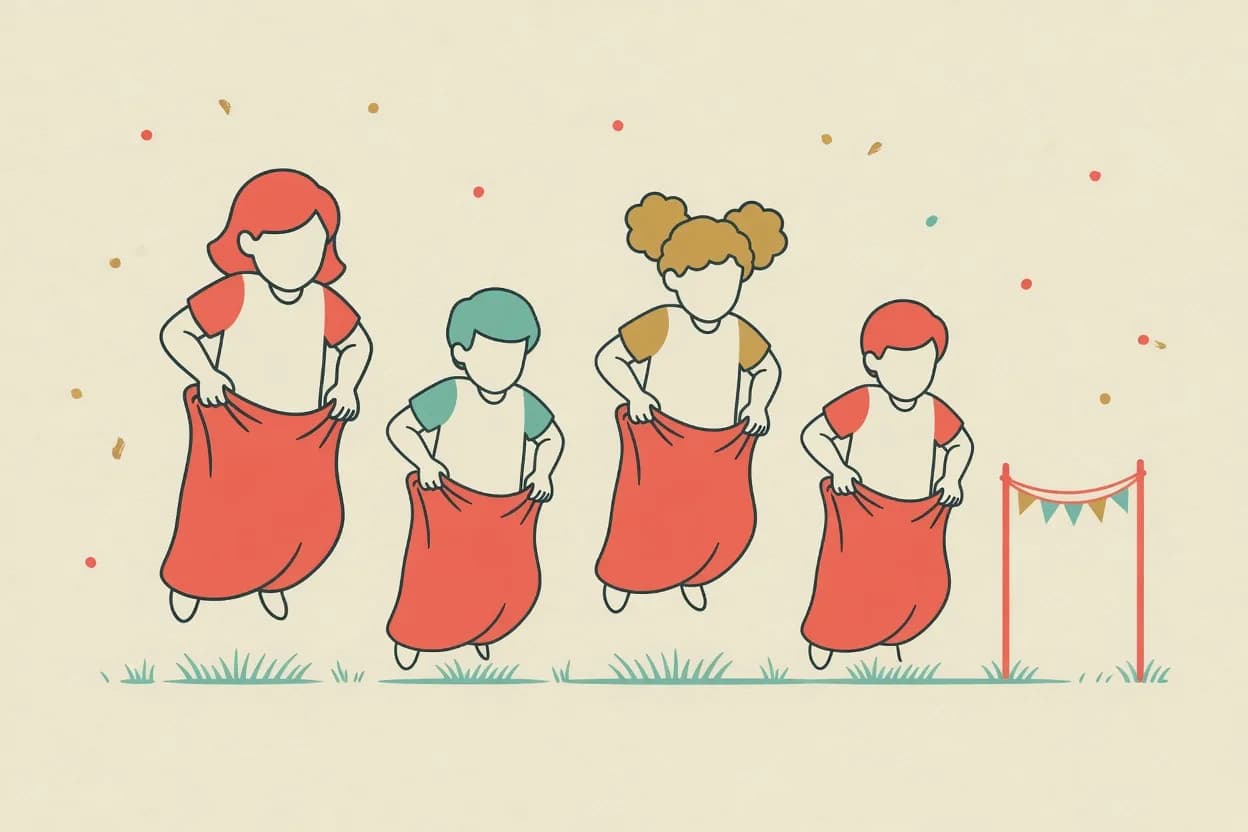
Sack Race: Rules, Setup & How to Jump Faster
A straight sprint in a sack starts to feel a little young by ten on its own, so add a there-and-back turn or weave a couple of obstacles into the course rather than running it plain. The technique still decides it either way — short, fast jumps beat one big leap, every time.
Full rules and variations for Sack Race: Rules, Setup & How to Jump Faster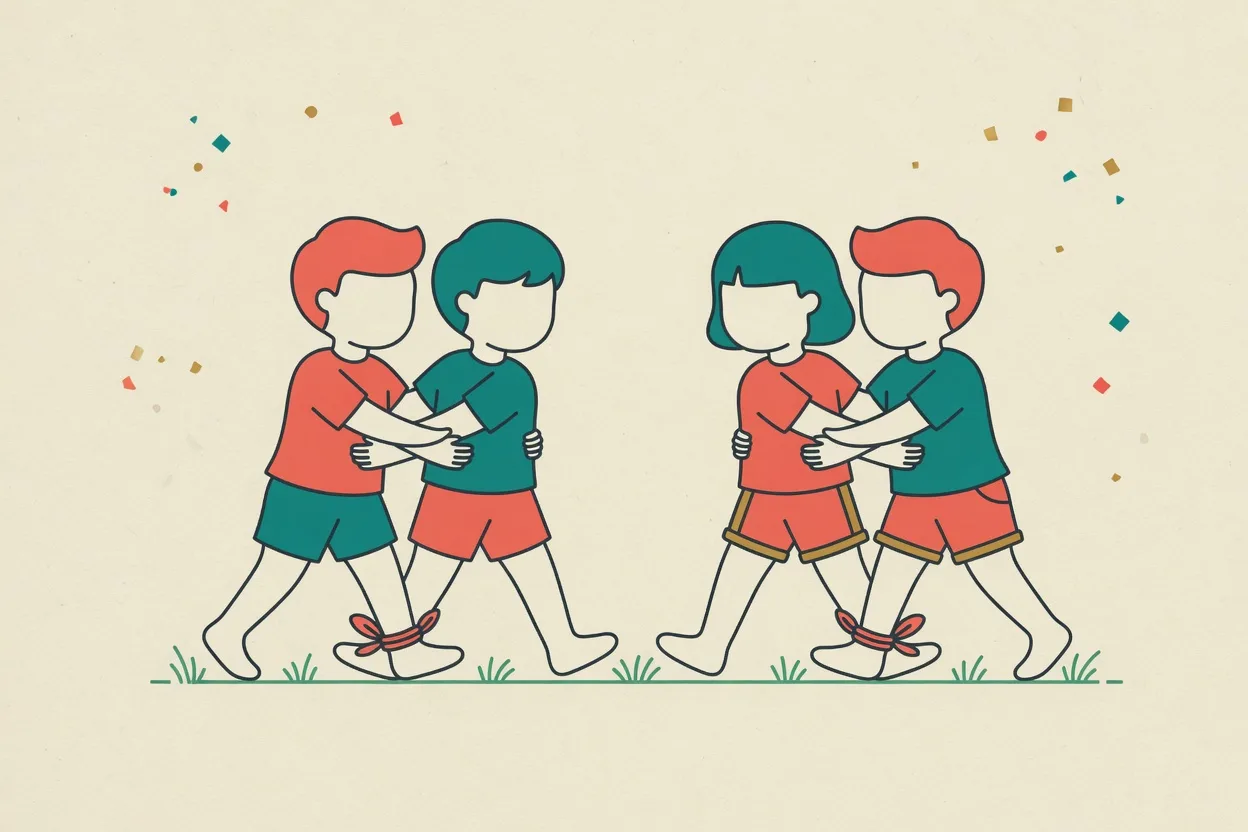
Three-Legged Race: Rules, Setup & Winning Technique
This is close to the age the counting rhythm turns it into an actual contest rather than a comedy of falling over — pairs who call 'in, out, in, out' together consistently beat pairs who just try to run. Pair by height rather than friendship group; a big stride mismatch is what ends most pairs on the grass.
Full rules and variations for Three-Legged Race: Rules, Setup & Winning Technique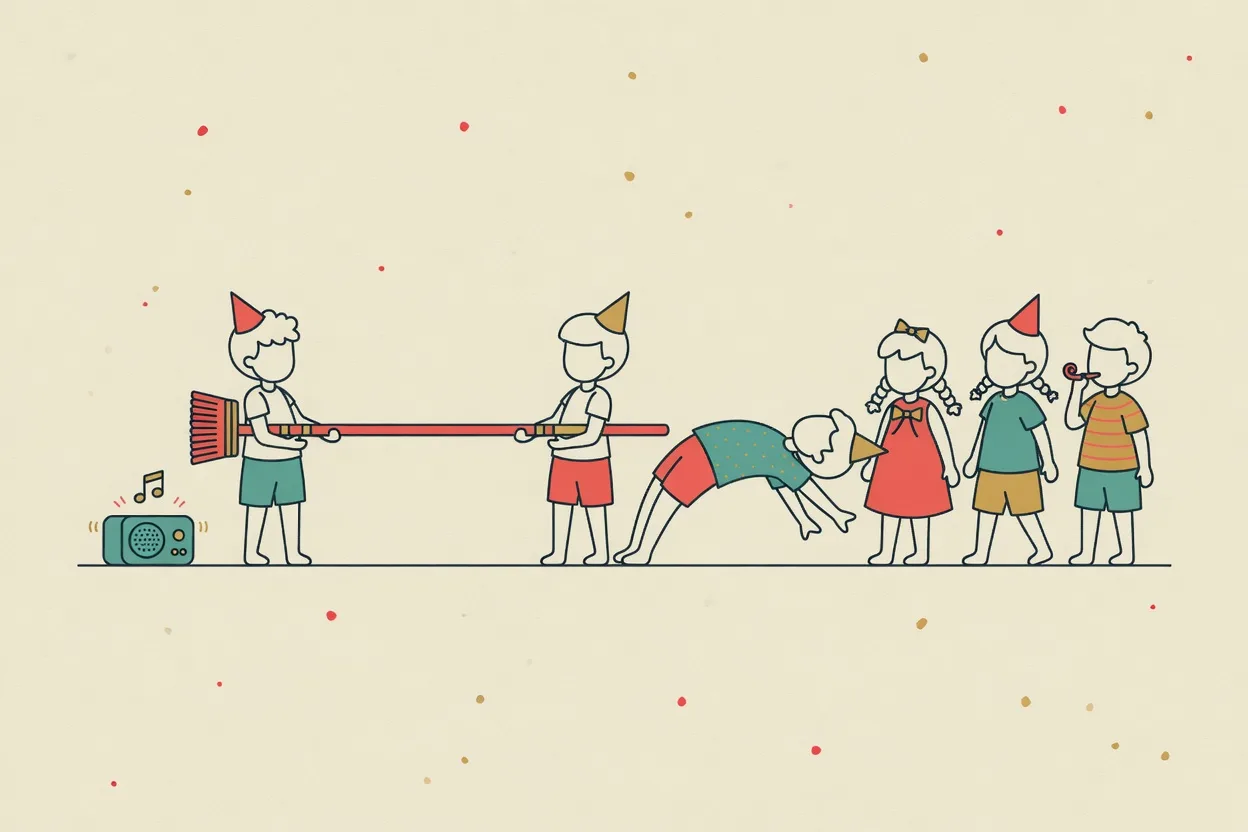
Limbo
Gets harder every round instead of settling into a routine, and it scales all the way up — ten-year-olds can genuinely go lower and hold the lean longer than younger children, which makes for a real last-one-standing finish rather than an arbitrary stopping point. Lower the bar by a hand's width a round and let the music carry the pauses between turns.
Full rules and variations for limboReal contests, not fillers
Dodgeball
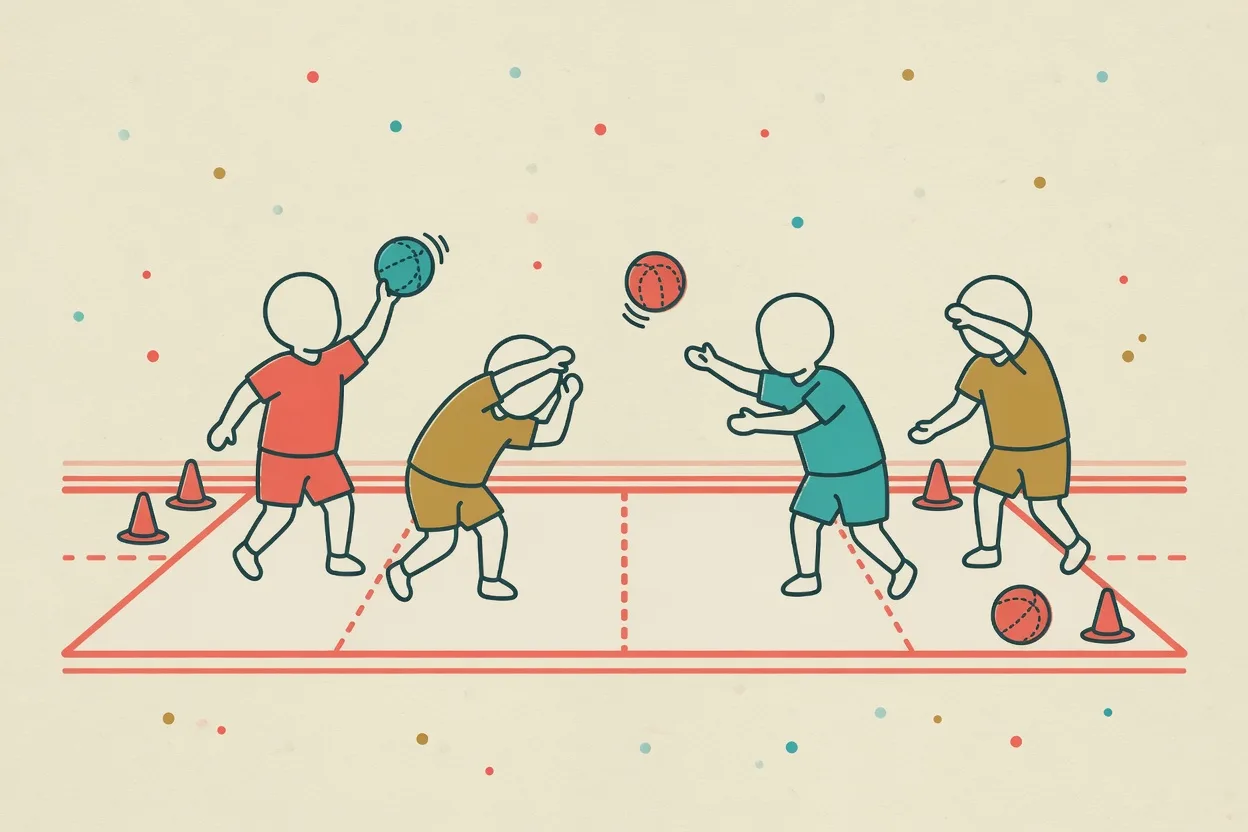
Foam balls only, but don't undersell it — the catch-to-revive rule, where a clean catch sends the thrower out and brings a teammate back in, rewards real skill, and ten-year-olds are sharp enough to actually hunt for that catch rather than just dodge and hope. One of the highest-energy games on this list, period.
Full rules and variations for dodgeball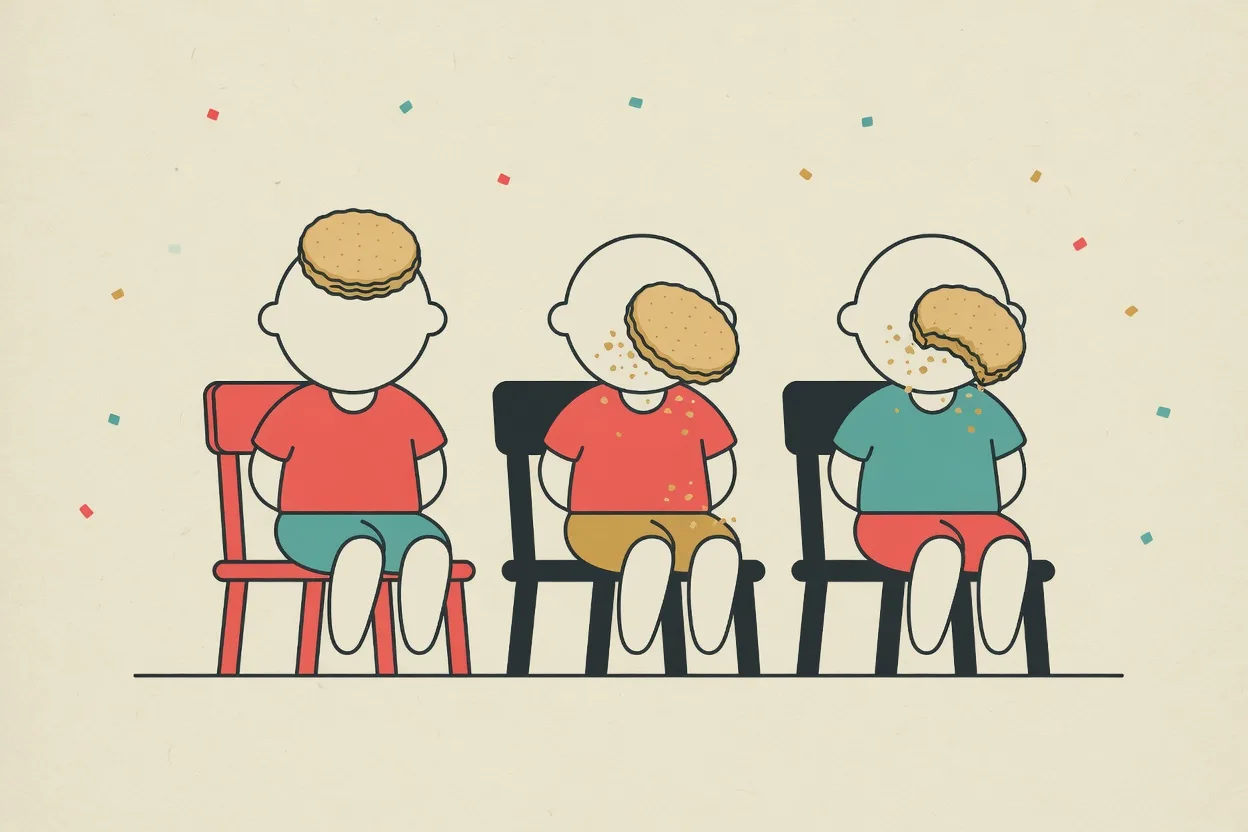
Cookie Face
A real minute-to-win-it heat that plays as well at ten as it does at six, purely because getting a cookie from forehead to mouth using nothing but your face is inherently funny at any age. Run it as a straight knockout if the group wants a bracket rather than just watching for the faces.
Full rules and variations for cookie face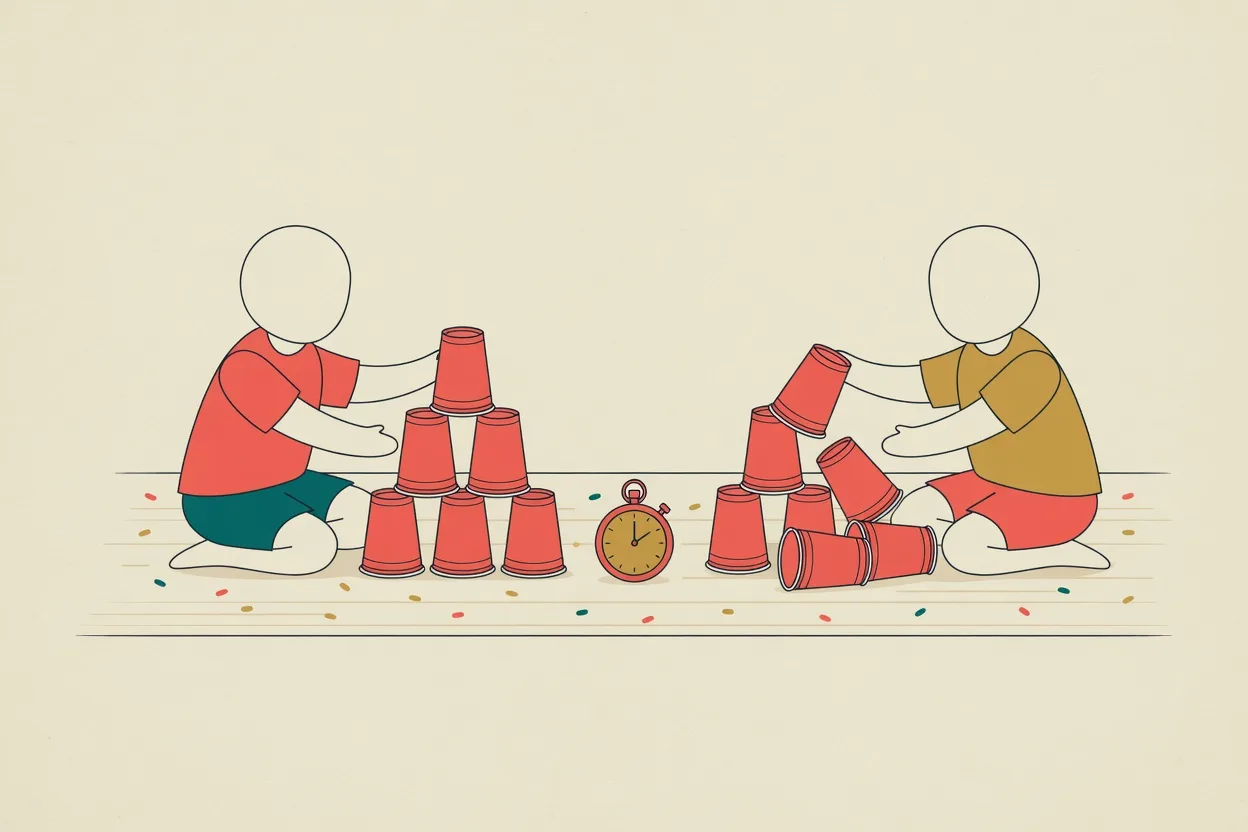
Cup Stacking
Step up to the ten-cup cascade at this age — four, three, two, one — rather than the six-cup party version, since it takes real technique rather than just speed and most ten-year-olds have the fine motor control to actually learn it. Run head-to-head pairs rather than solo against a stopwatch for the better spectacle.
Full rules and variations for cup stacking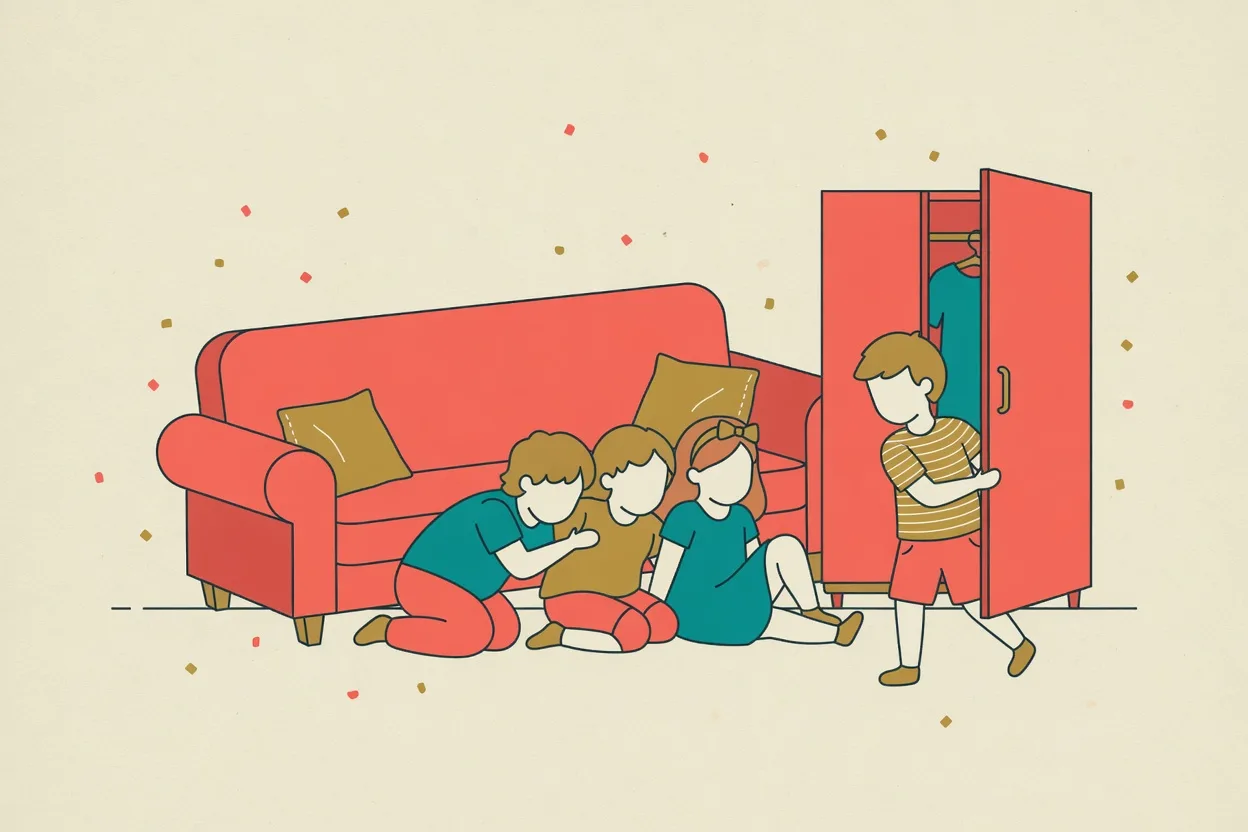
Sardines
This is squarely the age it starts working properly — squashing into a closet with four other children and trying not to give the game away with a laugh rewards a kind of self-control that a six-year-old genuinely doesn't have yet. Save it for the evening half of a party or a sleepover, once the louder outdoor games are done.
Full rules and variations for sardinesFrequently asked questions
- How do you keep a 10-year-old's party from feeling babyish?
- Reach for the older-kids version of each classic rather than the standard one — a tug-of-war bracket with anchors and callers instead of a plain pull, an obstacle course with a wheelbarrow section instead of hula hoops. Most of the games on this list have that upgrade built in; using it is usually the whole fix.
- What games work for a mixed group of 10- and 12-year-olds?
- Capture the flag and tug of war both scale well across a couple of years' age gap, since the strategy side gives an older child something to do beyond just running faster. Balance teams by size and confidence rather than strict age, and a two-year gap generally isn't the problem parents expect it to be.
- Is elimination okay for 10-year-old party games?
- Yes, without much softening needed — by this age a real knockout bracket or a genuine last-one-standing finish is part of what makes a game satisfying rather than something to protect anyone from. Keep an eye on a child losing repeatedly, but don't default to removing the stakes.
- What's a good low-energy game for later in a 10-year-old's party?
- Sardines, once the louder games are done — it needs almost no space and very little noise, and the self-control it rewards, staying quiet while squashed into a closet with four other children, is a joke that lands properly at this age in a way it doesn't for younger children.
Sorting the venue too? 7 Kids Birthday Party Places in Jacksonville (2026)