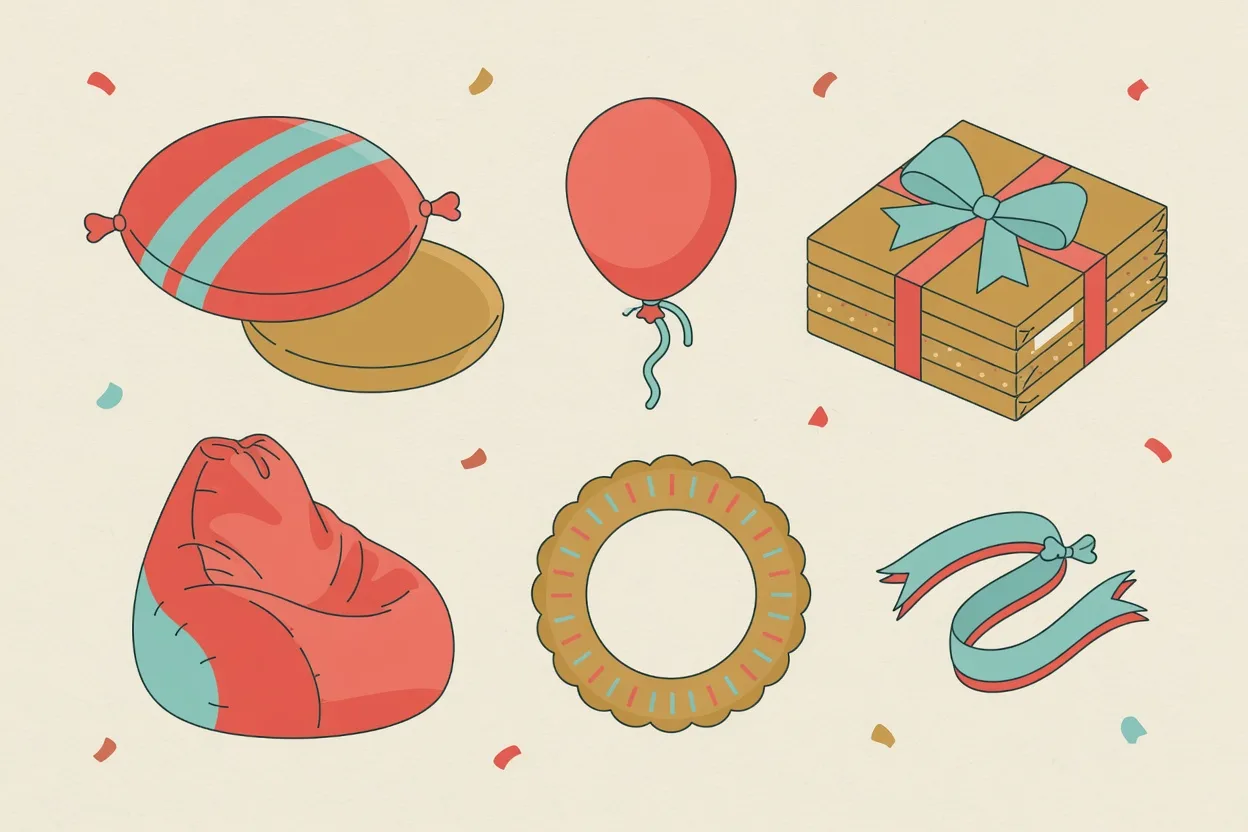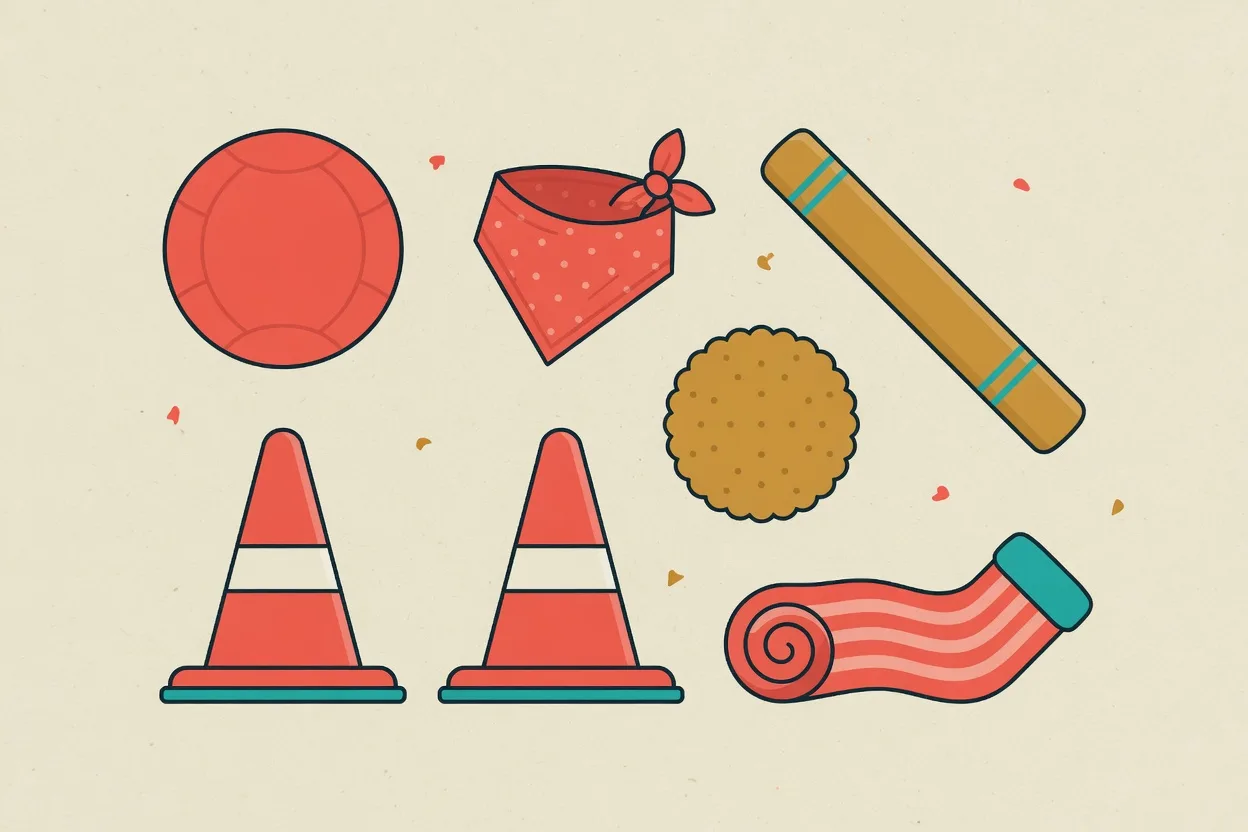

Five is the age party games actually click. Old enough to hold a rule in mind for the length of a game, young enough that a straightforward chase or a straightforward guess is still genuinely exciting rather than easy — this is the classic party age for a reason, and most of the games everyone already half-remembers are pitched almost exactly here.
The one thing worth planning for is the mix. A five-year-old's energy runs in bursts rather than a steady line, so a party that's all running or all sitting tends to come apart in the same way — either everyone's too wound up to sit still for the cake, or a room full of children who've been sitting for twenty minutes starts finding its own, less supervised entertainment. Alternate: a chase, then a circle game, then something with a line and a turn to wait for.
Elimination genuinely works at this age, more than it does for younger children — but keep a soft-exit version in your pocket for whichever game seems to be losing someone. Below is a run-around half and a sit-down half, so building that alternation is mostly just picking one from each. For a slightly younger group still working through elimination, see party games for toddlers; for a group that's ready for real stakes, party games for 8-year-olds is the next step up.
The run-around half
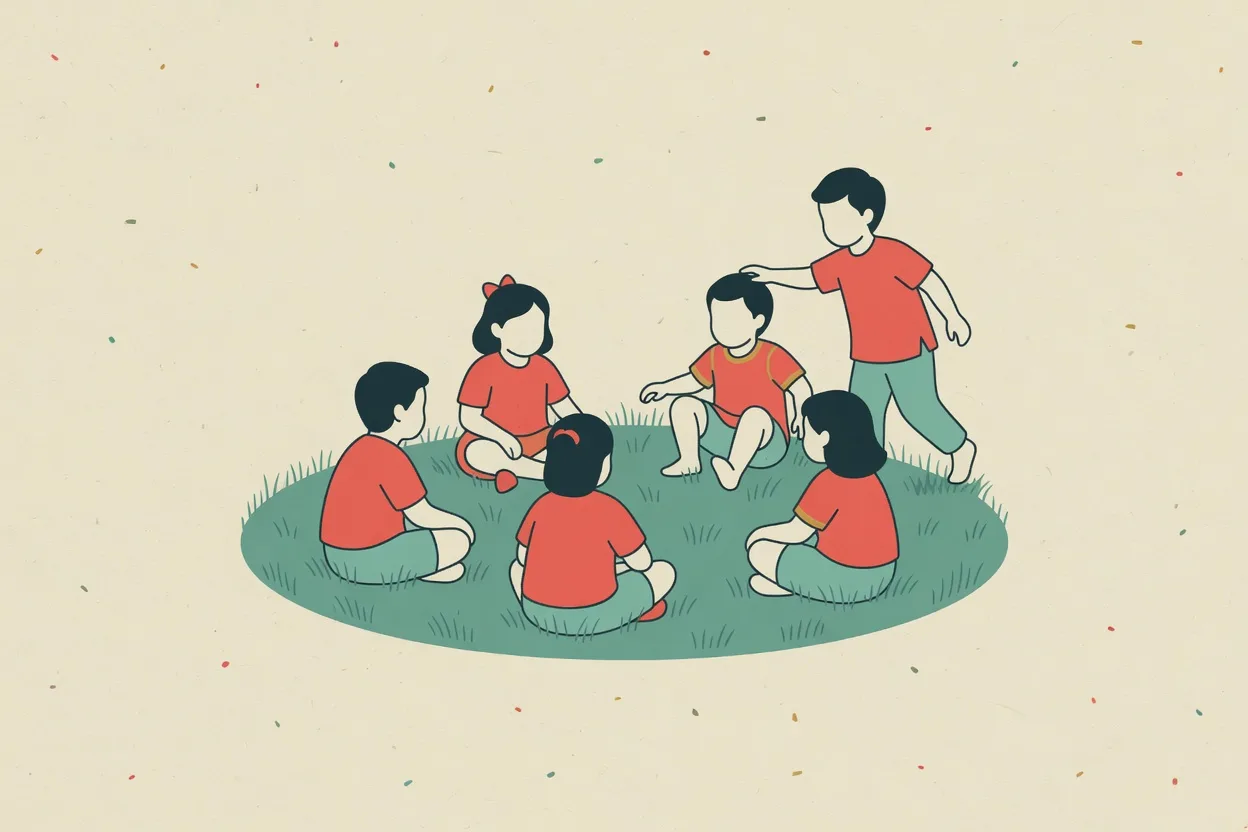
Duck Duck Goose
Five is close to the sweet spot for this one — old enough to manage the sit-still-then-sprint switch, young enough that a straightforward chase is still exciting rather than easy. Fix the one real flaw before you start: agree that whoever's tapping has to go all the way around the circle once before repeating anyone, or the quiet child at the end of the row can go the whole game without a turn.
Full rules and variations for duck duck goose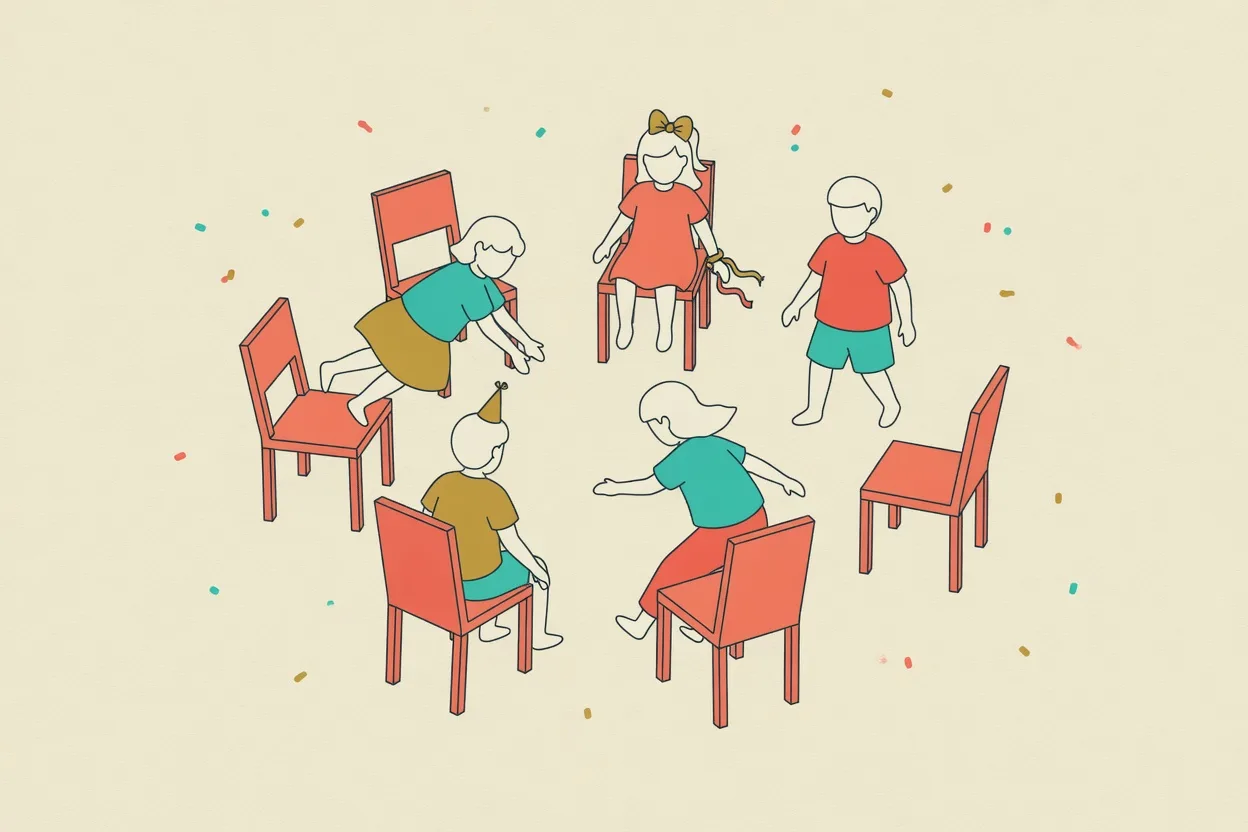
Musical Chairs
The classic elimination format lands well from about five, but keep a soft exit in your back pocket for whoever seems to be taking it hard — the 'nobody out' version, where a chair disappears each round but nobody actually leaves, ends in a giggling pile-up instead of a line of children on the sofa. Either way, the chair count is always one behind the player count.
Full rules and variations for musical chairs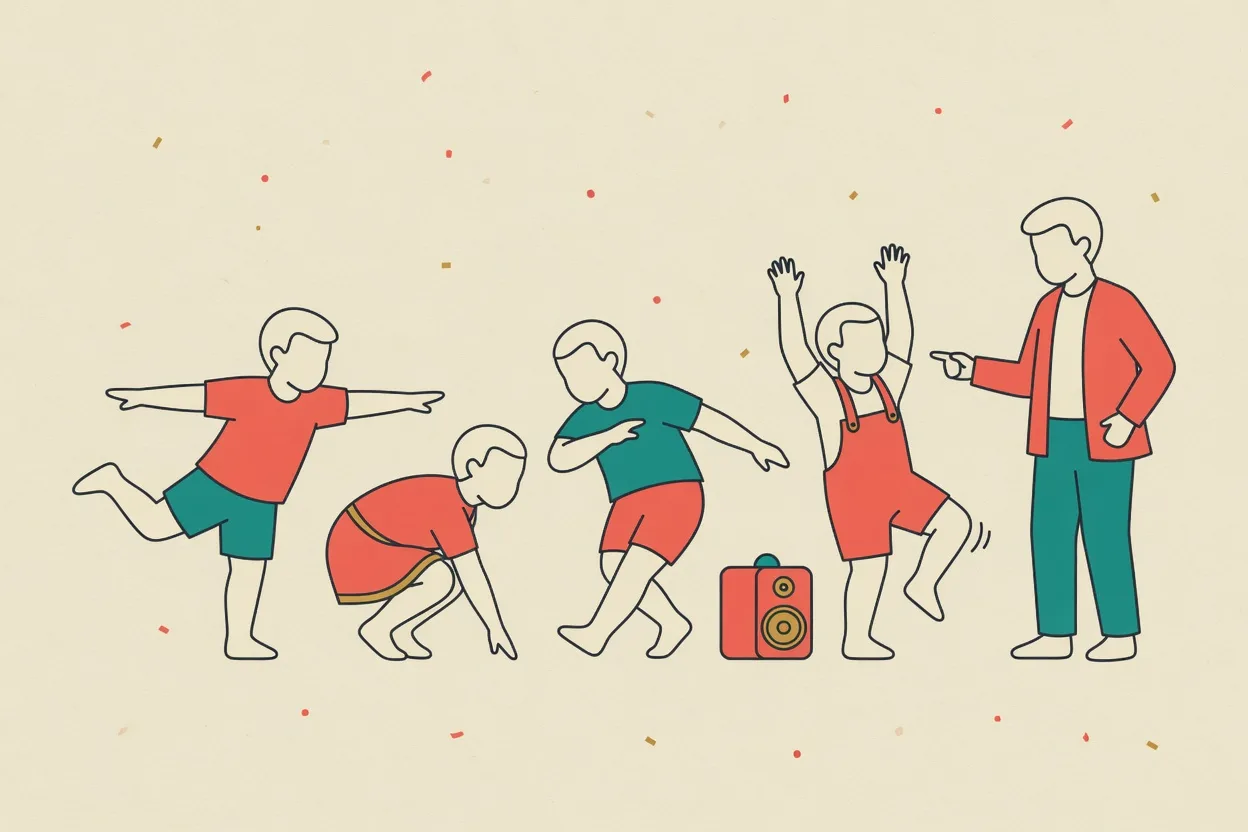
Musical Statues: Rules, Fair Judging & Playlist
Five to seven is the classic musical statues age by a wide margin — old enough to hold a pose and find the whole thing genuinely funny, young enough that losing still stings a little, which is exactly the right amount of stakes. Judge kindly ('your foot moved', not 'you're out') and it holds up for the whole party.
Full rules and variations for Musical Statues: Rules, Fair Judging & Playlist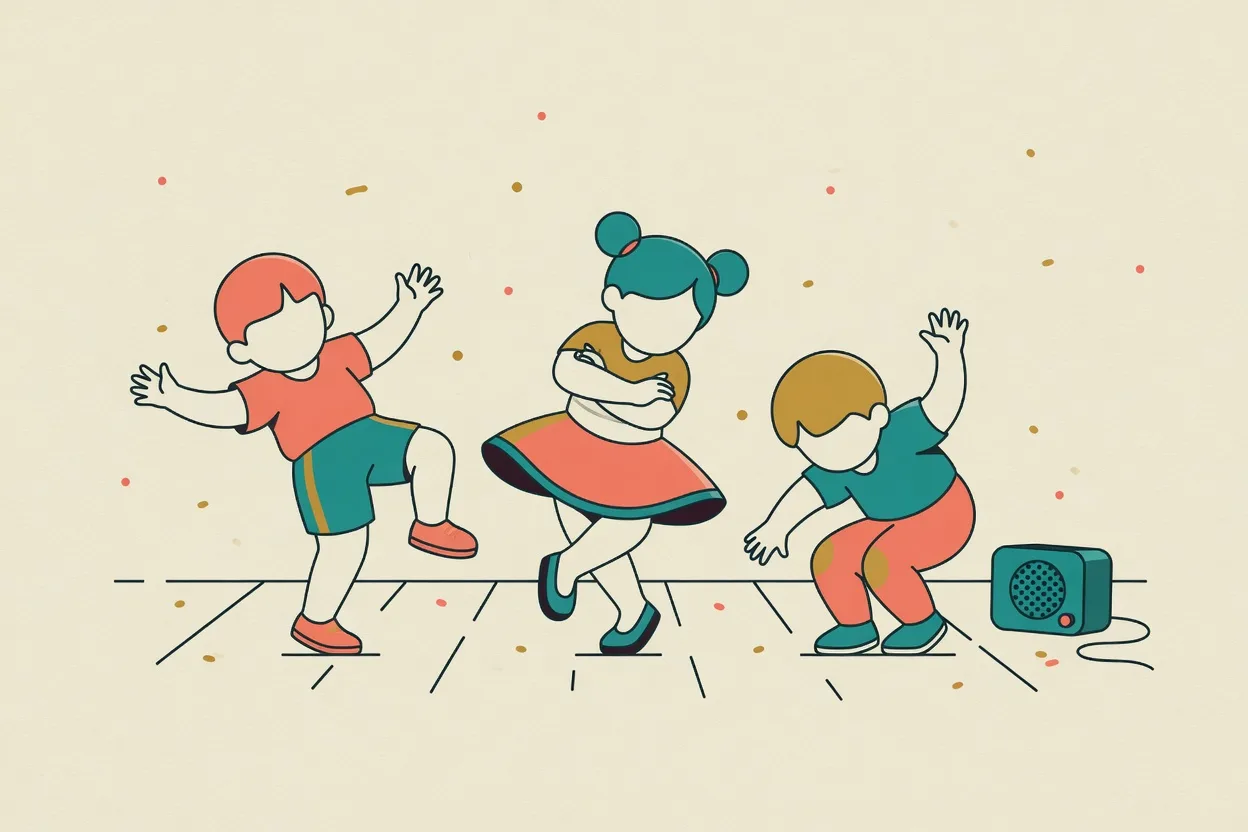
Freeze Dance
Same freeze-and-judge game as musical statues under its American name, and just as reliable at this age. Vary the length of each burst of music properly — a predictable gap just teaches the sharpest five-year-old in the room to anticipate the stop rather than actually dance.
Full rules and variations for freeze dance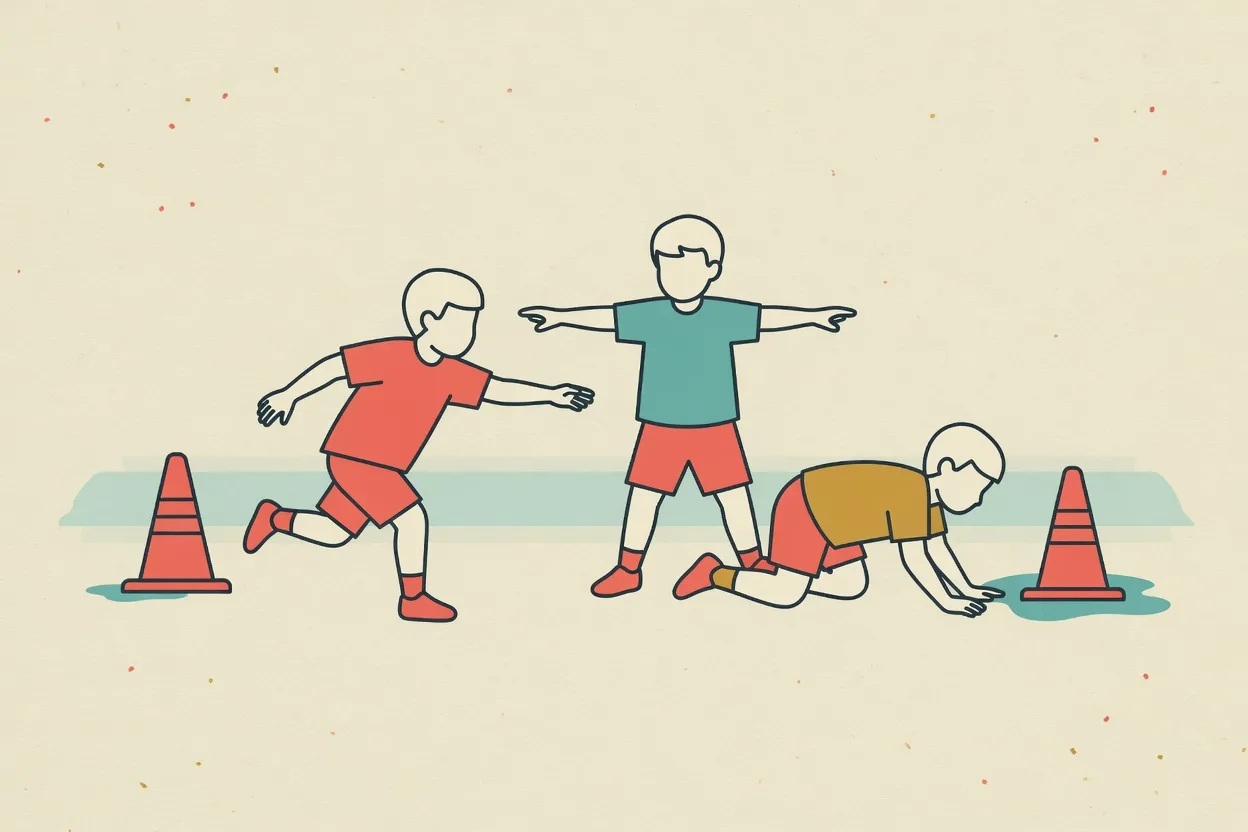
Freeze Tag
A step up from a straight chase, because a tagged player freezes instead of sitting out — which matters at five, when being fully out for the rest of a game is the thing that actually causes tears. Start with one tagger and the simplest unfreeze method, a high five, and agree on the boundary out loud before the first chase.
Full rules and variations for freeze tag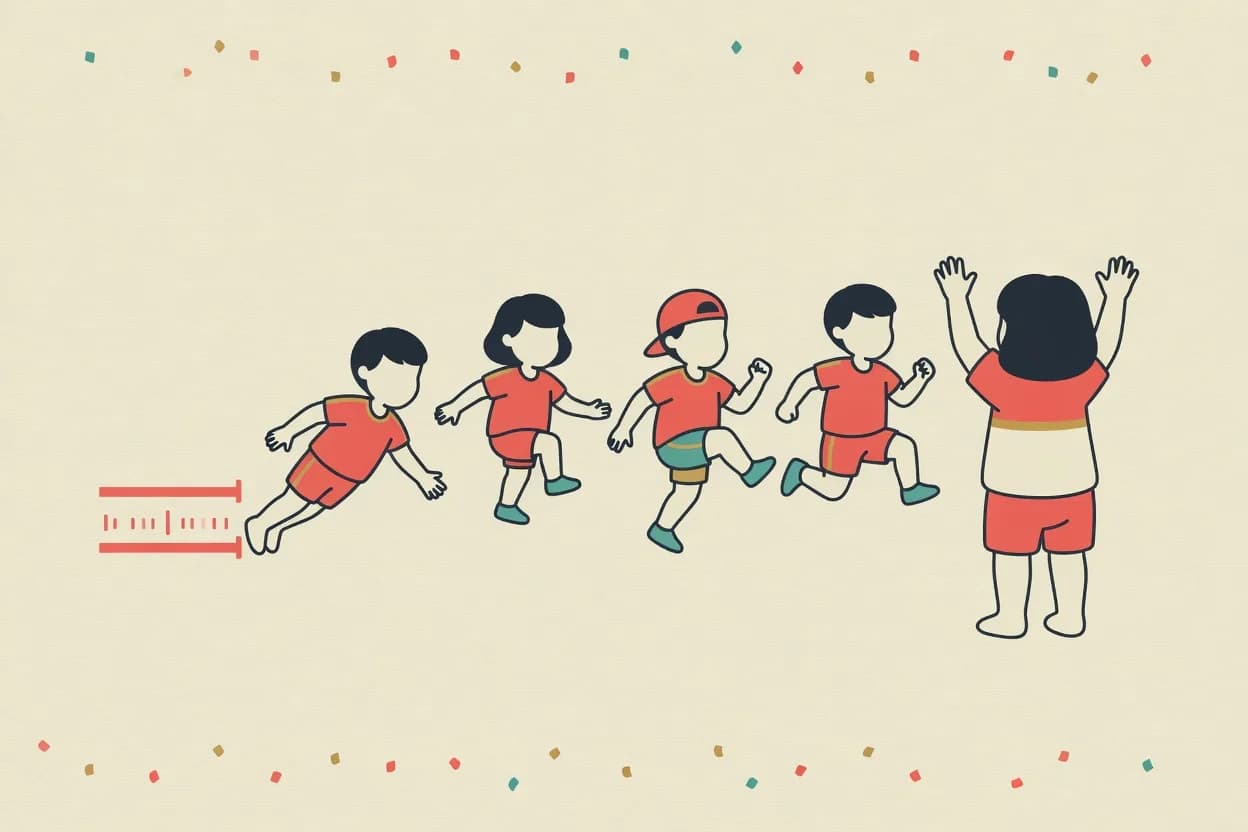
Red Light Green Light
Five is roughly where children can reliably stop themselves dead on command, which is the one skill this whole game depends on. Give it real distance — fifty feet if you can find it — since the appeal is entirely in the risk of creeping just a little too far on a green light.
Full rules and variations for red light green light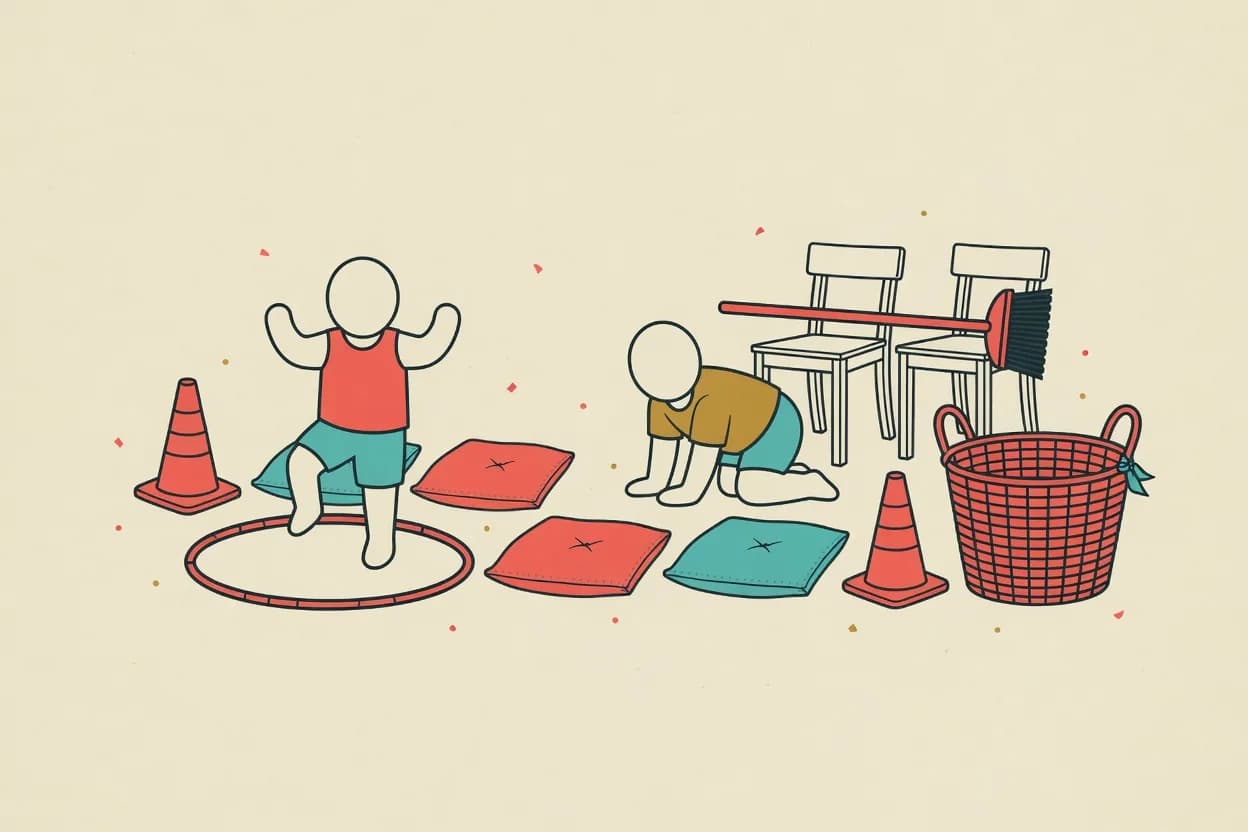
An Obstacle Course
Five sits right between the toddler course and the full six-to-nine version, so build six or seven obstacles with a bit of everything — a hula hoop to jump into, a broom to crawl under, cushions to hop across. Time it against the clock rather than racing head to head, which keeps a less confident five-year-old from feeling singled out.
Full rules and variations for an obstacle courseThe sit-down half
Pass the Parcel
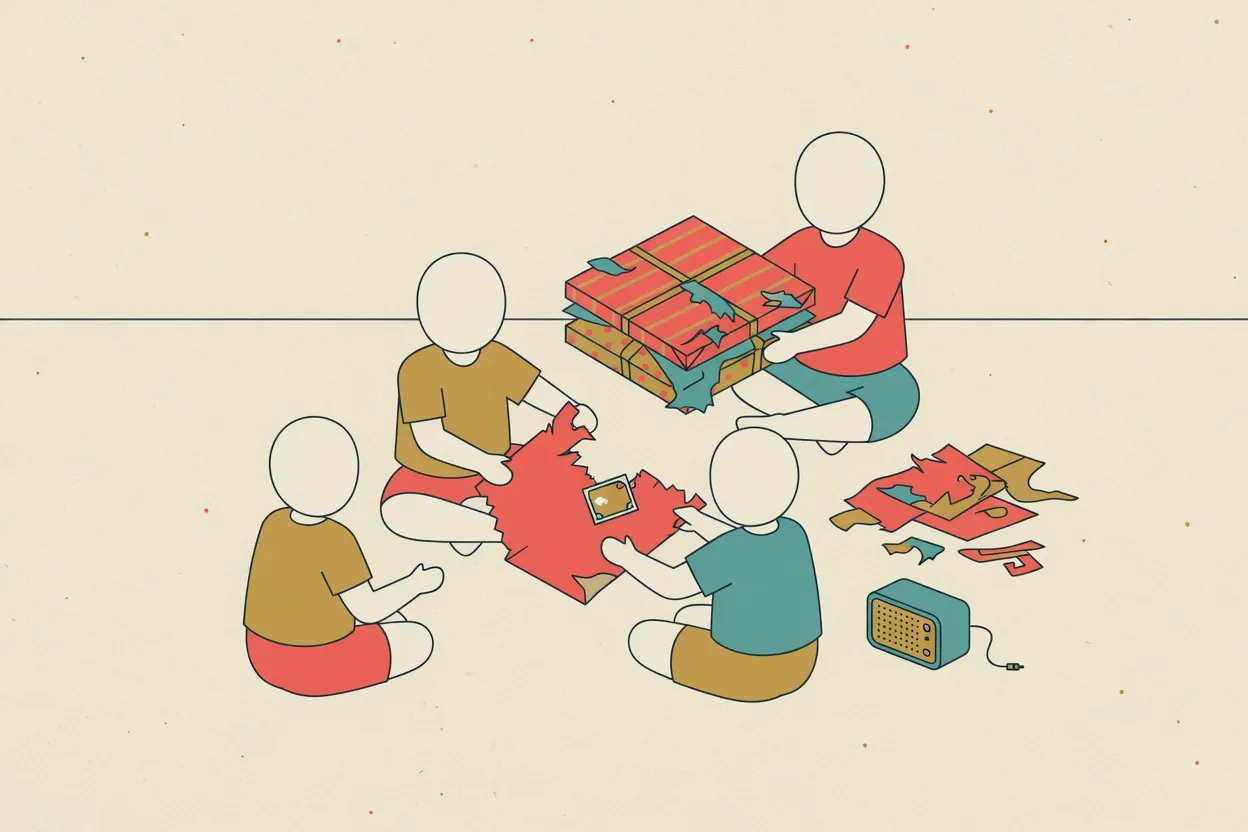
Wraps well for this age because the two things five-year-olds actually care about — getting a turn, and what's under the paper — both land properly by now. Wrap one layer per child playing and tuck a small prize into roughly half the outer layers, so unwrapping never feels pointless but the center prize still feels special.
Full rules and variations for pass the parcel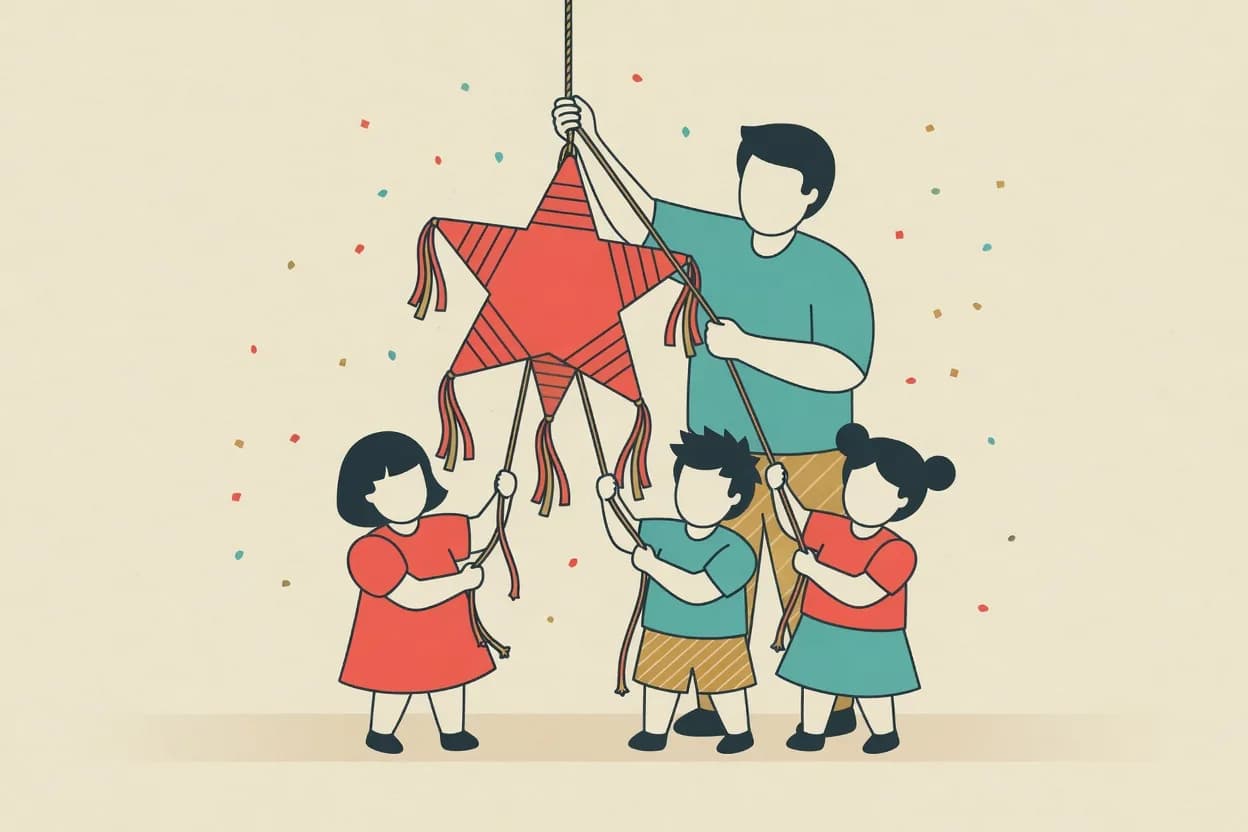
Piñata
This is the age the swinging version genuinely opens up, with a blindfold and three counted swings each, though the rope-pull version is still worth keeping for a mixed group. Decide the running order before anyone picks up the stick — youngest to oldest keeps the line patient while the piñata's still easy to hit.
Full rules and variations for piñata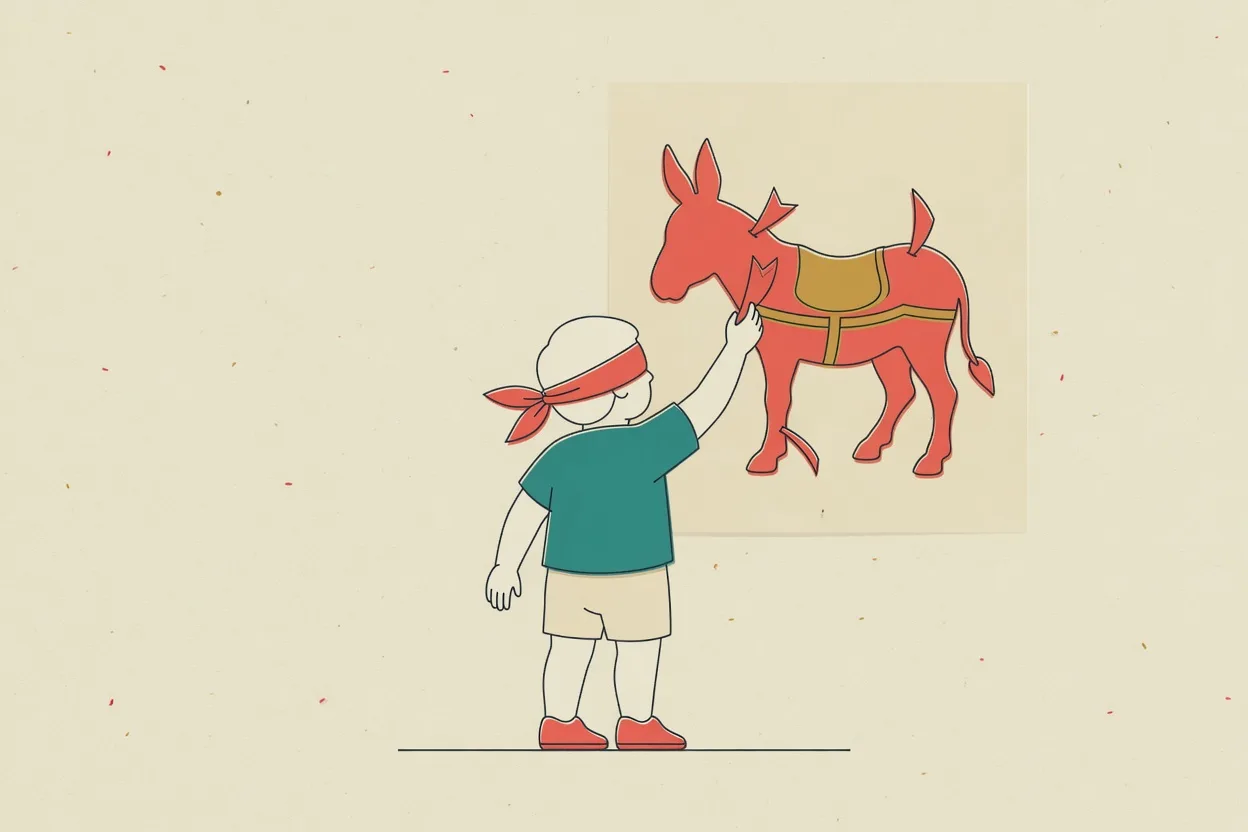
Pin the Tail on the Donkey
Two to three gentle spins is right for a five- to seven-year-old — enough to genuinely disorient without leaving them unsteady on their feet. Roll a loop of tape onto the back of each tail rather than using pins, and mark a spot to line up about six feet back so the rest of the group doesn't crowd in behind whoever's currently blindfolded.
Full rules and variations for pin the tail on the donkey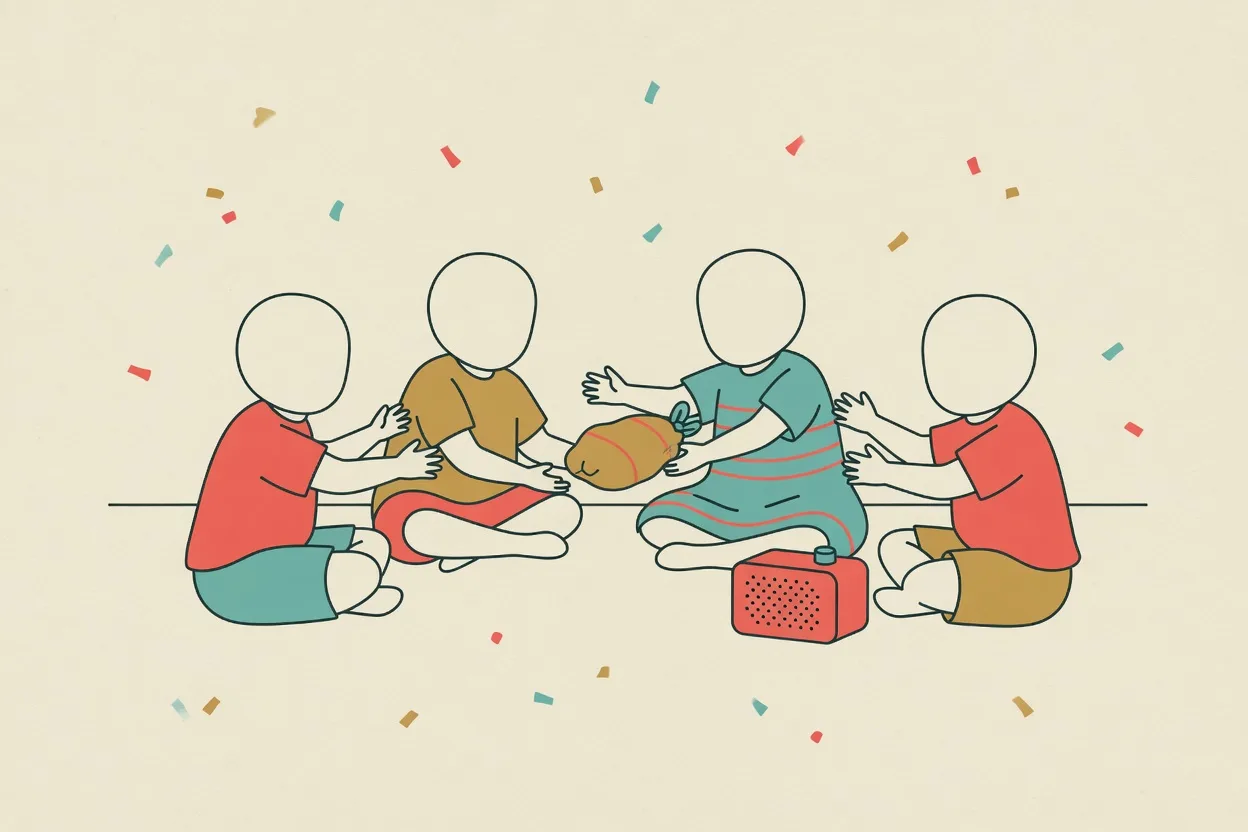
Hot Potato
Straight elimination starts to work from about seven or eight; at five, run the no-elimination version instead, where getting caught just means a quick forfeit and staying in the circle. It needs one soft object and a speaker, and it's over in one clean round, which makes it a good breather between bigger games.
Full rules and variations for hot potato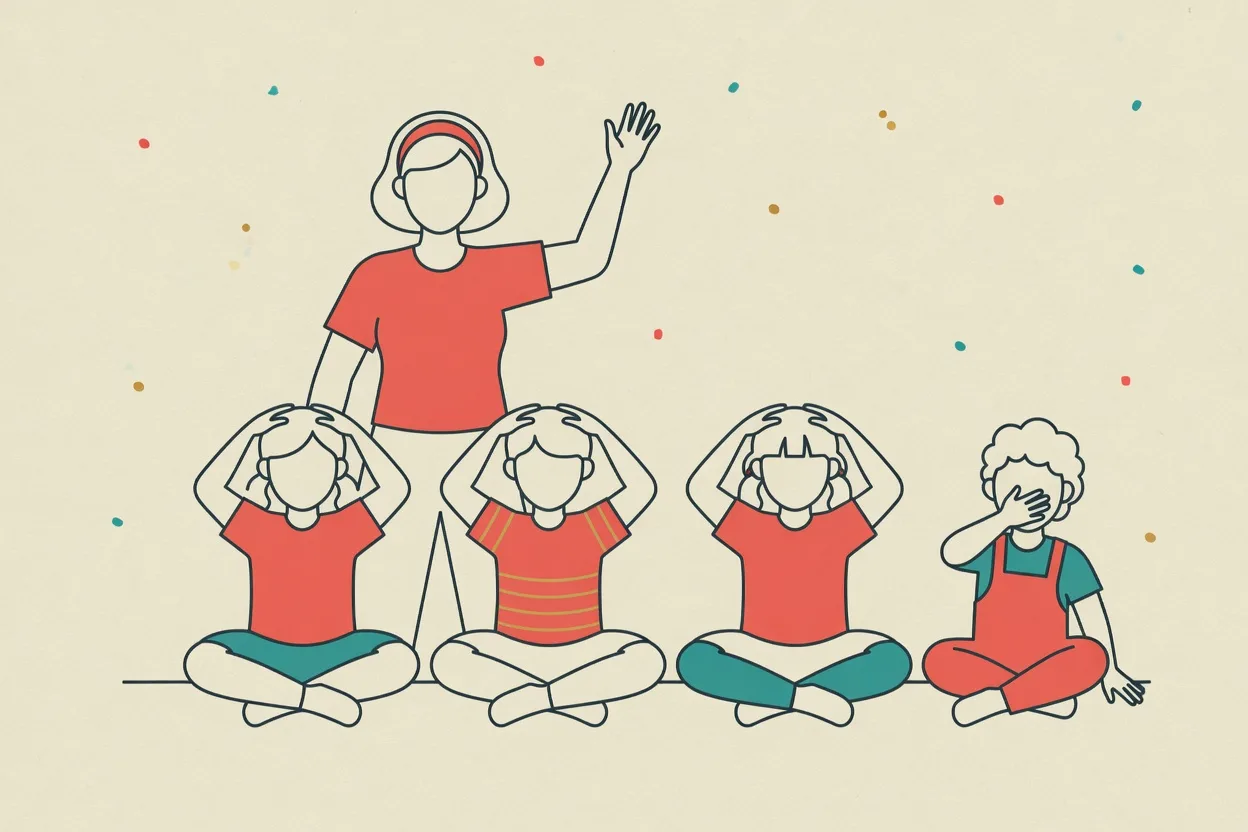
Simon Says
Full elimination suits about seven and up — at five, swap in the forfeit version, where being caught means a jumping jack rather than sitting down for the rest of the round. Let an adult be Simon first; five-year-olds pick up the rhythm and the trickery far faster from watching a well-run round than from being told the rules.
Full rules and variations for Simon says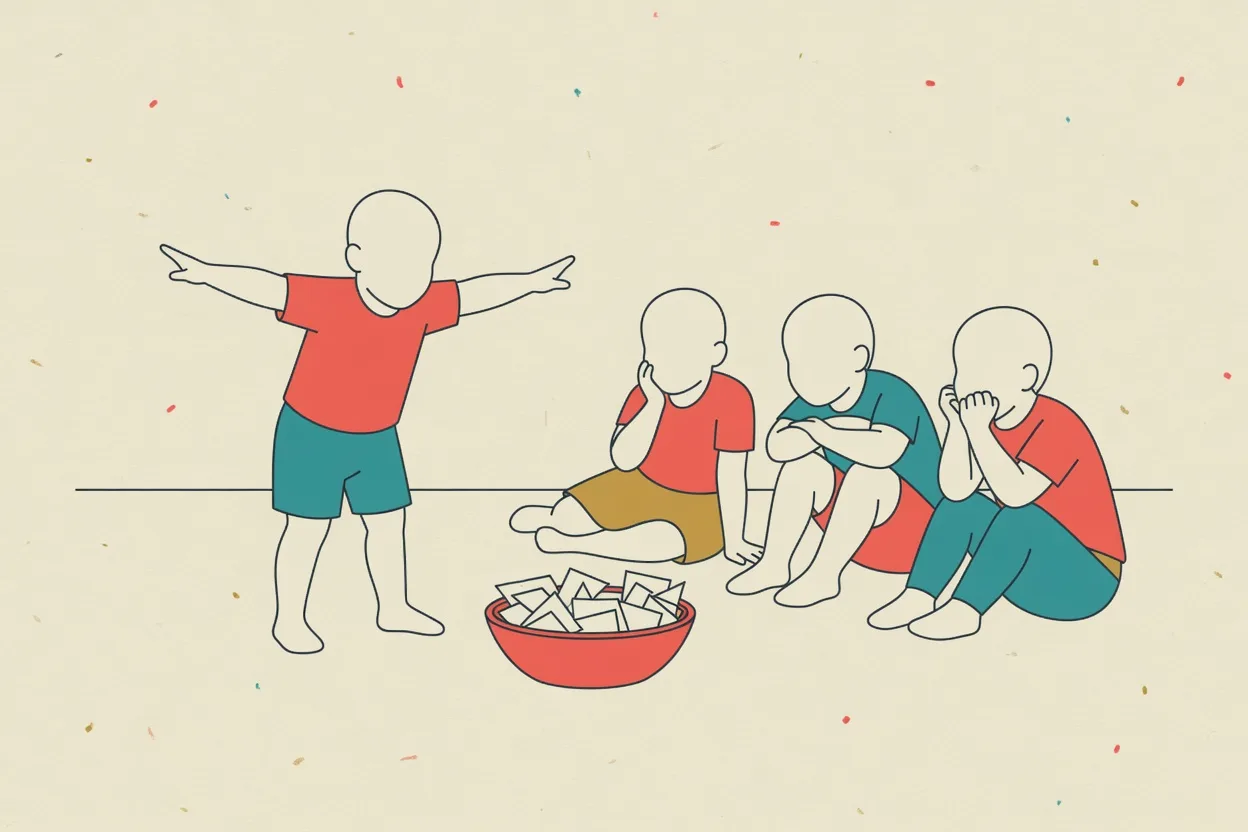
Charades
Five is the age this opens up, as long as the prompts stay physical and obvious — an elephant, brushing your teeth, a monkey — rather than anything that needs reading or abstract thinking. Write the prompts down before the party rather than inventing them on the spot, which is where the game usually slows to a crawl.
Full rules and variations for charades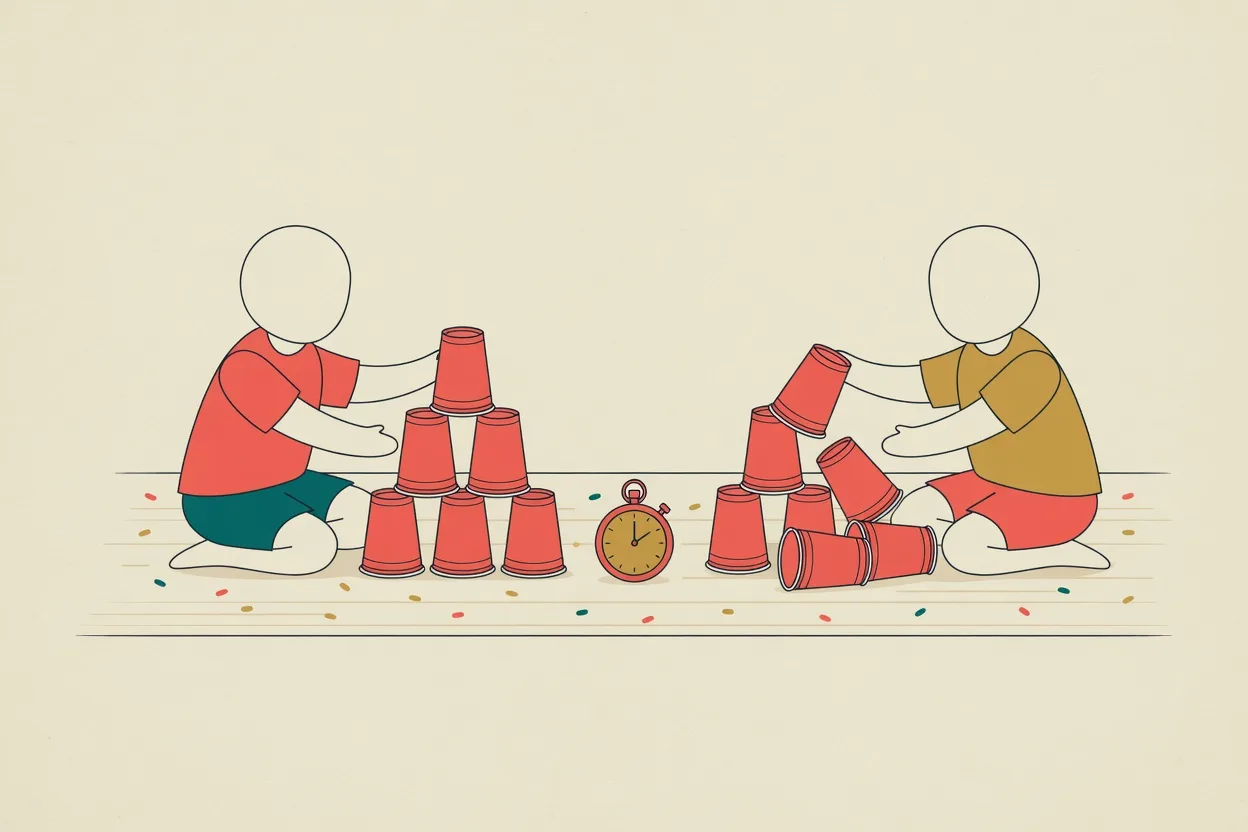
Cup Stacking
This is roughly the age fine motor control catches up with the ambition, so a child can place a cup precisely rather than just knock it in the right direction. Six cups is the right number for a party version, and give everyone one practice stack before the clock starts — first attempts are routinely two or three times slower than a practiced one.
Full rules and variations for cup stackingFrequently asked questions
- How many party games do you need for a 2-hour party?
- Four to six games, run in ten- to fifteen-minute blocks with breaks for cake, presents and free play in between. A two-hour party isn't two hours of structured games — it's a handful of games spaced through an afternoon that also needs food and downtime.
- Should games for 5-year-olds have elimination?
- It can work at this age, more reliably than for younger children, but keep an eye on whoever's out first — five-year-olds still mind losing more than they'll usually admit. Most of the classics have a soft-exit version built in, a forfeit instead of sitting out, and it's worth having it ready rather than needing it.
- What's the biggest mistake at a 5-year-old's party?
- Running everything at one speed. A block of quiet, turn-taking games back to back loses the room; a block of chasing games back to back exhausts it before the cake. Alternate a run-around game with a sit-down one and the afternoon holds together far better than either extreme.
- Do 5-year-olds need an adult to referee every game?
- Most of them, yes, at least for the first round — judging musical statues fairly or calling red light, green light without an argument is a real skill, and five-year-olds accept a decision from an adult far more easily than from another five-year-old.
Sorting the venue too? 7 Kids Birthday Party Places in Charlotte (2026)