
Four is the first birthday where a party game can have a real rule in it. Not two rules, and not a rule that changes halfway through — one: stop when the music stops, only move when Simon says, take as many steps as the fox calls. Keep a game to a single instruction like that and a four-year-old will play it properly, round after round, and be visibly proud of getting it right.
What four can't do yet is wait. Taking turns is brand new at this age, and the line is where most four-year-old games come apart: the child third in line for pin the tail has drifted off to the snack table by the time it's their turn. Keep lines short, keep rounds short, and keep elimination out of it. Nearly every game below has a no-elimination version written for this age, and it's the one to run — a four-year-old who's out first doesn't sit and watch the rest of the game, they leave it.
If most of the guests are still closer to three, party games for toddlers is the gentler list; if they're nearly five, party games for 5-year-olds picks up where this one stops. The games below are grouped by the one thing each asks of a four-year-old: hold a rule, wait for a turn, follow a trail, or simply get to the finish line.
One rule at a time
Each of these runs on a single instruction a four-year-old can hold for a whole round. Say the rule once, play the first round with an adult going first, then let them have it.

Simon Says
The purest one-rule game there is — move only when Simon says — and four is the age it starts to work. Run the forfeit version, where a child caught out does a jumping jack or a silly noise and stays in, because being out early and often is exactly what ruins it at this age. Be Simon yourself at this age, and decide your next three instructions before you start talking, so the trick call lands inside a rhythm rather than in a pause everyone can see coming.
Full rules and variations for Simon says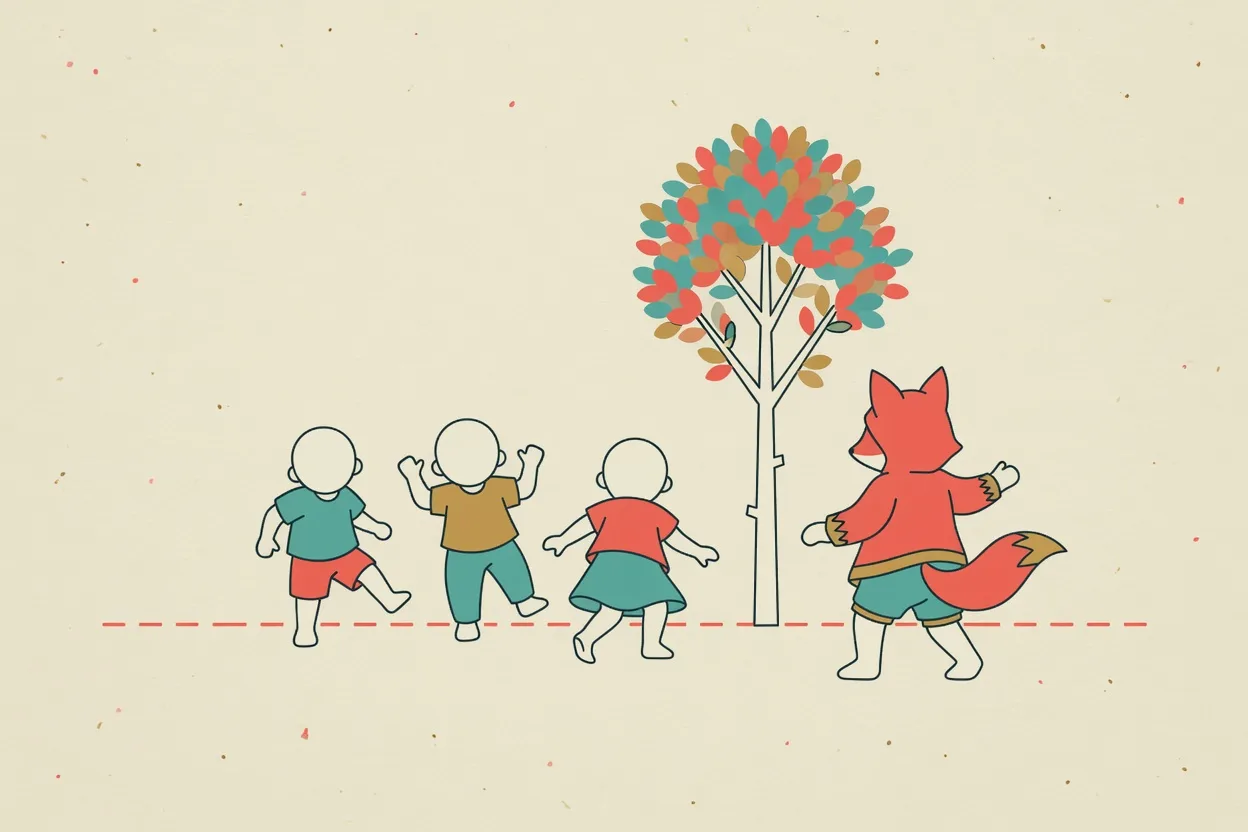
What's the Time, Mr. Fox
Four is the bottom of this game's age range, and its only rule is to take the number of steps the fox calls — which at four means counting them out loud together, and that's half the fun. Use the shorter chase written for four- and five-year-olds: halve the distance to the fox and call 'dinner time' within the first few rounds, because a long, slow creep loses this age well before the chase arrives.
Full rules and variations for what's the time, Mr. Fox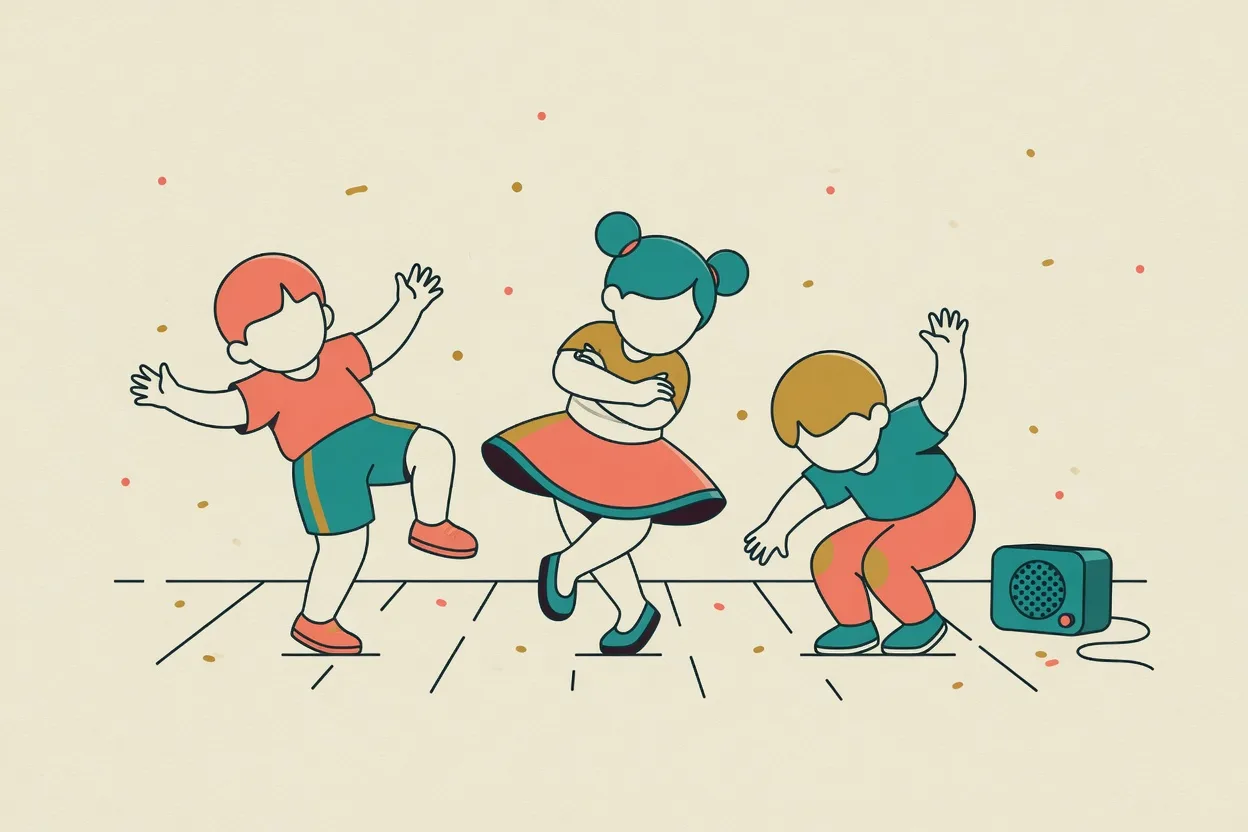
Freeze Dance
Stop when the music stops: the whole game in five words, which is why it lands so well at four. Keep it no-elimination for now, so nobody goes out and a wobble just gets a laugh, and vary the gaps wildly — eight seconds, then forty, then fifteen — so the stop is a genuine surprise rather than something the sharpest child in the room has already counted.
Full rules and variations for freeze danceLearning to wait for a turn
Turn-taking is the newest skill at four, and the shakiest. These games are built around a turn, so keep the waiting group small — three or four children, not twelve — and keep things moving for whoever's next.
Pass the Parcel
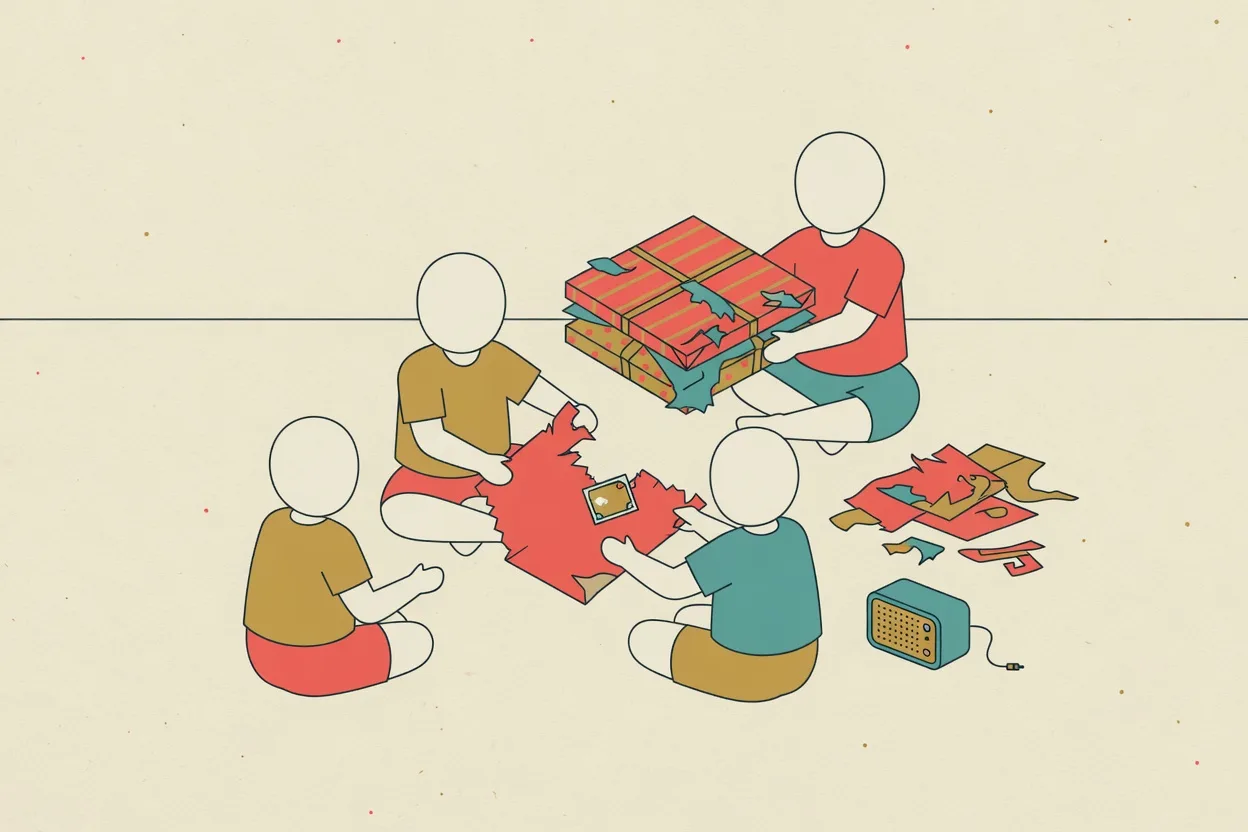
A natural first turn-taking game, because the turn travels to you instead of you standing in line for it. At four, forget one layer per child and just make sure everyone holds the parcel at least once, prize in their layer or not. Slow the music down too, and if a child is still wrestling with a stubborn bit of tape when it stops again, let them finish that layer before the parcel moves on.
Full rules and variations for pass the parcel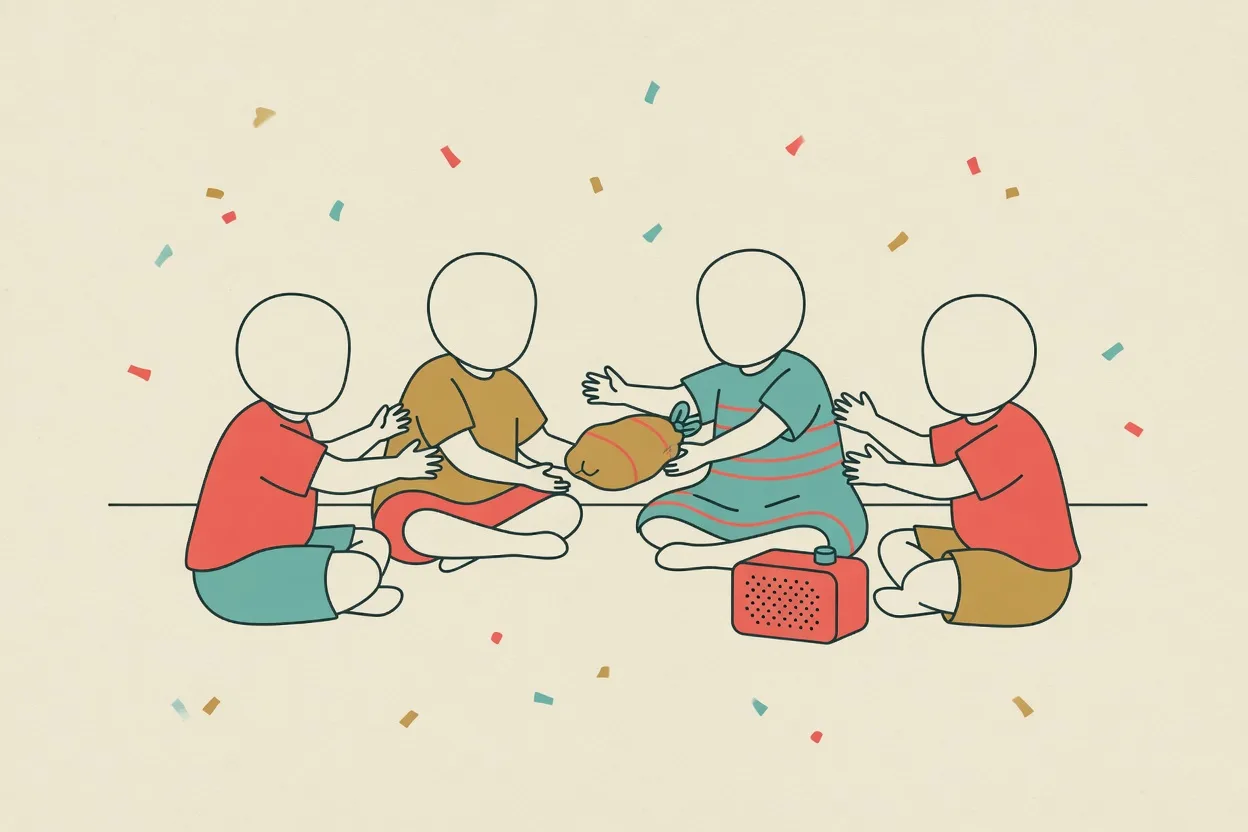
Hot Potato
Four is the youngest age this works, and it's the mirror image of pass the parcel: now the whole point is getting rid of your turn as fast as you can. Run the no-elimination version, where whoever's holding the potato when the music stops does a quick hop or a silly noise and stays in the circle. The guide keeps that version right up to seven, so don't be tempted to switch to straight elimination early.
Full rules and variations for hot potato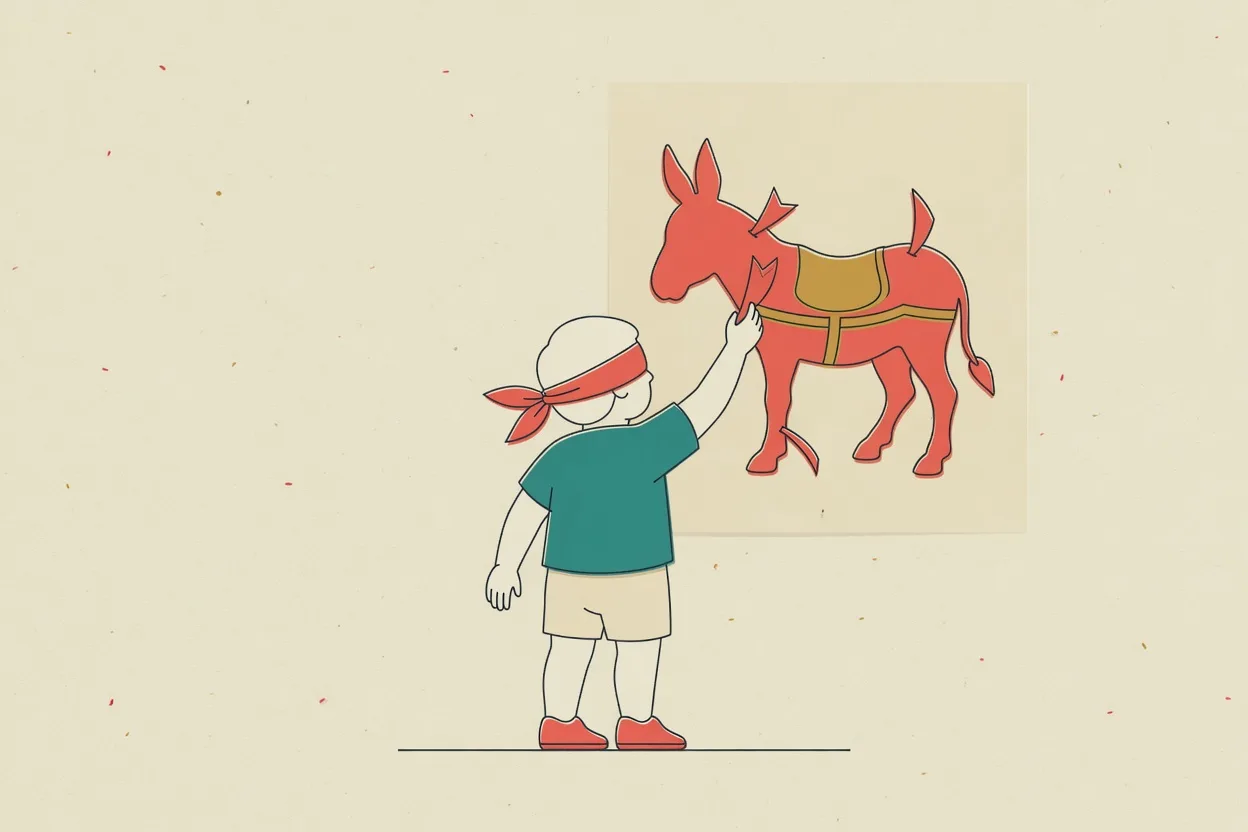
Pin the Tail on the Donkey
One gentle turn in place is the right spin for a four-year-old; any more and they lose their footing rather than their sense of direction. If the blindfold itself upsets anyone, let them close their eyes and promise not to peek, with an adult standing close enough to check. Tape a line on the floor about six feet back and keep the whole group behind it, or the line crowds in around whoever's reaching for the poster.
Full rules and variations for pin the tail on the donkey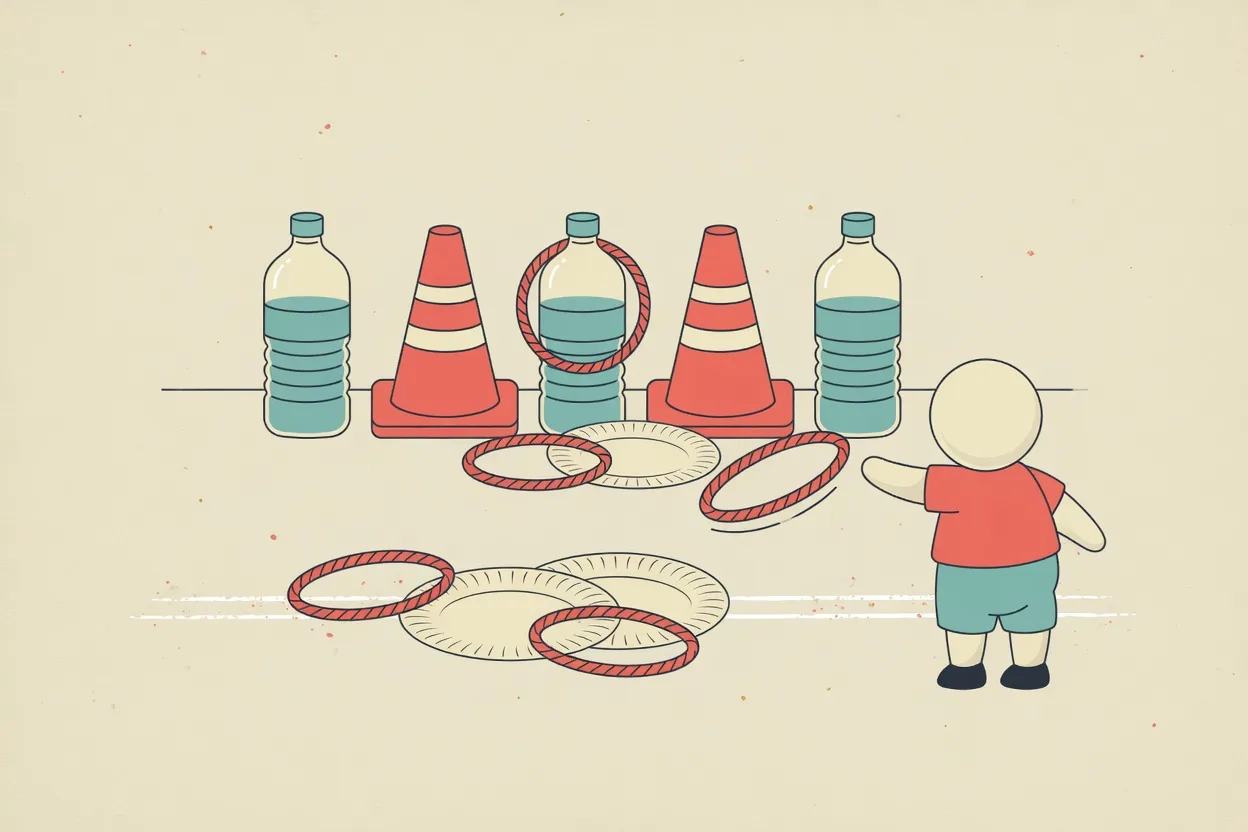
Ring Toss
Set the throwing line about three feet out, as the guide suggests for children under six, and let any child step back further if they want to — that heads off the 'too close!' argument before it starts. Run it as a booth with three or four rings each and a small prize for any ring that lands, and fix that allowance before the first throw, because one four-year-old asking for just one more turn holds up everyone behind them.
Full rules and variations for ring tossTrails and hunts, no reading needed
Most four-year-olds can't read a clue yet, but they can follow a photo, a color or a grown-up's hint — and the moment of actually finding something is as good at four as it ever gets.
Treasure Hunt
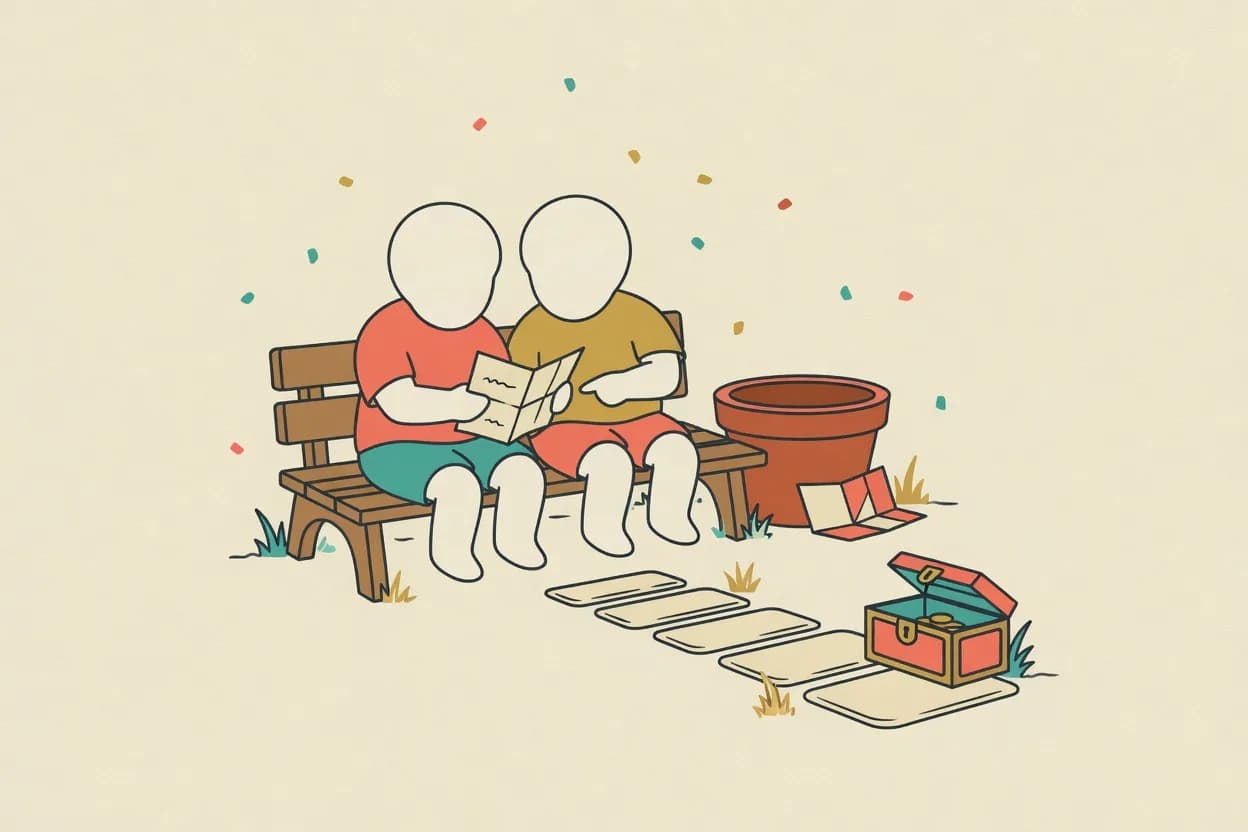
Make it a photo trail: take a picture of each hiding spot on your phone minutes before the party, and every clue is simply the next photo. Keep it to four or five hops, the length the guide recommends for three- to five-year-olds, because past that the youngest hunters lose track of what they're looking for. Leave something small at each stop rather than saving it all for the end, so nobody has to wait for the finish to feel they found something.
Full rules and variations for treasure hunt
Scavenger Hunt
Swap the written checklist for the color hunt — find something red, something yellow, something green — which a four-year-old can play without reading a word. Send them out in pairs rather than alone, since plenty of children this age would rather not search on their own, and set a time limit so the hunt ends while everyone's still enjoying it instead of dragging on with one child hunting by themselves.
Full rules and variations for scavenger hunt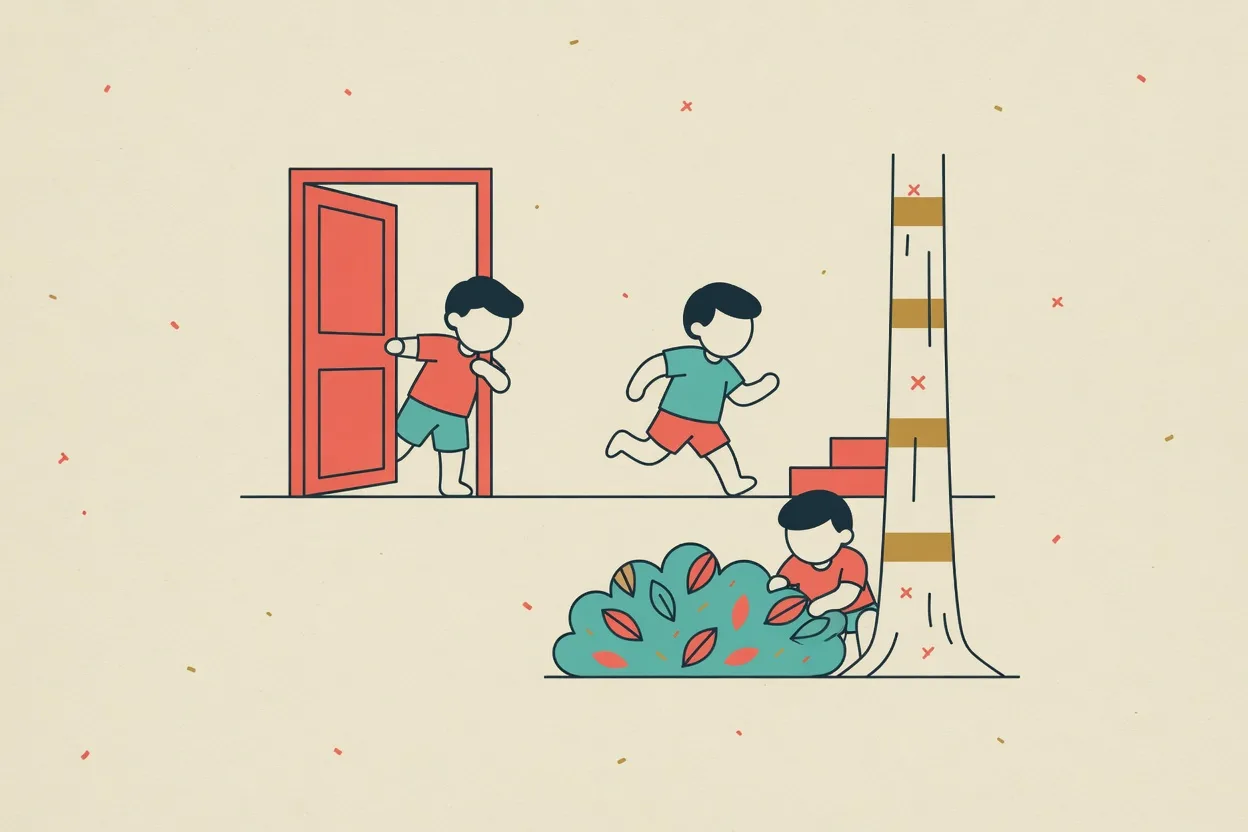
Hide and Seek
Four sits between the two stages the guide describes: playable from about three with an adult reminding everyone where home base is, properly independent from about five. So keep the boundary to one room or a small, obvious patch of yard, walk it again halfway through the party, and count short — a long count with nothing to do is exactly when a four-year-old seeker starts peeking.
Full rules and variations for hide and seekRaces where finishing is the win
Four-year-olds love a race and can't yet manage most of the skills a real one asks for, like jumping with both feet together or balancing while moving fast. These versions keep the race and drop the stopwatch.
Egg and Spoon Race: Rules, Technique & Variations
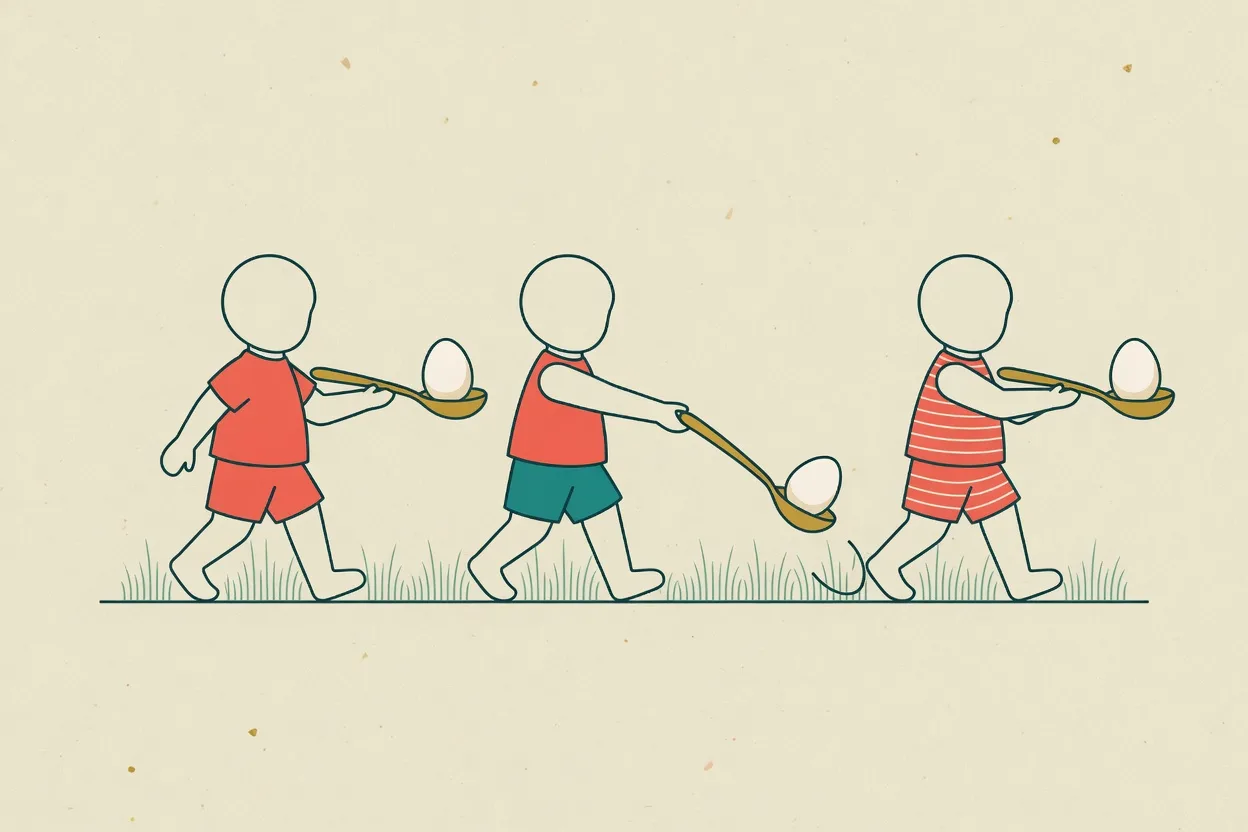
Four is the youngest age the guide gives for this one, along with a clear instruction: walk the course with a big spoon and a forgiving egg, and praise every child for finishing rather than timing them. A small potato or a weighted plastic egg turns a drop into a ten-second pause instead of a mess, and holding the spoon at the very end of the handle is the one tip worth showing before the start.
Full rules and variations for Egg and Spoon Race: Rules, Technique & Variations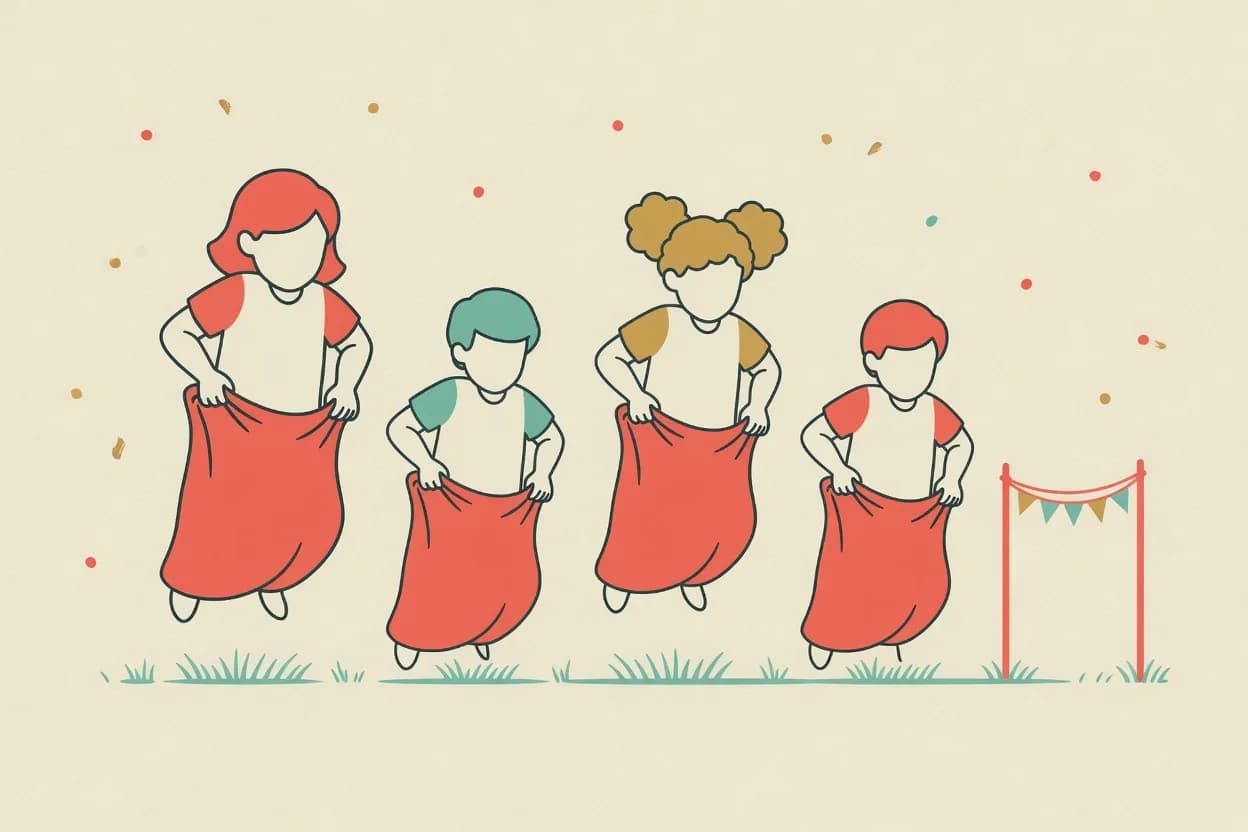
Sack Race: Rules, Setup & How to Jump Faster
Most four-year-olds can't reliably jump with both feet together yet, so don't ask them to: let them shuffle, walk or waddle inside the sack and call it a race. A heavy-duty pillowcase is kinder on bare legs than scratchy burlap, a short course beats a long one, and the sight of six small children waddling into each other is just as funny as the hopping version.
Full rules and variations for Sack Race: Rules, Setup & How to Jump Faster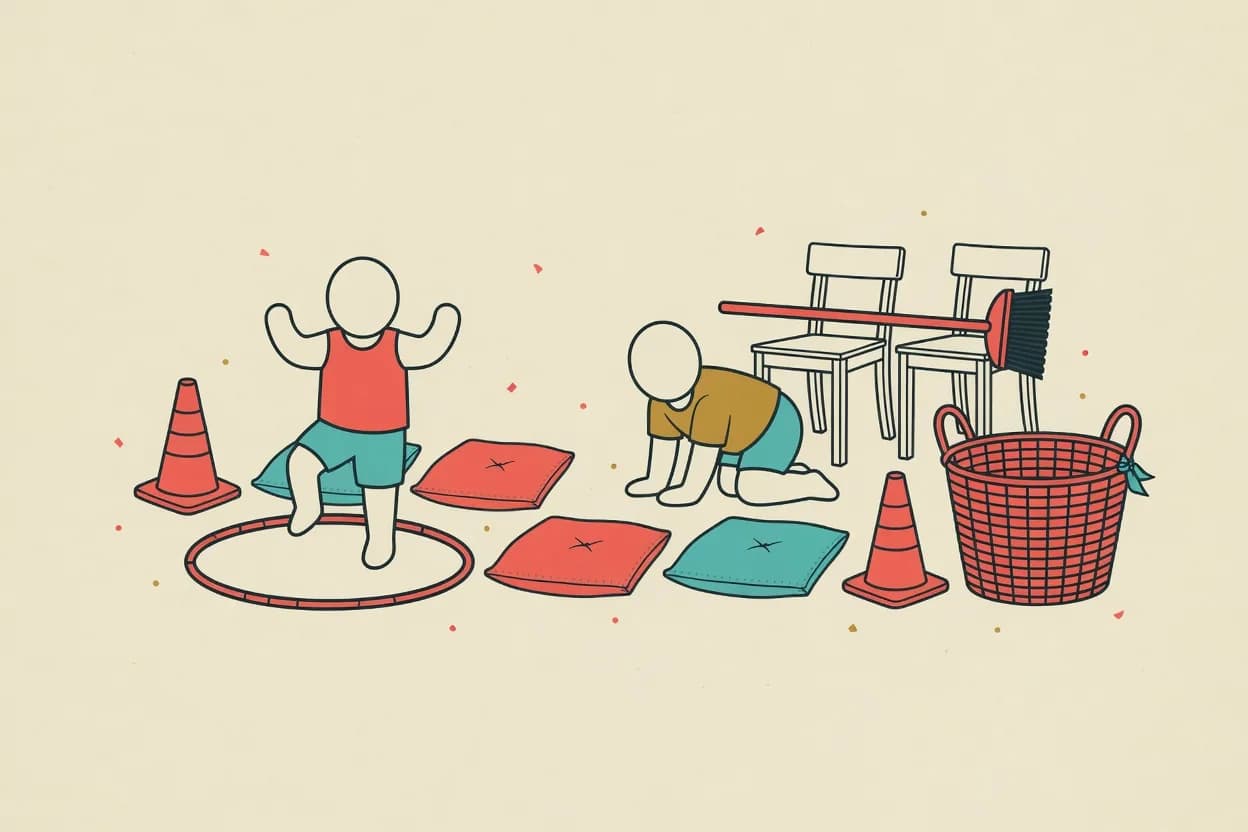
An Obstacle Course
Build the guide's course for three- to five-year-olds: four or five low obstacles — a hoop to step into, a tunnel to crawl through, a chalk line to walk — and no timing at all. Walk it with them once, cheer at the finish, and expect them to want to go around again. Test each obstacle at their height before the party; a gap that's an easy step for you is a real climb for a four-year-old.
Full rules and variations for an obstacle courseFrequently asked questions
- What games can 4-year-olds play at a birthday party?
- Games with one simple rule work best at four: freeze dance, Simon says, what's the time, Mr. Fox, pass the parcel and a picture-clue treasure hunt. Choose games where nobody is out for long, and play a few short rounds of each rather than one long one.
- Should 4-year-olds play elimination games?
- Mostly not. Nearly every classic has a no-elimination version written for this age — musical chairs with floor cushions, Simon says with a forfeit, hot potato where nobody leaves the circle — and at four it's the version that keeps everyone playing. If you do try straight elimination, give whoever's out first a job, like stopping the music.
- How long should each game last at a 4-year-old's party?
- Plan on five to twenty minutes per game, the round lengths the games above are written for. Stop while a game is still going well rather than when interest runs out, because a four-year-old who ended on a high will happily play it again later.
- Can 4-year-olds do a treasure hunt?
- Yes, as long as the clues are pictures rather than words. A photo trail of four or five hiding spots, where each clue is a phone picture of the next spot, is the version our treasure hunt guide recommends for three- to five-year-olds.
- What's the hardest part of running games for 4-year-olds?
- Waiting. Four-year-olds can follow a simple rule, but standing in line for a turn is still hard, so keep turn-based games to three or four children at a time, and if you have a second adult, run two stations at once.
Planning the whole birthday? More ideas for a 4th birthday
Sorting the venue too? 11 Kids Birthday Party Places in New York (2026)